📍 Location
Location Map Coordinates 35.896413, 14.513318
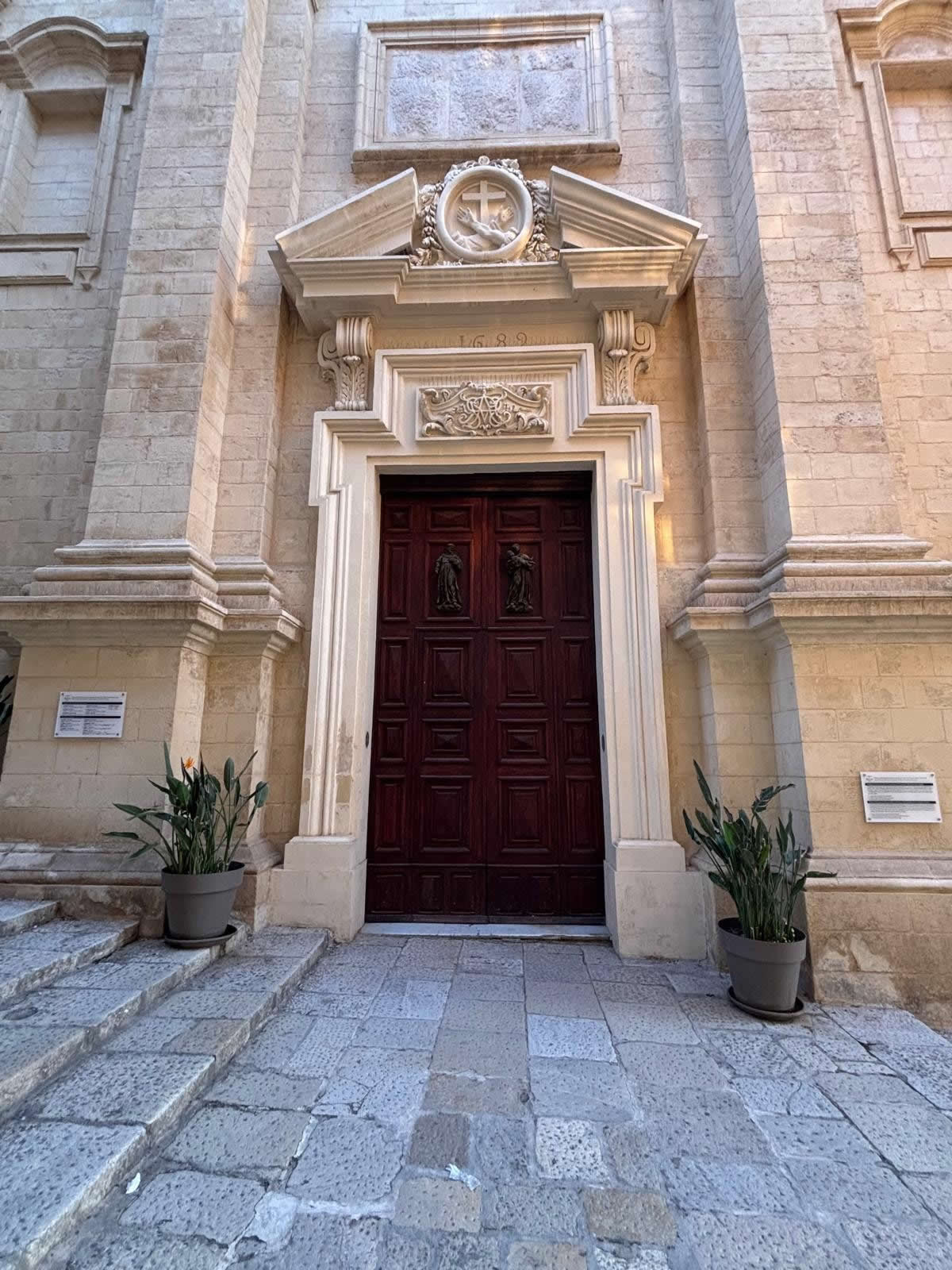
The Knisja ta’ Ġieżu, officially known as the Church of St Mary of Jesus, is one of the oldest Franciscan churches in the capital city of Valletta, Malta. Located at coordinates 35.896413, 14.513318, the church forms part of a historic Franciscan convent complex that has played a central role in the religious and cultural life of Valletta since the sixteenth century.
Dedicated to St Mary of Jesus, the church is popularly referred to by Maltese residents as Ta’ Ġieżu, a colloquial expression derived from the Maltese phrase meaning “of Jesus”. The church is renowned for its Miraculous Crucifix, an object of deep devotion among Maltese Catholics, and for its strong connection with the Franciscan Order.
Today the church remains an active place of worship while also serving as a significant cultural monument within the UNESCO World Heritage city of Valletta.
Foundation and Early History
The origins of the church date back to the establishment of Valletta itself. In 1571, the Franciscan Friars Minor were granted land in the newly built city where they constructed a convent and church to serve their growing religious community.
The original church was designed by the prominent Maltese architect Girolamo Cassar, who was responsible for many of Valletta’s earliest buildings after the Great Siege of 1565. Cassar’s design followed the architectural style typical of the late Renaissance and early Mannerist period, reflecting the functional yet elegant approach to church architecture used by the Knights of St John.
Over the centuries the church became a centre of Franciscan spirituality in Valletta, attracting both residents and visitors who sought guidance, confession, and participation in Franciscan devotional traditions.

Baroque Transformation
Although the original church dates from the sixteenth century, modifications were introduced during the seventeenth century to reflect evolving artistic styles. Around 1680, a new Baroque façade replaced the earlier exterior design. This project was undertaken by Mederico Blondel, a military engineer serving the Knights of St John.
The redesigned façade introduced the decorative sculptural elements characteristic of Maltese Baroque architecture while preserving the structure of the original church.
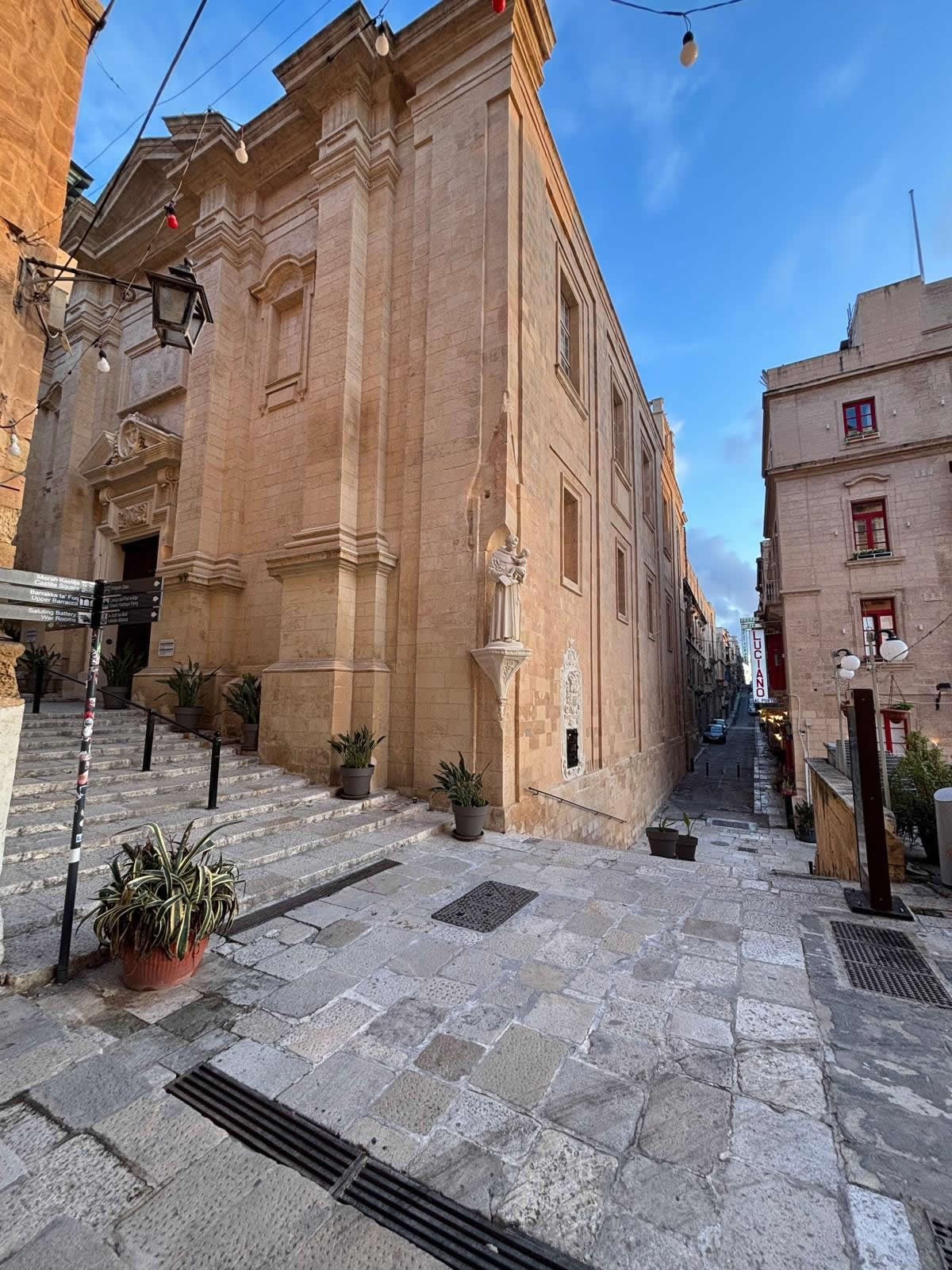
The church’s distinctive entrance staircase and elevated position further enhance its visual prominence within the surrounding streets of Valletta.

Architecture and Interior Layout
Exterior Design
The exterior of Ta’ Ġieżu Church reflects the transition between Renaissance and Baroque architectural styles. Built using traditional Maltese limestone, the façade features classical proportions combined with Baroque decorative elements.
- Baroque façade added in the late seventeenth century
- Elevated entrance staircase
- Bell tower overlooking the surrounding streets
- Traditional Maltese limestone masonry
Interior Layout
The interior of the church follows a typical Franciscan church plan characterised by a single nave and side chapels. Decorative stonework, paintings, and devotional sculptures adorn the interior while maintaining the simplicity traditionally associated with Franciscan spirituality.
Several altars and devotional spaces within the church commemorate saints and events connected with the Franciscan tradition.

The Miraculous Crucifix
One of the most important treasures of Ta’ Ġieżu Church is the Miraculous Crucifix, a wooden sculpture created around 1630 by the Sicilian Franciscan friar Innocenzo da Petralia Sottana.
The crucifix has long been regarded as a sacred object of devotion and is believed by many faithful to possess miraculous qualities. Thousands of devotees visit the church each year to pray before the crucifix, particularly during the Lenten season and Holy Week.
The crucifix forms the centrepiece of the church’s main altar and remains one of the most venerated religious artefacts in Malta.

Artworks and Religious Heritage
The church contains a number of important works of religious art that illustrate the artistic traditions of Malta during the Baroque period. Among these is a painting of Our Lady of Sorrows by the Maltese artist Stefano Erardi, a prominent seventeenth-century painter.
Another significant feature of the church is the historic Via Crucis cycle, consisting of fourteen paintings depicting the Stations of the Cross. These artworks were created by well-known Maltese artists including Francesco Zahra, Gio Nicola Buhagiar, and Johannes Gini.
The Via Crucis paintings underwent extensive restoration in recent years to preserve their artistic and historical value.
The Valletta Carnival Tragedy of 1823
One of the most tragic events in Maltese social history occurred at Ta’ Ġieżu Church during the Valletta Carnival of 1823. During a charitable distribution of bread to children following a religious service, a large crowd gathered in a narrow corridor connected to the church’s sacristy.
A sudden surge of people caused a devastating crush in which approximately 110 children lost their lives due to trampling and suffocation.
The tragedy shocked Maltese society and remains one of the worst peacetime disasters in the history of the islands.
Restoration and Conservation
Over the centuries Ta’ Ġieżu Church has undergone several restoration projects aimed at preserving its historic architecture and artworks. In recent years conservation works focused on the façade, stonework, and interior decoration of the building.
Major restoration projects began in 2022 with funding from the Maltese government and heritage organisations. These works included cleaning the façade, repairing damaged limestone, and restoring architectural details that had deteriorated over time.
Additional conservation initiatives restored the Via Crucis paintings and the church bells, ensuring the preservation of the building’s historical and cultural significance.
Religious Traditions and Devotion
Ta’ Ġieżu Church remains closely associated with the religious traditions of Valletta and Malta as a whole. The church is particularly well known for its role in the annual Good Friday procession, one of the most important religious events in the Maltese liturgical calendar.
During Holy Week the church becomes a centre of devotion as thousands of faithful gather to venerate the Miraculous Crucifix and participate in Lenten services and processions.
These traditions highlight the enduring importance of the church within Maltese Catholic culture.
Visiting Ta’ Ġieżu Church
Ta’ Ġieżu Church is located in the historic centre of Valletta and can easily be reached on foot from many of the city’s major landmarks, including:
- St John’s Co-Cathedral
- Republic Street
- The Grand Master’s Palace
- Upper Barrakka Gardens
Visitors exploring Valletta’s religious heritage will find Ta’ Ġieżu Church a fascinating destination that combines centuries of architectural history with deep spiritual significance.
Conclusion
The Knisja ta’ Ġieżu stands as one of Valletta’s most historically important religious buildings. Founded in the late sixteenth century by the Franciscan Friars and designed by architect Girolamo Cassar, the church has witnessed centuries of Maltese history.
With its Baroque façade, sacred artworks, and the revered Miraculous Crucifix, Ta’ Ġieżu Church continues to attract devotees and visitors from across Malta and beyond. Its rich heritage and spiritual significance ensure that it remains an essential part of Valletta’s cultural and religious landscape.