📍 Location
Location Map Coordinates 35.895178, 14.513352
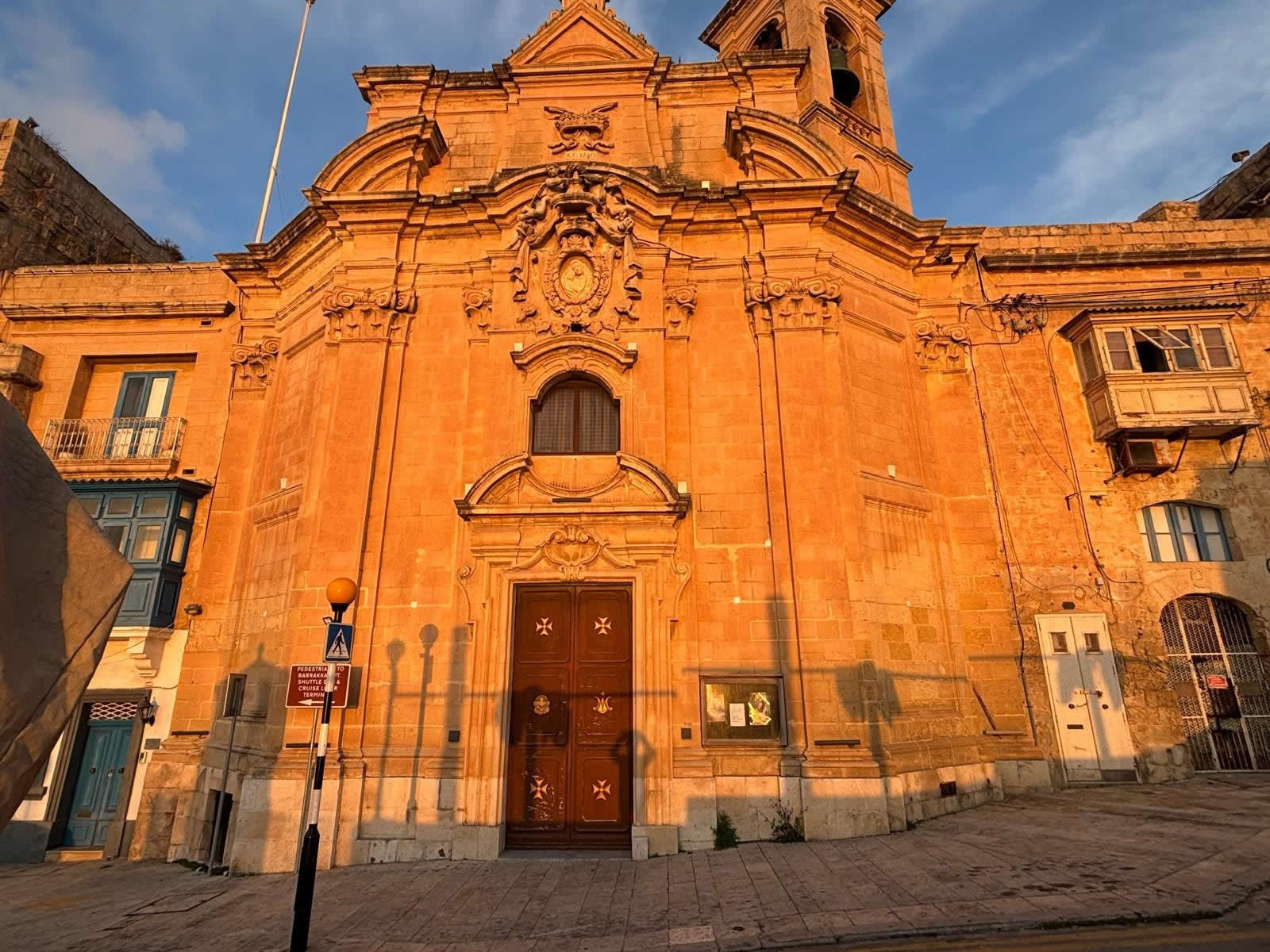
The Knisja tal-Madonna ta’ Liesse, commonly known as Ta’ Liesse Church, is one of the most historically significant Roman Catholic churches located along the waterfront of Valletta, Malta. Situated at coordinates 35.895178, 14.513352, the church stands near the Grand Harbour and close to the historic entrance to the city through Victoria Gate.
The church is dedicated to Our Lady of Liesse, a Marian title that originated in France and became associated with devotion among the Knights of St John during their rule in Malta. Over the centuries the church developed a close relationship with the maritime community of the harbour area, serving sailors, dockworkers, and residents living near the port.
Today Ta’ Liesse Church remains an important religious and historical landmark in Valletta, admired for its Baroque architecture, religious artworks, and its strong connection with Malta’s maritime heritage.
Historical Origins
The origins of the Church of Our Lady of Liesse date back to the early seventeenth century. The foundation stone of the original church was laid on 21 November 1620 in a ceremony attended by Grand Master Alof de Wignacourt of the Order of St John. The construction was financed by Fra Giacomo De Chess du Bellay, the Bailiff of Armenia within the Order.
The church was built during a period when Valletta was expanding rapidly as the capital of the Knights of St John. Many religious institutions were constructed to serve both the knights and the growing civilian population. Ta’ Liesse quickly became associated with the maritime activities of the harbour and the fishermen who worked along the waterfront.
Because of its location near the docks and harbour entrance, the church became particularly popular among sailors who prayed there before embarking on voyages across the Mediterranean.
Reconstruction in the Eighteenth Century
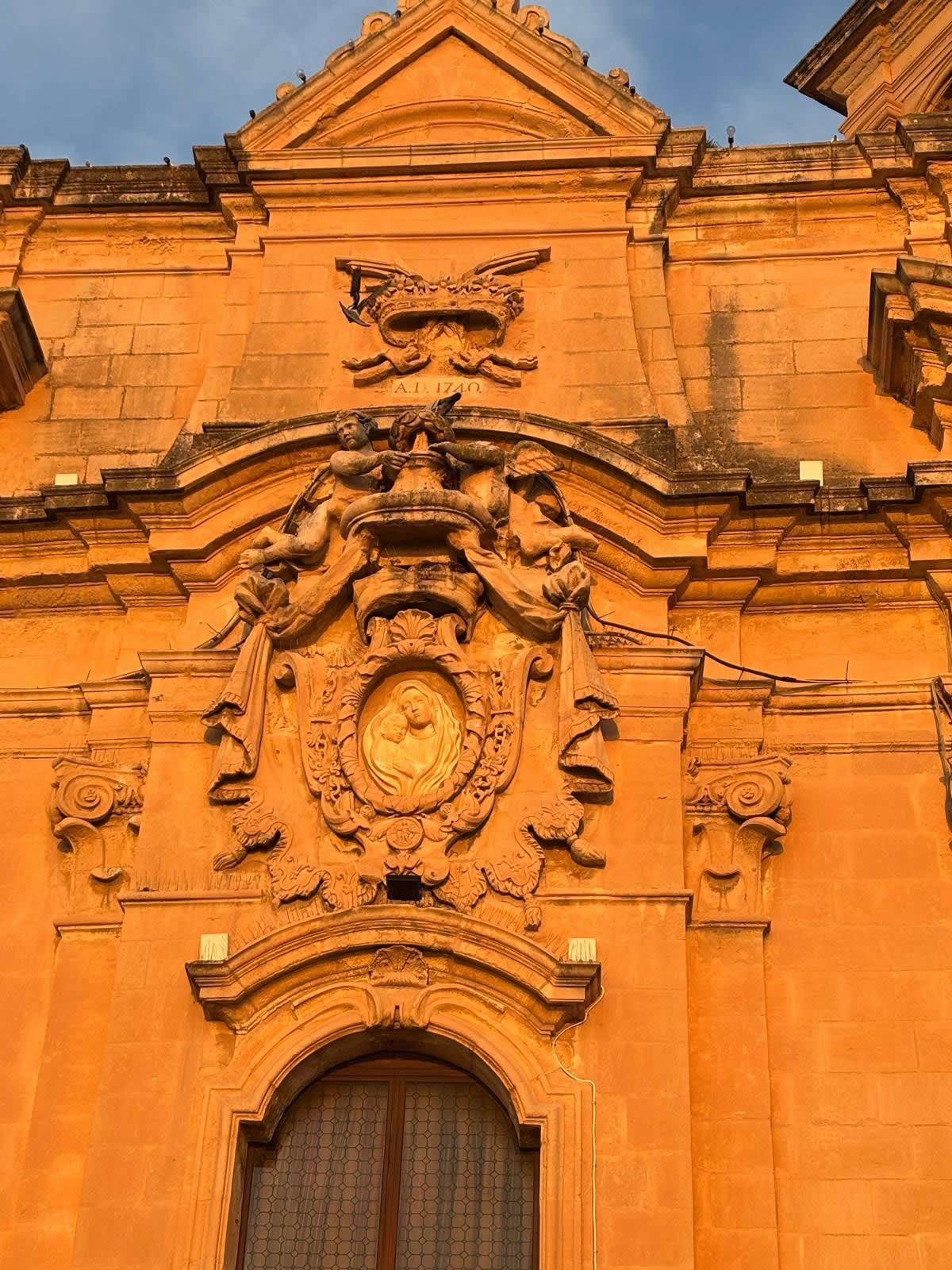
By the early eighteenth century the original structure had begun to deteriorate, and the Knights of St John decided to rebuild the church entirely. In 1740, the Langue of France commissioned the construction of a new building on the same site, creating the church that largely survives today.
The redesigned church followed the architectural principles of the Baroque style, which dominated Maltese church architecture during this period. The project is often associated with the architect Andrea Belli, one of the prominent Maltese architects of the eighteenth century.
The rebuilding introduced a more elaborate façade, improved structural design, and enhanced decorative elements that reflected the artistic tastes of the time.
After several decades of use, the church was solemnly consecrated on 23 November 1806 by the Bishop of Malta, Vincenzo Labini.
Architecture and Design
Baroque Exterior
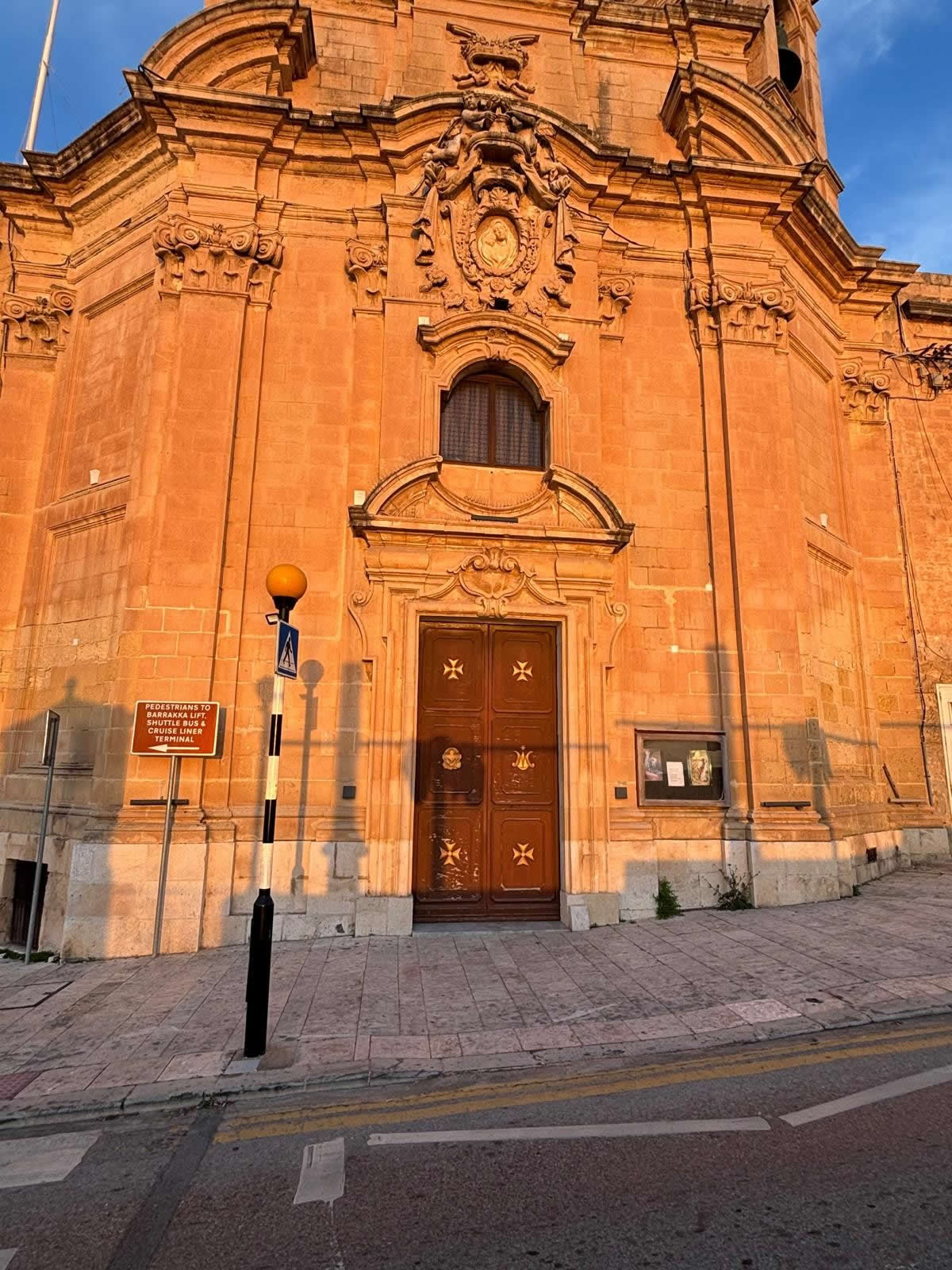
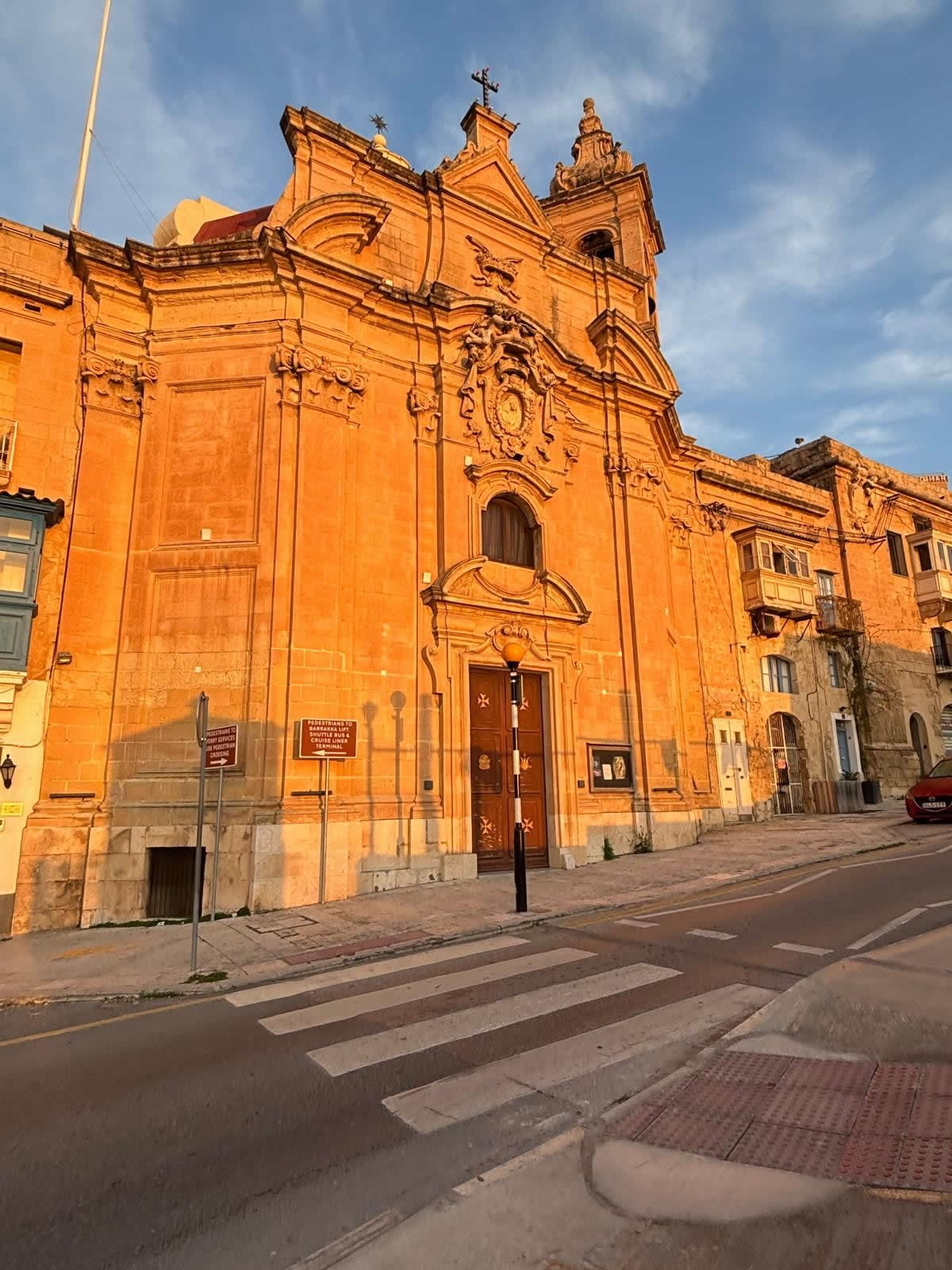
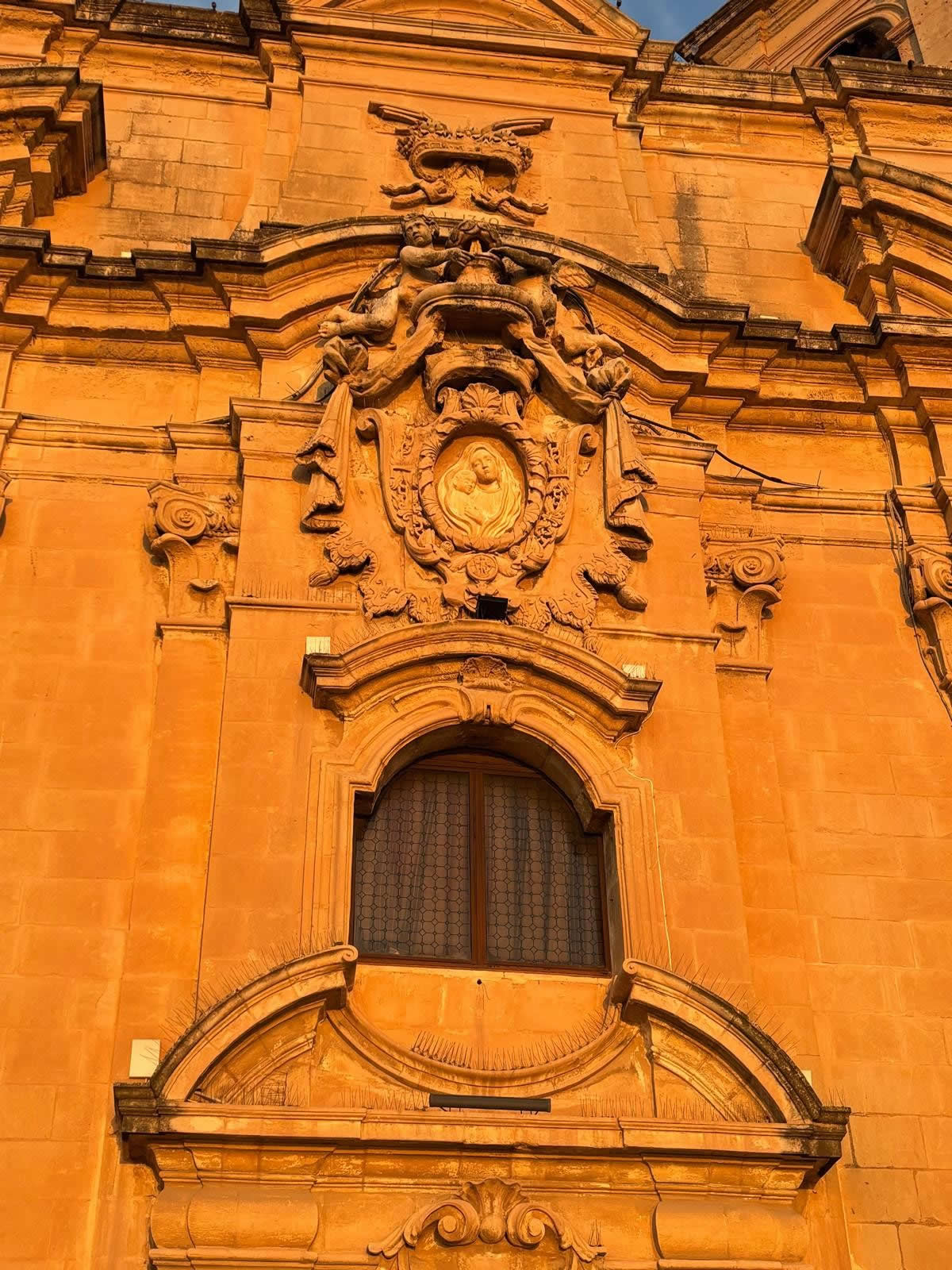
The Church of Our Lady of Liesse is constructed from traditional Maltese limestone and displays a balanced Baroque façade characterised by sculptural ornamentation and architectural symmetry.
- Decorative Baroque façade with curved pediment
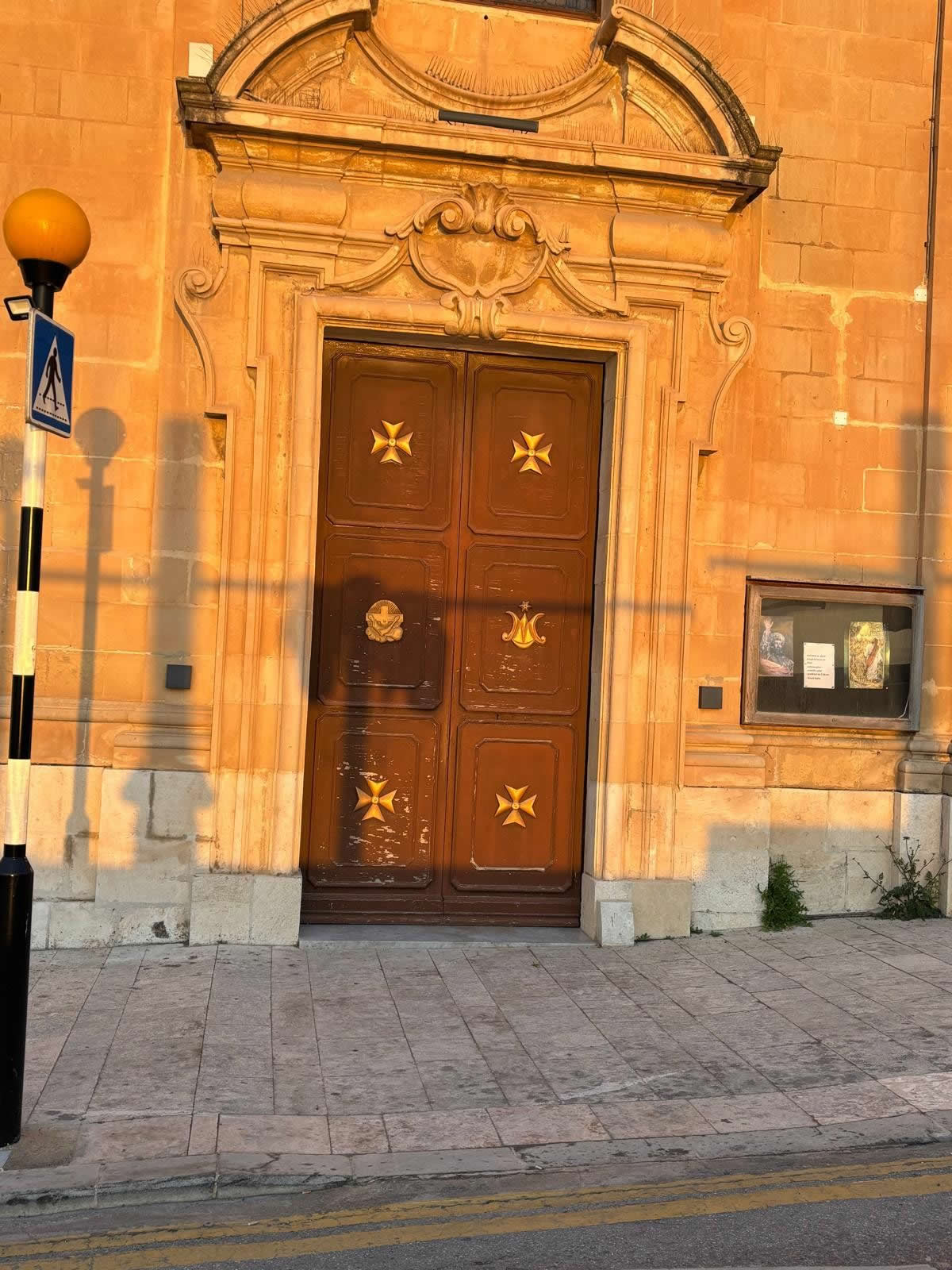
- Central entrance portal framed by carved stone
- Separate bell tower structure
- Central dome visible above the roofline
The church’s prominent position near the Grand Harbour allows the building to stand out against the waterfront skyline of Valletta.
Interior Layout
The interior of Ta’ Liesse Church follows a traditional Maltese church layout with a single nave and side altars. Decorative marble, sculptural elements, and religious paintings enhance the interior environment and contribute to the devotional atmosphere of the building.
The church contains three principal altars and a central dome designed by architect Francesco Zammit, adding vertical emphasis to the interior space.
Artworks and Religious Treasures
Among the most important artistic features of the church is the titular painting of Our Lady of Liesse. This artwork depicts the Marian devotion associated with the church’s dedication and illustrates the historical legend of three knights connected with the cult of Our Lady of Liesse.
The painting was created by the artist Enrico Arnaux and remains a focal point of the church’s devotional life.
The church also houses the relics of Saint Generoso, a Christian martyr whose remains were transferred to the church from the chapel of Fort Manoel. Another important religious object preserved inside the church is a statue of the Virgin Mary that originally stood at Fort Saint Elmo.
These objects highlight the connections between the church, the harbour fortifications, and the military heritage of Malta.
World War II Damage and Restoration
During the Second World War Malta was subjected to intense aerial bombardment due to its strategic importance in the Mediterranean. Valletta, as the administrative and military centre of the island, suffered considerable damage.
In 1942 Ta’ Liesse Church was hit during German bombing raids and sustained significant damage. After the war the church underwent restoration works aimed at rebuilding damaged sections and preserving its historical features.
Following these repairs the church reopened to the public in 1952, restoring its role as a place of worship and community gathering.
Connection to Malta’s Maritime Community
Due to its location directly overlooking the Grand Harbour, Ta’ Liesse Church has long been associated with Malta’s maritime traditions. Sailors, fishermen, dockworkers, and harbour labourers frequently visited the church to pray for protection before sailing.
In 1961 the church was entrusted to the Apostleship of the Sea, a Catholic organisation dedicated to providing pastoral care for seafarers. This strengthened the historic relationship between the church and the maritime community.
Even today the church remains closely linked to the harbour and continues to host services and events connected with the maritime sector.
Cultural and Heritage Importance
The Church of Our Lady of Liesse is listed on the National Inventory of the Cultural Property of the Maltese Islands, recognising its architectural and historical importance within Valletta’s urban landscape.
Its waterfront location makes it a familiar landmark for visitors arriving by sea and an integral part of the harbour skyline. The church’s Baroque architecture, maritime associations, and centuries-long history contribute to its cultural significance within the Maltese islands.
Visiting Ta’ Liesse Church
Visitors exploring Valletta’s historic harbour area can easily include Ta’ Liesse Church as part of a walking route through the lower part of the city. Nearby landmarks include:
- Victoria Gate
- Lascaris Battery
- The Upper Barrakka Gardens
- The Grand Harbour waterfront
Although smaller than some of Valletta’s grand churches, Ta’ Liesse offers visitors a fascinating glimpse into the religious and maritime heritage that shaped the history of Malta’s capital city.
Conclusion
The Knisja tal-Madonna ta’ Liesse stands as an enduring symbol of Valletta’s spiritual and maritime history. Founded in 1620 and rebuilt in 1740, the church reflects centuries of devotion to the Virgin Mary and the important role played by the harbour community in the life of the Maltese islands.
With its Baroque architecture, religious artworks, and historic connections to sailors and the Knights of St John, Ta’ Liesse Church remains a treasured landmark within the UNESCO World Heritage city of Valletta.