Overview
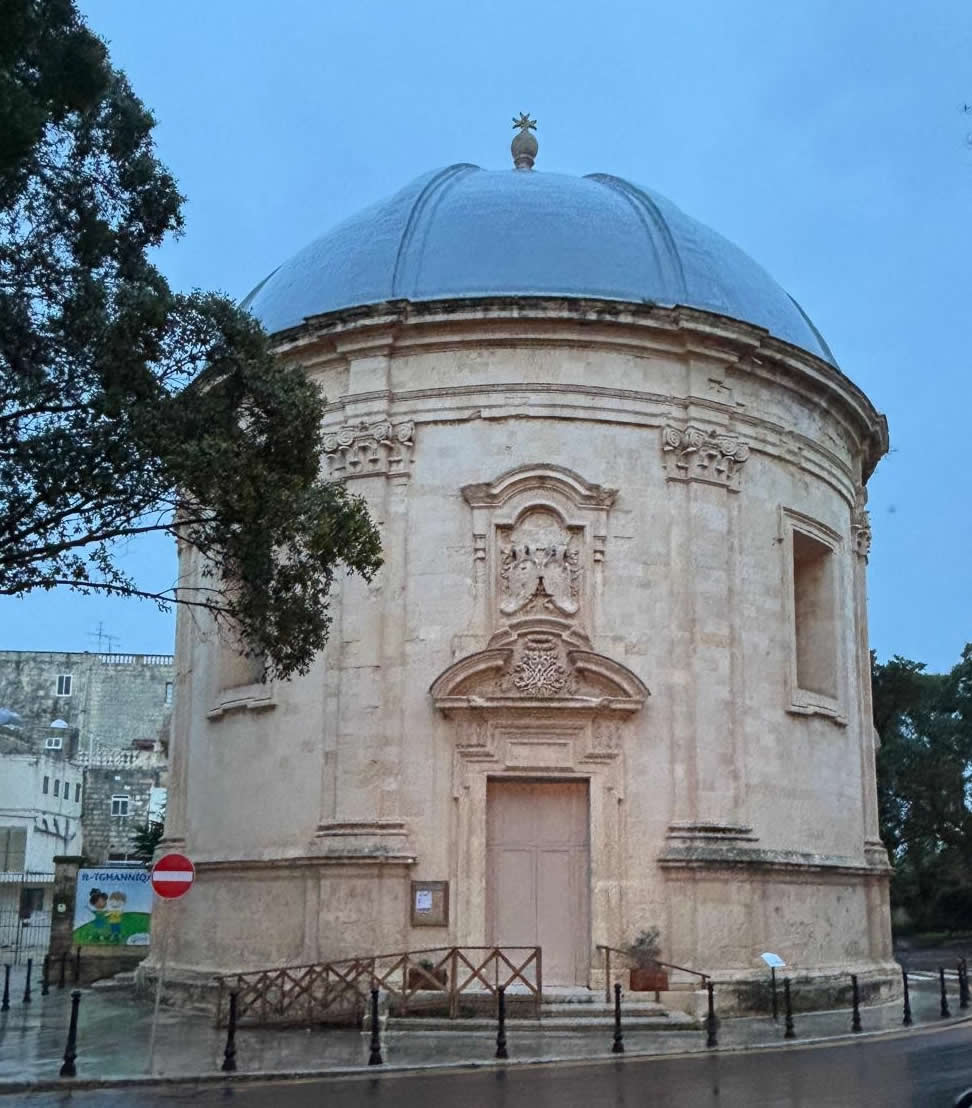
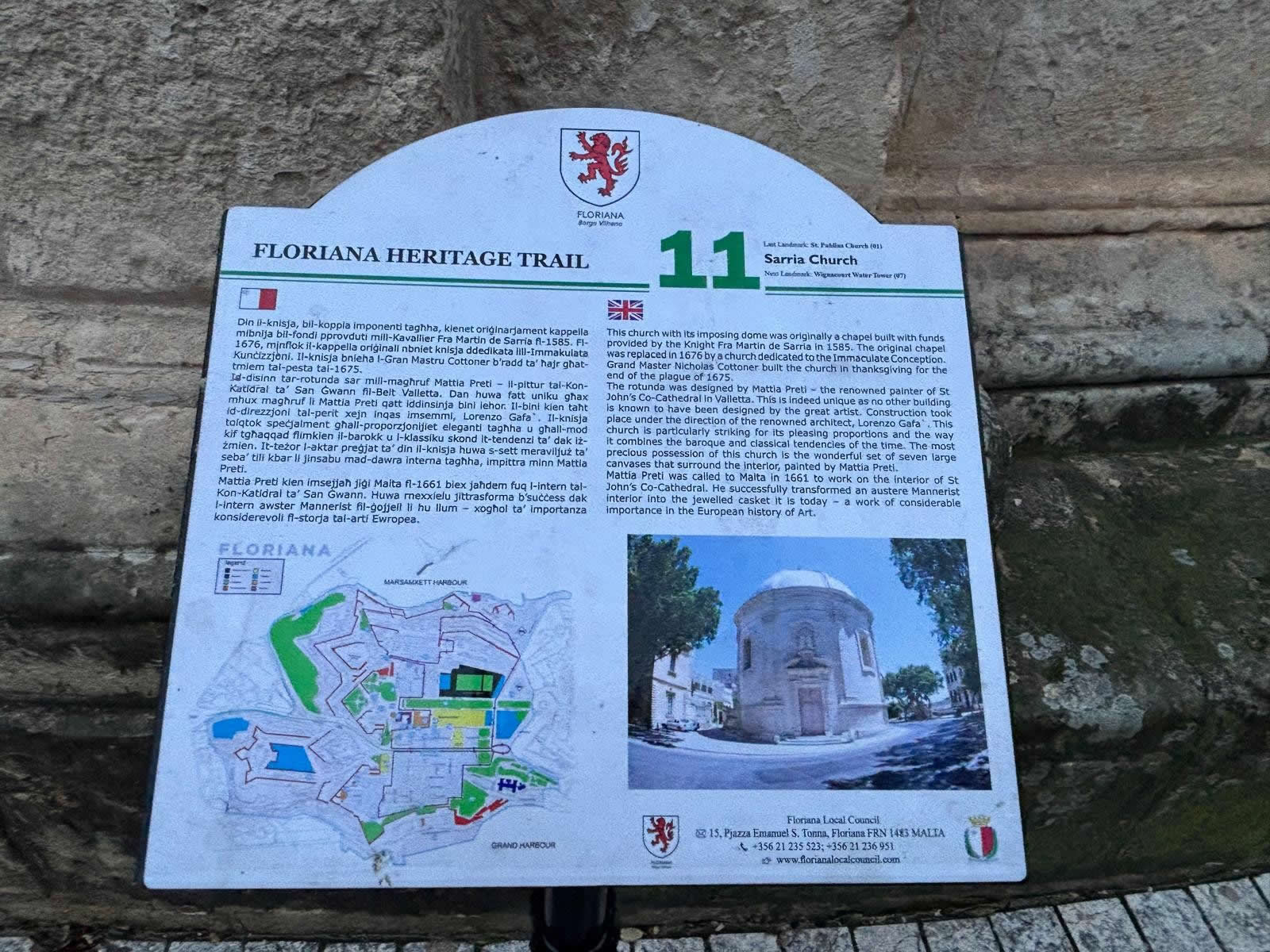
Sarria Church (Ta’ Sarria) sits beside one of Malta’s busiest junctions, yet inside it feels like a quiet Baroque jewel box. Officially dedicated to the Immaculate Conception, it is most famous for the cycle of large canvases and the main altarpiece painted by Mattia Preti—the only church design commonly attributed to him.
Key dates
- 1585: A chapel is built with funds provided by Knight Fra Martin Sarria Navarra.
- 1675–1676: Malta suffers a devastating plague; Sarria’s later rebuilding is described as thanksgiving for its end.
- 1676–1678: The present rotunda church is built, designed by Mattia Preti and executed under architect Lorenzo Gafà.
- 1942–1944: Sarria Church serves as Floriana’s temporary parish church after St Publius parish church is damaged in wartime bombing.
- 2000s: Major restoration initiatives begin to address structural damage and stone deterioration.
- 2010s–2020s: Scientific analysis and conservation projects support restoration of Mattia Preti paintings within the church.
History: from sailors’ chapel to Floriana landmark
The church’s nickname comes from Fra Martin Sarria Navarra, the Knight of St John who funded the first chapel on this site. Later sources note that the early chapel attracted devotion from seafarers linked to the Order’s maritime life.
After the 1675–76 plague, Grand Master Nicolas Cotoner is recorded as commissioning the present church as a sign of thanksgiving, with Preti entrusted to the design and Gafà overseeing construction.
During World War II, when Floriana’s main parish church was hit, Sarria briefly stepped in as a temporary parish church—showing how a small rotunda could become a vital community refuge in crisis.
Construction and architecture
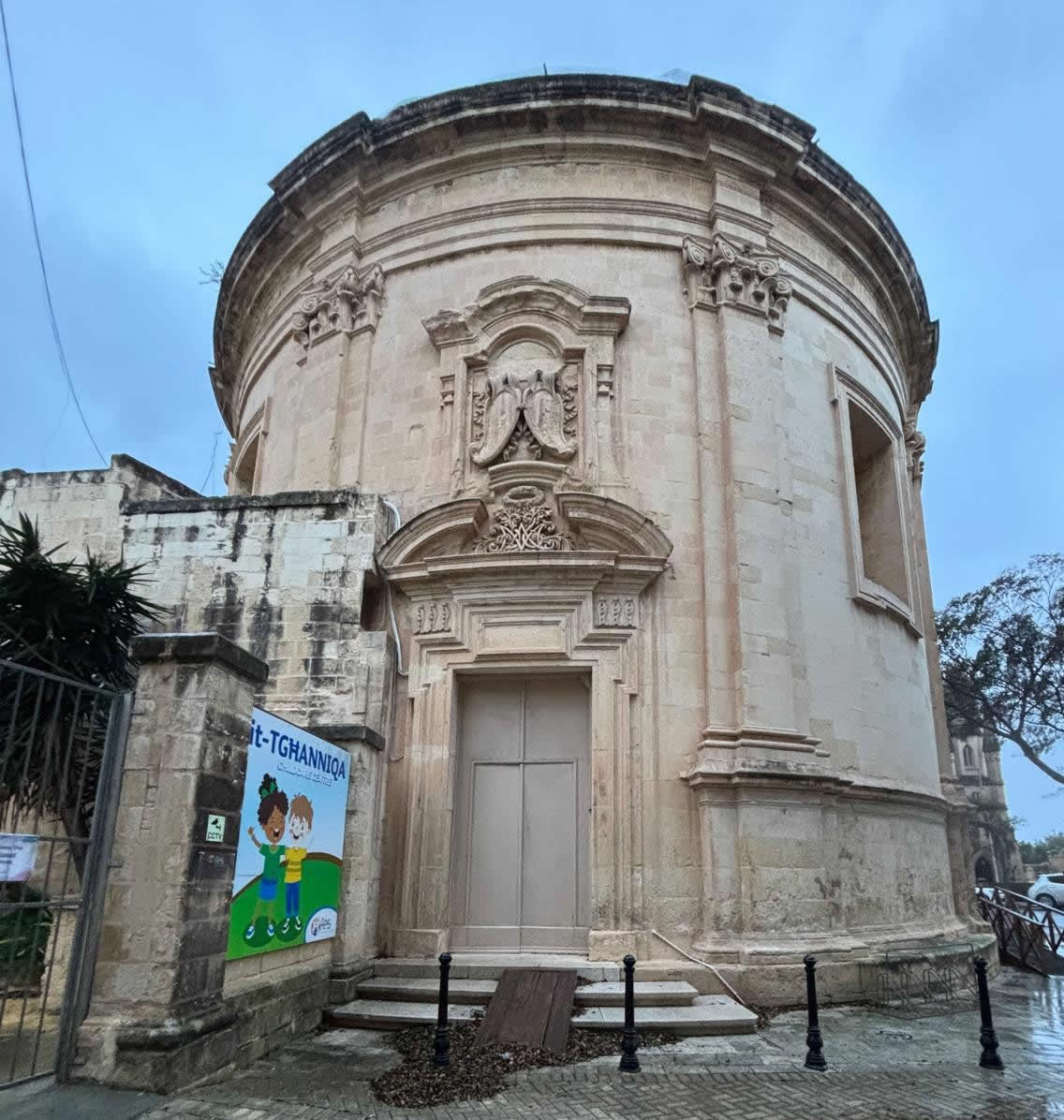
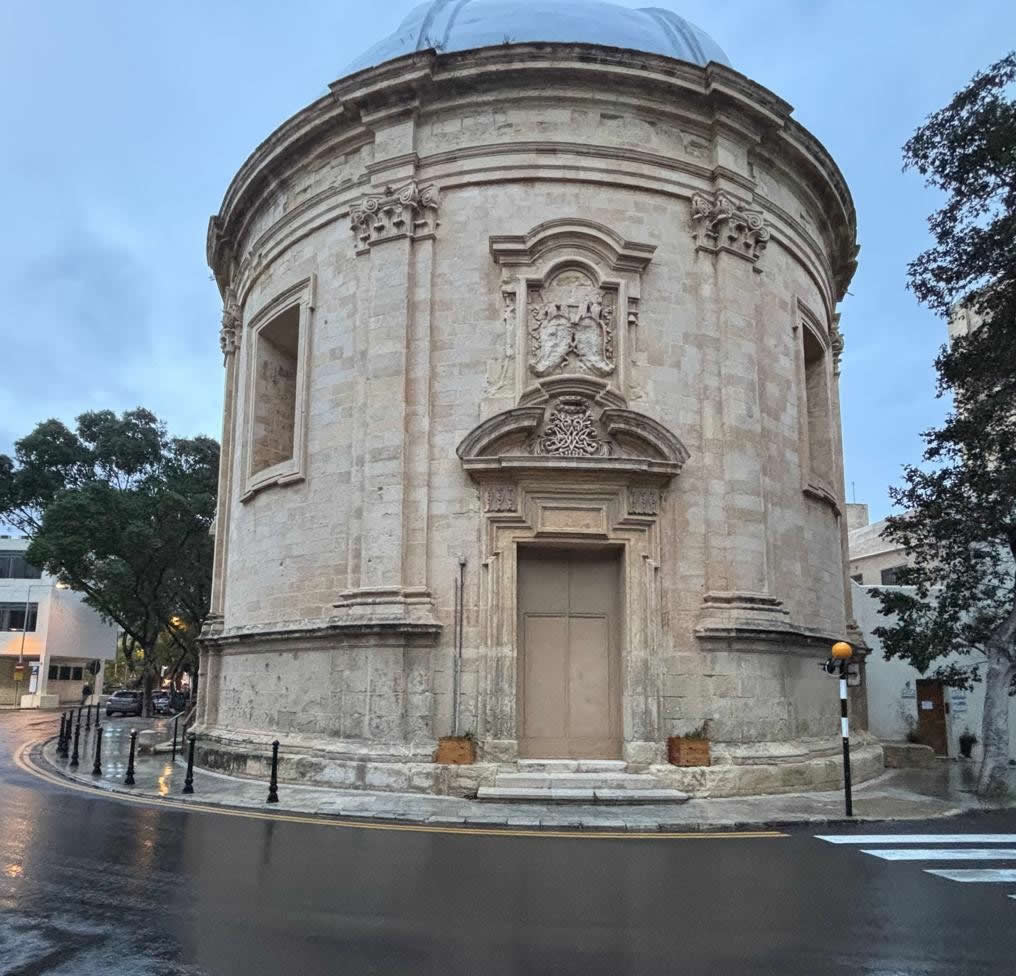
Sarria is a rotunda church—its compact circular plan creates an interior focused on the altar and the surrounding painted cycle. Preti’s design is often noted as unique precisely because he is primarily remembered as a painter, not an architect, yet here he shaped the building around the art experience.
- Form: rotunda plan under a dominant dome.
- Material: Maltese limestone (globigerina), sensitive to soot and weathering in heavy-traffic environments.
- Design credit: Mattia Preti (design); Lorenzo Gafà (execution/direction).
Notable contents: Mattia Preti’s paintings
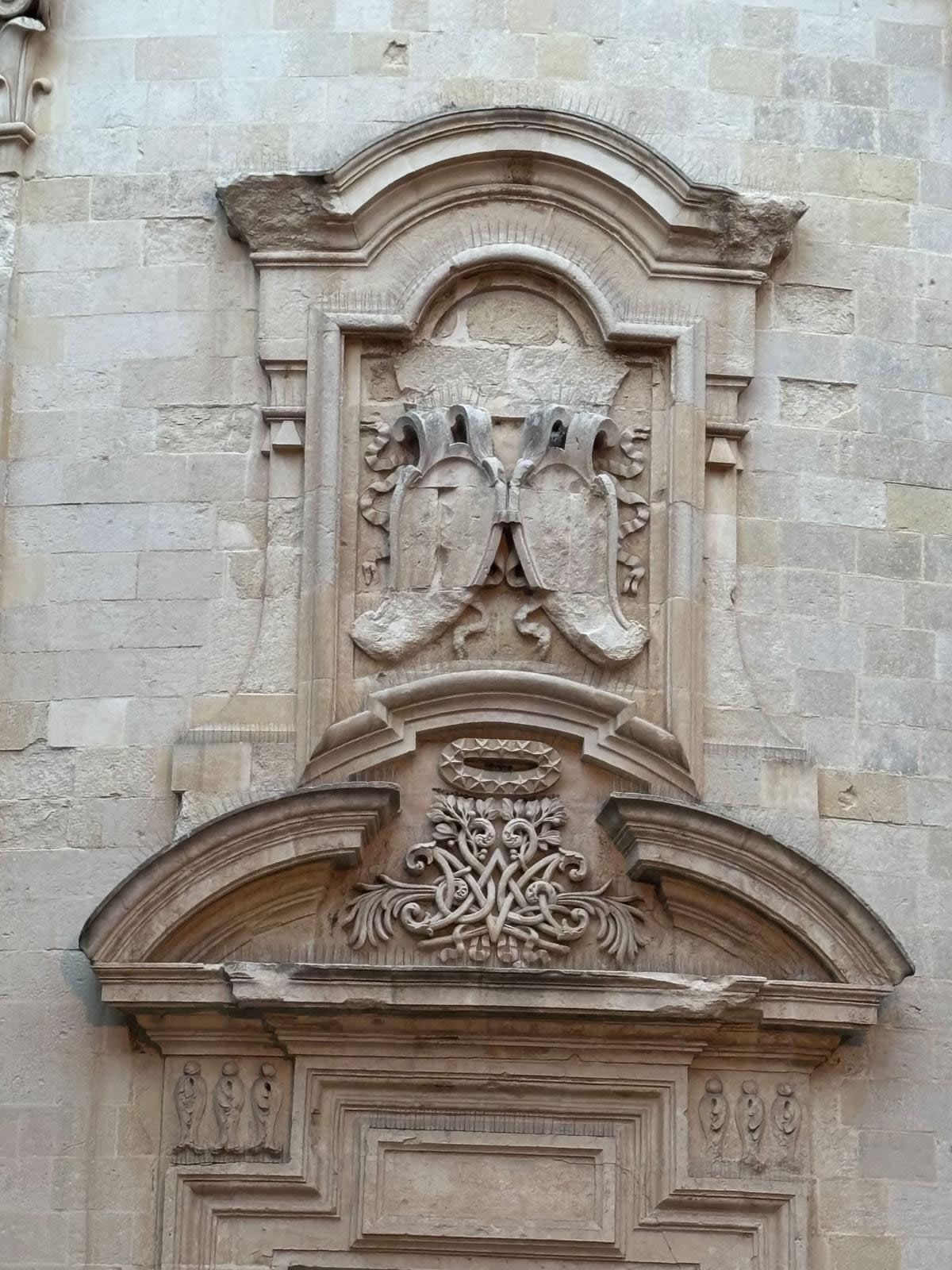
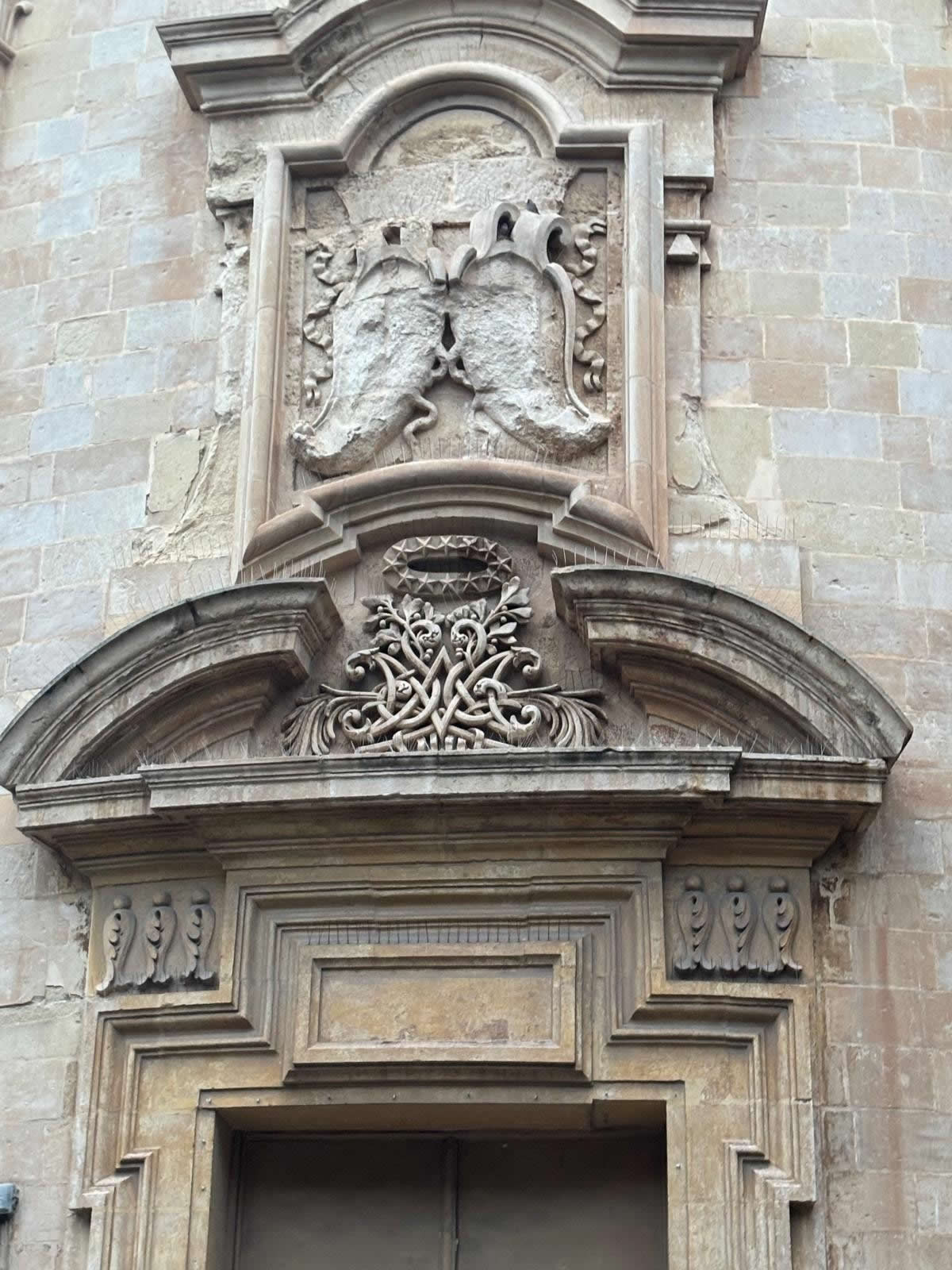
The church’s most celebrated treasures are the large canvases by Mattia Preti that wrap around the interior, along with the altarpiece. The main image of the Immaculate Conception includes plague symbolism—angels with sheathed swords—linking the artwork directly to the 1675–76 epidemic context behind the church’s rebuilding.
| # | Artwork Title / Subject | Artist / Workshop | Date / Period | Medium | Description / Notes |
|---|---|---|---|---|---|
| 1 | The Immaculate Conception – Main Altarpiece | Mattia Preti (1613‑1699) | 1676 – 1678 | Oil on canvas | Depicts the Virgin Mary triumphing over sin and darkness, commissioned after the plague of 1676 as a votive painting. Central focus beneath the domed oculus of Sarria. |
| 2 | Fresco Cycle in the Dome and Vault | Mattia Preti and assistants | 1676‑1678 | Fresco (pigments on wet plaster) | Illusionistic paintings depicting angels, the Heavenly Glory of Mary, and patron saints of Floriana. An outstanding example of Maltese Baroque ceiling painting. |
| 3 | The Annunciation | Circle of Mattia Preti | Late 17th century | Oil on canvas | Located in the left side altar; shows the Archangel Gabriel appearing to the Virgin Mary. Vibrant colours typical of Calabrian Baroque style. |
| 4 | The Nativity of the Virgin | Unknown Maltese artist after Preti | 18th century | Oil on panel | Right side altar; a tranquil scene of Saint Anne and infant Mary, reflecting Preti’s school composition found in numerous Maltese churches. |
| 5 | Stucco Decorations & Gilded Cornices | Mastr’Angelo Cassar & local guild | 1678 – 1700 | Stucco relief and gilding | Elaborate ornamentation around the dome and portal frames; includes cherubim, Marian monograms, and vine motifs produced by Floriana’s guild of masons. |
| 6 | Wooden Statue of the Immaculate Conception | Wistin Camilleri workshop | Early 20th century (1912) | Polychrome painted wood | Sculpture used for annual procession on 8 December; depicts Our Lady in serene pose standing atop a crescent moon. |
| 7 | Marble Altar & Balustrade | Italian marble workers (Trapani School) | Late 17th – early 18th century | Polychrome marble inlay | Ornate main altar in Carrara and Sicilian marble with inlaid cartouches and angel reliefs beneath Preti’s painting. |
| 8 | Ceiling and Wall Carvings | Unknown Maltese craftsmen | Restored 2005 – 2008 | Limestone and gilded plaster | Integrated floral and shell patterns carved in Malta’s globigerina limestone, highlighted in recent restorations to restore Preti’s intended luminance. |
Restoration and conservation
Sarria’s position beside major roads exposes it to soot and vibration, and modern reports describe serious structural and stone deterioration that prompted major restoration activity.
What has been restored
- Exterior stonework: restoration programmes were reported to tackle deteriorating limestone and pollution staining.
- Paintings: scientific investigation and technical imaging supported restoration work on Preti paintings in the church.
- Documentation: academic and professional reports discuss restoration planning and treatment approaches for the church and its artworks.
Use today
Sarria remains an active church, used for worship and special liturgies, while also functioning as a cultural landmark for Floriana. Its fame today is tied to the combination of architecture and Preti’s paintings—an unusually concentrated Baroque experience in a compact space.
Visiting tips
- Best time: visit when open outside service times for a quieter interior.
- What to notice: the dome, the rhythm of the canvases around the rotunda, and the altarpiece’s plague symbolism.
- Photography: avoid flash; respect worship if services are in progress.
- Pair with: St Publius Church, Argotti Gardens, the Granaries, and Valletta’s city gate area (short walk away).
This is a place of worship—dress and behave respectfully and follow any on-site guidance.
FAQ
Why is it called “Ta’ Sarria”?
The name comes from Fra Martin Sarria Navarra, the Knight of St John who funded the first chapel on the site in 1585.
Was Mattia Preti really the designer?
Standard summaries state that Preti designed the church and that Lorenzo Gafà directed its construction—an unusual case where a master painter shaped the architecture.
When was the current church built?
The original chapel dates to 1585, while the present rotunda is generally dated to the late 1670s (often cited as 1676–1678) following the 1675–76 plague.