
Location Map Coordinates 36.0407116, 14.2330265
Quick facts
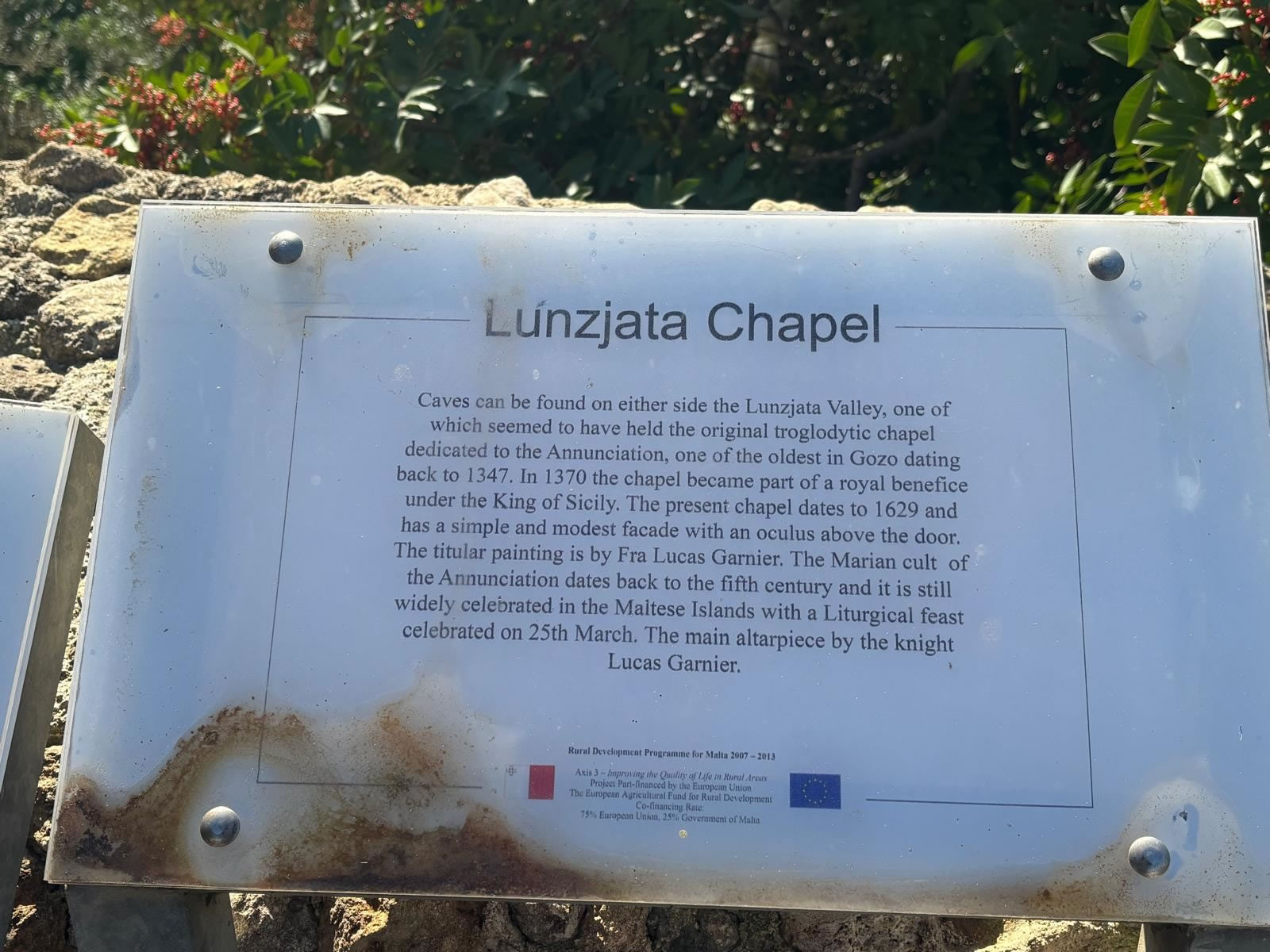
- Original medieval chapel: built by 1347
- Major rebuild: 1629
- Location: Lunzjata Valley, Gozo (near Victoria/Kerċem)
- Coordinates: 36.0407116, 14.2330265
- Dedication: The Annunciation
Why it’s worth a stop
- A rare troglodyte-style setting (chapel integrated with rock/cave)
- Deep medieval roots tied to Gozo’s long devotion to the Annunciation
- Perfect add-on to a Lunzjata Valley walk among springs, aqueducts, and fields

Overview: a chapel at the valley threshold
Il-Lunzjata Chapel stands at the entrance to Lunzjata Valley, a green corridor of agriculture and water features near Victoria. The building is small and simple from the outside, but its setting is striking: the chapel is partly built into a cave, blending architecture and natural rock in a way that feels both protective and intimate.
Tip: If you’re mapping the site, use the coordinates 36.0407116, 14.2330265. A short visit pairs well with a gentle country walk through the valley.

Detailed history
Medieval origins (built by 1347)
Documentary evidence places a chapel here by 1347. In the late medieval period, the chapel is associated with a jus patronatus (patronage right) linked to Aragonese-Sicilian rule, reflecting how religious sites in Malta and Gozo could be administered through noble and royal patronage systems.
Patronage and administration (14th–16th centuries)
Records cited in modern historical summaries describe how patronage and appointments moved through Aragonese/Sicilian authority and later, after 1530, under the governance framework of the Knights of St John. This context helps explain why a small rural chapel could have a formally recognized benefice and named clerics attached to it.
Rebuilding in 1629
The chapel was rebuilt in 1629, an important milestone that shaped much of what visitors see today. The rebuilding phase is typically linked to the chapel’s rector at the time, and it reflects the continued importance of the site for local devotion at the entrance to the valley.
20th-century restoration and consecration
After the disruptions of the 20th century, the chapel underwent extensive restoration after World War II and was consecrated in 1959. These works helped preserve the chapel’s structure and ensured it remained in active religious use.

Construction and architecture
Form & setting
Il-Lunzjata’s most distinctive feature is its integration with the rock face. The chapel is set against—and partly within— the natural cave/overhang at the valley edge, an approach sometimes described as a troglodyte (cave-adjacent) religious site.
Exterior character
The façade is intentionally modest, reflecting its rural role. Its simplicity puts focus on the chapel’s location: a threshold between the built settlement above and the cultivated landscape below.
Interior highlights
Inside, the chapel is traditionally described as having a single altar and a titular artwork depicting the Annunciation, emphasizing the dedication that gives the chapel its name (Lunzjata).

Restoration and conservation
For small heritage chapels, conservation typically balances structural stability, moisture control, and careful treatment of finishes and artworks. Il-Lunzjata is especially sensitive because of its rock-and-cave interface—a setting that can introduce humidity, salt migration, and erosion risks if not monitored.
- Post-war restoration: substantial works culminating in the chapel’s consecration (1959).
- Ongoing care: periodic maintenance is essential due to the chapel’s exposed valley location and rock adjacency.
Religious and community use today
Il-Lunzjata remains an active Roman Catholic chapel and is closely associated with devotion to the Annunciation. Beyond formal worship, the chapel also functions as a cultural waypoint: it anchors valley walks, photography stops, and quiet visits that connect Gozo’s rural landscape with living tradition.
Visiting Il-Lunzjata Chapel
How to get there
Start from Victoria (Rabat), Gozo and head toward the valley approaches near Kerċem. The chapel is positioned at the entrance to Lunzjata Valley, making it easy to combine with a countryside route.
What to do nearby
- Walk the Lunzjata Valley paths and lanes
- Look out for springs, aqueduct traces, and cultivated terraces
- Enjoy a calm, scenic alternative to busier coastal sites

FAQ
Is Il-Lunzjata Chapel the same as the Lunzjata church in Siġġiewi (Malta)?
No—this page is about Il-Lunzjata Chapel in Gozo’s Lunzjata Valley near Victoria/Kerċem. Siġġiewi has a different church site also associated with “Lunzjata.”
When is the best time to visit?
Late afternoon is popular for softer light in the valley. Spring is especially scenic when the countryside is greener.
Can I enter the chapel?
Access can depend on opening arrangements and services. Even when closed, the exterior and setting at the valley entrance are worth seeing.