The kajjik is one of the oldest and most versatile traditional boats of the Maltese Islands. For centuries it served fishermen, boatmen and coastal communities, becoming an important part of Malta's maritime heritage. Although often overshadowed by the more famous luzzu, the kajjik played a vital role in everyday life and was once a common sight in harbours, creeks and fishing villages throughout Malta and Gozo.

Origins of the Kajjik
The name kajjik is believed to derive from the Turkish word kayik, meaning a small boat. Similar vessels were used throughout the eastern Mediterranean, and the Maltese version developed distinctive characteristics adapted to local conditions.
The kajjik was traditionally built from timber by skilled Maltese boatbuilders using methods passed down through generations. Its design reflected centuries of maritime experience, resulting in a practical and seaworthy craft suited to fishing, transport and harbour work.
Design and Construction
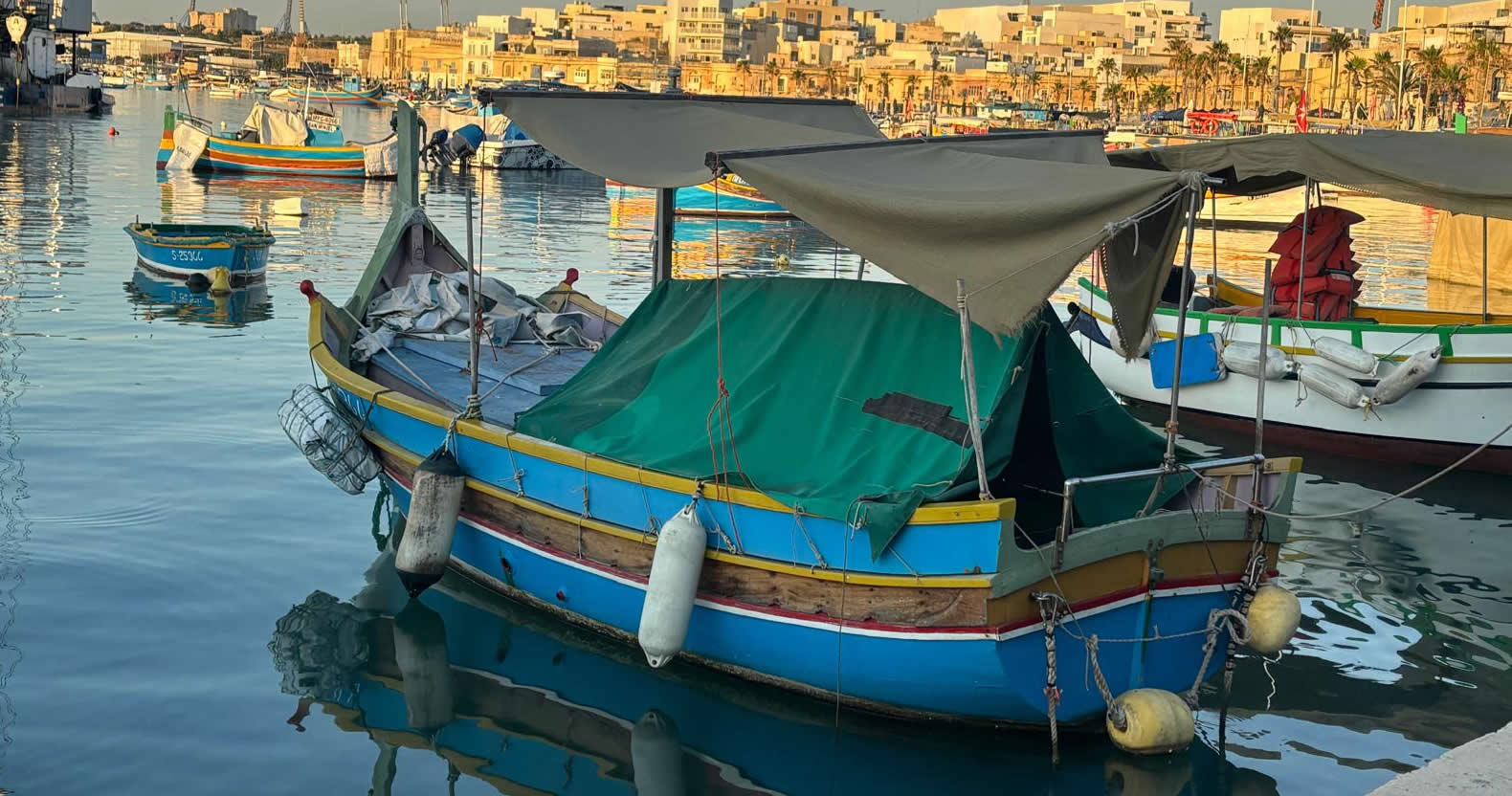
The Maltese kajjik is characterised by its pointed bow and stern, broad beam and relatively shallow draft. These features made it stable in coastal waters while allowing it to operate close to shore and within the narrow inlets and creeks of the islands.
Unlike the brightly coloured luzzu, which developed into a specialised fishing vessel, the kajjik served a wider range of purposes. It could be rowed, sailed or later fitted with an engine, making it a highly adaptable craft.
Traditional kajjikki were constructed from local and imported timber and were painted in various colours, often reflecting the preferences of their owners. Many carried decorative features similar to those found on other Maltese boats, including variations of the protective eye motif associated with Mediterranean maritime traditions.
The Kajjik in Maltese Life
For generations the kajjik was an essential working boat. Fishermen used it to reach fishing grounds close to the coast, while others employed it for transporting goods and passengers between harbours and coastal settlements.
Before the construction of modern roads and transport networks, boats such as the kajjik provided an important means of communication between different parts of the islands. In Grand Harbour and Marsamxett Harbour, kajjikki could frequently be seen carrying people, supplies and equipment between ships and the shore.
The boat was particularly valued for its reliability and versatility. Whether used for fishing, harbour duties or family transport, it became deeply woven into Malta's maritime culture.
Fishing and Coastal Activities
Fishing communities relied heavily on the kajjik. Its stable design made it suitable for setting and retrieving nets, carrying fishing equipment and transporting the daily catch back to shore.
The boat was equally useful for coastal activities such as collecting salt, transporting agricultural produce and supporting small-scale trade. Its ability to operate in shallow waters gave it advantages that larger vessels did not possess.
The Arrival of Motorisation
During the twentieth century many traditional kajjikki were fitted with small engines, increasing their range and efficiency. Motorisation transformed the way these boats were used while allowing them to retain their traditional appearance.
However, the introduction of modern fibreglass vessels and changing fishing practices gradually reduced the number of kajjikki in regular use. As newer boat designs became available, traditional wooden boats became less common.
Preservation of Maritime Heritage
Today the kajjik remains an important symbol of Malta's maritime past. Although fewer examples survive than in previous generations, efforts to preserve traditional boatbuilding skills and historic vessels help ensure that this aspect of Maltese heritage is not forgotten.
Restored kajjikki can still be seen in some harbours and maritime events, where they serve as reminders of the islands' long relationship with the sea. Together with the luzzu, dgħajsa and other traditional craft, the kajjik forms part of a rich maritime tradition that has shaped Maltese life for centuries.
Legacy of the Kajjik
The kajjik represents the ingenuity and resilience of Malta's coastal communities. Designed for practical use and adapted to local conditions, it provided generations of islanders with a dependable means of fishing, transport and trade.
Although modern boats have largely replaced it, the kajjik remains an enduring symbol of Malta's seafaring heritage and an important chapter in the story of traditional Maltese boats.
Frequently Asked Questions About the Maltese Kajjik
What is a kajjik?
The kajjik is a traditional Maltese wooden boat that was widely used for fishing, transport and harbour work. It is one of the oldest boat types associated with the Maltese Islands and played an important role in the daily lives of coastal communities.
How is a kajjik different from a luzzu?
While both are traditional Maltese boats, the kajjik is generally regarded as a versatile working vessel used for a variety of purposes, whereas the luzzu evolved into a specialised fishing boat. The luzzu is also known for its brightly coloured appearance and distinctive painted eyes.
What was the kajjik used for?
The kajjik was used for fishing, transporting goods and passengers, harbour duties and coastal trade. Its adaptable design made it suitable for a wide range of maritime activities around Malta and Gozo.
Are kajjikki still used today?
Although modern boats have largely replaced traditional wooden vessels, some kajjikki remain in use and others have been restored as part of Malta's maritime heritage. They can occasionally be seen in harbours and traditional boat events.
Why is the kajjik important to Maltese heritage?
The kajjik represents centuries of Maltese seafaring tradition and craftsmanship. It reflects the close relationship between the Maltese people and the sea and forms an important part of the islands' maritime history.
How was a traditional kajjik built?
Traditional kajjikki were handcrafted from timber by skilled Maltese boatbuilders. Construction techniques were passed down through generations, resulting in sturdy and seaworthy vessels adapted to local conditions.
Where can traditional Maltese boats be seen today?
Traditional Maltese boats, including kajjikki, can still be seen in various harbours around Malta and Gozo, particularly in fishing villages and during maritime heritage events.
What other traditional boats are found in Malta?
Other traditional Maltese boats include the luzzu, dgħajsa, firilla, frejgatina and barklora. Each vessel was designed for specific maritime purposes and contributed to Malta's rich seafaring heritage.
Article Information
- Category: Maltese Heritage
- Topic: Traditional Maltese Boats
- Reading Time: 6-8 minutes
- Last Updated: 18 June 2026
- Written by: Paul Berman
- Reviewed by: eMalta Editorial Team
References & Further Reading
The information presented in this article has been researched using historical publications, maritime heritage resources and official Maltese cultural organisations. Readers wishing to explore the subject further may find the following sources useful.
-
Heritage Malta – Publications and educational resources covering Malta's cultural and maritime heritage.
https://heritagemalta.mt/ -
The Malta Maritime Museum (Heritage Malta) – Collections relating to Malta's naval and maritime history.
https://heritagemalta.mt/explore/malta-maritime-museum/ -
National Archives of Malta – Historical records documenting Malta's maritime and social history.
https://nationalarchives.gov.mt/ -
Malta Tourism Authority – Information about Marsaxlokk and Malta's traditional fishing villages.
https://www.visitmalta.com/ - National Museum of Archaeology, Malta – Background on Malta's prehistoric and Phoenician history.
- Cassar, Paul. Maritime Malta. A respected work examining Malta's long maritime traditions.
- Muscat, Joseph. Traditional Boats of the Maltese Islands.
- Various archaeological studies concerning Phoenician and Roman maritime activity in the central Mediterranean.
Editorial Note: This article has been written and researched specifically for eMalta. It is an original work that draws upon historical research and publicly available heritage resources. Any historical interpretations remain subject to ongoing academic research, particularly regarding the ancient origins of symbolic features such as the painted eyes found on the traditional Luzzu.