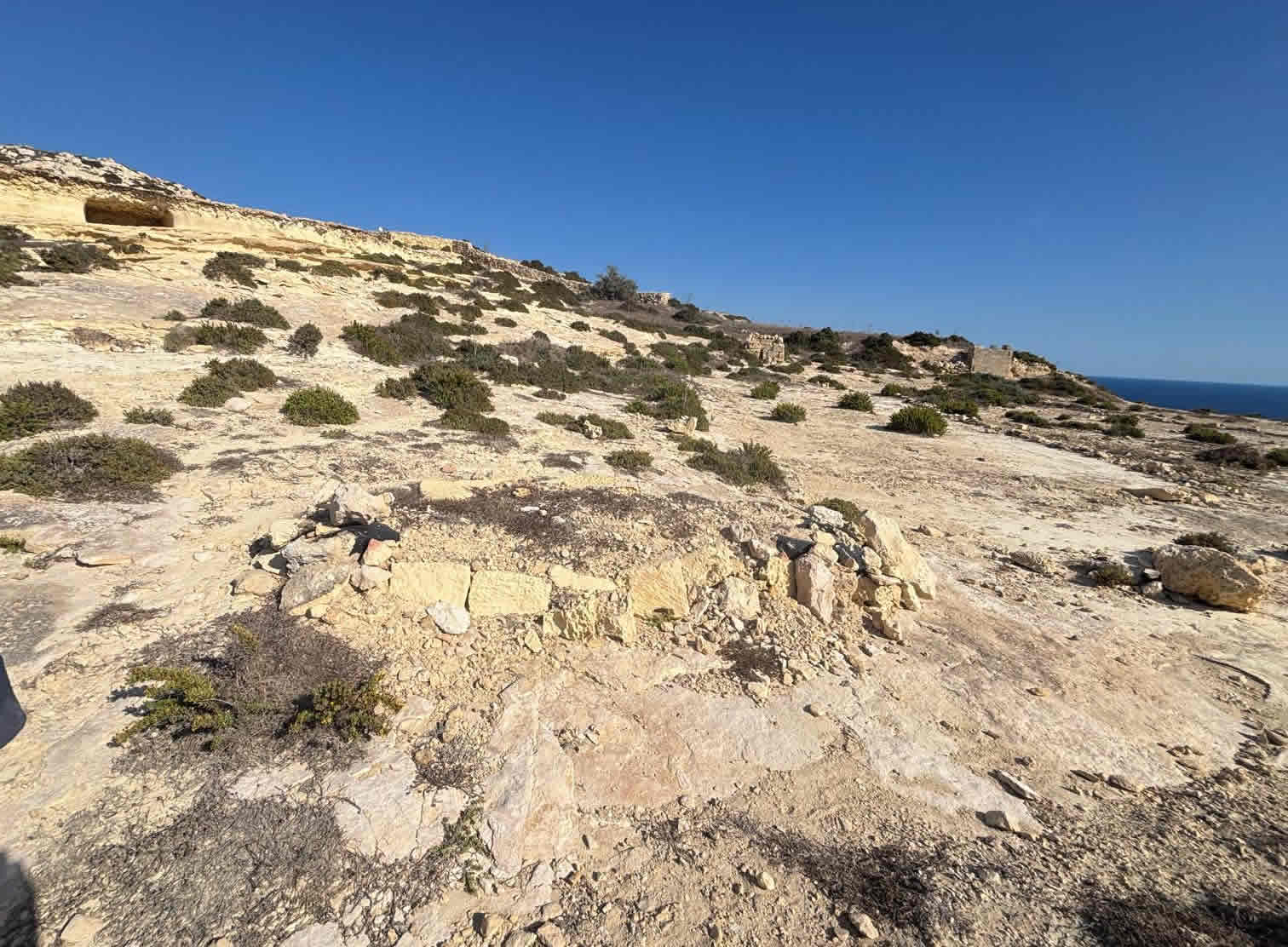
Here is a detailed summary of what is known about the Wardija / Ras il‑Wardija “nymphaeum” / sanctuary in Gozo — its history, structure, archaeological findings, significance, and current state.
Ras il‑Wardija Nymphaeum
📍 Location
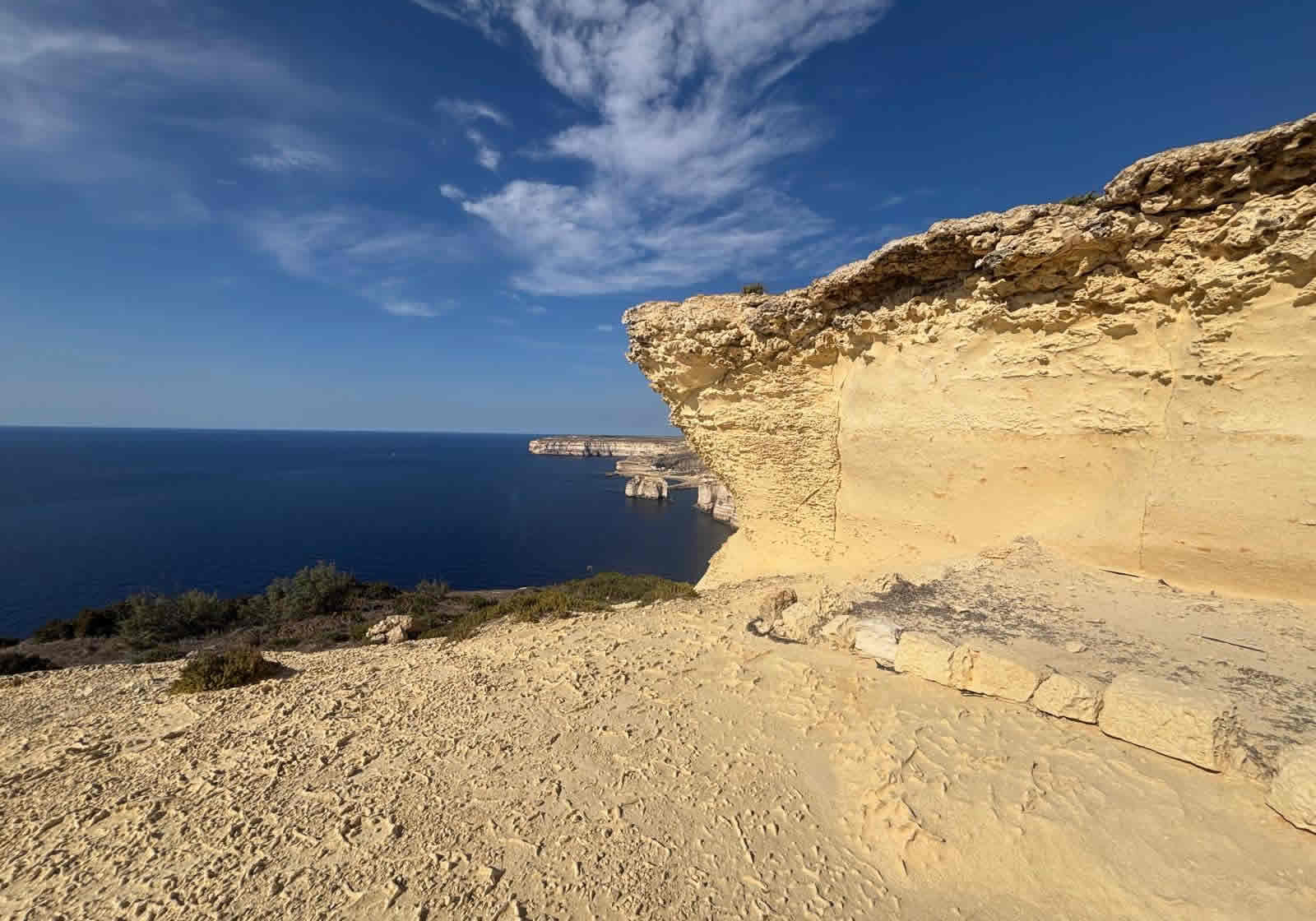
Ras il‑Wardija is a promontory on the south‑west coast of Gozo, in the limits of the village of San Lawrenz.
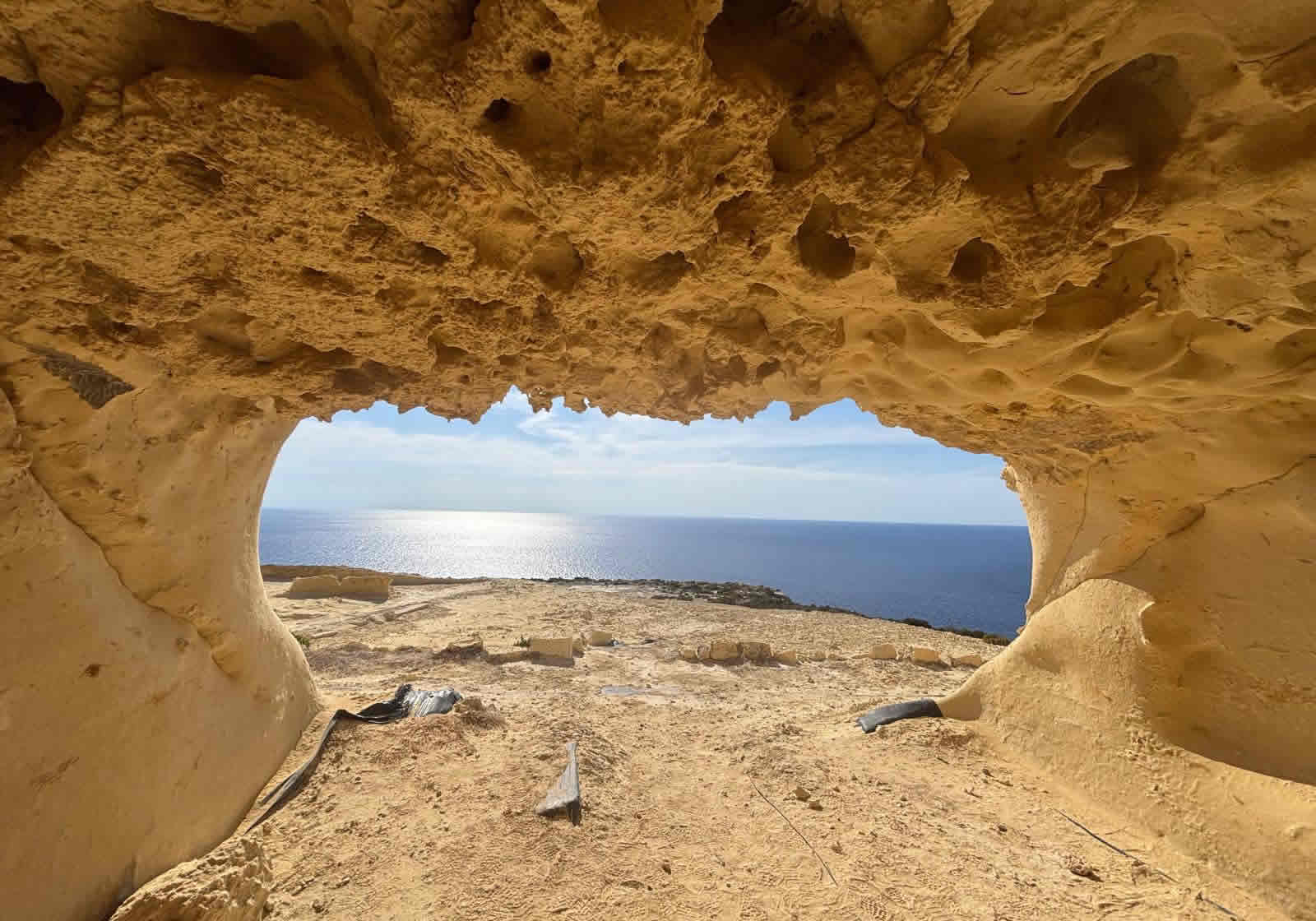
It stands above sea cliffs (~120‑m cliffs) facing the sea, with Xlendi harbour to the south and the Dwejra inlet to the west. Its exposed position makes it highly visible from the sea.
The name “Wardija” likely derives from Italian “Guardia”, meaning “watch” or guard / lookout—appropriate given the location. “Ras” is Maltese for head or promontory.
Coordinates: approx. 36.036671, 14.186984.
Chronology & Use Periods
| Period | Approximate Date | Key Uses / Events |
| Bronze Age / Late Prehistoric | ca. 1500 BCE | Initial human presence; cart ruts and other remains suggest habitation or use of the promontory. |
| Punic Period | ~ 3rd century BCE (some sources say 4th‑3rd) | Establishment of a religious complex / sanctuary. Possibly constructed or adapted as a nymphaeum (a sanctuary associated with water, springs, baths, rites) in this period. |
| Roman Period | Up to ~ 4th century AD | Continued use of the sanctuary, possibly Christian elements being introduced. ﴾Carved crosses are present.﴿ Site usage declines by about 4th century AD. |
| Medieval / Christian | After Roman period into early Christian times | The site shows evidence of Christian worship (cross‑carvings etc.). It may have had a Christian phase, perhaps reused as a hermitage or small chapel. |
| 20th Century Excavations | 1964‑1967 | Excavated by the Italian Archaeological Mission (Missione Archeologica Italiana a Malta). Important study of its layout, finds etc. |
| Recent Research | 2021‑2022 | New work (by Sapienza University etc.) reassessing cult, ritual usage, dedications, connections with other Punic sanctuaries. |
Structural Details & Layout
Here are the main architectural / archaeological features that have been documented; some are rock‑cut, others built:
| Feature | Description / Purpose |
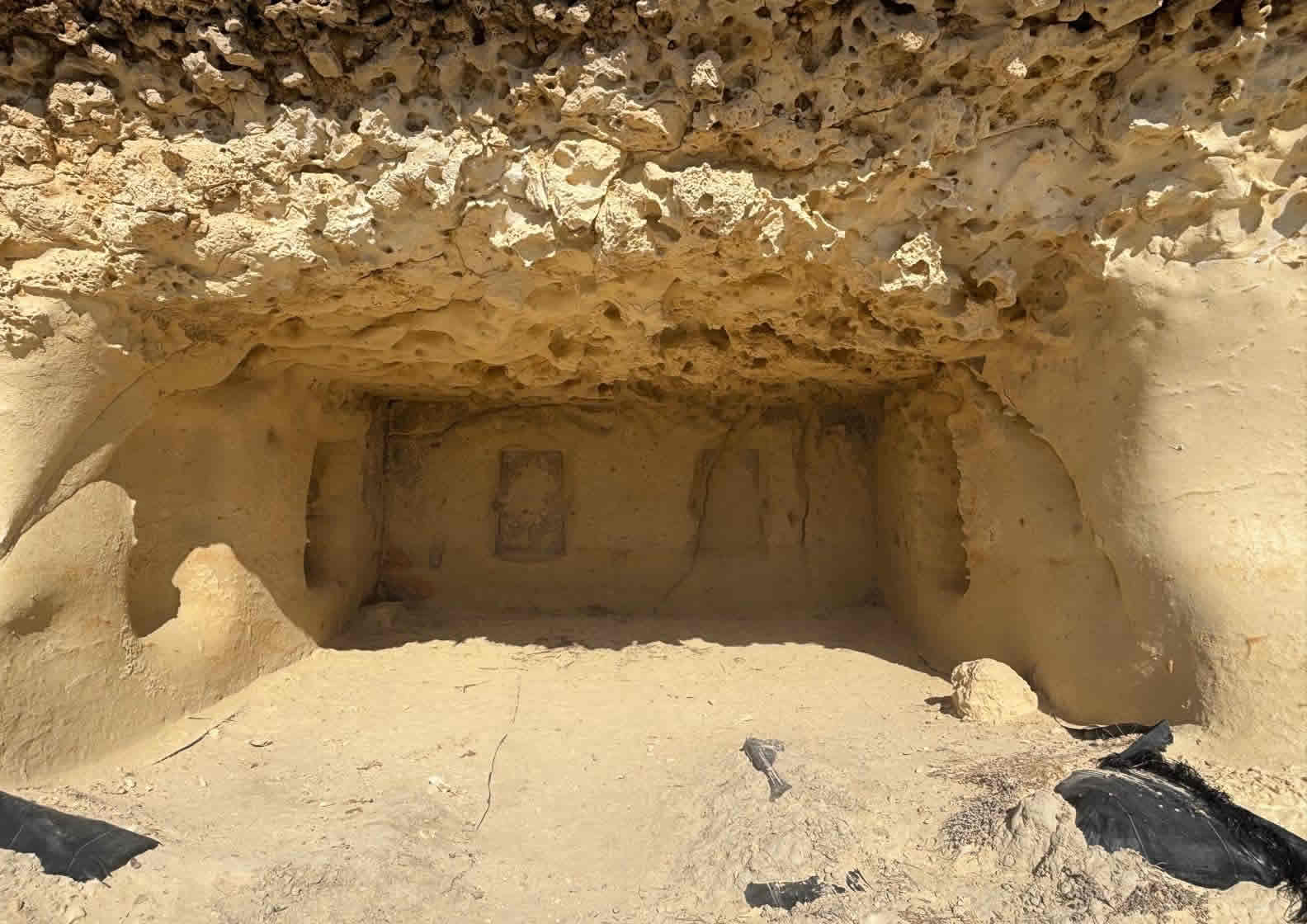
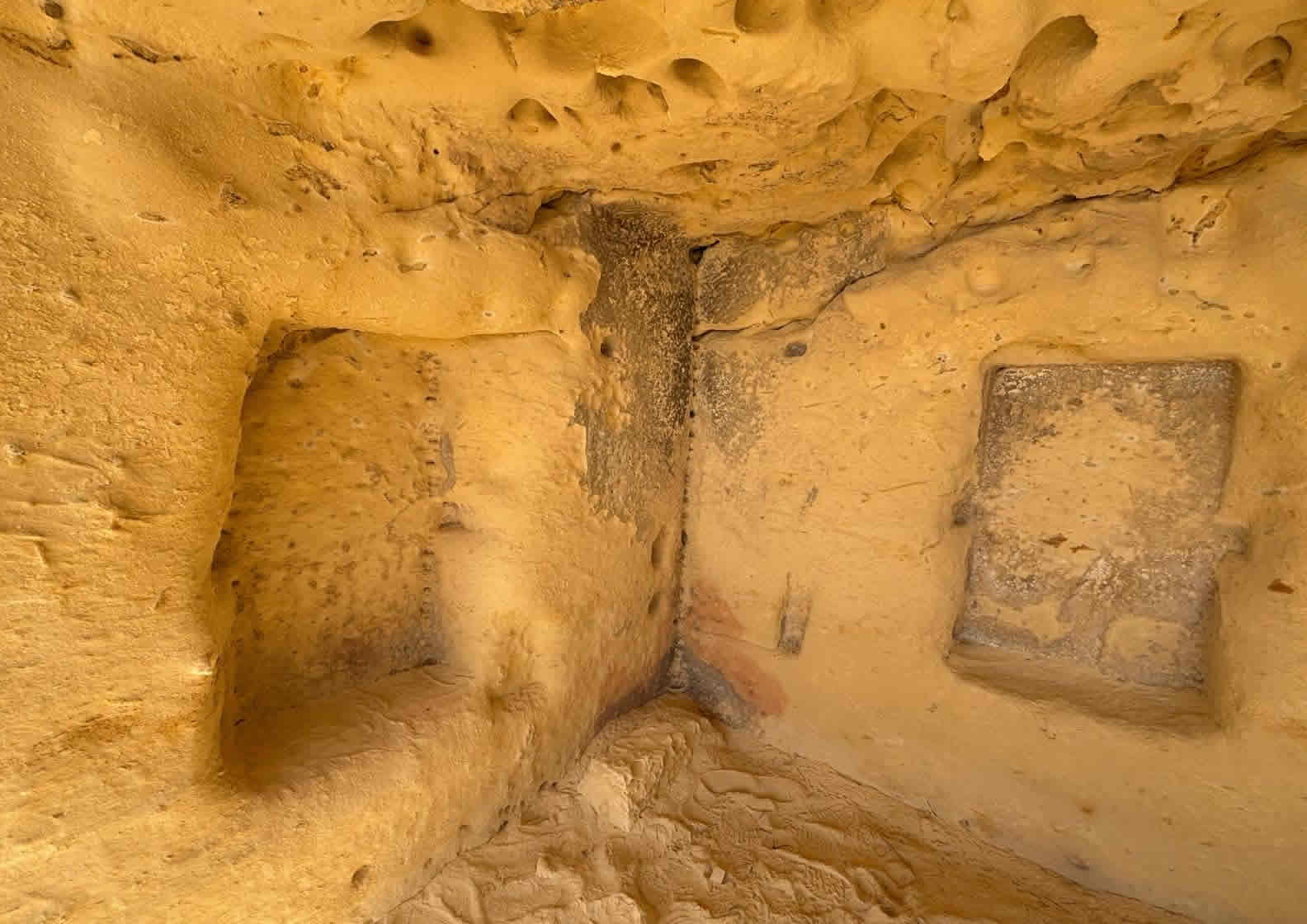
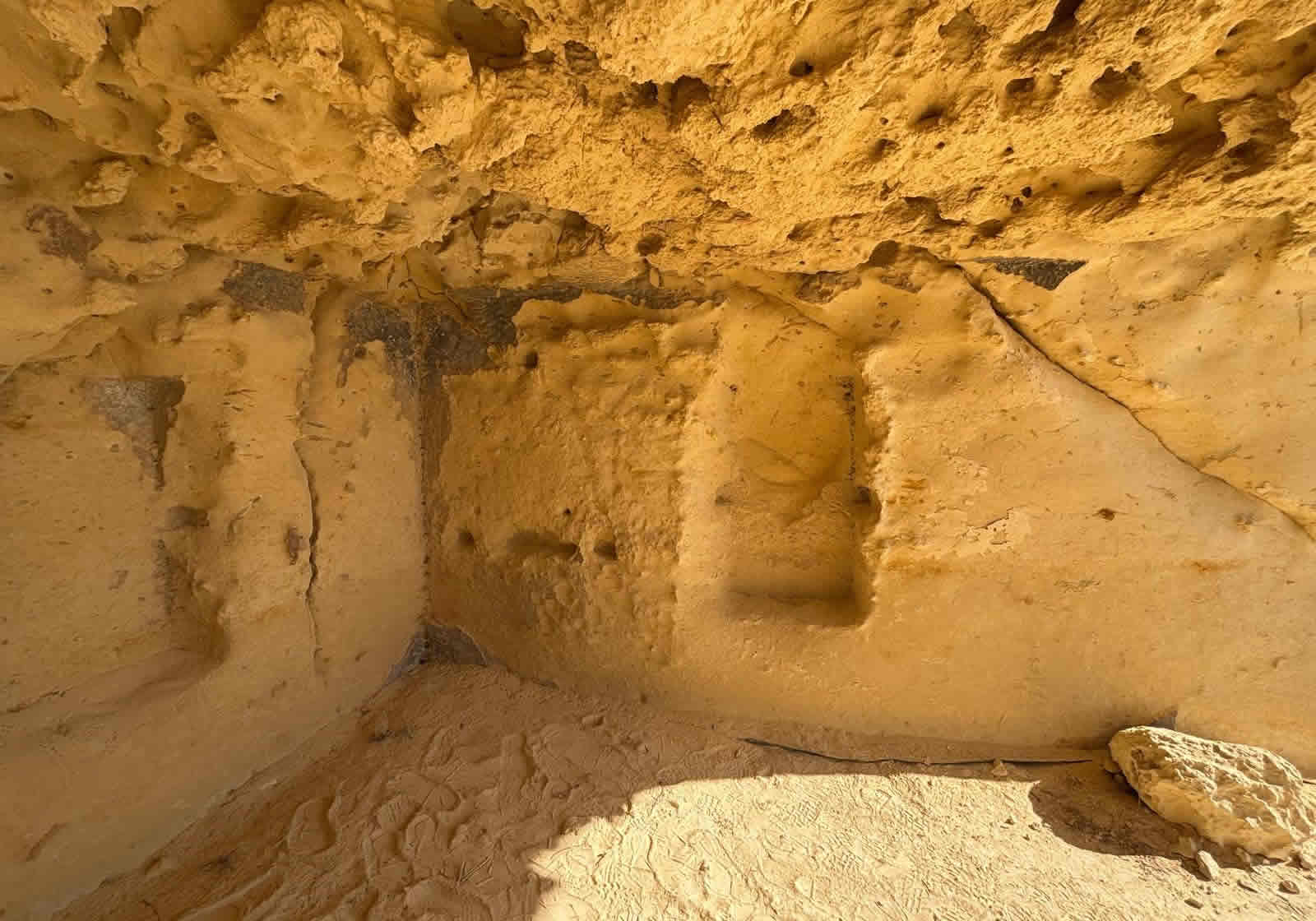
| Rock‑hewn rectangular chamber | Carved into the limestone ridge; this chamber has several niches in its walls. Some of the niches are moulded (have architectural moldings). This chamber is thought to be the central ritual chamber. |
| T‑shaped rock‑hewn corridor | A passage/corridor cut in the rock: one longer arm parallel to the façade of the chamber; the shorter arm leading into the chamber. This passage also has benches along parts of it (outside the chamber). Possibly used for processional or gathering purposes. |
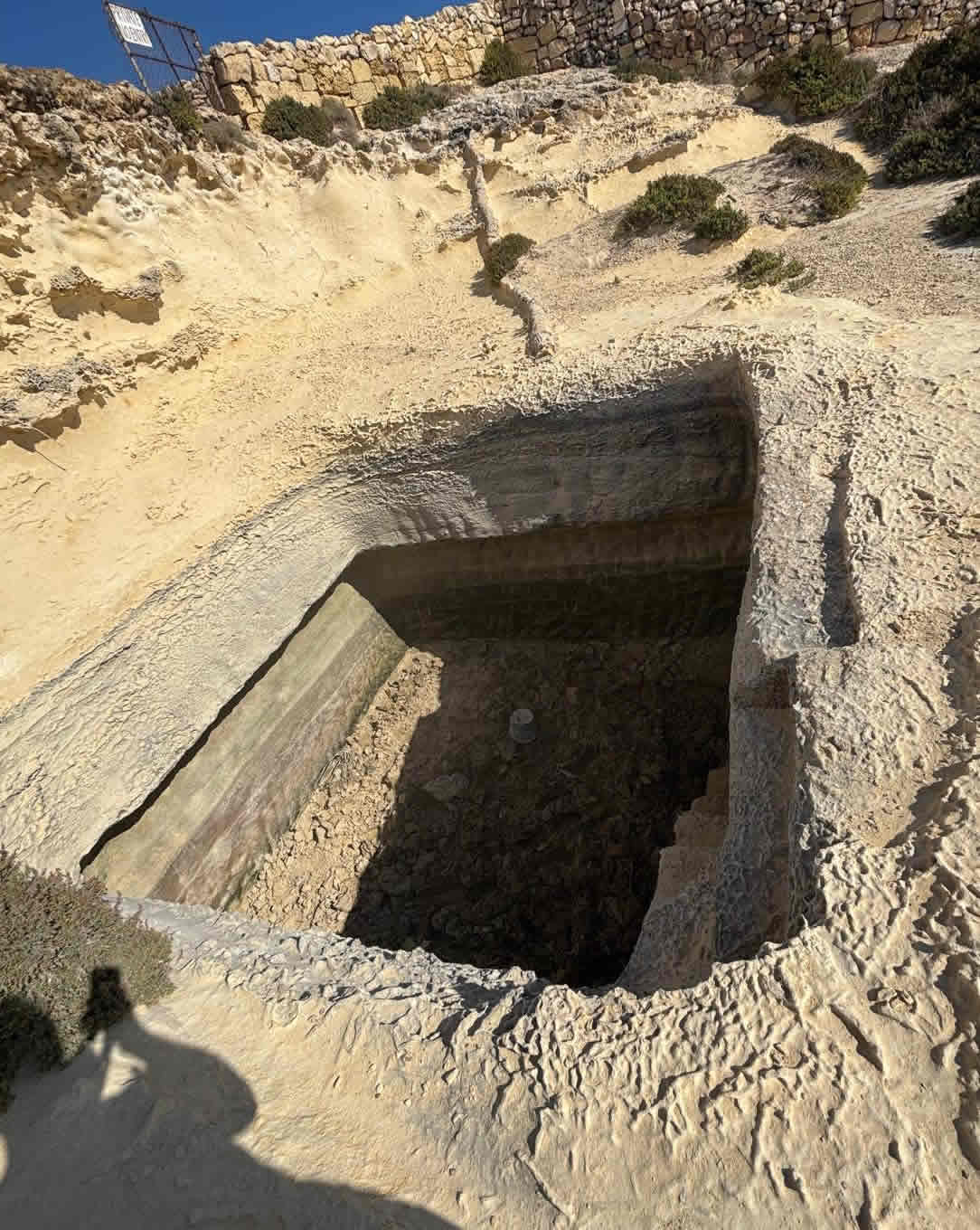
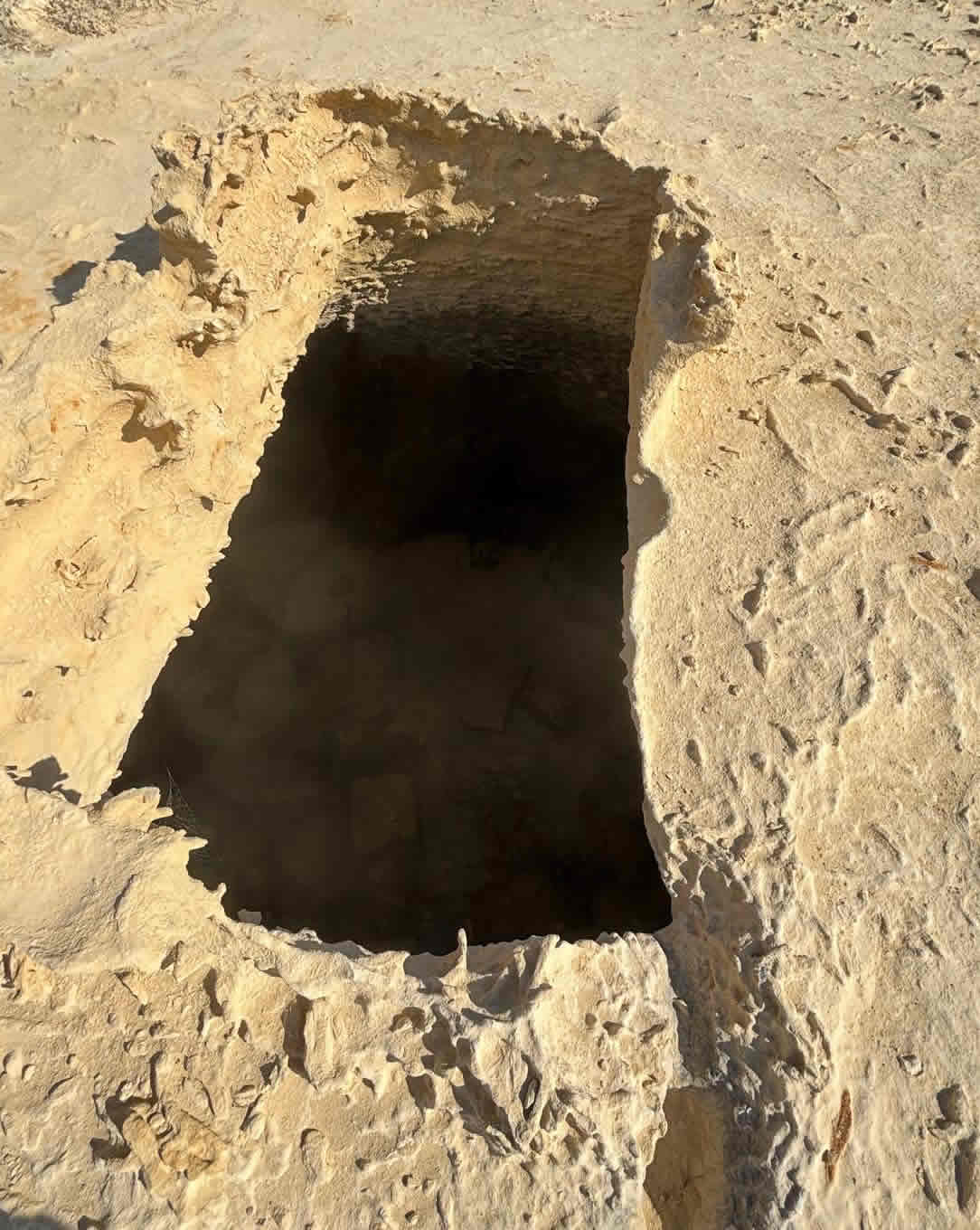
| Water‑features | Several water‑related structures: • A large basin/pool cut into the rock with internal steps (likely for ritual bathing or purification) • A bell‑shaped well, rock‑hewn, perhaps to draw or store water for the sanctuary’s use. • Water reservoirs or cisterns; troughs are also mentioned. Some of these fill during rainy seasons. |
| External masonry structure / altar | On the lowest terrace of the complex, a masonry building built of large ashlar blocks; likely an outer temple / altar. The walls show fine plaster surfaces; some hearths, reddened floor suggests fire was used, possibly sacrificial or ritual rites. |
| Niches & benches | Inside the chamber there are niches; benches along walls, likely for ritual or gathering, possibly banqueting or rest (as some researchers suggest). |
| Graffiti / Carvings | There's a graffito of a human figure with outstretched arms, shaped like a cross. Scholars have interpreted this variously: possibly Tanit (a Punic goddess), possibly Christian period cross‑symbol. It was stolen in 1988, recovered in 2011, and now is in the Gozo Museum of Archaeology. |
Cult, Ritual & Religious Significance
The sanctuary is thought to have been dedicated to one or more deities: Astarte is a leading candidate, given typical Punic religious practice, and recent research suggests strong evidence of her cult here.
There are Punic dedication‐formulas discovered that are similar to those found at other Maltese sanctuaries (e.g. Tas‑Silġ in Malta). These suggest that Ras il‑Wardija was not isolated but was part of a wider religious network.
Features like the pool / basin, well, niches, benches etc., are consistent with ritual purification or bathing rites, offerings, possibly banquets, perhaps celebrations associated with seasonal or maritime events. Its visibility from the sea suggests marine/ navigator elements might have been involved.
Excavations & Recent Research
The site was excavated in depth between 1964‑1967 by the Italian archaeological mission. The work documented the major architectural features, recovered pottery, small finds, and cross‑dated some parts from Punic through Roman periods.
More recently (2021‑2022), researchers (e.g. Sapienza University) have resumed study of items from earlier excavations, focusing on cult practice, ritual, inscriptions, small artifacts.
Current Condition & Access Issues
The site is in a dilapidated state. After the original excavations, deterioration from natural elements, erosion, and vandalism have taken their toll.
It is privately owned (owner: George Spiteri), which raises access, conservation, and protection issues.
The stolen graffiti of 1988 (human figure) was recovered in 2011 but damage had been done.
Access is uncontrolled and sometimes difficult: the Trekking paths (especially “West Trekking route”) are used to reach it, but terrain is rugged, paths are less developed. Visibility depends on weather, season.
Research Updates & Re‑interpretations
The 2023/2022 work has refined the dating (some features perhaps earlier than previously thought, or reused / modified in Roman/late‑antique times).
There’s increased interest in comparing rituals/dedications here with those at other known Punic or Punic‑Roman sanctuaries (e.g. Tas‑Silġ) to better understand religious networks in Malta/Gozo.
The re‑analysis of small finds and inscriptions is helping in better understanding which deities, what rituals, and how practices changed over time.
Schematic Diagram (Textual) of Ras il‑Wardija Sanctuary Layout
Below is a simplified layout/plan, showing terraces, chambers, water features, etc., based on archaeological descriptions. Think of the site as a series of terraces on a promontory, roughly sloping towards the sea, with the main ritual chamber on one of the higher terraces, water features, and external altars further out.
Cliff edge / Sea view
Terrace 5 (highest active ritual terrace)
Rock‑cut ritual chamber (≈5.60m × 4.60m) ← facing W/SW toward sea
In front of chamber:
↓ staircase / path downward between terraces
Terrace 4, 3, 2 (middle terraces)
↓ path / corridor
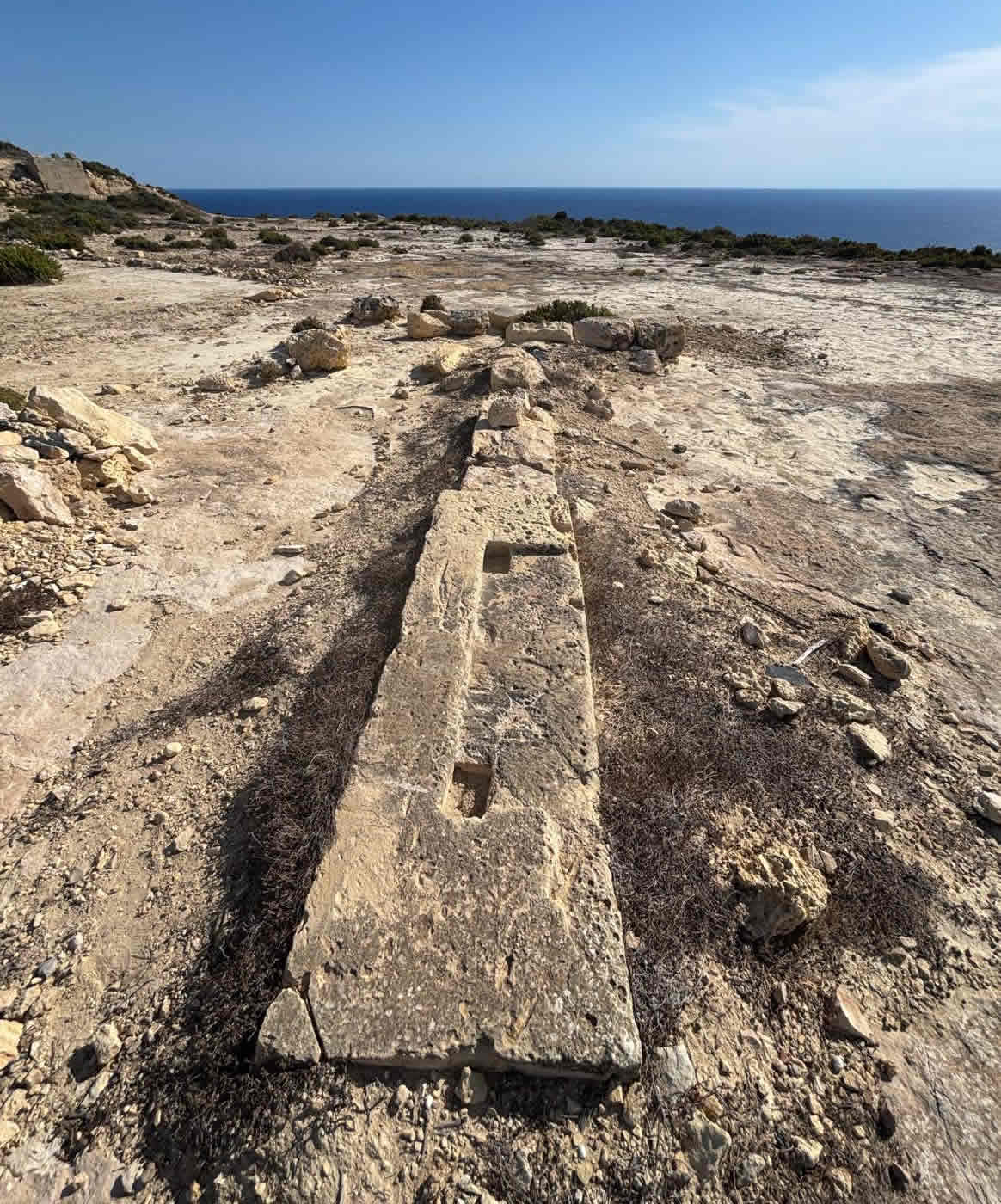
External T‑shaped corridor (rock‑cut):
↓ path outwards toward promontory edge
Terrace 1 (lowest major terrace)
Landward side / access path
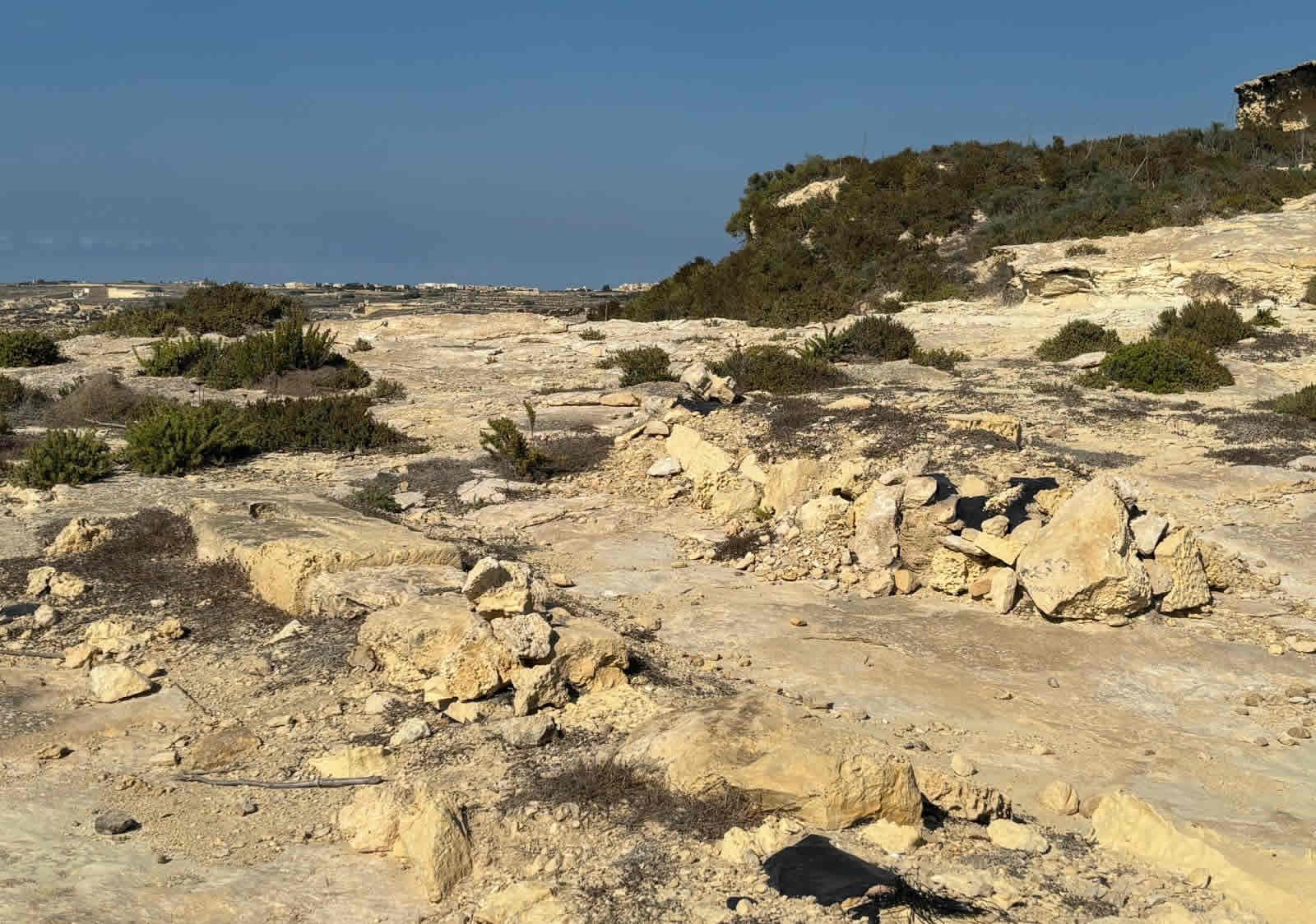
Key Features and Spatial Relationships
The ritual chamber (on Terrace 5) is central; it is rock‑cut into the cliff ridge, oriented to view the sea. It has niches, seating (bench), and faces open outward.
The basin / pool and well are associated with the same terrace, directly in front of the ritual chamber, used for water‑rituals, bathing, purification, etc.
Lower terraces have external altars / masonry buildings, likely for offerings or processional approach.
The T‑shaped corridor connects the higher ritual chamber and the outer altar/terrace, serving as processional path and gathering space, especially along the longer leg with benches.
The sanctuary is terraced, built against the natural slope, to create levels of ritual space stepping down toward the sea.