Sir Alexander Ball’s Garden, Ħal Safi (Ġnien Sir Alexander Ball)
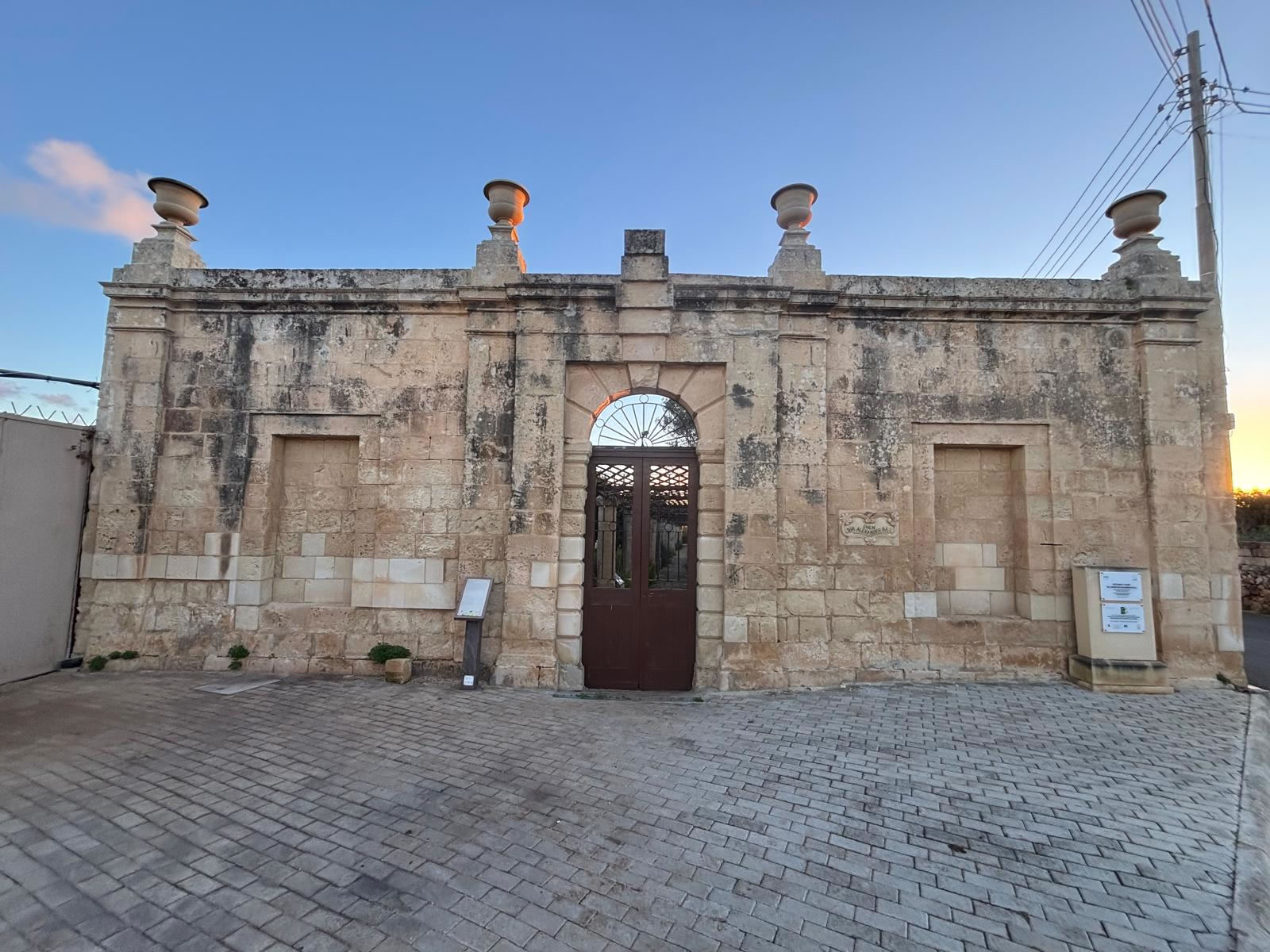
A rare surviving example of Malta’s early-19th-century Commander’s Gardens (Ġonna tal-Kmand), created during the first years of British rule. This small but distinctive garden is best known for its formal entrance portal, stone-lined paths, and trellised pergola walkway.
📍 Location
Location Map Coordinates 35.8350867, 14.4909379
Quick facts
- Name: Sir Alexander Ball’s Garden (Ġnien Sir Alexander Ball)
- Type: Historic public garden / Commander’s Garden (Ġonna tal-Kmand)
- Locality: Ħal Safi, Malta
- Coordinates: 35.8350867, 14.4909379
- Construction era (confirmed context): Early 19th century, under Sir Alexander Ball’s administration
- Local date associated with the Safi garden: 1808 (commonly cited for completion/establishment at this site)
- Modern restoration: Restoration completed and reported in 2021
- Current use: Public green space for quiet recreation and heritage interest
Full history (confirmed context and timeline)
1) Why the Commander’s Gardens were created
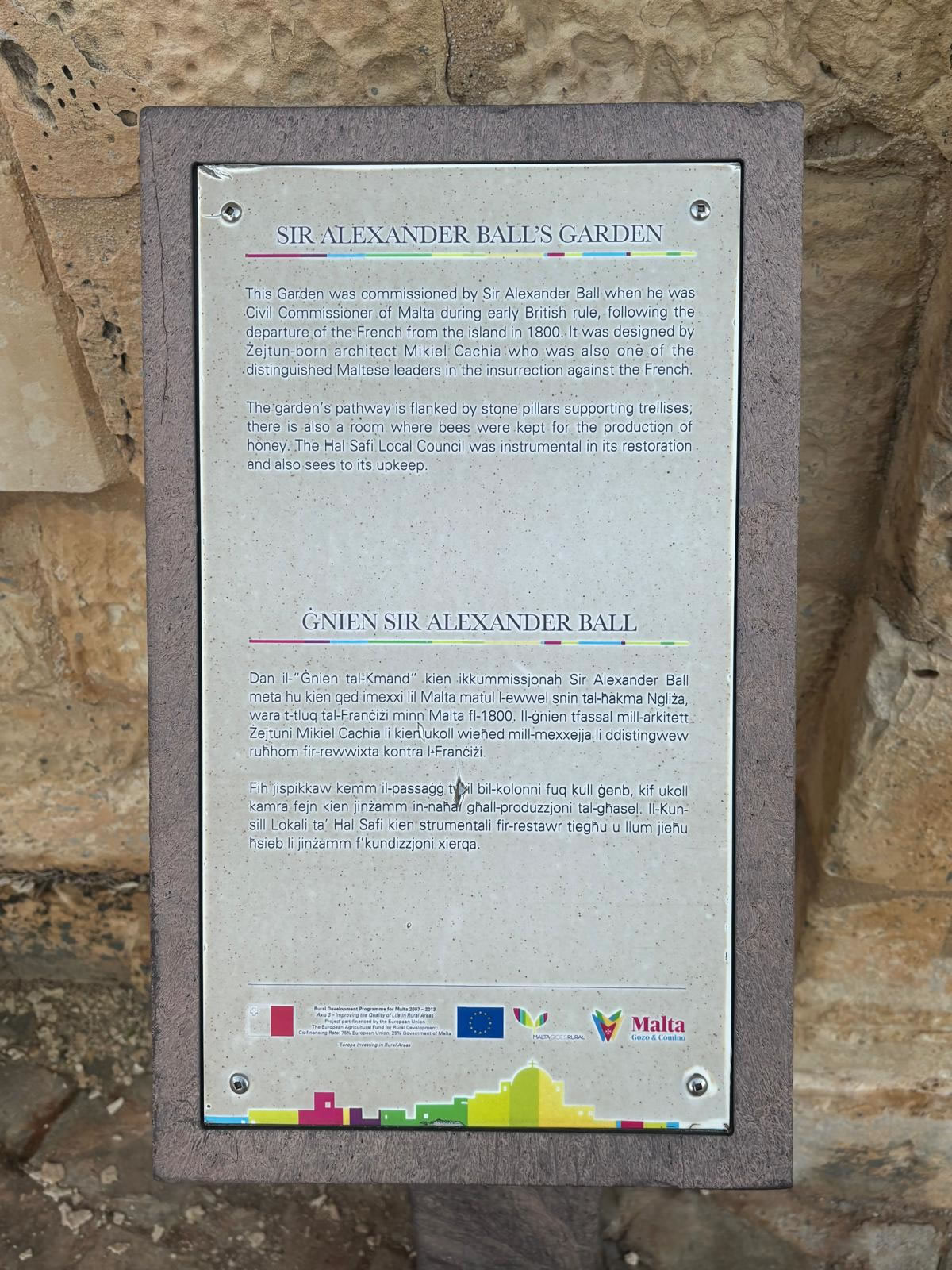
Sir Alexander Ball (often described as the first Civil Commissioner/Governor figure of the British administration in Malta) is associated with a nationwide scheme that created multiple village gardens known today as the Ġonna tal-Kmand. These gardens were intended to introduce and support greenery, encourage practical horticulture, and serve as model spaces at the edge of towns. In some accounts, they were also linked to agricultural experimentation and the distribution of plants and seeds.
2) When the Safi garden was established
The Safi garden is consistently placed in the early 1800s, with local and heritage summaries giving a build window of 1802–1808 for the wider programme. The Safi site in particular is frequently dated to 1808, which is widely treated as the garden’s established/recorded date.
3) From intended public benefit to restricted use
Historically, Commander’s Gardens were associated with local officials (“luogotenenti” / temporary lieutenants) responsible for village administration. In practice, many gardens were not used as freely public spaces at first and were kept for official or private use. Over time, surviving sites like Safi’s garden increasingly shifted toward community access and heritage value.
4) Survival into the modern era
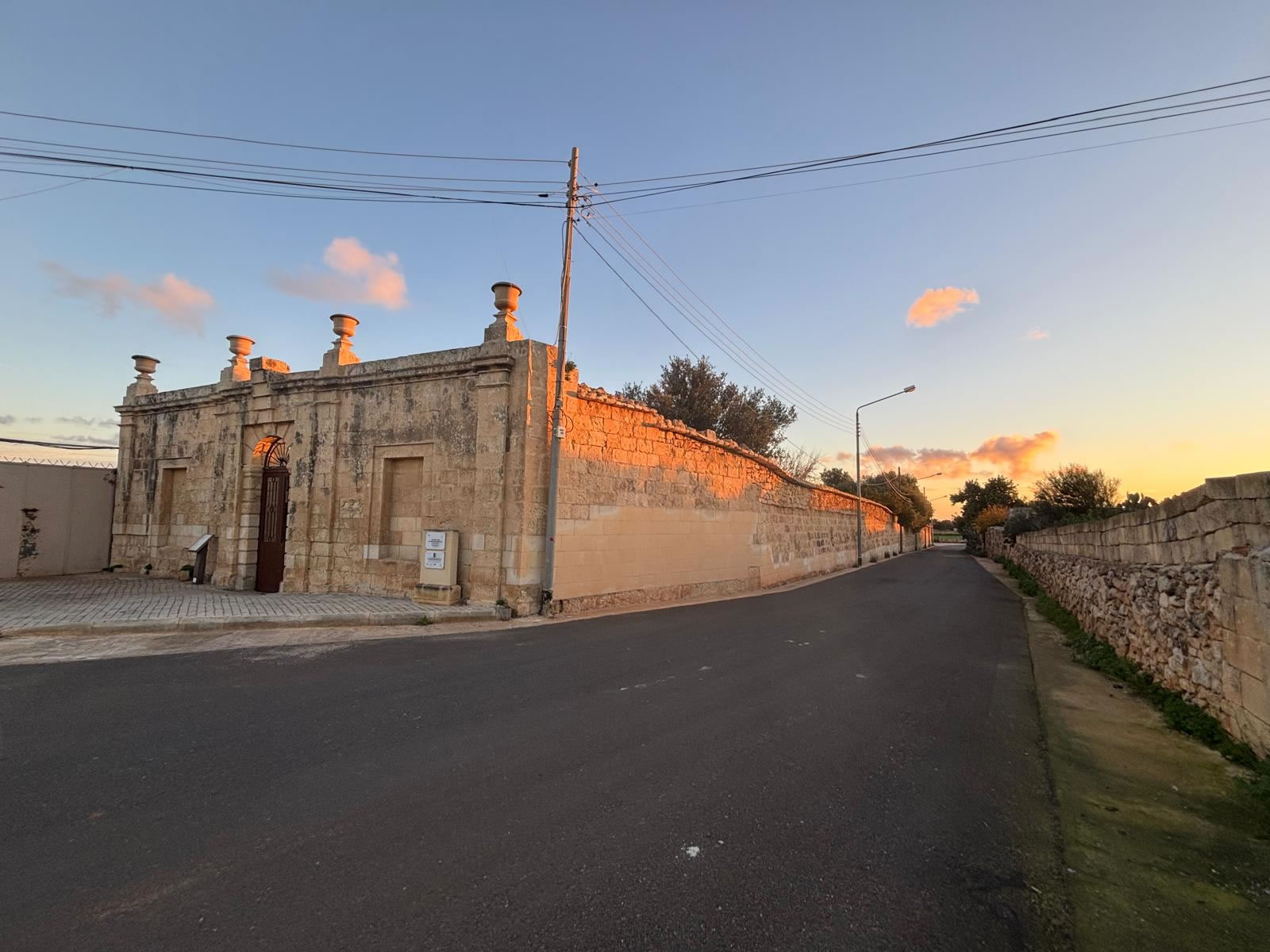
Many Commander’s Gardens were altered or lost during the 20th century. Safi’s garden is notable because key elements—especially the character-defining entry portal and internal layout—have remained recognisable, making it one of the more intact survivors.
Construction and design
Entrance portal and inscription tradition
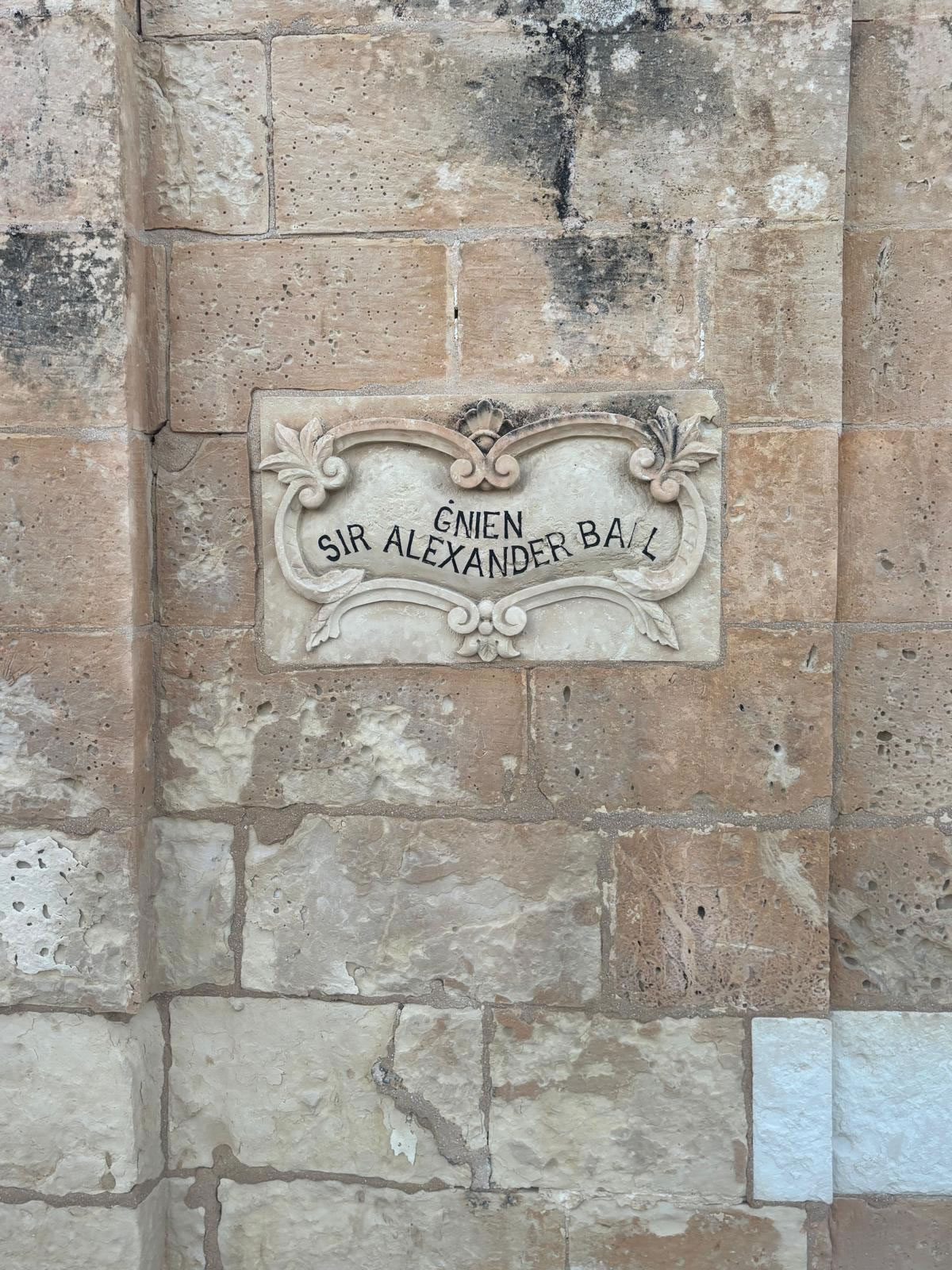
The garden is entered through a formal limestone portal set into a boundary wall. Across the Commander’s Gardens, memorial stones and inscriptions are a recurring theme; Safi’s garden is associated with this tradition, reinforcing its identity as part of Ball’s early-19th-century programme.
Pergola walkway and planting
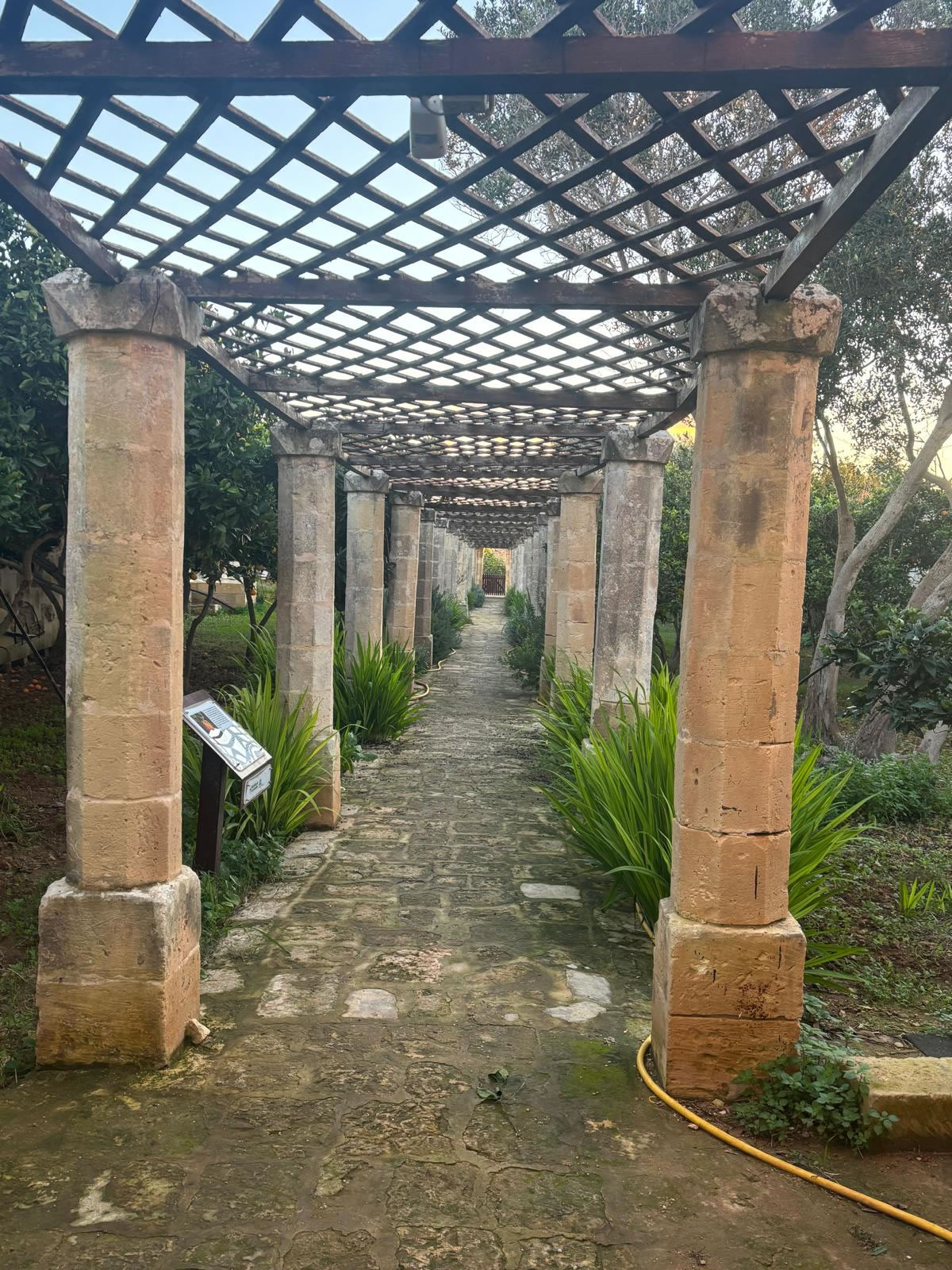
One of the garden’s most photographed features is a long trellised pergola supported by limestone pillars, historically used to train vines and provide shaded passage. This structure gives the garden a calm, rhythmic geometry and reinforces its hybrid character as both a leisure and productive space.
Layout and materials
The garden is built in local limestone and laid out with pathways and small planted areas. Traditional Mediterranean planting—often including citrus and other hardy species—suits the sheltered microclimate created by boundary walls and trellises.
Modifications, conservation and restoration
Long-term change
As with many historic gardens, changes over two centuries tend to include replanting cycles, renewal of trellis timbers, patch repairs to paving, and stabilisation of boundary walls. Even where the original footprint remains stable, garden character can shift depending on planting, irrigation, and maintenance regimes.
2021 restoration (confirmed modern milestone)
A major modern conservation milestone for Safi’s garden was the completion of a restoration project reported in 2021. The works were publicly described as having been completed, supported by funding streams including European programmes and national tourism-related funds. Such projects typically involve repairing stonework, improving accessibility, renewing landscaping, and ensuring safer public use while protecting historic fabric.
Use today
Today, Sir Alexander Ball’s Garden functions as a local public green space and a heritage stop for visitors interested in the early British period, rural Safi, and Malta’s historic public-garden experiments. It is well suited for short walks, quiet sitting, photography, and community appreciation of a rare surviving garden type.
Visiting information
- Coordinates: 35.8350867, 14.4909379
- Locality: Ħal Safi, Malta
- Best for: Heritage walks, architecture and garden photography, quiet breaks
- Respect: Help preserve the site—avoid littering, do not damage planting or stonework, and keep noise low.
FAQ
When was Sir Alexander Ball’s Garden in Safi built?
It belongs to the early-19th-century Commander’s Gardens programme associated with Sir Alexander Ball. Local references commonly date the Safi garden to 1808 (often treated as its established/recorded date), within a broader creation window of the early 1800s.
What makes this garden special?
Safi’s garden is one of the more intact surviving Commander’s Gardens and is especially known for its formal entrance portal and the long trellised pergola walkway that creates shade and structure within the garden.
Was the garden restored recently?
Yes. A restoration project was reported as completed in 2021, improving the garden’s condition and public experience while safeguarding historic features.