Ta' Ħaġrat Temples — Mġarr, Malta
Overview
Ta' Ħaġrat (pronounced Ta' Haʒrat) is a small megalithic complex set within the village of Mġarr on Malta’s northwest plateau. The site contains two principal buildings: a larger trefoil/three‑apsed temple dated to the Ġgantija phase (c. 3600–3200 BC) and a smaller adjoining structure usually assigned to a slightly later Saflieni phase (c. 3300–3000 BC). Although modest in scale compared with Ħaġar Qim or Ġgantija, Ta' Ħaġrat is especially valued for the preservation of its monumental facade, doorway and courtyard features and for the pottery sequences recovered nearby, which informed the island’s prehistoric chronology.
- Location: Mġarr, Malta
- Coordinates:35.91849°N, 14.36859°E
- Principal dates: c. 3600–3000 BC (Ggantija → Saflieni phases)
- Management:Heritage Malta

History & Excavations
The standing structures were first brought to modern attention in the early 20th century and were professionally excavated in the 1920s (archival excavation campaigns commonly cited between c.1923–1926). Additional minor interventions and recording took place in the 1950s and during the 1960s when regional surveys and targeted studies expanded understanding of the Mġarr valley’s long occupation. Later research has reassessed the stratigraphic archive, re-evaluating pottery series and the relationship between nearby Skorba and Ta' Ħaġrat. Archaeologists have emphasized the importance of Ta' Ħaġrat's village-temple transition — evidence that domestic occupation and ritual building overlapped in this locality.

Key excavation milestones
- Discovery / early clearing: early 20th century, with formal excavations in the 1920s.
- Mid‑20th century recording: minor interventions and additional recording in the 1950s–1960s.
- 21st-century reassessment: archive re-studies, contextual landscape analysis and publication of excavation records (ongoing research by Maltese archaeologists and scholars).

Architecture & Building Features
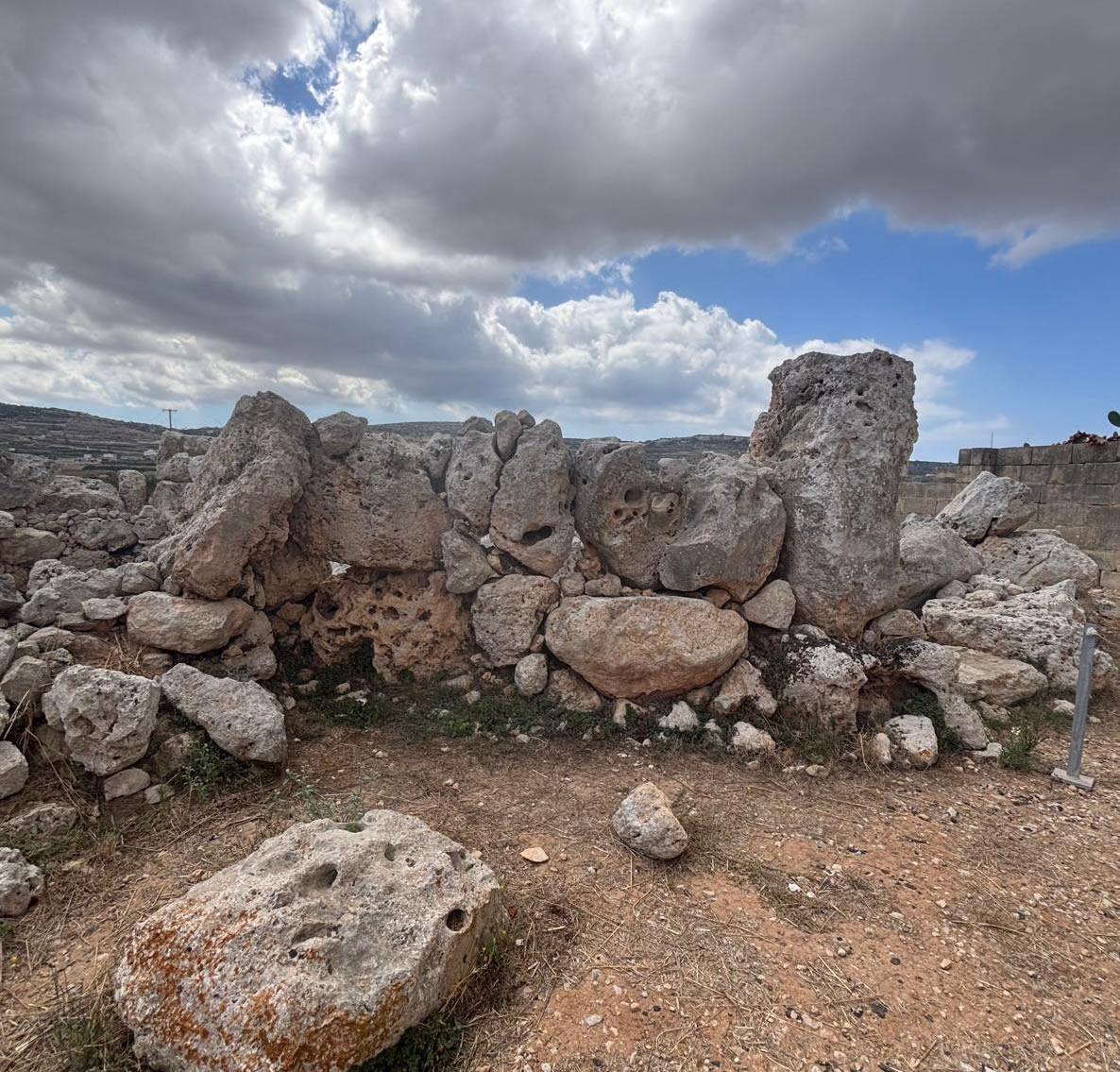
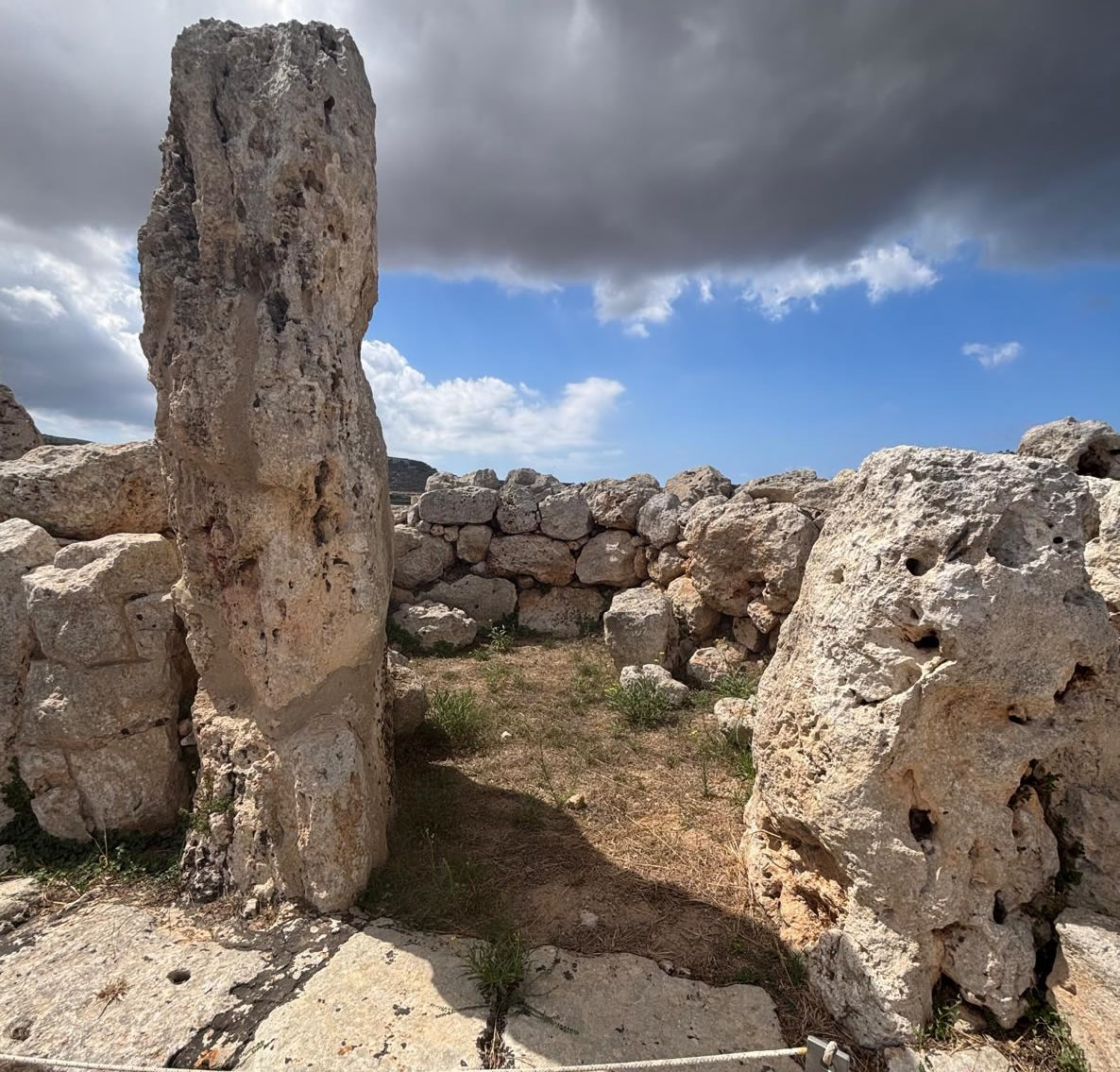
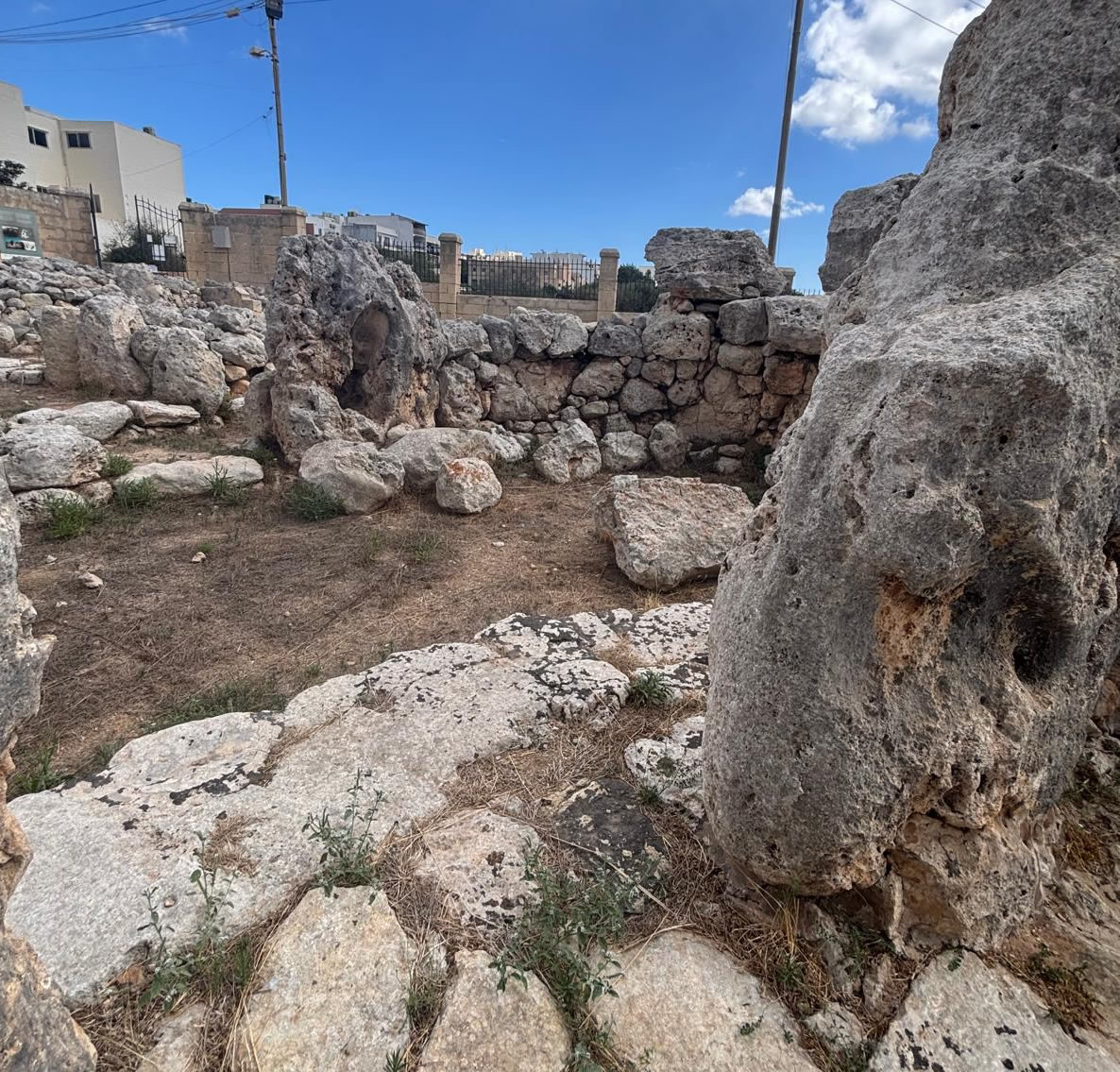
Ta' Ħaġrat is constructed entirely from local Upper Coralline Limestone — making it notable as one of the temples built of this firmer, more durable stone rather than the softer globigerina used elsewhere. The larger building preserves a monumental facade with a prominent doorway and a continuous bench running along the facade’s length. A small courtyard (approx. 2.5 x 4.5 m) in front of the doorway is ringed by a raised stone kerb and provides access to three inner apses via megalithic doorways. Many of the slabs show worked surfaces though decorative carving is less prominent here than at Tarxien.
Plan & construction
The plan is trefoil-like (three-apsed) for the larger temple with orthostats forming the apse divisions. The smaller temple to the side has a simpler arrangement and is often interpreted as either an earlier or later reoccupation depending on the sequence considered. Floors include paved elements and beaten stone (torba) patches in some areas. The presence of village structures and pottery adjacent to the temples indicates an intimate relationship between living areas and ritual spaces.
Finds, Pottery & Significance
Excavations at Ta' Ħaġrat recovered pottery that helped define key Neolithic ceramic phases on the islands. Finewares and coarse domestic pottery, along with stone tools and fragmented vessels, were recorded. Because much of the early pottery sequence for Malta was established from finds in the Mġarr area (Ta' Ħaġrat and Skorba), these sites are central to the island’s prehistory — they show how village economies, craft production and ritual architecture co-evolved in the Late Neolithic.
Conservation & Site Management
The site is managed by Heritage Malta. Conservation aims focus on stabilising the standing stones, preventing biological growth and erosion, and managing visitor impact. Protective measures — including walkways and shelters where needed — have been adopted across Maltese temple parks; site-specific conservation typically balances preserving in situ remains with documentation, limited interventions and, where appropriate, removal of the most vulnerable slabs to museum care.
Quick facts
Short guide for scholars
Recommended: consult the archive reassessment publications and the Ta' Ħaġrat excavation records (1920s archive) for pottery catalogues, stratigraphic drawings and field notebooks. Modern re-evaluations provide revised phasing and landscape context with GIS mapping.

Visitor Information
Getting there
Ta' Ħaġrat lies in the village of Mġarr (northwest Malta). Drive from Valletta (≈20–30 minutes depending on traffic) via the Triq il‑Malti route or take a public bus to Mġarr and walk a short distance to the site. GPS: 35.91849, 14.36859. There is limited on‑street parking nearby — look for municipal parking spaces.
Hours & tickets
Heritage Malta manages the site. Opening hours and entrance fees change seasonally; Ta' Ħaġrat is commonly included in combined tickets (Skorba + Ta' Ħaġrat) that allow flexible visits within a period. Always check Heritage Malta for current opening hours and to purchase tickets online.
Facilities
Ta' Ħaġrat is a small site with minimal on‑site facilities; the closest visitor services (toilets, refreshments) are in Mġarr village or at larger temple parks such as Ħaġar Qim / Mnajdra. The site is exposed to weather — bring water and sun protection in summer.

Access & safety
Paths within the site are short and mostly paved but the ground among the megaliths can be uneven. The temple is generally accessible for people with limited mobility up to the viewing points, but full access to all interior parts may be restricted. Contact Heritage Malta for specific mobility assistance and current accessibility provisions.
Best time to visit
Early morning or late afternoon provides softer light for photography and fewer visitors. Spring (March–May) and autumn (September–October) offer pleasant temperatures. If you are interested in archaeological context, pair your visit with Skorba and the Mġarr landscape walking route.
Guided visits & events
Heritage Malta and local heritage groups occasionally run curator tours, lectures and community events (e.g., joint Ta' Ħaġrat & Skorba curator tours). Check the Heritage Malta events page for scheduled guided visits.

Conservation & Research Notes
Ta' Ħaġrat's conservation history follows broader Maltese temple management practice: protect, document, monitor. Because the temples are carved from Upper Coralline Limestone, they are less vulnerable to rapid erosion than sites in softer stone but still require ongoing maintenance. Researchers have used the Ta' Ħaġrat archive to refine pottery chronologies and to model the social landscape of Neolithic Mġarr (village-to-temple transitions, craft production, and ritualized deposition).

References & Further Reading
Selected sources used to compile this page (consult these for in-depth excavation records, pottery catalogues and conservation reports):
- Heritage Malta — Ta' Ħaġrat Temples (site page and visitor information)
- UNESCO — Megalithic Temples of Malta (World Heritage listing)
- Excavation archives and academic reassessments (Ta' Ħaġrat & Skorba excavation records, 1920s archive reassessments)
- Scholarly articles on Maltese Neolithic pottery sequences and landscape archaeology