Ħaġar Qim (Qrendi, Malta)
A Neolithic megalithic temple complex on the southern coast of Malta — one of the earliest free-standing stone buildings in the world.
Part of the UNESCO listing Megalithic Temples of Malta
📍 Location
The coordinates of Ħaġar Qim are:
- 35.827672, 14.442012
There are a number of photos on this page that are from 1870 and a photos taken in the 1980's.
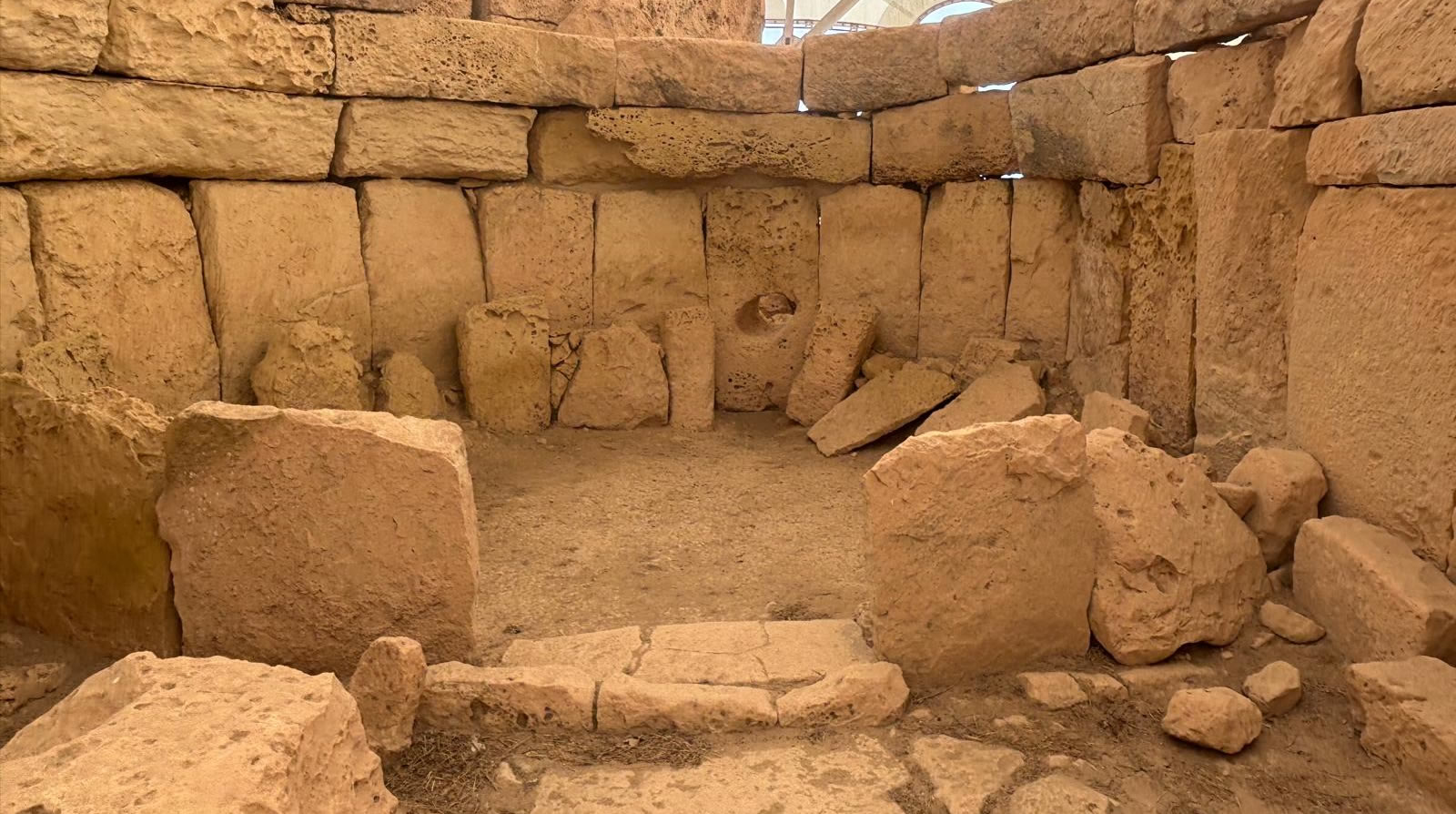
The newer photos that were taken in 2025 which show how the site it is now.
The older photos are from the National Archives of Malta and have the reference under each photo.


National Archives of Malta PHO 1837
Key Facts
- Location: Qrendi, Southern Region, Malta
- Coordinates: 35°49′40″N 14°26′32″E
- Phase: Late Neolithic / Ġgantija phase (c. 3600–3200 BCE)
- Part of: Megalithic Temples of Malta (UNESCO World Heritage Site)
- Material: Globigerina limestone (local)
- Management: Heritage Malta

What is Ħaġar Qim?
Ħaġar Qim is a prehistoric temple complex made of large carved limestone megaliths. It stands on a hilltop with sea views on Malta’s southern coast and is one of several temple complexes built by the island’s Neolithic communities. The surviving layout includes an imposing façade, a forecourt and a sequence of oval chambers and apse-like recesses that reflect a recognizable Maltese temple plan.


National Archives of Malta PHO 4026
History & Archaeological Excavations
Construction of the main temple building is dated to roughly the middle-late 4th millennium BCE (commonly given as c. 3600–3200 BCE), although parts of the complex include earlier material. The site was first formally explored in the 19th century and has been excavated and studied in successive campaigns during the 1800s and 1900s. Important finds — pottery, tools, and small cult statuettes — were removed to museums and are exhibited as key evidence of ritual life on the islands.


National Archives of Malta PHO 1836
Architecture & Notable Features
The complex follows the classic Maltese temple pattern: an external façade and forecourt lead into a central passage with lateral semi-circular chambers. Massive upright blocks (orthostats) form the internal walls and were once capped by horizontal lintels and corbelled roofing. The façade at Ħaġar Qim is notable for containing some of the largest single blocks used in Maltese megalithic architecture.

Special features
- Oracle hole — an acoustic opening between chambers whose function is debated (ritual, acoustic effect, or astronomical marker).
- Misqa tanks — a nearby set of bell-shaped rock-cut reservoirs that may have had practical or ritual use.
- Carved motifs & figurines — including corpulent pregnant-style statuettes interpreted as fertility symbols.
- Solar alignments — some doorways and openings align with sunrise/sunset on solstices or equinoxes (especially nearby Mnajdra).
Major Finds
Excavations recovered pottery, polished stone tools, and small carved stone and clay figurines. The best-known statuettes (often called ‘Venus’ figures) are displayed in Malta’s National Museum of Archaeology in Valletta and in reproductions at the Ħaġar Qim visitor centre.

Conservation & Protective Measures
Exposed limestone and coastal weathering have seriously affected the carved surfaces over millennia. To protect the site, modern conservation interventions include reinforcement of unstable stones and a large protective shelter that was installed in the 2000s to slow erosion and salt damage. A visitor centre adjacent to the site provides context via exhibitions and audio-visual displays.
Note: conservation practice evolves — for detailed conservation reports consult academic publications and Heritage Malta documentation.

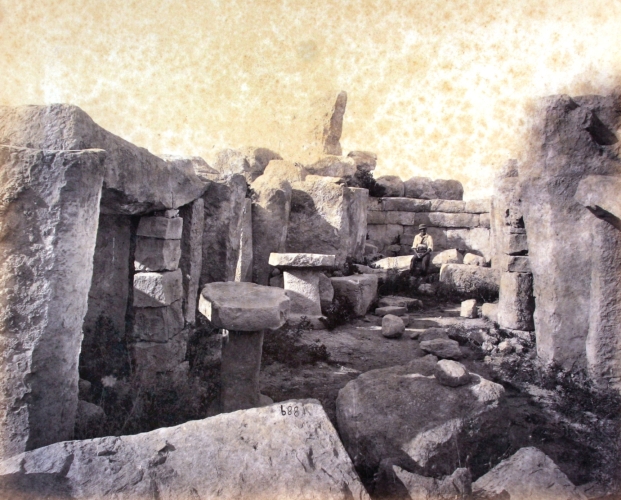
National Archives of Malta PHO 1835
Visitor Information
Ħaġar Qim is open to the public as part of the Ħaġar Qim & Mnajdra Archaeological Park. A combined ticket normally covers both sites and the visitor centre. The site is on a hilltop and has paths and interpretive panels; sheltered viewing and guided tours may be available seasonally.
Practical tips
- Wear sturdy shoes — walking paths include uneven rock surfaces.
- Weather can be strong on the coast — bring sun protection or rain gear as needed.
- Check official Heritage Malta sources for current opening hours, ticket prices and special events.
- The National Museum of Archaeology (Valletta) houses many of the original finds.

Further reading & resources
Suggested official and high-quality sources to consult for research or planning: Heritage Malta (site pages and ticket store), UNESCO World Heritage listing for the Megalithic Temples of Malta, major museum catalogues, and peer-reviewed conservation literature on sheltering and stone decay.

Ħaġar Qim — Visitor Guide
Plan your trip to Malta’s famous Neolithic temple complex
Opening Hours
Summer (1 April – 30 September): 09:00 – 18:00 (last entry 17:30)
Winter (1 October – 31 March): 09:00 – 17:00 (last entry 16:30)
Closed: 24 Dec, 25 Dec, 31 Dec, 1 Jan, Good Friday

Ticket Prices
- Adults (18–59): €10
- Youths (12–17), Seniors (60+), Students: €7.50
- Children (6–11): €5.50
- Infants (0–5): Free
Ticket includes entry to both Ħaġar Qim and Mnajdra, plus the visitor centre.
How to Get There
By Car or Taxi
- ~20 minutes from central Malta (e.g., Valletta or St. Julian’s)
- Fuel cost: ~€2–€3; Ride-hailing (Uber/Bolt): ~€10
- Free parking on-site
By Public Bus
- From Valletta: Take bus 74 to “Hagar” or “Qrendi” stop, 3–4 min walk to site
- From San Pawl il-Baħar: Bus 41 to Valletta, then bus 74 (~1h35m total, ~€6)
| Mode | Route / Info |
|---|---|
| Car / Taxi | ~20 min drive, free on-site parking |
| Bus | Bus 74 from Valletta direct to site |
| Bus + Bus | From north Malta: bus 41 → bus 74 (~1h35m) |

About the Site
Ħaġar Qim is a UNESCO-listed megalithic temple complex dating to c. 3600–3200 BCE. Built from local globigerina limestone, it features massive upright blocks, semi-circular chambers, and evidence of ritual life. A protective shelter helps preserve the stones from coastal weathering.