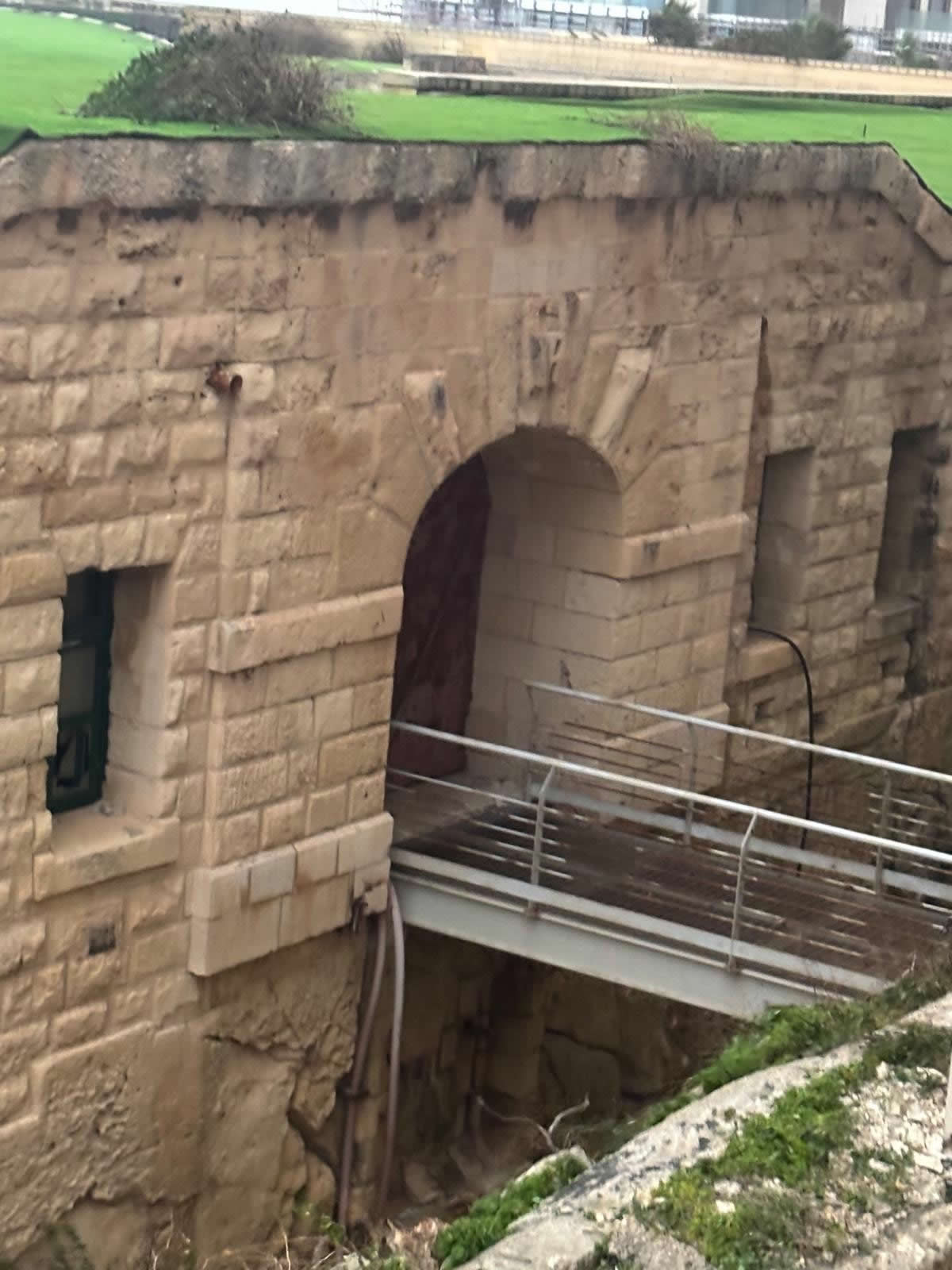
Overview
Cambridge Battery was conceived during a period of naval arms escalation in the Mediterranean. The battery was designed around one immense weapon: a 450 mm (17.72-inch) rifled muzzle-loading Armstrong gun—nicknamed a “100-ton gun” for its scale. It was paired with Rinella Battery on the opposite side of the harbour approaches, creating a two-gun heavy coastal defence scheme for Malta.
You’ll often see it described as “Fort Cambridge”. Historically it functioned as a battery built to protect its gun, crew, magazines, and machinery—rather than a traditional multi-gun fort.
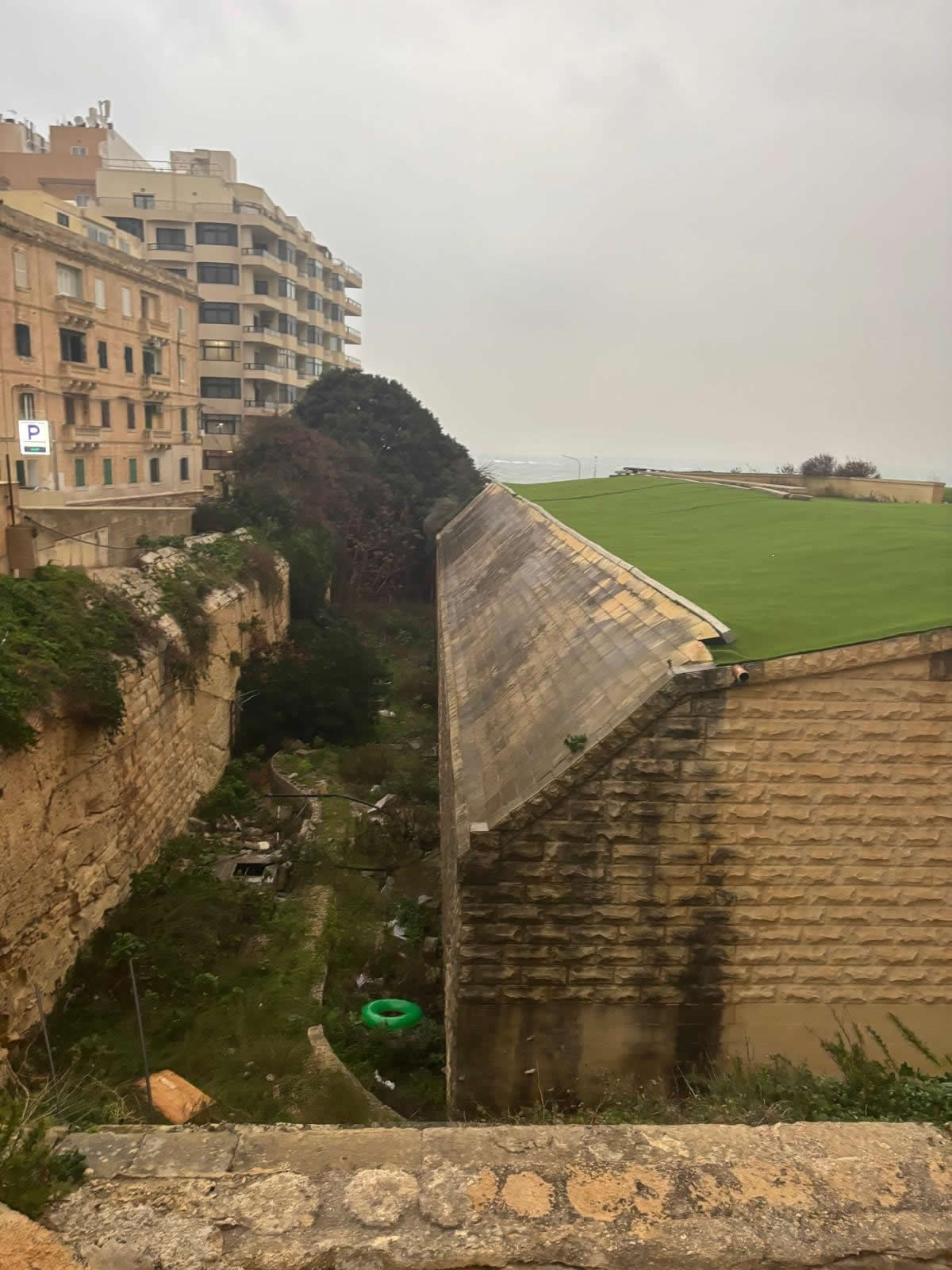
Key dates and timeline
- 28 Aug 1878: Construction begins (British period).
- 1880: Gate and entrance works recorded as built.
- 16 Sep 1882: The 100-ton gun arrives in Malta for Cambridge Battery.
- 20 Feb 1884: Gun mounted and ready for service; firing trials followed later due to the complexity of bringing systems into full working order.
- 1889: Garden Battery built nearby to cover gaps toward Fort Tigné.
- 1903–1904: Last recorded firings (practice/operational tests), before the weapon was withdrawn from active service.
- 1906: Battery effectively taken out of active service; the gun never fired “in anger”.
- 1956: The gun is cut up and sold for scrap during a wider programme disposing of surplus ordnance.
- Late 20th–early 21st century: Parts of the site are affected by development and reuse; substantial structures remain.
- 2000s onward: Fort Cambridge residential development grows around the battery; restoration commitments are discussed in planning/press coverage.
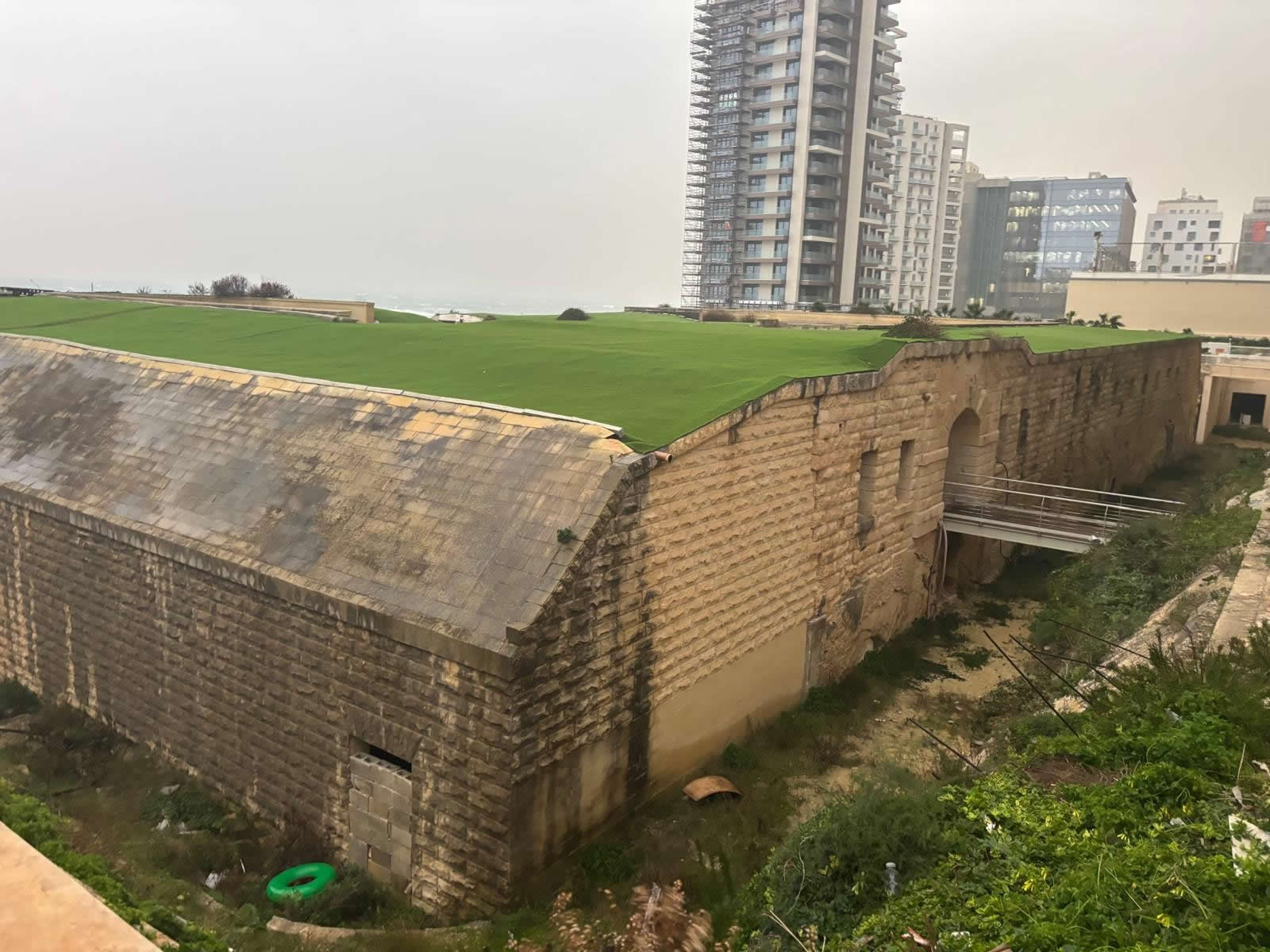
Why Cambridge Battery was built
In the late 19th century, Malta’s harbours were essential to British maritime power and to routes linking the Mediterranean with the Suez Canal. Britain responded to the emergence of heavily armoured warships by installing ultra-heavy guns at strategic chokepoints. Cambridge Battery was one of only a handful of sites worldwide designed specifically for the Armstrong 100-ton gun.
The decision to place a matching battery at Rinella (near Kalkara) created interlocking coverage around the main harbour approaches.
Construction, layout, and defensive design
Cambridge Battery is relatively compact because every element serves the needs of one weapon system: the gun emplacement, loading casemates, magazines, machinery rooms, and protected circulation routes for the garrison.
- Barbette emplacement: the gun fired over the parapet while keeping crews protected behind cover.
- Low profile & deep protection: magazines and machinery spaces were buried to resist counter-fire from warships.
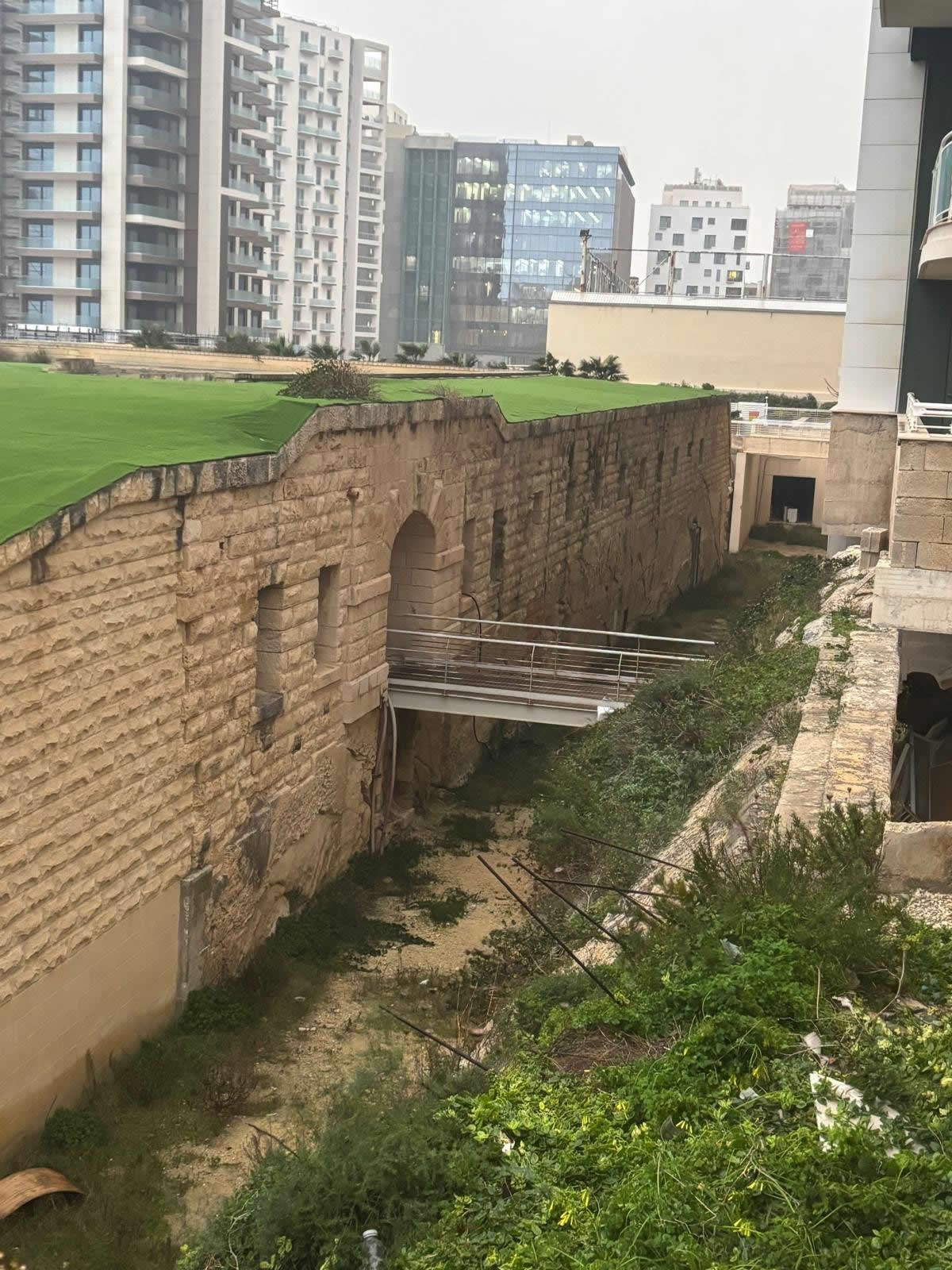
- All-round local defence: instead of secondary artillery, the battery relied on a ditch, caponiers, and firing points intended for small-arms defence.
- Revetment changes: parts of the stone revetment were replaced by earthworks after review, improving absorption of shell impact; masonry was retained around loading casemates.
- Drawbridge and ditch system: period descriptions treat these 100-ton batteries as “fort-like” in their perimeter security.
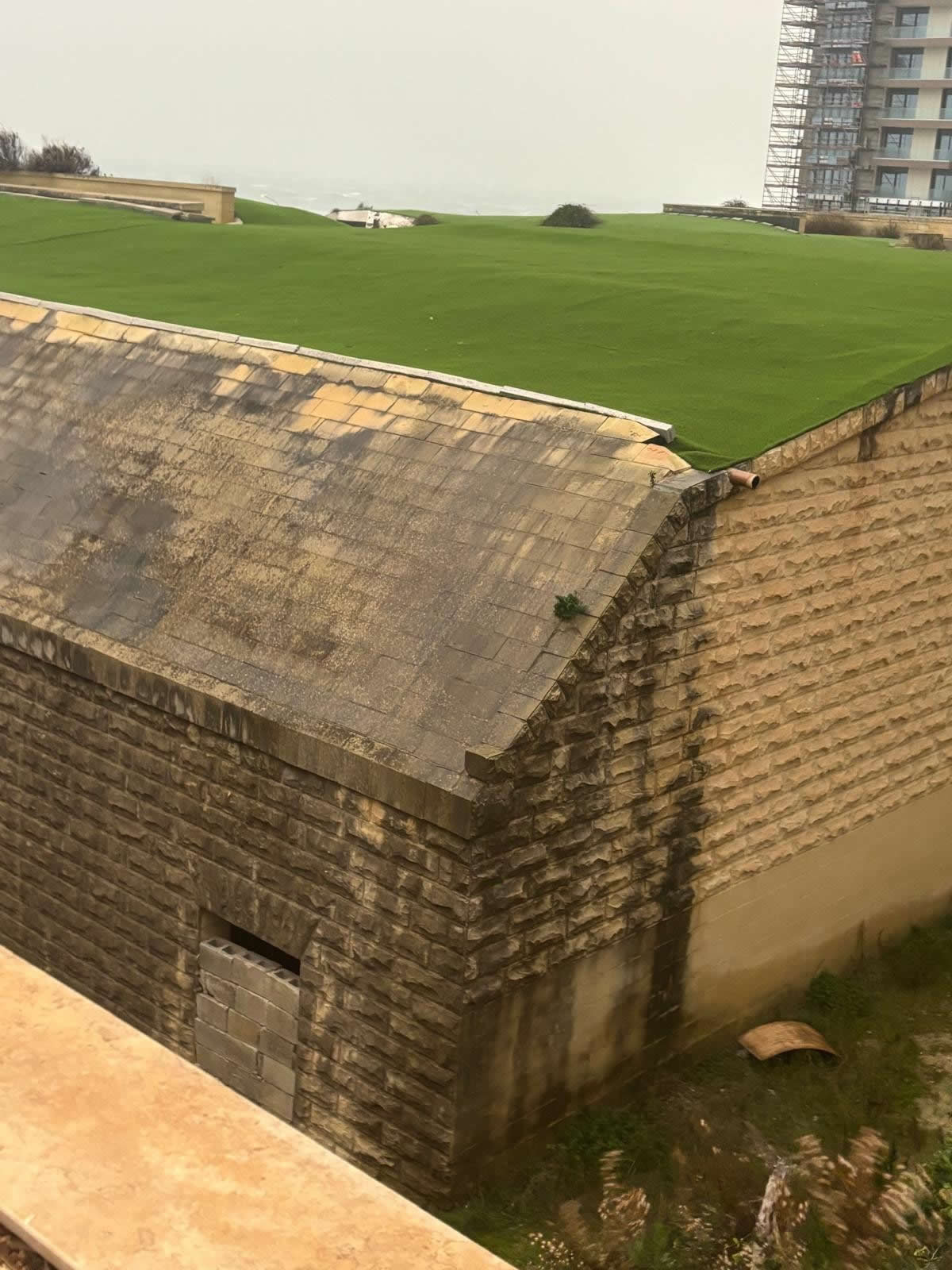
The 100-ton gun: operation and capability
The 100-ton gun at Cambridge was a giant rifled muzzle-loader on a sliding carriage, supported by heavy machinery and carefully engineered handling systems. Period descriptions note it was designed to engage warships at long range (often cited up to several thousand yards), but practice firing was limited due to the cost and complexity of operation.
- Gun type: Armstrong 100-ton, 450 mm RML (rifled muzzle-loading).
- Mounted: 1884; active service roughly two decades.
- Last fired: early 1900s (commonly cited 1903–1904).
- Withdrawn: by 1906; never used in combat.
- Fate: scrapped in 1956 (unlike Rinella’s gun, which survives).
If you want a “how it worked” illustration section, link this page to your Rinella Battery content (the surviving 100-ton gun site) for deeper context.
Later use, modern development, and restoration
After the battery’s operational life ended, the site went through phases of reuse and partial alteration. Sources describe later occupation by hospitality/leisure uses on parts of the footprint, and then major redevelopment of the surrounding land into the Fort Cambridge residential complex in the 2000s.
Planning and press reporting around the development period discusses restoration obligations and proposals to reinstate or conserve key elements (ditch, entrance, and core battery structures). While some clearance and demolition of later intrusive structures has been reported, the pace and extent of restoration have been an ongoing talking point.
Editorially safe phrasing: “The battery survives substantially intact, but has been affected by 20th-century reuse and later development; restoration has been proposed and partially initiated.”
Visiting Cambridge Battery
Cambridge Battery is generally not open as a regular public attraction. Viewing is typically limited to what can be seen from public routes around Tigné Point and nearby promenades.
- Best viewpoints: seafront walks around Tigné Point and approaches toward Fort Tigné.
- What to look for: ditch lines, entrance zone, and the battery footprint embedded into the modern landscape.
- Respect access: treat the area as sensitive/private where indicated; do not enter restricted zones.
Nearby heritage
- Sliema – promenade, harbour views, and town history.
- Sea Water Distilling Building – 1881 distillation experiment on the Tigné seafront.
- Batteries hub – browse other coastal batteries across Malta.