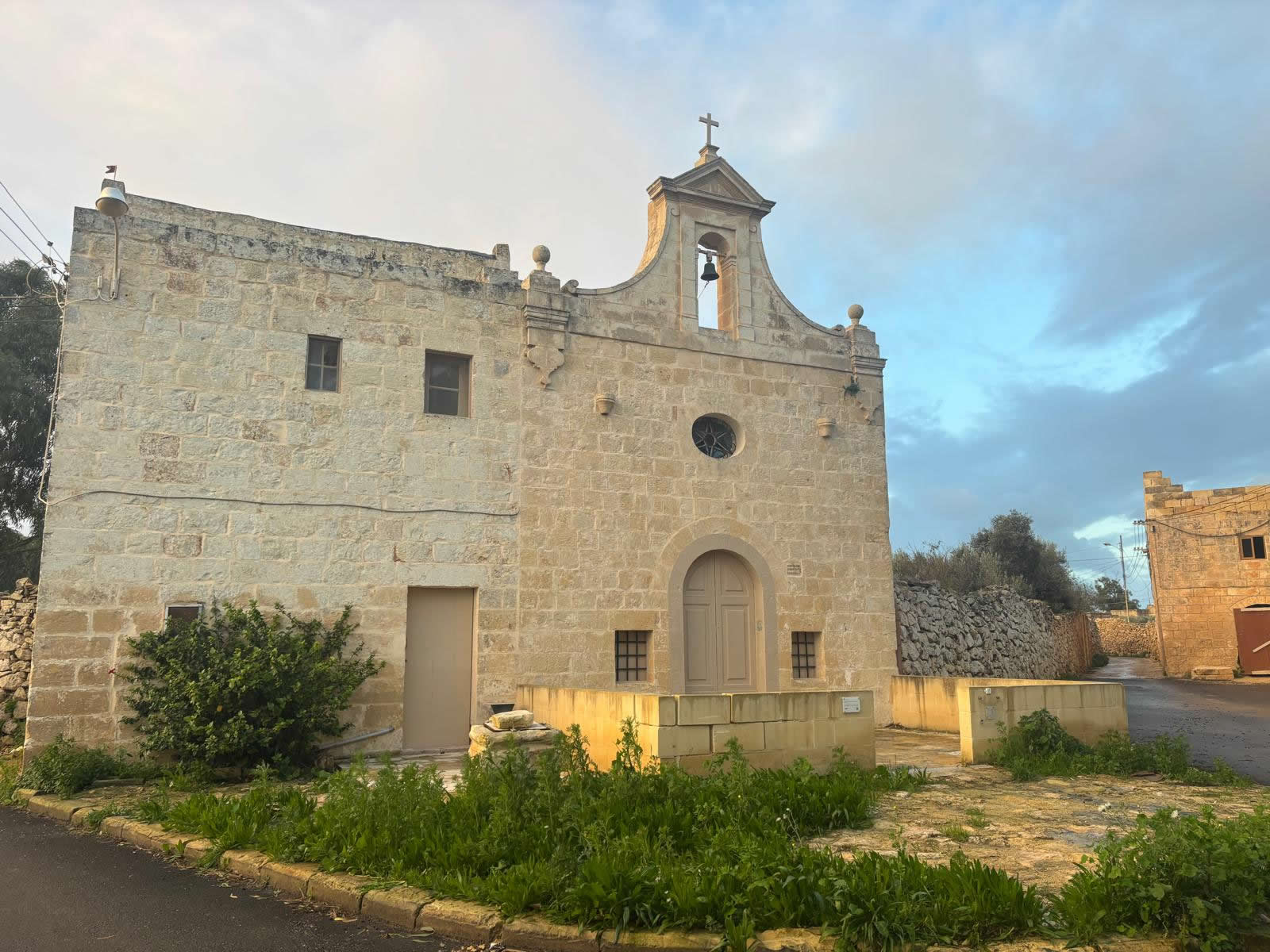
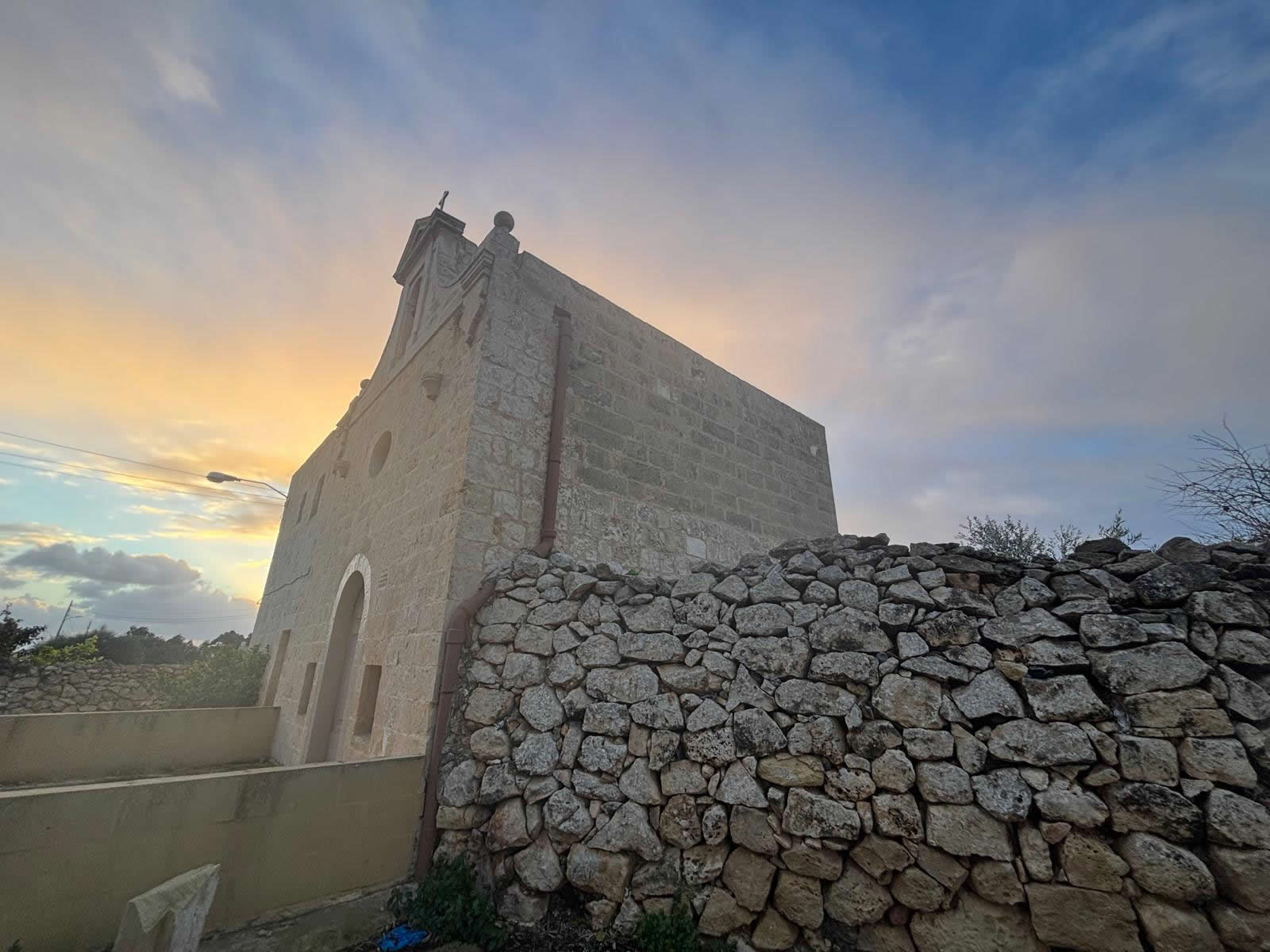
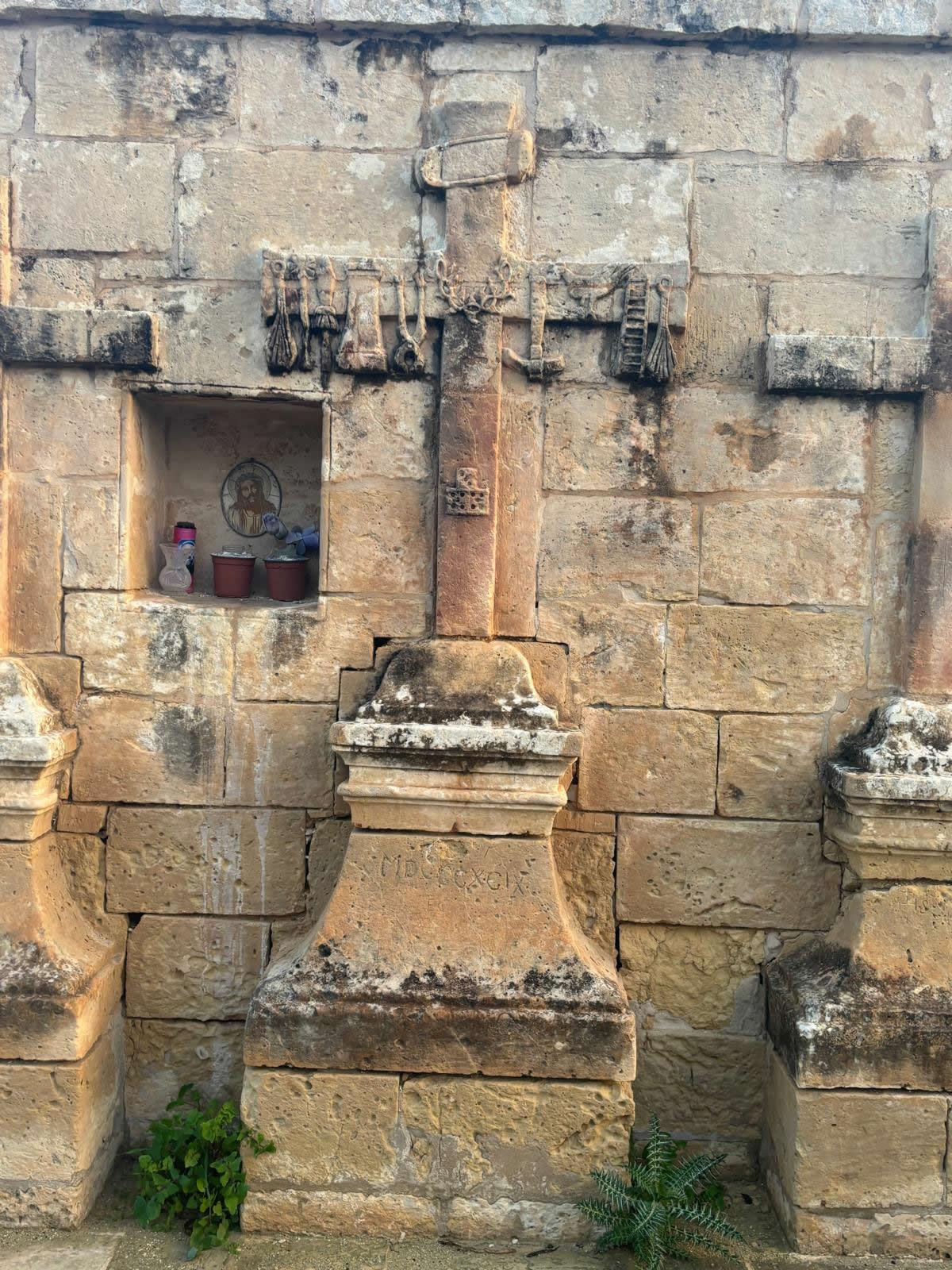
Set on Bidni hill near the landmark known as the Three Crosses, the Madonna tad-Dawl Chapel is a rural sanctuary
with deep local memory—shaped by piracy-era countryside life, an 18th-century surge in Marian devotion, and continuing community care.
Coordinates: 35.868847, 14.554516Near: The Three Crosses (Bidni)Older chapel: before 1654Re-opened: 1733Dedication popularised: 1737Rebuilt/expanded: 1754–1758
At a glance
The chapel is commonly referred to as Madonna tad-Dawl (Our Lady of Light) and is located in the countryside area of Bidni,
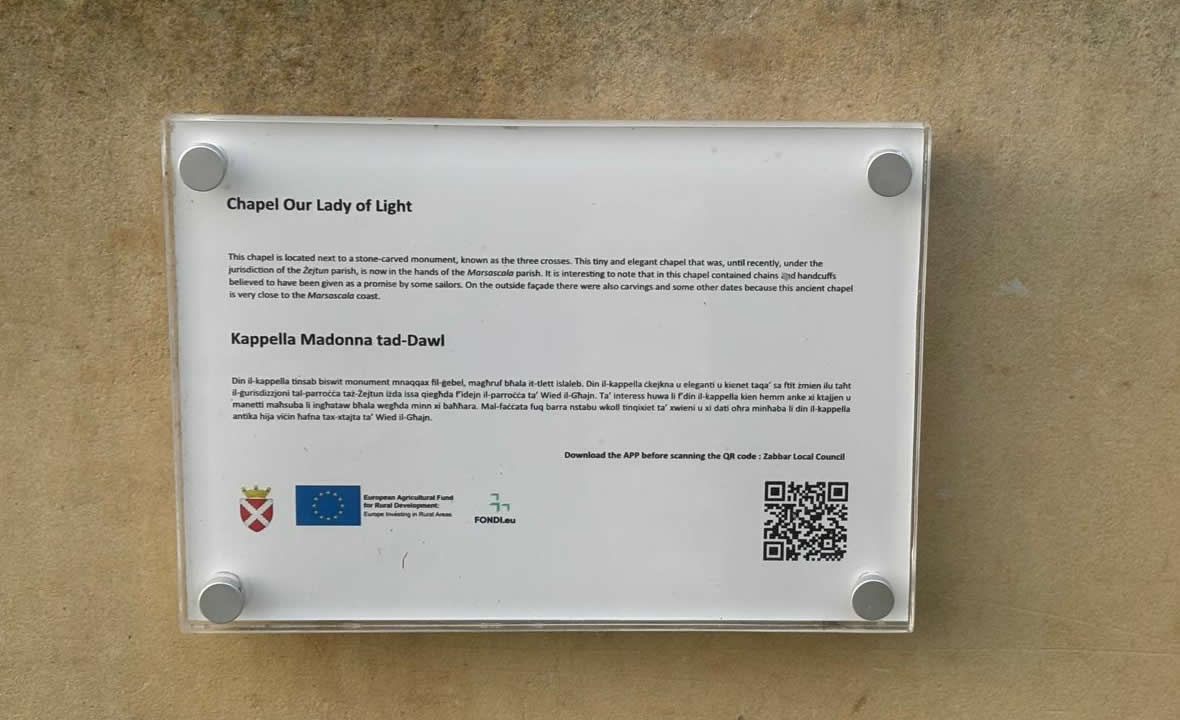
within the wider Marsaskala parish landscape. It is frequently mentioned together with the Three Crosses monument directly opposite/nearby,
making this a distinctive “paired” heritage stop in Malta’s southeast countryside.
Construction storyOlder chapel (pre-1654) → re-opened (1733) → rebuilt/expanded (1754–1758)
Recent worksFaçade, sacristy, and parvis restoration procurement (2021)
Full detailed history
The chapel’s “build date” depends on what you mean by “built”: sources describe a chapel here before 1654, while the structure broadly
associated with today’s chapel was rebuilt/expanded in the mid-18th century (1754–1758).
Before 1654: an earlier chapel dedicated to St John the Baptist
Accounts linked to Bidni’s Three Crosses heritage describe an earlier chapel in this area existing before 1654, then dedicated to
St John the Baptist. It was later closed (deconsecrated) by the bishop due to neglect and lack of maintenance—an outcome repeated
across remote rural chapels during periods of insecurity and population movement.
Mid-17th century: deconsecration during rural insecurity
Local historical writing associates the deconsecration with the mid-17th century and links abandonment to the dangers of living in an exposed countryside
landscape during frequent raids and attacks in the wider region.
1733: permission to reopen for worship
In 1733 the chapel was reopened for religious use, with local tradition naming Bishop Paul Alphéran de Bussan in connection with the decision.
This moment marks the chapel’s return from dormancy to active devotion in the Bidni countryside.
1737: a new Marian title takes root — “Madonna tad-Dawl”
By 1737, a painting representing Our Lady of Light was installed, and the Marian devotion became closely tied to the chapel’s identity.
Over time, the chapel became popularly known by this dedication, reflecting an 18th-century spread of this title across parts of the Maltese Islands.
1754–1758: rebuilding/expansion (the key construction phase for today’s chapel)
As devotion grew and more pilgrims visited, records and locality writing state that the chapel was rebuilt and/or expanded between 1754 and 1758.
This mid-18th-century construction phase is the most practical “confirmed” period to cite for the fabric most visitors associate with the chapel today.
Devotion, votive culture, and the countryside community
The chapel’s story is bound to votive tradition: accounts describe ex-voto offerings and thanksgiving linked to protection and assistance—especially connected
with danger and hardship (including storms and conflict at sea), reflecting how devotional practices travelled between coast and countryside.
Construction and architectural character
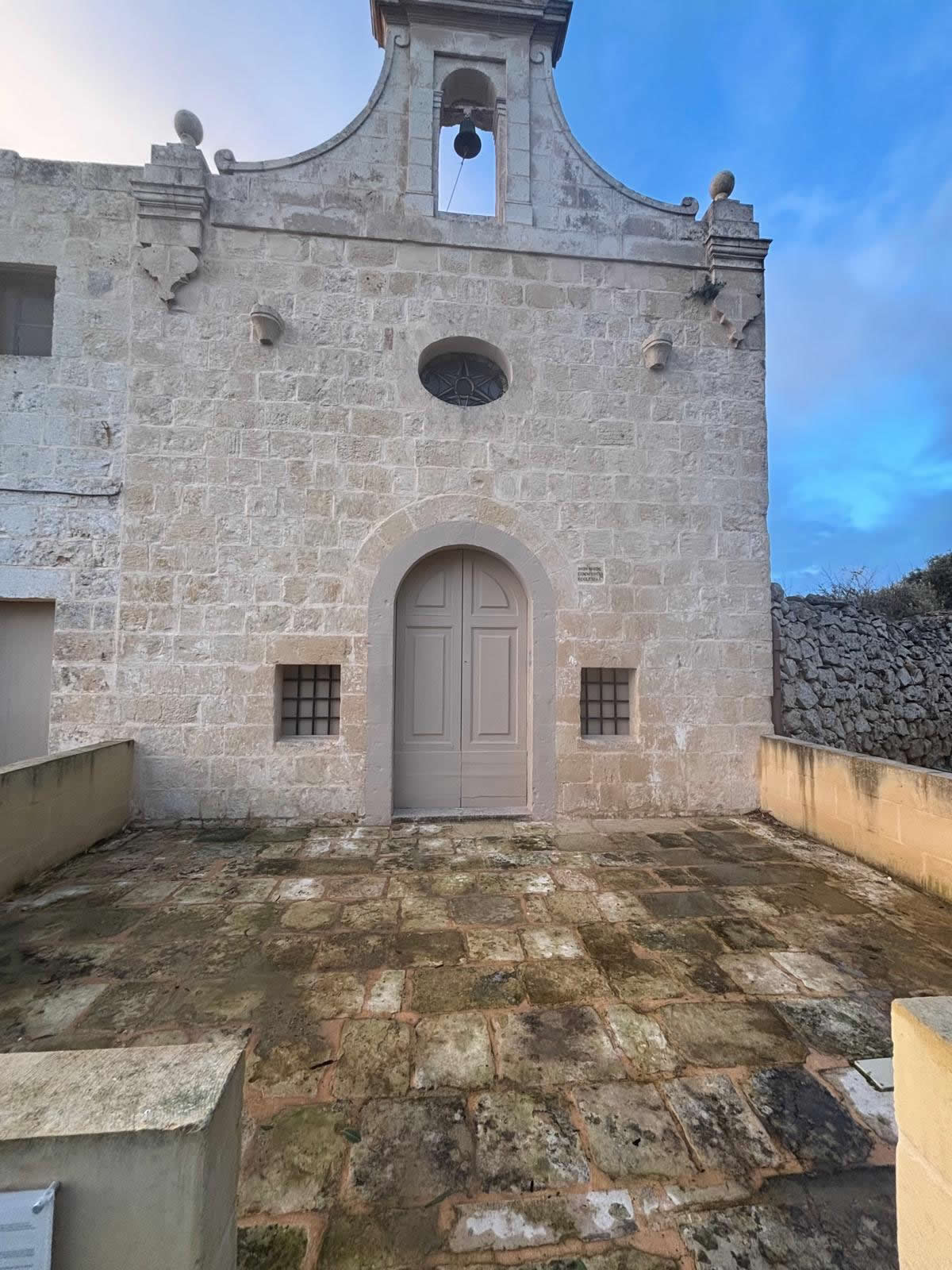
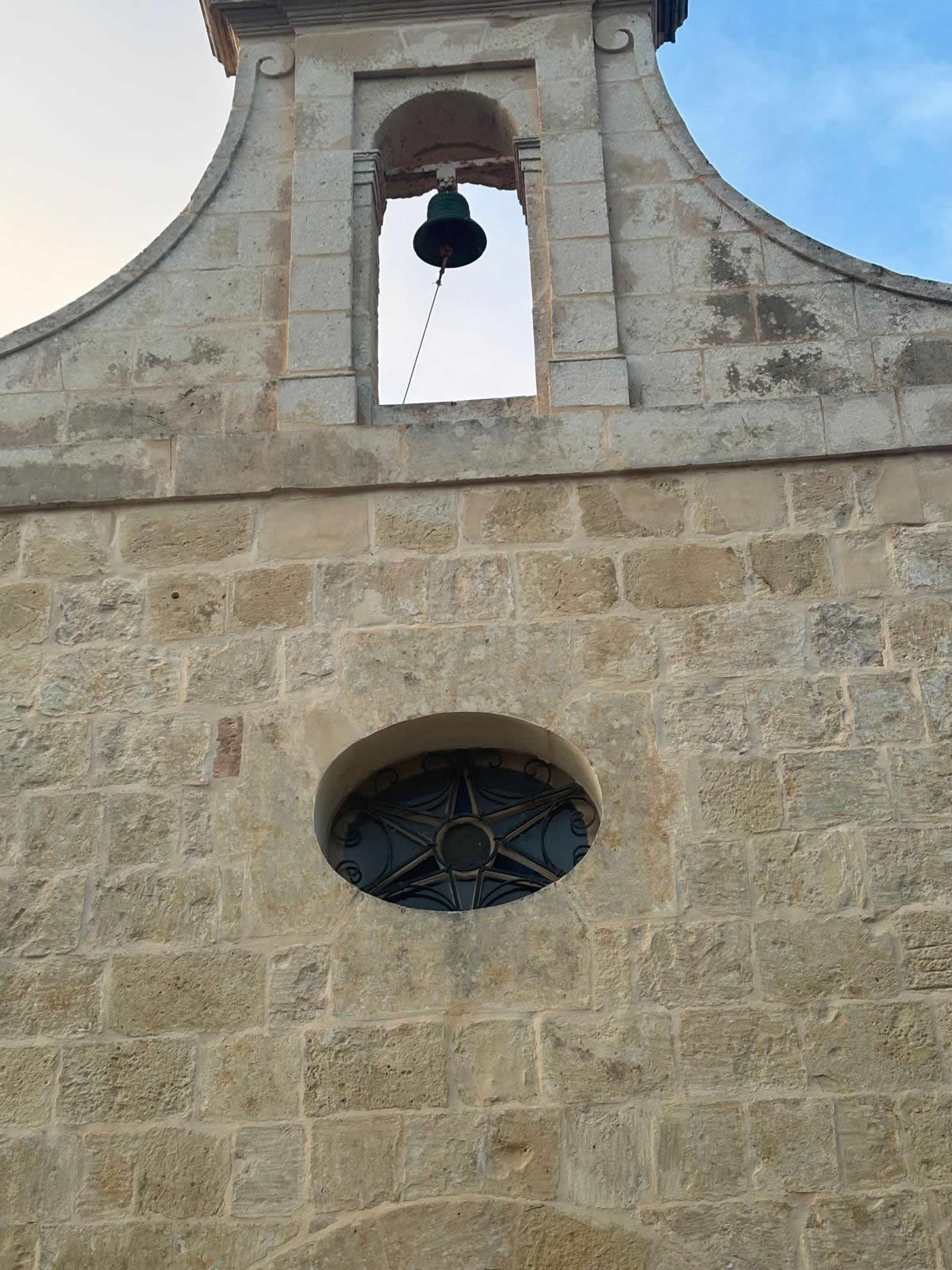
Madonna tad-Dawl Chapel is a compact rural church built in Malta’s traditional limestone. Its simple façade and small forecourt (parvis) match the
typical pattern of countryside chapels designed for local devotional life rather than large congregations.
The chapel’s physical history is best understood as layers: an earlier pre-1654 chapel on/near the site, a revival of worship in 1733,
and a mid-18th-century rebuilding/expansion that solidified the building’s current presence.
Restoration and conservation (modern works)
In recent years, the Marsaskala Parish issued procurement notices for the restoration of the main façade, sacristy, and parvis of Madonna tad-Dawl Chapel (Bidni).
These works focus on the most exposed elements of a rural chapel: external stone surfaces, rainwater vulnerability points, and the forecourt surface that receives the most wear.
If you have a plaque date, contractor handover date, or a parish update confirming completion, you can add it as a “Restoration completed (YYYY)” line in the timeline below.
How the chapel is used today
Today the chapel remains a countryside devotional landmark and a heritage stop for visitors exploring Bidni’s rural archaeology and the nearby Three Crosses monument.
Its liturgical use is typically occasional (rather than daily), reflecting its rural setting.
Timeline of key dates (confirmed / widely cited)
Date / period
Event
Before 1654
Earlier chapel in the Bidni area (dedicated to St John the Baptist) is recorded as existing before this year.
1654 (mid-1600s)
Chapel is reported as deconsecrated/closed due to neglect and the challenges of maintaining remote rural chapels.
Second half of the 17th century
The chapel is also described in heritage writing as built in this period (reflecting older origins and/or early fabric).
1733
Reopened for worship (permission associated with Bishop Paul Alphéran de Bussan in local accounts).
1737
A painting of Our Lady of Light is installed; devotion grows and the chapel becomes known as Madonna tad-Dawl.
1754–1758
Rebuilt/expanded due to growing devotion and visitor numbers—key construction phase for the present chapel.
2021 (issued)
Parish restoration procurement issued for the façade, sacristy, and parvis.