Overview
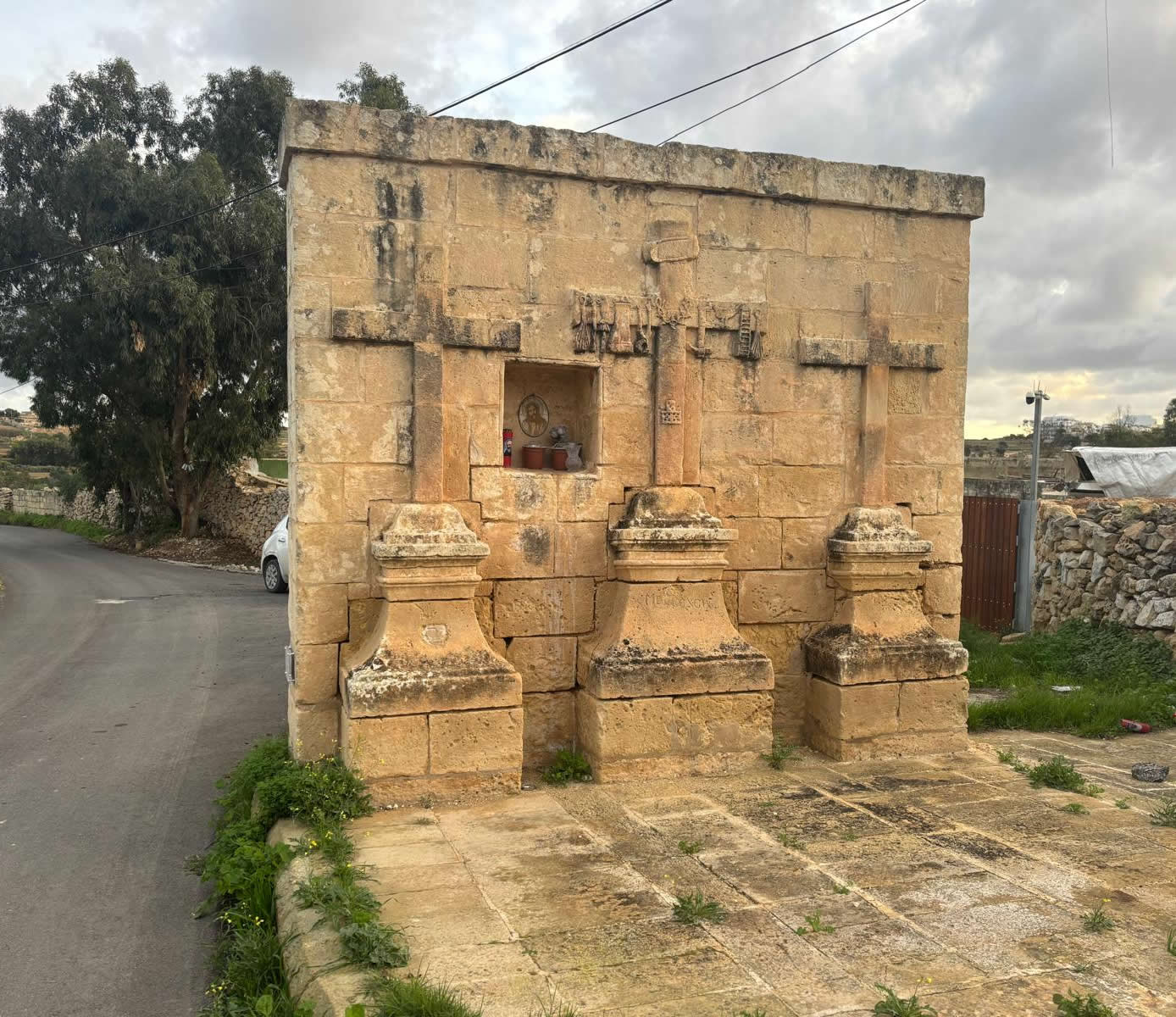
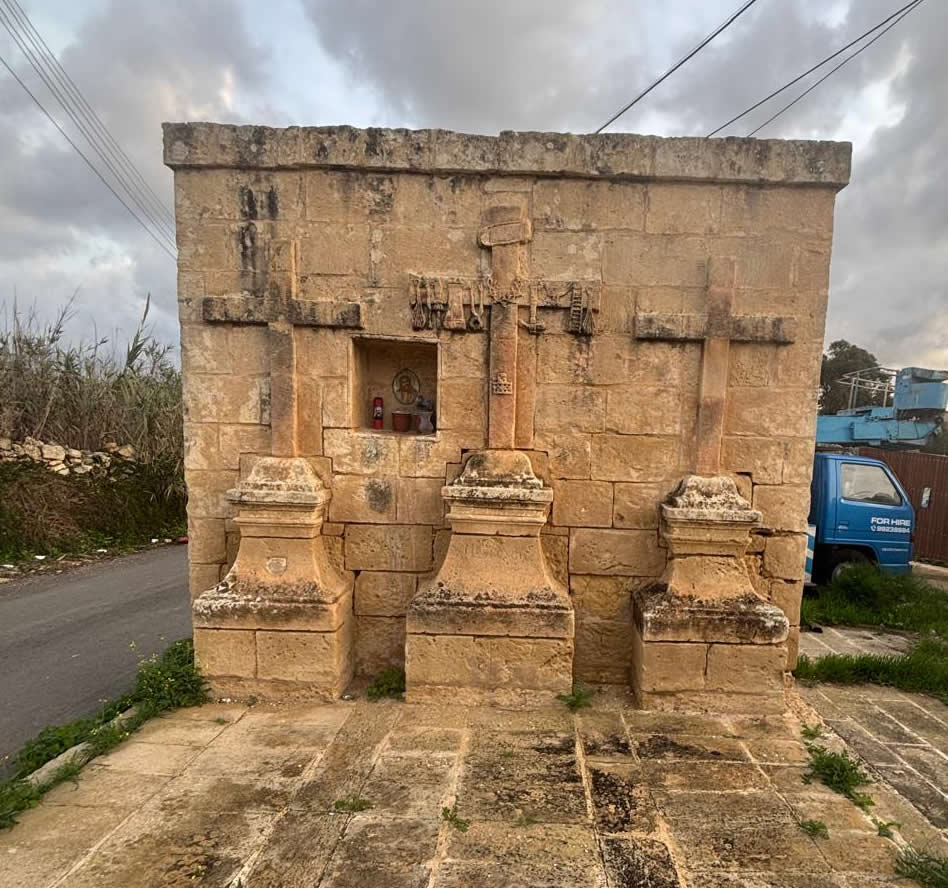
The Three Crosses are carved as a single composition in limestone—three crosses on one face, with the middle cross larger and more elaborate. The monument is closely associated with the nearby Chapel of Madonna tad-Dawl (Our Lady of Light), and local writing notes that the shrine’s deeper meaning is not conclusively documented, leaving room for several long-lived explanations and legends.
Full detailed history
What the monument represents
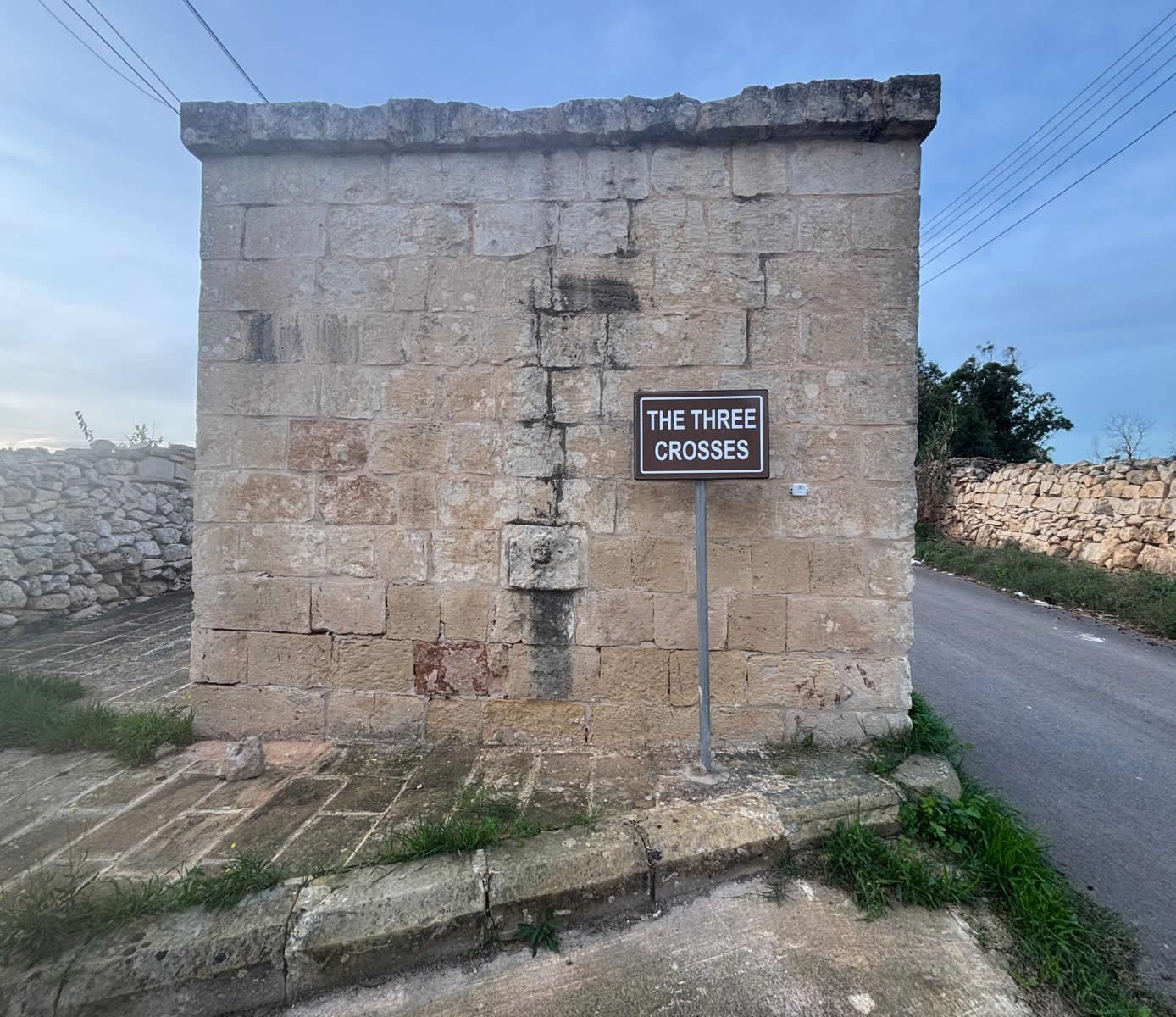
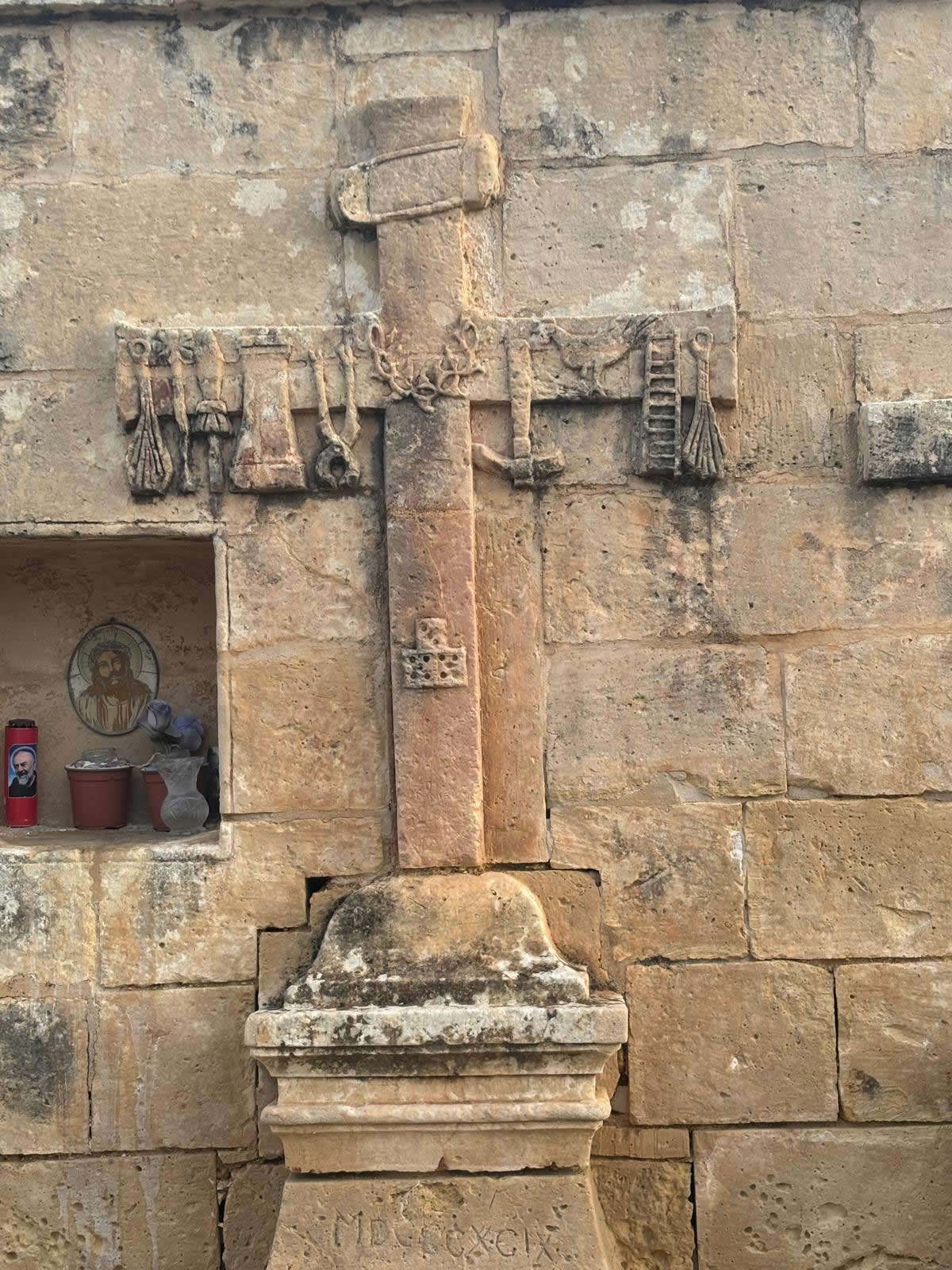
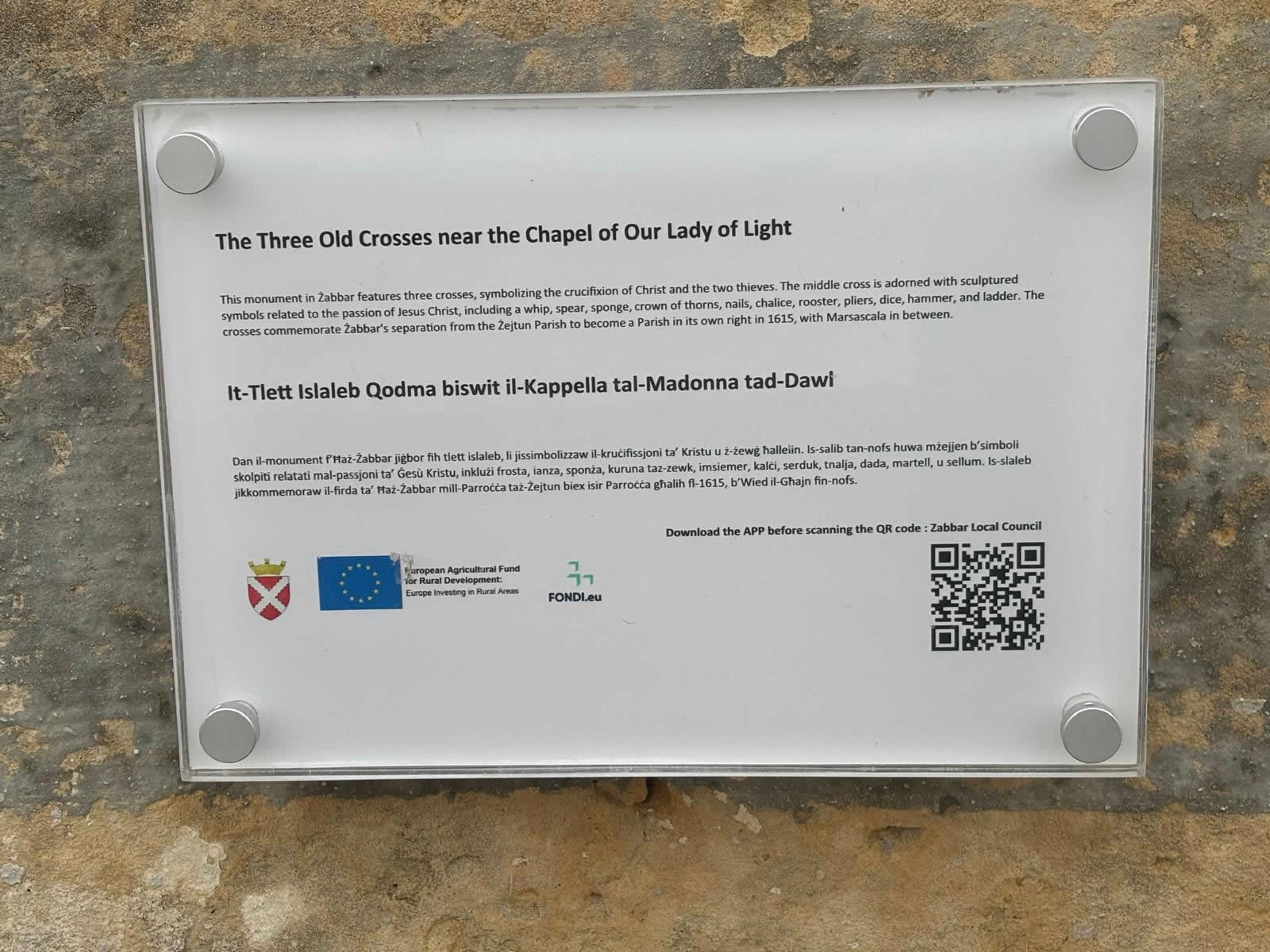
A close reading of the design suggests a Calvary scene: the Crucifixion on Golgotha, with Christ on the central cross and the two thieves on either side. The central cross carries carved instruments associated with the Passion—this is the feature that elevates the monument from “three crosses” into an unusually specific devotional object.
The Passion symbols carved on the central cross
Accounts of the shrine describe the central cross as carved with multiple symbols linked to the Passion—such as the scourge, lance, sponge, crown of thorns, nails, chalice, rooster, pliers, hammer, ladder, and even dice (recalling the casting of lots for Christ’s garments). These details are the key to appreciating the monument: the carving reads like a compact “visual prayer” of the Passion narrative rather than a purely decorative roadside marker.
Uncertain origins, strong local tradition
The shrine’s creator and exact date are not firmly known in the accessible written sources. What survives is tradition: one local explanation says the monument marked historic limits between communities (often described as boundary-marking), while other stories persist as folklore—ranging from a memorial for religious figures killed in an Ottoman raid, to a plague-burial tale, to other clearly legendary accounts. The persistence of these stories reflects how prominent the shrine is in local memory—even when the “paper trail” is thin.
A key neighbour: the Chapel of Madonna tad-Dawl
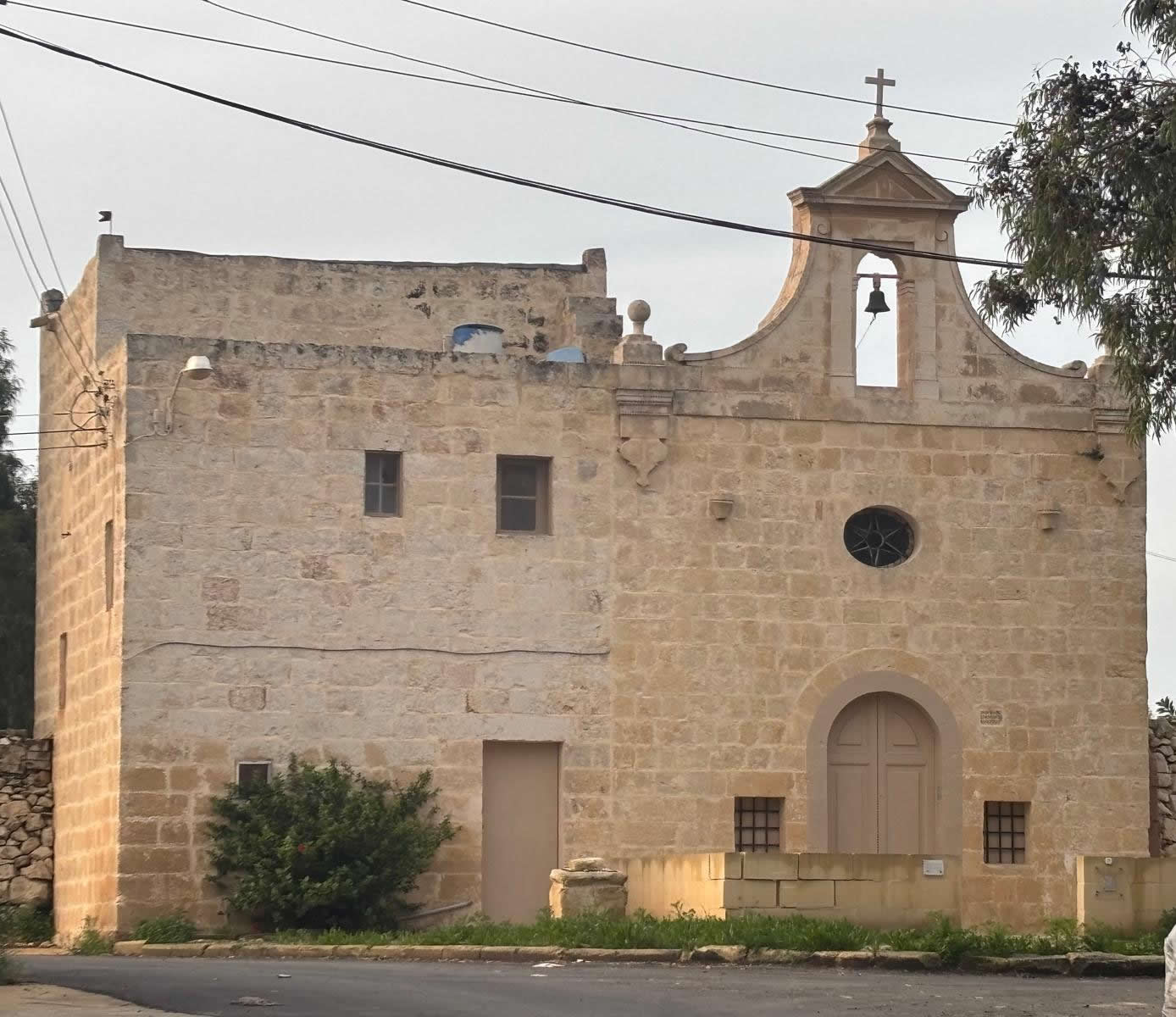
In front of the monument stands a small chapel dedicated to Madonna tad-Dawl. Local writing records that a chapel existed in the Bidni area before 1654 (originally dedicated to St John the Baptist), was later closed due to poor maintenance, then reopened in 1733 by Bishop Alpheran de Bussan, and in 1737 received an image/painting of the Madonna tad-Dawl. The chapel’s devotional pull is reflected in votive gifts and popular stories of protection—especially connected to danger at sea and storms.
What to look for on-site
- Scale difference: the central cross is larger—read it as Christ’s cross, flanked by the two thieves.
- Carved symbols: spend time identifying the Passion emblems on the central cross (look for tools/weapons, the rooster, ladder, and dice motifs).
- Material & weathering: note how limestone erosion softens detail—side lighting (early/late day) makes carvings easier to see.
- Relationship to the chapel: the shrine “faces” the devotional landscape—monument + chapel function as a paired stop in local tradition.
How to visit (practical guide)
- Best time: early morning or late afternoon for better carving visibility and calmer roadside conditions.
- Safety: it is roadside—park responsibly, keep children close, and avoid stepping into traffic.
- Respect: it is a devotional landmark for many locals—keep noise low and avoid climbing on the stonework.
- Photography tip: try a close-up of the central cross to capture the Passion symbols; include the chapel in wider shots for context.
Nearby places to visit (build a great mini-itinerary)
1) Chapel of Madonna tad-Dawl (Bidni)
The natural pairing with The Three Crosses. Even from outside, it anchors the shrine in a devotional landscape and adds strong historical dates (pre-1654 origins; reopened 1733; image added 1737).
2) Marsaskala (Wied il-Għajn) waterfront
Finish your stop with an easy coastal walk and harbour views. It’s a strong contrast: quiet inland shrine → lively seaside promenade.
3) Żonqor area viewpoints (optional extension)
If you want a countryside + coast day, continue toward the Żonqor side for open views and a broader sense of the southeast coastline.
FAQ
Is The Three Crosses monument in Marsaskala or Żabbar?
It’s near Bidni on the road linking the two—often described in connection with both areas. For navigation, use the coordinates: 35.869282, 14.554826.
Is the date of the monument known?
The exact date and maker are not securely documented in the commonly cited local summaries; its meaning is preserved mainly through tradition and multiple local explanations rather than a single confirmed origin story.
What makes the central cross special?
It carries a rich set of Passion symbols carved into stone—details that many visitors miss if they only glance at the monument from the road.