St Cathaldus Chapel, Rabat (Il-Knisja ta’ San Katald)
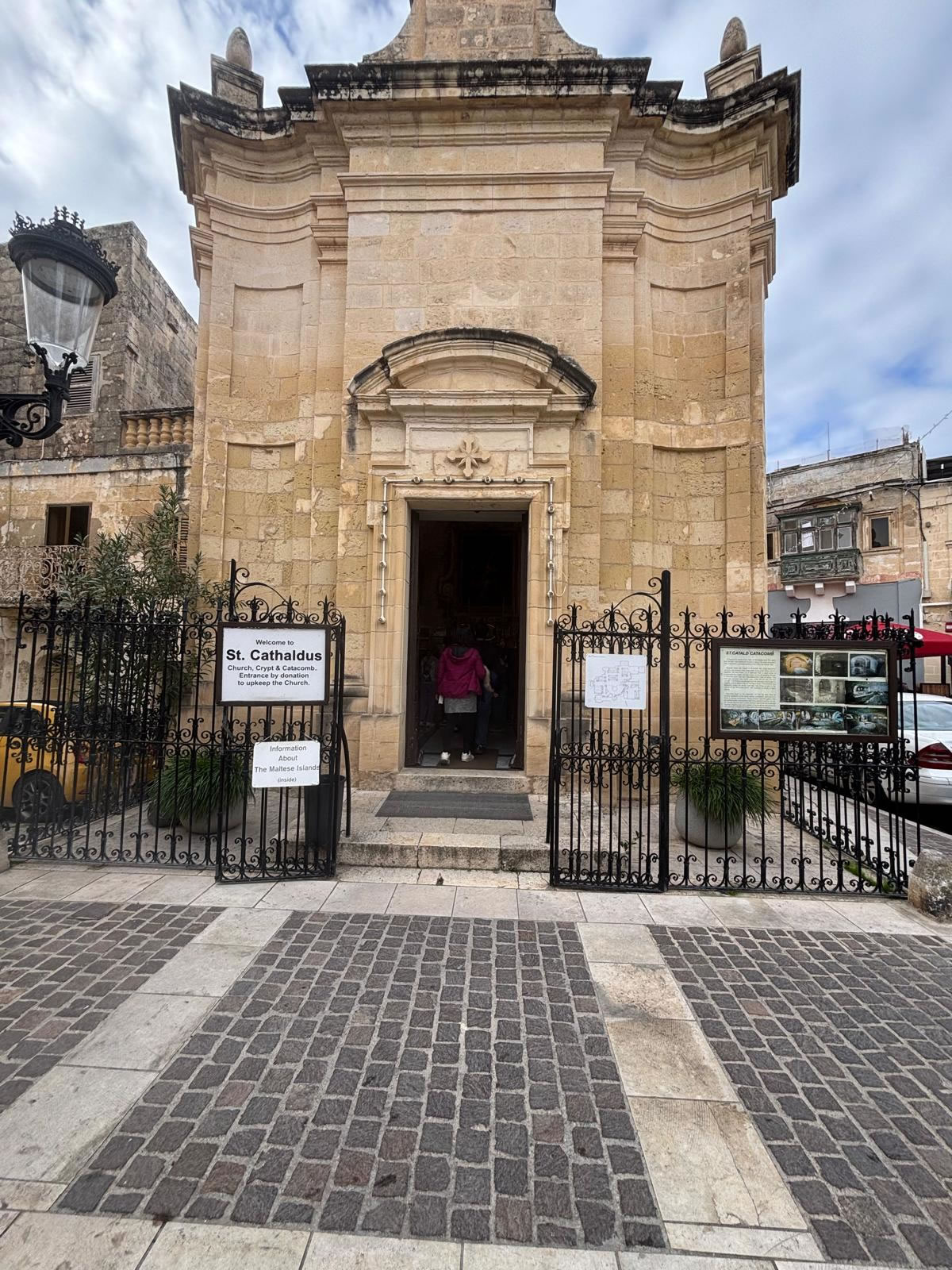
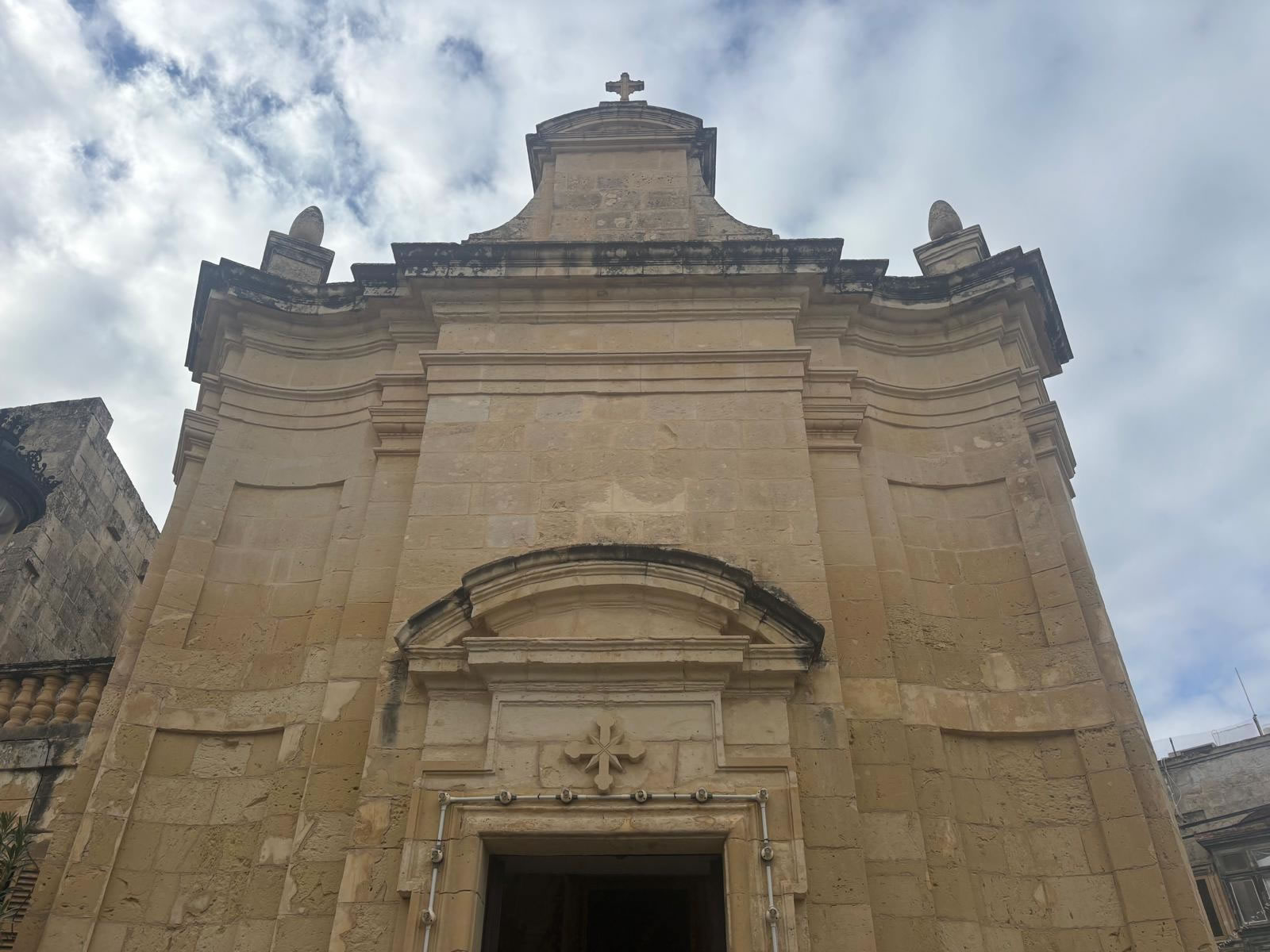
A compact Baroque chapel standing above an older burial landscape, St Cathaldus (San Katald) is one of Rabat’s most distinctive devotional sites: a church built over a medieval crypt and an underlying Christian hypogeum, where worship, memory, and archaeology meet.
Quick facts
- Name: St Cathaldus Chapel (Il-Knisja ta’ San Katald)
- Location: Rabat, Malta
- Coordinates: 35.881771, 14.398110
- Dedication: St Cathaldus (San Katald), an Irish bishop-saint
- Built (current chapel): completed in 1745
- Earlier phases: a medieval chapel and crypt over a Christian hypogeum/catacombs
- Closed by apostolic visitation: 1575
- Medieval chapel demolished: 1739 (to make way for the Baroque building)
- Modern restoration (external phase): completed as a first phase in the late 2000s (documented in 2009–2010 publications)
Full history and key dates
Early medieval veneration and the burial landscape
The chapel stands at the edge of an area dense with rock-cut burial chambers associated with the ancient cemetery outside the walls of Roman Melite. The presence of a Christian hypogeum beneath the site indicates that this was a place connected to burial and remembrance from a very early period. Local tradition also links the dedication to St Cathaldus with a story of the saint stopping in Malta while returning from pilgrimage.
Medieval chapel and closure in 1575
The first church dedicated to St Cathaldus is described as medieval in origin. In 1575, the Apostolic Visitor Mons. Pietro Dusina reported the chapel in a condition that led to its closure to the public. The site was later redecorated and reopened, showing continuing devotion and local attachment.
1739–1745: from demolition to the Baroque chapel
By the 18th century the older structure was replaced. The medieval chapel was demolished in 1739, clearing the way for a larger Baroque church constructed above the medieval crypt and the underlying Christian hypogeum. The chapel in its present form was completed in 1745. No firm archival record has yet identified the architect or master mason.
18th century devotion, ex-votos, and the titular painting
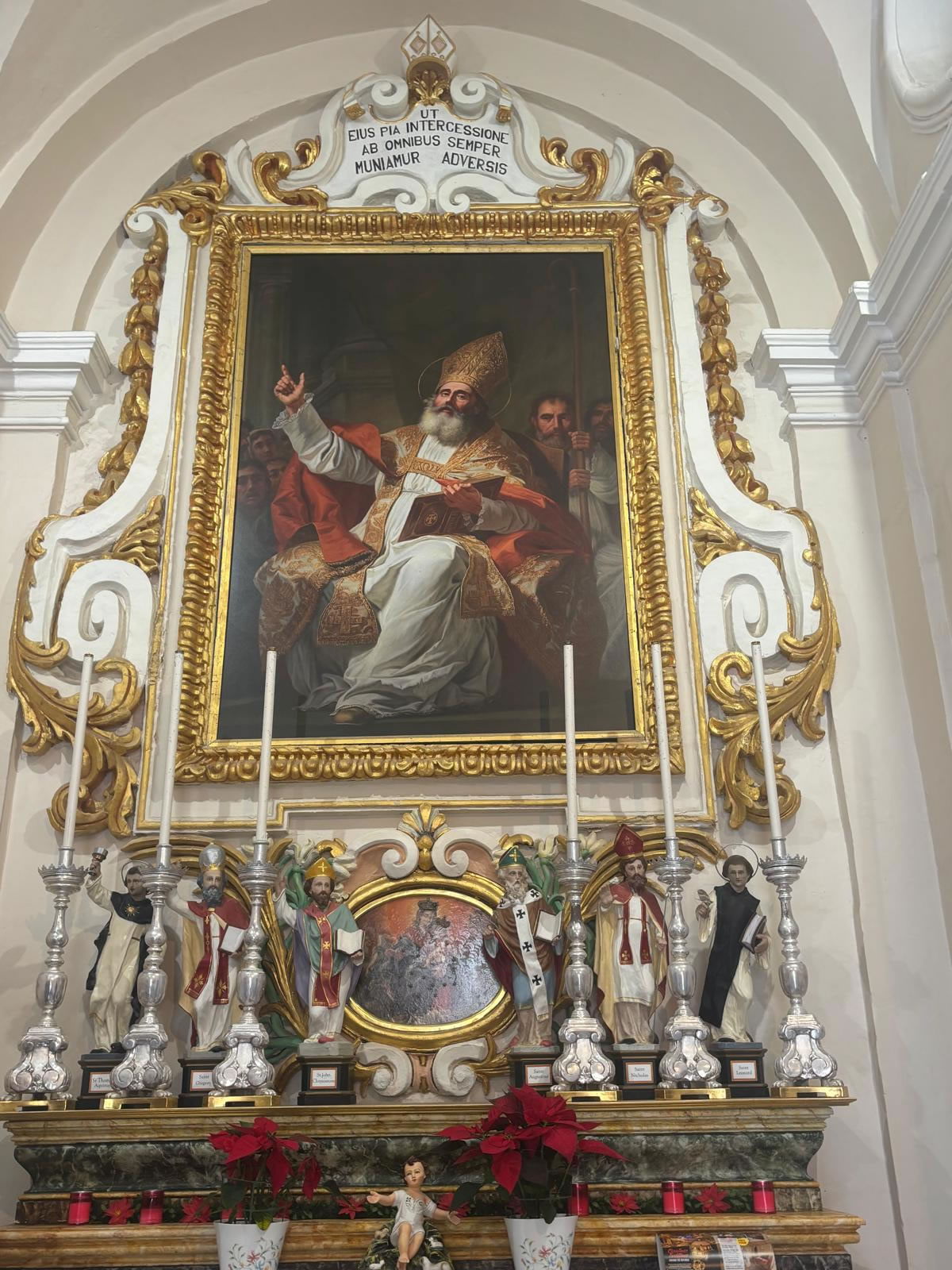
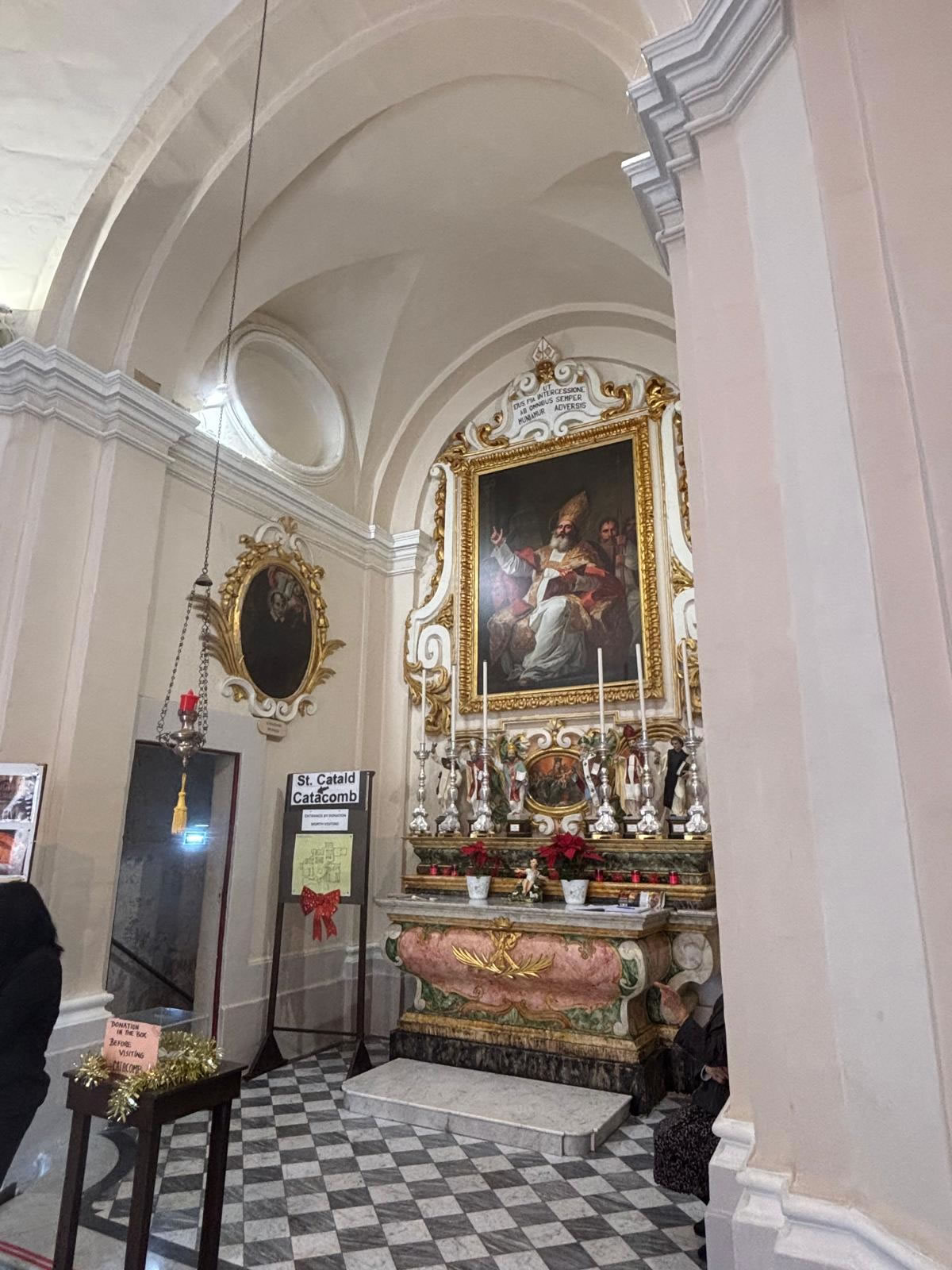
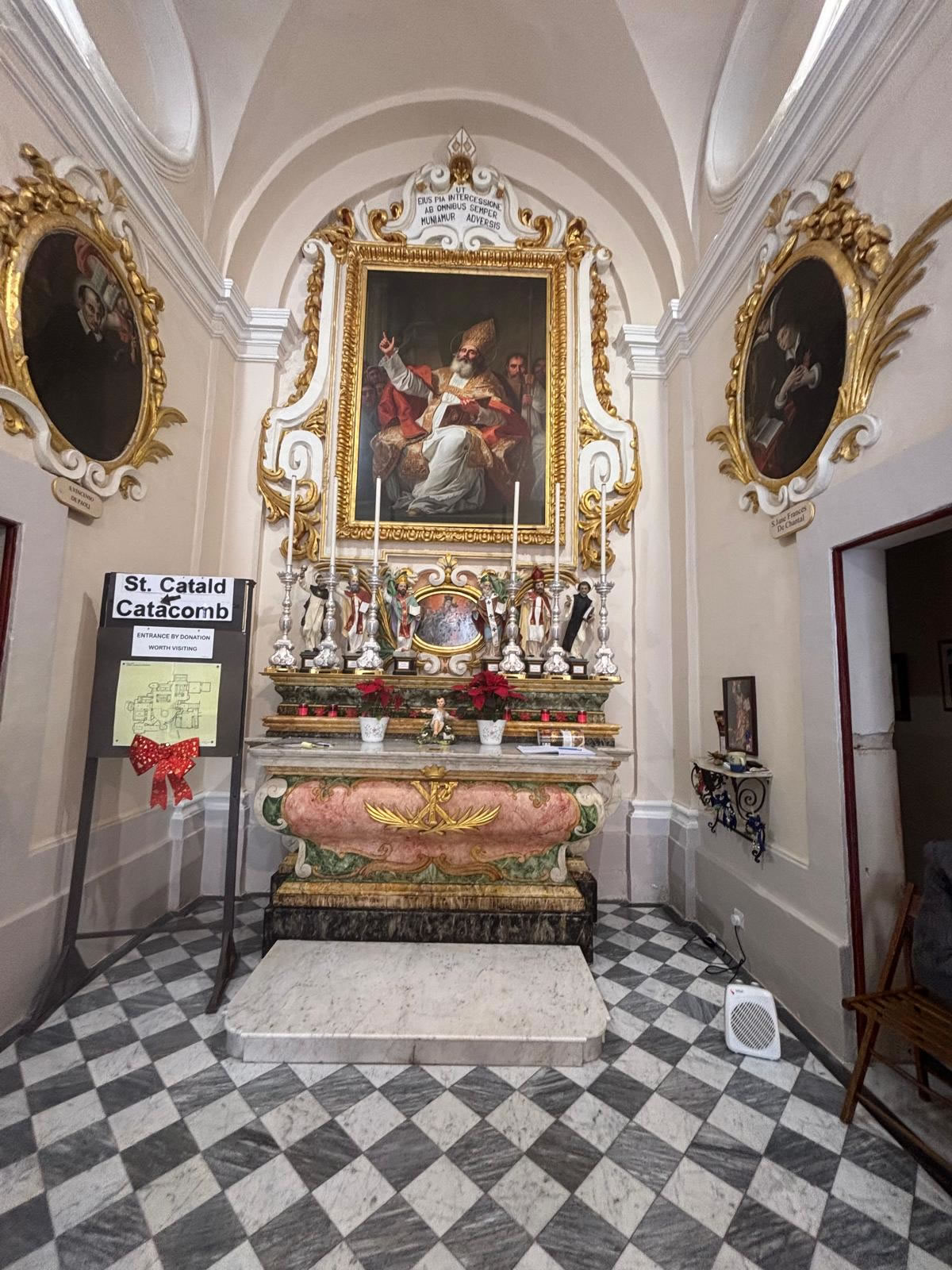
Devotion to St Cathaldus remained strong. Mass was celebrated regularly, and offerings were made in honour of the saint, including ex-voto paintings. The titular painting behind the main altar depicts St Cathaldus as a bishop and is attributed to the French painter Antoine de Favray (1706–1798).
Modern era: restoration and renewed care
By the late 20th and early 21st centuries the chapel suffered from lack of maintenance and damaging interventions. A key problem was the use of non-breathable cement rendering and paint on the façade, which trapped moisture and accelerated deterioration. A major restoration initiative—supported by parish authorities and heritage funding—removed harmful cementitious layers, repaired stonework, restored missing sculptural elements, repointed joints with appropriate lime-based materials, and improved roof weatherproofing.
Architecture and notable features
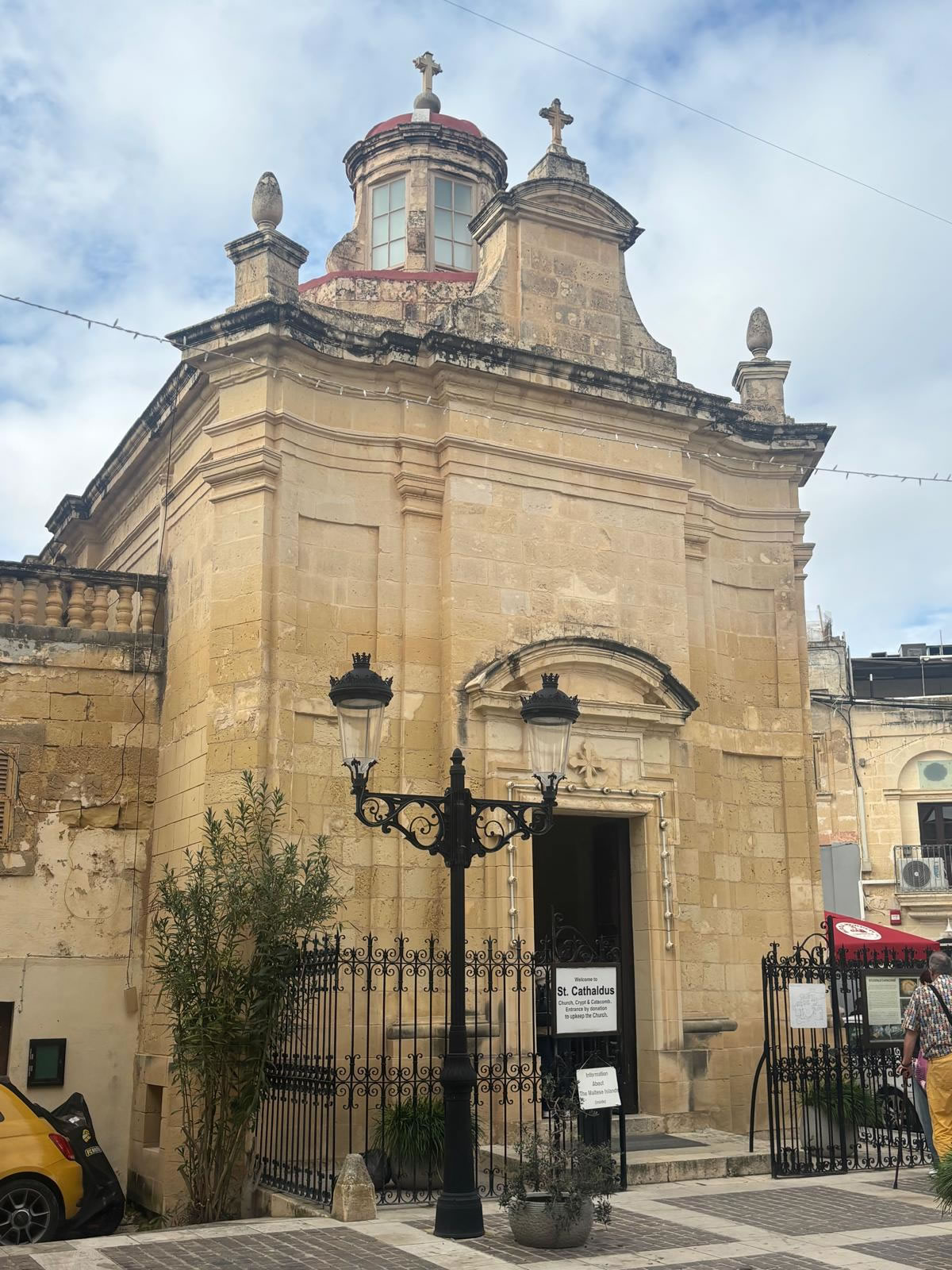
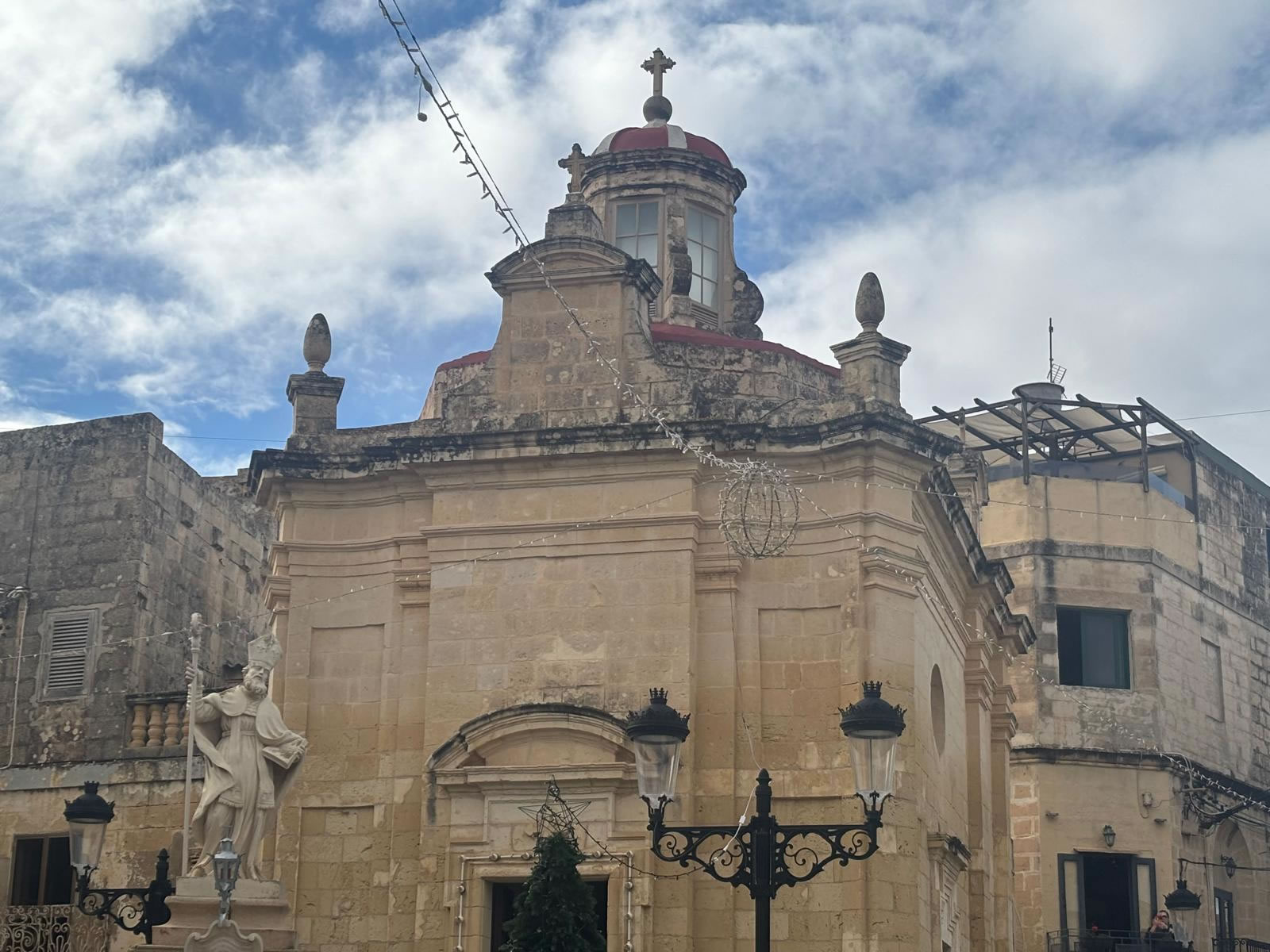
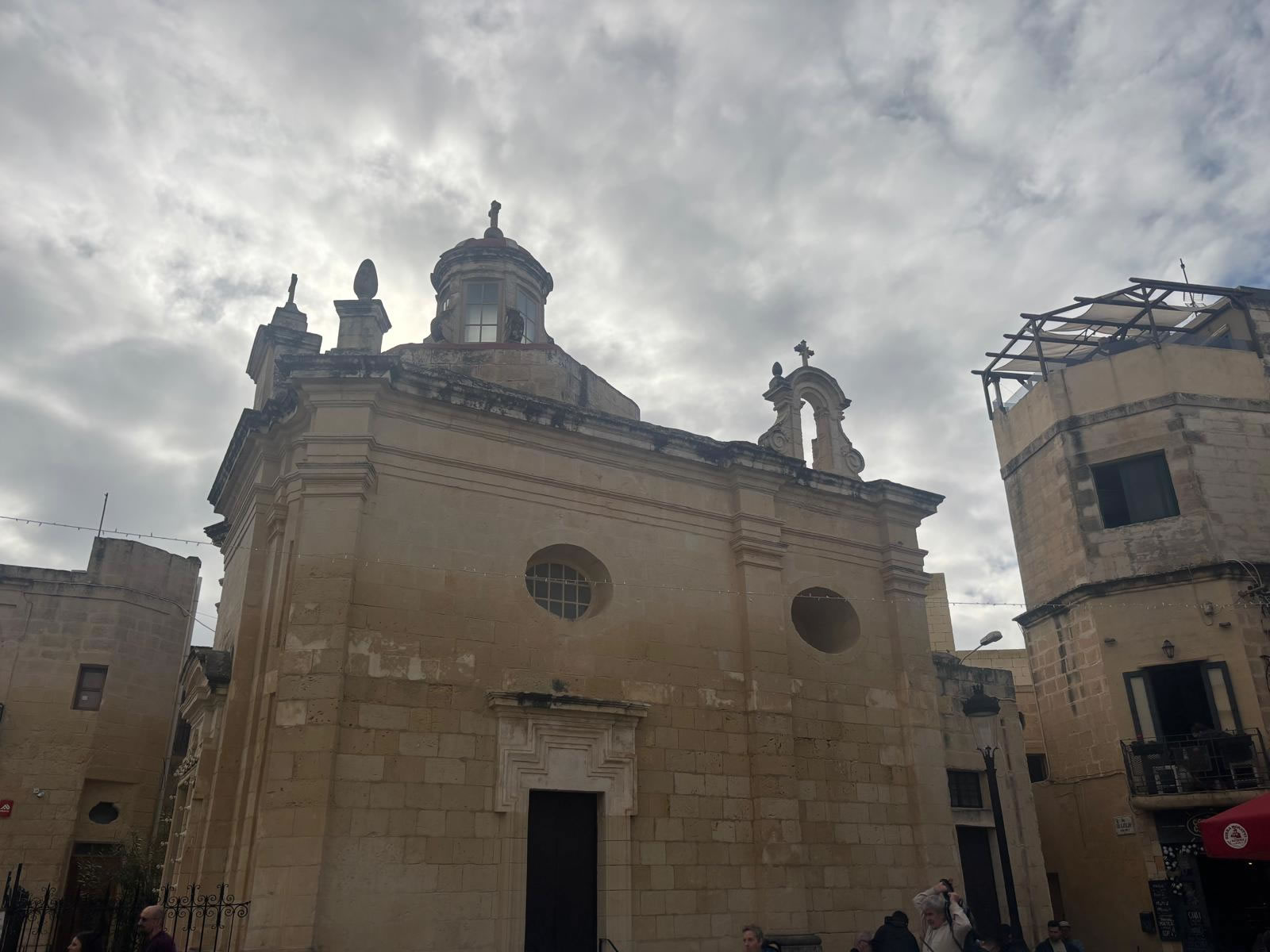
St Cathaldus is a fine example of mid-18th-century Maltese Baroque on a small scale: a compact plan, a strongly modelled façade, and a dome-and-lantern profile that makes it a clear landmark within Rabat’s streetscape.
- Baroque façade: sculpted portal surrounds and mouldings typical of the period.
- Dome and lantern: prominent silhouette above the chapel’s compact volume.
- Statue in the square: a long-standing urban focal point associated with the chapel.
- Altar painting: St Cathaldus portrayed as a bishop (attributed to Antoine de Favray).
Crypt, hypogeum and catacombs beneath the chapel
One of the chapel’s defining features is what lies beneath it. The Baroque building sits over a medieval crypt, and below that is a Christian hypogeum—part of Rabat’s wider early-Christian burial landscape. These underground spaces include multiple tomb types and features associated with Maltese Christian-era catacombs, including areas used for funerary rituals.
Underground heritage is fragile. Conditions (humidity, salts, soot) can rapidly affect surfaces and historic fabric—especially where lighting and access are uncontrolled.
Restoration and conservation (what was done and why it mattered)
The restoration of the chapel’s exterior addressed rising damp and stone decay caused by impermeable cement coatings. Conservation choices focused on minimum stone replacement, careful repair with compatible materials, reconstruction only where elements were missing, and cleaning methods that avoided harsh abrasion.
- Key issue tackled: removal of damaging cement rendering and non-porous paint that trapped moisture.
- Stonework conservation: selective replacement only where necessary; lime-based repair mortars elsewhere.
- Reinstated elements: reconstruction of missing/broken details where historically evidenced.
- Repointing: raking out failed joints and repointing using compatible lime-based mixes.
- Roof protection: improved sealing to reduce water ingress to masonry and decorative elements.
Use today
St Cathaldus Chapel remains a devotional landmark while also functioning as an entry point into an underground heritage experience. Access may vary depending on liturgical use, conservation requirements, and guided-visit arrangements for the catacombs.
Beneath the Chapel: St Cathaldus Crypt & Catacombs
Nearby (eMalta): Lunzjata Chapel, Rabat and
St Leonard Cave Church, Lunzjata.
Visiting information
- Coordinates: 35.881771, 14.398110
- Locality: Rabat, Malta
- Best for: Baroque architecture, saint devotion, underground heritage
- Respect: modest dress when open; keep noise low and do not touch stonework or underground surfaces.
FAQ
When was St Cathaldus Chapel built?
The current Baroque chapel was completed in 1745, after the earlier medieval chapel was demolished in 1739.
What happened in 1575?
The chapel was reported and closed to the public in 1575 following the apostolic visitation of Mons. Pietro Dusina.
Are there catacombs beneath the chapel?
Yes. The chapel stands above a medieval crypt and an underlying Christian hypogeum/catacombs, part of Rabat’s wider early-Christian burial landscape.
What is the main artwork inside?
The titular altarpiece depicts St Cathaldus as a bishop and is attributed to Antoine de Favray (1706–1798).