📍 Location
Location Map Coordinates 35.886425, 14.403800
Introduction
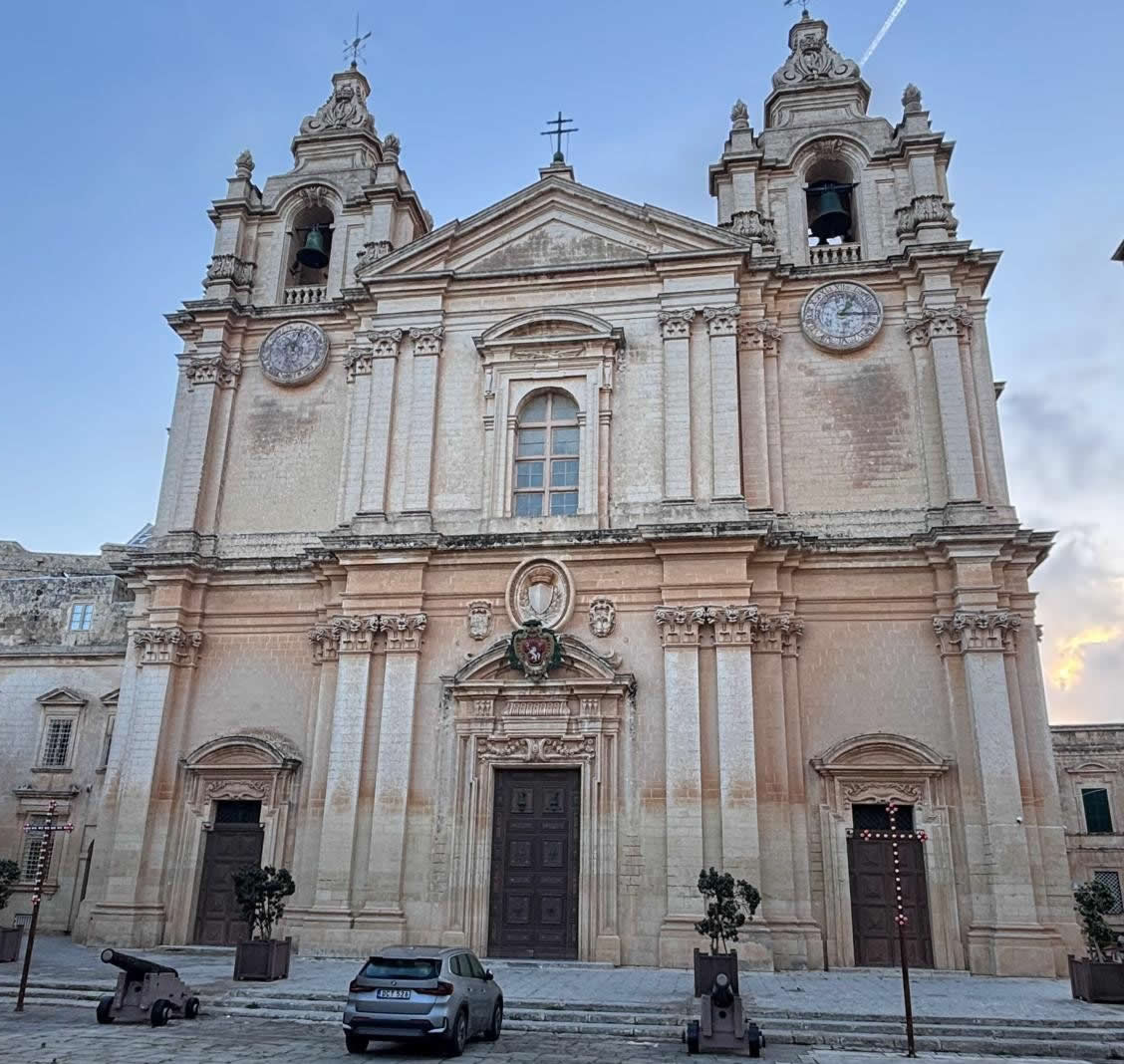
The Cathedral of St Paul, commonly referred to as the Mdina Cathedral, is one of the most important historic churches in Malta and the principal cathedral of the Roman Catholic Archdiocese of Malta. Located in the heart of the fortified city of Mdina, the cathedral stands in the main square and dominates the skyline of Malta’s ancient capital.
The present Baroque cathedral was built between the late seventeenth and early eighteenth centuries, replacing an earlier medieval cathedral that had been severely damaged during the devastating Sicilian earthquake of 1693. The building is widely regarded as the masterpiece of Maltese architect Lorenzo Gafà and remains one of the most significant examples of Baroque architecture in the Maltese Islands.
Tradition and Early Christian Origins
According to longstanding Christian tradition, the site of the cathedral occupies the location where the Roman governor of Malta, Publius, met the Apostle Paul after the latter was shipwrecked on the island in AD 60 during his journey to Rome. The Acts of the Apostles recounts that Paul healed Publius’s father and preached Christianity during his stay in Malta.
Over time this tradition led to the establishment of a church on the site, commemorating the arrival of Christianity in Malta. Early religious buildings may have existed here during Roman or Byzantine periods, although definitive archaeological evidence remains limited.
During the Arab occupation of Malta beginning in the ninth century, the earlier Christian structures were destroyed or repurposed, and the site may have served as a mosque before the Norman reconquest restored Christianity to the island in the late eleventh century.
The Medieval Norman Cathedral
Following the Norman conquest of Malta in 1091, a cathedral was constructed on this site during the twelfth or thirteenth century. This medieval cathedral combined Romanesque and Gothic architectural elements and served as the principal ecclesiastical centre of the island for several centuries.
Over time the building underwent numerous modifications and expansions. As the seat of the Bishop of Malta, the cathedral played a central role in the island’s religious and political life during the medieval period.
The medieval structure stood for several centuries until it was largely destroyed by the powerful Sicily earthquake of 1693, which caused widespread damage across the Maltese Islands.
The Great Earthquake of 1693
On 11 April 1693 a catastrophic earthquake struck the region of Sicily and Malta, severely damaging many buildings across the islands. The medieval cathedral in Mdina suffered extensive structural damage.
Although some parts of the building remained intact, the cathedral chapter ultimately decided to dismantle the damaged structure and rebuild the cathedral entirely.
This decision created an opportunity to construct a new cathedral reflecting the Baroque architectural style that had become dominant during the period of the Knights of St John.
Construction of the Present Cathedral
The new cathedral was designed by the Maltese architect Lorenzo Gafà, one of the most important Baroque architects in Malta. Construction began in 1696, incorporating some surviving elements of the earlier medieval cathedral such as the choir and sacristy.
Work progressed rapidly, and the building was largely completed by 1702. The cathedral was consecrated on 8 October 1702 by Bishop Davide Cocco Palmieri.
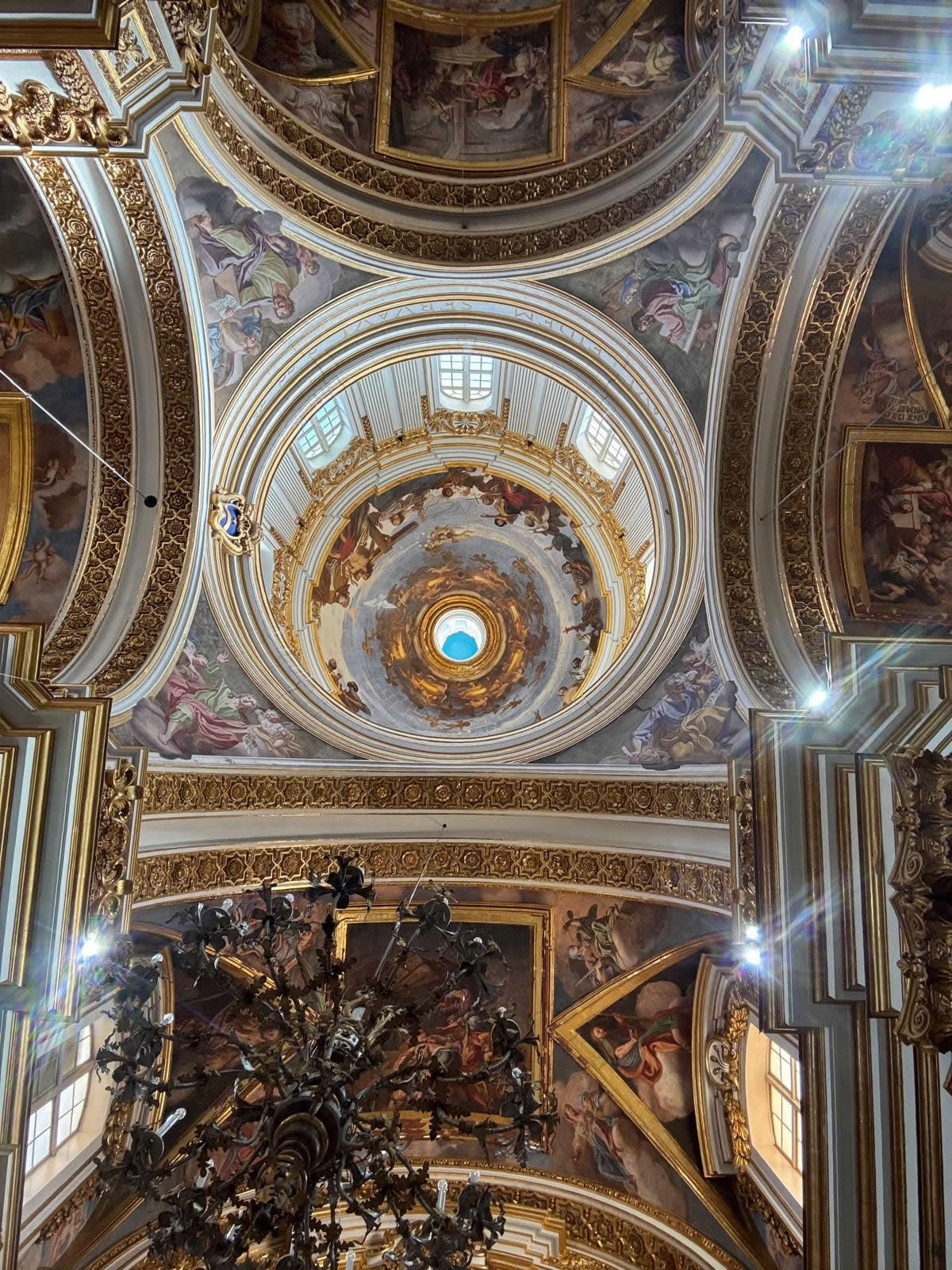
The final stages of construction were completed in 1705, when work on the impressive dome was finished.
The result was a magnificent Baroque cathedral that reflected both the artistic ambitions of the period and the importance of Mdina as Malta’s historic capital.
Architecture
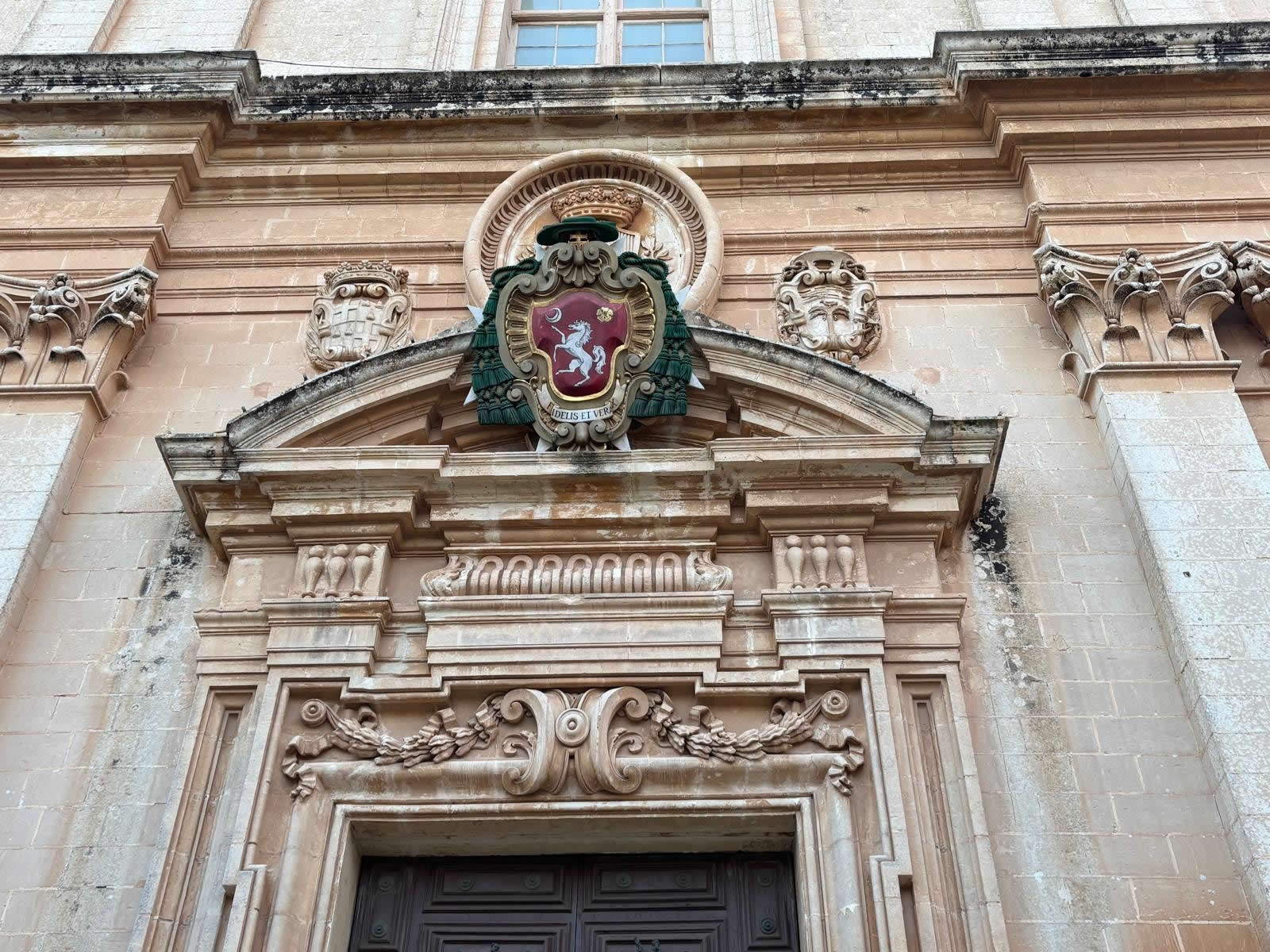
The Cathedral of St Paul is designed in the Baroque style and follows a traditional Latin cross plan. Its façade features balanced architectural proportions and decorative stone carvings that reflect the refined Baroque aesthetic introduced during the rule of the Knights Hospitaller.
The cathedral’s large dome is one of the most recognisable features of the Mdina skyline. The structure is flanked by two bell towers that enhance the visual symmetry of the façade.
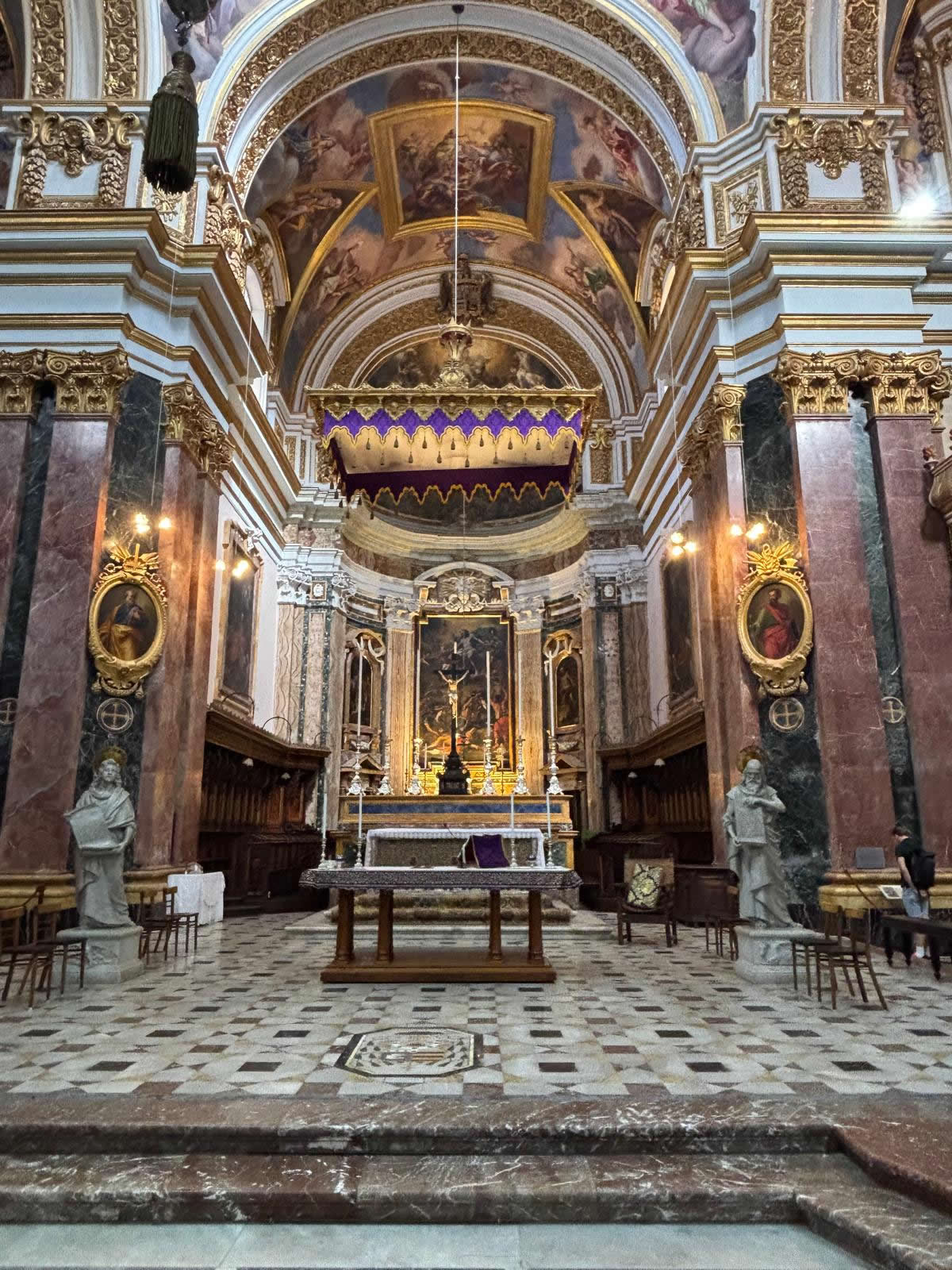
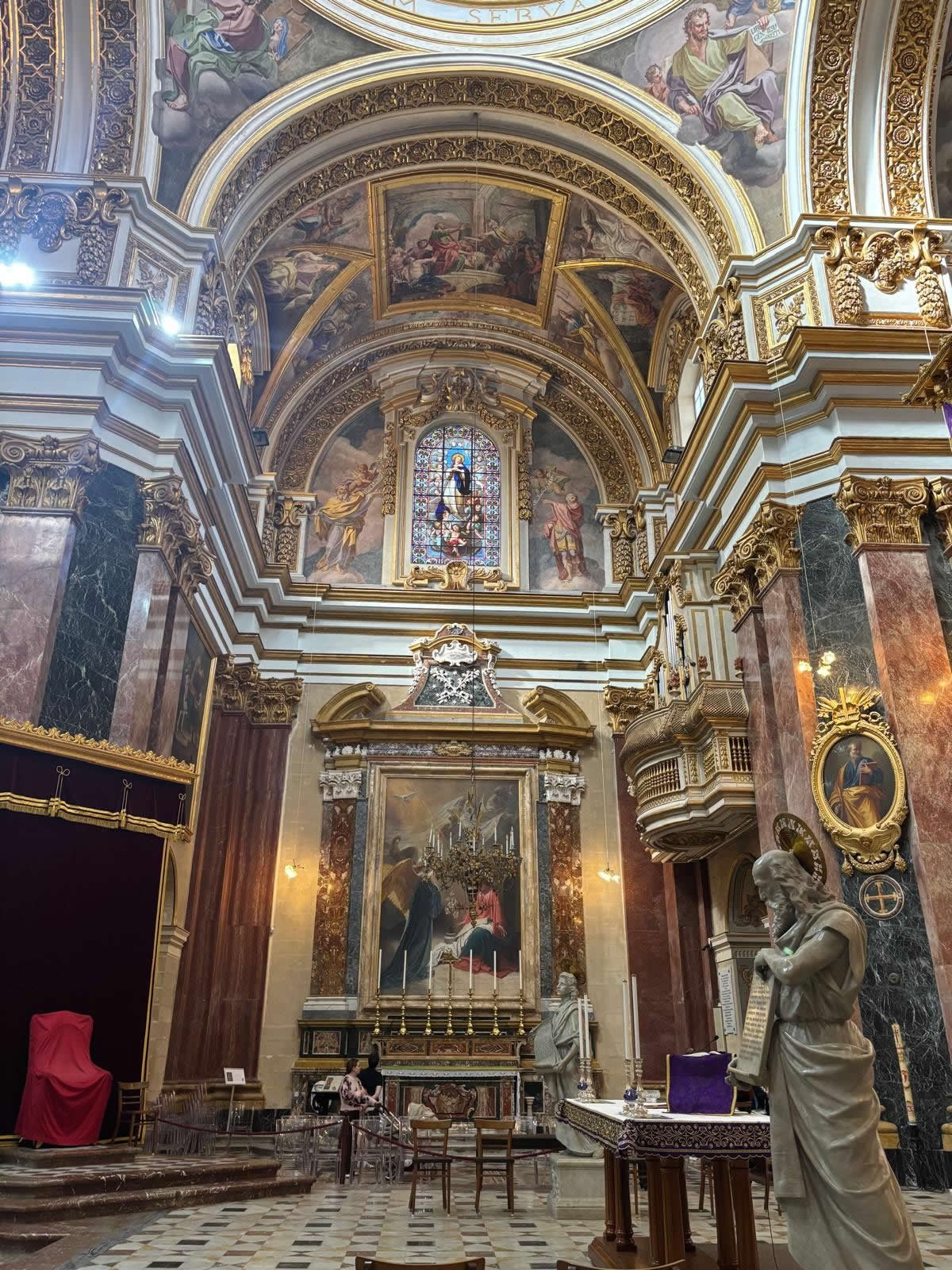
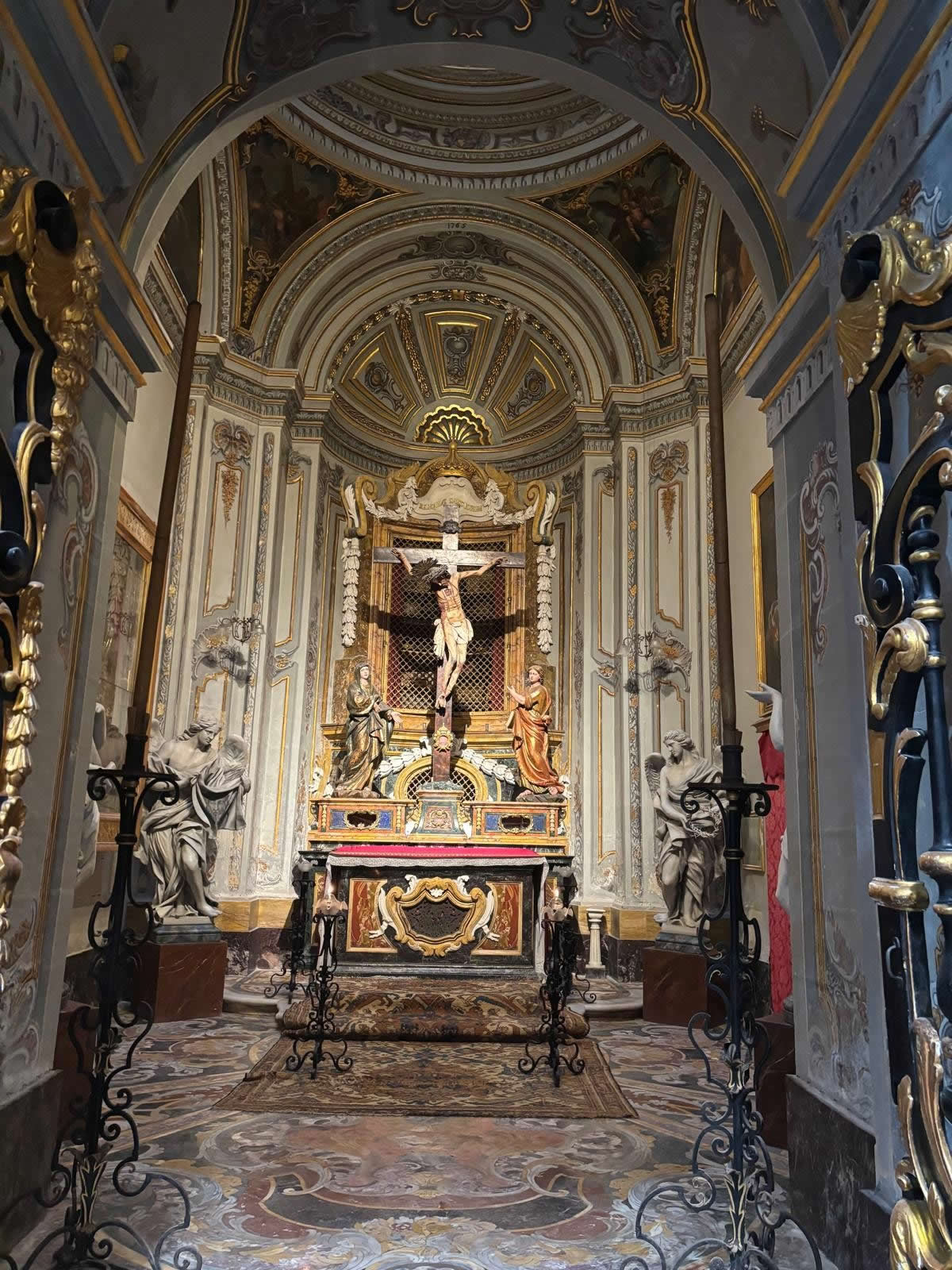
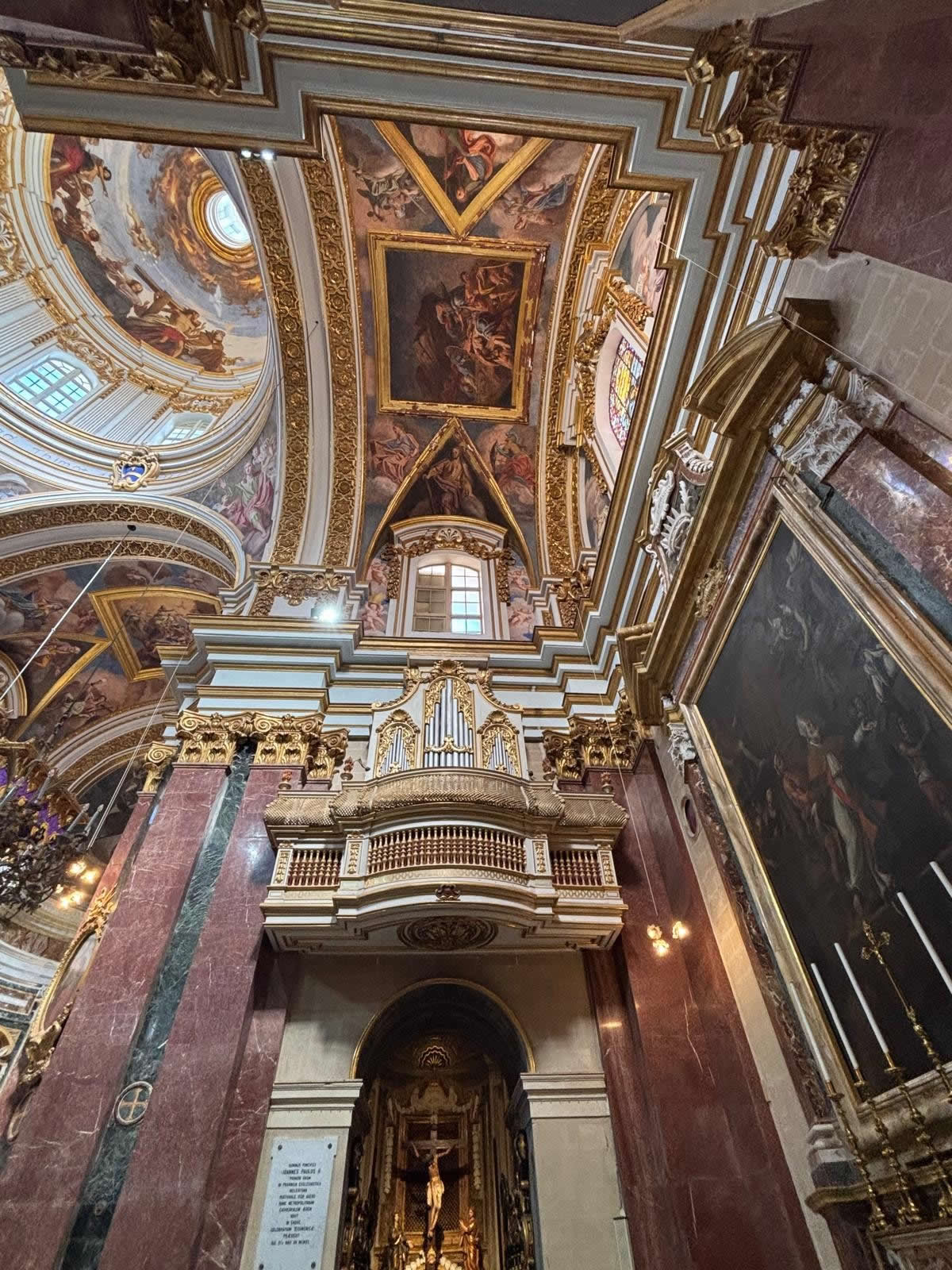
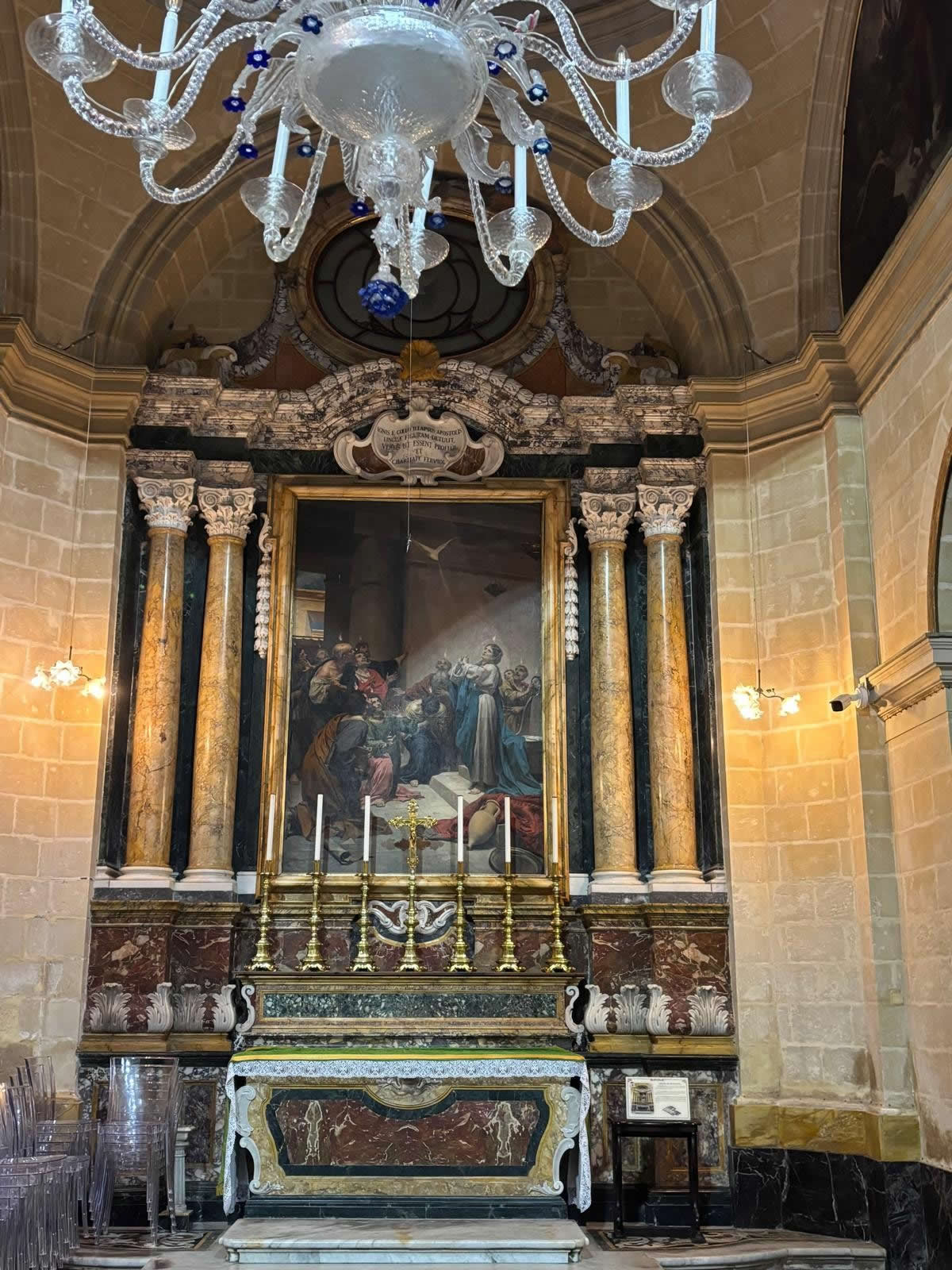
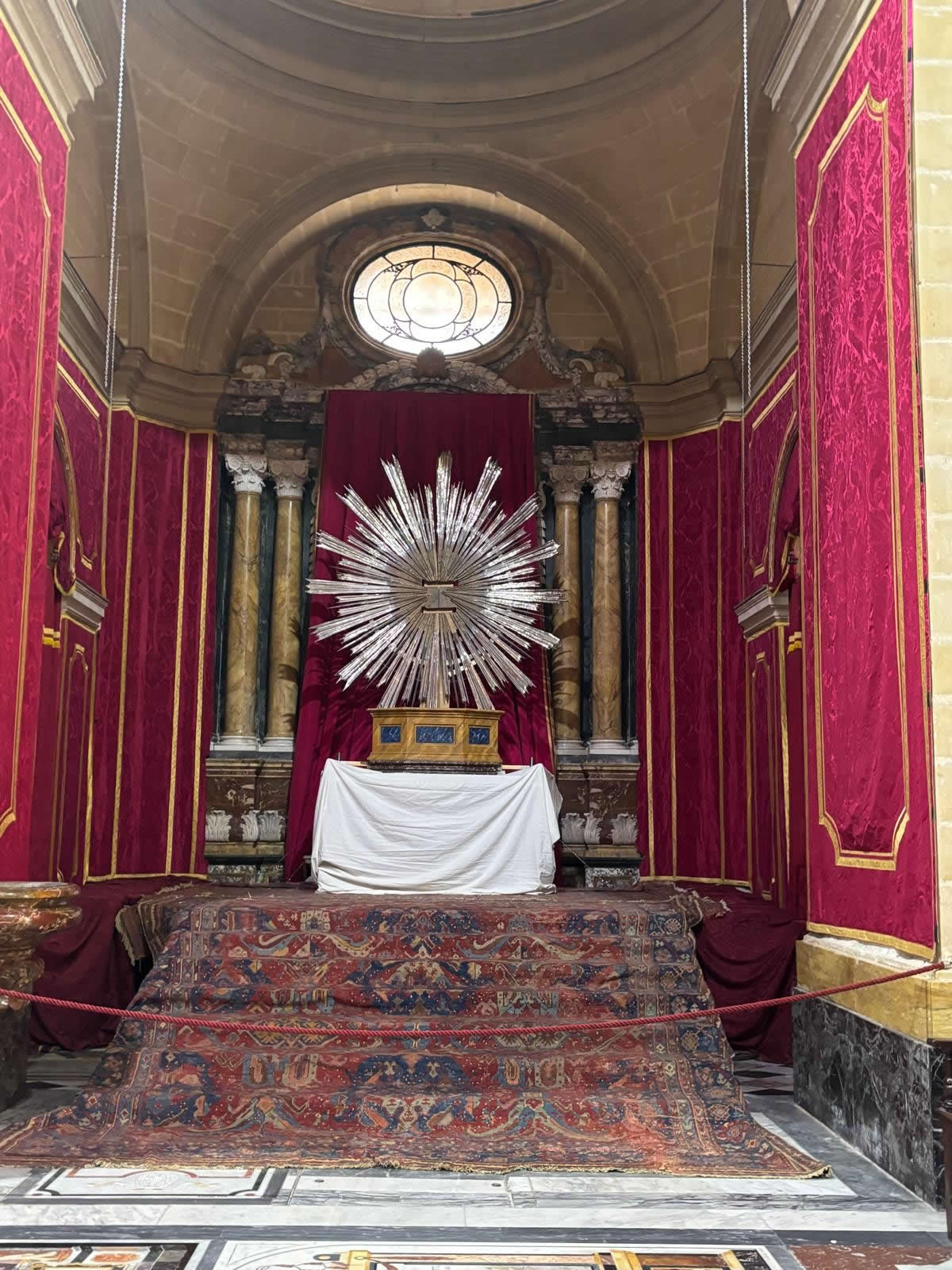
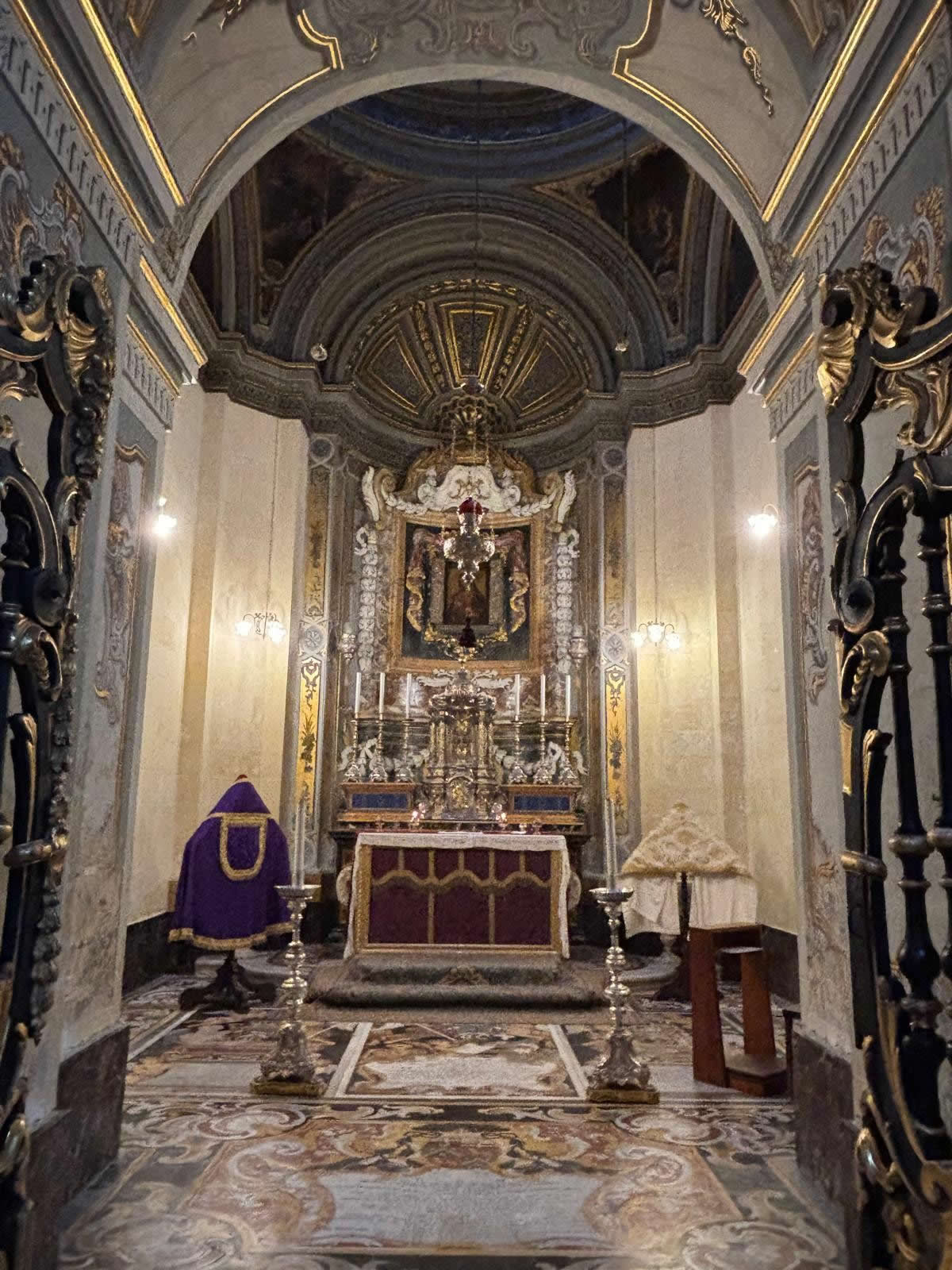
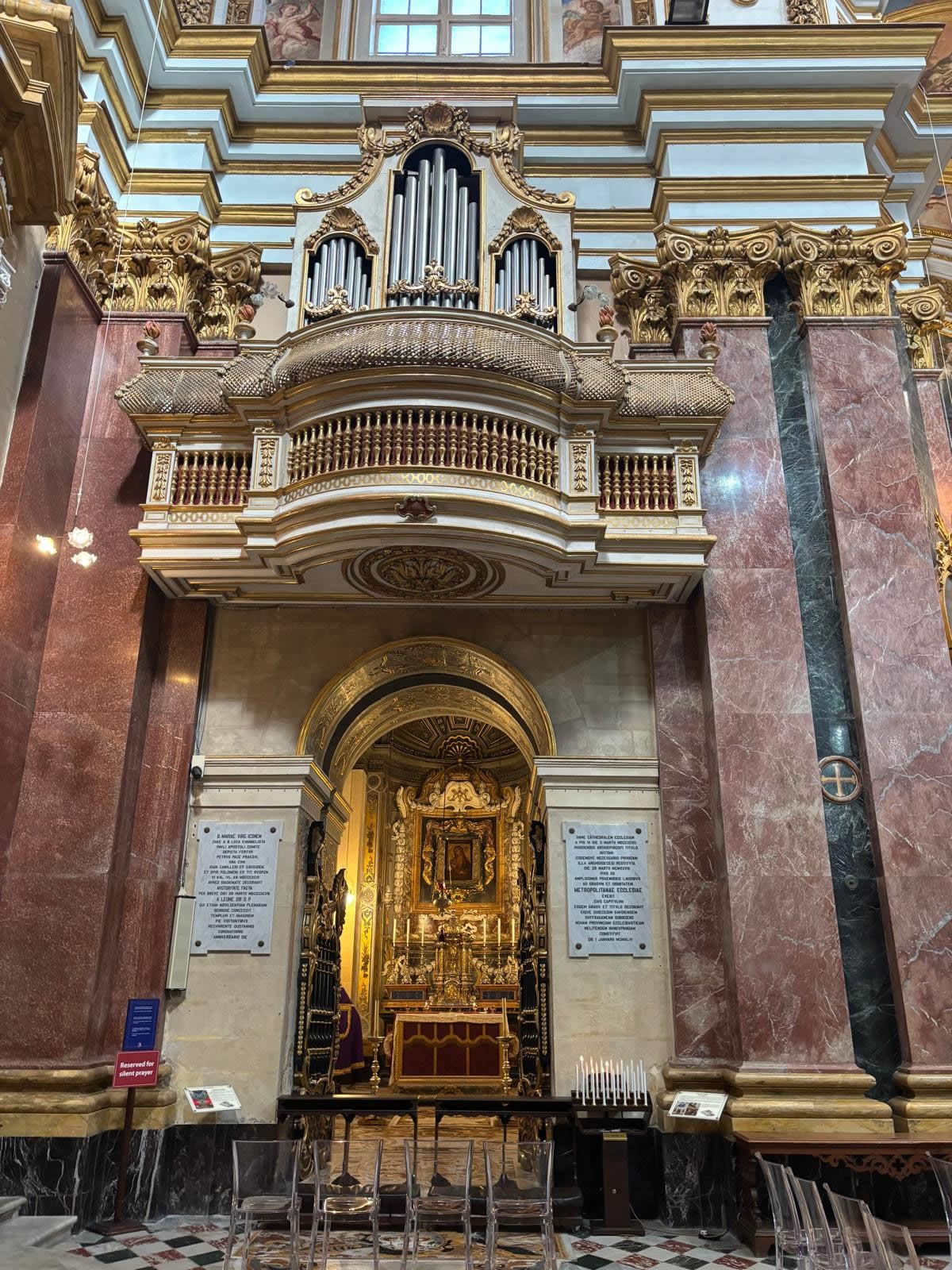
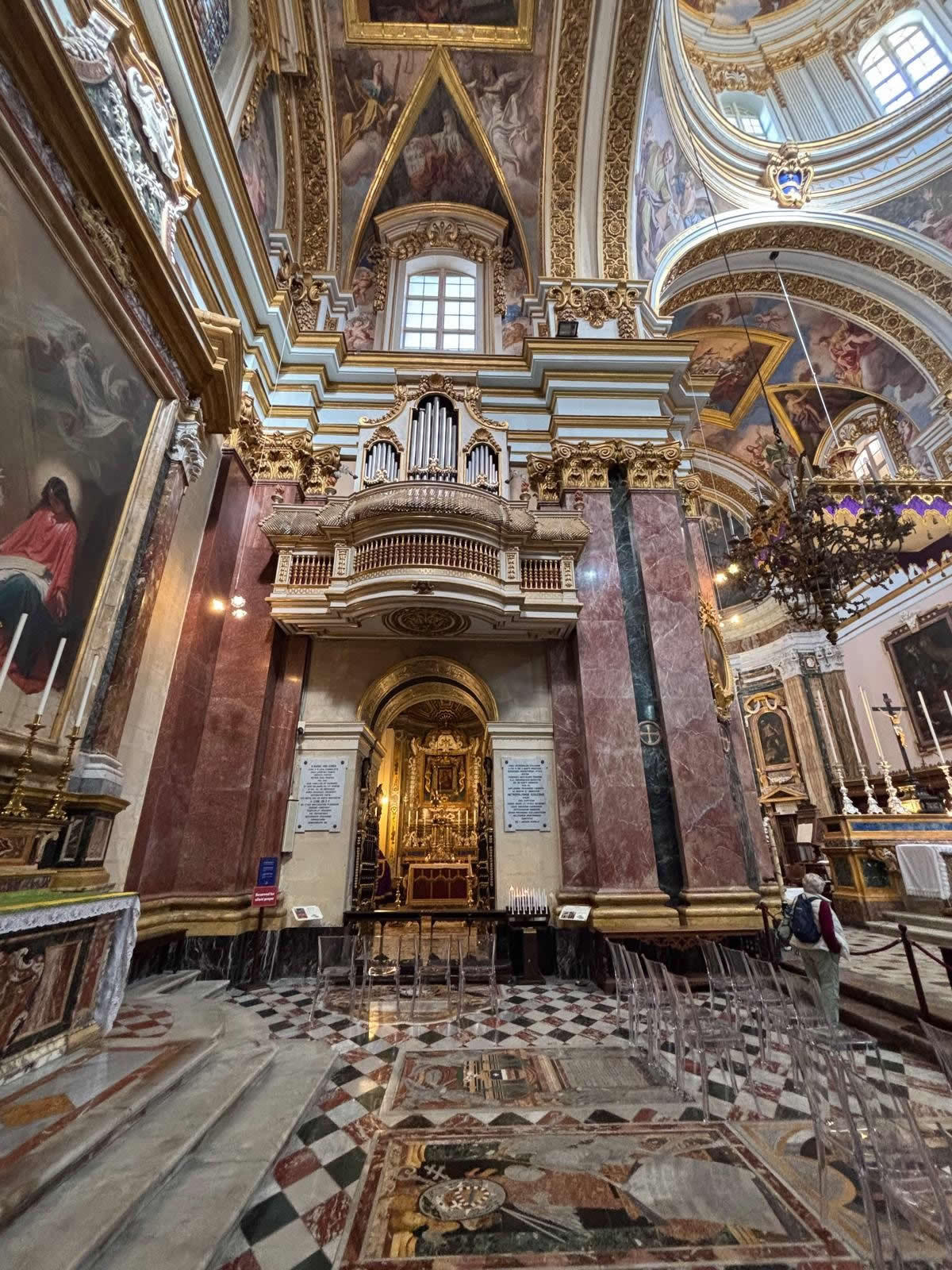
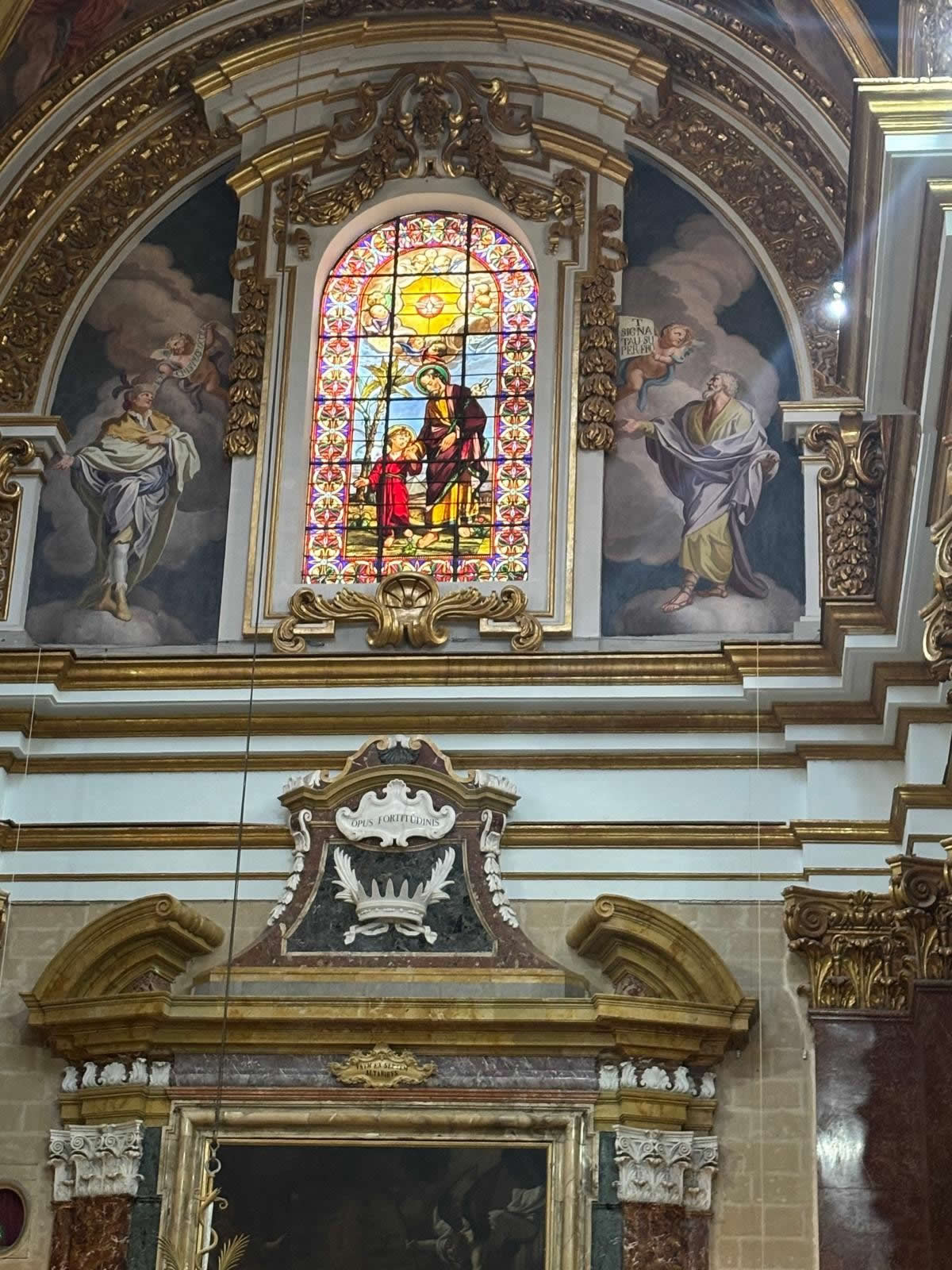
Inside, the cathedral is richly decorated with marble, paintings, and sculptural elements that highlight the artistic achievements of Maltese and European artists.
The Marble Tombstone Floor
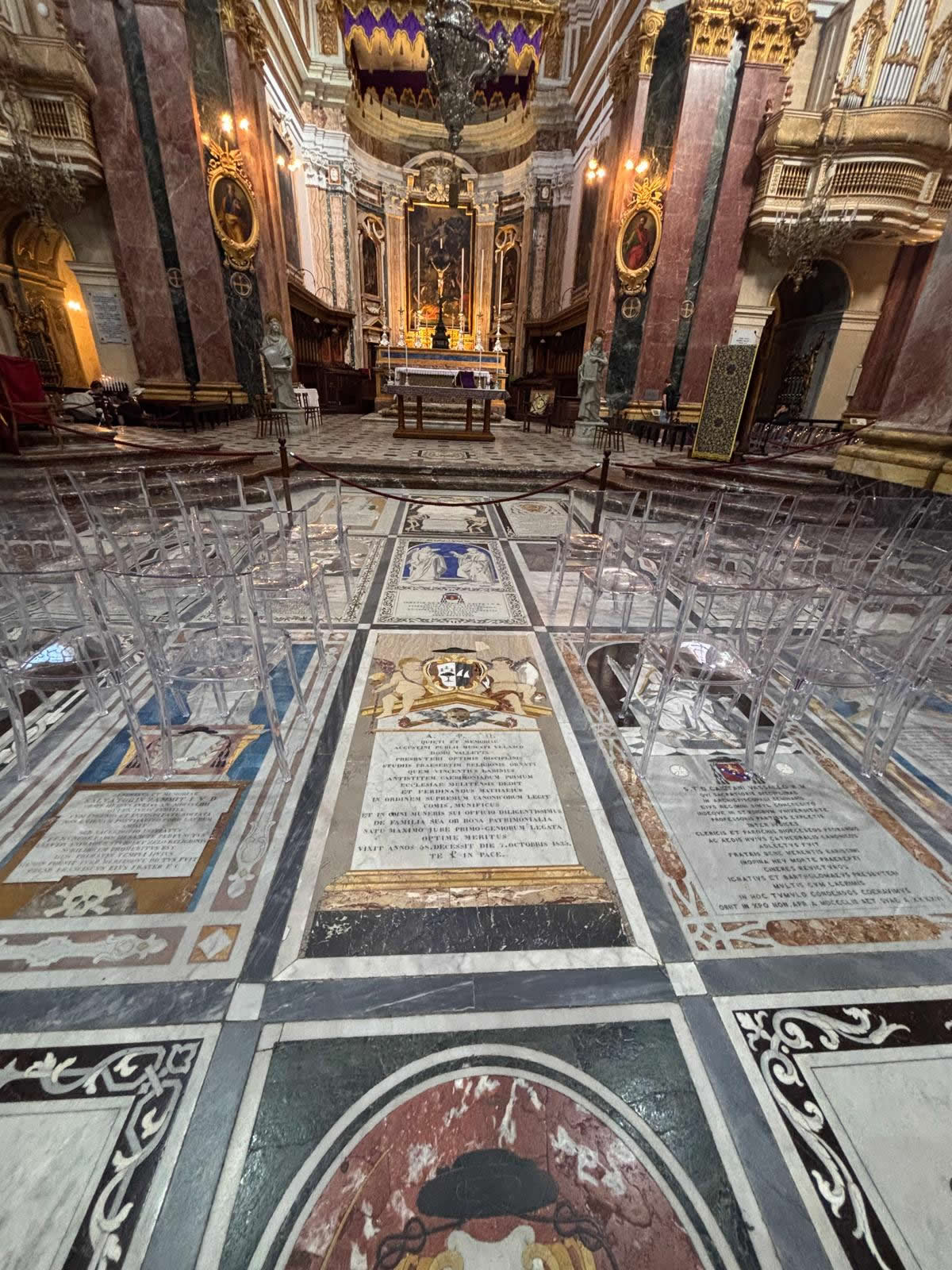
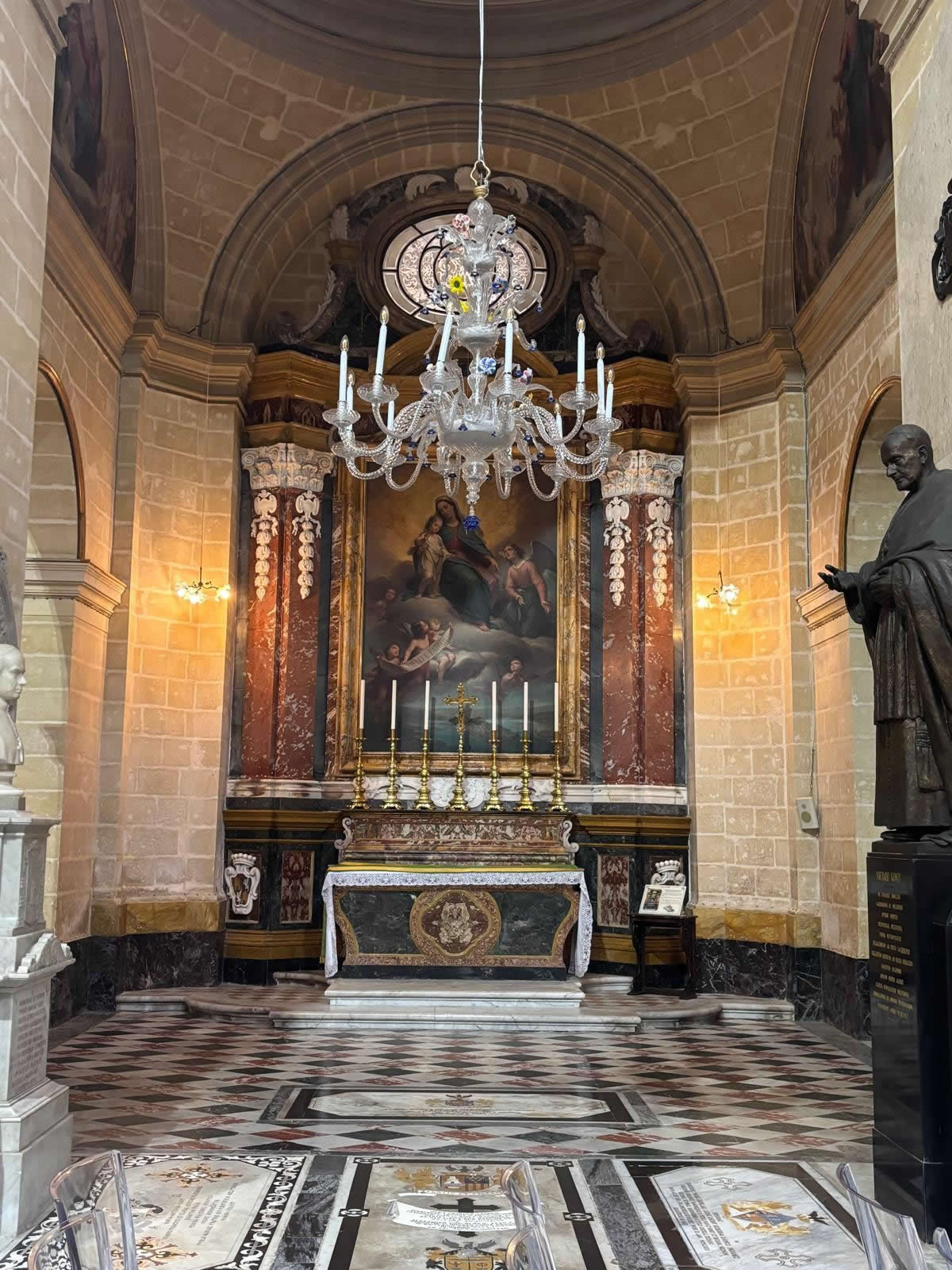
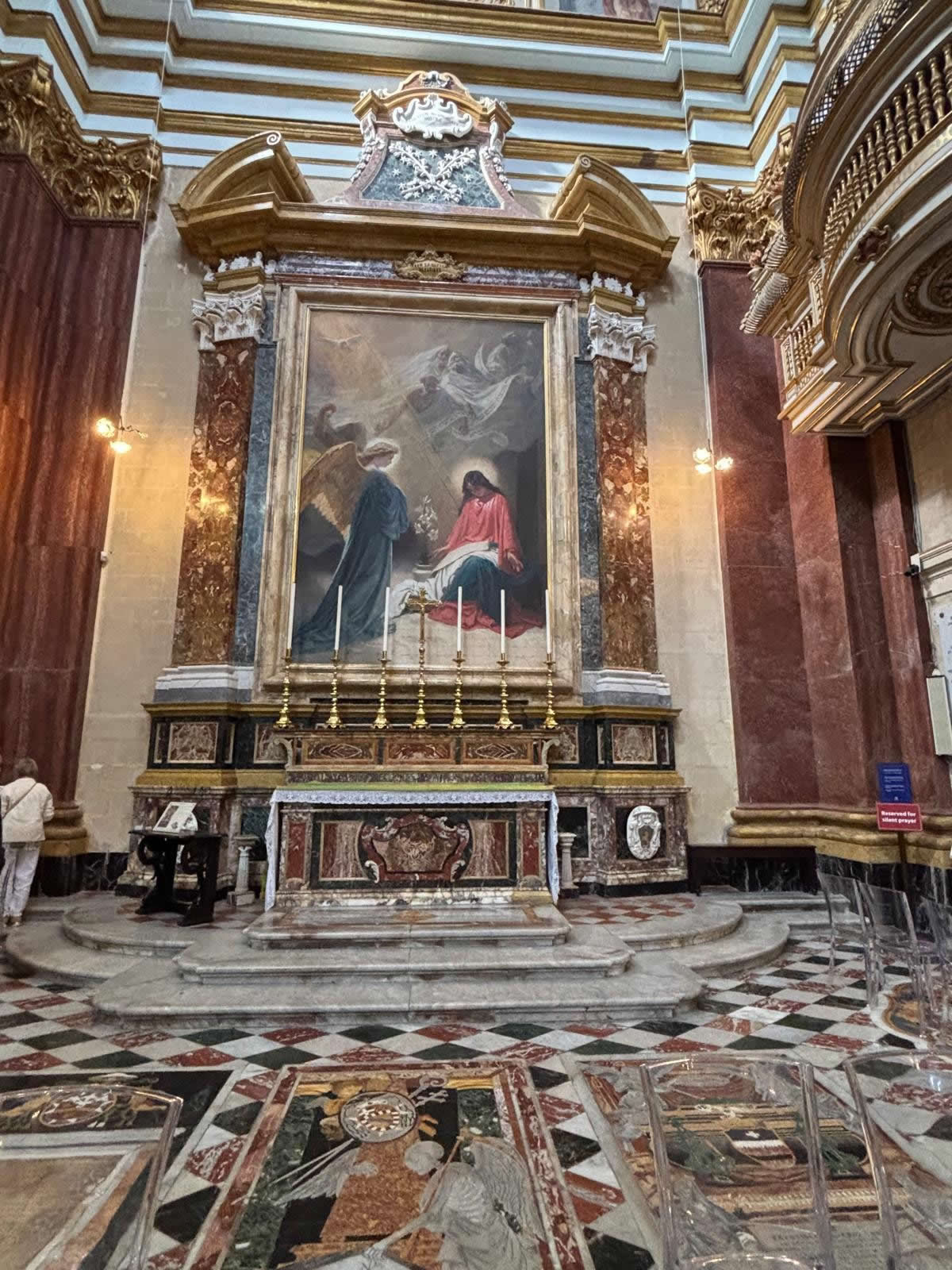
One of the most remarkable features of the cathedral interior is its ornate marble floor, which consists of numerous inlaid tombstones commemorating bishops, noble families, and members of the cathedral chapter.
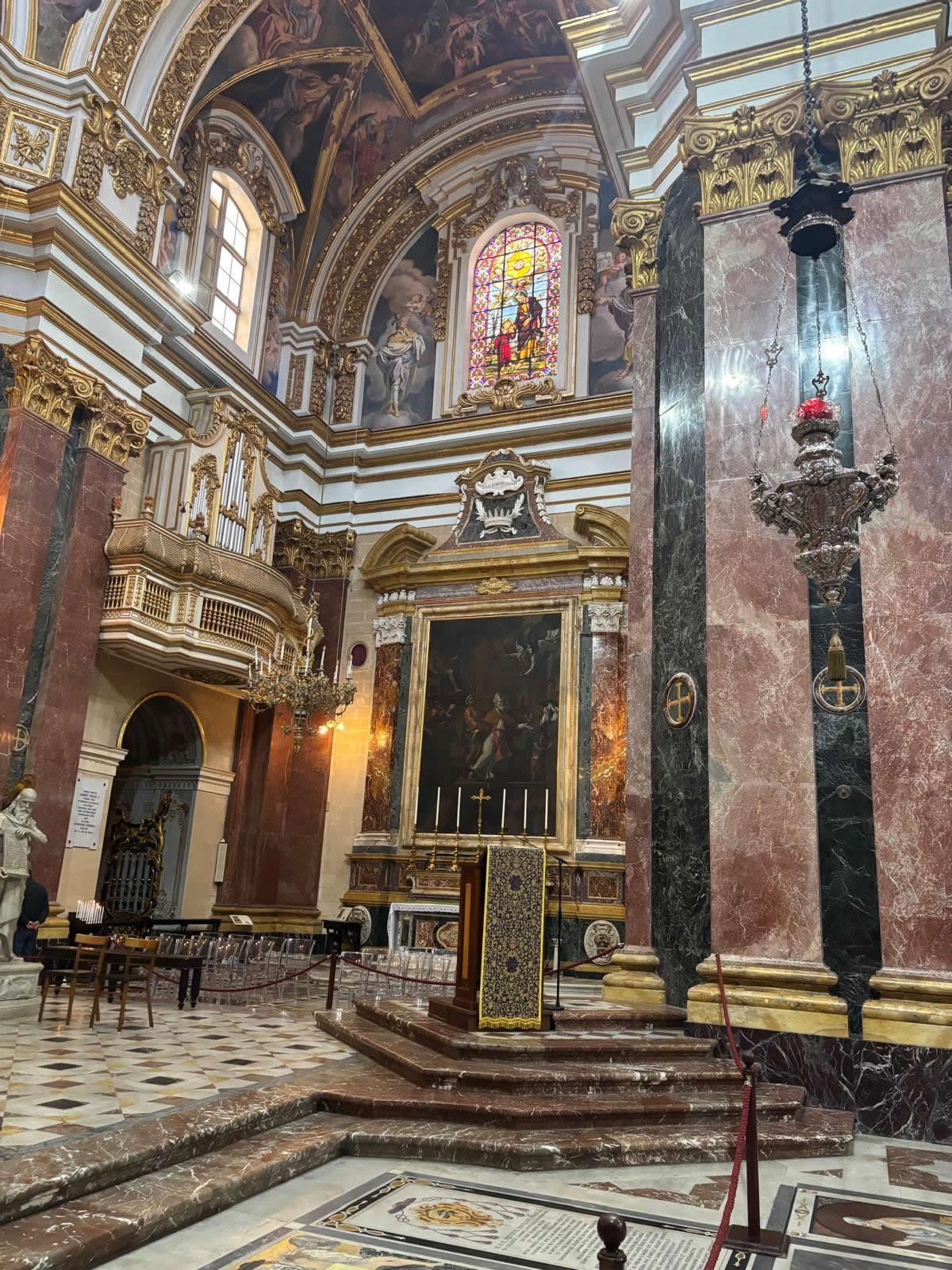
These decorative marble slabs display coats of arms, inscriptions, and symbolic imagery representing the individuals buried beneath the cathedral floor.
This tradition mirrors the famous marble floor found in St John’s Co-Cathedral in Valletta, reflecting a broader Maltese practice of commemorating prominent figures within church interiors.
Artworks and Decoration
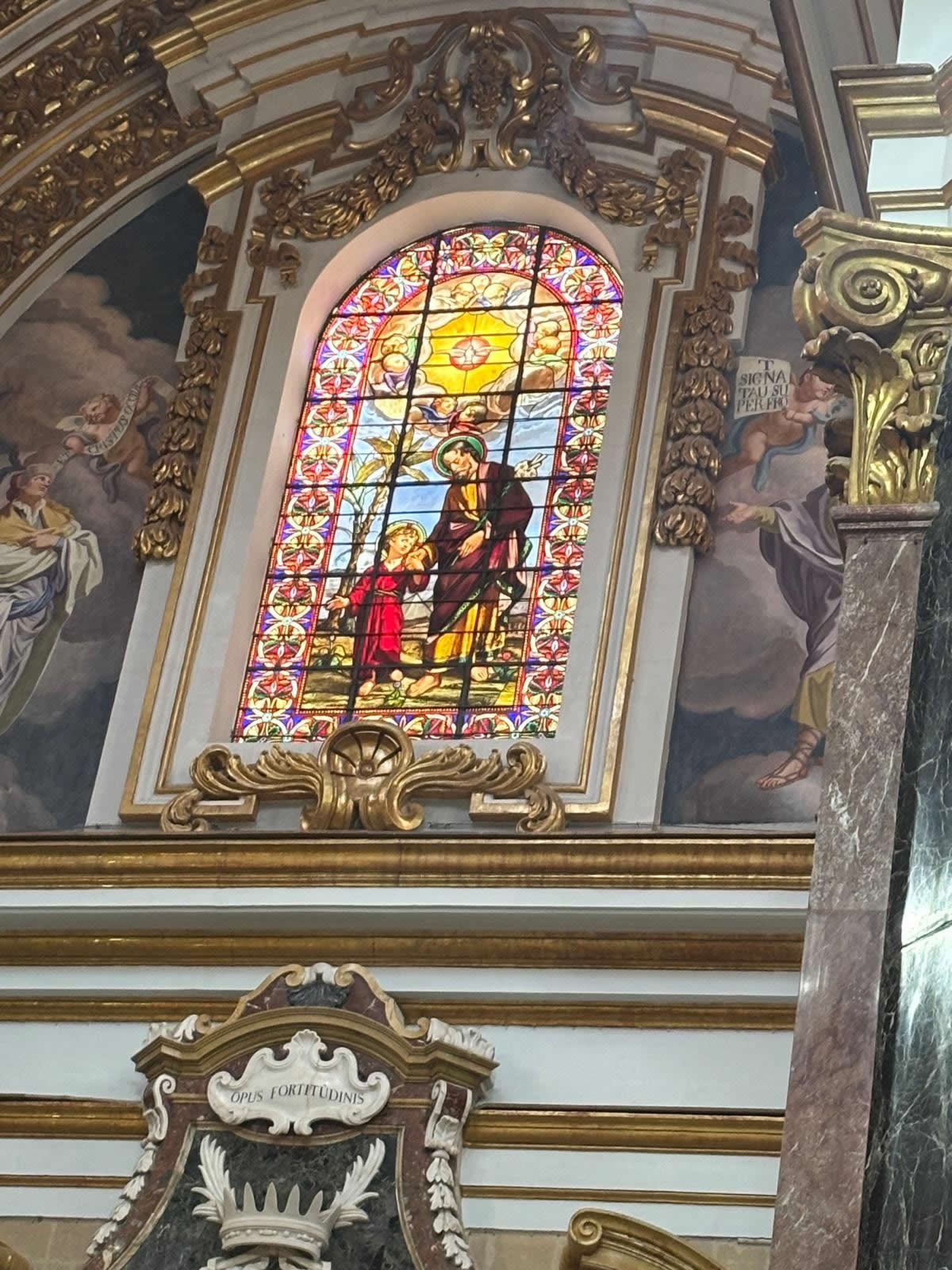
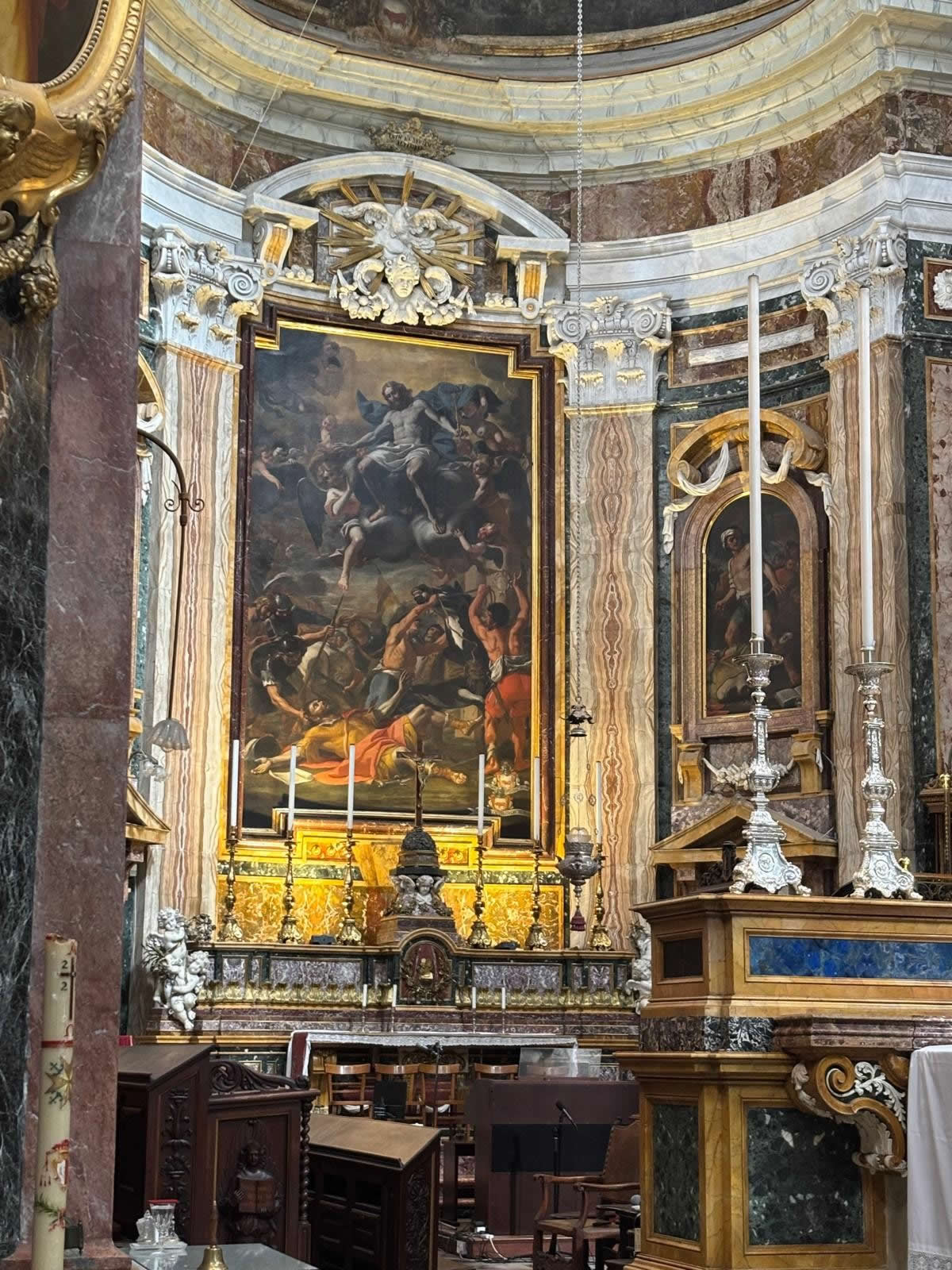
The cathedral houses an impressive collection of artworks created by prominent European and Maltese artists.
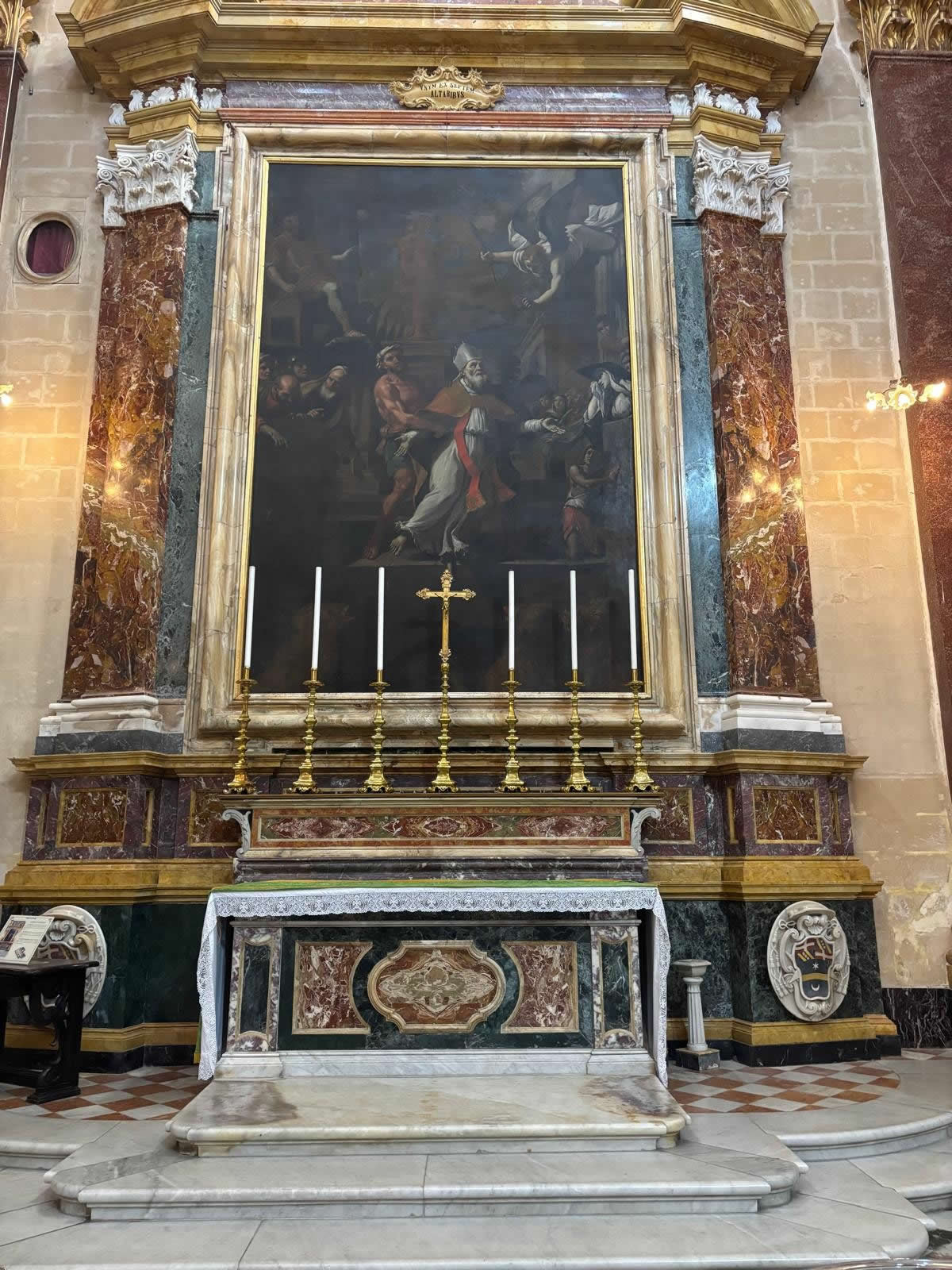
Among the most notable paintings are works by the renowned Baroque artist Mattia Preti, including depictions related to the life and mission of St Paul.
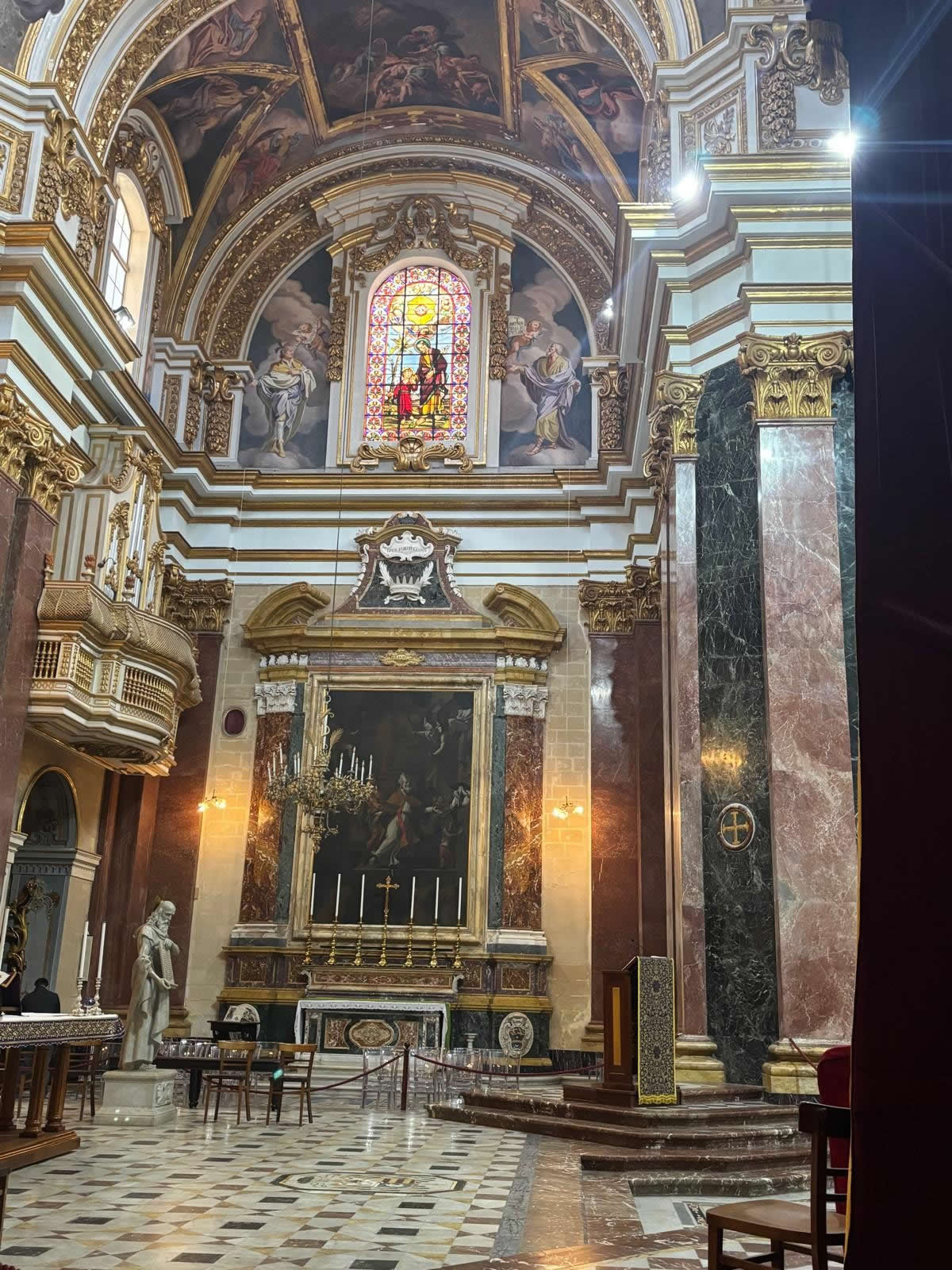
The cathedral also contains paintings and decorative works by several other artists, including Francesco Zahra, Giuseppe Calì, Pietro Gagliardi, and Domenico Bruschi.
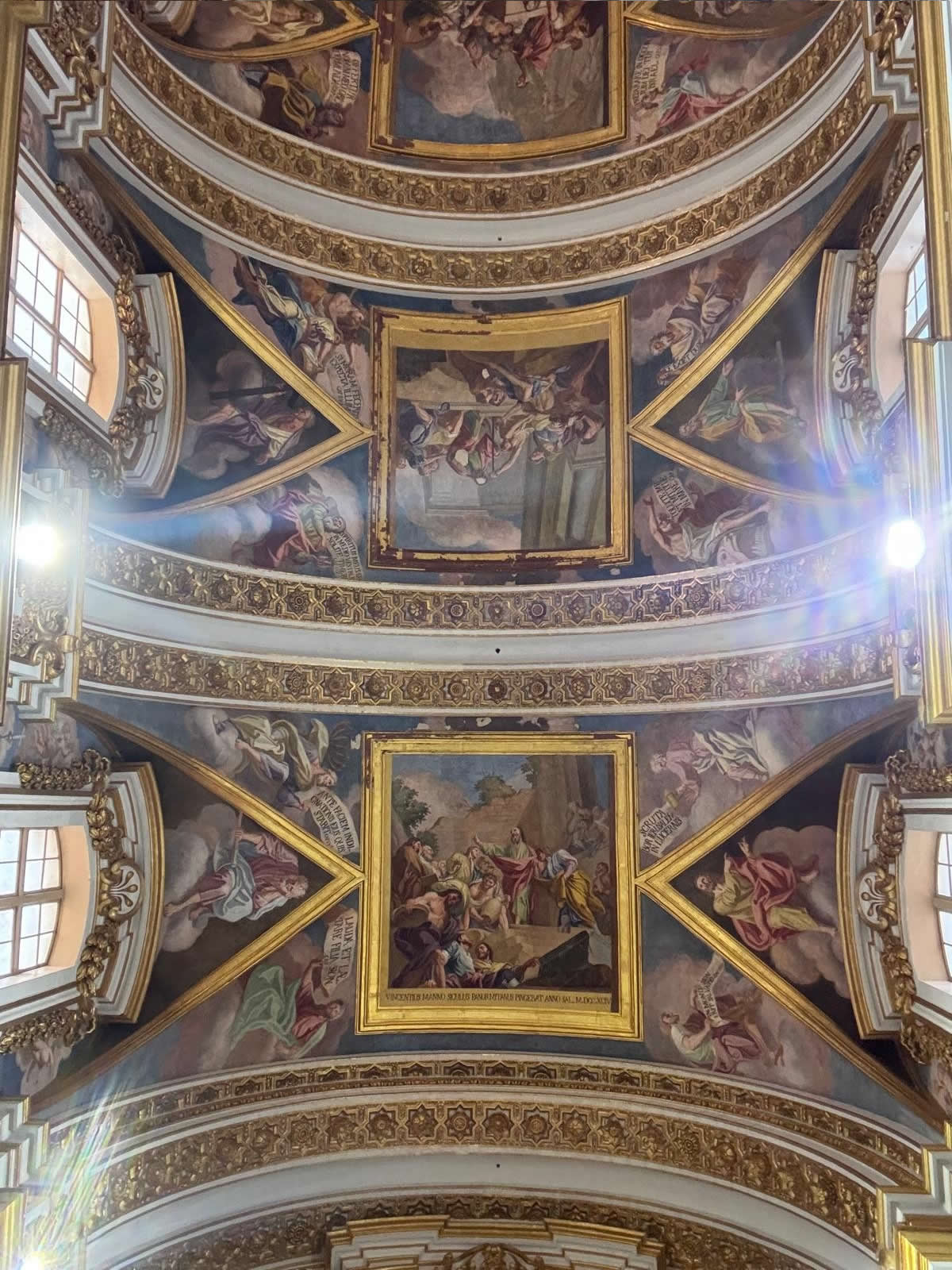
The ceiling frescoes depicting scenes from the life of St Paul were painted in 1794 by the Sicilian artists Vincenzo, Antonio, and Francesco Manno.
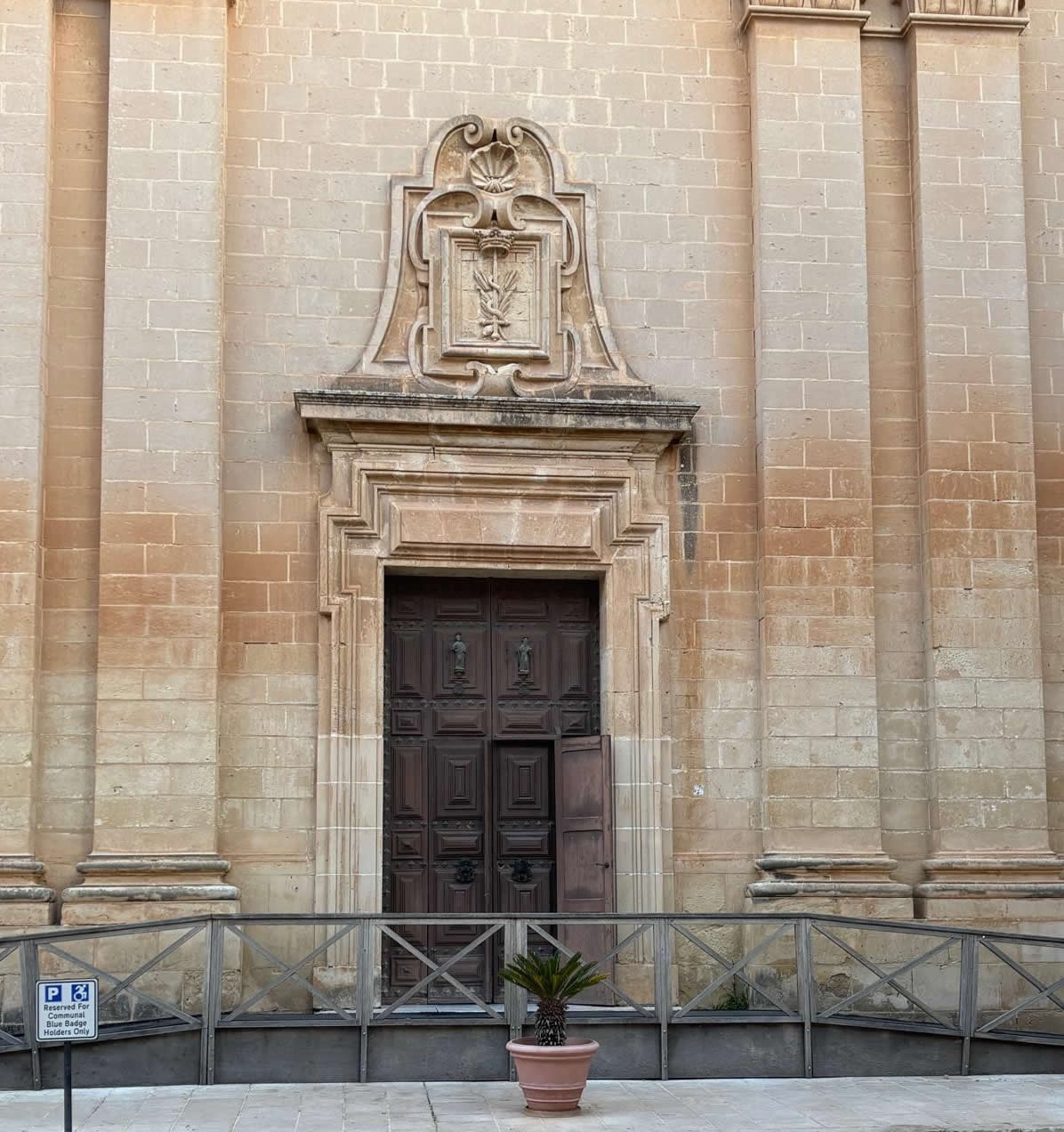
Other historic elements preserved within the cathedral include a late Gothic baptismal font dating from 1495 and the original cathedral door created in 1530.
The Cathedral Museum
Adjacent to the cathedral stands the Cathedral Museum, located within the former seminary building. The museum houses an extensive collection of ecclesiastical artefacts including religious vestments, manuscripts, paintings, coins, and historical documents.
Among its most valuable exhibits are engravings by the German Renaissance artist Albrecht Dürer and various artefacts salvaged from the earlier medieval cathedral.
Later Developments and Restoration
Throughout the centuries the cathedral has undergone several restoration campaigns aimed at preserving its structure and artistic heritage.
In 1856 another earthquake caused damage to the cathedral dome, destroying earlier fresco decorations which were later replaced.
Various restoration works in the twentieth and twenty-first centuries have focused on conserving the cathedral’s paintings, marble floors, and architectural features.

Religious Role
For centuries the Cathedral of St Paul served as the principal cathedral of Malta and the seat of the island’s bishop. After the construction of St John’s Co-Cathedral in Valletta during the rule of the Knights of St John, the episcopal functions of the Maltese diocese were shared between the two churches.
Today the cathedral remains an active place of worship and continues to host major liturgical celebrations and diocesan events.
Location
| Church | Cathedral of St Paul |
|---|---|
| Location | Mdina, Malta |
| Coordinates | 35.886425, 14.403800 |
| Architect | Lorenzo Gafà |
| Construction | 1696 – 1705 |
| Architectural Style | Baroque |
| Consecration | 8 October 1702 |
| Dedication | St Paul the Apostle |
Conclusion
The Cathedral of St Paul in Mdina represents one of the most important religious monuments in Malta. Its origins are closely connected with the ancient tradition of St Paul’s arrival in Malta, while its present Baroque structure reflects the artistic achievements of the late seventeenth century.
With its magnificent architecture, rich artistic decoration, and central role in Malta’s religious history, the cathedral continues to stand as a symbol of the island’s Christian heritage and the historic importance of Mdina as Malta’s former capital.