📍 Location
Location Map Coordinates 35.900143, 14.512362
An icon of Valletta’s skyline and a spiritual centre of Carmelite devotion since the 16th century.
Overview
| Local Name: | Bażilika tal‑Madonna tal‑Karmnu |
| English Name: | Basilica of Our Lady of Mount Carmel |
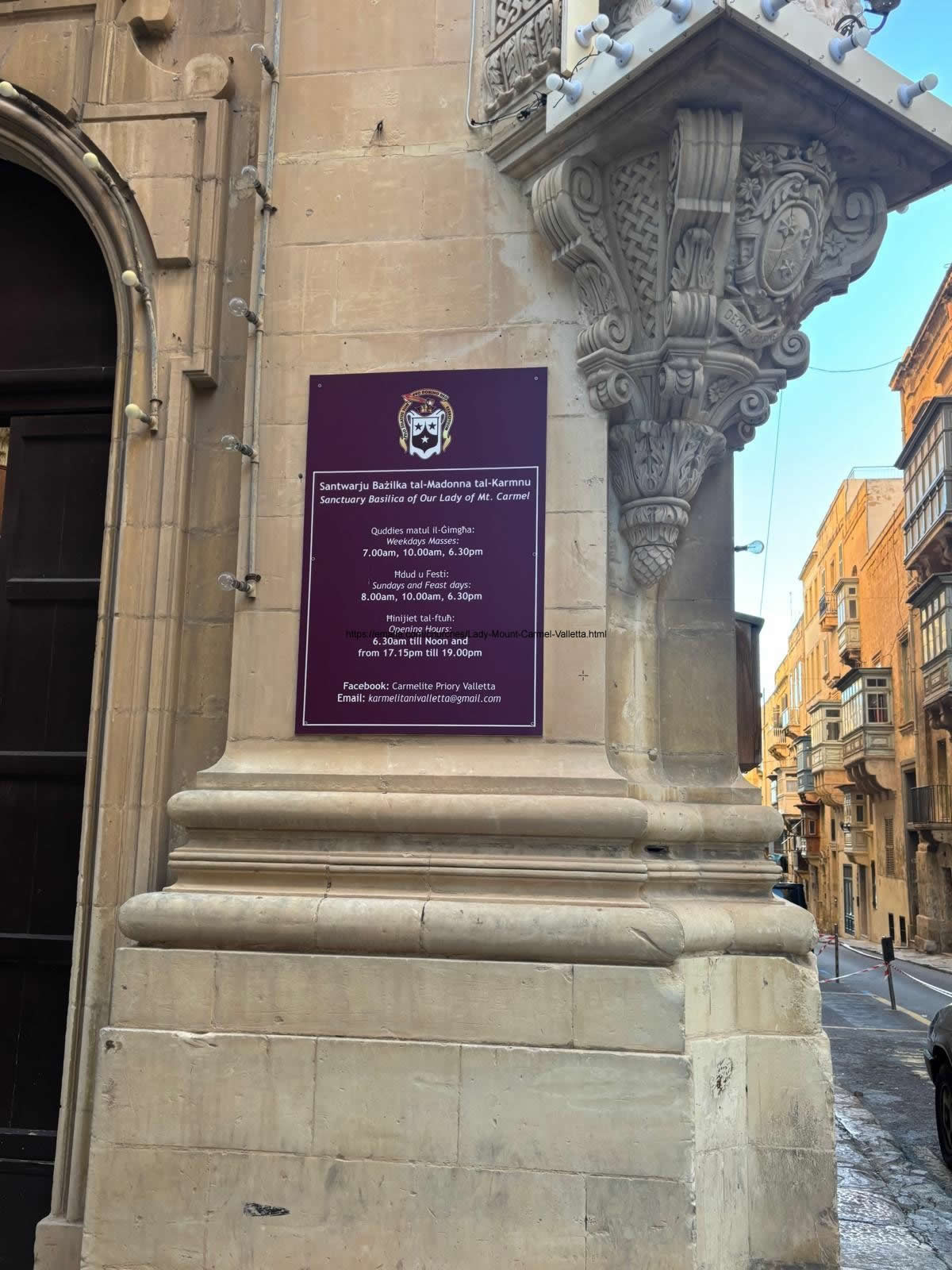
| Location: | Old Theatre Street & Old Mint Street junction, Valletta, Malta |
| Coordinates: | 35.900143° N, 14.512362° E → View on Google Maps |
| Denomination: | Roman Catholic – Carmelite Order |
| Construction & Status: | Founded 1570; rebuilt 1958 after wartime destruction; raised to Minor Basilica (1981) |
| Architectural Style: | Neo‑Baroque and Modern Renaissance hybrid with concrete dome reinforced cupola (61 m high) |
Historical Background
The Carmelite Fathers arrived in Malta soon after the 1551 Turkish raids and were granted land by the Order of St John to establish a church and convent inside the newly planned City of Valletta. Their first church was completed in 1570 and dedicated to Our Lady of Mount Carmel. By the 17th century it was one of Valletta’s principal parish churches, with a miraculous painting of the Virgin Mary that became a popular pilgrimage image.
During the Second World War (1942), the original Carmelite church was devastated by intensive aerial bombing that destroyed its dome and most of the friary. The faithful nonetheless continued services in temporary shelters until reconstruction began in 1958 under architect Joseph D’Amato. The new design provided Valletta with a modern reinterpretation of Baroque grandeur, featuring a towering elliptical dome which today is one of Malta’s most recognisable landmarks.
Completed in 1981 and consecrated in 1982 by Archbishop Joseph Mercieca, the church was raised to the rank of Minor Basilica by Pope John Paul II that same year during his first visit to Malta, recognising its heritage and its devotional significance to the Carmelite community worldwide.
Architecture & Design
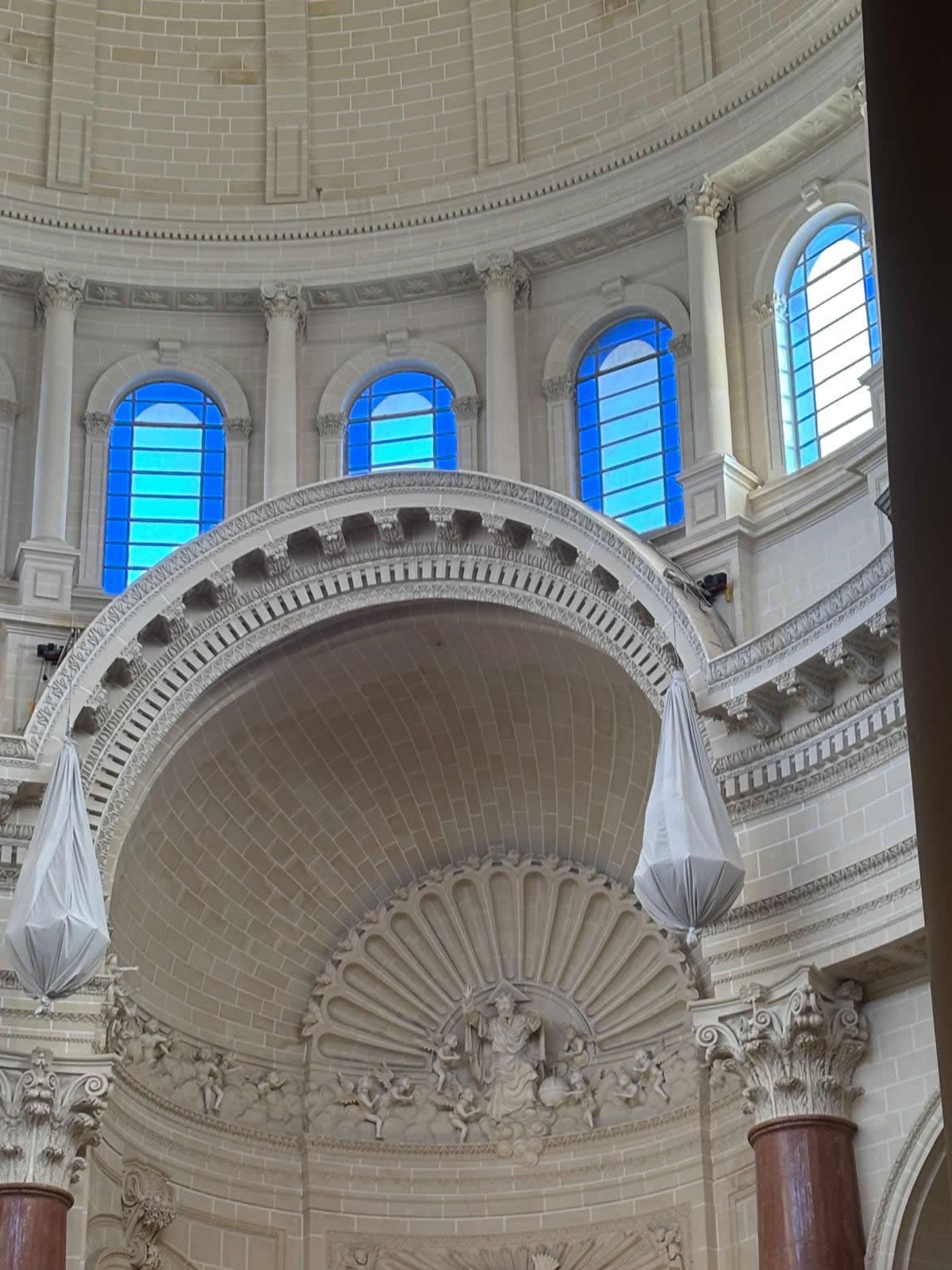
The current basilica is distinguished by its monumental dome – 61 metres (200 ft) high – built of reinforced concrete with an elliptical profile instead of a perfect circle, an engineering innovation necessitated by Valletta’s tight urban grid. The central lantern rises on 16 ribbed arches creating a dramatic silhouette visible from the Grand Harbour and Sliema seafront.
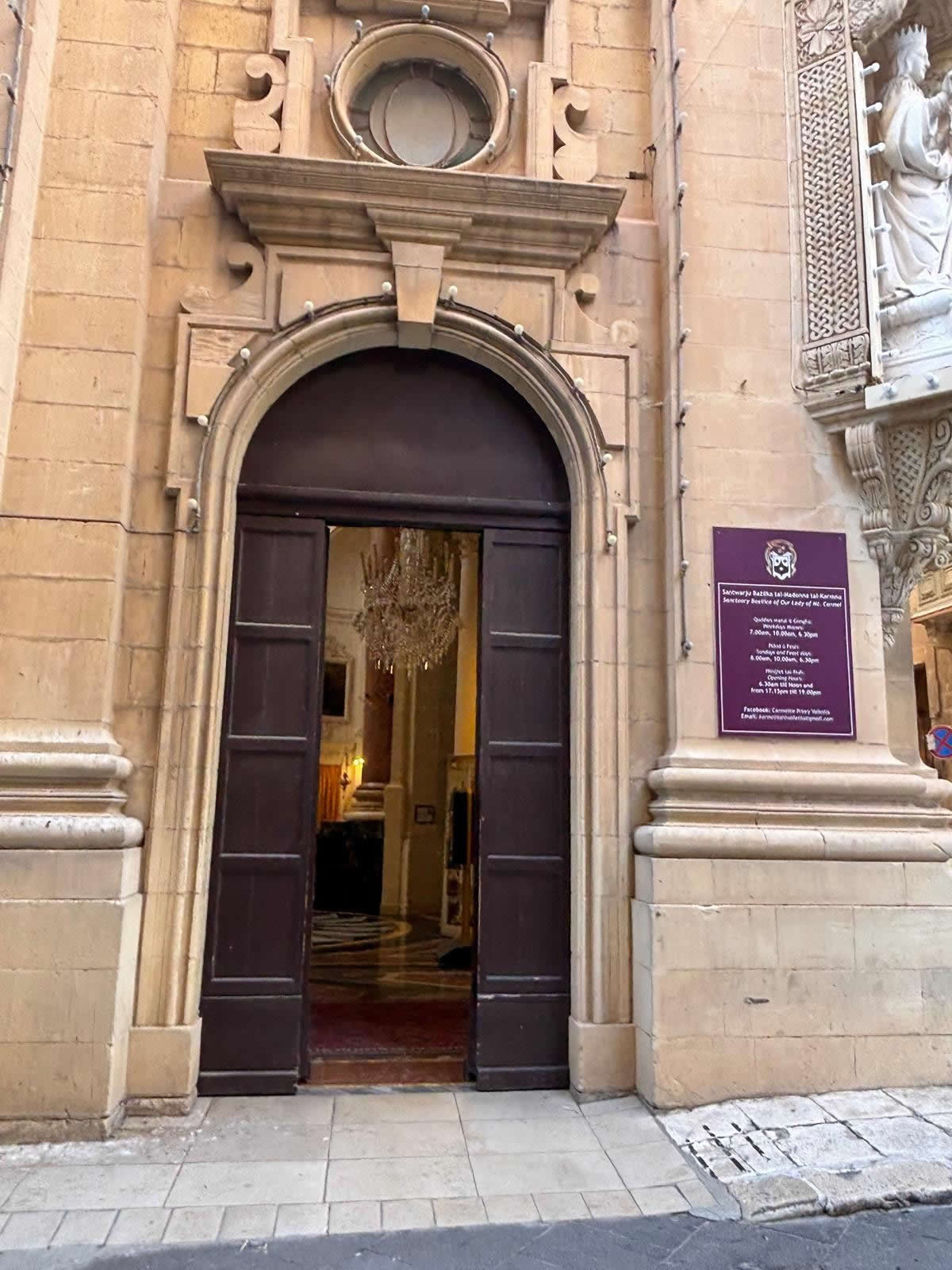
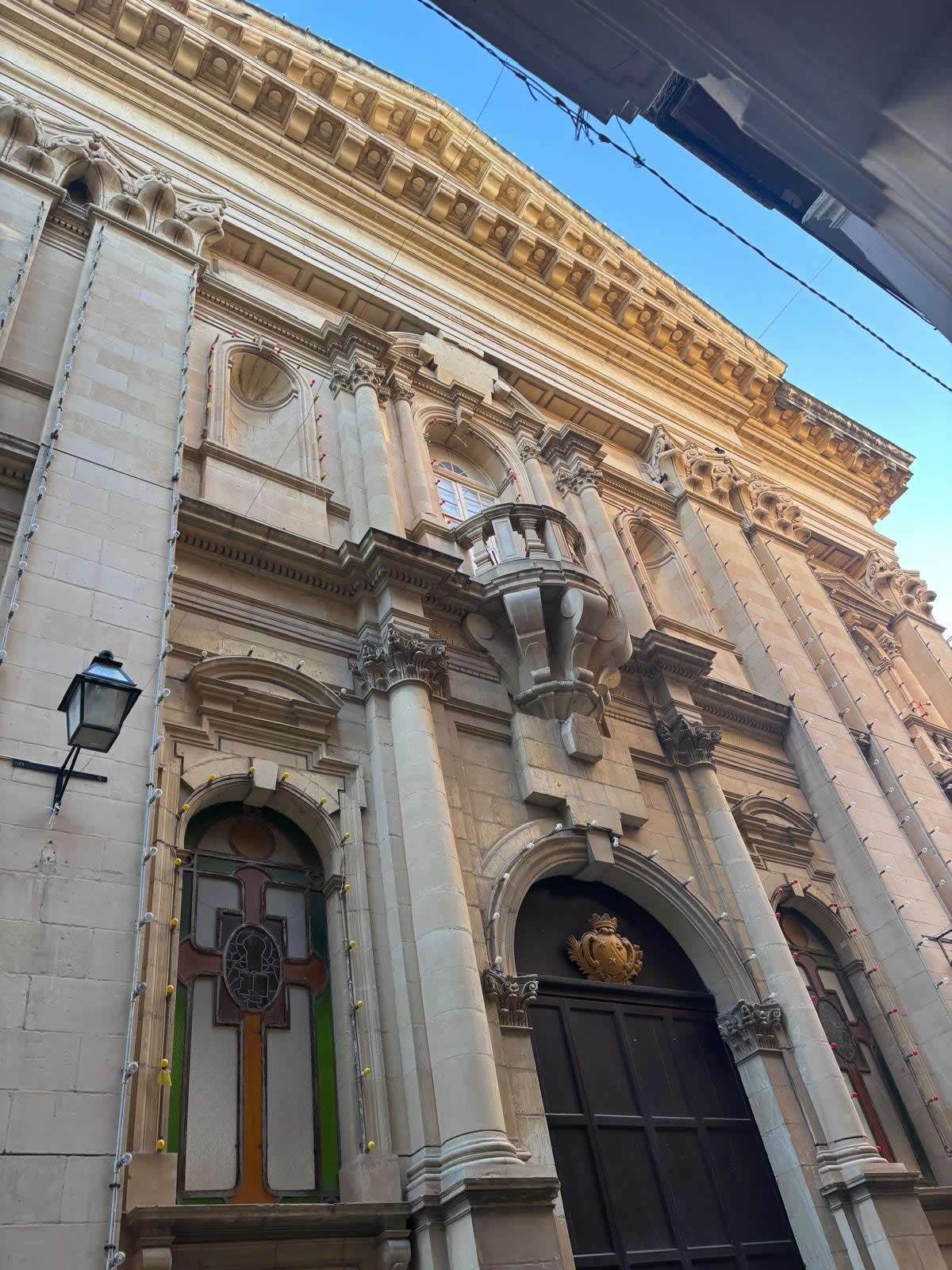
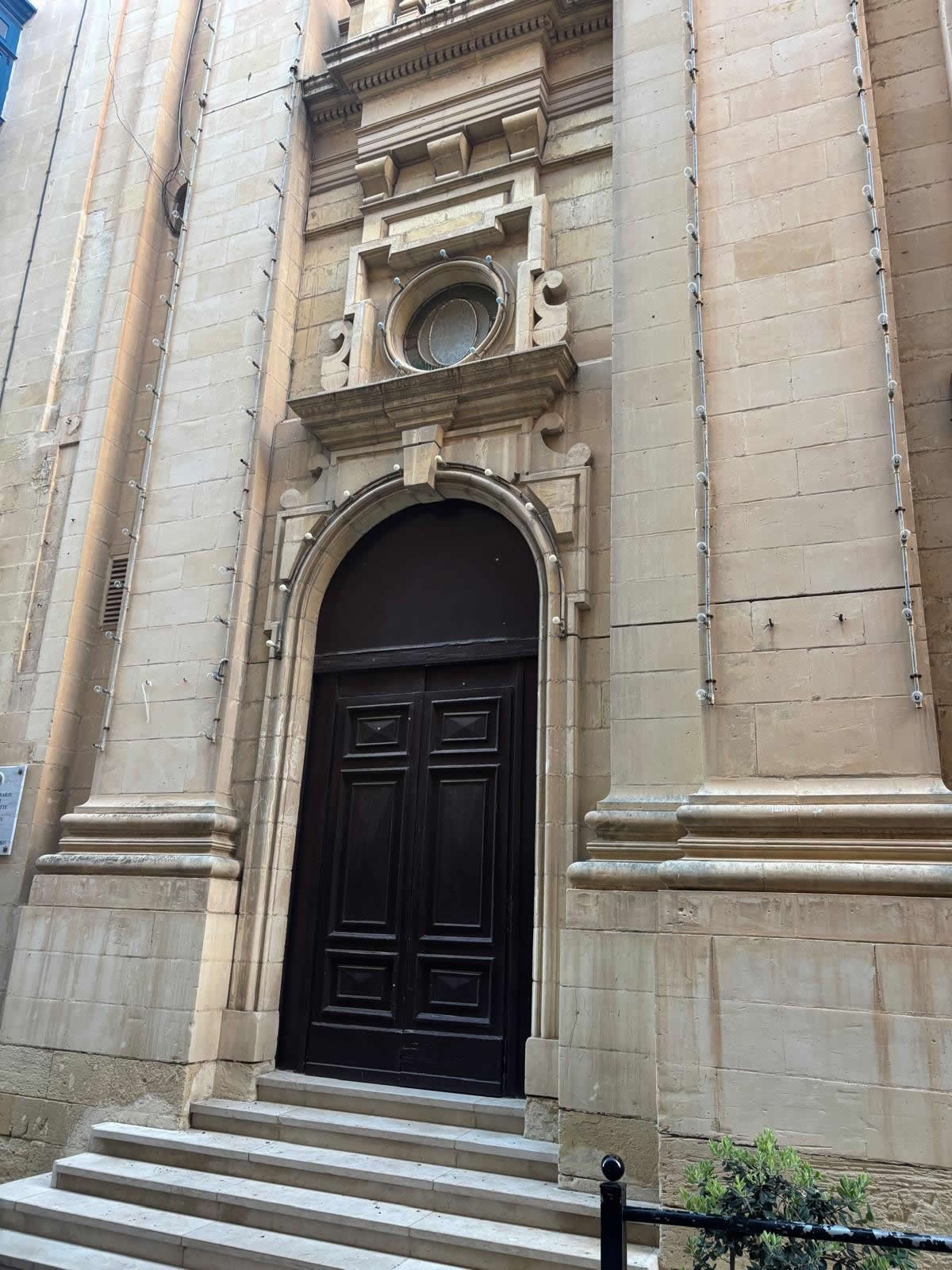
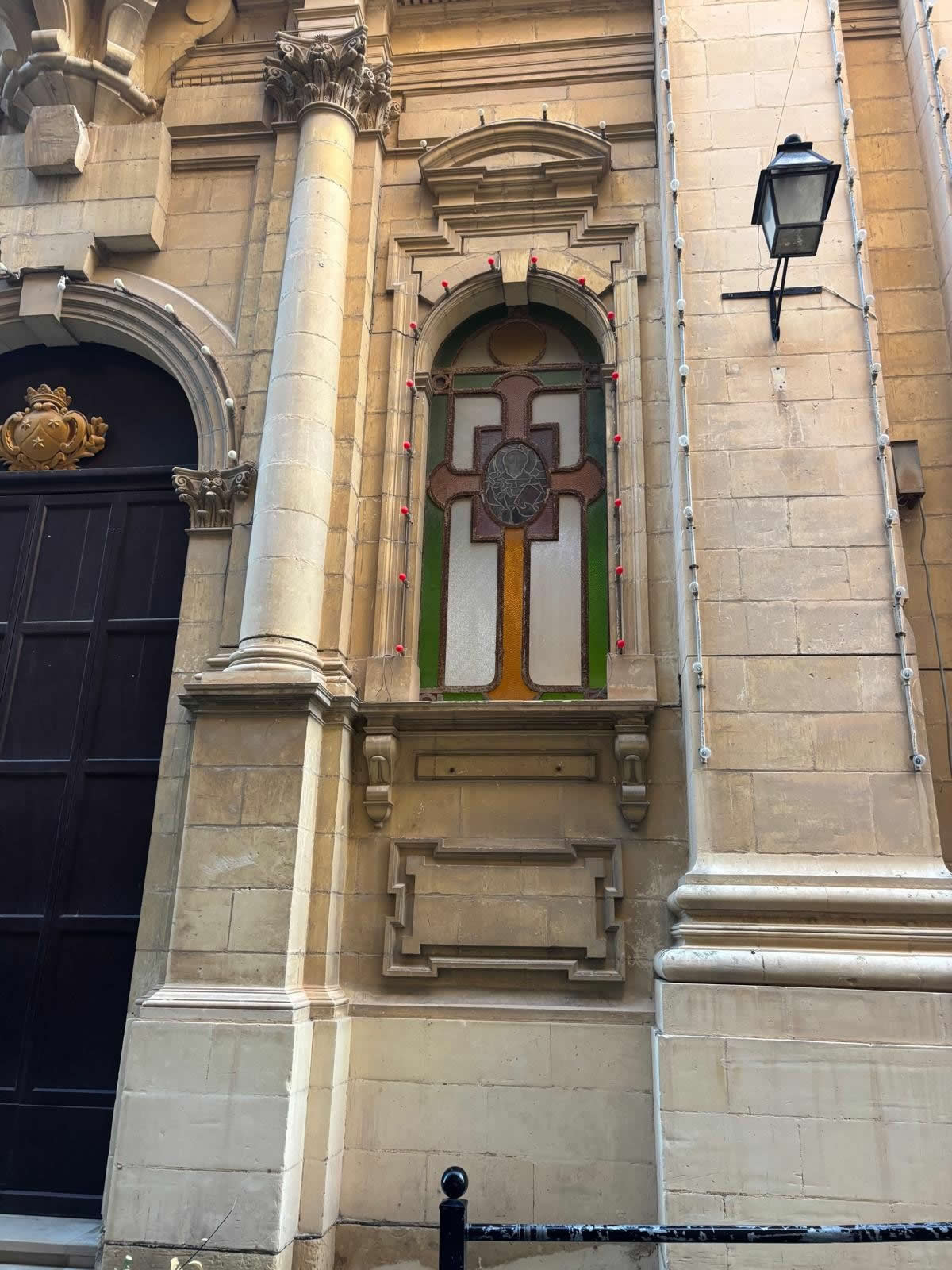
The façade is a balanced composition of classical orders with paired pilasters and a central pediment bearing the Carmelite crest. The interior is spacious and light‑filled, accentuating the verticality toward the dome. White Carrara marble and local limestone blend harmoniously, while modern stained‑glass windows depict the Mysteries of the Rosary in deep blue tones echoing the Carmelite habit.
Artworks & Interior Decoration
The basilica holds a rich legacy of Marian art and Carmelite imagery:
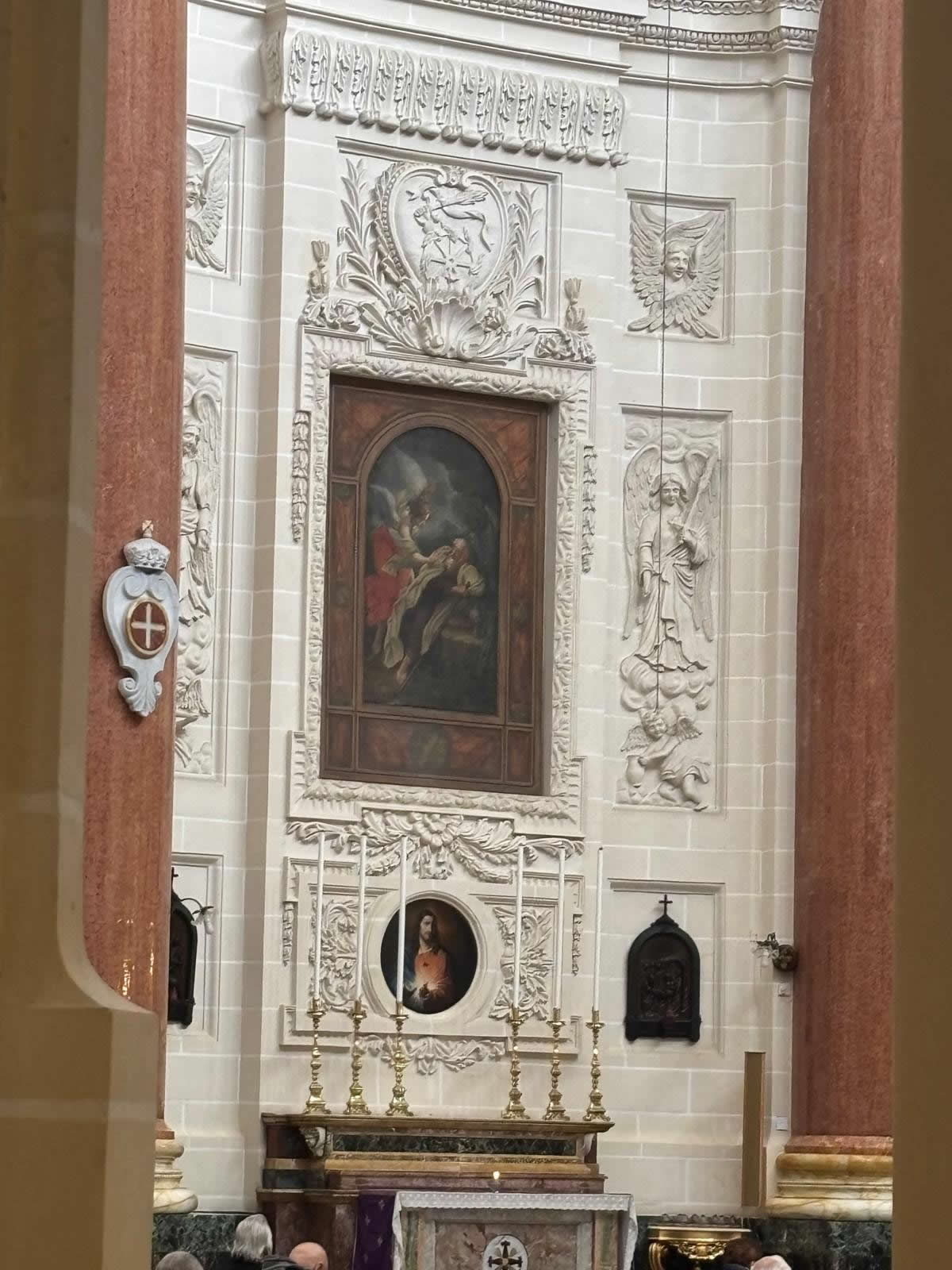
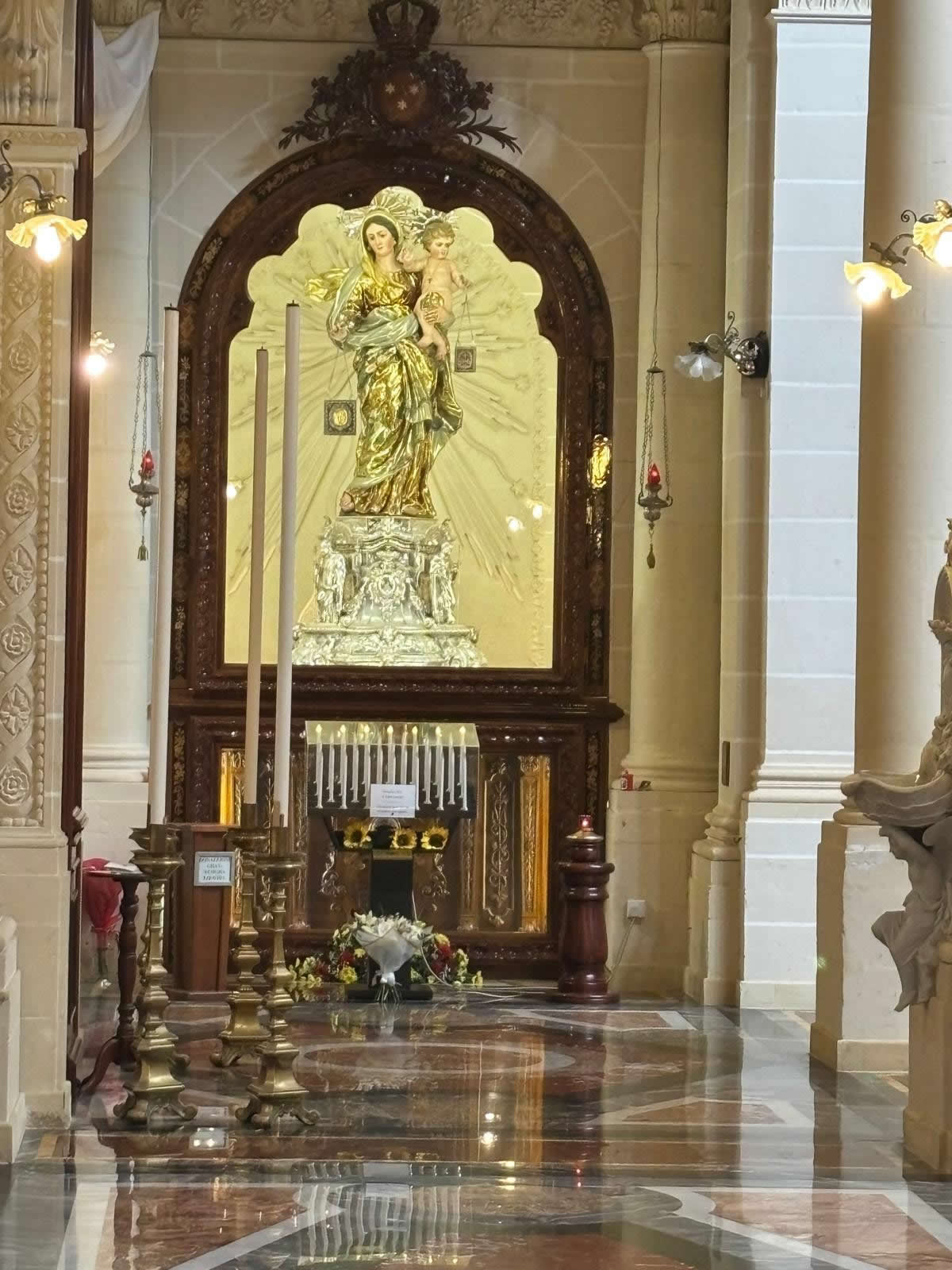
- Icon of Our Lady of Mount Carmel (16th c., repainted 1959): Originally from the 1560s church; miraculously recovered after wartime debris, restored in Rome and enshrined above the main altar. It remains the object of centuries‑old devotion attracting pilgrims nationwide.
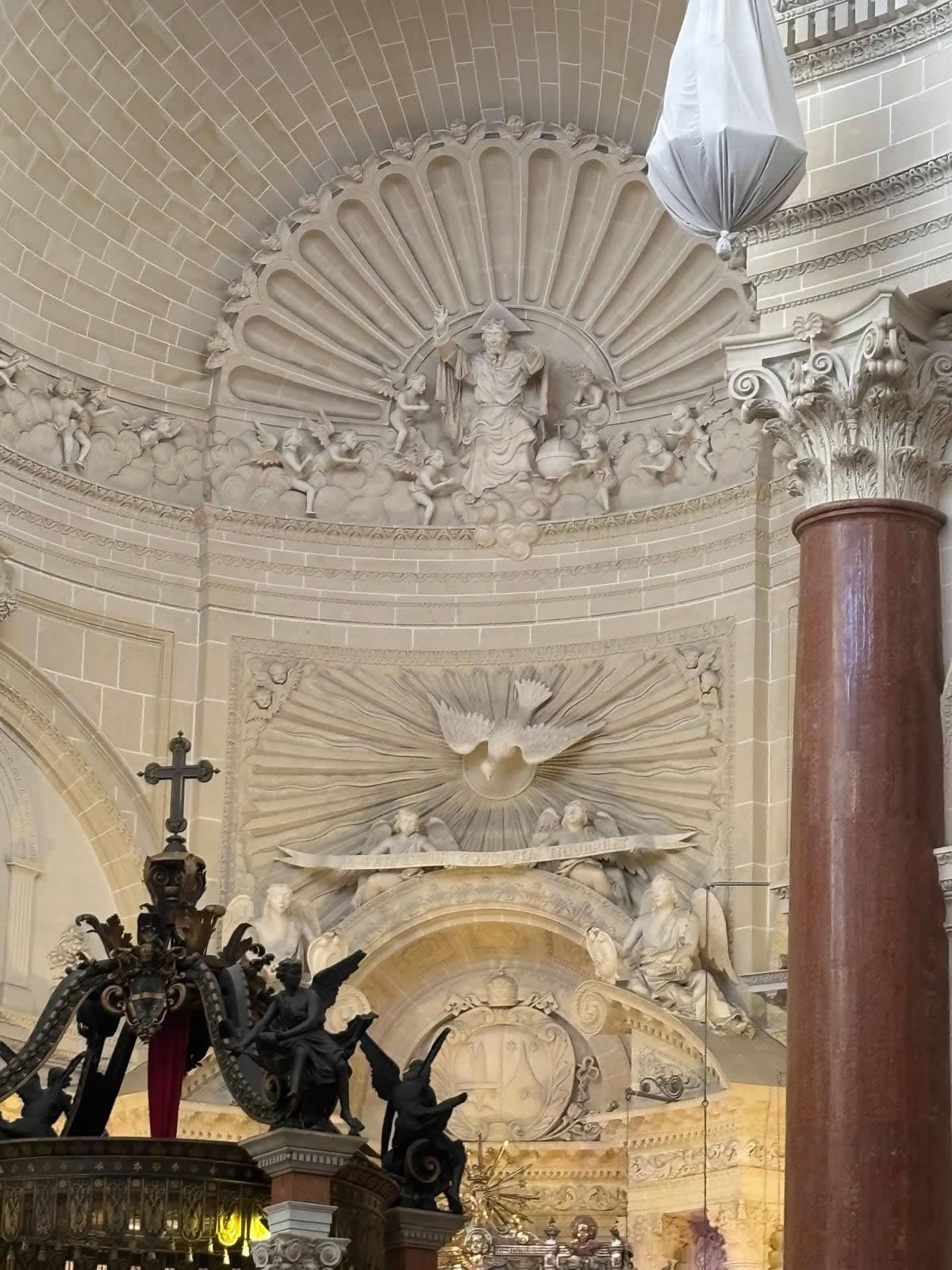
- Dome Fresco “The Glorification of Our Lady of Mount Carmel” (1960s): by Maltese painter Mario Coccajar Dalli; a vibrant composition of cloud‑borne figures and angels radiating from the lantern to the cornices.
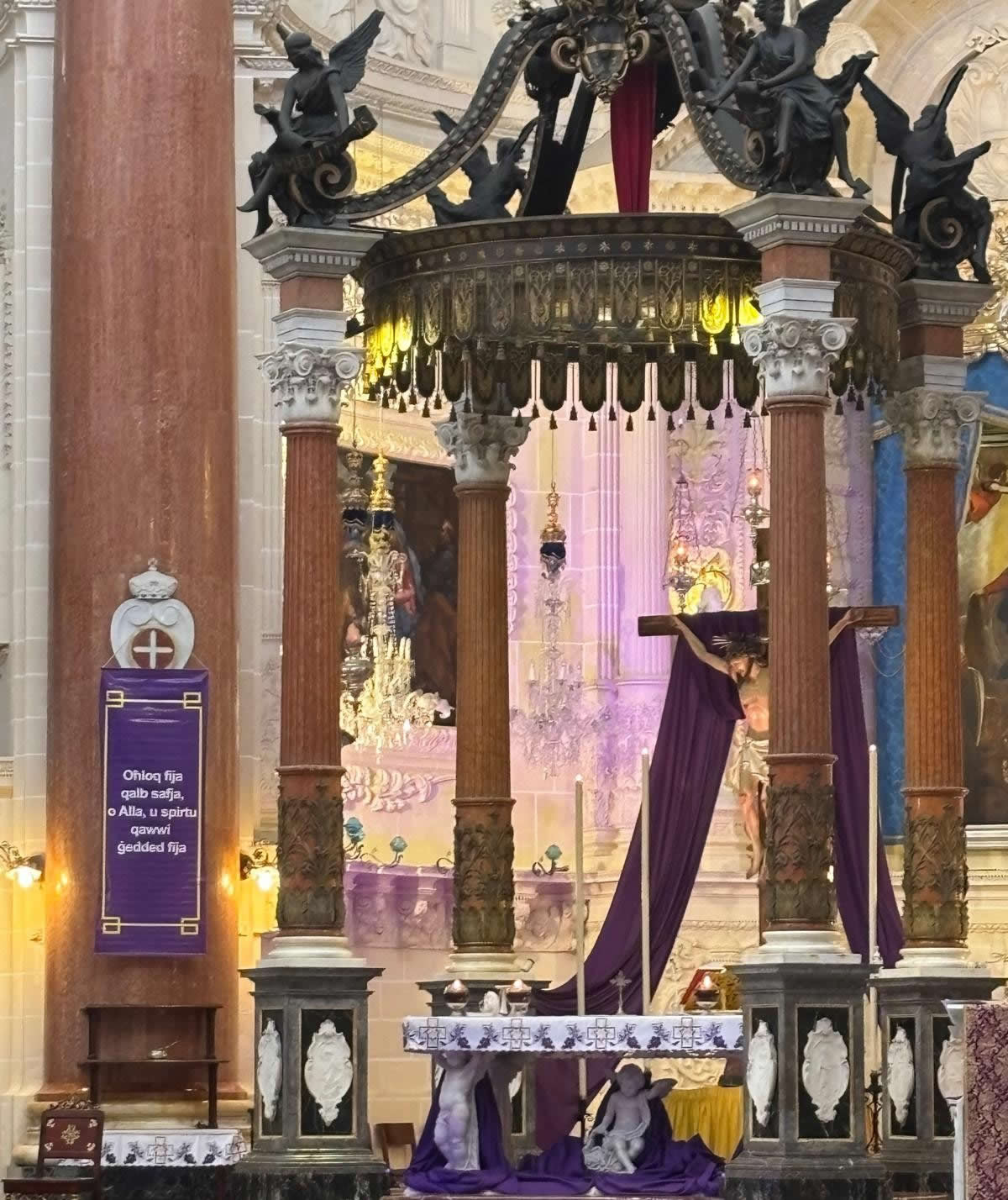
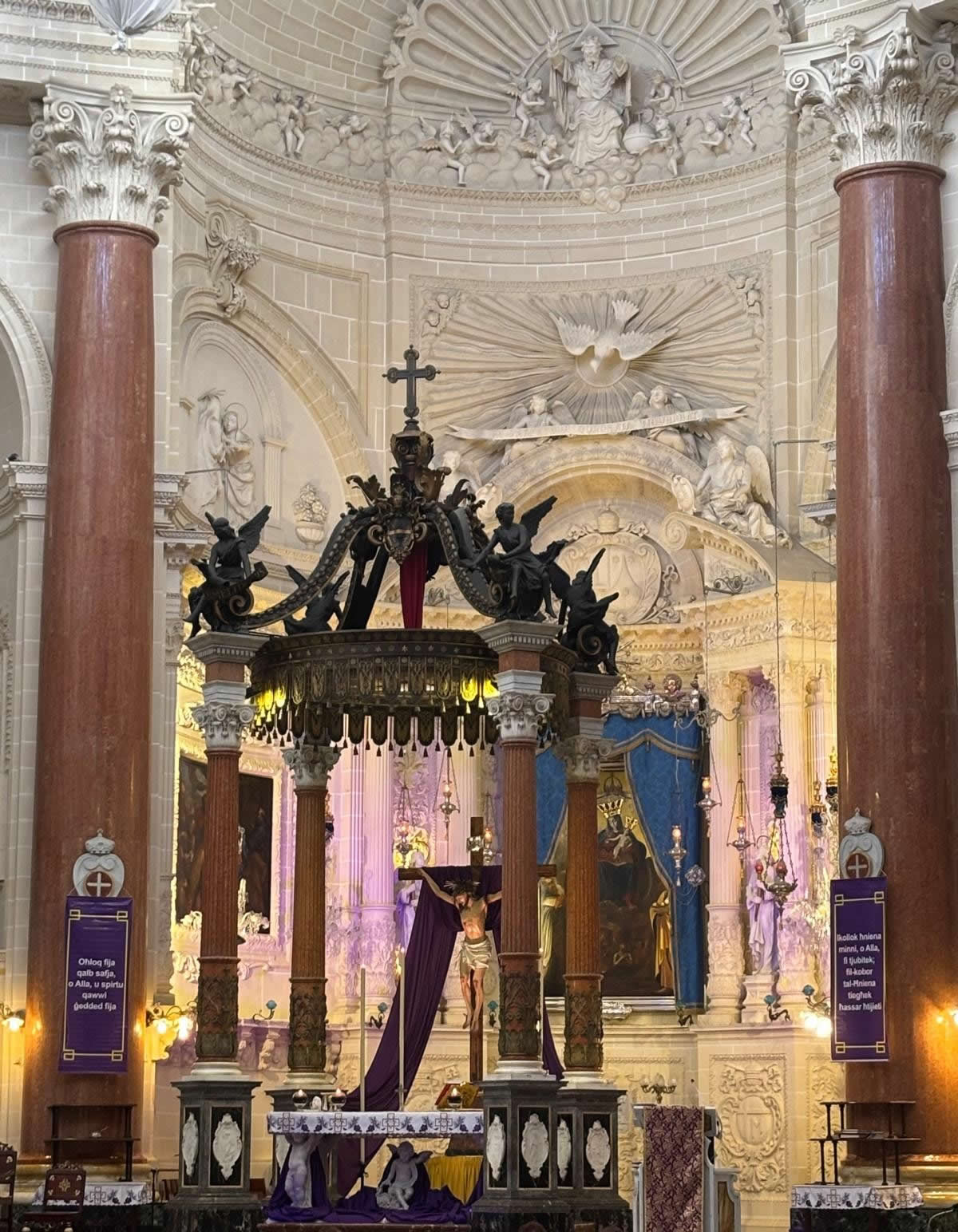
- Marble Altar and Baldacchino: Designed by Giovanni Bonello (1962); crafted in white Carrara marble with bronze accents symbolising the scapular of the Carmelites.
- Side Chapels: Dedicated to St Therese of Lisieux and Blessed Franco of Siena, featuring modernist altarpieces by Carmelite artist Fr Gabriel Caruana O.Carm (1980s).
- Sculpture of Our Lady of Mount Carmel (Processional Statue): carved c. 1781 by Pietro Paolo Azzopardi; gilded and conserved in 2016. Carried each July during the popular *Festa tal‑Karmnu*.
Restoration & Conservation
Post‑war reconstruction (1958‑1981) was guided by architect Joseph D’Amato with structural engineer Louis Naudi, using modern materials while preserving Baroque essence. Between 2006 and 2009 the Malta Restoration Directorate undertook major stone cleaning of the façade, restoration of the dome exterior, and replacement of glazing panels with UV‑filtration glass. Special attention was given to corrosion control on metal reinforcements within the dome’s elliptical shell.
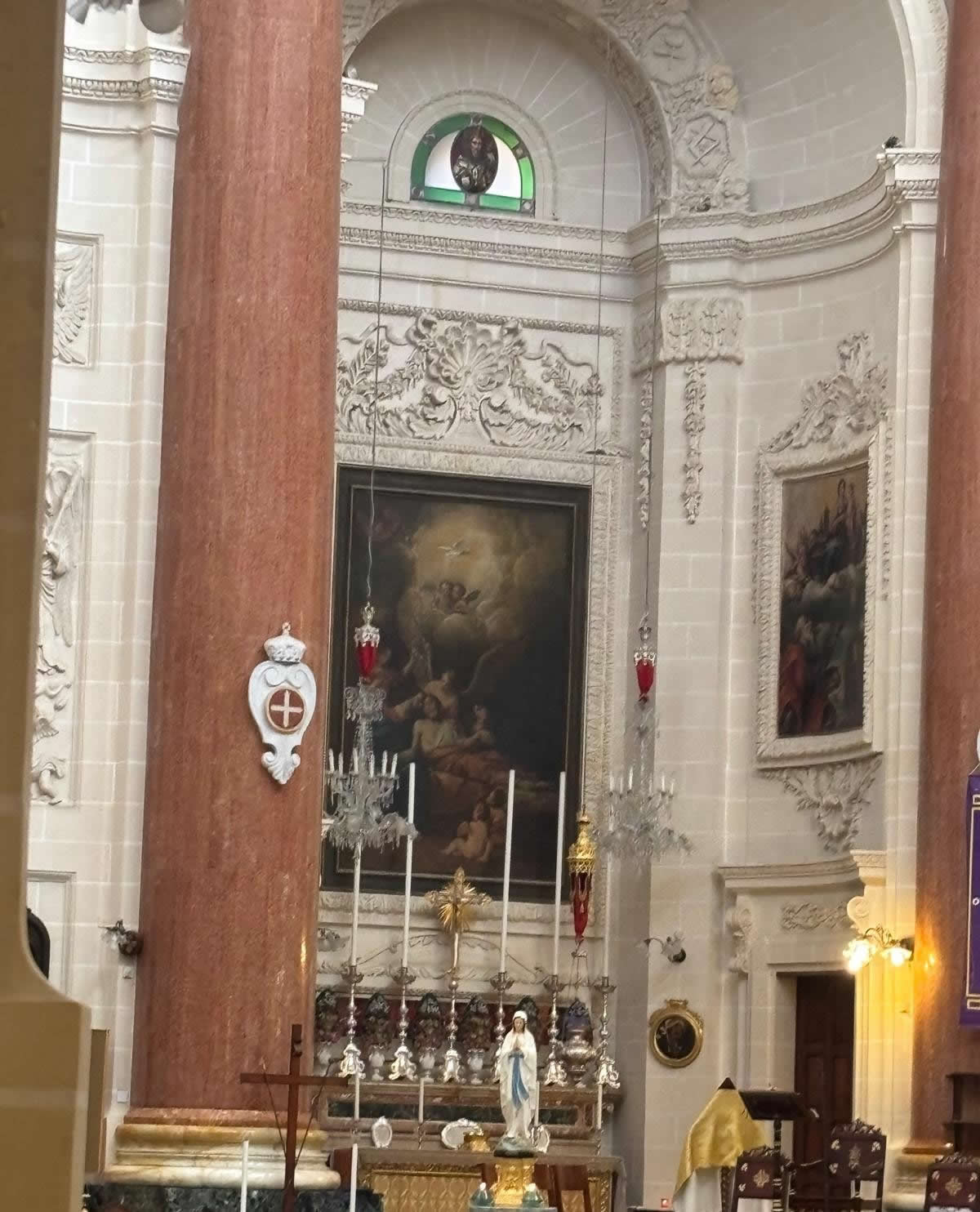
In 2018 the interior underwent a comprehensive re‑lighting project by Heritage Malta introducing energy‑efficient systems that highlight Preti‑school paintings and Carmelite masonry details without altering ambience. The ongoing Cultural Heritage Plan (2022‑2026) includes digital 3D mapping of the dome for structural monitoring and drainage improvement to preserve the iconic silhouette for future generations.
Present‑Day Role & Feast Celebrations
The basilica stands today as the centre of Carmelite life in Malta and the headquarters of the Carmelite Province of the Mediterranean. Daily liturgies and evening adoration are held in the main nave, while the Friary houses a library of more than 12,000 theological volumes. The congregation’s social mission includes spiritual counselling and youth education programmes.
The highlight of the year is the Feast of Our Lady of Mount Carmel celebrated on the third Sunday of July. A majestic procession with the 1781 statue courses through the streets of Valletta, accompanied by the Carmelite band and hundreds of faithful carrying brown scapulars. The feast lights up the city with decorations, fireworks over the harbour, and a solemn pontifical Mass concelebrated by the Archbishop of Malta.
Beyond its liturgical life, the basilica functions as an acclaimed acoustic venue for sacred music concerts such as the annual Choirs of Europe Festival and Carmelite Choral Vespers broadcast during Christmas.
Map & Location
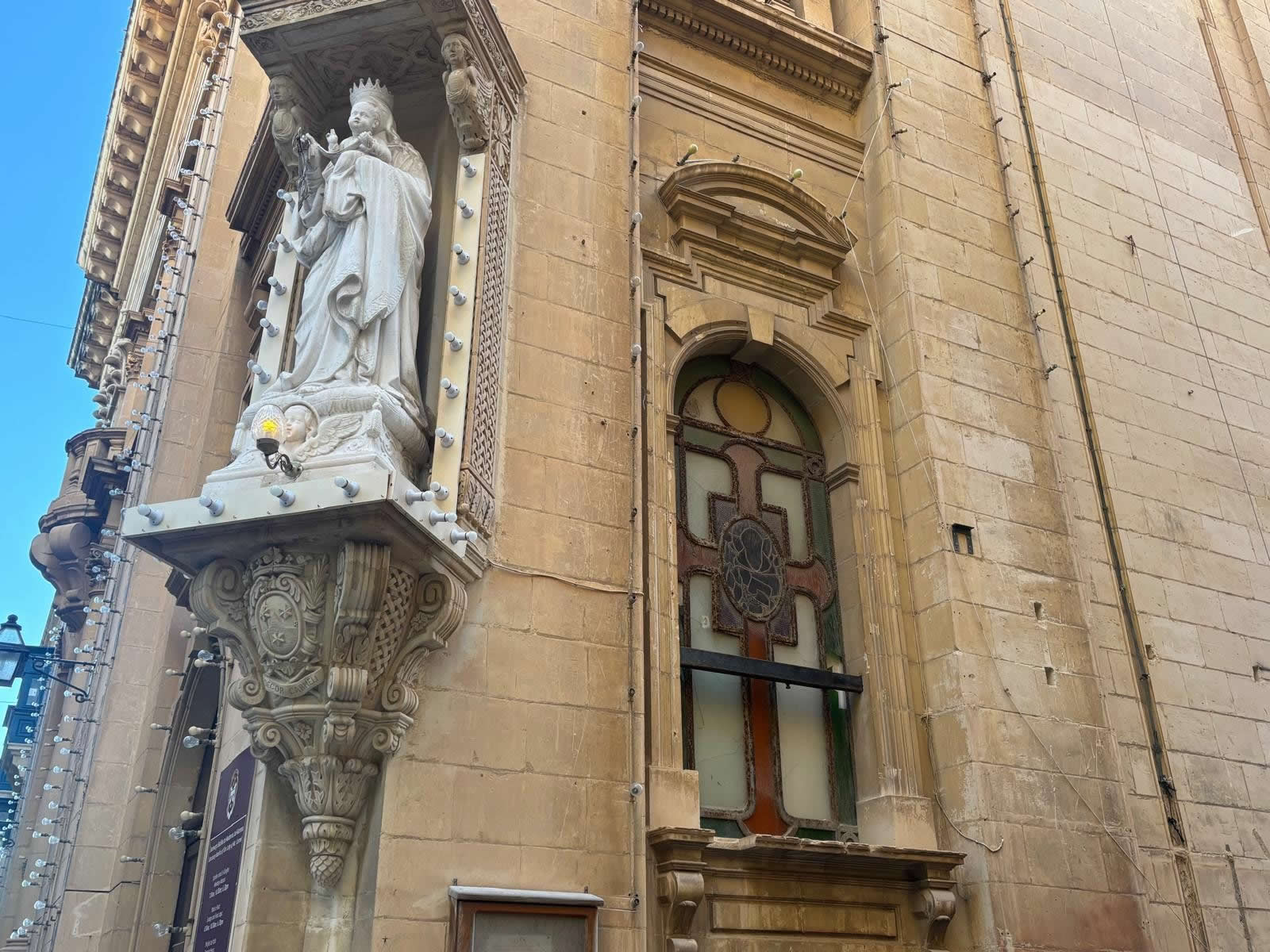
The Basilica dominates Valletta’s silhouette from almost all angles of the Grand Harbour. It is situated on Old Theatre Street near Manoel Theatre and is a 5‑minute walk from city gate, making it one of Malta’s most‑photographed landmarks.
Coordinates: 35.900143° N, 14.512362° E → View on Google Maps