📍 Location
Location Map Coordinates 35.897661, 14.509725
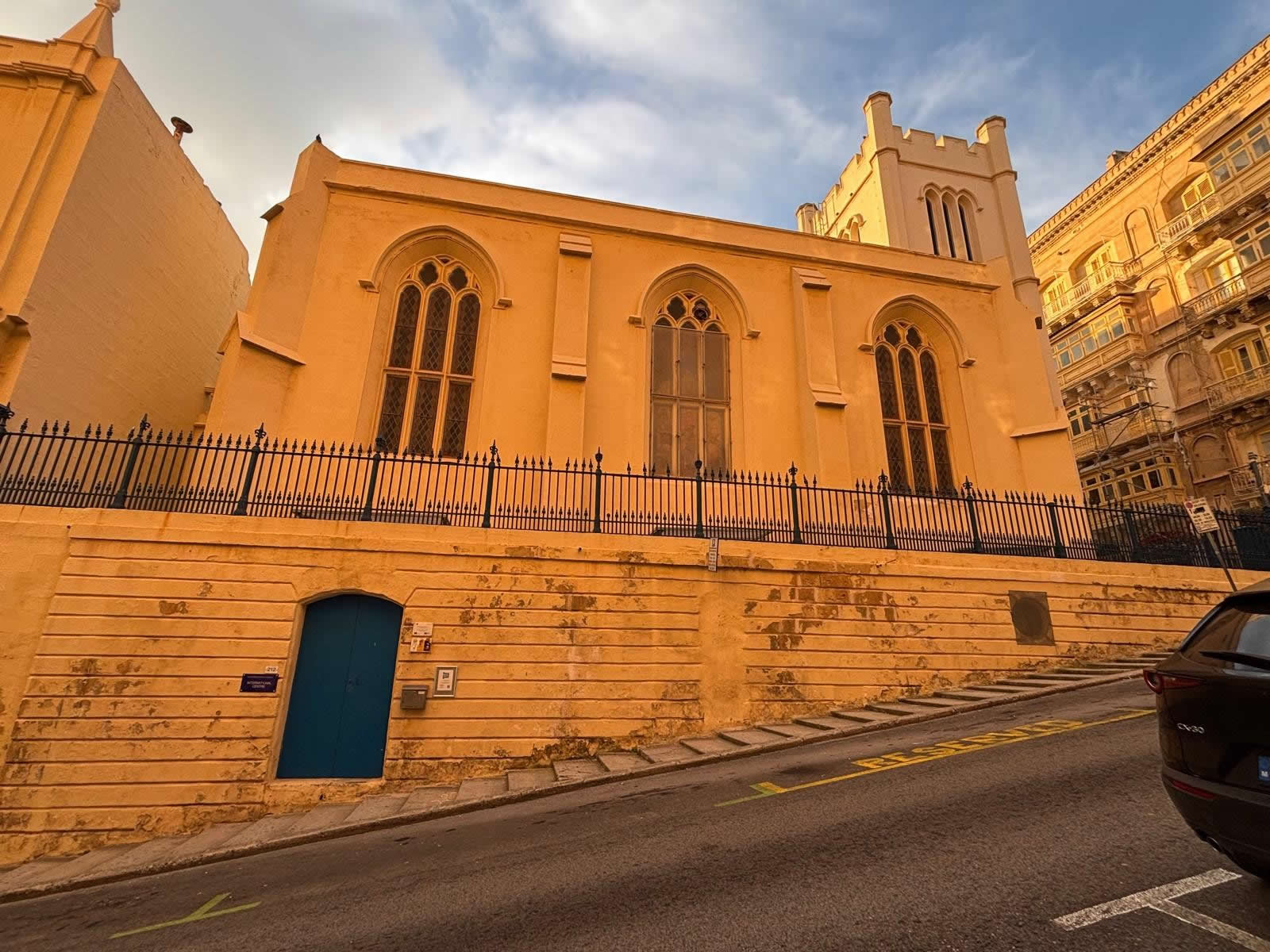
St Andrew’s Scots Church in Valletta, Malta is one of the most historically significant Protestant places of worship on the Maltese islands. Located at coordinates 35.897661, 14.509725, the church stands at the junction of Old Bakery Street and South Street in the historic capital city of Valletta.
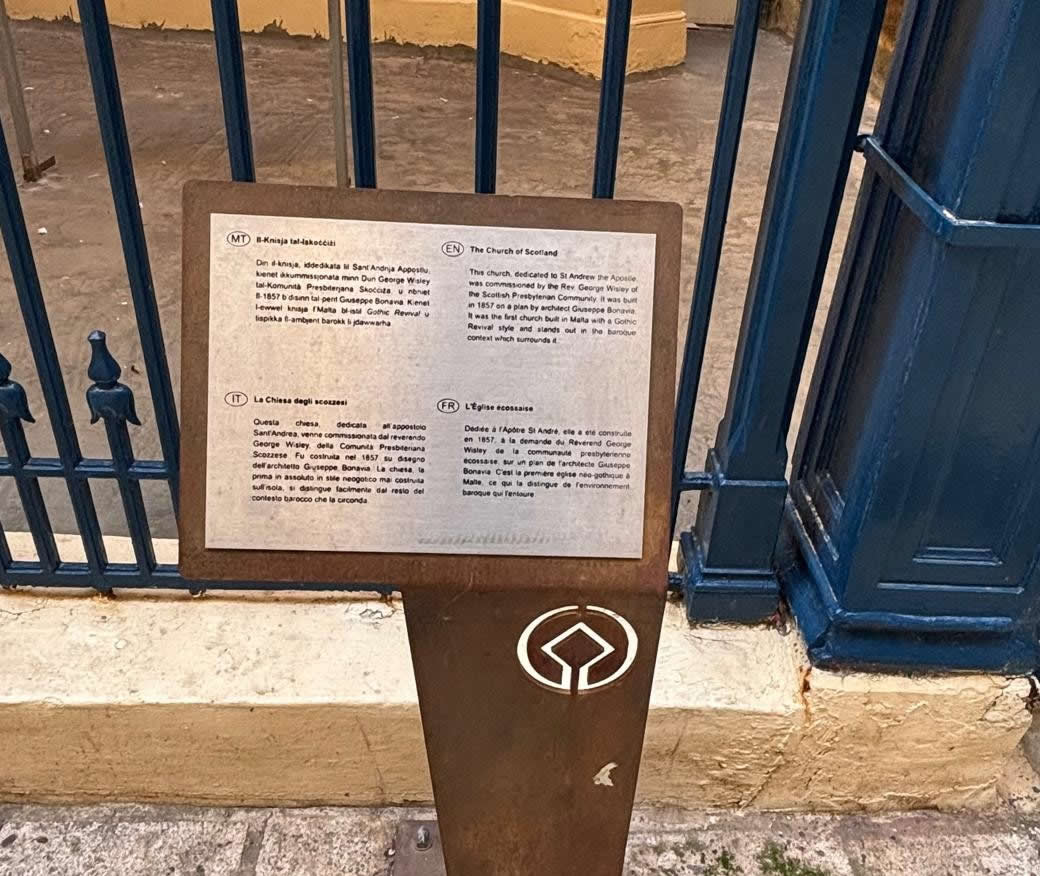
Built during the British colonial period and completed in 1857, the church represents an important milestone in Malta’s religious history. It was the first church constructed on the island for non-Roman Catholic worship and the first building in Malta designed in the Neo-Gothic architectural style.
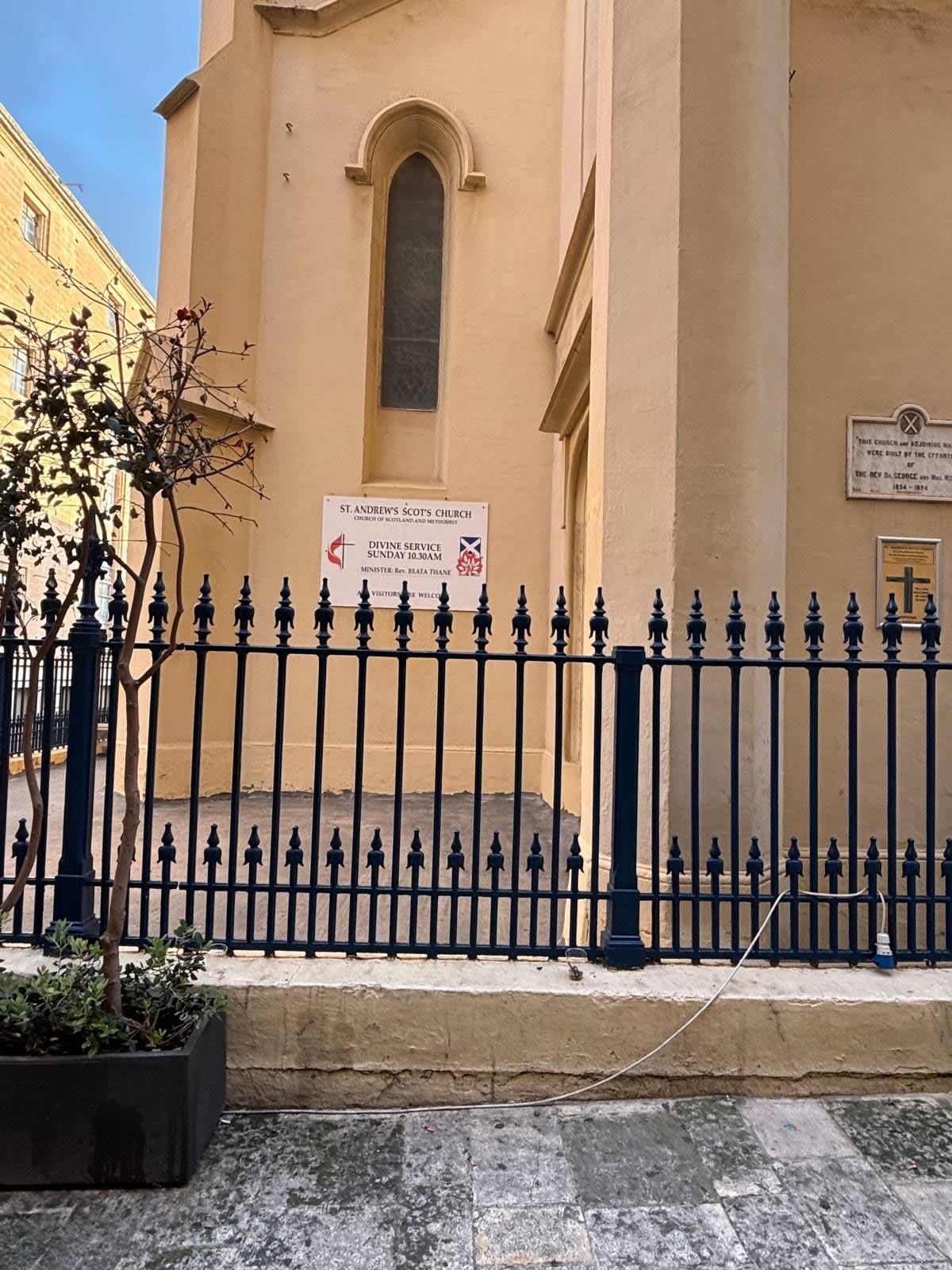
Today the church remains active as a place of worship and serves an international congregation composed of members of the Church of Scotland, the Methodist Church of Great Britain, and Christians from many other Protestant traditions.
St Andrew’s Scots Church Burial Register
The church's historic burial register provides a fascinating record of the Protestant and military community in nineteenth-century Malta. Our searchable transcription of the St Andrew’s Scots Church Register of Burials contains names, dates of burial, ages, places of residence, military units and the ministers who conducted the ceremonies.
Location and Setting
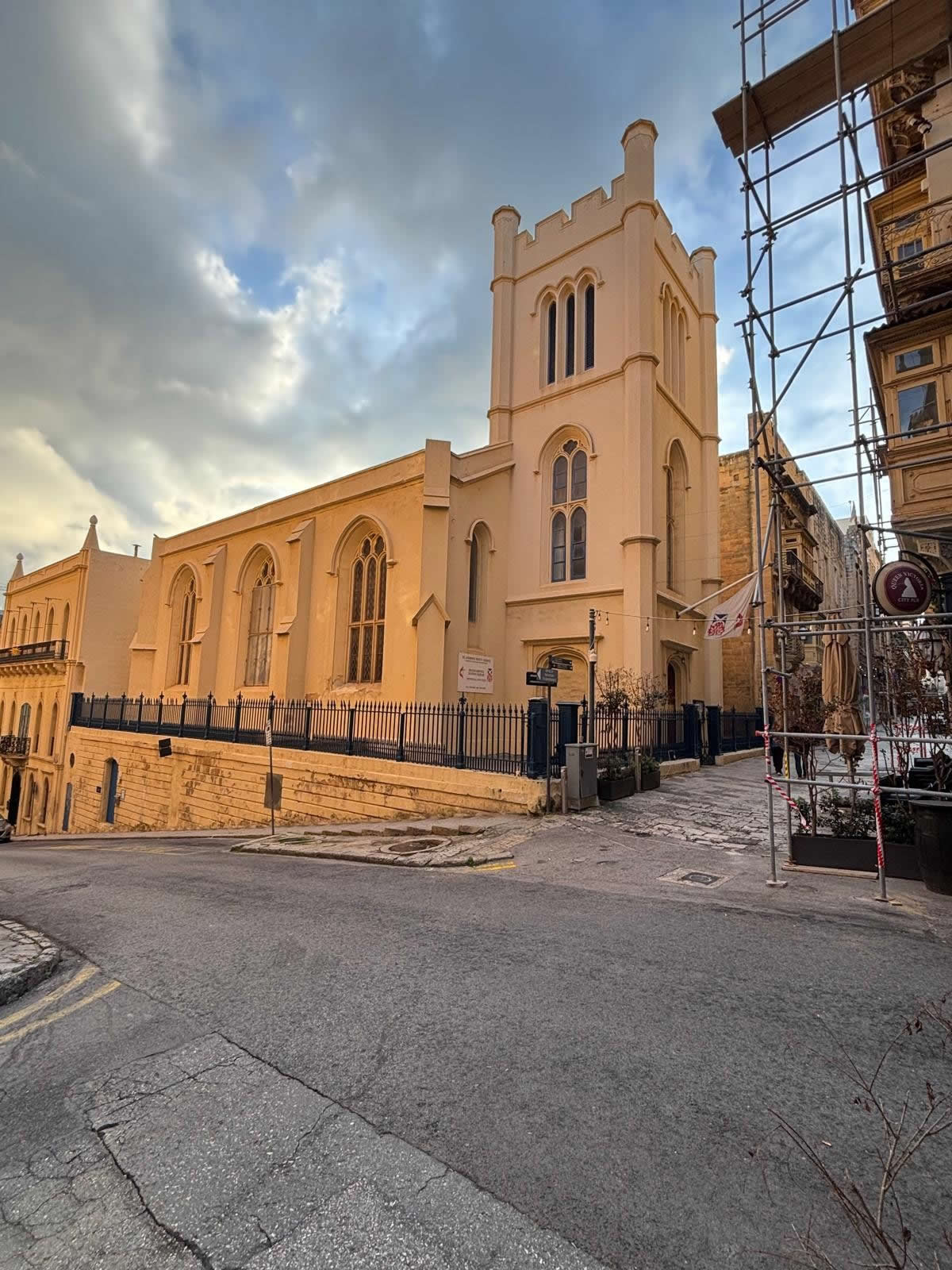
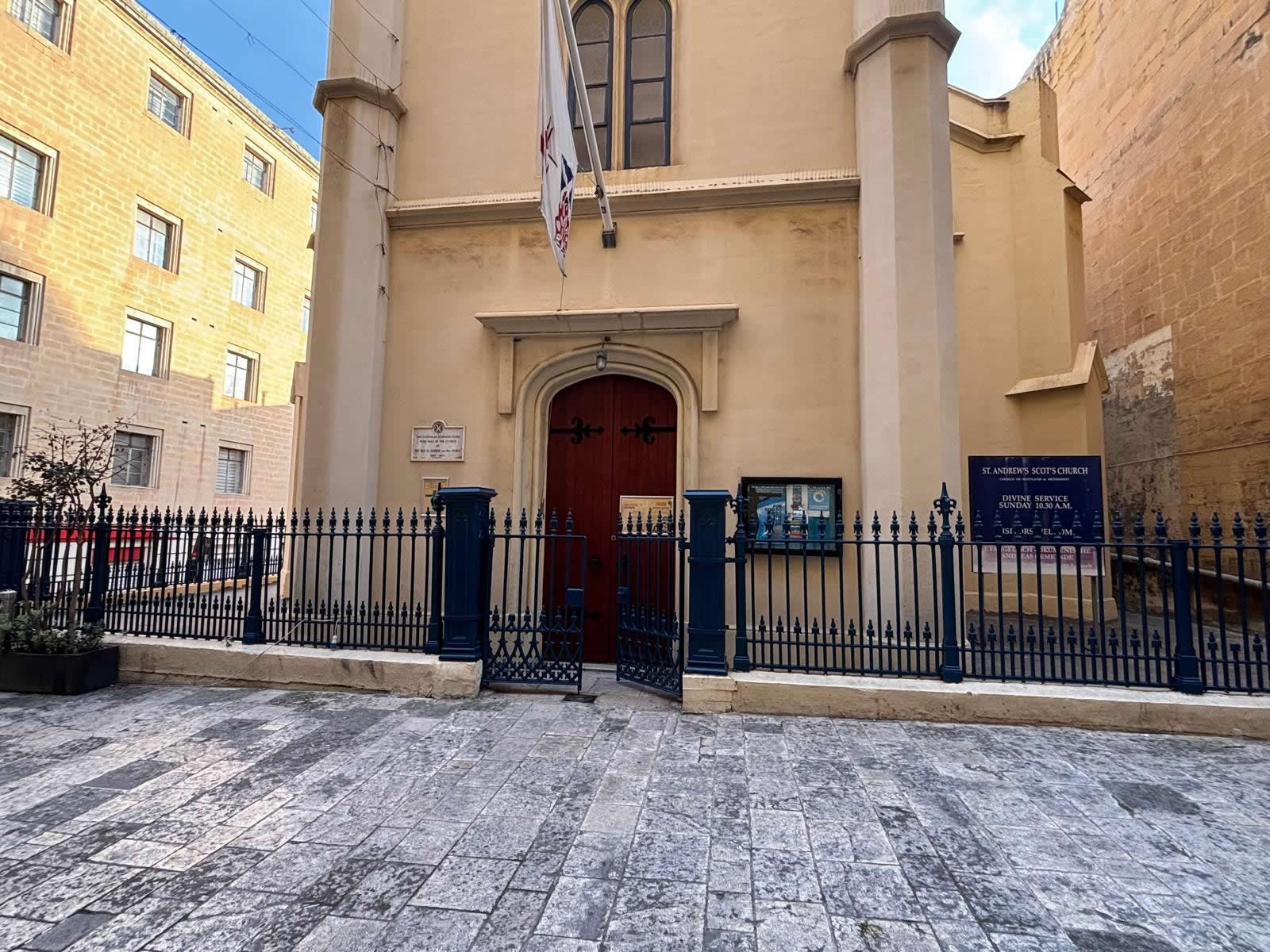
St Andrew’s Scots Church is situated within the historic grid of streets that make up Valletta’s UNESCO World Heritage city centre. The building occupies a distinctive site at the intersection of South Street and Old Bakery Street, slightly set back from the surrounding urban block.
The church stands on a raised platform constructed to accommodate the steep slope of the terrain. A decorative Victorian iron palisade separates the church from the surrounding streetscape, emphasising the building’s architectural independence from the neighbouring Baroque structures that dominate Valletta’s skyline.
This unique positioning allows the church to stand out among the predominantly Catholic religious architecture of the capital city.
Origins and Early Protestant Presence in Malta
For centuries Malta was overwhelmingly Roman Catholic, particularly during the rule of the Knights of St John between 1530 and 1798. The arrival of British administration in the early nineteenth century introduced new Protestant communities to the islands, including military personnel, merchants, and administrators from Britain and other parts of the Commonwealth.
In 1824, the Reverend John Keeling acquired the site in Valletta with the intention of building a church for the Methodist community living in Malta. This marked the beginning of organised Protestant worship in the Maltese capital.
Before the construction of St Andrew’s, Protestant worship services were often held in temporary chapels or private buildings. The new church therefore represented a major development in the religious diversity of Malta.
Construction of the Church (1857)
The present church building was completed in 1857 under the direction of Rev. Dr George Wisely, who served as minister of the congregation for more than four decades. Wisely played an important role not only in the church’s development but also in wider Maltese society through educational and charitable initiatives.
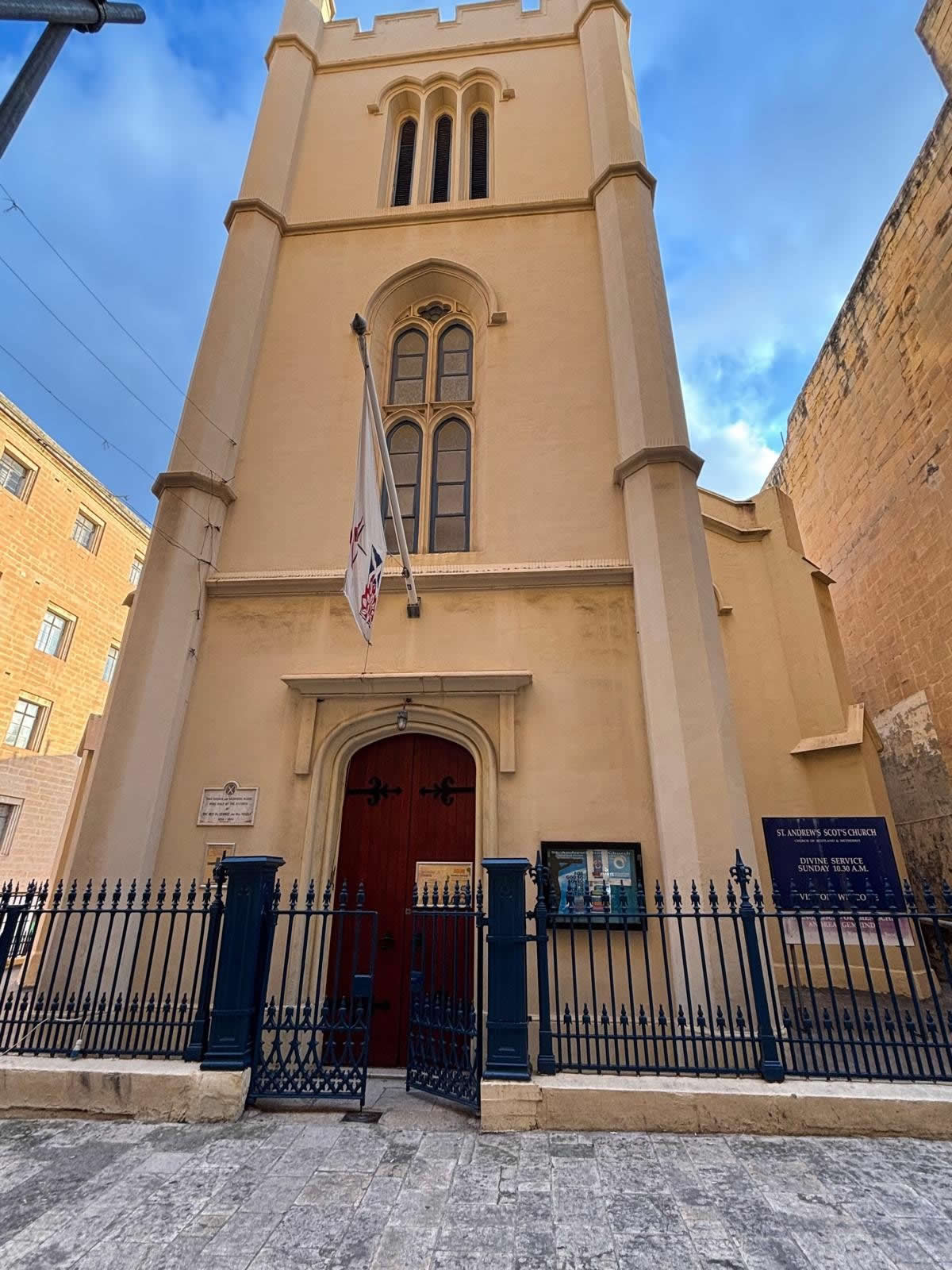
The church was designed by the Maltese architect Giuseppe Bonavia, who introduced the Neo-Gothic architectural style to Malta through this project. At the time, Valletta was dominated by Baroque architecture dating from the era of the Knights of St John, making the Gothic revival style of St Andrew’s particularly distinctive.
The building was officially opened and dedicated on St Andrew’s Day, 30 November 1857.
Architectural Design
Neo-Gothic Style
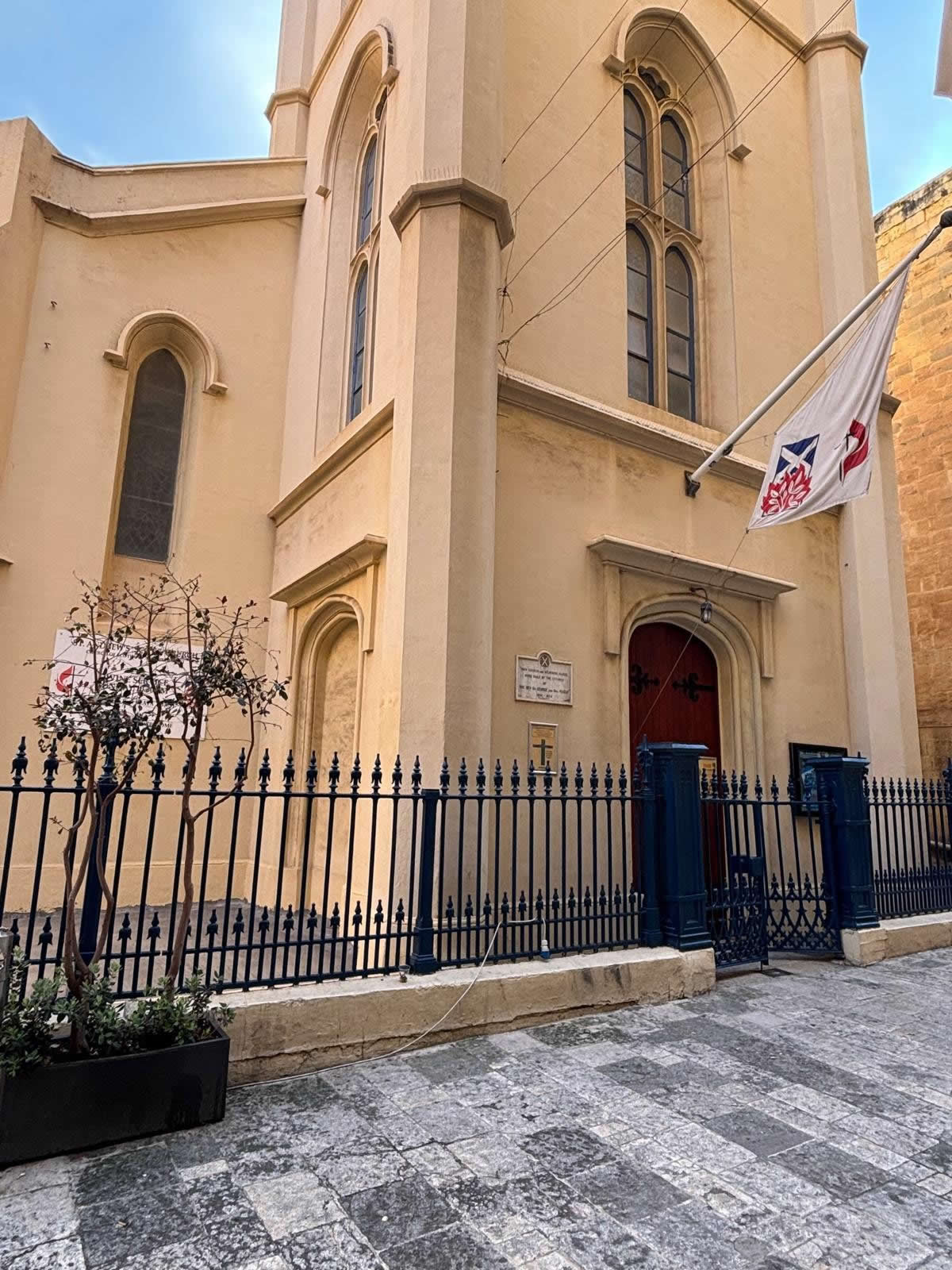
St Andrew’s Scots Church is widely recognised as the first Neo-Gothic building constructed in Malta. The design draws inspiration from Scottish village churches of the nineteenth century while incorporating local building materials and construction techniques.
Key architectural features include:
- Pointed Gothic arches
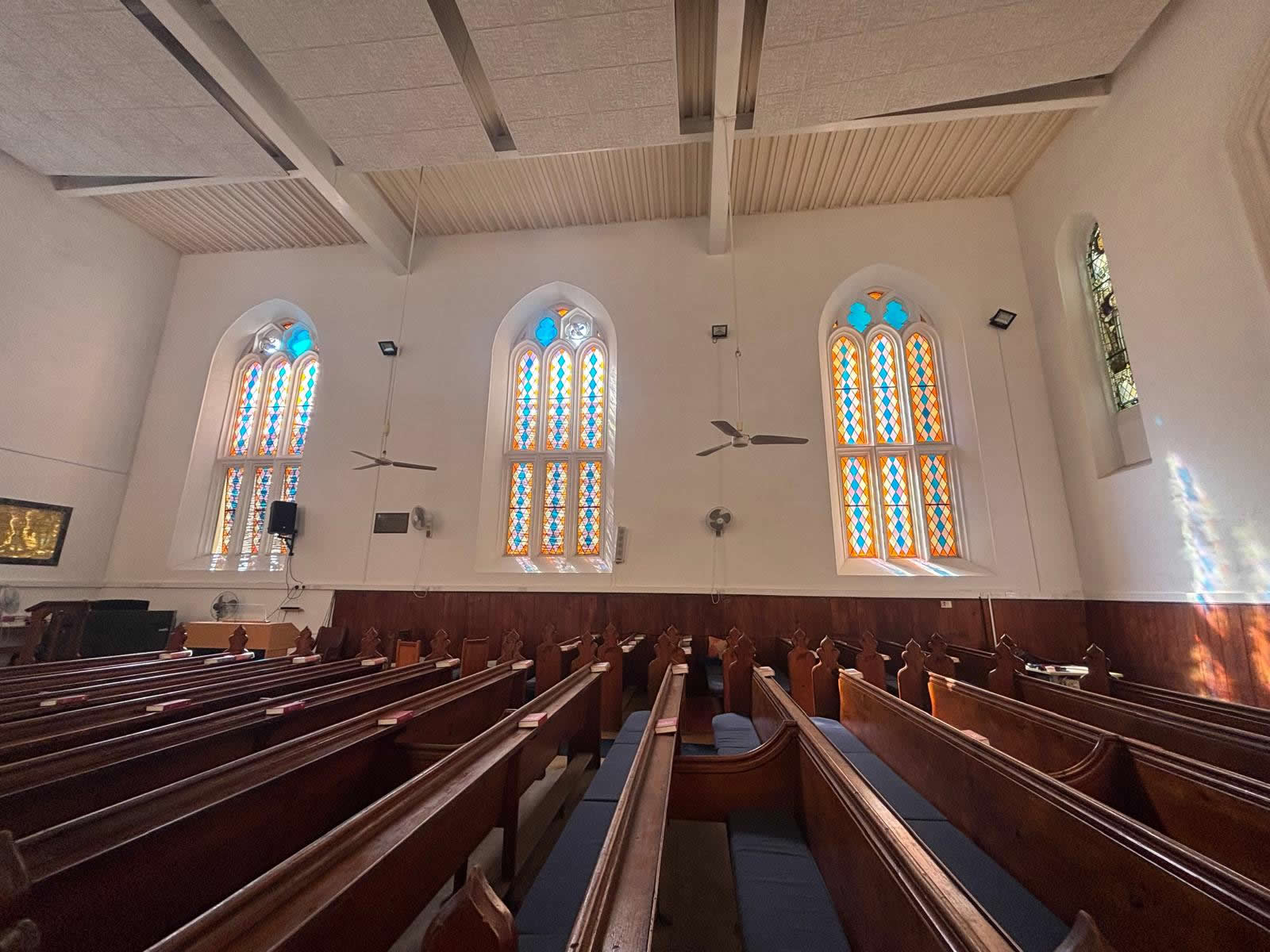
- Slender lancet windows
- A modest bellcote on the façade
- Limestone masonry construction
- A steeply pitched roof
The restrained decoration reflects the Presbyterian emphasis on simplicity and clarity of worship spaces.
Interior Layout
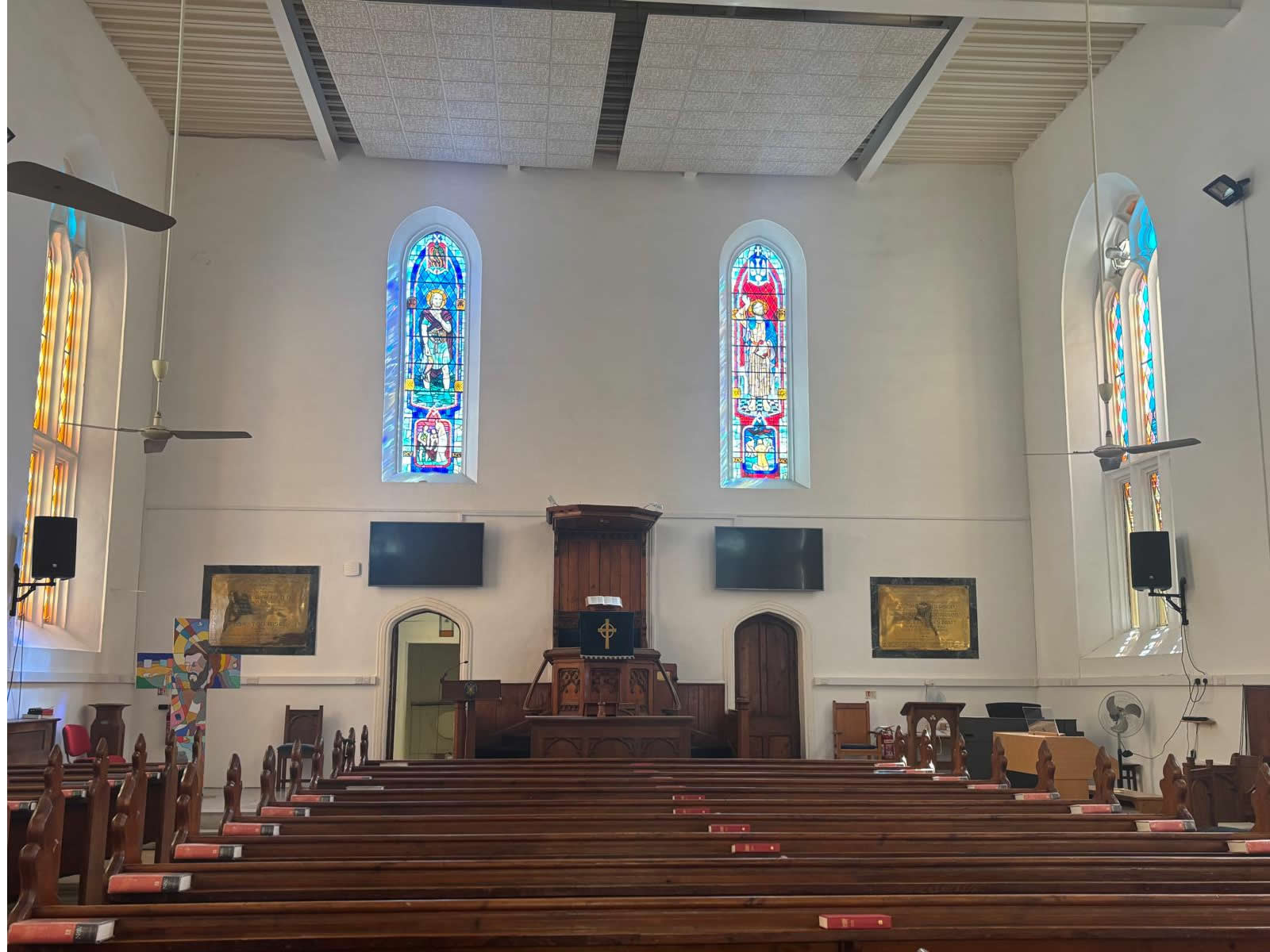
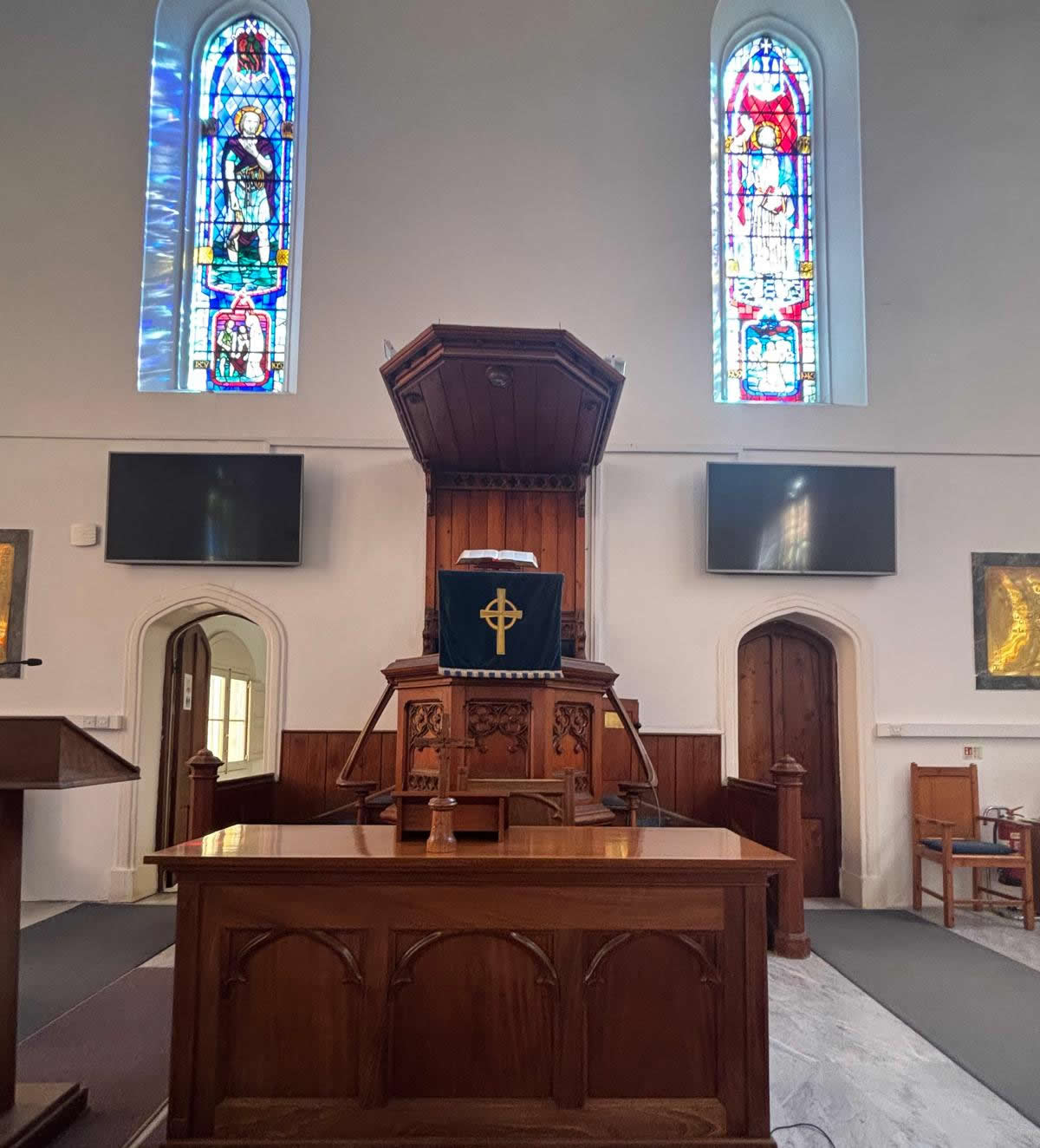
The interior is characterised by a high vaulted ceiling, wooden pews arranged around a central pulpit, and a gallery structure typical of nineteenth-century Protestant churches. The arrangement emphasises preaching and congregational participation rather than elaborate liturgical ceremony.
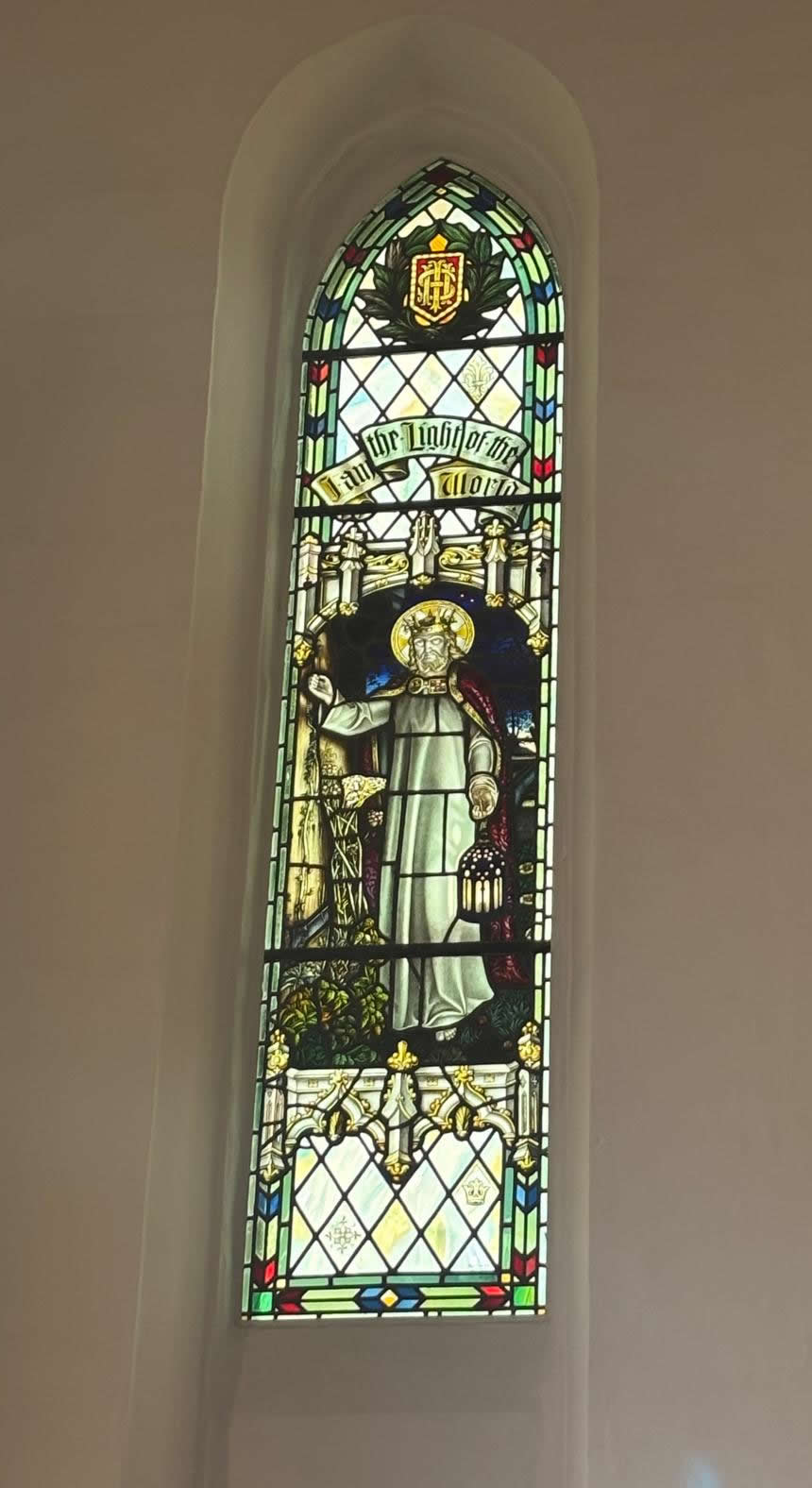
Stained glass windows, memorial plaques, and historical inscriptions add further visual interest to the otherwise simple interior.
Wartime Damage and Restoration
During the Second World War Malta experienced heavy aerial bombardment due to its strategic position in the Mediterranean. Valletta in particular suffered severe damage during the siege of 1940–1942.
St Andrew’s Scots Church was not spared from the destruction. Bombing raids damaged parts of the building and resulted in the loss of some historical records and archives belonging to the church community.
Following the war, restoration works were undertaken to repair the structure and preserve the historic church. Over the years the roof has been replaced more than once as part of maintenance and conservation efforts.
Ecumenical Role and Modern Congregation
In 1974, an important development occurred when the Methodist congregation from the former Methodist church in Floriana joined the Presbyterian congregation at St Andrew’s. This created a shared congregation representing both the Church of Scotland and the Methodist Church of Great Britain.
Today St Andrew’s functions as an international Protestant church welcoming people from many Christian traditions. Worship services are conducted in English and attract a diverse congregation including Maltese residents, expatriates, diplomats, students, and tourists.
The church also collaborates with other Christian communities in Malta, promoting inter-denominational dialogue and cooperation.
With thanks to St Andrew’s Scots Church
eMalta.com would like to thank Rev Betsi Thane of St Andrew’s Scots Church for her assistance with the research for this page and for helping us document the church’s history, memorials and heritage. For current information about the congregation, services and activities, please visit the official St Andrew’s Scots Church Malta website.
Memorial Plaques
St Andrew's Scots Church contains a number of brass memorial plaques commemorating ministers, elders and members of the congregation whose lives were closely connected with the church and the British community in Malta. Together they span more than a century of the church's history, from the Victorian era through the Second World War and into the modern day.
George Wisely D.D.
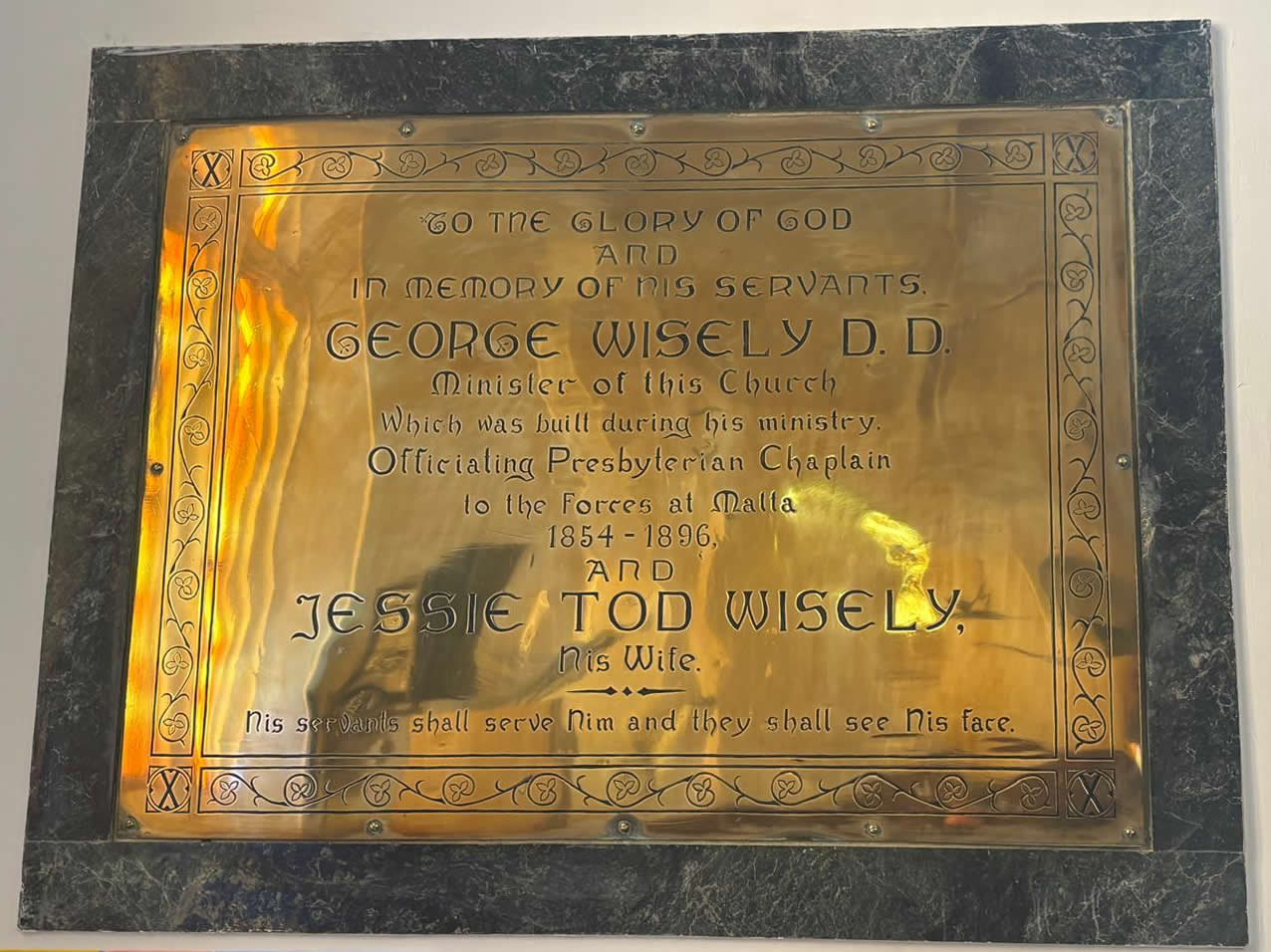
One of the church's most significant memorials honours George Wisely D.D., who served as Minister of St Andrew's Scots Church and as Presbyterian Chaplain to the Forces in Malta between 1854 and 1896. During his ministry the present church was constructed and opened for worship, making him one of the principal figures in the congregation's history. His memorial also commemorates his wife, Jessie Tod Wisely.
Mary Elizabeth McBain
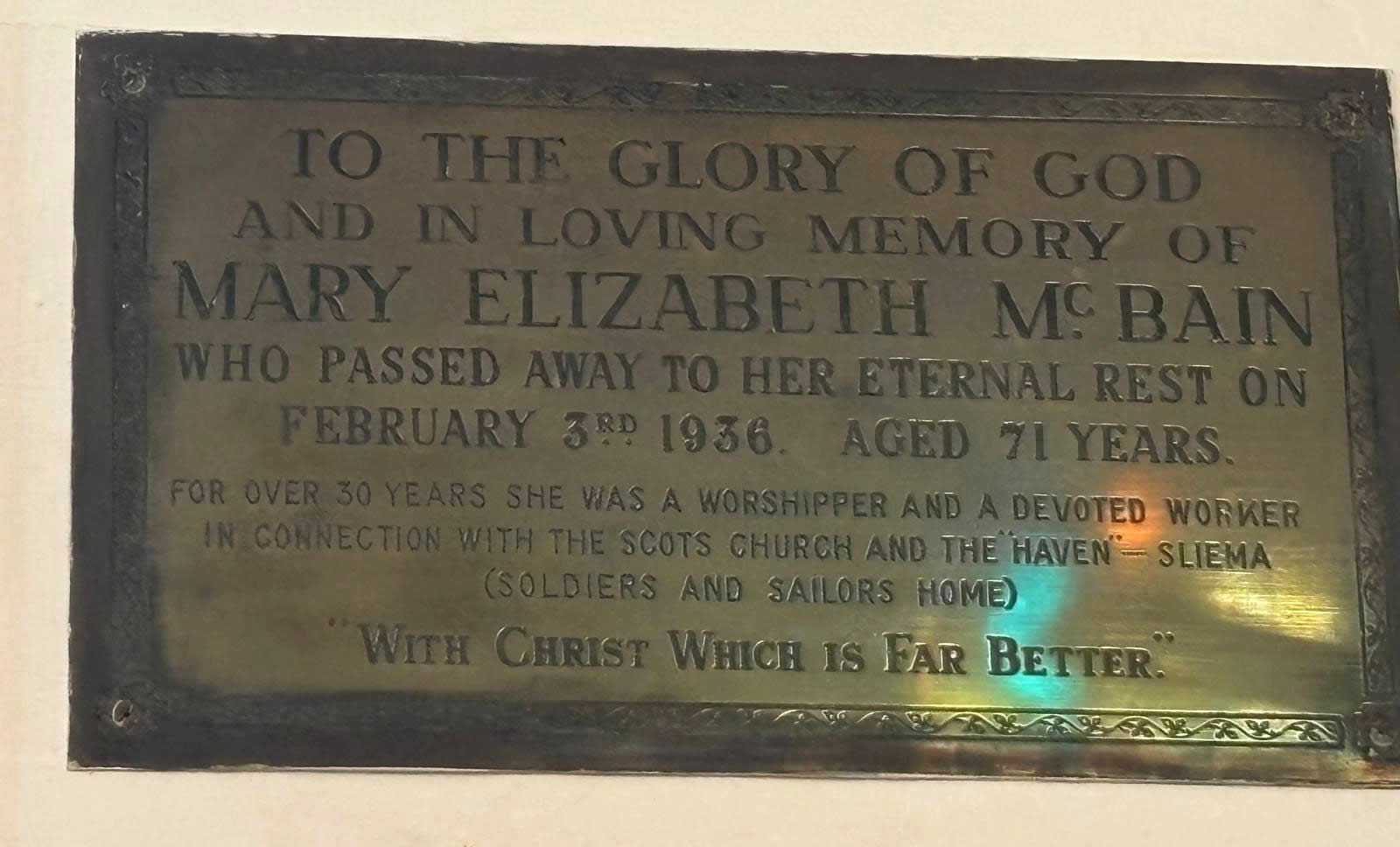
This memorial commemorates Mary Elizabeth McBain, who died on 3 February 1936 aged 71 years. The inscription records that she worshipped at St Andrew's Scots Church for more than thirty years and devoted herself to charitable work through the church and The Haven, a Soldiers' and Sailors' Home in Sliema serving members of the British armed forces stationed in Malta.
Sir David Callender Campbell
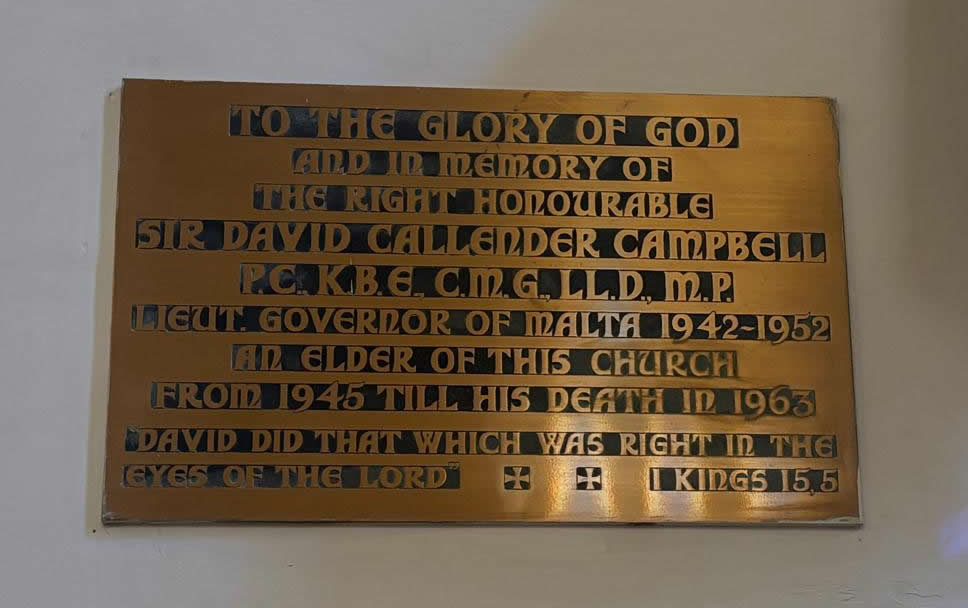
A brass memorial honours Sir David Callender Campbell, Lieutenant-Governor of Malta from 1942 until 1952. Following the Second World War he became an Elder of St Andrew's Scots Church, serving the congregation from 1945 until his death in 1963. The inscription quotes 2 Kings 15:3: "David did that which was right in the eyes of the Lord."
Bernard and Hannah Crabtree
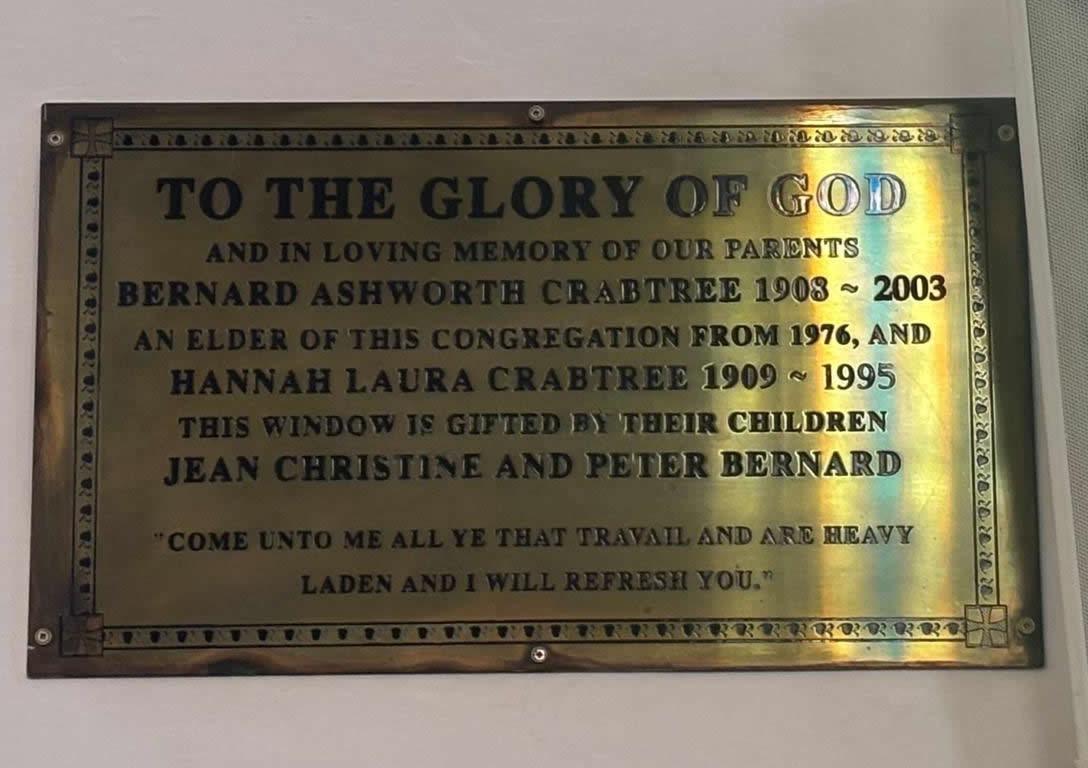
A modern memorial records the lives of Bernard Ashworth Crabtree (1908–2003), an Elder of the congregation from 1976, and his wife Hannah Laura Crabtree (1909–1995). The memorial also notes that one of the church's stained-glass windows was presented by their children in their memory.
First World War Memorial
The church also contains a brass memorial commemorating three members of the congregation who were killed in action during the First World War. It honours Sergeant John N. Morrison of the Queen's Own Cameron Highlanders, Second Lieutenant Ronald M. Morrison of the East Yorkshire Regiment and Second Lieutenant Alexander Stewart Pratt of the Cameronians (Scottish Rifles), all of whom died in France between 1915 and 1917.
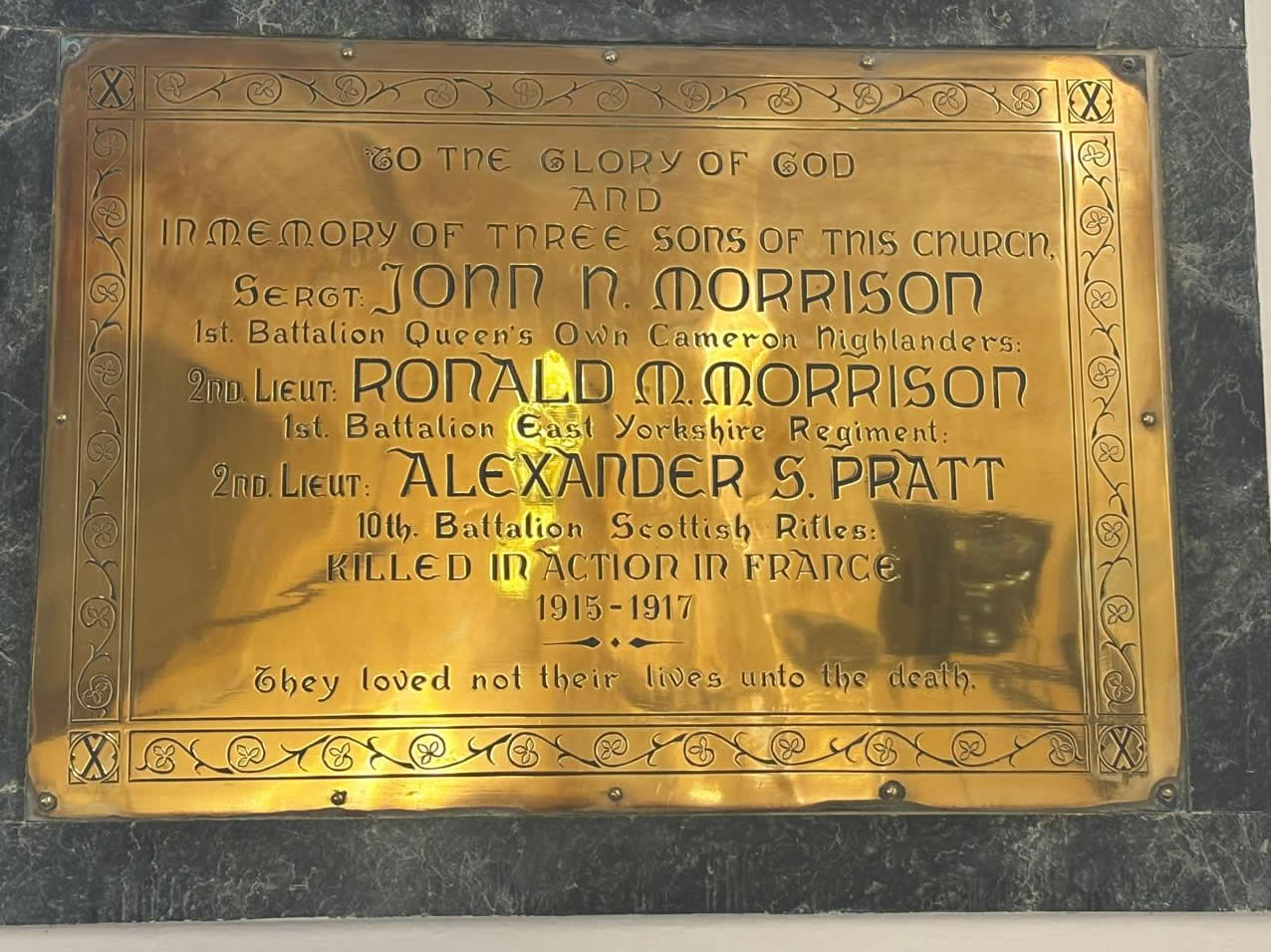
Explore the St Andrew's Scots Church First World War Memorial →
Community and Cultural Activities
In addition to regular Sunday worship services, St Andrew’s Scots Church hosts a variety of community activities throughout the year. These include:
- Concerts and musical performances
- Lectures and cultural events
- Charitable initiatives and social outreach programs
- Commemorative services such as ANZAC Day and Remembrance Sunday
The church also participates in Malta’s cultural calendar, including events connected with Valletta’s historic heritage and religious traditions.
Heritage Protection
Recognising its historical and architectural significance, St Andrew’s Scots Church has been designated as a protected national monument by Maltese heritage authorities. This status ensures that the building will be preserved as an important example of nineteenth-century Protestant architecture in Malta.
As one of the few surviving Protestant churches built during the British colonial period, the church remains a unique element within the predominantly Catholic religious landscape of the Maltese islands.
Visiting St Andrew’s Scots Church
Visitors exploring Valletta’s historic streets can easily include St Andrew’s Scots Church as part of a walking tour of the city. The church is located only a short distance from major landmarks such as:
- St John’s Co-Cathedral
- Upper Barrakka Gardens
- Republic Street
- St Paul’s Anglican Pro-Cathedral
Although less well known than some of Valletta’s grand Baroque churches, St Andrew’s offers a fascinating insight into Malta’s multicultural religious history and its connections with Britain and the wider Commonwealth.
Conclusion
St Andrew’s Scots Church remains a remarkable landmark in Valletta’s architectural and religious landscape. Built in 1857 as Malta’s first non-Catholic church and the first Neo-Gothic structure on the island, it represents an important chapter in the development of religious diversity in Malta.
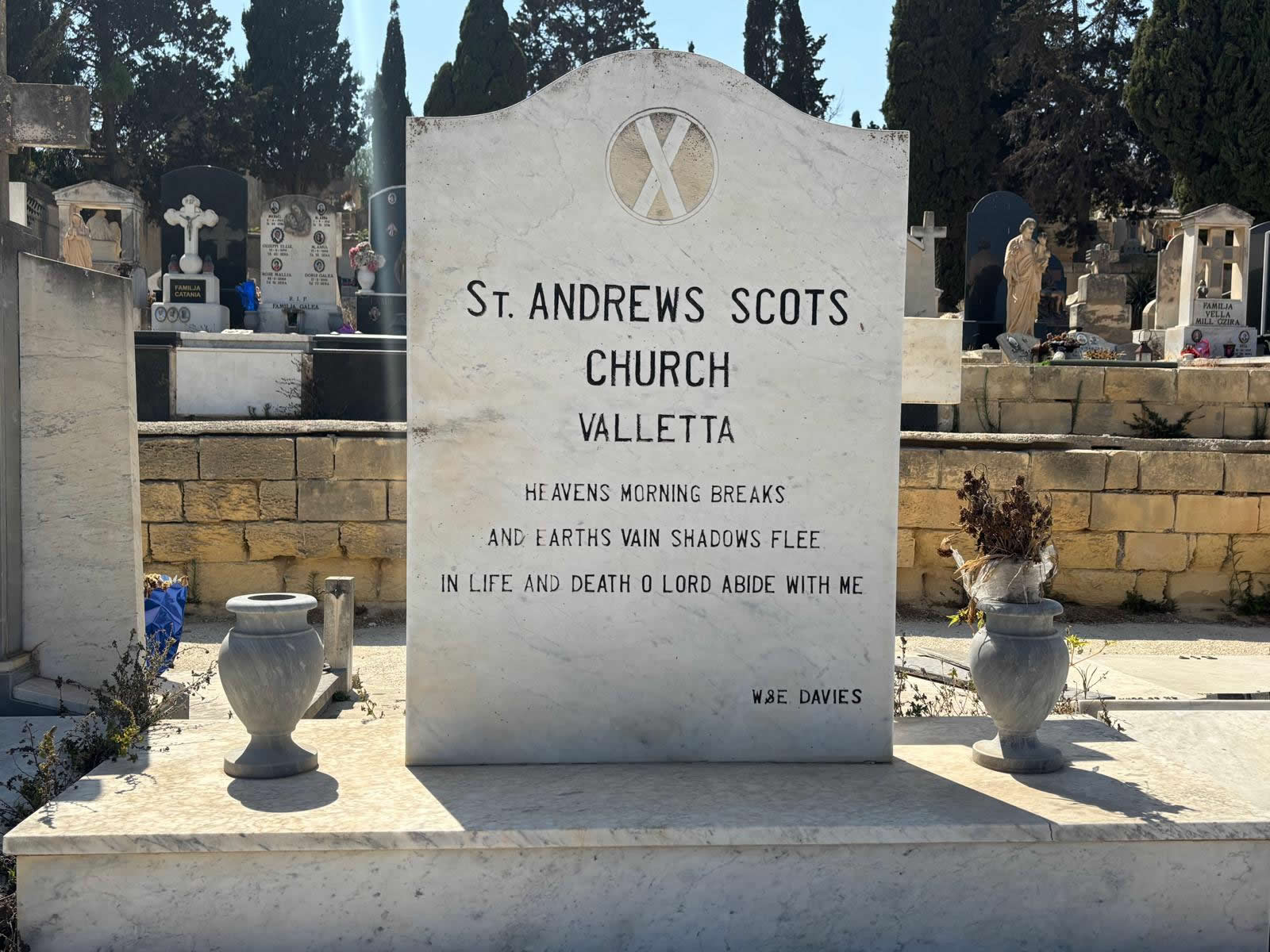
co-ordinates for visitors 35.867450, 14.501558
Today the church continues to serve an international congregation while preserving its historic architecture and heritage. As both a place of worship and a cultural monument, St Andrew’s Scots Church reflects the enduring connections between Malta and the wider Protestant world.
Frequently Asked Questions about St Andrew’s Scots Church
Where is St Andrew’s Scots Church in Valletta?
St Andrew’s Scots Church is located at 210 Old Bakery Street in Valletta, Malta, at the junction with South Street. The coordinates are 35.897661, 14.509725.
When was St Andrew’s Scots Church built?
The present St Andrew’s Scots Church was completed in 1857 and was dedicated on St Andrew’s Day, 30 November 1857. The site has earlier Protestant origins dating back to 1824.
Who designed St Andrew’s Scots Church?
The present church was designed in the Neo-Gothic style by Maltese architect Giuseppe Bonavia, under the direction of Rev. Dr George Wisely.
What is special about St Andrew’s Scots Church?
St Andrew’s Scots Church is an important Protestant heritage building in Valletta and is widely recognised as Malta’s first Neo-Gothic church. Its history also reflects the development of Protestant worship in Malta during the nineteenth century.
Is St Andrew’s Scots Church Protestant?
Yes. St Andrew’s is a Protestant church with historic connections to both the Church of Scotland and the Methodist Church. It continues to serve an international congregation.
What memorial plaques are inside St Andrew’s Scots Church?
The church contains several historic memorial plaques, including memorials to George Wisely D.D., Mary Elizabeth McBain, Sir David Callender Campbell, and Bernard and Hannah Crabtree. It also contains a First World War memorial commemorating members of the congregation who were killed in action.
Does St Andrew’s Scots Church have a First World War connection?
Yes. The church contains a First World War memorial commemorating three members of the congregation who were killed in action between 1915 and 1917. The church also has an important connection with Malta’s wider First World War and ANZAC history.
Does St Andrew’s Scots Church have stained glass windows?
Yes. St Andrew’s contains several stained-glass windows which form an important part of the church's interior and history. Some are associated with individual memorials and commemorations.
Is St Andrew’s Scots Church still active?
Yes. St Andrew’s Scots Church remains an active Protestant congregation in Valletta and continues to welcome an international community.
Research & Documentation
- Researcher: Paul Berman
- Last Updated: 2026
This page forms part of eMalta's ongoing documentation of the historical, cultural and religious heritage of Malta and Gozo.
Information has been compiled through site visits, field research, historical publications, archival records, maps, plans and other reference sources.
All locations that currently exist featured on eMalta have been personally visited and documented. Where historic sites no longer exist, information has been researched from archival sources and contemporary records.
Images used on eMalta include original photography as well as historical illustrations, maps and photographs reproduced with permission from archives, institutions and copyright holders where applicable. Individual image credits and archive reference numbers are provided where available.