📍 Location
Location Map Coordinates 35.897623, 14.515543
Church and Cloistered Convent of the Order of St John – Valletta, Malta
Introduction
The Monastery of St Ursula (Sant Orsola) is one of the most historically significant religious institutions in Valletta. Located within the fortified capital city of Malta, the complex consists of a church and a cloistered convent that has been continuously inhabited by nuns connected to the Order of St John since the sixteenth century. The monastery stands as a unique reminder of the spiritual life associated with the Knights Hospitaller and represents one of the longest surviving monastic communities in Malta.
Although Valletta is renowned for its impressive Baroque churches, St Ursula’s Monastery has a distinctive character because it was founded specifically for the female branch of the Order of St John. The cloistered nuns who reside within its walls dedicate their lives to prayer and contemplation, maintaining a tradition that dates back more than four centuries.

Foundation of the Monastery
The origins of St Ursula’s Monastery can be traced to the period shortly after the Knights Hospitaller established Valletta as the new capital of Malta following the Great Siege of 1565. Recognising the importance of supporting religious life within the growing city, Grand Master Hugues Loubenx de Verdalle founded a convent for cloistered nuns of the Order during the late sixteenth century.
The first monastery associated with the community had been established in Birgu (Vittoriosa) in 1582, within the former Grand Master’s Palace. However, when Valletta became the principal seat of the Order, the community was transferred to the newly constructed convent in the capital city. The move to Valletta was completed in 1595.
From that time onwards, the monastery of St Ursula became the permanent home of the cloistered nuns of the Order of St John in Malta.

The Nuns of the Order of St John
The women living in the monastery are members of the Hierosolimitan Nuns of the Order of St John the Baptist, the female counterpart to the famous military and charitable Order of St John. Their rule of life follows the spiritual traditions established by Blessed Raymond du Puy, one of the earliest leaders of the Order.
Historically, the nuns were placed under the authority of the Grand Master of the Knights Hospitaller. Their role was primarily spiritual: they were expected to offer prayers for the knights, the Order, and the Christian world.
Unlike the knights, who were engaged in military and hospitaller activities, the nuns lived a life of strict enclosure. They rarely left the monastery walls and devoted their time to contemplation, liturgical prayer, and spiritual intercession.
Even after the Knights of St John were expelled from Malta by Napoleon in 1798, the monastic community continued to exist. The monastery eventually came under the jurisdiction of the Maltese Church authorities, while maintaining its historic links with the Order of Malta.

Architecture and Layout
The monastery complex occupies an entire city block within Valletta and is located close to the eastern bastions overlooking the Grand Harbour. The church itself forms an integral part of the monastery and is accessed from Archbishop Street.
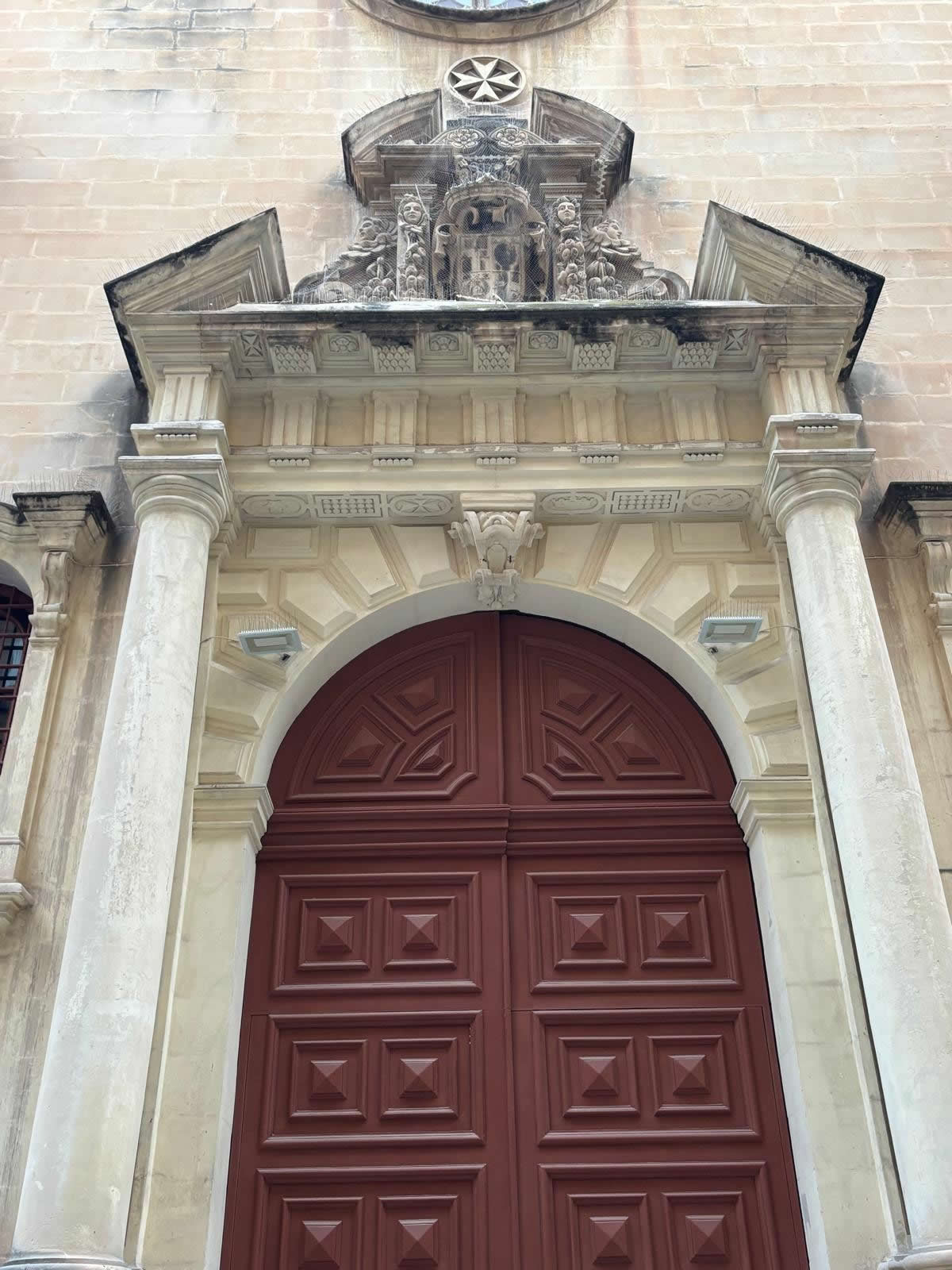
The façade of the church is symmetrical in design and reflects the architectural language common to Valletta’s religious buildings. The main central bay is flanked by narrower sections framed by pilasters extending over two levels, giving the façade a balanced and dignified appearance.
The interior of the church follows a traditional layout typical of seventeenth-century ecclesiastical architecture in Malta. The sanctuary area is emphasised by decorative stonework, while side altars and devotional artworks contribute to the sacred atmosphere of the building.

Artworks and Religious Treasures
Among the most important artistic treasures of St Ursula’s Church is a celebrated painting depicting The Martyrdom of St Ursula by the renowned Baroque artist Mattia Preti.
Preti, one of the most important artists associated with the Knights of St John, produced numerous masterpieces in Malta during the seventeenth century. His works can be found in many churches across the islands, including the famous ceiling paintings of St John’s Co-Cathedral.

The presence of a painting by Preti within St Ursula’s Monastery highlights the importance that the Knights placed on the convent and its church.
The monastery also preserves several historical relics associated with the Order of St John, including items connected with the founder of the Order, Blessed Gerard.
Hardships and World War II Damage
Throughout its long history, the monastery has experienced several difficult periods. One of the most challenging occurred during the Second World War when Malta was subjected to heavy aerial bombardment.
The monastery and church were severely damaged during bombing raids, resulting in structural collapse in parts of the complex. The nuns were forced to temporarily leave the building for safety.
After the war, restoration works were undertaken to rebuild the damaged areas and preserve the historic structure of the monastery.

Restoration and Preservation
The monastery has undergone several restoration campaigns in order to maintain its historic fabric. A major restoration project was carried out between 2006 and 2007, during which the façades and structural elements of the complex were repaired and conserved.
Due to its exceptional historical value, the monastery and church have been designated as a Grade 1 national monument within the National Inventory of the Cultural Property of the Maltese Islands.
These conservation efforts ensure that the monastery remains an important architectural and cultural landmark in Valletta.

Monastic Life Today
Despite the dramatic changes that have taken place in Maltese society over the centuries, the cloistered monastic community of St Ursula continues to live according to the ancient traditions of their order.
The nuns devote their lives to prayer, contemplation, and spiritual support for the Church and society. Their daily routine includes liturgical prayer, meditation, and quiet manual work within the monastery.
The convent remains largely closed to the public due to the strict enclosure observed by the community. Nevertheless, the church connected to the monastery continues to serve as a place of worship and spiritual reflection.
Location
| Church / Monastery | St Ursula’s Monastery |
|---|---|
| Location | Valletta, Malta |
| Coordinates | 35.897623, 14.515543 |
| Founded | 1582 (Birgu), transferred to Valletta 1595 |
| Founder | Grand Master Hugues Loubenx de Verdalle |
| Religious Order | Hierosolimitan Nuns of the Order of St John |
| Notable Artwork | The Martyrdom of St Ursula by Mattia Preti |
Historical Significance
St Ursula’s Monastery represents a unique institution within Maltese history. While the Knights of St John are often remembered for their military and naval exploits, the monastery highlights the spiritual dimension of the Order’s mission.
For more than four hundred years, the cloistered nuns of St Ursula have maintained a continuous tradition of prayer within Valletta. This enduring presence links modern Malta with the religious heritage of the Knights Hospitaller and forms an important chapter in the cultural history of the Maltese Islands.