Mdina — The Silent City
Explore 3,000 years of history in Malta’s ancient capital, from Phoenician Maleth and Roman Melite to Arab‑Byzantine medina and Baroque splendour. This guide covers origins, fortifications, palaces, museums, best walks, and practical tips for a perfect visit.

Overview
Mdina (Maltese: L-Imdina) is a fortified hilltop city at the heart of Malta. Known as the Silent City, it is famed for its honey‑stone bastions, winding alleys, noble palazzi, and the Baroque Cathedral of St Paul. Together with adjoining Rabat, it preserves layers of Phoenician, Punic, Roman, Byzantine, Arab, Norman, and Knights of St John heritage.
Population ~300 inside the walls; the wider urban area (with Rabat) is much larger. Access is primarily on foot; only residents’ cars are allowed inside.
Names: Maleth (Phoenician) → Melite (Roman) → Mdina (Arabic for ‘city’)Status: Former capital of Malta; walled city & scheduled heritage area
Fame: Cathedral of St Paul; palazzi; Game of Thrones filming locations
Fast Facts
~3,000 years Continuous human activity on the Mdina/Rabat plateau
~150 m Elevation above sea level; commanding views
12–15 Minutes to walk from gate to bastions at a leisurely pace
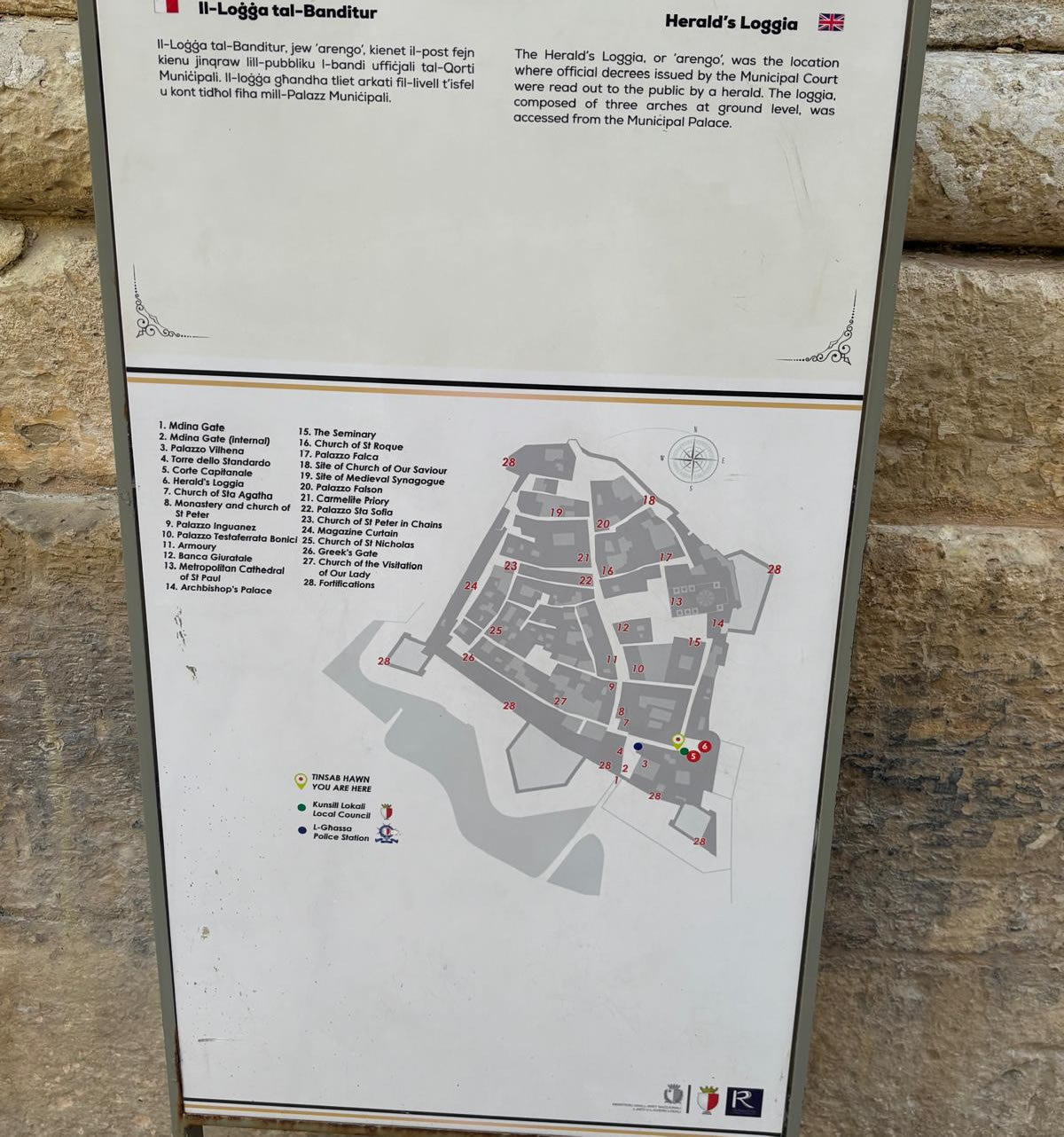
History — From Maleth to Mdina
c. 8th–7th century BCE — Phoenicians establish Maleth on the plateau; strategic harbouring at nearby Mtarfa/Rabat valleys.
218 BCE – 4th c. CE — Under Rome, the city becomes Melite; enlarged with walls, forum, domestic mosaics (Domvs Romana), and possible amphitheatre traces.
Late Antiquity — Christian community develops; traditions link St Paul’s shipwreck (60 CE) and preaching in the area; catacombs flourish in Rabat.
Byzantine → Aghlabid/Arab (870) — City contracts to a defensible core; Arabic urban influence and the name Mdina (‘the city’).
1091–1530 — Norman, Swabian, Angevin, Aragonese rule. Mdina (also Città Notabile) seat of Maltese nobility and Università (local council).
1530–1565 — Knights of St John arrive; move main seat to Birgu/Valletta, but Mdina remains the island’s noble capital.
1693 — Sicily earthquake damages Mdina heavily.
1722–1746 — Grand Master António Manoel de Vilhena commissions engineer‑architect Charles François de Mondion to rebuild the gate, piazza, portals, and outworks in Baroque style, giving Mdina much of its present appearance.
1798–1800 — French occupation then Maltese uprising; British protectorate follows; Mdina becomes a quiet, aristocratic town.
20th–21st c. — Conservation era; careful restorations; tourism and film productions raise profile; strict traffic limits preserve serenity.
Did you know? Mdina’s outer suburb Rabat (from Arabic ‘suburb’) contains the catacombs and Domvs Romana museum; both are outside the city walls but integral to understanding Mdina’s story.
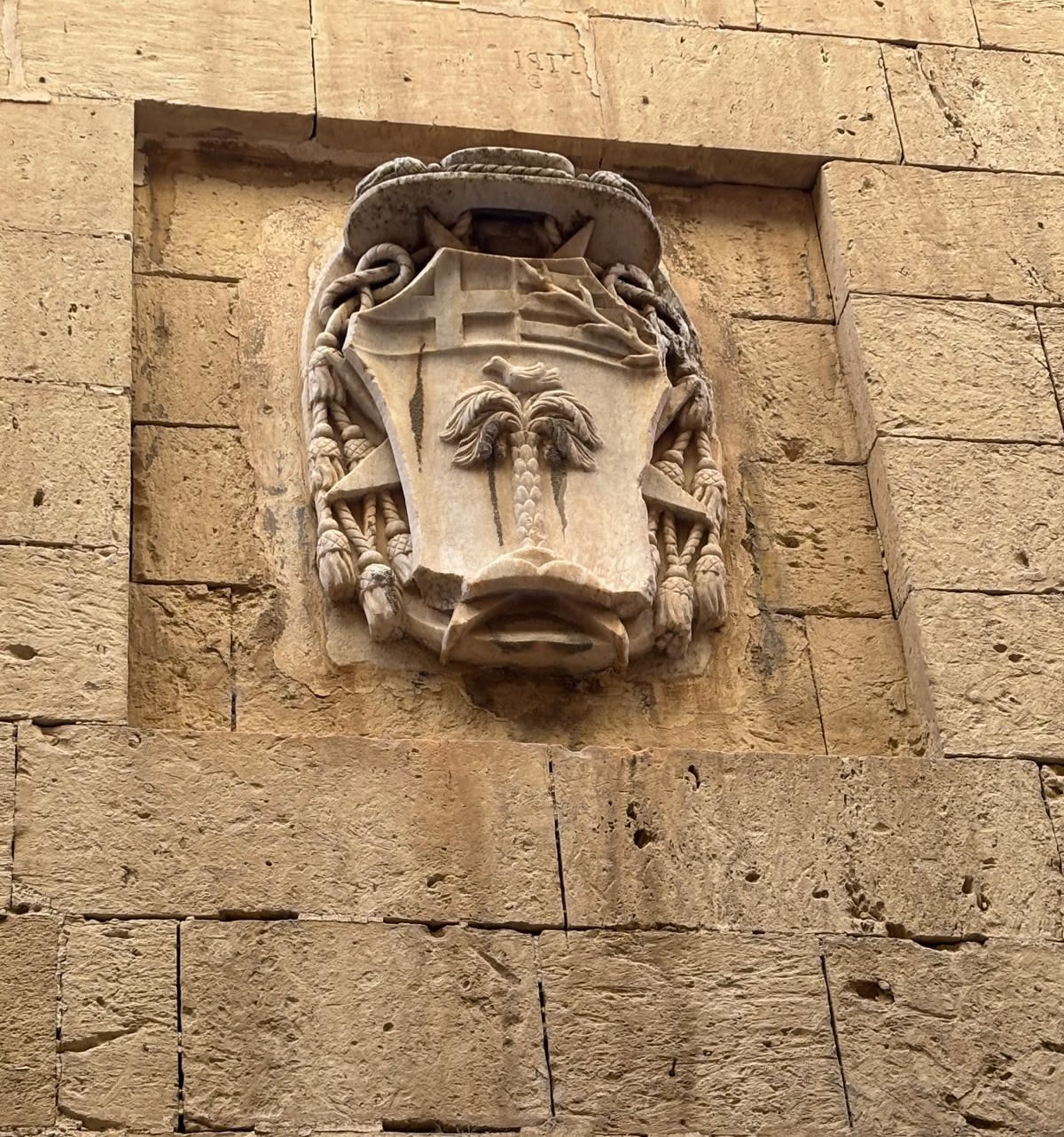
Architecture & Urban Fabric
Fortifications
- Mdina Gate (1724) — ceremonial Baroque gate by de Mondion with Vilhena’s arms.
- Bastions — medieval cores reworked early 18th c.; spectacular belvederes over Mosta & Mtarfa.
- Barriera & Ditch — landscaped into a gardened glacis; the bridge replaced former drawbridge.
- Porta Maggiore remnants — traces of older entries and necks of walls visible in fabric.

Religious
- Cathedral of St Paul — rebuilt after 1693 by Lorenzo Gafà; Latin cross plan, dome, rich Baroque interior; museum holds silver, textiles, prints.
- Chapel of St Roque, Carmelite Church — fine façades and quiet cloisters.

Palazzi & Streetscape
- Palazzo Falson (Norman House) — 13th‑century origins; museum of period rooms and collections.
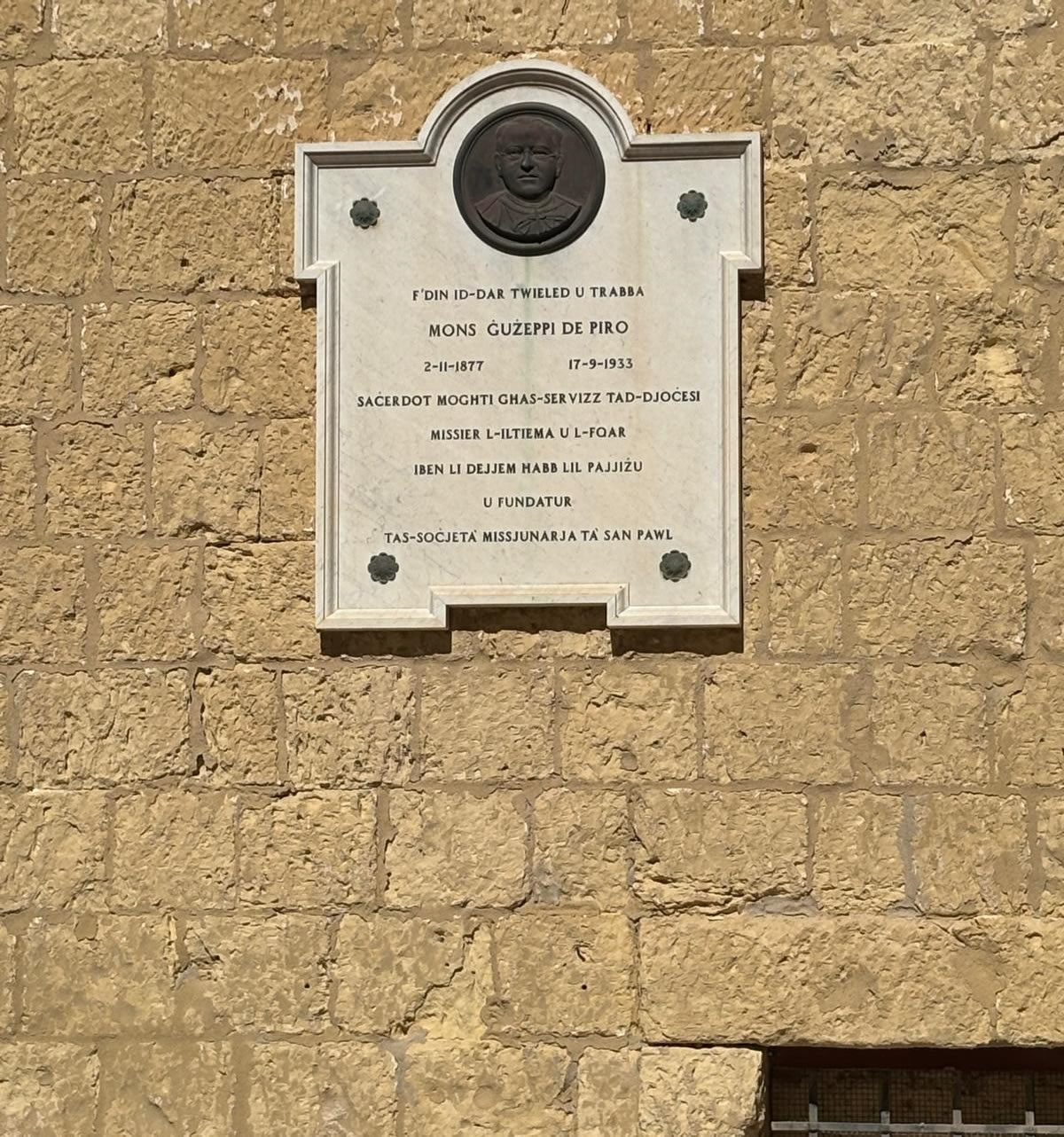
- Palazzo de Piro — cultural centre & terraces with views.
- Villegaignon Street — noble townhouses, ironwork balconies, intimate lanes and cul‑de‑sacs (sottoportici).
- Cathedral Square — urban stage set framed by bishop’s palace and seminary.
Materials & Style
Mdina’s hallmark is warm globigerina limestone, crisply carved in Baroque mouldings, portals and cornices. Narrow streets temper wind and sun; projecting balconies and door knockers add colour and heraldry.
Top Sights (Don’t Miss)
| Sight | Why Go | Allow |
|---|---|---|
| Mdina Gate | Iconic Baroque entrance by de Mondion; filming location | 10 min |
| St Paul’s Basilica | Masterwork of Lorenzo Gafà; artworks, marble, dome | 30–45 min |
| Cathedral Museum | Silver, prints (incl. Dürer), coins, manuscripts | 45–60 min |
| Palazzo Falson | Atmospheric historic house museum with rooftop views | 45–60 min |
| Bastion Belvederes | Golden hour panoramas over island’s heartland | 20–30 min |
| Carmelite Priory | Cloister calm; small museum | 20–30 min |

Two Perfect Walking Routes
Classic Mdina Loop — 40–60 min

Mdina & Rabat Heritage — 2–3 hrs

Museums & Sites (Mdina & Adjacent Rabat)
Within Mdina
- St Paul’s Cathedral & Museum — ecclesiastical treasury: silver, vestments, paintings, engravings, rare books.
- Palazzo Falson Historic House — collections of armour, art, oriental rugs, silver, and more.
- Carmelite Priory Museum — religious art and monastic life.

Nearby in Rabat
Note: These are outside the Mdina walls but part of the same historical complex.

Visitor Information
Getting There
When to Go

Etiquette & Tips
Accessibility
Food, Views & Nearby
Where to Pause
Combine With
Location
FAQ
Why is it called the Silent City?
Strict traffic limits, residential character, and narrow sound‑absorbing alleys create a calm atmosphere compared to busier towns.
Is Mdina the same as Rabat?
No. Mdina is the walled city; Rabat is the adjoining suburb (its name comes from Arabic for ‘suburb’). They form one historic ensemble.
How long to visit?
Short visit: 1–2 hours for gate, cathedral square, bastions. Deeper visit: 3–4 hours including museums and Rabat sites.
Game of Thrones spots?
Mdina Gate and nearby lanes appeared as King’s Landing backdrops in Season 1.
List of Churches and Chapels in Mdina
| Name | Location | First Built | Google Map |
| Cathedral of St Paul | Pjazza San Pawl, Mdina | 1696 – 1705 | Google Map |
| Church of the Annunciation of Our Lady | Triq Villegaignon, Mdina | 1660 – 1675 | Google Map |
| Kappella ta’ San Rokku | Triq Villegaignon, Mdina | rebuilt 1720 | Google Map |
| Kappella ta’ San Nikola | Triq Mesquita, Mdina | 1434 rebuilt 1685 | Google Map |
| Kappella ta’ Sant’ Agata | Triq Inguanez, Mdina | 1417 rebuilt after 1693 | Google Map |
| Kappella San Pietru fil-Ktajjen | Triq L Imhazen, Mdina | 15th century | Google Map |
| Knisja u Monasteru ta' San Pietru | Triq il Villegiagnon, Mdina | Founded 1455 rebuilt around 1625 | Google Map |
| Vizitazzjoni | Triq Inguanez, Mdina | 16th century | Google Map |