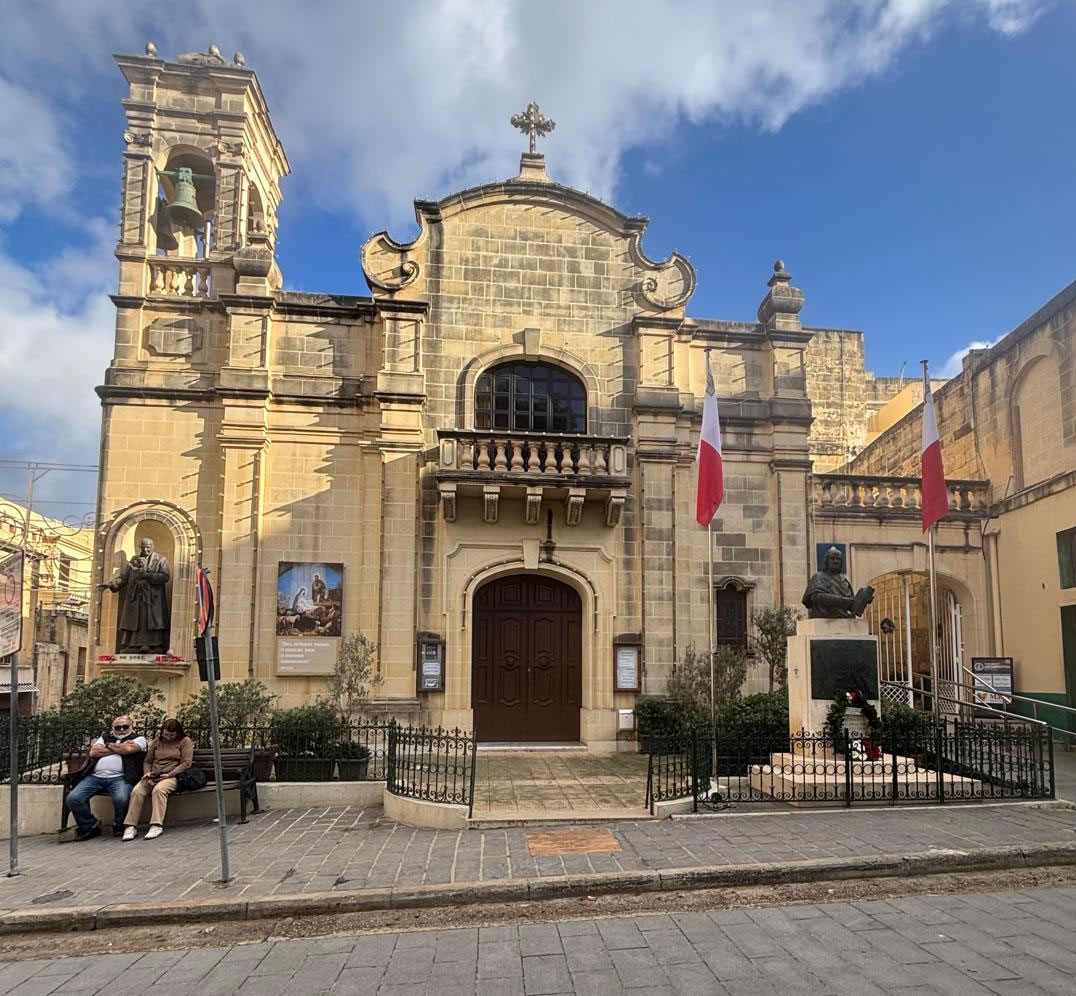
Why it’s worth visiting
- Right in the centre of Victoria (perfect on a walking route)
- Important for Holy Week devotion: Our Lady of Sorrows procession
- 18th-century sanctuary and notable artworks, including an altarpiece dated 1742
📍 Location
Location Map Coordinates 36.0448218, 14.2396357
Quick facts
- Dedication: St James the Greater
- Location: Independence Square, Victoria (Rabat), Gozo
- Completed: 1740 (major 18th-century rebuild)
- Consecrated: 18 January 1942
- Rebuilt: after partial demolition due to damage in 1979
- Coordinates: 36.0448218, 14.2396357
Overview
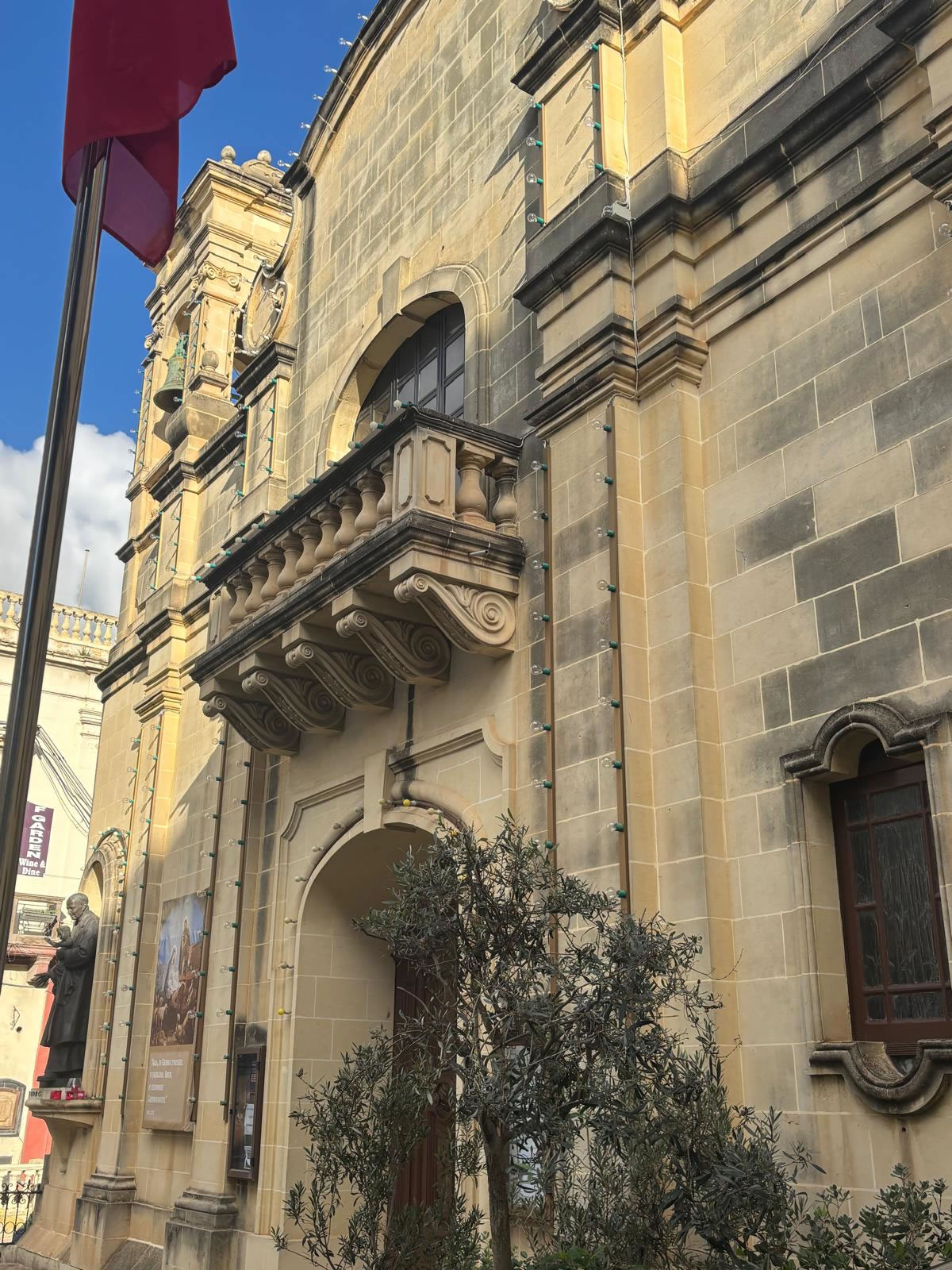
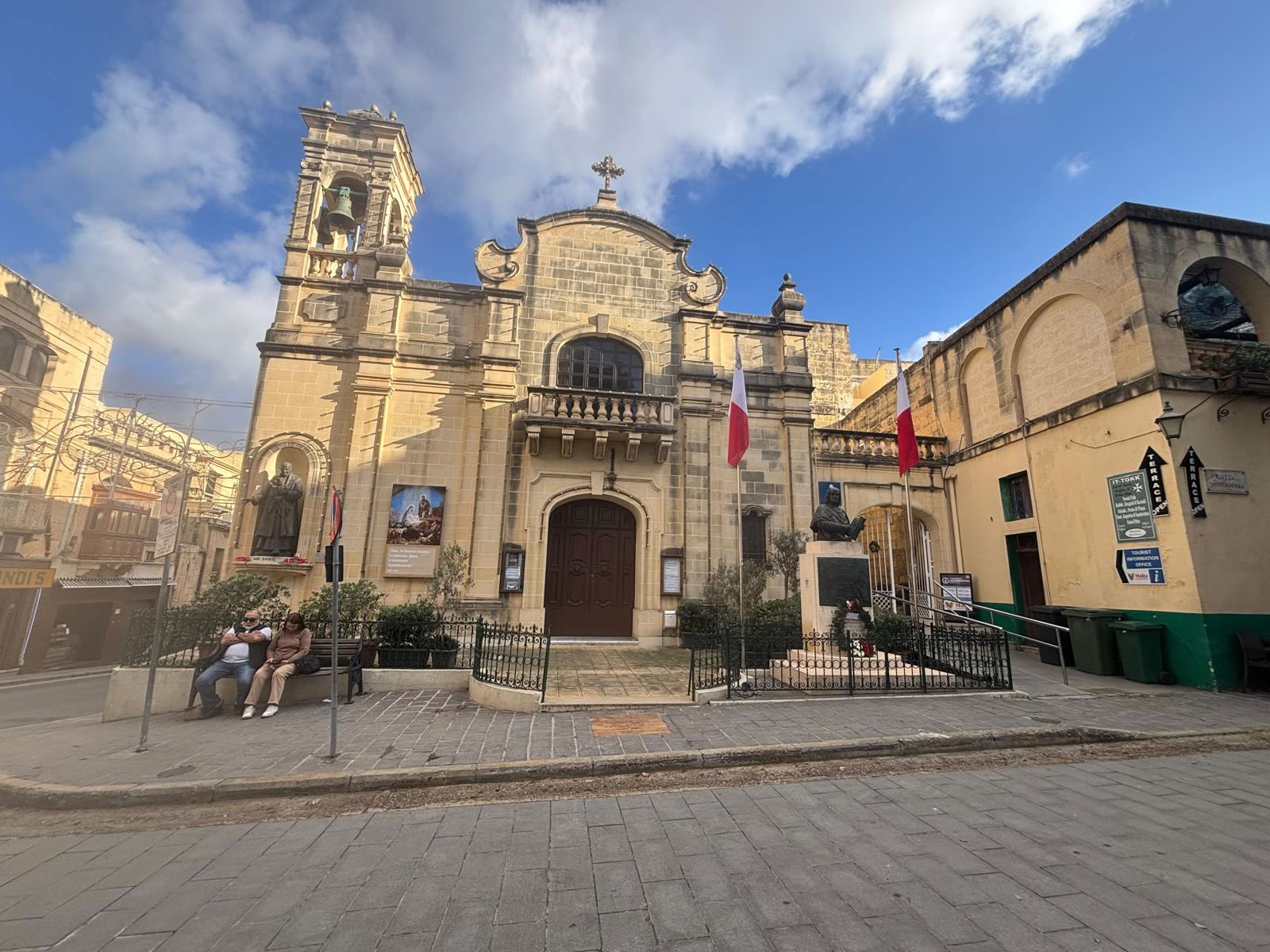
The Church of St James is one of Victoria’s best-known churches, set on Independence Square in the town centre. While the visible building includes significant 20th-century reconstruction, the church preserves an older sacred footprint, with the sanctuary associated with the 18th-century structure.
Map tip: Use 36.0448218, 14.2396357 to navigate directly to St James Church in Victoria.
Full detailed history
Early references and a town-centre church
Historical summaries link the site to earlier church structures in Victoria, including a reference to adjoining chapels and an early presence recorded in the 16th century (inquisitorial documentation is cited in modern accounts). This helps explain why St James became one of the central churches serving Victoria and the surrounding district.
Damage after the 1551 raid
The church suffered severe damage in the 1551 corsair raid on Gozo. Later rebuilding phases followed as the town recovered and religious life was re-established.
Deconsecration (1657) and the 18th-century rebuilding campaign
Sources state that the church was deconsecrated in 1657 by Bishop Balaguer, after which a new church was ordered and built by direction of Grand Master Ramon Despuig. The rebuilding programme was completed in 1740—a key date for the church’s architectural identity.
Religious customs: blessing of crops and St Mark’s day
A notable local custom associated with St James was the blessing of crops connected with the feast of St Mark. This tradition is described as beginning in 1847 and ending in 1968.
Consecration (1942)
The church is recorded as being consecrated on 18 January 1942, reflecting the completion and liturgical regularisation of a modern phase of the building.
Structural damage, partial demolition and rebuilding (1979)
In 1979, the church was partly demolished due to structural problems and subsequently rebuilt. The episode is also referenced in cultural commentary as a controversial intervention in Victoria’s historic core.
Construction and architecture
What’s old and what’s newer
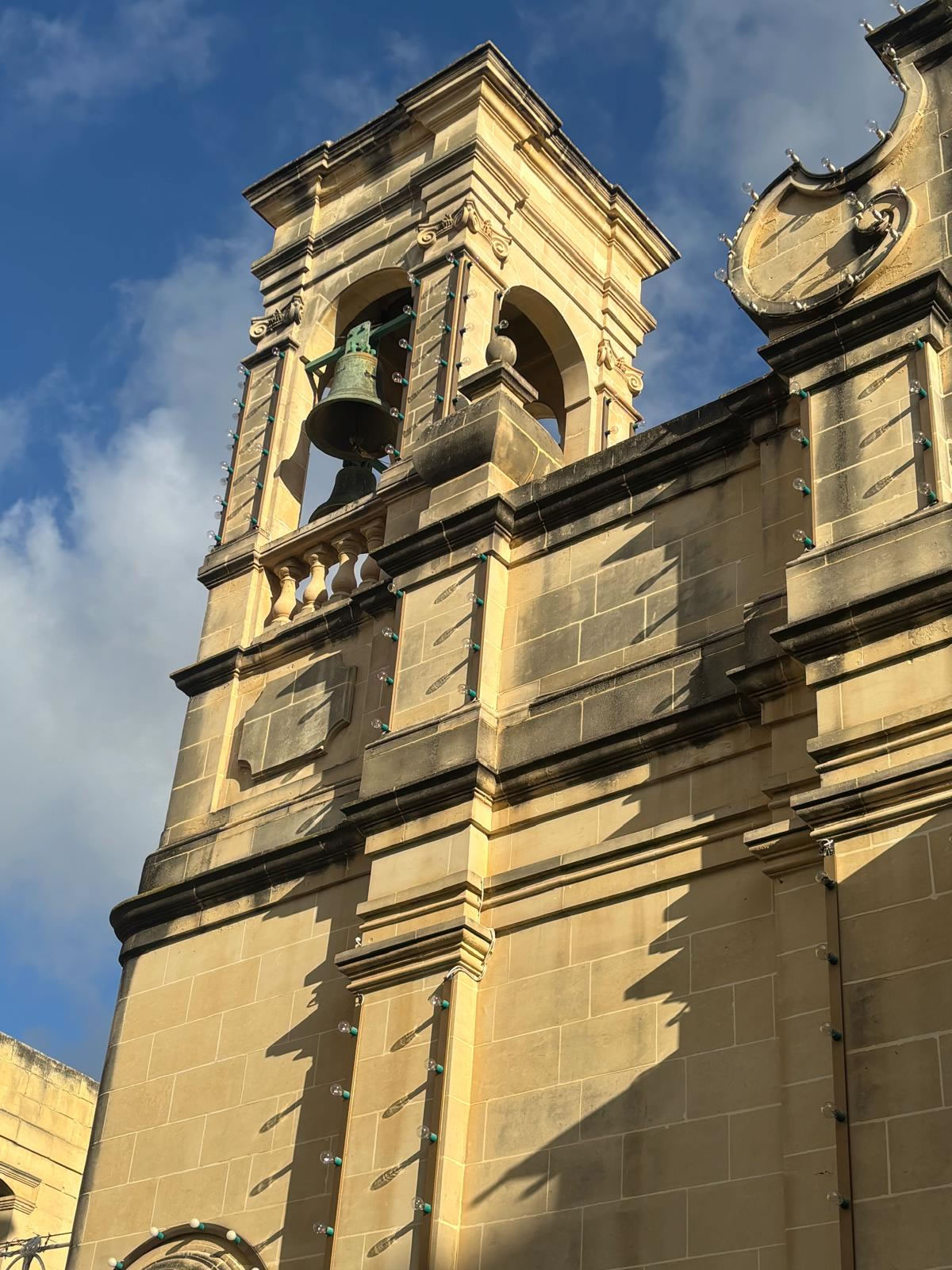
Modern descriptions emphasise that while much of the visible church reflects 20th-century rebuilding, parts of the complex—especially the sanctuary—retain 18th-century fabric and continuity.
Key dating and phases are summarised in published references.
Urban setting
Unlike many rural chapels in Gozo, St James is a town-centre church: it is part of the daily rhythm of Victoria, standing directly on one of the busiest civic squares in Gozo.
Commonly listed as a central Victoria attraction.
Interior character
The church is known for its devotional focus and its artworks (including altarpieces and side altars), alongside the strong Holy Week traditions linked to the Our Lady of Sorrows statue.
Artworks and devotions are widely noted in summaries.
Artworks and devotional highlights
Main altarpiece and side altars
The main altarpiece depicting St James is commonly dated to 1742. The church also has side altars dedicated to St Barbara and to St Teresa of Ávila with St Rose of Lima, with paintings traditionally associated with the Maltese Baroque painter Francesco Zahra.
Our Lady of Sorrows: Victoria’s renowned procession
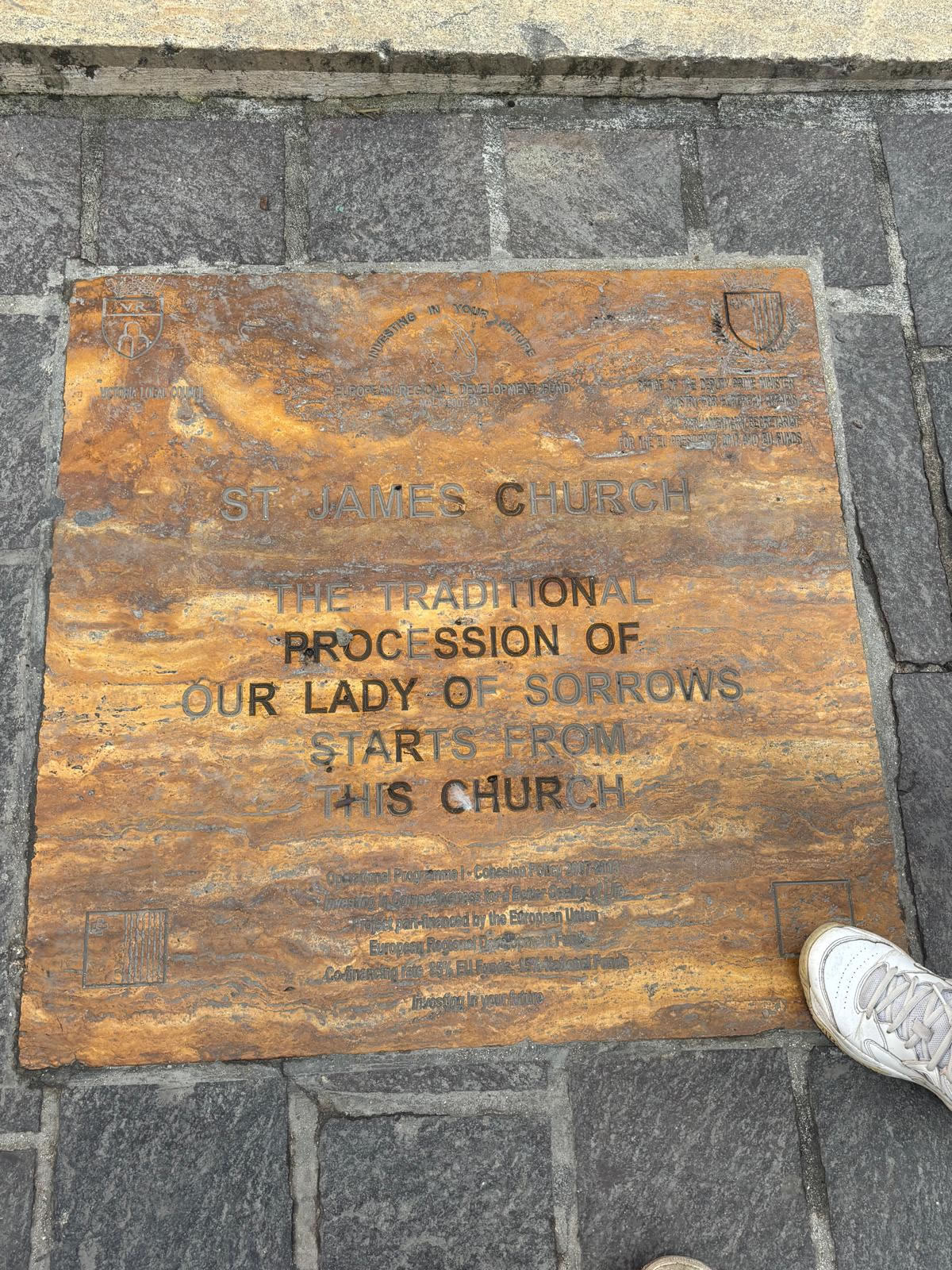
St James Church is especially famous for the statue of Our Lady of Sorrows, brought from Munich in 1879. The statue is carried in procession on the Friday before Good Friday—one of Victoria’s most emotionally significant Holy Week events.
Restoration and conservation
The church’s major modern conservation story is tied to the 1979 structural intervention and rebuilding. As a heavily visited town-centre church, it also relies on routine maintenance—especially for stone, plaster, lighting, and artworks—so it can function as both a worship space and a heritage stop in Victoria.
Religious and community use today
St James remains an active Roman Catholic church within the Diocese of Gozo, serving liturgy and devotional practices connected to Victoria’s calendar—most notably Holy Week. Its location on Independence Square also makes it a frequent stop for visitors exploring Victoria on foot.
Visiting the Church of St James
How to get there
The church is in the centre of Victoria on Independence Square (Misraħ l-Indipendenza). If you’re visiting the Citadel, St George’s Basilica, or Republic Street, it’s an easy walk.
Best time to visit
- Morning for quieter viewing
- Holy Week if you want to experience Victoria’s devotions (expect crowds)
- Late afternoon for town-centre ambience and photography
FAQ
Is St James Church a parish church?
St James is an active church in Victoria, but Victoria’s best-known parish centres are St George’s Basilica and the Cathedral within the Citadel. St James is especially associated with town-centre devotion and Holy Week traditions.
What’s the most important tradition connected to this church?
The Our Lady of Sorrows statue and procession (Friday before Good Friday) is the best-known tradition linked to St James Church.
When was the church completed and rebuilt?
The major 18th-century church was finished in 1740; the church was consecrated in 1942; and it was partly demolished and rebuilt after structural damage in 1979.