Location Map Coordinates 36.0590127, 14.2195695
Quick facts
- Built/installed: early 1980s (statues placed along the path)
- Commissioning & models: initiated in 1970
- Material: white Carrara marble
- Stations: 14 scenes (biblical Passion sequence)
- Coordinates: 36.058840, 14.219695
Why it’s worth doing
- A unique open-air Via Crucis with large-scale sculpture
- Strong ties to Ta’ Pinu devotion and Lenten pilgrimages
- Panoramic views across Gozo as you climb
Overview: an outdoor Way of the Cross opposite Ta’ Pinu
Ta’ Għammar Hill rises directly opposite the Ta’ Pinu National Shrine. A winding, rugged path climbs to the top, passing 14 marble stations that narrate the Passion from the Last Supper through the Crucifixion and onward to the Resurrection. The route is both devotional and scenic, combining prayerful pauses with open countryside views.
Map tip: Use 36.058840, 14.219695 to navigate to the route area on Ghammar Hill.
Detailed history
Roots in post-war penitential walking
After World War II, devotees began walking up the steep path of Ta’ Għammar Hill as an act of repentance and meditation. The tradition is linked to Ta’ Pinu devotion and to a particular focus on Christ’s “hidden wound” caused by carrying the cross, which encouraged prayerful ascent rather than a purely scenic hike.
The idea becomes a Via Crucis
A proposal followed to transform the hillside into a formal Via Crucis, enabling pilgrims to walk uphill while meditating on the Passion, death, and resurrection. From the beginning, the concept was site-specific: a physical climb paired with a structured sequence of sculpted stations.
Commissioning, modelling, and production (1970 → early 1980s)
The original models were created by Alfred Camilleri Cauchi and were commissioned in 1970 by the Ta’ Pinu rector Mons. Lawrence Portelli to the Italian firm Tiemistocle Sarti, under the artistic direction of Gualtiero Luisi. A subsequent rector took a keen interest in the project, including improving the approach route and preparing the summit setting.
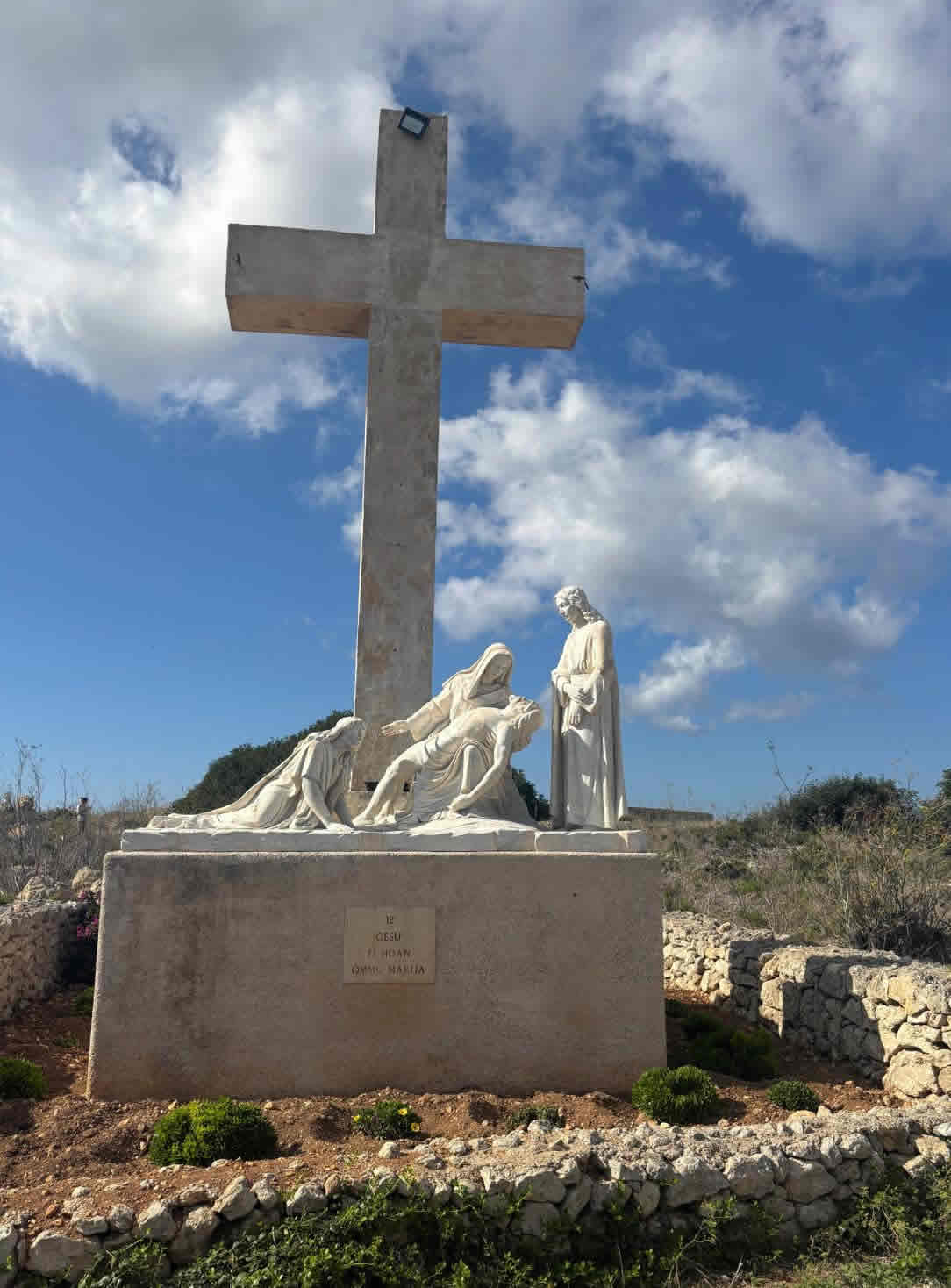
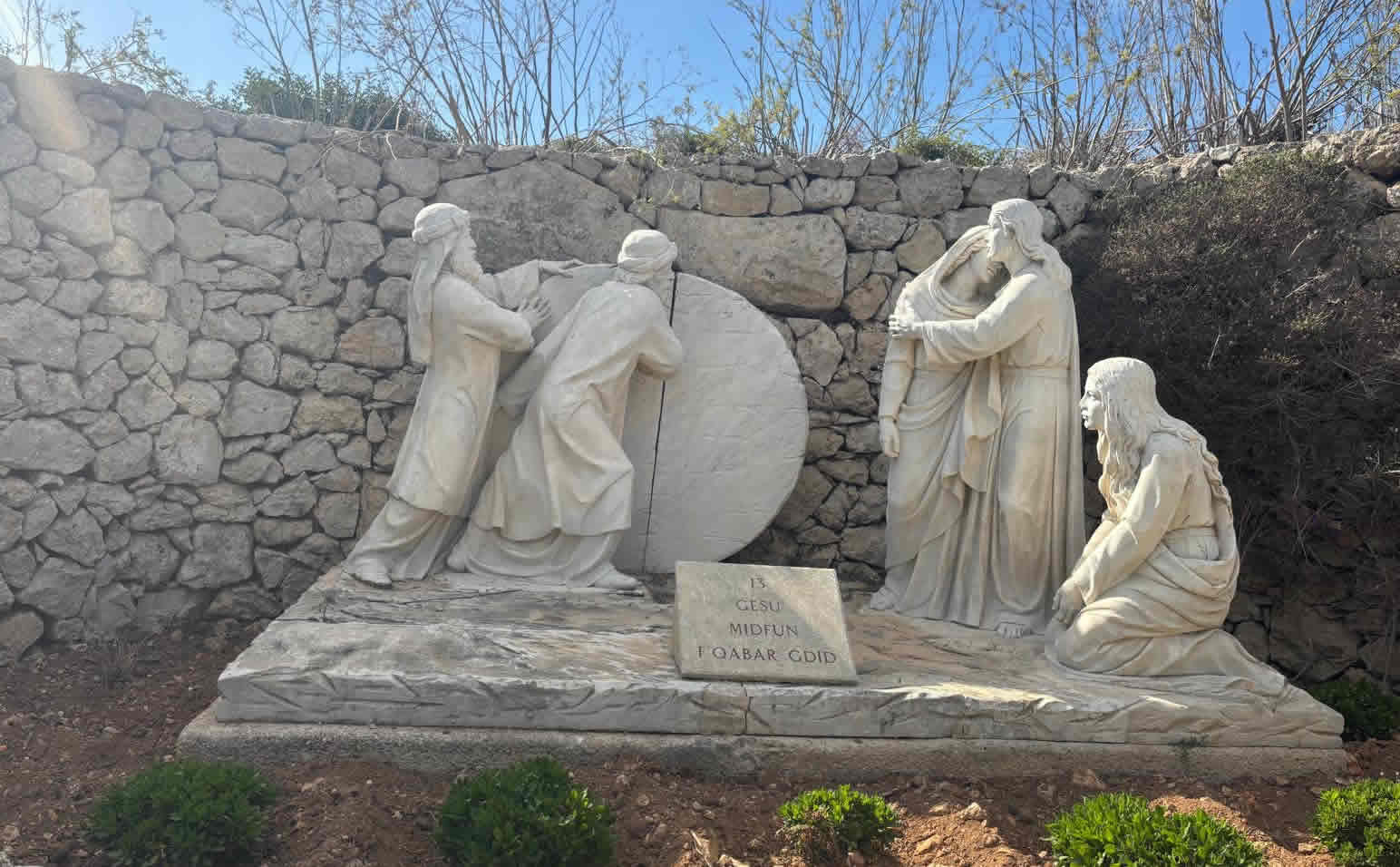
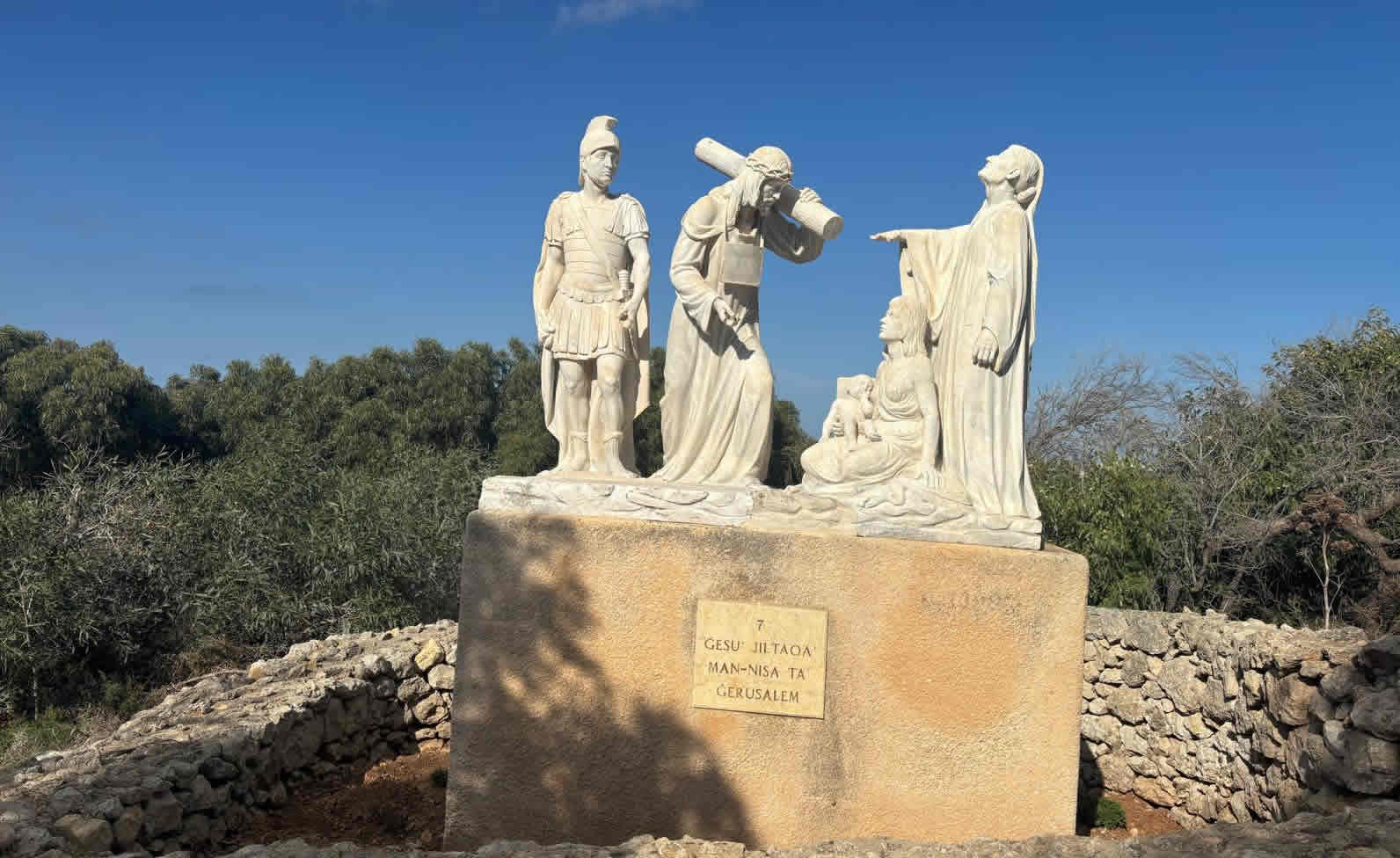
The sculptures themselves—carved in white Carrara marble—were placed along the hill path in the early 1980s. They were produced in Italy (Pietrasanta is cited as the production centre in multiple summaries), and then installed to create today’s recognizable pilgrimage line across the hillside.
Construction and layout
The route
The climb begins near Ta’ Pinu and follows a rough, winding trail that gradually reveals each station. The setting is intentionally open-air: instead of a church interior, each scene is framed by stone walls, shrubs, and big Mediterranean skies.
What “14 stations” means here
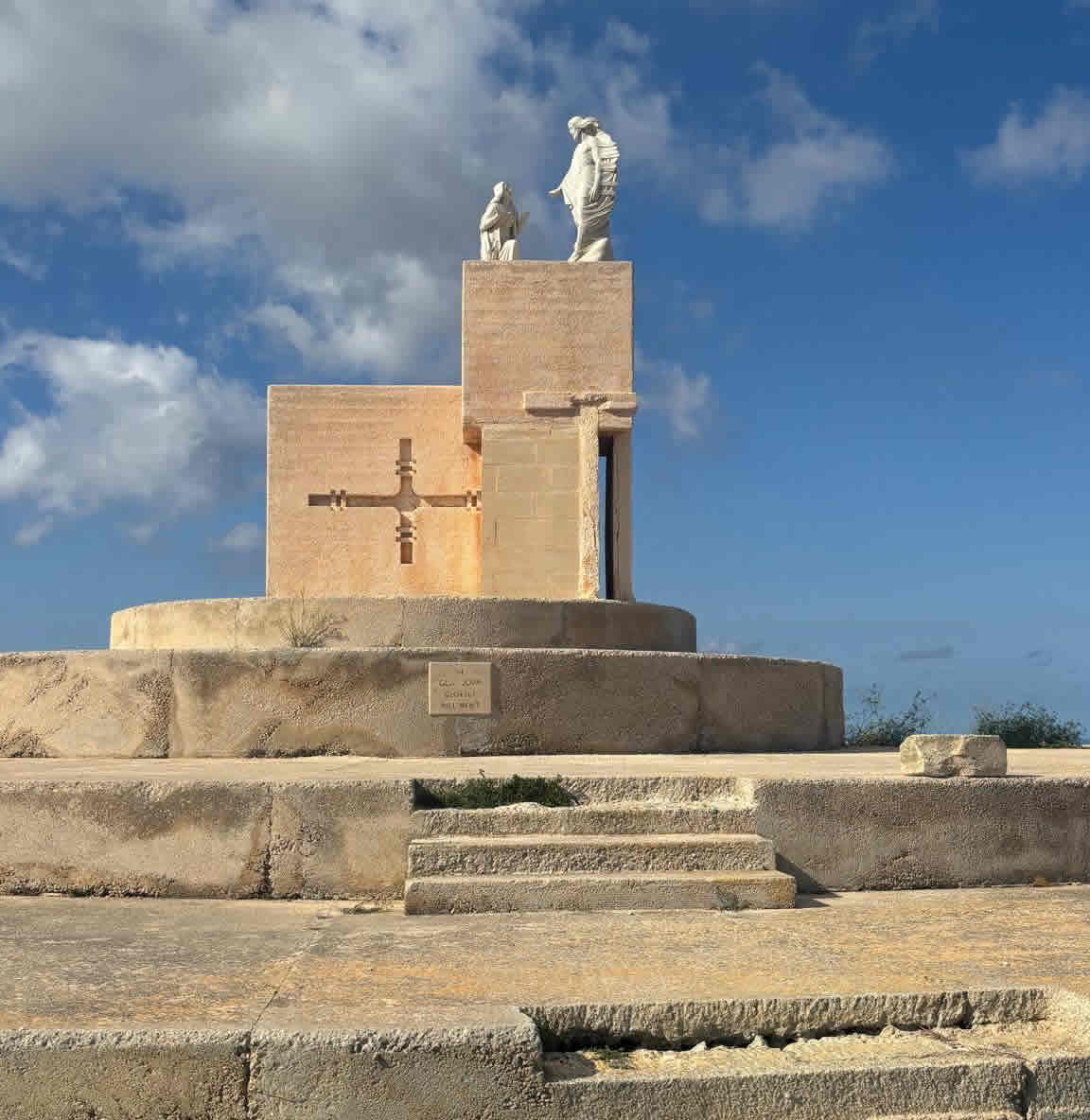
The sequence is not strictly the traditional 14-station format in every detail; it is described as following the biblical account of the Passion, starting with a Last Supper bas-relief at the Ta’ Pinu parvis and ending with the Resurrection near the summit.
Hilltop amphitheatre
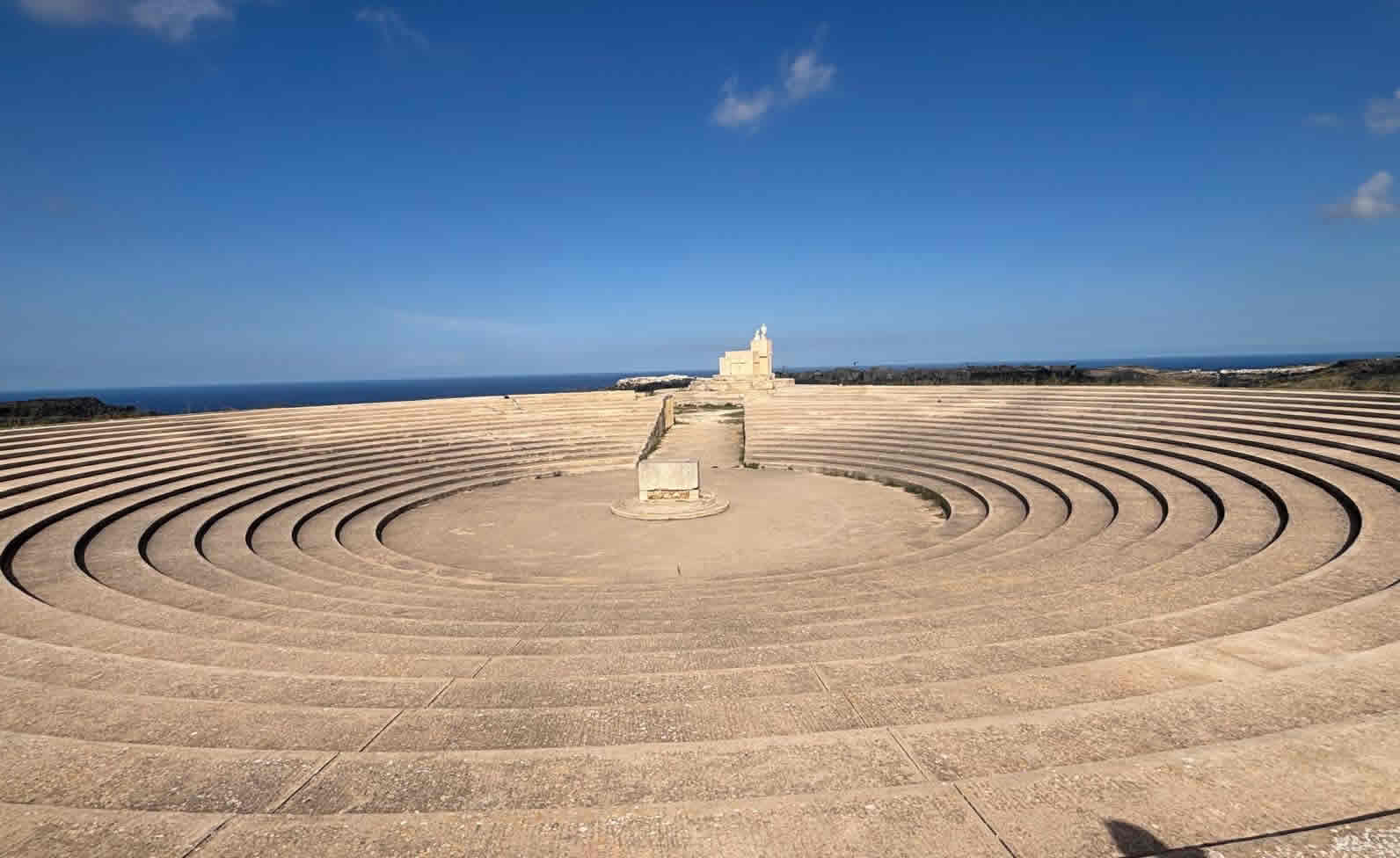
The summit area includes an open-air amphitheatre, reinforcing the site’s role for communal prayer and reflections—especially during Lent—while also serving as a dramatic viewpoint over Gozo.
Restoration and conservation
Outdoor marble sculpture in a coastal Mediterranean environment is naturally exposed to weathering and occasional damage. Reports note that some statues have suffered vandalism, highlighting the need for ongoing care and respectful visitation.
Restoration of the Ghammar Hill niche (2012)
In addition to the statues, Ta’ Għammar Hill includes a devotional niche with an image of Our Lady of Ta’ Pinu. The niche was set on fire in April 2012 due to vandalism. The sanctuary rector ordered that it be restored to its previous condition so it could once again serve as a place of prayer and meditation.
Visitor etiquette: Keep the route clean and treat each station and niche as a place of prayer—this is repeatedly requested by site custodians.
Religious and community use today
Today, the Ta’ Għammar Hill Via Crucis is closely tied to the devotional calendar of Gozo. During Holy Week, a public meditation of the Way of the Cross is organised on the hill, led by the Bishop of Gozo together with the faithful from Gozo and Malta. Outside major liturgical dates, the route remains popular for personal prayer walks, quiet reflection, and photography.
Visiting Ta’ Għammar Hill Stations of the Cross
Getting there
The hill stands opposite the Ta’ Pinu Sanctuary (Gozo). Park near Ta’ Pinu where permitted and begin the walk from the lower approaches. Wear shoes with grip—the path is uneven and steep in parts.
Best time to go
- Late afternoon for softer light and long views
- Lent/Holy Week if you want to see the route used devotionally
- After rain, expect slippery patches on stone and soil
FAQ
Is this the same as the Ta’ Pinu Sanctuary?
The Stations of the Cross are opposite Ta’ Pinu, on Ta’ Għammar Hill. Many visitors pair the sanctuary visit with the Via Crucis climb.
How long does the walk take?
It depends on pace and stops for prayer or photos. The climb is short in distance but can feel demanding due to the incline and rough path.
Are there really 14 statues?
Yes—there are 14 sculptural stations, beginning with a Last Supper bas-relief at the Ta’ Pinu parvis and continuing up the hill to the Resurrection near the summit.