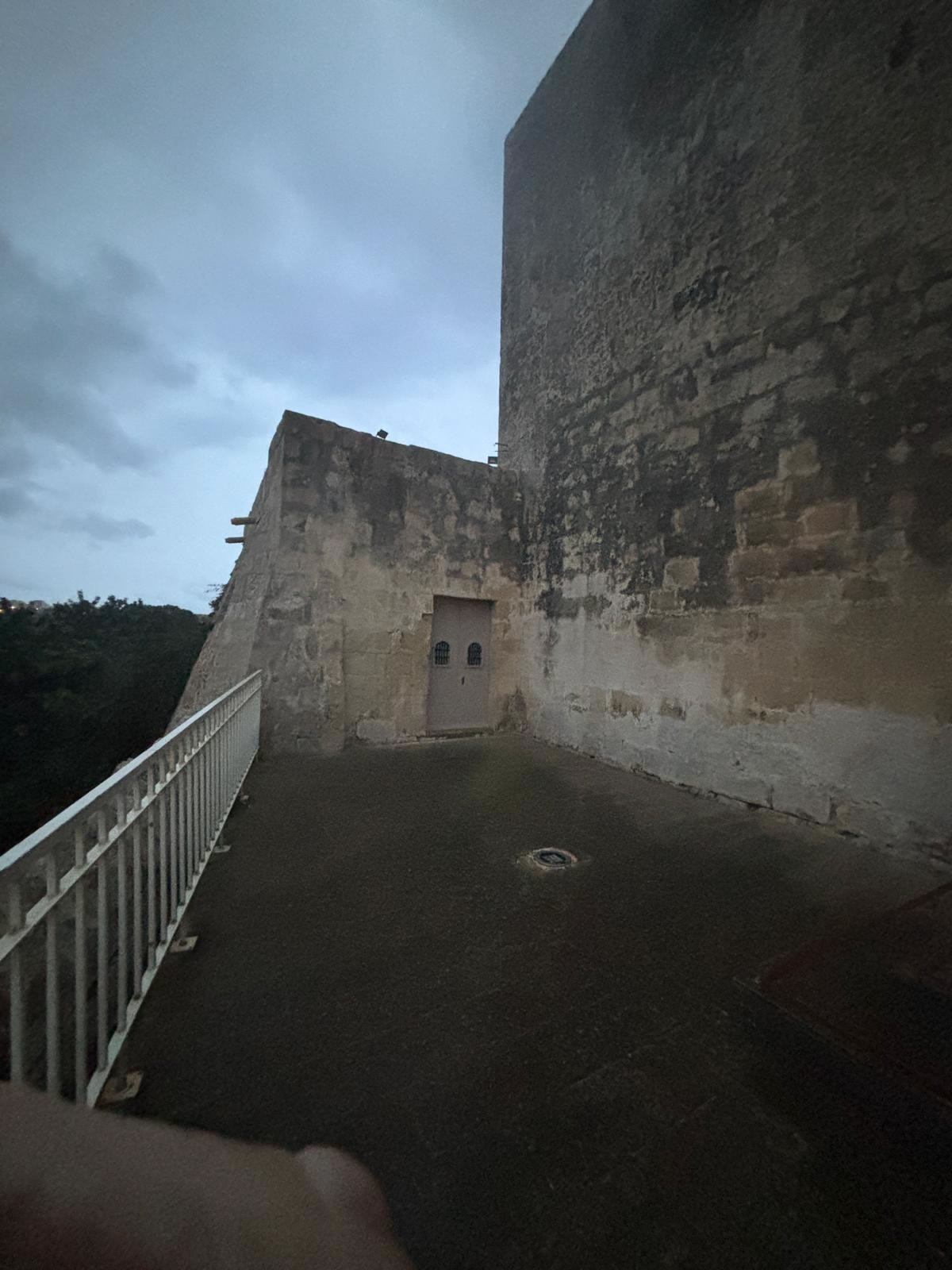
At a glance
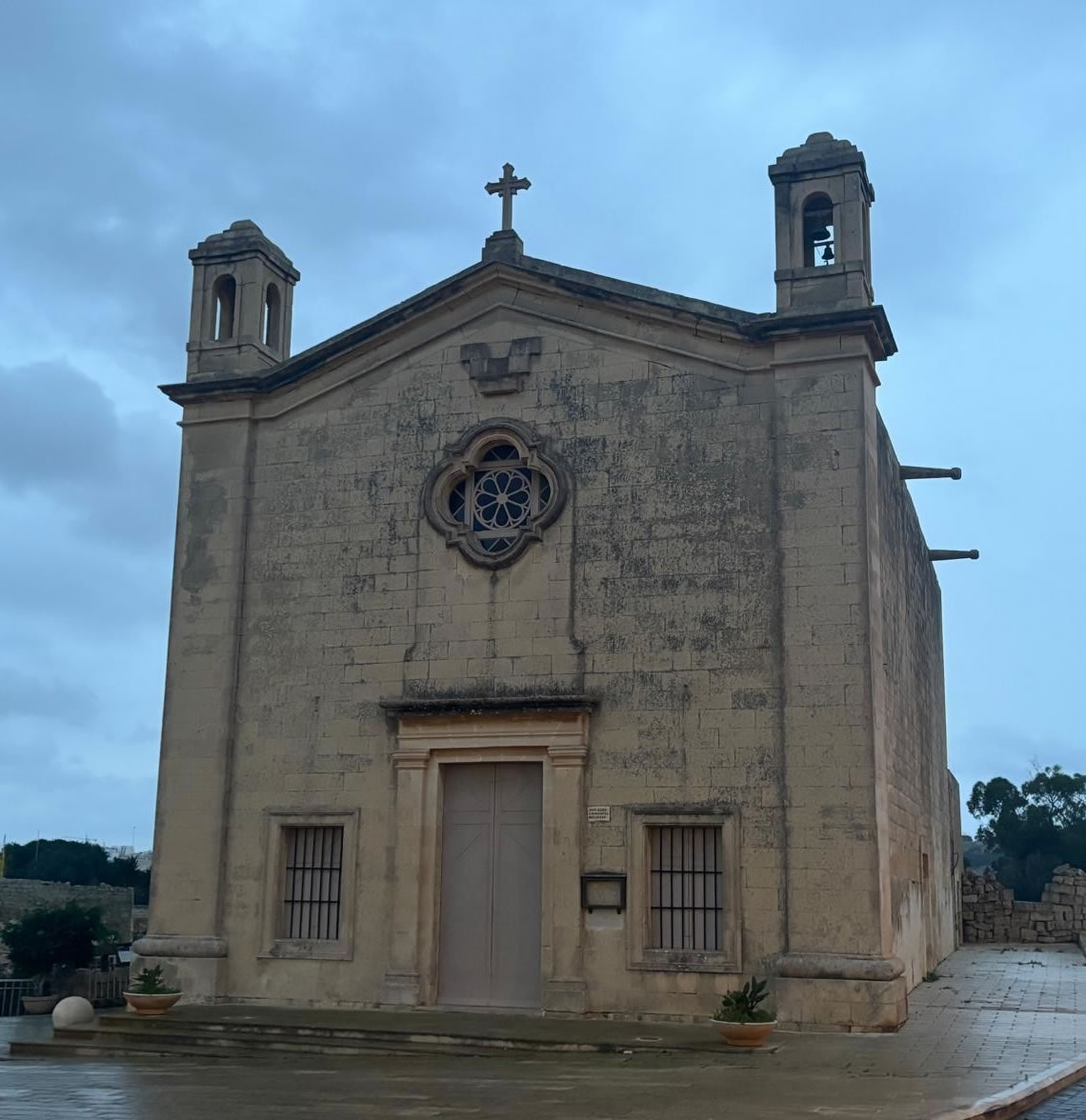
Full name: Chapel of St Matthew the smaller (San Mattew Iż-Żgħir)
Dedication: St Matthew the Apostle
Setting: Beside the Maqluba sinkhole (il-Maqluba), Qrendi
Why it’s significant: A medieval chapel tied to local legend, later physically and functionally reshaped by nearby church construction
History: origins, legend and recorded worship
San Mattew Iż-Żgħir is part of a sacred landscape that blends geology, memory and devotion. Local tradition links the chapel to the story of
a catastrophic storm in the 14th century that created the Maqluba sinkhole—an event that shaped the area’s identity and reinforced the chapel’s
reputation as a protected holy place.
Historically, the chapel is known to have existed by the late medieval period and is often associated with earlier medieval origins.
It is also referenced in the context of a major ecclesiastical visitation in 1575, reflecting its role as an established devotional site
in the Qrendi countryside.
Construction and architectural character
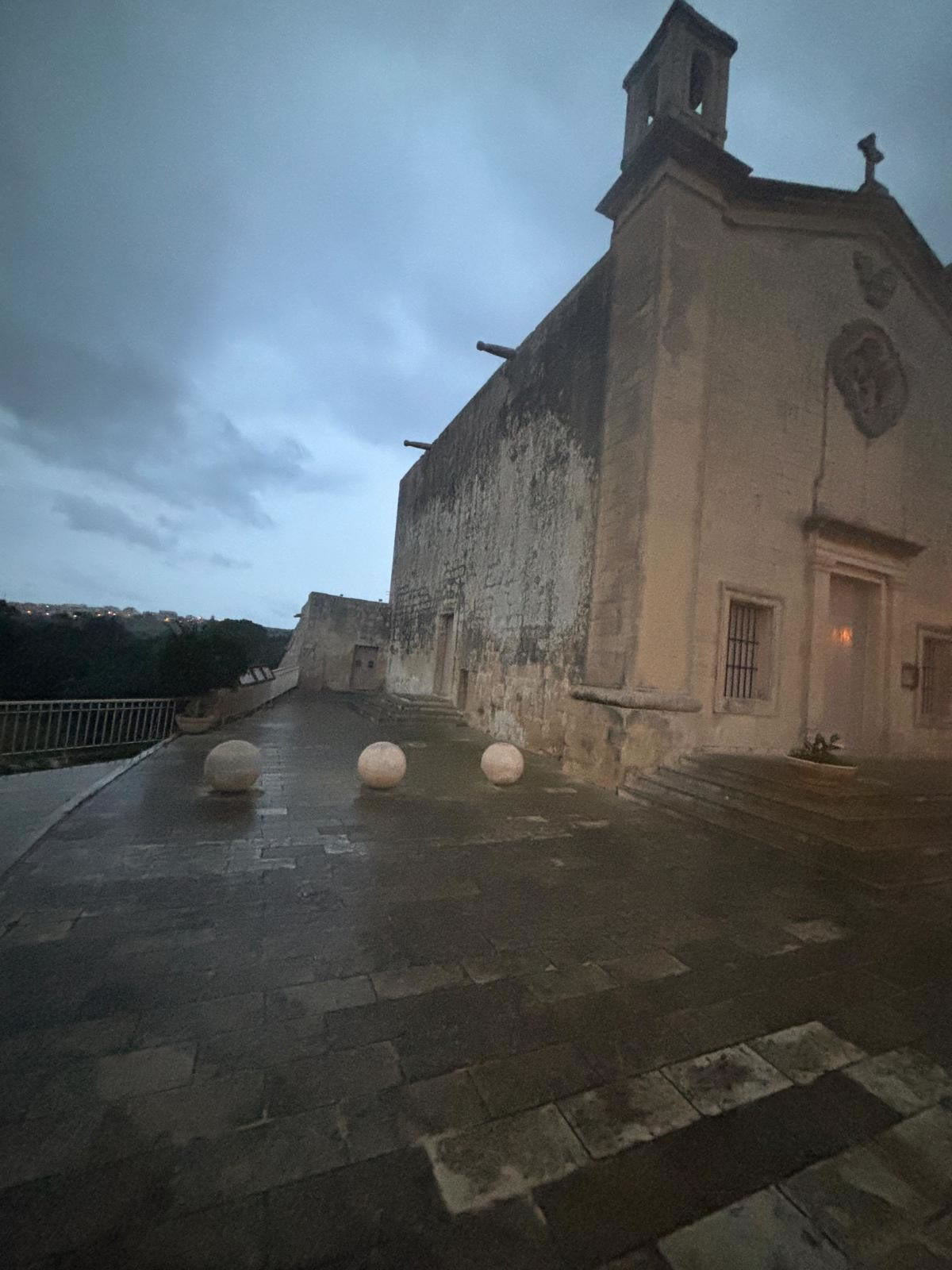
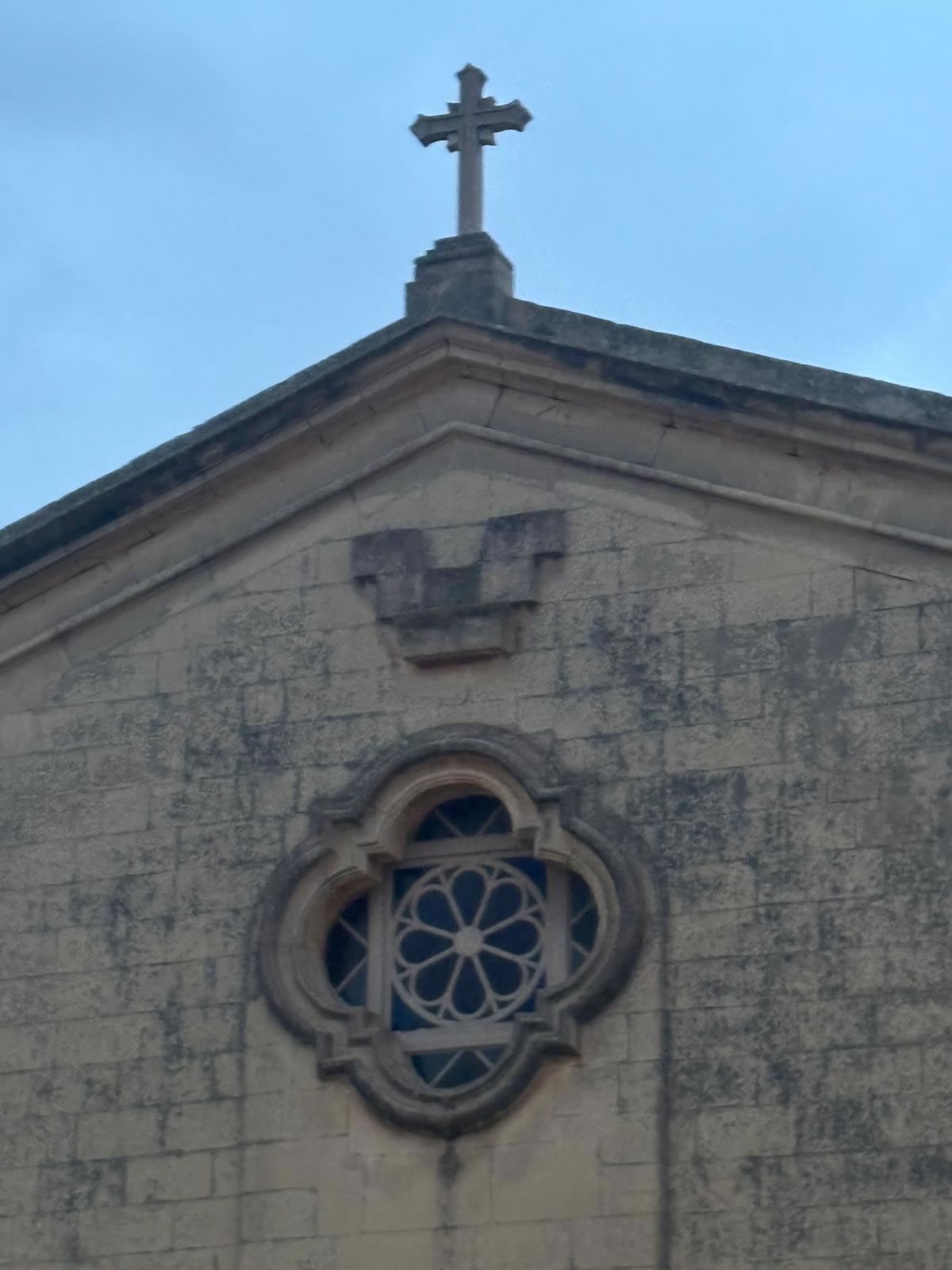
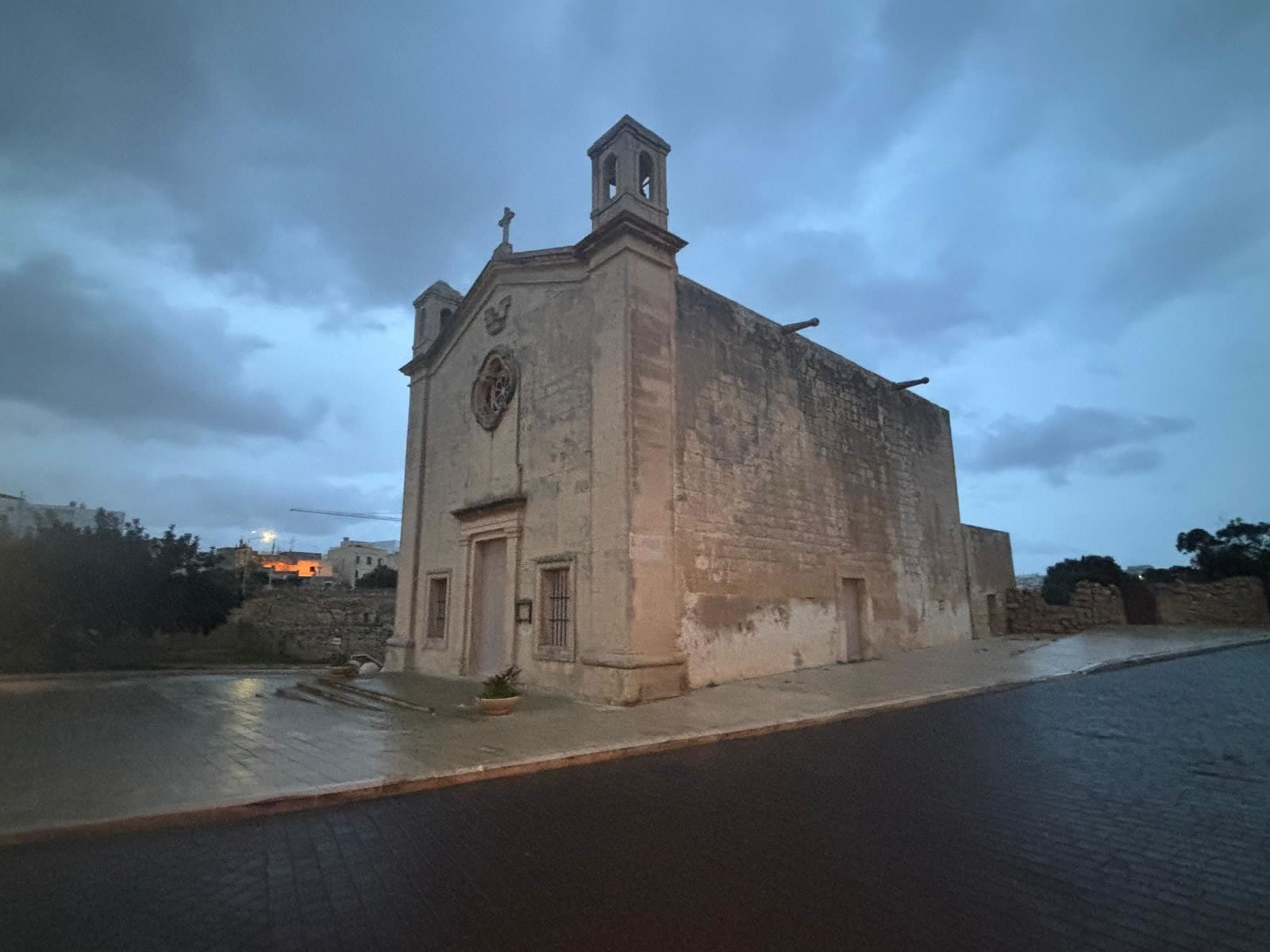
The chapel is modest in scale and typical of medieval Maltese rural religious buildings: functional stonework, simple massing, and a compact interior
focused entirely on the altar. Its atmosphere is defined by the interplay of limestone, shadow, and pointed arches—an architectural language widely
associated with medieval worship spaces on the islands.
- Plan and scale: small rectangular footprint designed for intimate devotion rather than large congregations.
- Materials: local limestone, chosen for availability and ease of carving.
- Medieval forms: pointed arches and a restrained interior that prioritises the sacred focal point.
Later changes: annexation and “crypt” use
The site contains two places of worship dedicated to St Matthew. When the larger St Matthew church was built nearby in the late 17th century,
the older chapel was annexed and its function changed: it became physically connected to the new church and was used as a crypt-like space.
This transformation reduced the chapel’s independent footprint, but it also helped preserve it within the expanded complex.
17th-century change: annexed to the adjacent church and adapted for crypt use
20th-century damage: wartime impacts affected parts of the wider complex, with repairs and alterations over time
Interior features and devotional use
Inside, the chapel’s simplicity is part of its power. Visitors often notice the medieval spatial feel, the stone altar, and small decorative details that survived
changes to the surrounding complex. These elements speak to continuity: even when buildings are altered, worship and local attachment can remain remarkably stable.
- Stone altar: a clear focal point of the space; later inscriptions and fittings reflect ongoing care.
- Small decorative details: including simple painted or plaster motifs that add character without overwhelming the interior.
- Use today: typically opens for specific services, feast days, or heritage occasions rather than daily access.
Visiting San Mattew Iż-Żgħir: practical tips
Best time: morning or late afternoon for softer light over the Maqluba landscape.
What to pair it with: a short stop at il-Maqluba viewpoint and a heritage drive through rural Qrendi.
Access: check local notices—small chapels may be closed outside events.
Related reading on eMalta.com:
Chapels & Churches of the Maltese Islands ·
Oldest Chapels in Malta & Gozo
FAQ
Is San Mattew Iż-Żgħir the same as San Mattew tal-Maqluba?
They are closely connected at the same site: the “smaller” chapel is the older medieval space, beside the later, larger church dedicated to St Matthew.
Why is il-Maqluba important?
Il-Maqluba is a major natural landmark (a sinkhole) tied to local legend and identity, making the chapel’s setting as significant as the building itself.
Can I go inside?
Sometimes. Access can be limited and may depend on events, services or heritage openings. If closed, the exterior and landscape are still worth visiting.