Quick facts
- Dedication: Saint Domenica (Santa Domenika)
- Founded: 1669
- Foundation context: jus patronatus chapel built on the Inguanez estate lands
- Setting: Associated with Dejr il-Bniet / Diar il-Bniet estate
- Heritage status: Listed on the National Inventory of the Cultural Property of the Maltese Islands
📍 Location
Location Map Coordinates 35.8664876, 14.3844032
Why it’s worth a visit
- A rare example of a privately founded countryside chapel tied to a noble estate
- Simple, elegant Maltese limestone architecture
- A quiet stop on Dingli countryside routes, away from the main village core
Overview
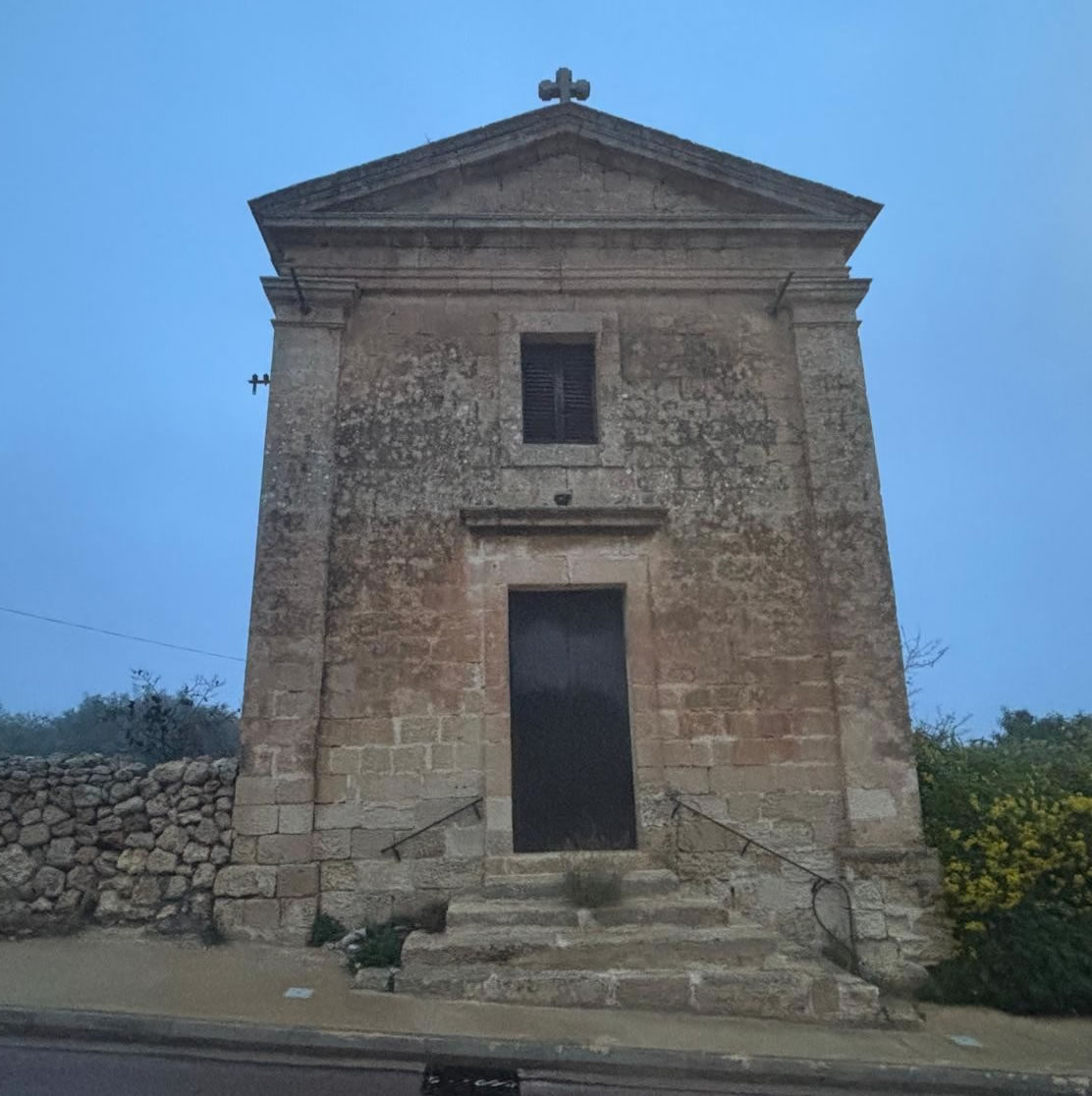
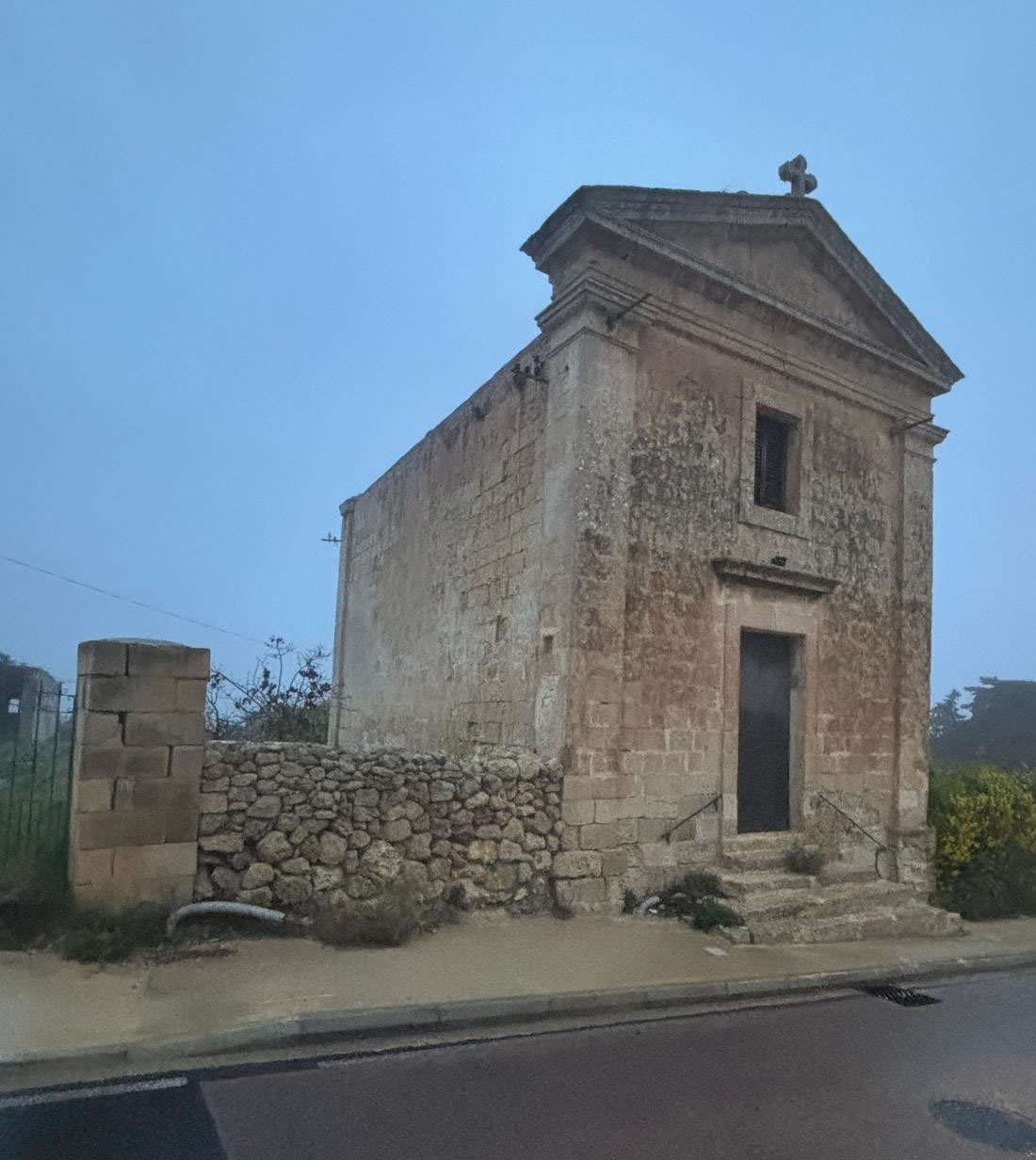
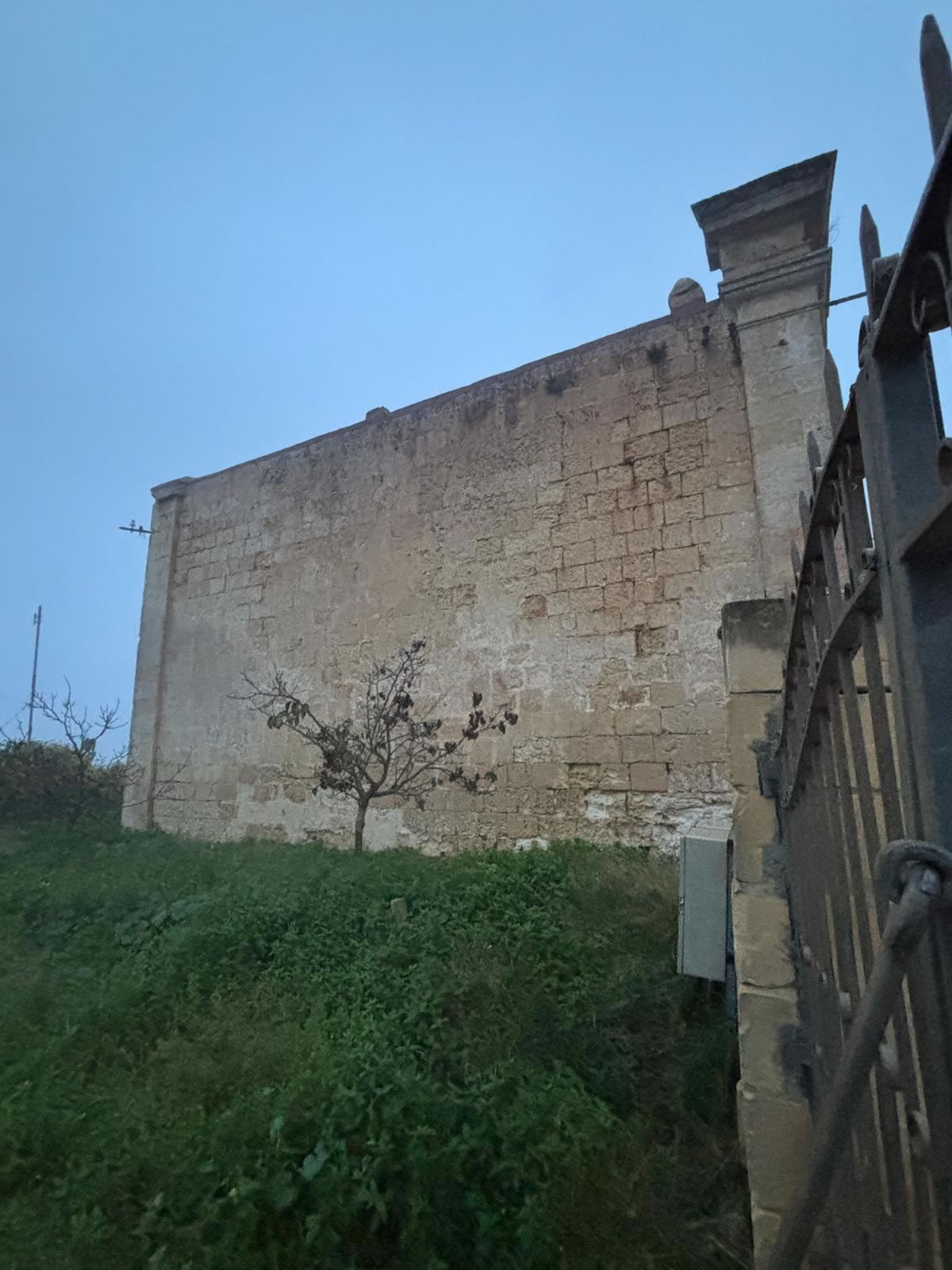
St Dominica Chapel is a Roman Catholic chapel in Dingli built in local limestone. It is widely described as a 17th-century chapel, founded in 1669 by Baron Marc’Antonio Inguanez. The chapel is also recorded as being annexed to the garden of Diar il-Bniet, a rural estate at Dejr il-Bniet, and is still considered an active place of worship with annual Mass.
Map tip: Use 35.8664876, 14.3844032 to navigate directly to the chapel.
Full detailed history
Confirming the foundation: 1669 and the Inguanez family
Published accounts identify the chapel’s founder as Marc’Antonio Inguanez and date the foundation to 1669. A scholarly study of Dingli’s medieval parish history further records a decree dated 25 February 1669 connected to the construction of a Church (chapel) of St Domenica built by Baron Marc Antonio Inguanez on his estate at Dejr il-Bniet.
Why St Domenica matters in Dingli
The dedication links to Dingli’s deeper religious memory. Research on Dingli / Tartarni discusses the medieval parish of Santa Domenica and how later traditions preserved the name, even as the parish dedication in Dingli evolved over time. In this context, the 1669 chapel stands as a deliberate act of commemoration and continuity by a prominent local benefactor.
Jus patronatus: a private chapel with public worship
The chapel is described as having been built as a jus patronatus church—meaning it was founded on private land with patronage rights tied to the founding family/estate. This helps explain why the building sits within (and is associated with) the surrounding estate landscape rather than the village centre.
Modern recognition and heritage listing
The chapel is listed on the National Inventory of the Cultural Property of the Maltese Islands, reflecting its architectural and historical significance and supporting its long-term safeguarding.
Construction and architecture
Exterior: a restrained limestone façade
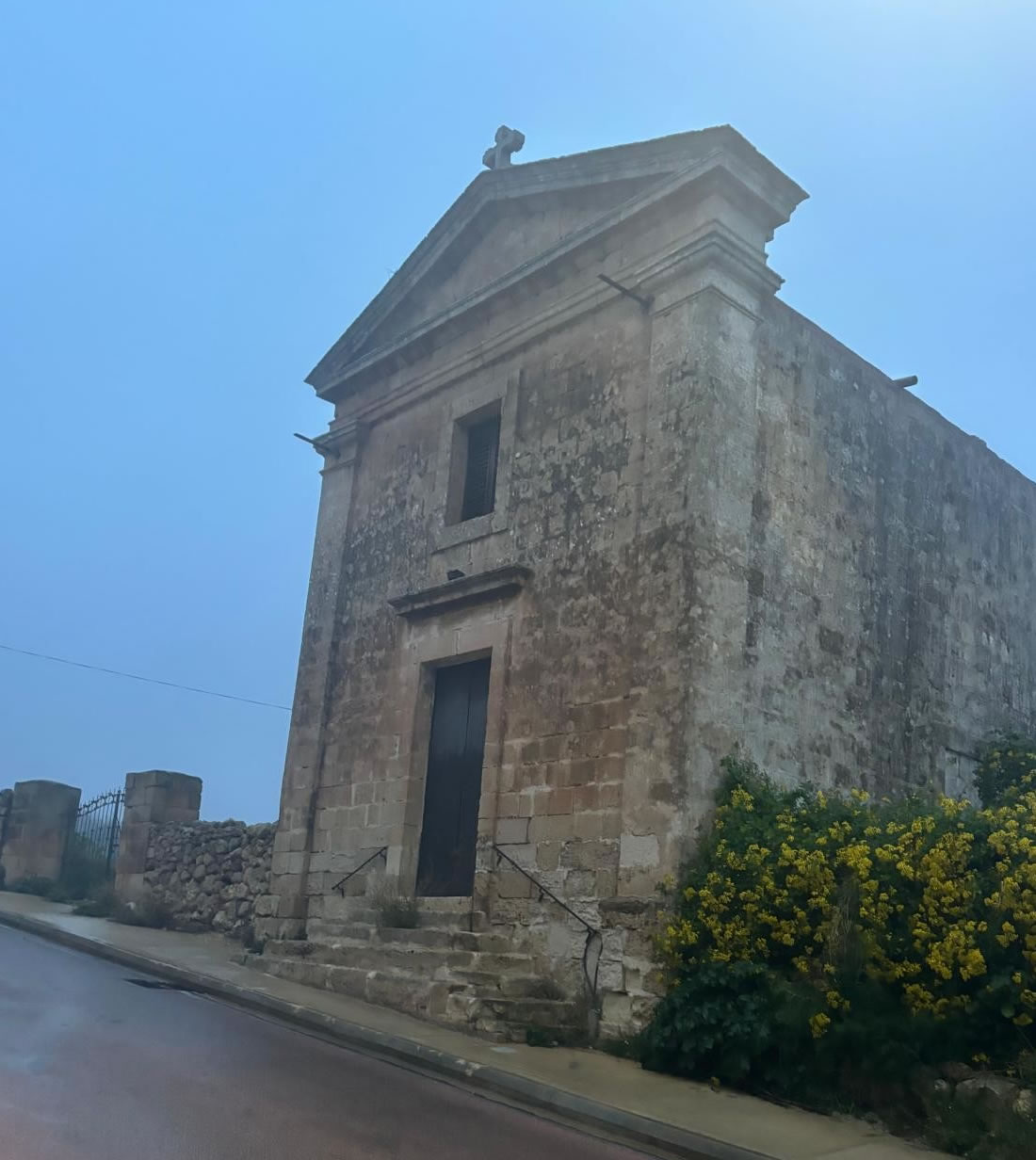
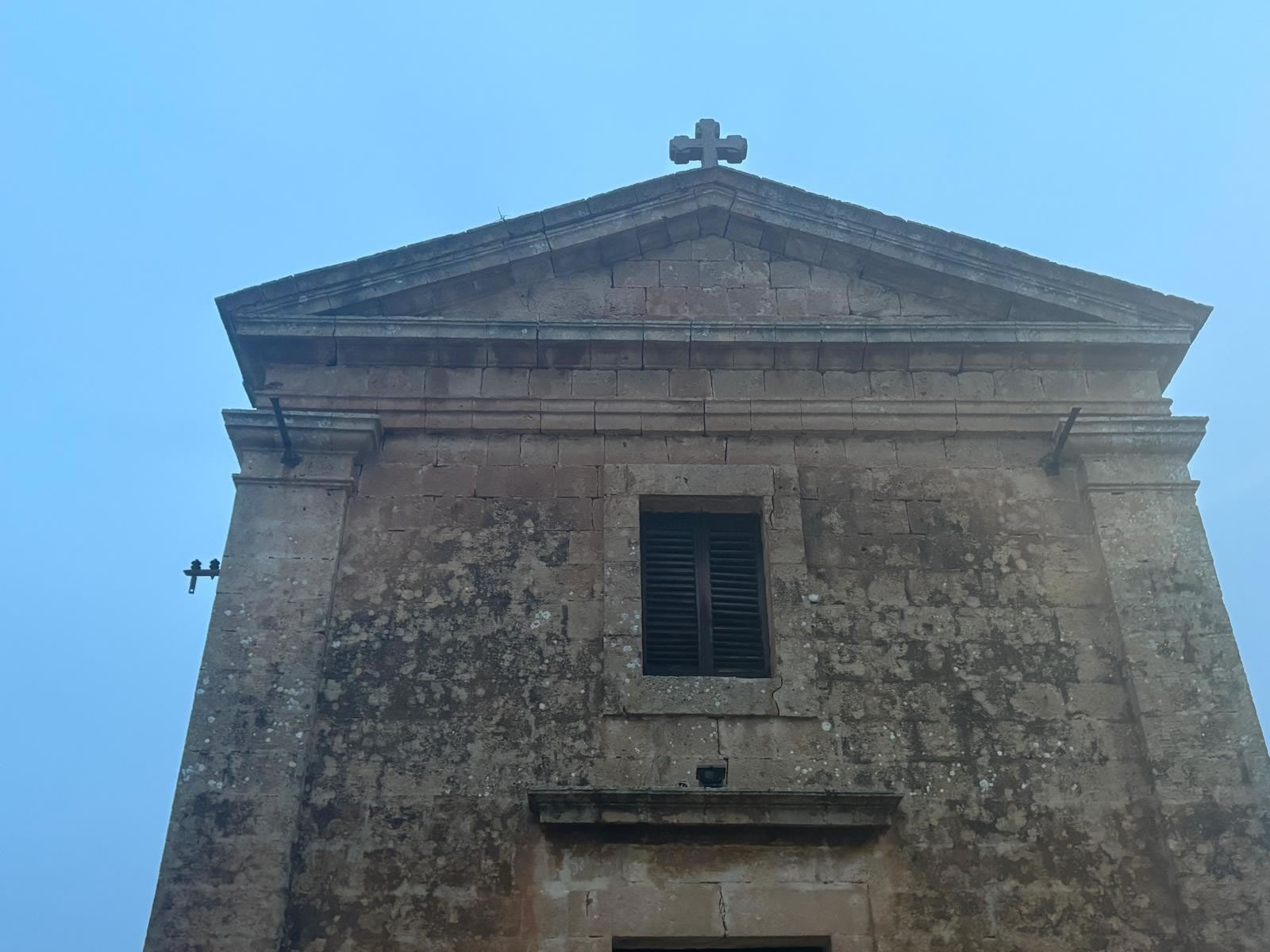
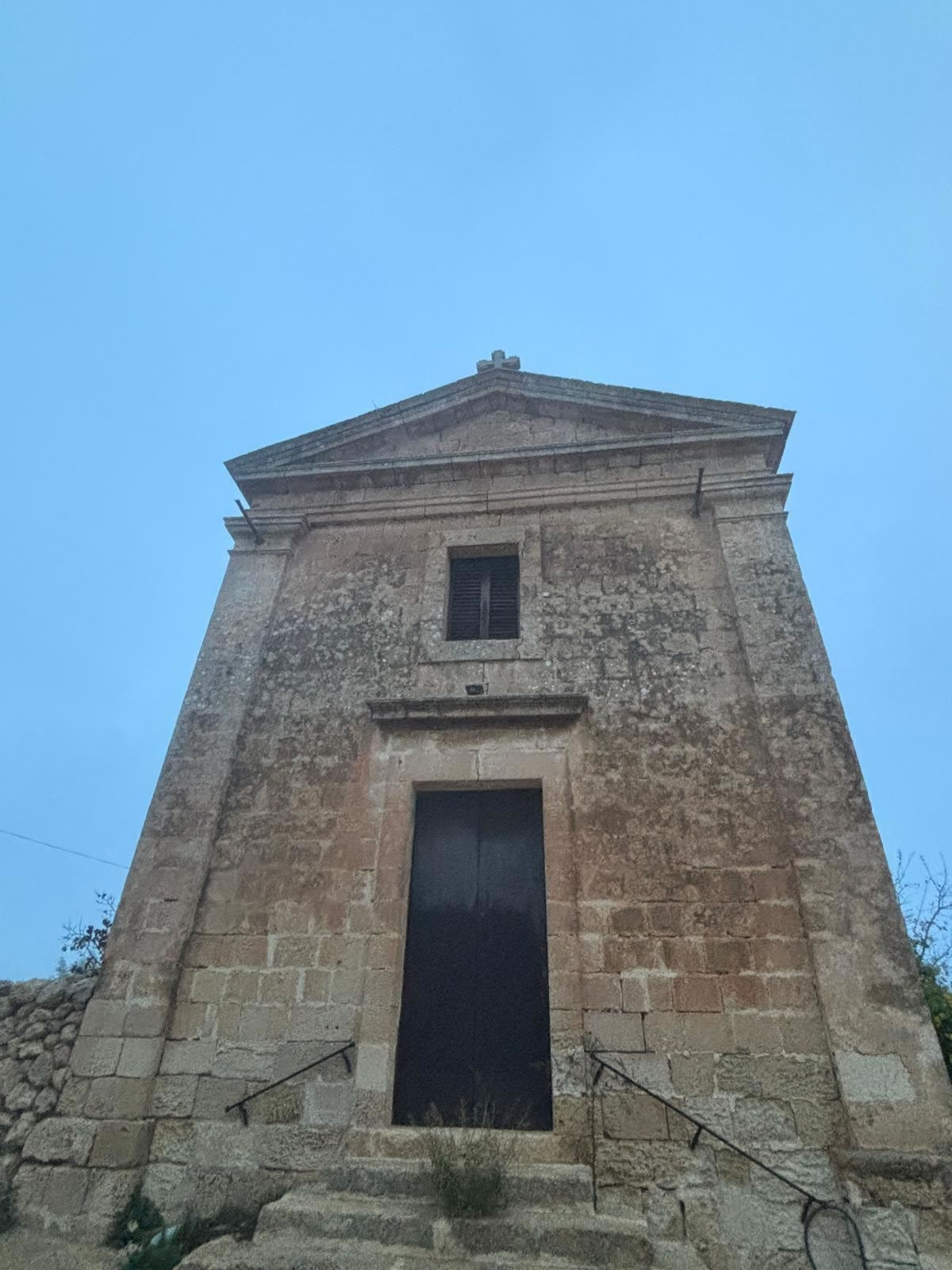
The chapel is small and intentionally simple, with a rectangular doorway and an upper opening, flanked by pilasters with Doric capitals. Above, an entablature and triangular pediment are crowned by a stone cross—an architectural vocabulary typical of many Maltese countryside chapels of the period.
Interior: a single-altar devotional space
Inside, the chapel is described as having a single altar. The modest scale suits its original purpose: a focused space for prayer and occasional liturgy connected to local devotion and patronage.
Landscape setting: the estate, the chapel and the spring
Estate information describes a natural spring fountain (L-Għajn Ħassellin) reached by a flight of steps from the sanctuary area, illustrating how rural chapels in Malta were often connected to the practical geography of water sources and countryside routes.
Modifications and restoration
Public summaries emphasise the chapel’s 17th-century form and do not commonly highlight major structural redesigns. As with many small chapels in Malta, its conservation story is typically expressed through routine upkeep of limestone fabric, water-shedding details, and the safeguarding of the interior for its annual liturgical use.
Heritage note: Limestone chapels are vulnerable to wind-driven rain, salt air, and inappropriate cement repairs. Long-term care usually focuses on breathable repairs, compatible stonework, and preventing moisture ingress.
Religious and community use today
St Dominica Chapel remains active. Published descriptions state that Mass is celebrated in the chapel once a year, preserving its identity as a living devotional place rather than a purely “historic” monument.
Some listings also note the liturgical commemoration associated with St Domenica on 7 July (a date still linked with the chapel’s devotion in published references).
Visiting St Dominica Chapel
How to get there
The chapel lies in Dingli’s countryside, associated with the Dejr il-Bniet / Diar il-Bniet area. It can be visited as part of a rural walk or a short detour from Dingli village routes.
Best time to visit
- Morning for calm countryside light
- Late afternoon for warm limestone tones
- Feast-related days (if visiting for liturgy—times vary)
FAQ
Who built St Dominica Chapel in Dingli?
The chapel was founded in 1669 by Baron (nobleman) Marc’Antonio Inguanez on his estate at Dejr il-Bniet.
Is the chapel protected as cultural heritage?
Yes. The building is listed on the National Inventory of the Cultural Property of the Maltese Islands.
Can you attend Mass at the chapel?
Published summaries state Mass is celebrated inside the chapel once a year.