Location Map Coordinates 35.881779, 14.398911
The Wignacourt Museum is a Baroque complex completed in 1749, linked to St Paul’s Grotto and a vast underground network of ancient hypogea and World War II shelters. The museum opened to the public on 24 June 1981.

Overview
The museum is named after Grand Master Alof de Wignacourt (r. 1601–1622), under whose administration the Knights intensified their involvement with the Pauline complex in Rabat, including St Paul’s Grotto. Today, the Wignacourt Museum is best understood as a “layered site”: a Baroque institutional building above a much older underground landscape, later adapted again during the Second World War.
Full history with key dates
- A.D. 60 (tradition): St Paul is believed to have stayed in the Rabat grotto after the shipwreck described in Acts, anchoring Rabat’s Pauline tradition.
- Early 17th century: the grotto becomes a major pilgrimage focus; administration shifts into Knights-era structures and institutions.
- 1749 (confirmed): the Baroque building that now houses the museum was fully completed, built as the residence/college for the chaplains connected to the collegiate church and the Pauline complex.
- 1798 onward: following the French occupation, the college continued in use under changing administration.
- World War II (1939–1945): the underground network includes WWII air-raid shelters; the building also took on wartime roles and community uses.
- 24 June 1981 (confirmed): the complex opened as the Wignacourt Museum, bringing together objects from the collegiate context and affiliated collections.
- Recent works: the museum’s official site states it has reopened after a “thorough refurbishment” and restoration of many artworks.

Construction and architecture
The structure is an 18th-century Baroque building completed in 1749, arranged across three levels: underground, ground floor, and a principal first-floor exhibition level. This “stacked” plan is fundamental to the visitor experience—surface galleries above, deep history below.
Three-level plan
The museum’s official description emphasises three distinct levels, with the underground dedicated to hypogea and WWII shelters, and the first floor used for the main picture gallery.
Chaplains’ spaces
The ground-floor spaces reflect the complex’s institutional past (offices/rooms, refectory area, and a garden), and the site includes a Baroque chapel intended for the chaplains’ private devotions.
A striking detail recorded by the museum is the presence of an oven associated with the chaplains’ refectory area, used during World War II to bake large quantities of bread for Rabat’s population.

St Paul’s Grotto & the underground complex
The Wignacourt Museum forms part of a Pauline complex and is physically connected to St Paul’s Grotto. Beneath the building is a “labyrinth” of older underground spaces and later shelter construction:
- Punic, Roman and Christian hypogea (interconnected funerary/underground spaces).
- World War II shelters described as two main corridors with about fifty rooms.

Collections and contents
The museum’s main exhibition level is described as an “impressive picture gallery” with works by major artists associated with Maltese Baroque and the Knights’ cultural world.
Highlights recorded by the museum
- Paintings including works by Mattia Preti, Antoine Favray, and Francesco Zahra.
- Silver collection (17th–19th century Spanish, Italian and Maltese silver).
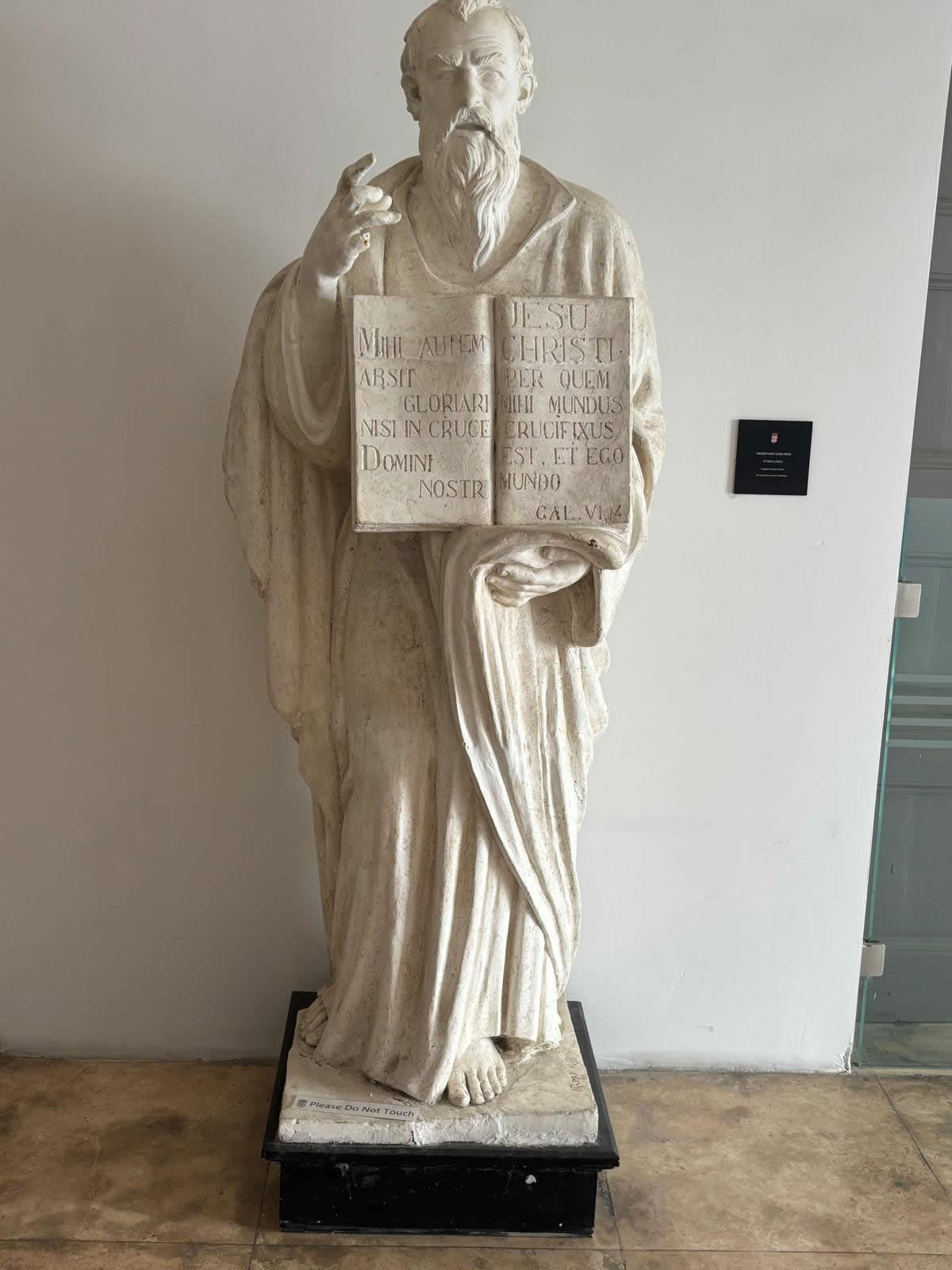
- Relics and reliquaries and other religious artefacts.
- Portable altar associated with Mass on the Order’s galleys.
- Sculpture and medals, including an item attributed to Alessandro Algardi.
- Maps, coins, prints and rare books (the museum cites, among its rarities, a copy of Henry VIII’s work titled “Septem Sacramants”).
- Baroque chapel for the chaplains’ private devotions (part of the visitor route).

How the building was used over time
One reason the Wignacourt complex is so compelling is that it has been repeatedly adapted. Sources describe the building moving through phases: a Knights-era chaplains’/collegiate context, post-1798 administrative change, wartime/community uses, and then conversion into a museum in 1981. The official museum description emphasises the WWII shelter layer and the building’s practical wartime provisioning role (bread production).

Visitor notes
- Allow extra time for the underground: the hypogea and WWII shelter corridors are a major part of the visit.
- Wear sensible shoes: underground surfaces can be uneven.
- Photography: galleries may have restrictions; underground lighting can be low—plan accordingly.
- Pair with Rabat heritage: the museum sits within Rabat’s dense heritage zone, making it easy to combine with catacombs and Mdina viewpoints.

FAQ
When was the building built, and when did it become a museum?
The Baroque building that houses the museum was completed in 1749, and it opened as the Wignacourt Museum on 24 June 1981.
What modifications or later changes are confirmed?
The site is described as having a significant World War II shelter layer beneath it and as having recently reopened following a thorough refurbishment and restoration of many artworks.
What are the “must-see” objects inside?
The museum highlights its picture gallery (including works by Preti, Favray, and Zahra), historic silver, relics and reliquaries, and a portable altar
associated with the Order’s galleys, alongside maps, coins, prints and rare books.
