The Old Prison in the Cittadella above Victoria (Rabat), Gozo, is one of the island’s most atmospheric historic sites. In use as a place of confinement from the mid-16th century until 1962, this compact prison complex once housed rowdy Knights of St John, troublesome locals and other offenders. Today it is managed by Heritage Malta and is renowned for its remarkably preserved cells and walls covered in historic graffiti, forming the largest known concentration of prisoner carvings in the Maltese Islands.
Location: Inside Gozo’s Cittadella
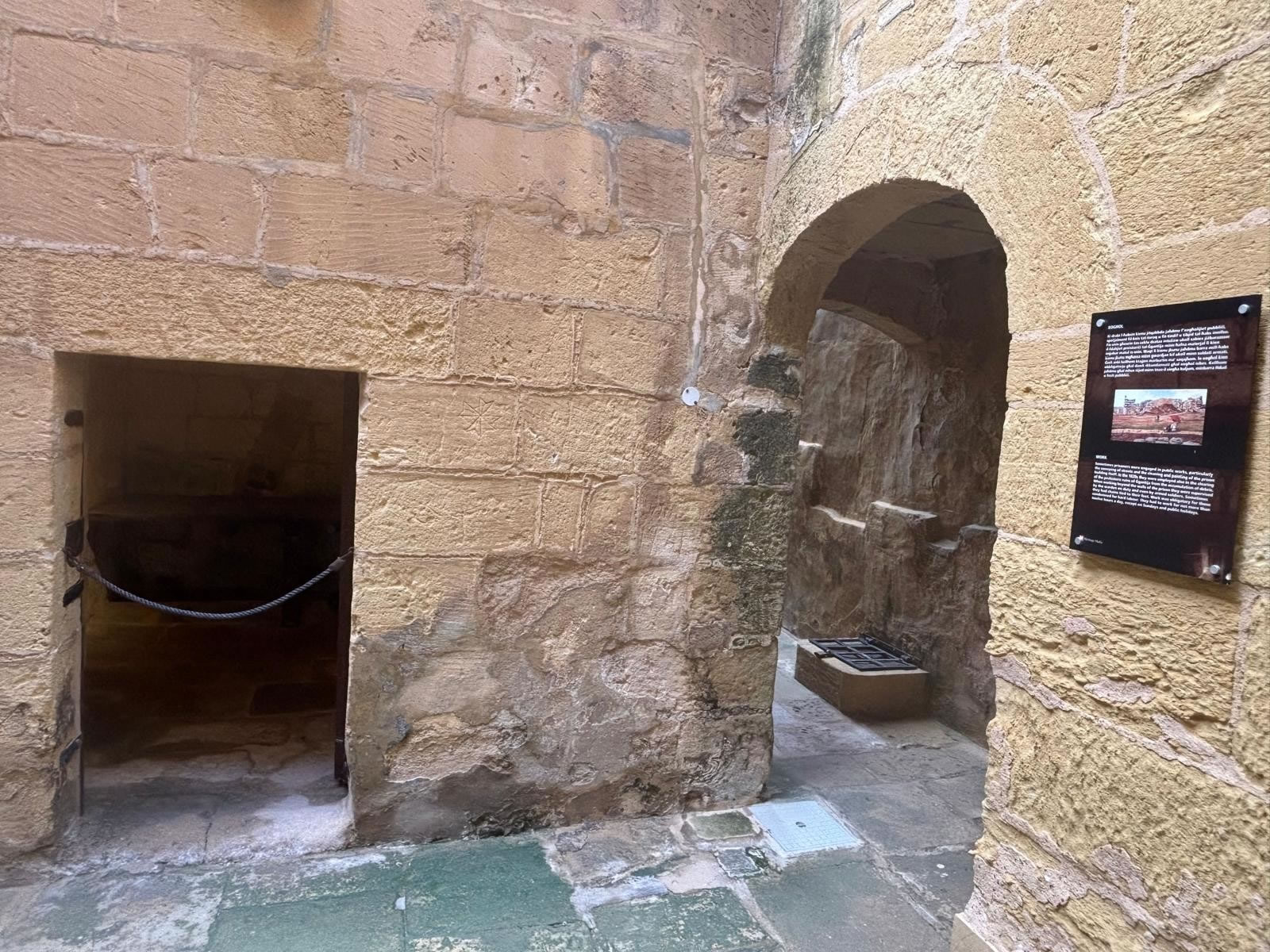
The Old Prison is located within the fortified Cittadella, the historic citadel overlooking Victoria, Gozo. It stands directly behind the Law Courts and was originally physically connected to the courthouse, reflecting its role in the island’s justice system. From Cathedral Square, a short walk along the narrow lanes of the citadel leads to the prison entrance.
Origins and Use as a Prison
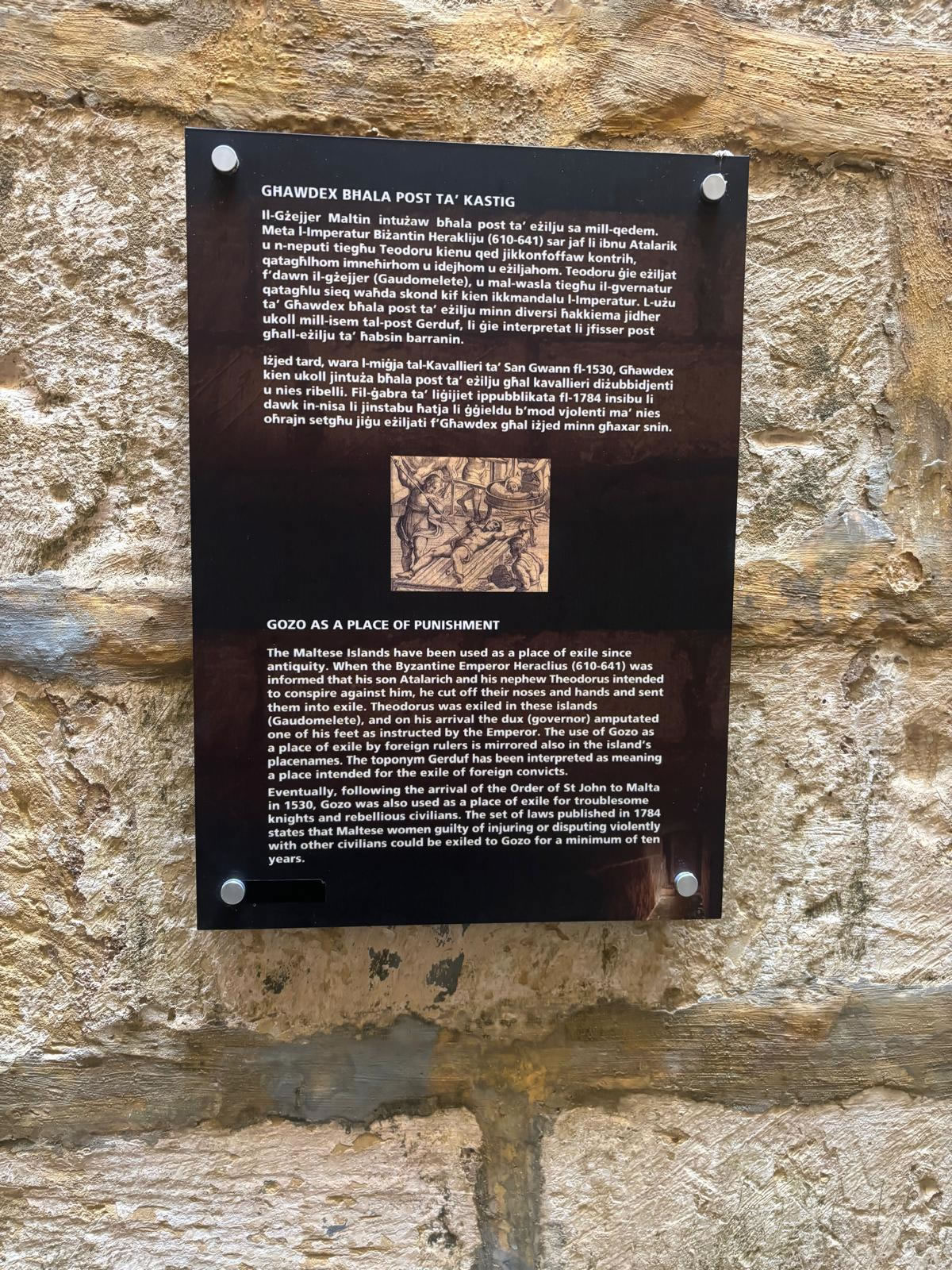
The building that now houses the Old Prison became a place of detention in the mid-16th century, during the rule of the Knights of St John. At first, it was used primarily to confine unruly or disruptive knights, giving them time to “cool down” after breaking the strict rules of the Order.
Over time, the Old Prison evolved into a more general place of incarceration. It served under successive regimes:
- The Hospitaller Knights of St John
- The brief French occupation of Malta
- The British colonial administration, which continued to use it as a prison into the 20th century
The prison remained in operation until the early 1960s and is recorded as being in use until about 1962, making it one of Gozo’s longest-serving institutions.
Famous Inmates: Jean Parisot de La Valette
One of the Old Prison’s most notable inmates was Fra Jean Parisot de La Valette, who would later become Grand Master of the Order and the famed commander during the Great Siege of 1565, as well as the founder of the city of Valletta. In 1538, La Valette spent around four months imprisoned here after attacking another man.
His confinement in this small Gozo prison adds an intriguing twist to the story of one of Malta’s most celebrated historical figures and underlines the importance the Order placed on discipline, even for high-ranking knights.
Layout and Architecture of the Old Prison
Today, the Old Prison complex is made up of two main parts:
- An entrance hall, which functioned as a common cell in the 19th century, where several prisoners were kept together.
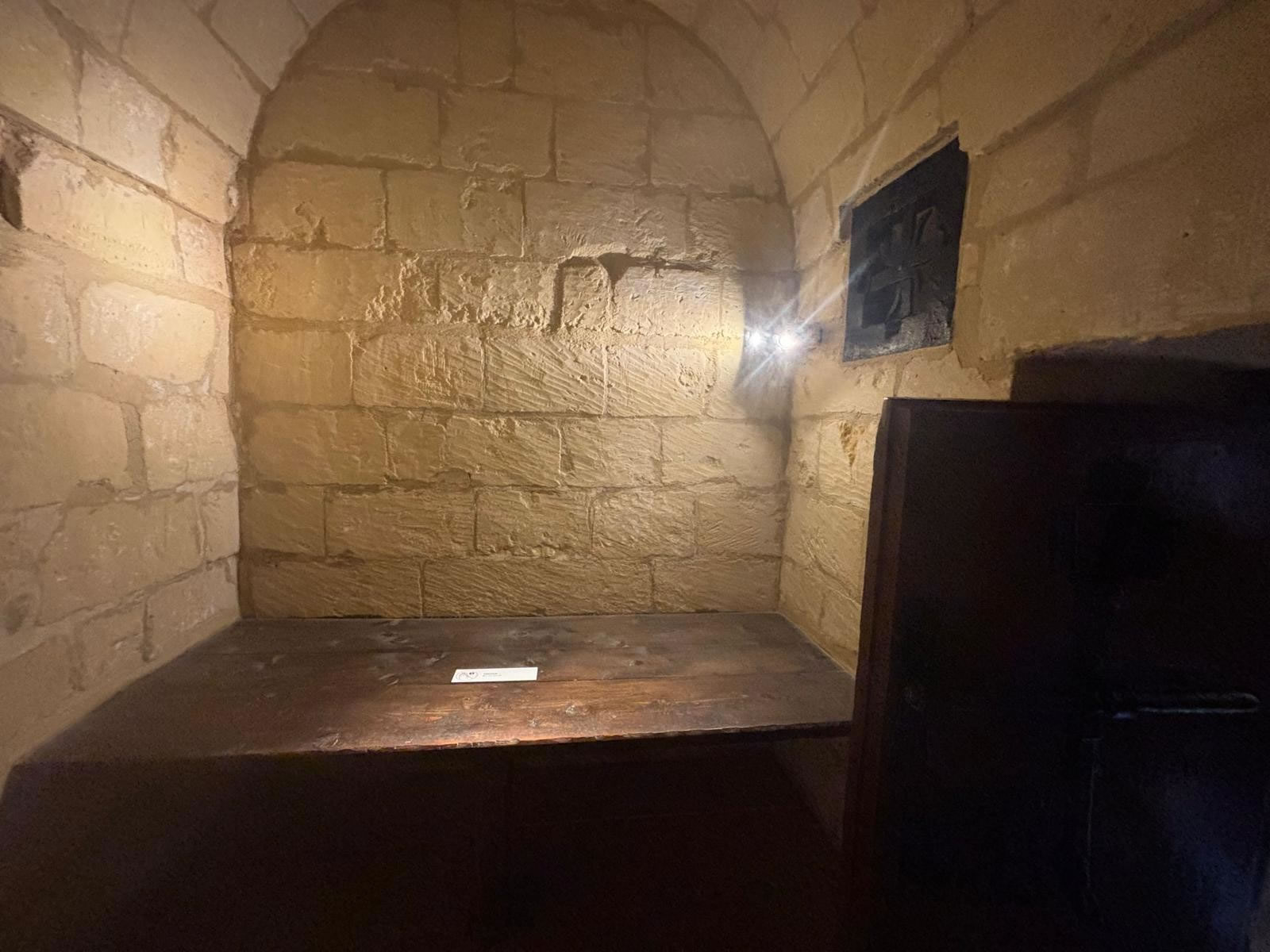
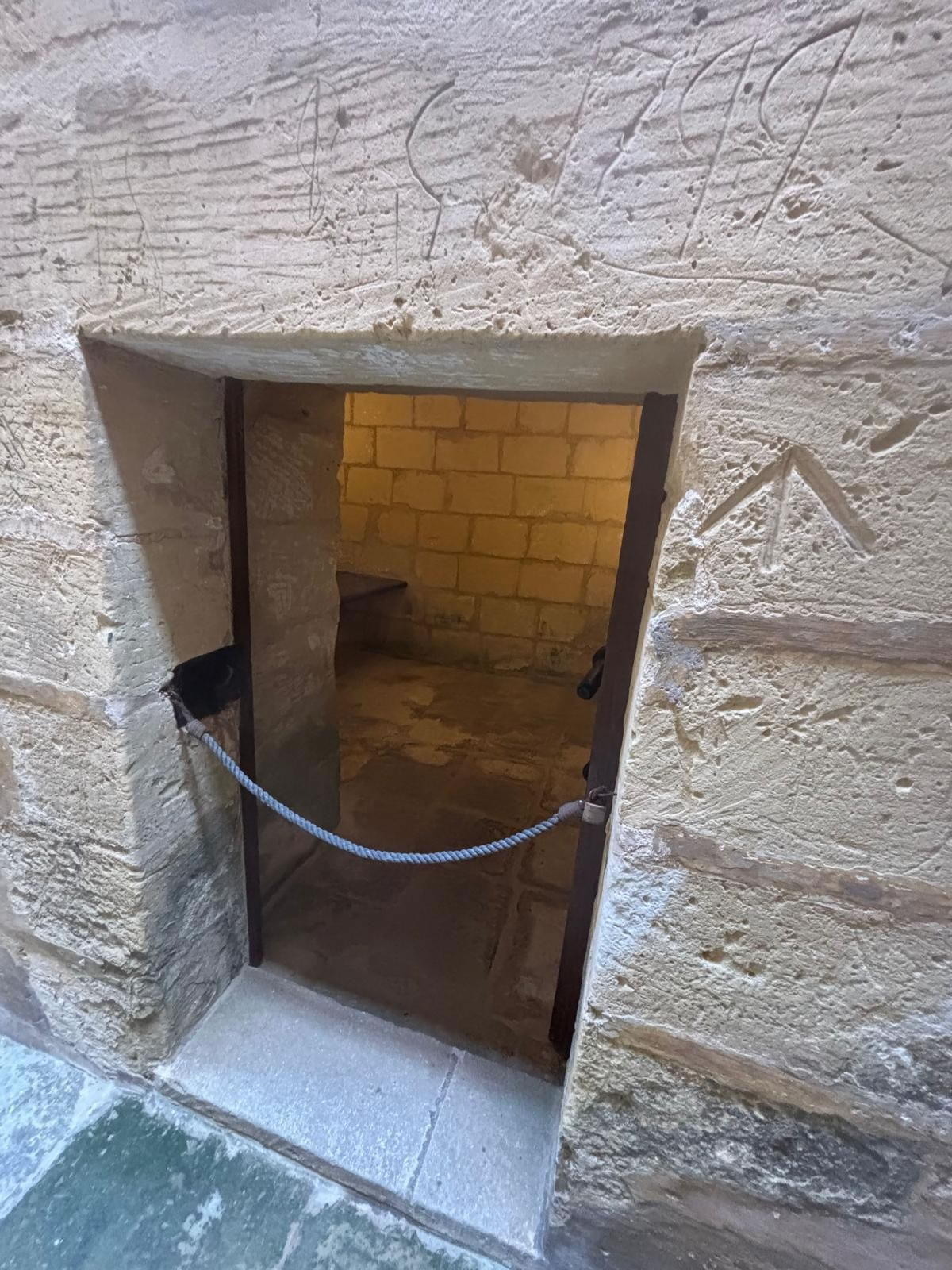
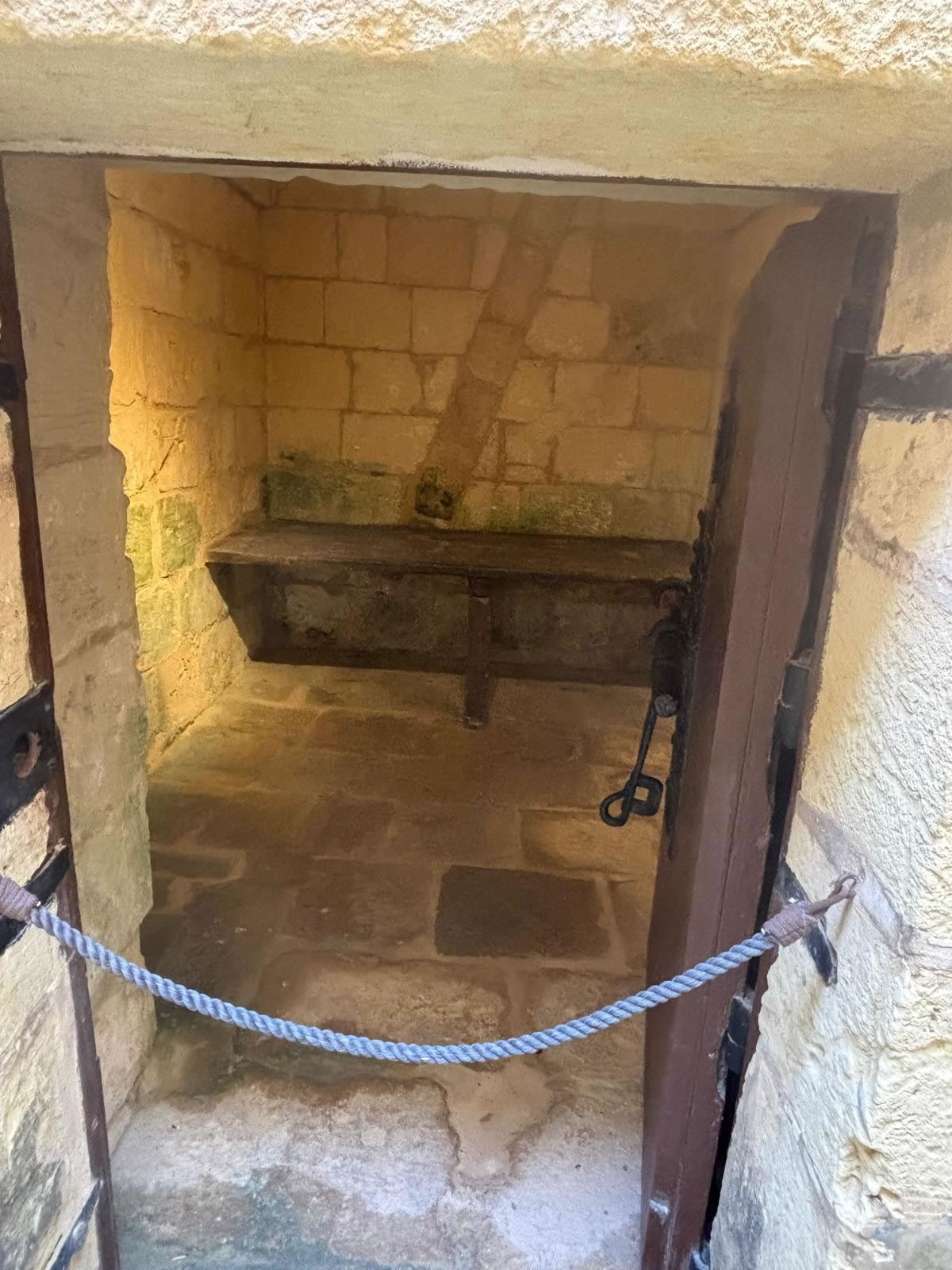
- A separate block containing six individual cells, each with a small doorway and very limited light, reflecting the harsh living conditions of inmates.
The building retains many of its historic features, including stone floors, narrow passages, iron fittings and the original cell doors. The simplicity and compact scale of the architecture convey the sense of confinement that prisoners would have endured.
Prison Graffiti: A Unique Historic Record
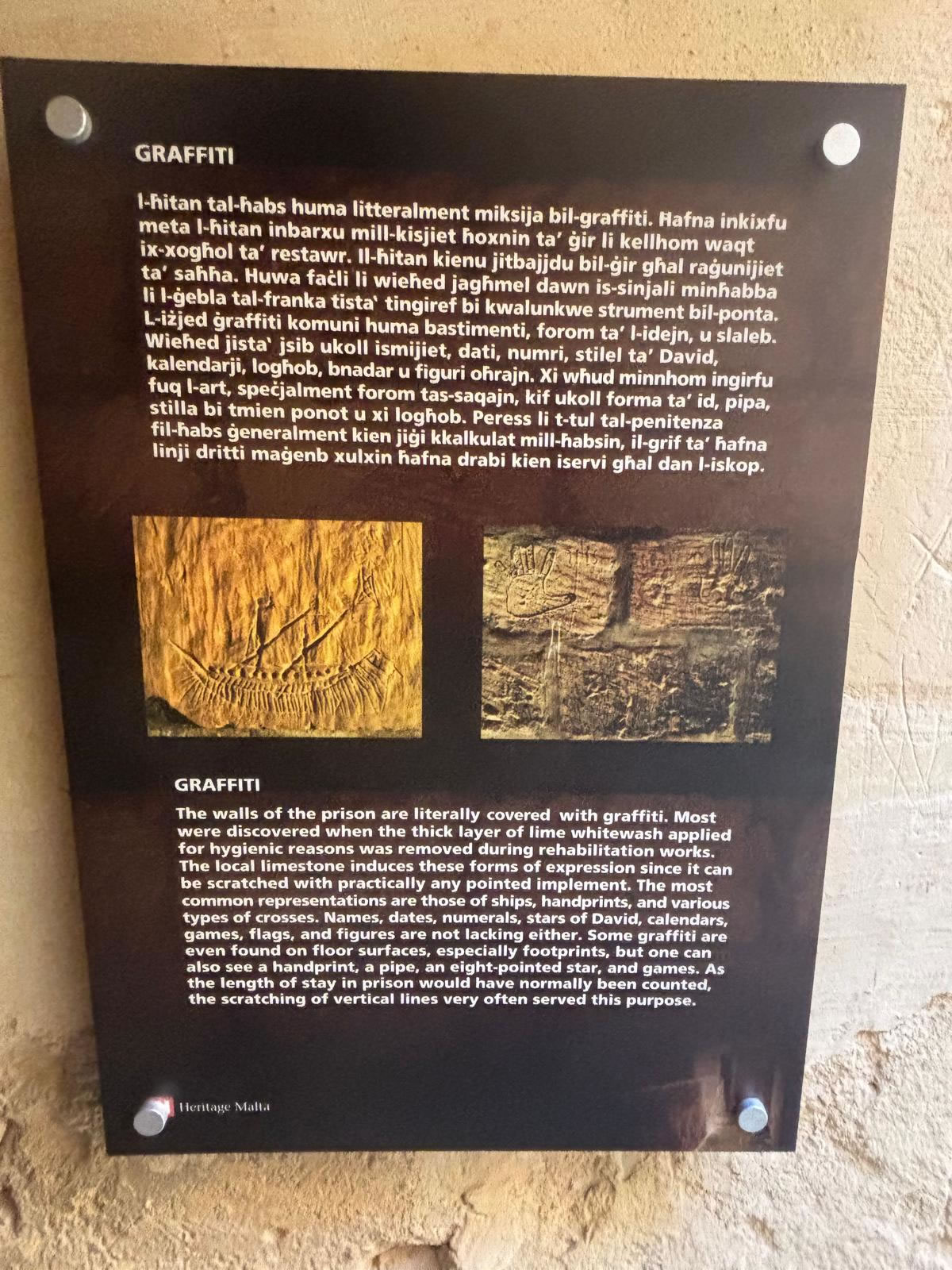
One of the most compelling aspects of the Old Prison is its wealth of graffiti, carved into the limestone walls by generations of inmates. This site preserves the largest known collection of historic graffiti in one place anywhere in the Maltese Islands.
The graffiti include:
- Ships and sailing vessels – reflecting Malta’s and Gozo’s maritime culture
- Crosses and religious symbols – hinting at the prisoners’ faith and hopes
- Names, initials and dates – personal marks left to assert identity and presence
- Hand-prints and simple human figures – powerful reminders of the individuals once held here
- Game boards and geometric patterns – suggesting attempts to pass the time and distract the mind
These carvings form a remarkable visual archive of life behind bars, offering insights into the emotions, beliefs and daily routines of inmates across centuries.
Life Inside the Old Prison
Conditions in the Old Prison were once harsh. Cells were small and sparsely furnished, with prisoners relying on basic bedding, minimal natural light and limited privacy. In some periods, prisoners in the common cell would have shared confined space, while those held in the individual cells experienced an even more restrictive environment.
Punishments could include extended periods of confinement, and for knights of the Order being sent to the Gozo prison was a serious disciplinary measure. Over time, as penal standards changed, conditions improved somewhat, but the building remained a stark place of detention until its closure in the 20th century.
From Prison to Heritage Site
After the Old Prison was officially closed in the 1960s, the site was preserved and later restored as part of a wider effort to safeguard Gozo’s cultural heritage. It is now managed by Heritage Malta and operates as a small museum within the Cittadella complex.
Interpretive panels, preserved cells and carefully lit displays allow visitors to understand how the prison functioned and to appreciate the significance of the graffiti and other surviving features.
Visiting the Old Prison in Gozo
The Old Prison is easy to include in a visit to the Cittadella, alongside sites such as the Cathedral of the Assumption and the Gozo Museum of Archaeology. Many visitors choose a combined or multi-site ticket that grants access to several Cittadella museums, often including the Old Prison.
- Location: Inside the Cittadella, Victoria (Rabat), Gozo, Malta
- Operator: Heritage Malta
- Access: Short walk from Victoria’s main square, with signposted routes up to the citadel
- Tickets: Often available as part of a Cittadella or Heritage Malta combined ticket
- Photography: Usually permitted; visitors are asked not to damage or touch the graffiti
Opening hours, ticket prices and temporary exhibitions may change, so visitors are encouraged to consult official Heritage Malta or Visit Gozo information before their visit.
Tips for Exploring the Old Prison
- Take time to look closely at the graffiti in each cell – many details are easy to miss at first glance.
- Combine your visit with a walk along the Cittadella bastions for panoramic views of Gozo.
- Allow at least 20–30 minutes inside the prison to fully appreciate its history and atmosphere.
- Consider a guided tour of the Cittadella to place the prison in the wider context of Gozo’s fortifications and governance.
Frequently Asked Questions
Where is the Old Prison located?
The Old Prison stands inside the Cittadella above Victoria (Rabat), Gozo. It lies close to the Law Courts and Cathedral Square, within the historic core of the citadel.
When was the Old Prison in use?
The prison was active from around the mid-16th century until about 1962, serving under the Knights of St John, later authorities and the British administration.
Who was imprisoned in the Old Prison?
In its early history, the Old Prison held knights of the Order of St John who had broken discipline. The most famous inmate was Jean Parisot de La Valette, future Grand Master and hero of the Great Siege, who was imprisoned here in 1538. Over time, the prison was also used for local offenders and other detainees.
Why is the Old Prison famous for graffiti?
The walls of the Old Prison are covered in carvings made by inmates over centuries. These include ships, crosses, symbols, names and dates. This concentration of prisoner graffiti is the largest of its kind in Malta and offers a unique insight into the lives and thoughts of those once confined there.
Is the Old Prison suitable for children?
Yes. While it is a historic prison and the subject matter is serious, the small size of the site and the intriguing graffiti often appeal to younger visitors. Parents may wish to accompany children closely and provide context about the history of punishment and justice in past centuries.