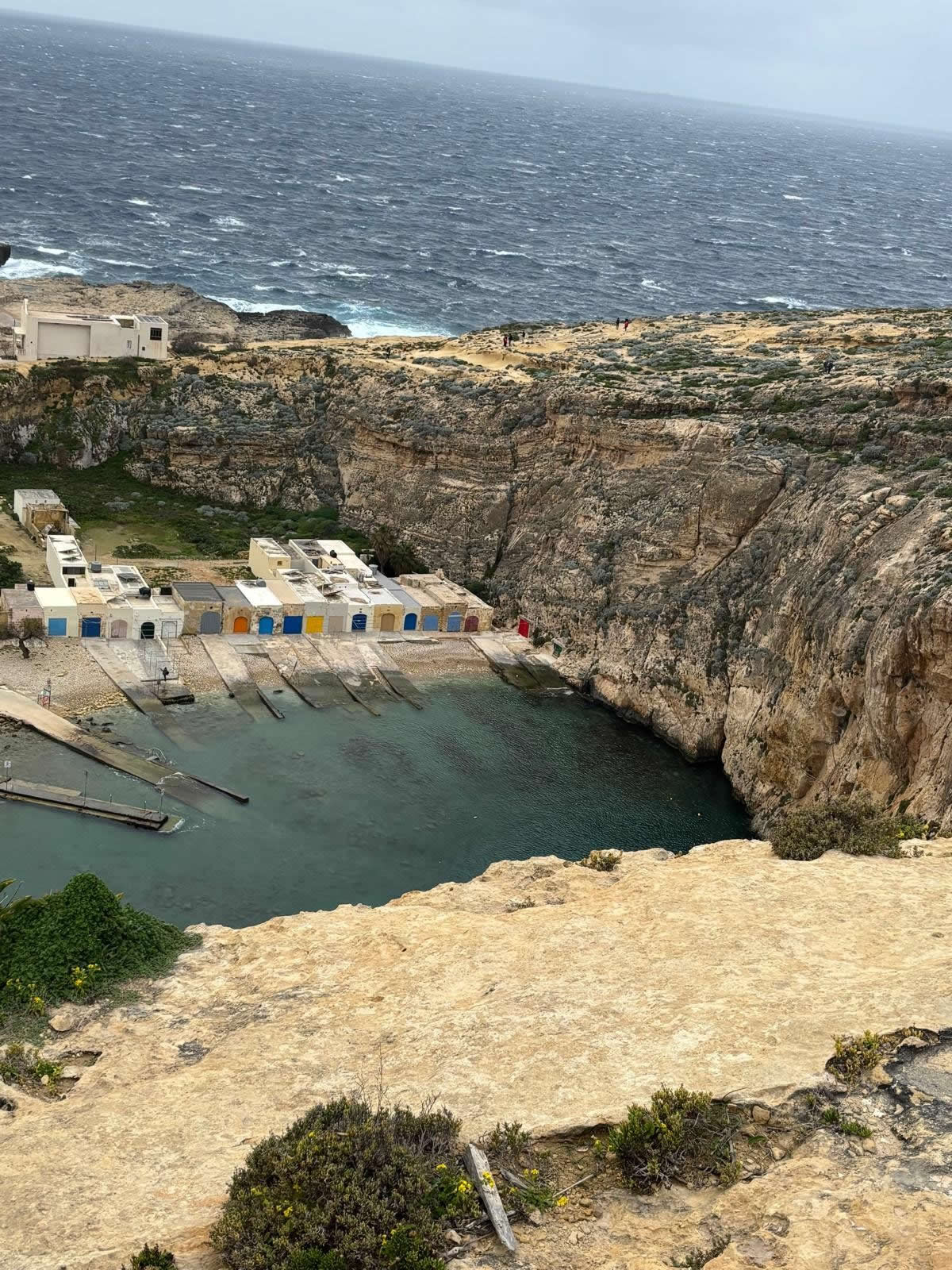
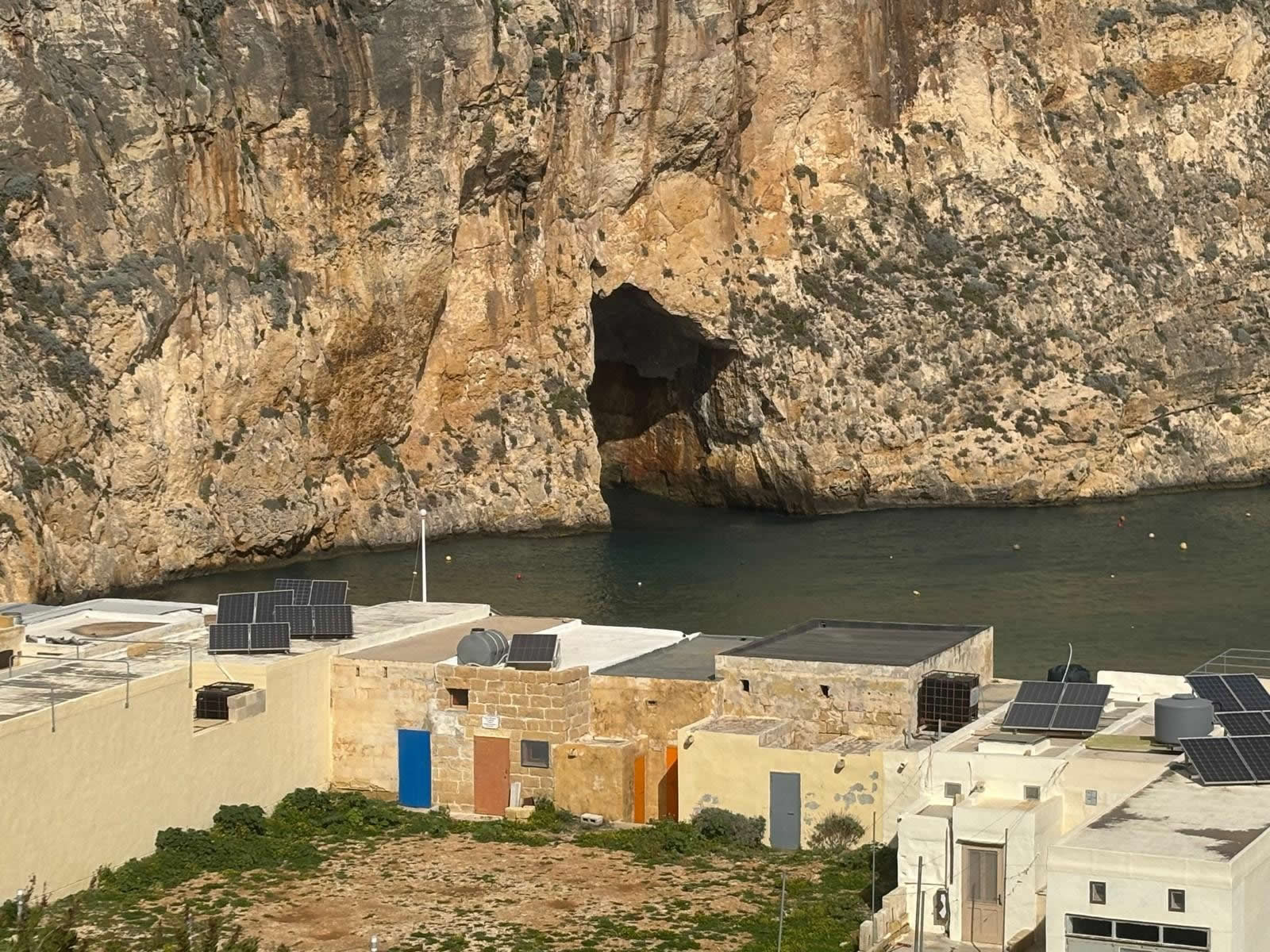
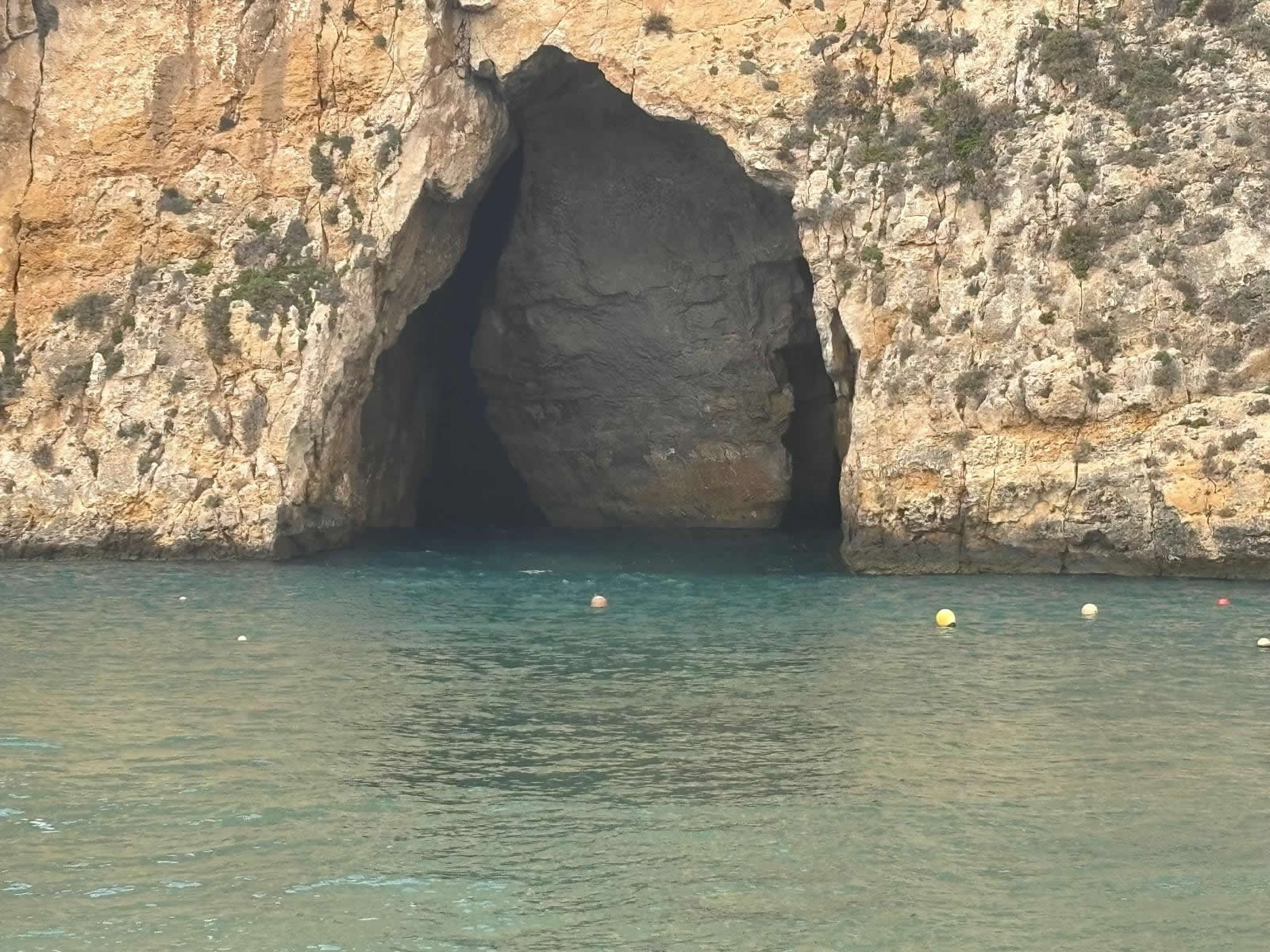
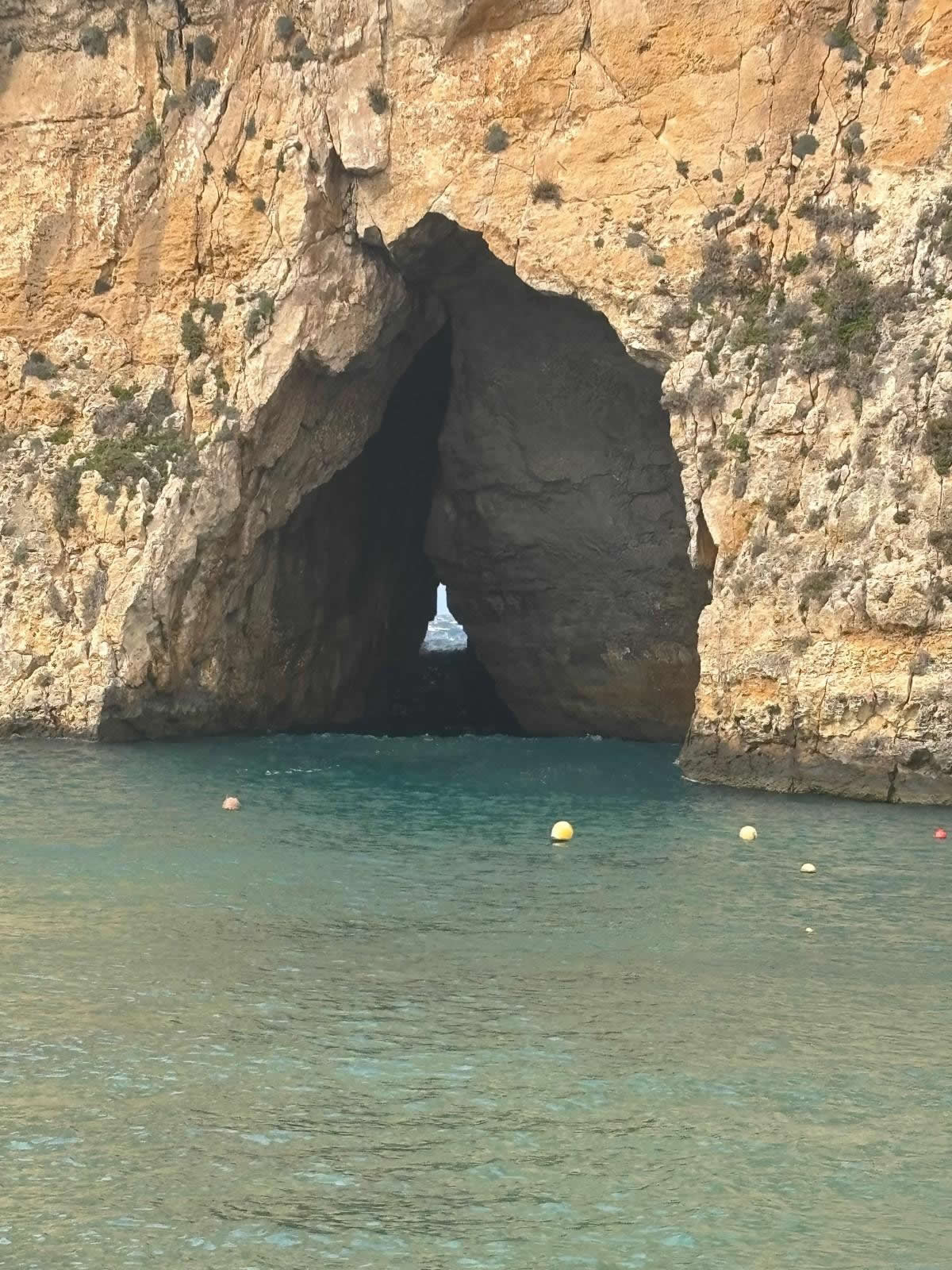
The Dwejra Inland Sea is a remarkable saltwater lagoon on Gozo’s west coast, connected to the open Mediterranean by a natural tunnel through the cliffs. It’s one of the best places in Gozo for a calm swim, a short boat trip, dramatic coastal scenery, and (for qualified visitors) a famous shore dive route out through the tunnel.
At a glance
- Place
- Dwejra Inland Sea (Il-Qawra), San Lawrenz, Gozo.
- What it is
- Saltwater lagoon connected to the Mediterranean via a natural tunnel/arch opening in the cliffs.
- Coordinates
- 36.053860, 14.191124
- Best for
- Swimming, short boat trips, photography, coastal walks, and shore diving (experienced divers).
- Access
- Easy access to the lagoon edge; nearby areas can be uneven rock—wear solid footwear.
How the Inland Sea formed
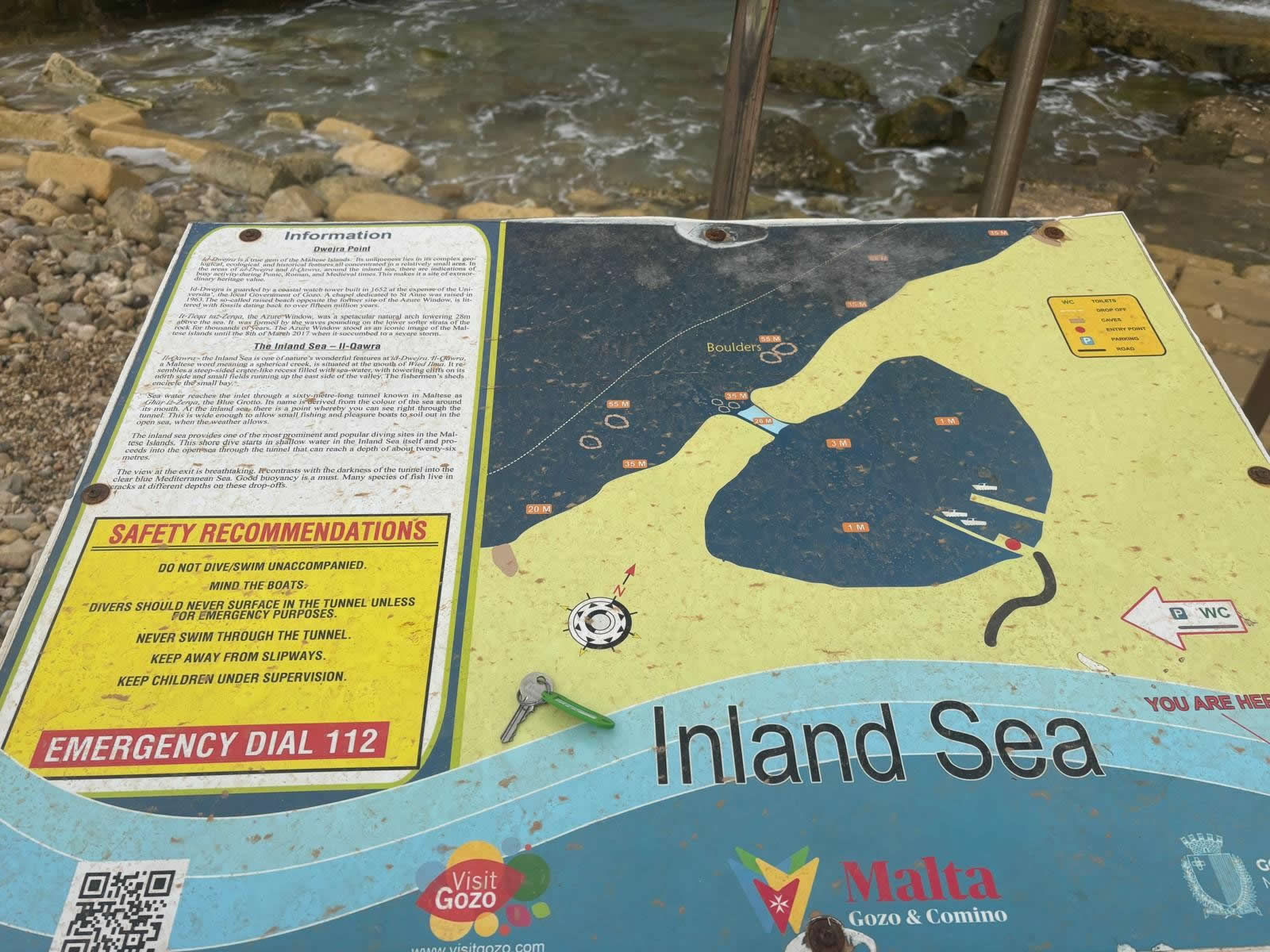
The Inland Sea is widely described as a lagoon created by Gozo’s limestone geology: a fault or weakness in the rock formed a sea cave, and later collapse helped create an enclosed basin, with the remaining passage forming the tunnel-like connection to the sea.
If you’re building a “Geology of Gozo” cluster page, link here with anchors like:
https://emalta.com/places/Dwejra-Inland-Sea.html#how-formed.
Things to do at Dwejra Inland Sea
1) Swim in the sheltered lagoon
- The Inland Sea is often calmer than the exposed west-coast shoreline, making it popular for a relaxed dip.
- Use caution on slippery rock, and avoid entering when there is strong surge, high winds, or poor visibility.
2) Take a short boat trip through the tunnel
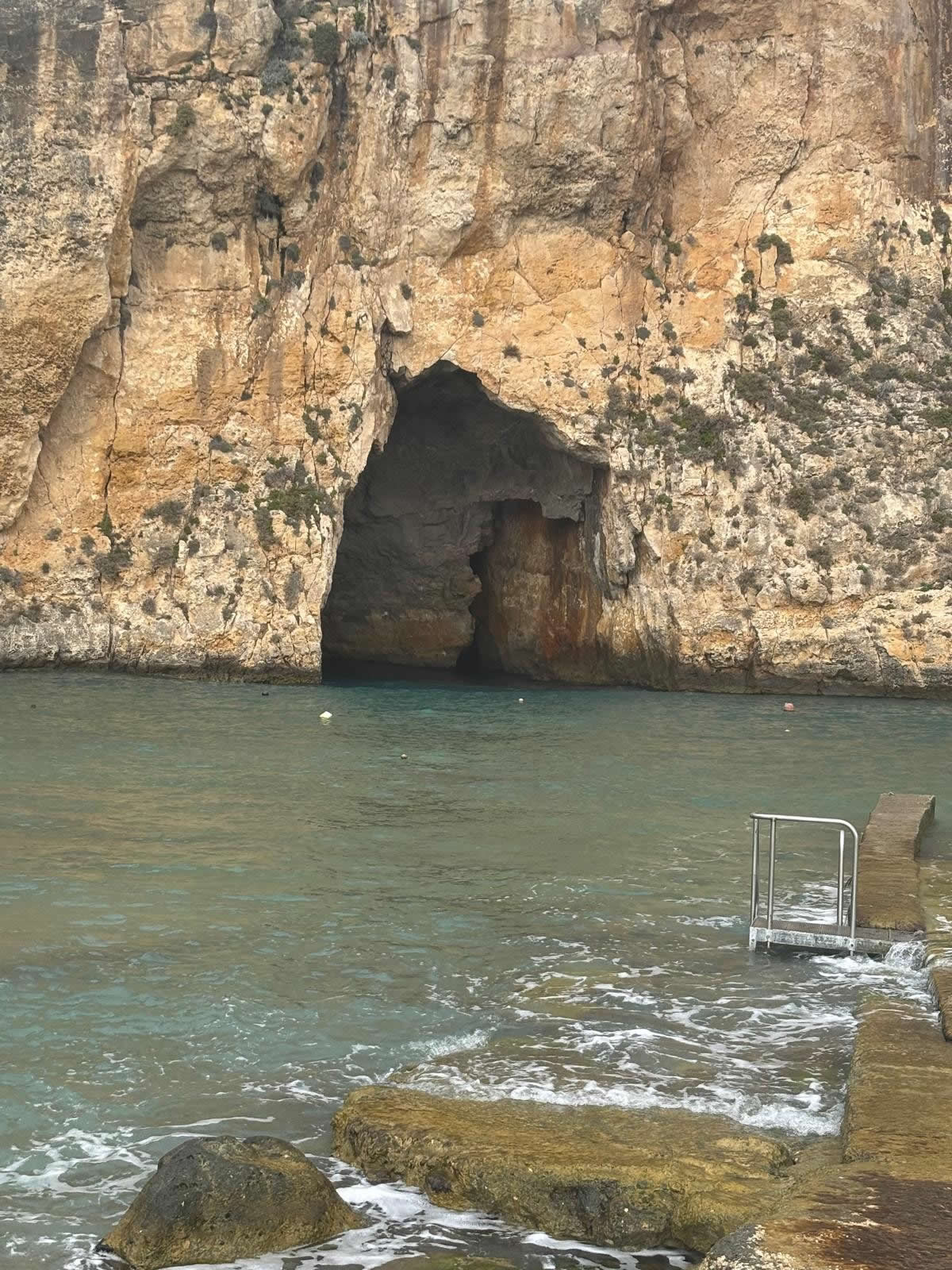
- Local boat operators often run short trips from the lagoon through the natural tunnel to the open sea and back.
- Sea conditions dictate whether trips operate—if it’s rough outside, tours may pause for safety.
3) Dive (experienced divers)
- The “Inland Sea & Tunnel” route is a well-known shore dive: a calm entry, then a long underwater tunnel leading out to open sea.
- This is not a beginner route—surge and swell can be significant outside the tunnel, and conditions change quickly.
4) Photography and coastal walks
- Golden-hour light is excellent on the layered limestone cliffs and the lagoon water.
- Short walks connect you to other Dwejra features (see below).
Nearby highlights at Dwejra
- Blue Hole (a famous natural pool and dive entry point) — nearby along the Dwejra shoreline.
- Dwejra Tower — a historic coastal watchtower (excellent viewpoint and photo stop).
- Fungus Rock — a dramatic offshore islet with historical associations.
- Azure Window site — the former location of the iconic limestone arch, which collapsed in 2017 after storms.
Tip: add a “Dwejra” hub page at /places/dwejra-gozo.html and link out to each feature for stronger topical SEO.
Practical tips for visiting
- When to go: early morning for quieter photos; late afternoon for warm light on the cliffs.
- Footwear: the shoreline can be sharp and uneven—closed shoes are safer than flip-flops.
- Sea state: even if the lagoon is calm, the open sea beyond the tunnel may be rough—follow local advice.
- Leave no trace: Dwejra is valued for its natural habitats—take rubbish with you and avoid disturbing rock pools.
FAQ
Is the Inland Sea suitable for families?
Often yes for a supervised swim in calm weather, but the rocks can be slippery and sharp. Always check conditions and supervise children closely.
How long is the boat trip?
Trips are typically short “out-and-back” tours through the tunnel to open sea and back, depending on conditions and operator schedule.
What happened to the Azure Window?
The Azure Window collapsed in 2017 after heavy storms; the surrounding Dwejra coastline remains a major natural attraction.
© Emalta. Coordinates: 36.053860, 14.191124. Content intended as a practical visitor overview.