Caravaggio
The childhood and early youth of Caravaggio are well documented. His father, Fermo "Merisi, was the uomo di fiducia " on the estate of Marchese de Caravaggio, Francesco Sforza. This association was a close one. It is at the basis powerful network of protection which surrounds Caravaggio's life. When his father Fermo Merisi was widowed from Maddalena Vacchi, he married Lucia Aratori on 14th January 1571. Francesco Sforza was one of the 3 witnesses of this marrage. Caravaggio was concived in his first few days after the marrage "Il concepimento del bambino nel giorno piu probabile quello del matrimonio." Francesco sforza in 1957 married Costanza Colonna who was the sister of Fabrizio Colonna, who married, in 1572, Anna Borromeo. From the marrage 3 children were born.
Of these 3, Filippo was to protect caravaggio, a figurative from justice at Paliano in 1606 after the murder of Ranucio Tommasoni, and Giovanna, who married Admiral Doria, protected Caravaggio for a month at Genova initially after he fled from Rome. Costanza Colonna was the daughter of Marcantonio Doria, the famous admiral who won the Battle of Lepanto on 26th September 1571 when the Christian fleet arrived at Corfu'. Little Merisi was born probably three days later on 29th September 1571, the feast of San Michele Arcangelo which must have suggested the name to Fermo and Lucia Merisi, a day when the forces of good seemed to be victorious over those of evil and the birth of little Michelangelo must have looked like a good omen to Costanza, Marchesa di Caravaggio. On 20th October 1577, when the plague overtook Milan, both Bernardino, Michelangelo's grandfather and his father, fermo, died at Caravaggio.
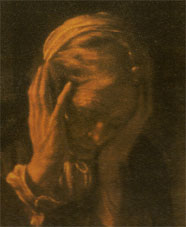
The fate of Michelangelo was sealed in a contract of apprenticeship for four year with the Lombard painter Simone Pederasini. Towards the end of his apprenticeship, Caravaggio's mother died and we know of a brisk disposal of family property with a series of divisions but these sales and "I'inarrestabile bisogno di soldi" seem to arise from early troubles with the law. Some reports go as far as to attribute a murder in Milan to Merisi at this early age. The liquidation of the family estate Ð "lo volser veder vendere il suo"Ð did have serious trouble behind it for which Caravaggio was to stay in jail for a year, but it also seems that this arose out of his refusal to testify against a friend involved in the incident. Whatever the truth, the sale of family assets arose from grave circumstances in Milan and left Caravaggio with little money from the family division. Here, therefore, we see in the summer of 1592 at the age of 20 the artist's departure for Rome "poco provisto di denari.
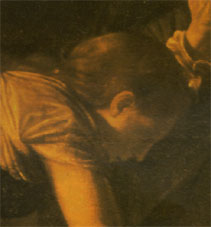
" In Rome, Caravaggio lived with a Sicilian artist called Lorenzo and worked for him. His agility in painting some heads, is recorded: "ne faceva tre al giorno'. It was a tough period where the artist floated between various small commissions and even smaller artist who exploited his talent, but a good friendship was struck with Prospero Orsi who was to become a kind of life long manager of the artist. Prospero succeeded in pulling Caravaggio away from the bottega of Bernardino Cesari and his brother Cavallier D'Arpino and bringing him some good commissions which appear in the inventory of the Aldobrandini family. These uncertain years came to an end with Caravaggio's first big important breakthrough, also thanks to Prospero Orsi, and that was to be the meeting with Cardinal Del Monte, Ambassador of Tuscany. merisi moved into the Cardinal's Palazzo madonna,and this was to mean a very comfortable life and a series of glittering commisions which began with "The Young Musicians "(Metropolitan , NYC) Trough Cardinal Del Monte,Caravaggio was to obtain his first public commission for the Contarelli Chapel at San Luigi Dei Francesi and this was to led to great public acclaim.
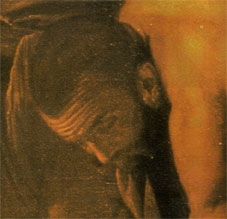
Merisi's great talent Meant one success lead to another. Caravaggio seems to have lived with Cardinal Del Monte up to 1600, when a change of circumstances saw the artist move to palace and the patronage of cardinal Gerolamo Matei and his family. It is this stage of Caravaggio's life that he becomes frantically sought after for work by all the scions of Rome's Aristocratic families. His great success however did not keep him away from the dubious company of boisterous characters or for that matter out of trouble with the law. In fact this success well as an artist,s reliance on his besotted protectors was to exacerbate further Caravaggio's penchant for trouble. In 1601 he charges with injuries Giordano Spada. In 1603 Caravaggio wounded Flavio Canonico and in 1604 was sued by pietro di Fusaccia for having thrown a plate of artichoks. In October 1604 he was arrested for brawl and was saved by Cardinal Del Monte and Olimpia Aldobrandini. In November he was again in prison and several other incidents are recorded. Caravaggio, after his agression on noteary pasqualone, flead Rome in August for Genova were he was kept under the protection of Giovanni Andrea Doria and Giovanna Colonna until the good notary forgave him in september 1604. However it is not long before a terrible incident occurred Ð which was to completely change the course of his life and eventually bring him to Malta a brawl Ð in which Ramuccio Tomnasoni was murdered and Caravaggio injured. Three days after the incident, a communication by informers of the duke of Urbino indicated that Caravaggio had already disappeared from Rome to seek the protection of Fillipo Colona at Paliano were he had planned to hide and wait until a pardon would be solicited from the Pope.
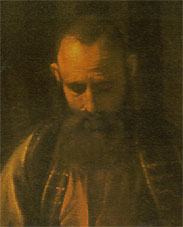
Fillipo Colonna was the son of Fabrizio, brother of Marchesa di Caravaggio, Costanza Colonna known to have a particular soft spot for the artist from the day of his birth. The sentence for the murder of Ranuccio Tomasi was a terrible one and consisted of a bando da Roma' were by anyone, in any place, could execute the death penalty on the artist. After he recovered from his wounds, Caravaggio left from Naples and his first commission is documented on 6th October 1606 with a contract for a "Madonna col Bambino". The Neapolitan period is an extremely prolific one for Caravaggio and the magnitude of the number of works executed by the artist is awesome. These places in sharp contrasts the relatively small output for Malta period established by the Azzopardi document to be of 15 months. It is this scarcity which prompts Pacelli to think the Malta period could have been interrupted by a visit to Napels. Prior to his departure for Malta, a week or so before 22nd July 1607, Caravaggio is meant to have painted other commissions in Napels.
There were the "Madonna del Rosario" The other "Giuditta che decepita Oloferne" now lost, as these 2 commissions are recorded in a documented letter dated 26 September 1607 to the Duka di Mantova, Vincenzo Gonzaga, were by these paintings are listed for Sale on the Market at not less than 400 dukats for the Madonna and not less than 300 for the Giuditta. His arrival in Malta is recorded to be at least two weeks prior to 26th July 1607. With so much work to be held in Napels, Caravaggios departure from Malta Mystified Historian but Bellori notes that era il Caravaggio desideroso di recevere la Croce di Malta solita darsi per grazie ad uomini riguardevoli per merito e per virtu. Another reson could be that derived from the artist's friendship with Cavalliere Ippolito Malaspina, a favourite of Wignacourt and a relative of Ottavio Costa, a great admirer and client of Caravaggio the Coat of Arms of Malaspina appear on the San Gerolamo. Celvesi however insists on the pista Colonna to Malta and connects Caravaggio directly to the events surrounding the life of Fabrizio Sforza Colonna, son of Costanza, Marchesa di Caravaggio. Fabrizio was already in prison in Malta 1602 to 1606 for grievous crime, Fabrizio was eventually pardoned but was obliged to remain in Malta because he too had a "bando generale delle galere of Malta of Philipe 3, King of Spain.
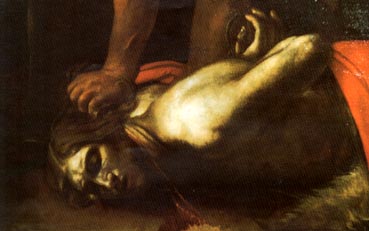
We have scant information of Caravaggios' life on Malta up to 14th July 1608 when he was made a knight of the order. The long stay in Malta results in an uncharacteristic small utput for the restless prolific artist. Apart from the San Gerolamo one can count two profiles of wigna court the Amorini Dormente and the great "Decollazione del batista" for the oratory probably executed to commemorate his entry in the order and inscribed with the letter "F" which probably stands for "Frate". The Maltese period is interrupted dramatically by events whicw are unclear and Caravaggio was imprisoned in Forte Sant Angelo . What is however clear is that the artist had escaped by 6th October 1608 and indications point to the protection of Fabrizzio Colonna. The deat of Caravaggio 9 months later is also the subject of much study and the object of mystery. After a short stay in Palrmo we know Caravaggio returned to Napels where his death is put down to an incident at the doorstep of the Osteria del Cerriglio, at the hand of a "Misterioso nemico Maltese", but most historians now concur on a different series of events at porto Ercole. There were circumstances whereby Caravggio was thought to be again in prison but this theory is dismissed by the publication of 5 letters collected by Vincenzo Pacelli in the Corriere della Sera of November 16th 1991. These letters were written by Deodato Gentili , Apostolic Nuncio to the viceroe of Naples, to Cardinal Scipione Borghese. From these letters Caravaggio was Obliged to get off his felucca at Palo, where he was stopped by the authorities to pay some "cautela".