📍 Luqa War Memorial
Location Map Coordinates 35.859021, 14.488715
Luqa memorial commemorating the air raid of 9 April 1942
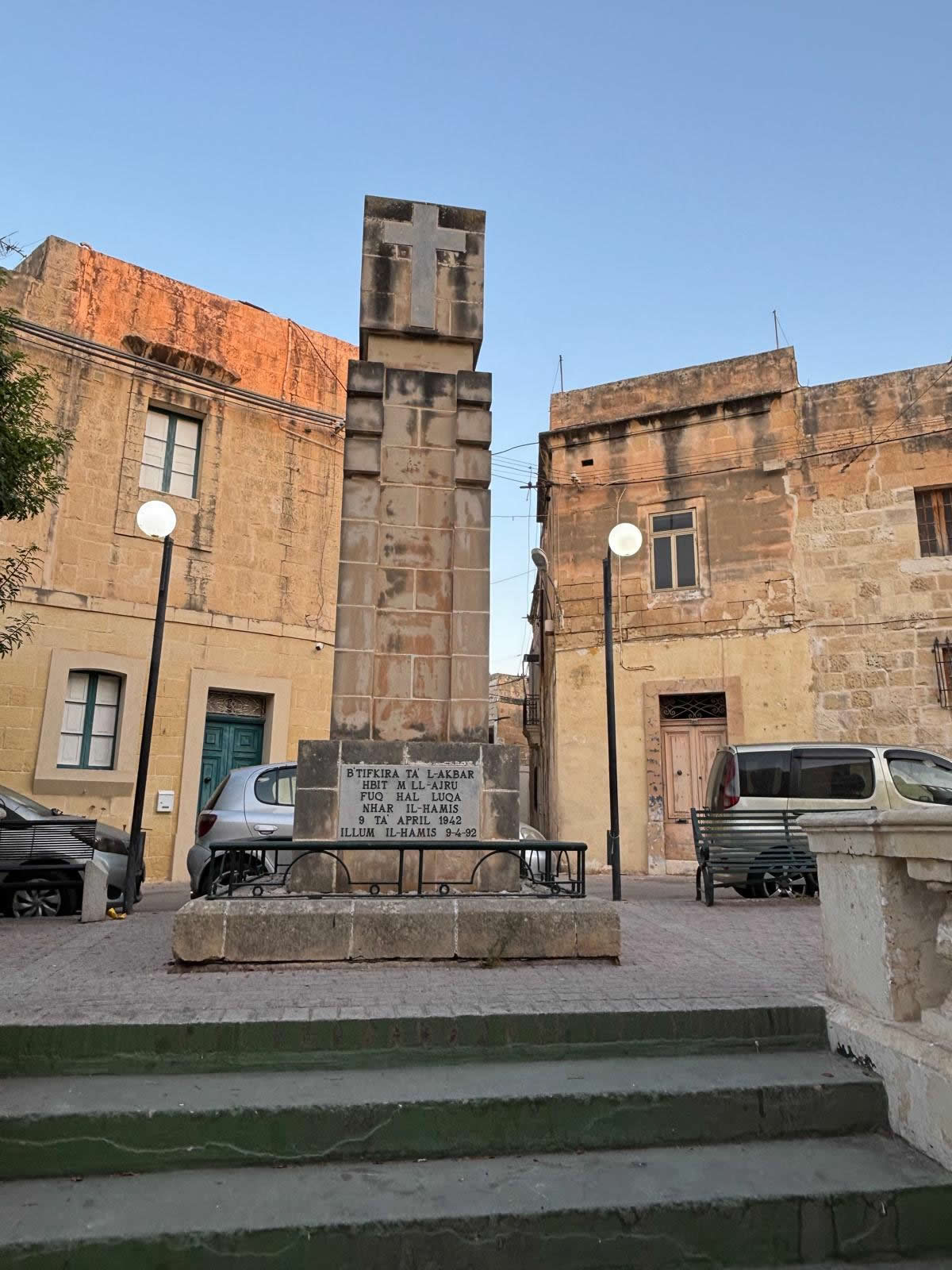
The Luqa War Memorial
This monument in Luqa commemorates the largest air raid on Ħal Luqa on Thursday 9 April 1942, during the Second World War. The wording is preserved on the monument itself in Maltese.
Unlike a conventional war memorial carrying a roll of honour, the Luqa memorial records a particular wartime event. No individual names are inscribed on this monument.
The inscription is dated 9 April 1992, exactly fifty years after the event it commemorates. The monument therefore represents a later act of local remembrance of the wartime bombing of Luqa.
Commemorative Inscription
ĦBIT MILL-AJRU
FUQ ĦAL LUQA
NHAR IL-ĦAMIS
9 TA' APRIL 1942
ILLUM IL-ĦAMIS 9-4-92
English translation:
In memory of the largest air raid on Ħal Luqa on Thursday 9 April 1942;
today, Thursday 9 April 1992.
Maltese Inscription – English Translation
The original Maltese inscription is reproduced below alongside an English translation. The wording follows the text visible on the monument.
| Maltese | English translation |
|---|---|
| B'TIFKIRA TA' L-AKBAR | In memory of the largest |
| ĦBIT MILL-AJRU | air raid |
| FUQ ĦAL LUQA | on Ħal Luqa |
| NHAR IL-ĦAMIS | on Thursday |
| 9 TA' APRIL 1942 | 9 April 1942 |
| ILLUM IL-ĦAMIS 9-4-92 | today, Thursday 9 April 1992 |
The final line records the date of the later commemoration. The inscription uses l-akbar, meaning “the largest” or “the greatest”, in its description of the air raid.
A Memorial Without Names
The Luqa memorial has no roll of honour and no individual names. Its purpose is to remember the air raid itself and the people of Luqa who experienced the bombing, rather than to provide a list of casualties.
This makes the monument different from memorial plaques elsewhere in Malta that identify individual civilian or military victims. It should therefore be catalogued as an event memorial rather than a memorial carrying a list of war dead.
Historical Context
Malta was a major Allied base during the Second World War and was subjected to sustained aerial bombardment, particularly during the intense attacks of 1940–1942. Luqa was especially exposed because of its proximity to the airfield.
The date 9 April 1942 is specifically remembered by the Luqa monument. The memorial's inscription records the attack as the largest air raid on Ħal Luqa and preserves the date of the event together with the fiftieth-anniversary date in 1992.
The monument is therefore an important piece of local wartime remembrance, preserving a specific episode in the history of Luqa rather than presenting a general memorial to the whole 1939–1945 conflict.
Photographs
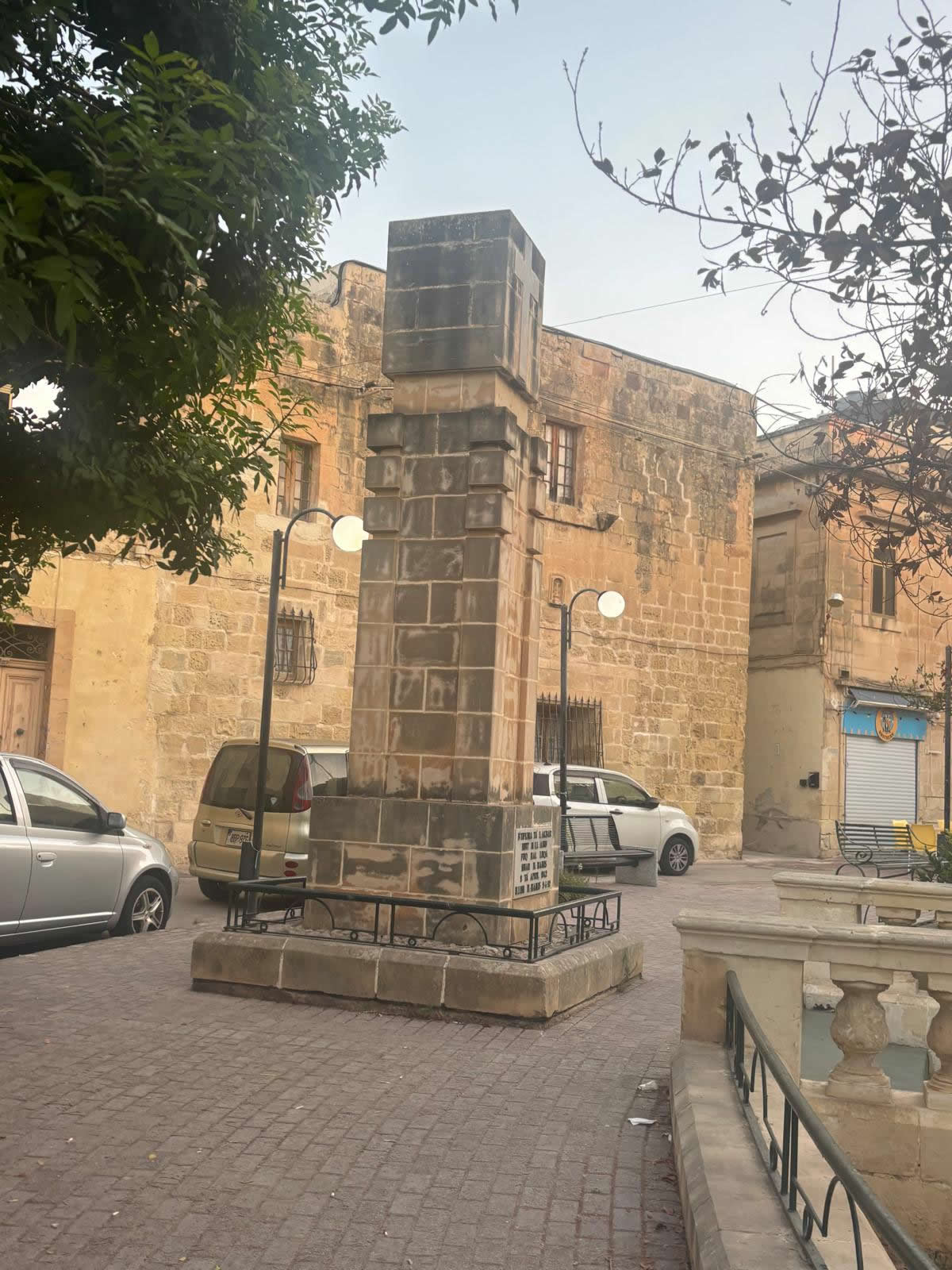
Sources & Documentation
The memorial, its inscription and present setting have been documented from current photographs taken at the site. The inscription has been transcribed directly from the monument.
The memorial's coordinates are recorded as 35.859021, 14.488715. The monument commemorates the air raid of 9 April 1942 and carries the later commemorative date 9 April 1992.
- Current photographic documentation of the Luqa memorial.
- Transcription of the Maltese inscription from the monument.
- Geographic coordinates and mapping reference for the memorial site.
Research & Documentation
- Researcher: Paul Berman
- Last Updated: 2026
This page forms part of eMalta's ongoing documentation of the historical, cultural and civic heritage of Malta and Gozo.
Information has been compiled through site visits, field research, historical publications, archival records, maps, plans and other reference sources.
All locations that currently exist featured on eMalta have been personally visited and documented. Where historic sites no longer exist, information has been researched from archival sources and contemporary records.
Images used on eMalta include original photography as well as historical illustrations, maps and photographs reproduced with permission from archives, institutions and copyright holders where applicable. Individual image credits and archive reference numbers are provided where available.