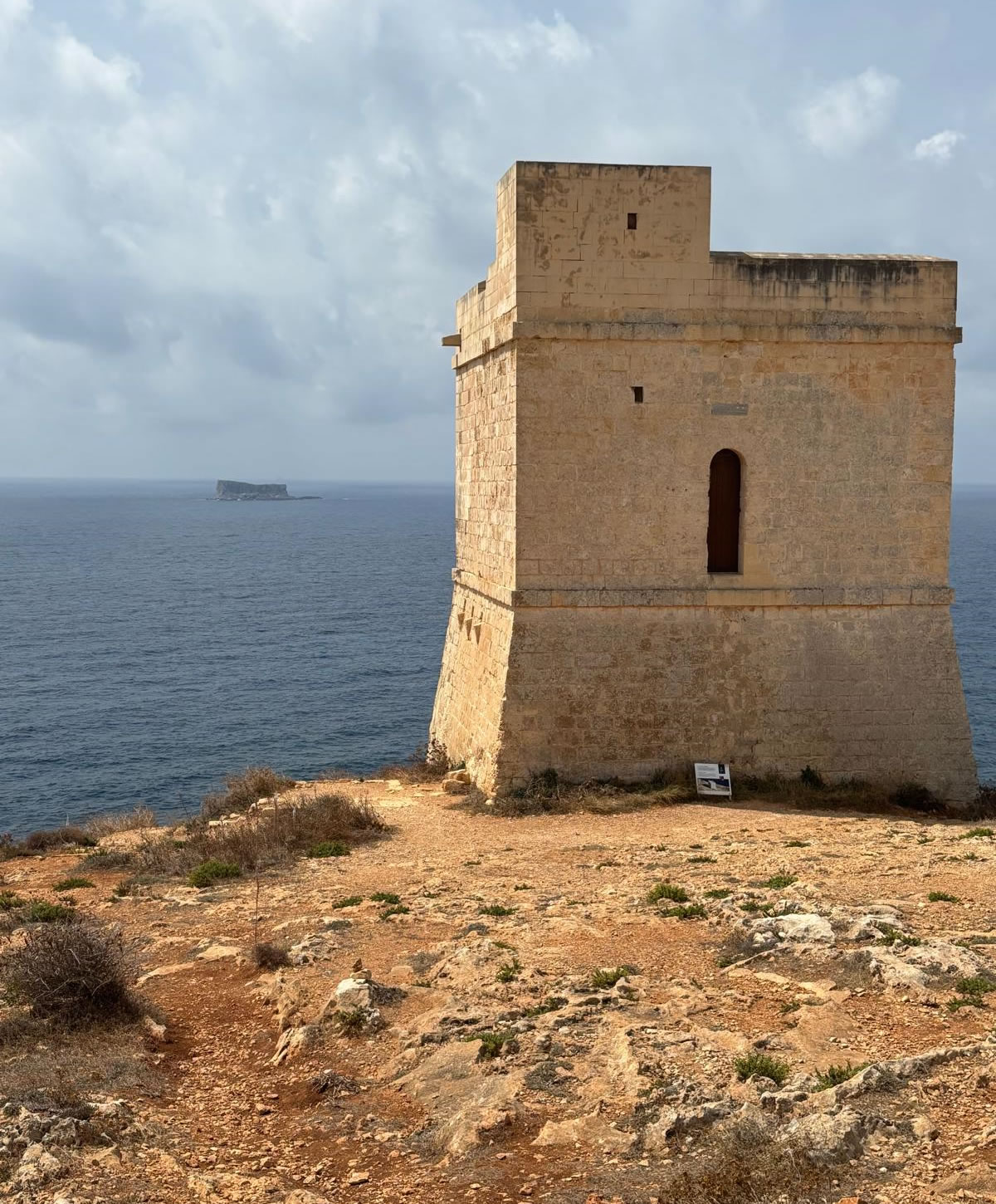
Congreve Memorial
Who It Commemorates
The monument honors General Sir Walter Norris Congreve (1862–1927), a British Army officer awarded the Victoria Cross and later serving as Governor of Malta (1924–1927). He died in office in Malta in February 1927 and — as per his wishes — was buried at sea in the channel between the Maltese coast and the islet of Filfla.
Location & Setting
The memorial stands on a coastal cliff between Ħaġar Qim and Mnajdra, with the Ħamrija Tower visible nearby. It offers panoramic views across the Mediterranean—toward Filfla on the horizon.
Sometimes referred to as the Congreve Channel, the sea route between Malta and Filfla marks where he was laid to rest.
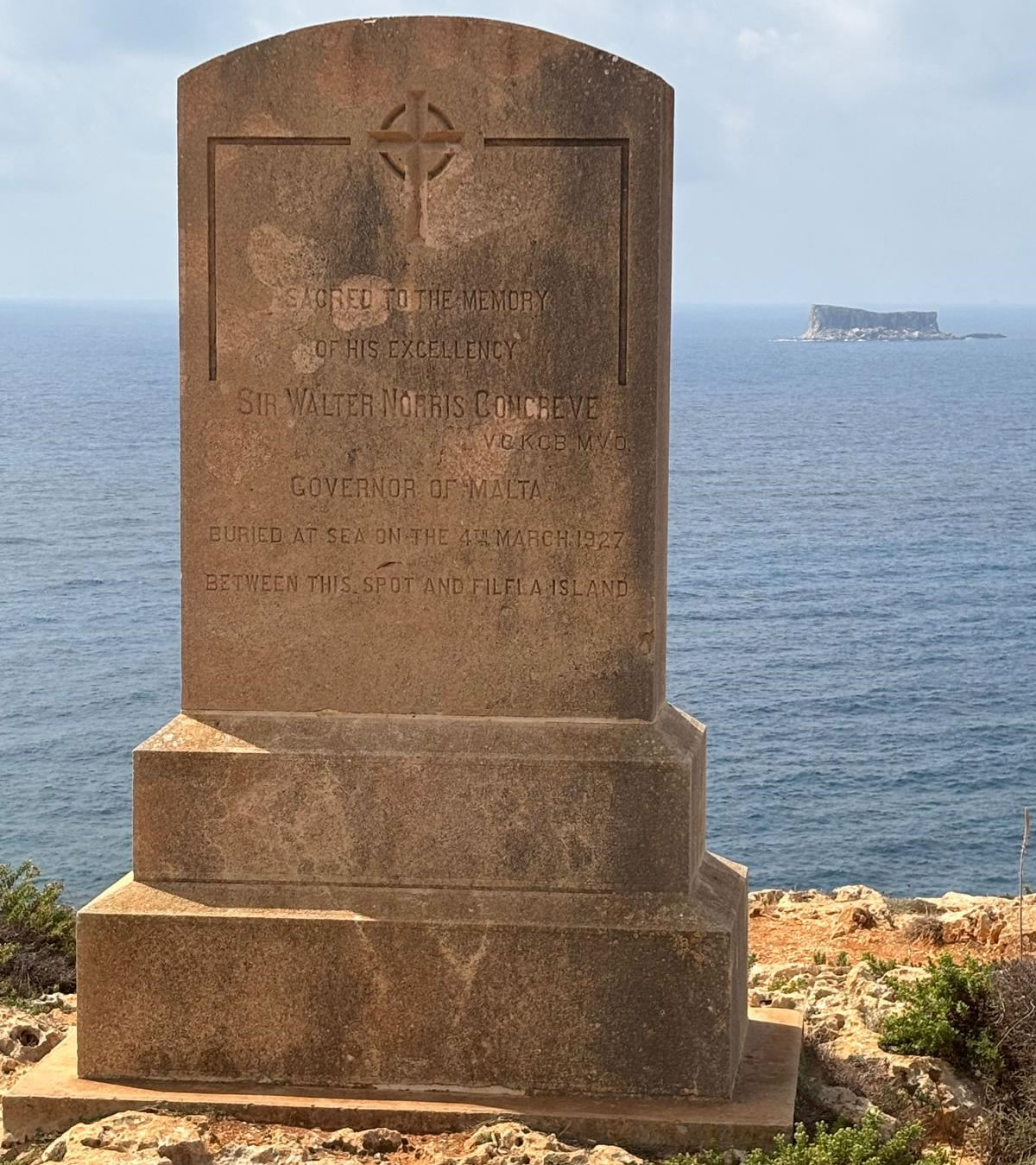
Structure & Description
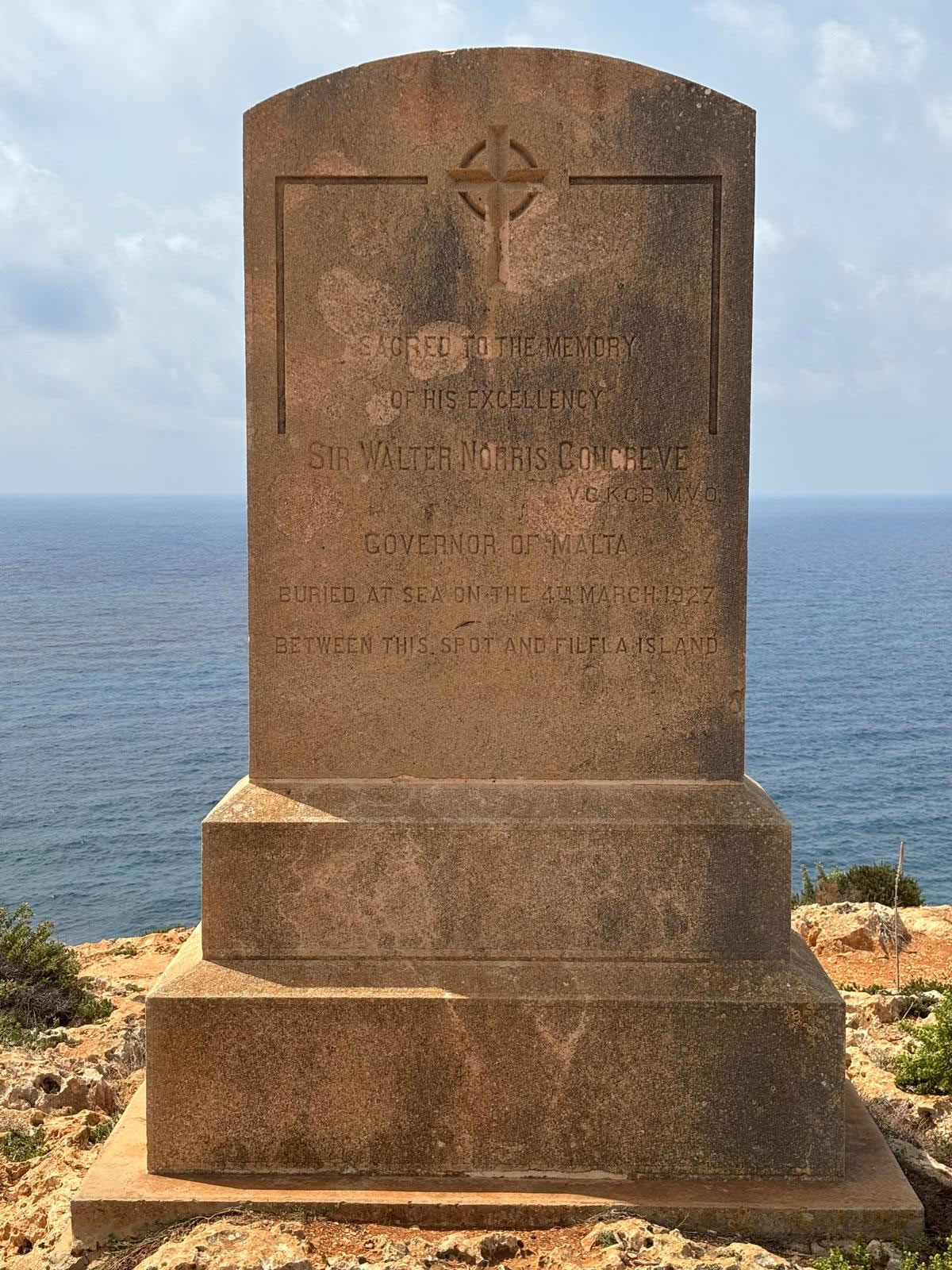
The memorial is a modest stone obelisk set vertically on a small base. It stands slightly over twice the height of an average person.
An inscription at its base states it commemorates Sir Walter’s burial at sea.
Visit Info & Cultural Notes
Access: A trail from the Ħaġar Qim visitor center leads to the memorial without requiring paid entry to the archaeological sites. A short side path off the main route takes you to the cliff where the standing stone is found.
Visitor Experience: It’s highly praised for its wild, almost “world’s edge” atmosphere and panoramic views—especially during sunrise or sunset.
Guided Access: Heritage Malta offers occasional guided heritage walks around Ħaġar Qim and Mnajdra that include the Congreve Memorial.
Quick visitor snapshot
Location
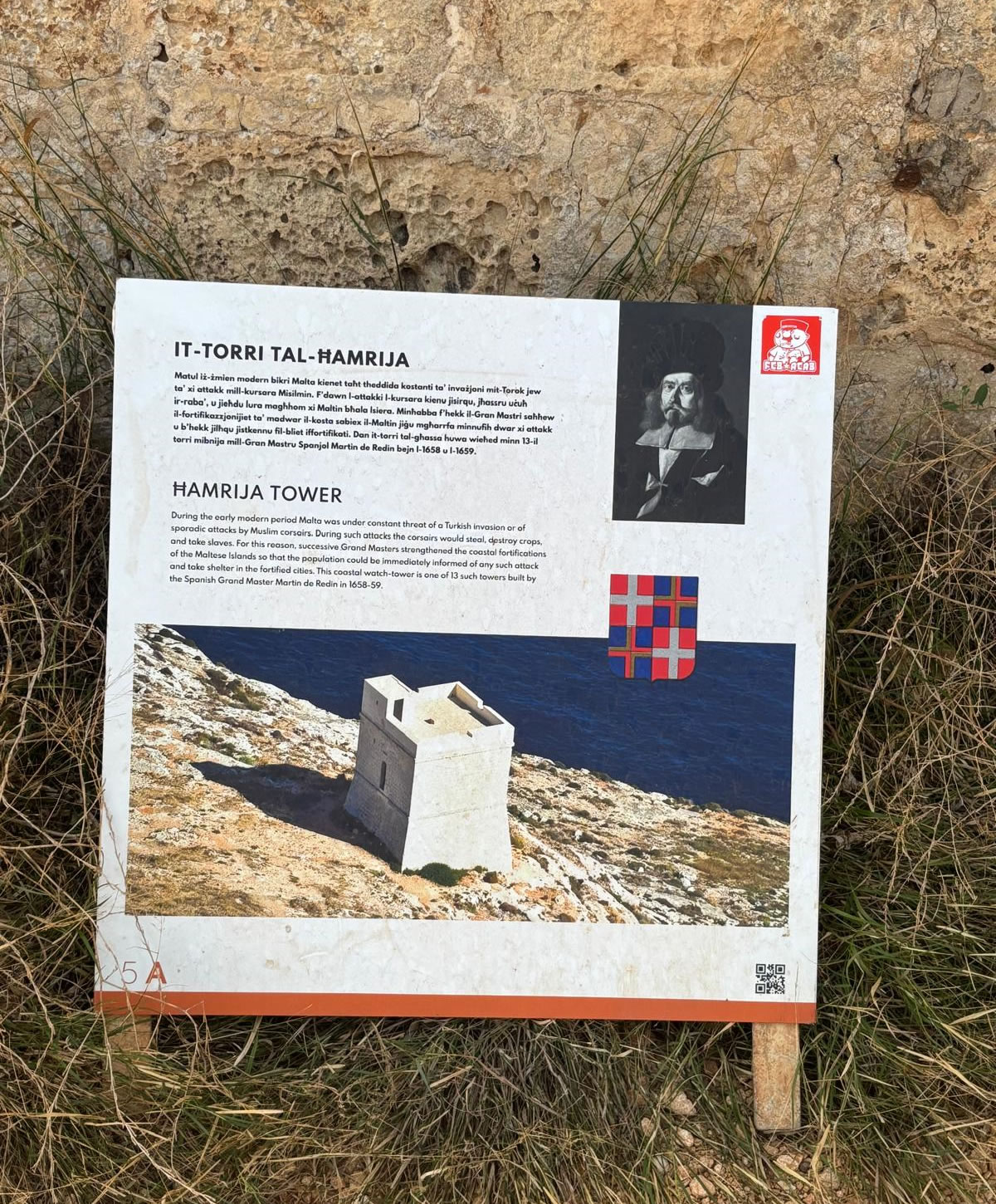
Tal-Ħamrija Coastal Tower
Name (Maltese / Italian) Tal-Ħamrija Tower (Torri tal-Ħamrija), originally Torre della Pietra Nigra (Torri tal-Ħaġra s-Sewda)
Built 1659, under Grand Master Martín de Redin
Type & Purpose One of the De Redin coastal watchtowers—built for visual signaling, not heavy defense
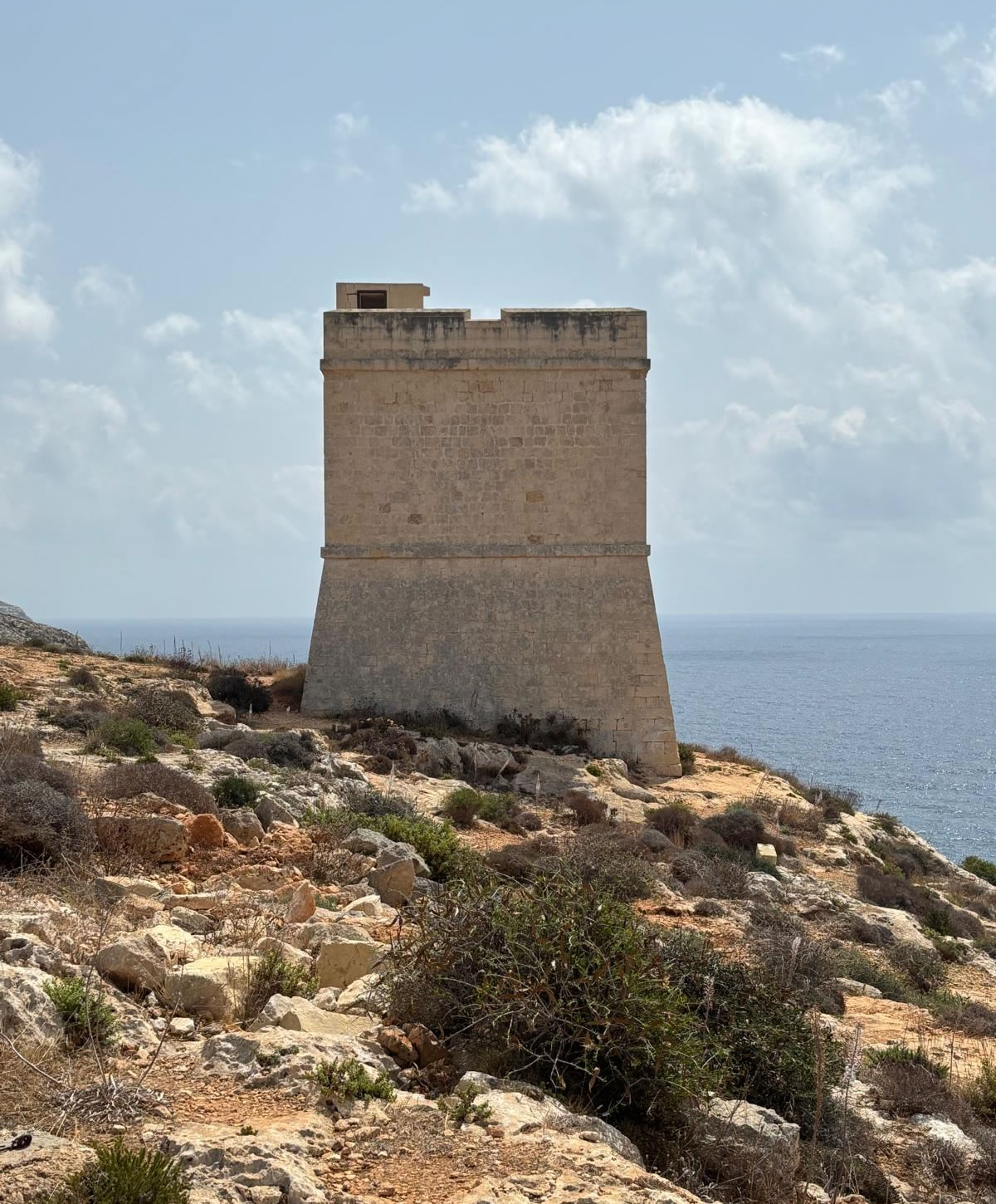
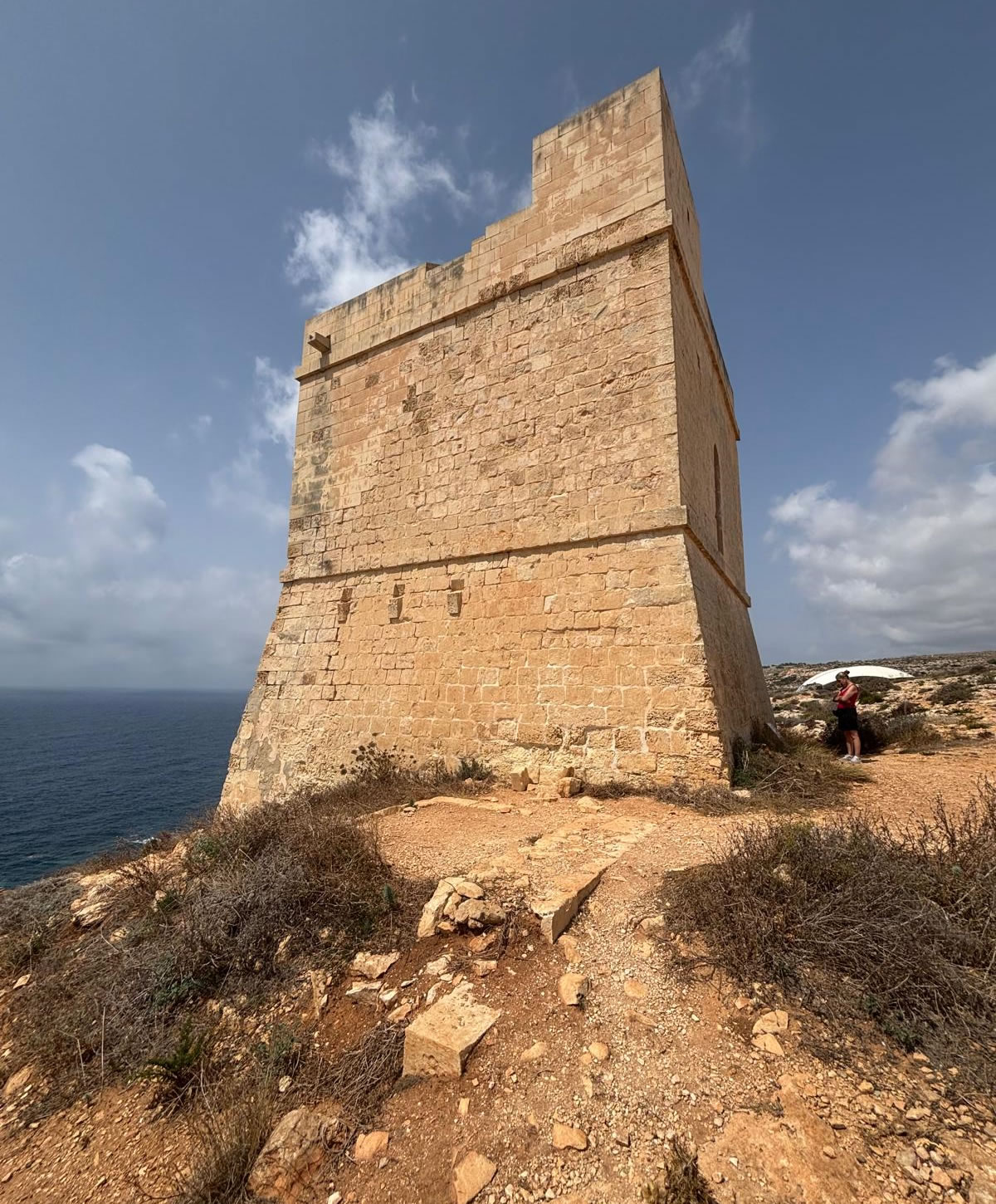
Materials & Structure Limestone; square base, two floors, raised upper entrance with retractable ladder
Armament (historical) Equipped with a 3-pounder and ½-pounder guns, used primarily for signaling
Location & Visibility Situated on a cliff overlooking the sea between Għar Lapsi and Wied iż-Żurrieq, with panoramic views of Filfla and both Mnajdra and Ħaġar Qim temples nearby
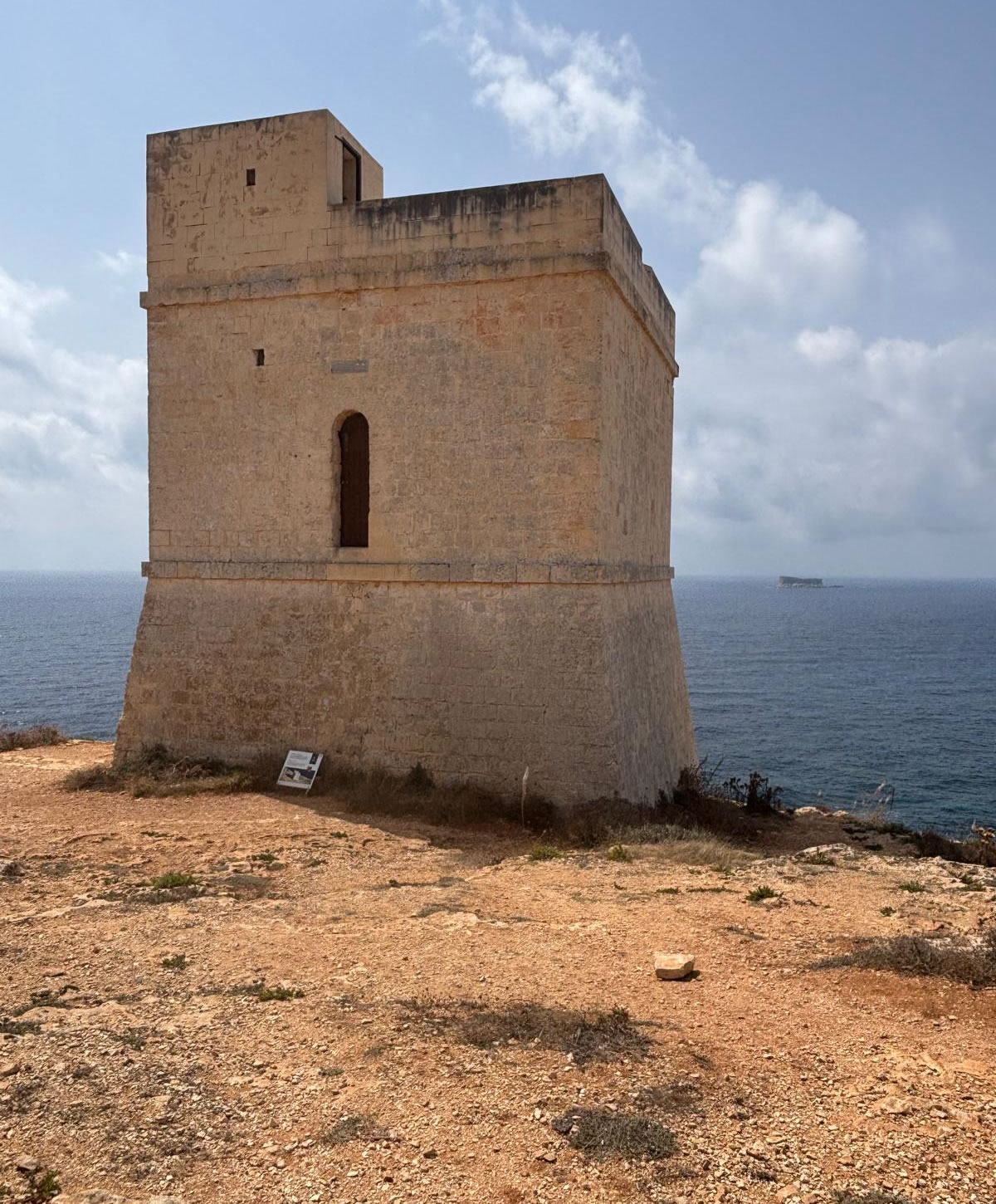
Chain of Towers The 12th out of 13 built by De Redin around Malta; it’s the southwesternmost tower and has no adjacent towers in direct visual contact
Restoration & Status Fully restored by Heritage Malta; now integrated into the Ħaġar Qim & Mnajdra Archaeological Park and is in good condition
Visitor Info Accessible via a public path from the temple area; not open inside, but visitors enjoy expansive coastal views especially popular during sunrise/sunset
Signaling Role Guards used red flags by day, bonfires by night, to alert other towers of incoming threats
Additional Context & Highlights
De Redin’s towers weren’t meant as fortresses but as part of a rapid warning network along Malta’s shoreline. Tal-Ħamrija, as the final link on the southwest, was essential for early coastal defense.
Though the Mnajdra and Ħaġar Qim temples predate the tower by millennia, the tower’s location was originally chosen for surveillance—its proximity to megalithic structures is coincidence.
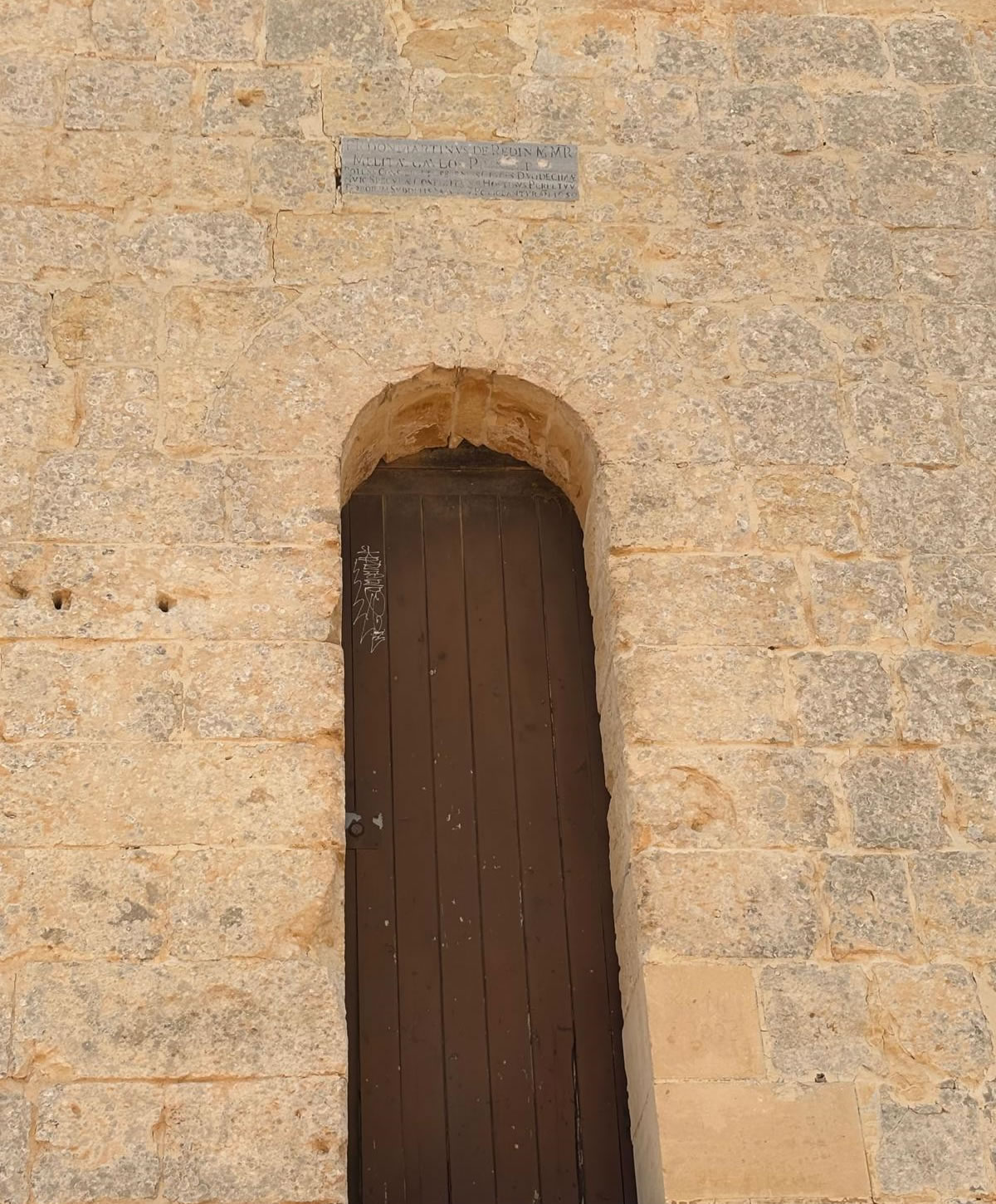
Restoration by Heritage Malta included repairing the spiral staircase, shaft, and parapet, both to preserve the structure and enhance its prominence within the archaeological park.
The site is widely praised online: free access, great views, rich historical setting an ideal complement to temple visits for those seeking a mix of history and nature.