Here’s a full historical overview of Torri ta' Triq il-Wiesgħa, one of Malta’s important watchtowers:
Torri ta' Triq il-Wiesgħa – Overview
The coordinates of Torri ta' Triq il-Wiesgħa are 35.877917, 14.564158
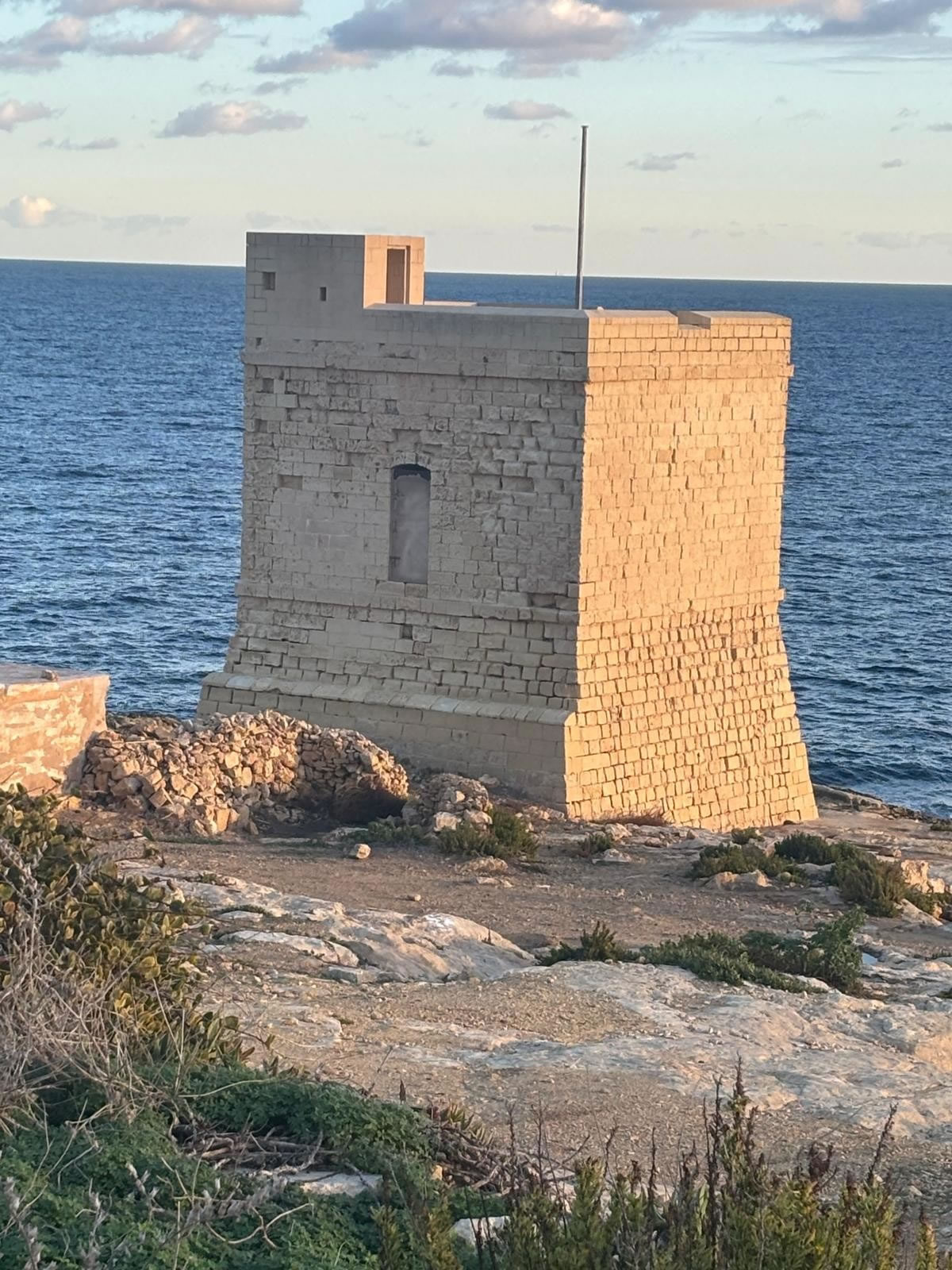
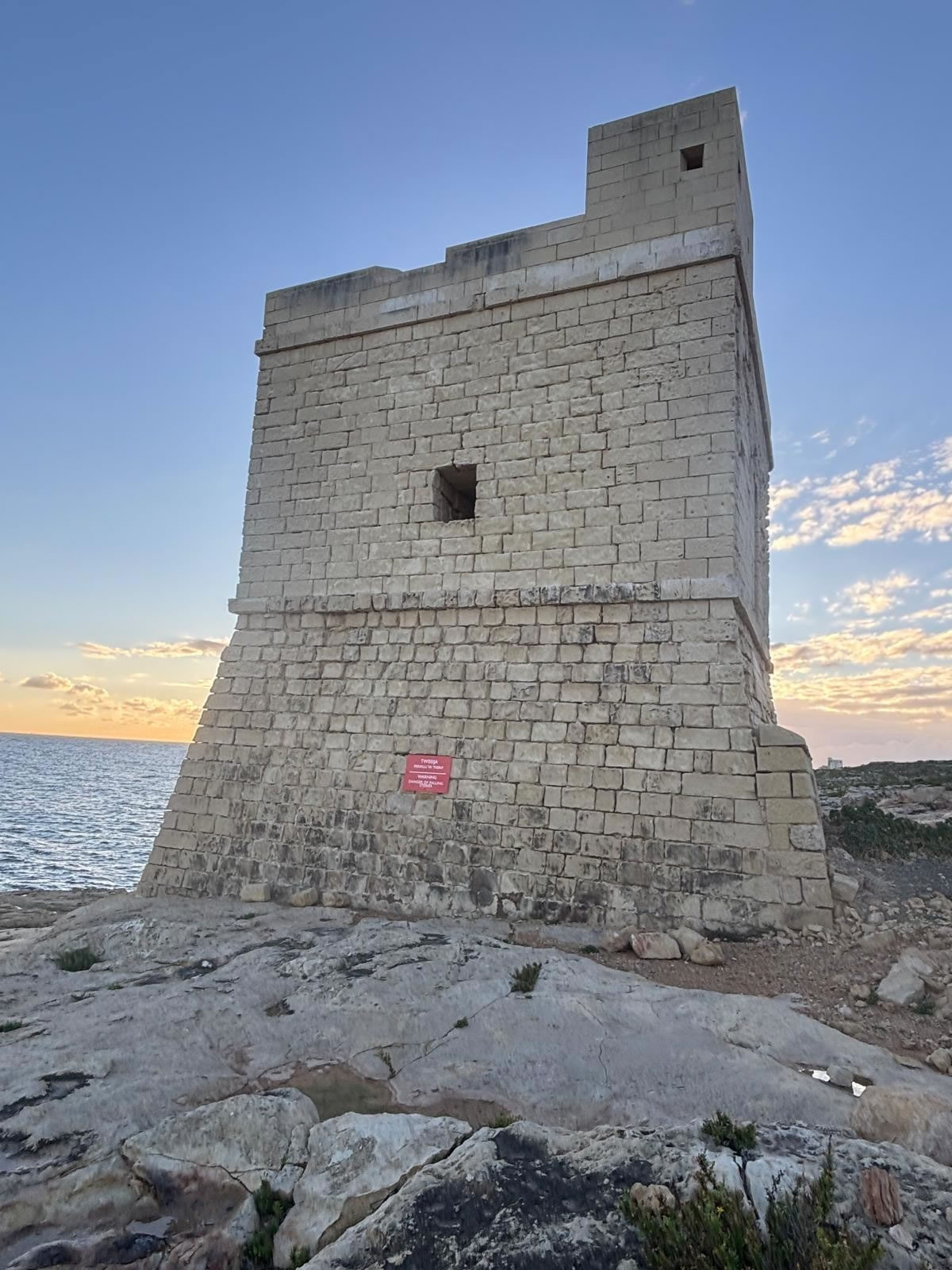
Torri ta’ Triq il-Wiesgħa (originally Torre della Giddida, also called Mwejġel Tower) is a De Redin coastal watch-tower built in 1659 to guard the east side of the Grand Harbour. It follows the standard De Redin design (square plan, two floors and a small rooftop turret), suffered partial collapse and other damage during the 20th century, and was conserved/restored in 2008–2009; it stands today in good condition and is Grade-1 protected.

1. Strategic purpose & brief chronology
Why it was built (1659): The tower was one of the chain of small coastal watchtowers commissioned by Grand Master Martín de Redín (the “De Redin towers”) to give early warning of corsair or Ottoman raids and to link local coastal defences around Malta. Torri ta’ Triq il-Wiesgħa was the ninth De Redin tower and was sited to cover the long stretch of coast east of the Grand Harbour — its Maltese name literally means “Wide Street”, referring to the wide coastal stretch it watched over.
Later history highlights: the tower remained part of Malta’s coastal surveillance system under subsequent rulers. Over the 19th–20th centuries parts of the tower suffered damage (some structural fabric was lost), but the tower survived enough to be restored in the early 21st century.
2. Location & relationship to other works
Location: on the shore east of the Grand Harbour near Żabbar / Xgħajra / Zonqor, commanding approaches between Zonqor Point and Xgħajra. GPS 35.877917, 14.564158. It formed a visual chain with neighbouring towers (some of which no longer survive) so signals could be relayed along the coast.
3. Construction & architectural details
Type & plan: Torri ta’ Triq il-Wiesgħa follows the standard De Redin model: a compact square plan, two storeys (ground floor and upper floor) with a small turret or bartizan on the roof and a roof-terrace (terreplein) for observation and signalling. Internally the tower contains a vaulted ground room and an upper room reached by a steep internal stair — exactly the simple, robust layout chosen for economy and speed of construction across the De Redin series.
*Materials & method:** built of local globigerina limestone with lime mortar as used across Maltese fortifications of the period. The walls are thick to resist small-arms and to give mass for the tower’s defensive role.

4. Use (how the tower functioned)
Watch & signal role: keepers manned the tower to keep watch, display day-signals (smoke, flags) and night-signals (fire/lanterns) and to fire warning guns if necessary. Its position allowed observation of shipping and potential raiders approaching the Grand Harbour from the east and facilitated communication to adjacent lookout points and the main harbour defences. It was not designed as a standalone fortress but as a network node—cheap to build and quick to staff.

5. Damage, neglect and 21st-century restoration
20th-century damage: over the 1900s the tower suffered structural damage and partial loss of fabric (some sections became ruinous). The pressures of development, wartime activity and local neglect affected several coastal towers, including this one.
Restoration (2008–2009): the tower underwent a careful conservation programme in 2008–2009 — masonry consolidation, rebuild of lost or unstable fabric where evidence allowed, and repointing with compatible lime mortar — returning it to sound condition and preserving the De Redin typology for public interest and protection. Since restoration it has been maintained and is recorded as being in good condition.

6. Legal/heritage status & visiting
Heritage designation: the tower is listed as a Grade-1 (high-value) cultural property in public records and is owned/managed under the State/heritage authorities; this gives it strong legal protection against unsympathetic alteration.
Access & visibility: the tower is visible from nearby coastal roads and coastal walks; access inside may be limited (check local heritage/Wirt Artna or VisitMalta notices if you plan a visit). Its coastal position also makes it a frequent subject for photographers and local heritage walks.
