📍 Location
Location Map Coordinates 36.061420, 14.203964
Home » Oldest Chapels Malta & Gozo » Għarb Cemetery Chapel
Introduction
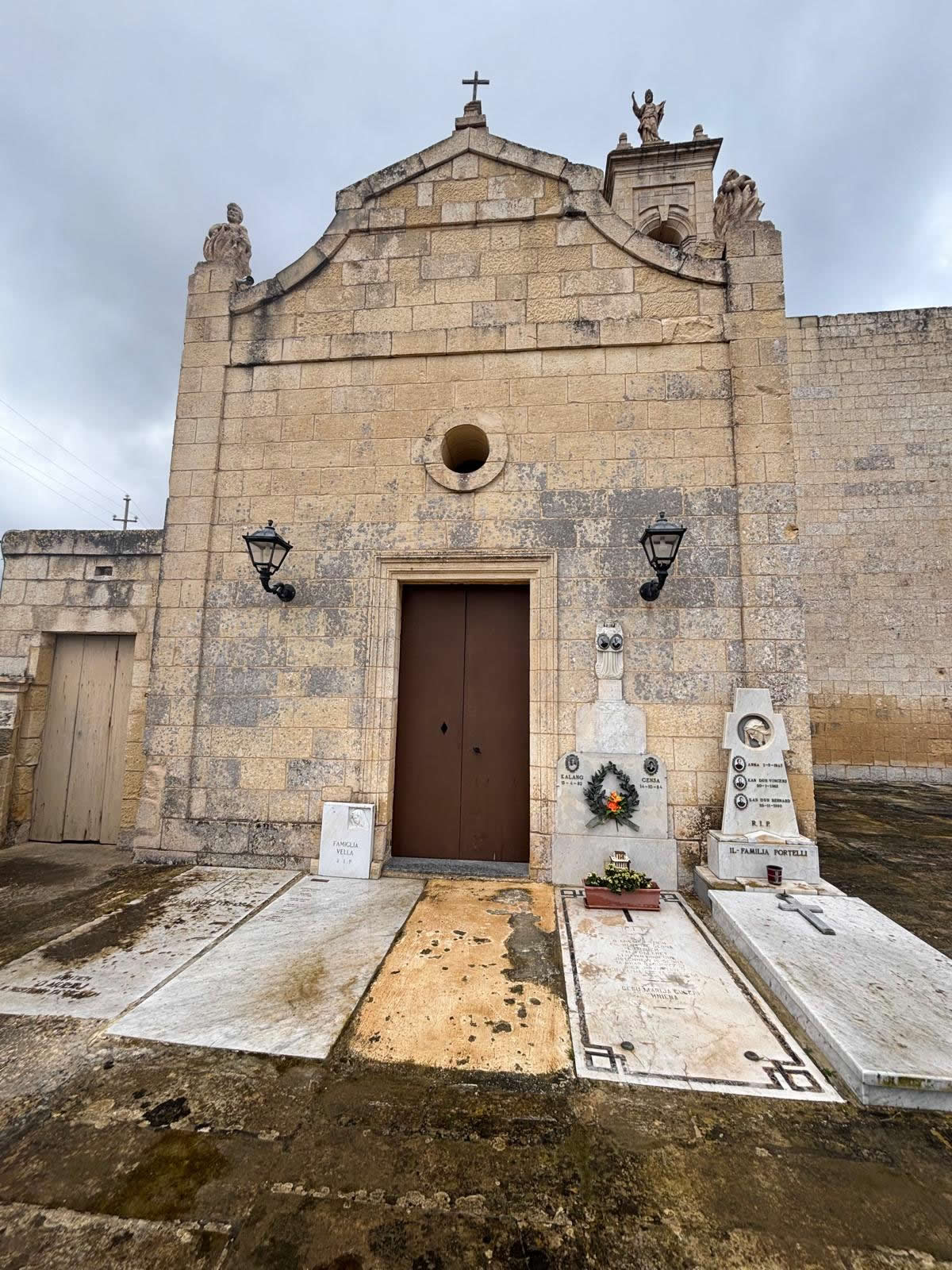
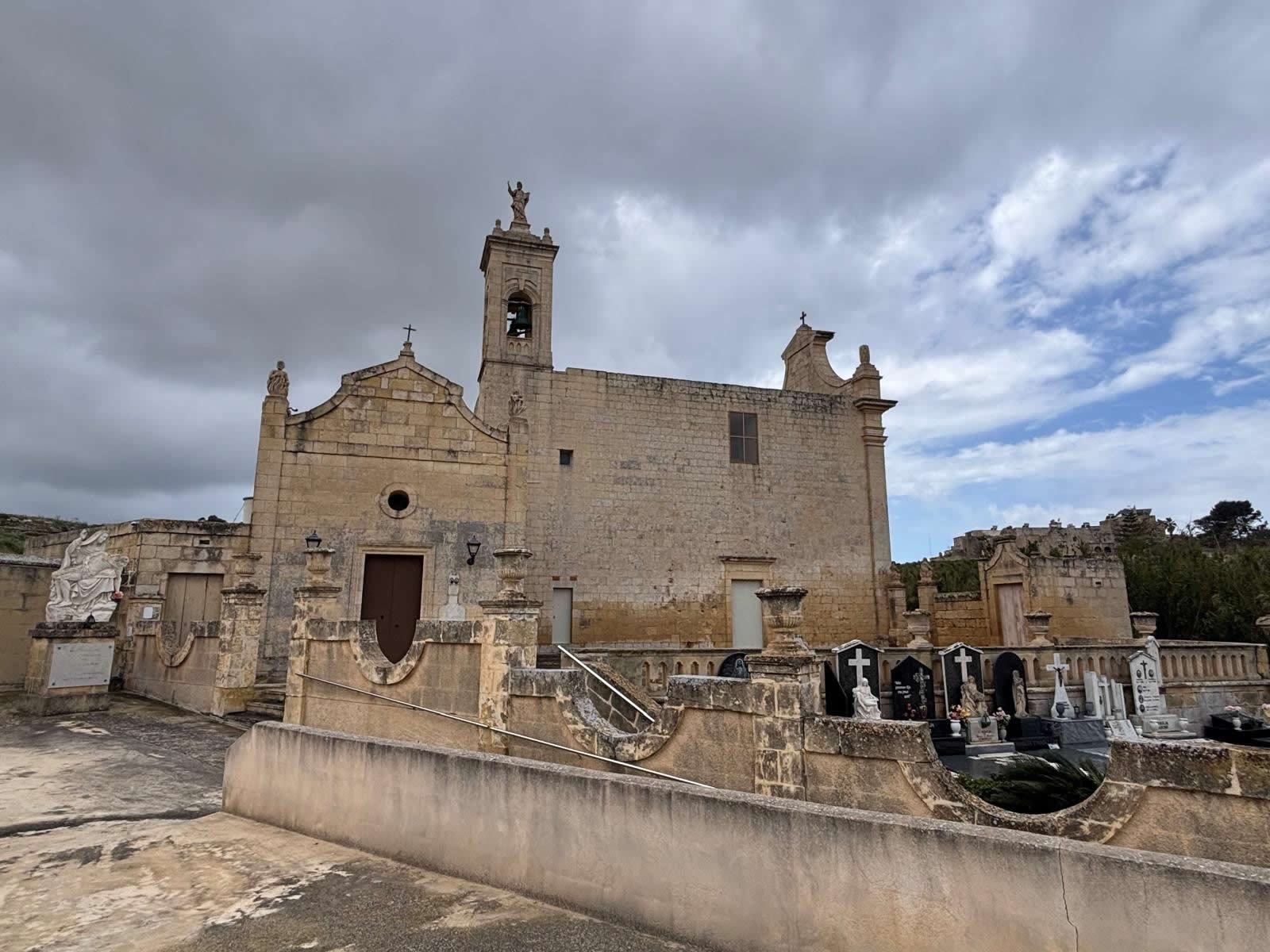
The Għarb Cemetery Chapel is a modest yet historically important religious structure located on the outskirts of the village of Għarb in Gozo, Malta. Positioned next to the village cemetery at coordinates 36.061420, 14.203964, this chapel forms part of one of the oldest ecclesiastical and funerary sites in the locality.
Although often overshadowed by the nearby parish church and the famous Ta’ Pinu Sanctuary, the cemetery chapel holds deep cultural and spiritual value. It represents centuries of burial traditions, religious devotion, and the evolving structure of parish life in one of Gozo’s oldest villages.
Historical Background of Għarb
Għarb is among the oldest settlements in Gozo, with evidence of habitation dating back to prehistoric times . The village developed into a parish in 1679, marking an important milestone in its religious and administrative history .
During this period, the need for organised burial grounds became increasingly important. This led to the establishment of a cemetery complex, which would eventually include the chapel that still stands today.
Construction of the Cemetery and Chapel (1703)
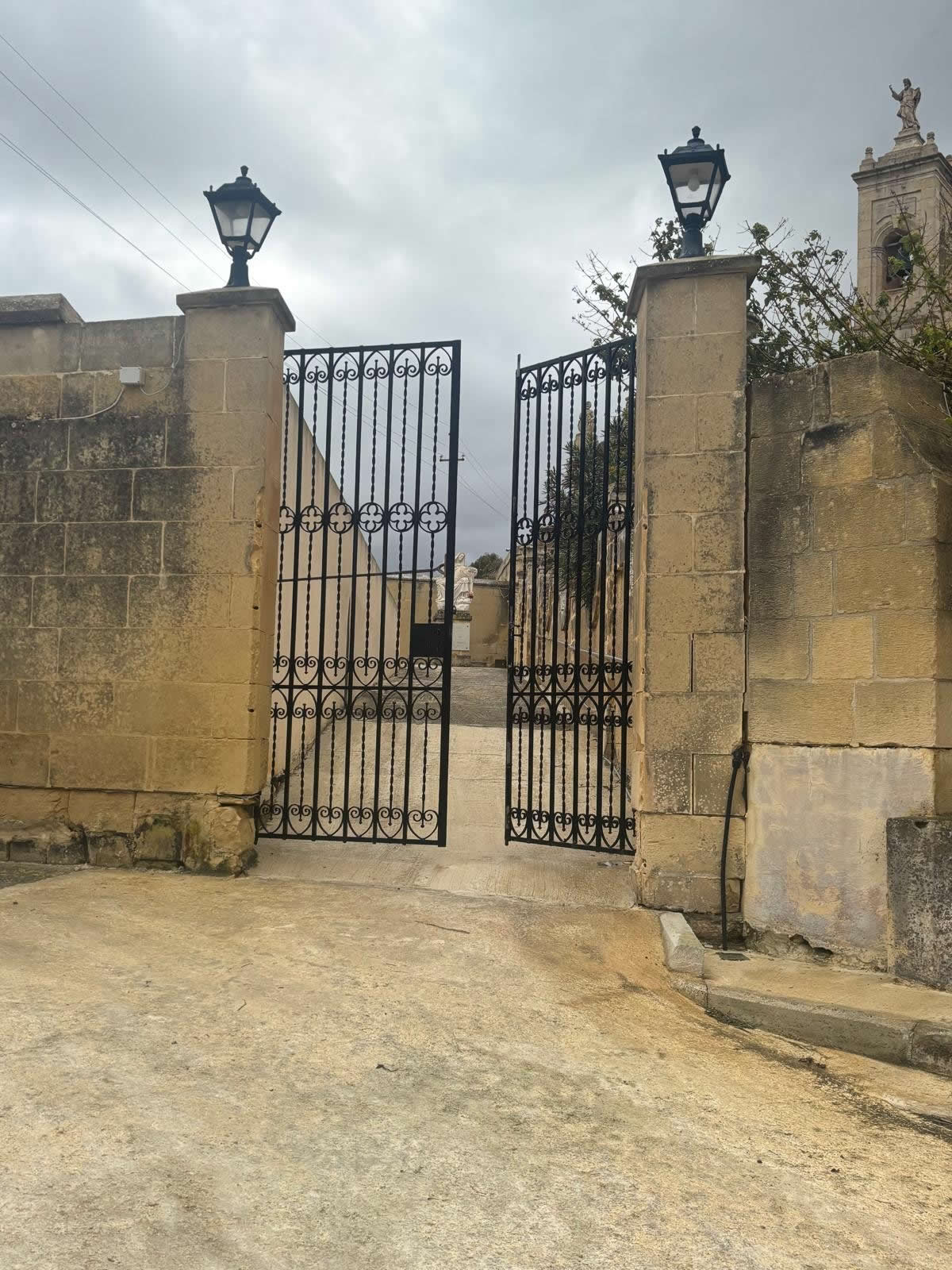
The Għarb cemetery was officially constructed in 1703 at a cost of approximately 150 scudi . Its establishment marked a significant step in the formalisation of burial practices within the parish.
The chapel associated with the cemetery likely dates from this early period or shortly thereafter, serving as a sacred space where funeral rites, prayers, and commemorative services could be held. At the time, it was common for cemeteries in Malta and Gozo to include a chapel, reflecting the close connection between death, remembrance, and religious ritual.
The cemetery itself was extended on 26 June 1814 and formally blessed by Bishop Ferdinandu Mattei, indicating continued growth and importance within the community .
Role in Public Health and Burial Practices
The cemetery—and by extension the chapel—played a crucial role in public health during earlier centuries. It was initially used for the burial of individuals who died from contagious diseases . This reflects broader historical practices across Europe, where separate burial grounds were often designated to prevent the spread of illness.
By 1935, the cemetery became the primary burial site for all residents of Għarb and the neighbouring village of St Lawrence . The chapel therefore evolved into a central place for funeral liturgy and communal mourning.

War Damage and Reconstruction
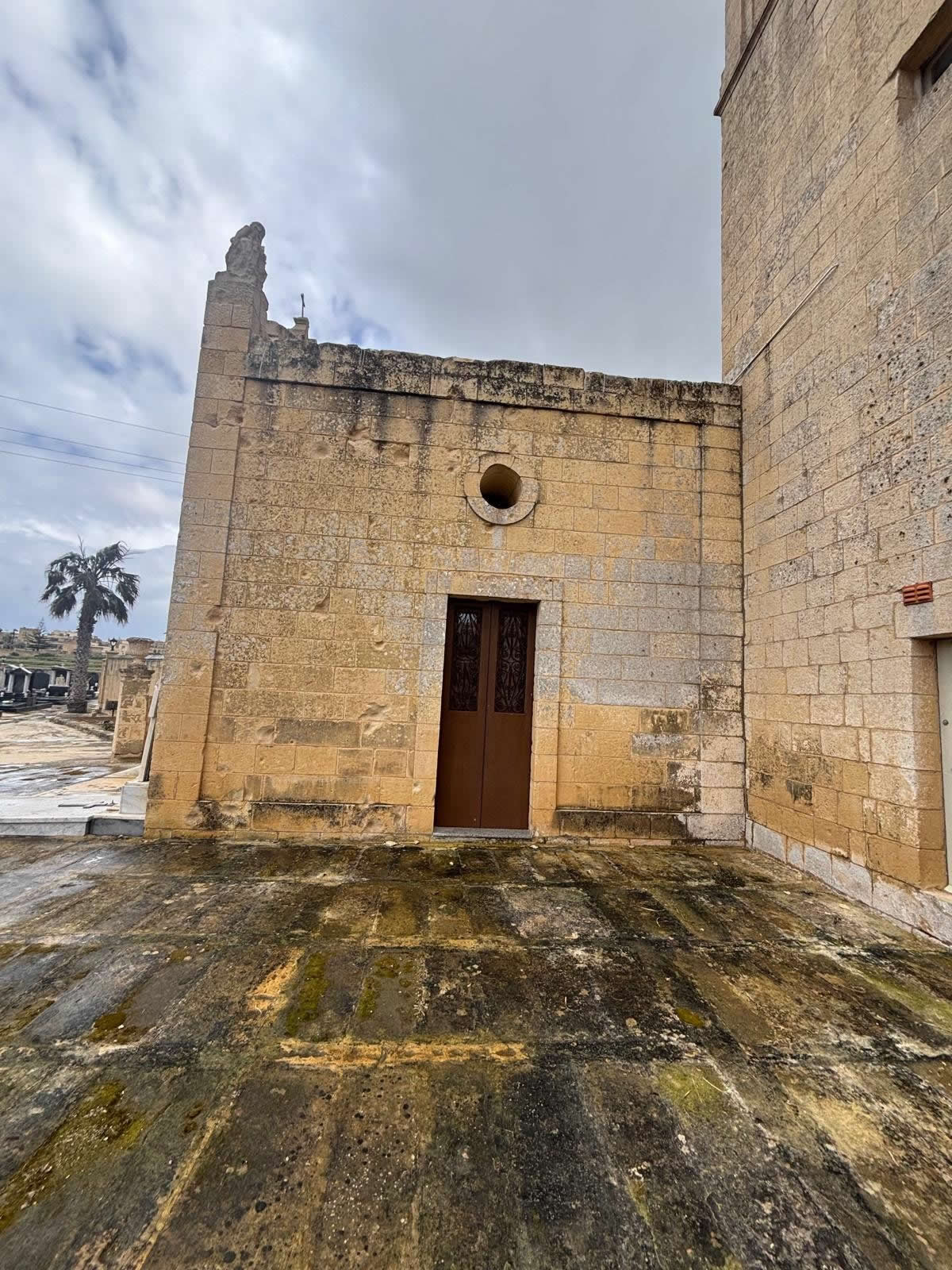
Like many sites in Malta and Gozo, the Għarb Cemetery Chapel and surrounding cemetery were affected during the Second World War. On 29 July 1942, German aerial bombardments caused significant damage to both the church and cemetery .
Subsequent restoration efforts ensured that the chapel remained functional and structurally sound. These interventions were vital in preserving the site for future generations and maintaining its role in village life.

Architecture and Design
The Għarb Cemetery Chapel reflects traditional Maltese chapel architecture, characterised by simplicity, functionality, and the use of local limestone.
- Style: Vernacular with Baroque influence
- Material: Maltese limestone
- Layout: Small rectangular structure
- Façade: Modest and unadorned
Unlike larger parish churches, cemetery chapels were designed primarily for intimate gatherings and funerary rites. As such, their architecture tends to be restrained, focusing on spiritual atmosphere rather than grandeur.

Interior and Liturgical Use
The interior of the chapel would traditionally include a simple altar, religious imagery, and possibly memorial plaques dedicated to the deceased. While detailed records of specific artworks are limited, such chapels often feature:
- Devotional paintings or statues
- Stone altars and liturgical furnishings
- Minimal decorative elements
The chapel continues to be associated with:
- Funeral services
- Masses for the deceased
- All Souls’ Day commemorations
Location and Setting
Situated just outside the main village core, the chapel enjoys a peaceful and contemplative environment. The surrounding cemetery, enclosed by traditional stone walls, reinforces the solemn character of the site.
Its location near the former parish church (Taż-Żejt) highlights the historical continuity of religious use in this area, which served as the original spiritual centre of Għarb before the construction of the larger parish church in the village square.

Original Latin Inscription
NE MORS IPSA SEPARET
QUOS IN VITA JUNXIT
FRATERNITATIS AMOR
HUNC REQUIEI LOCUM SIBI
SALVATOR CAN. HON. CARBENS.
S. LAURENTII CURIO PRIMUS
QUI OBIIT V NOV. MCMXXXVII
EJUSDEM COLL. AC MATR. INS.
CARMELUS ARCHIPRESB.
PIUS M. AERARII CURATOR
IN UTRAQUE ECCL. ASSIDUUS
JOSEPH BASILICAE TA PINU
RECTOR BENEMERITUS
AMBO CANONICALI HONORE
IN EODEM COLL. DECORATI
GRATIUS SAC. MICHAEL
JOSEPHA TERESIA ROSALIA
COGNOMINE PORTELLI
IN DOMINO SURRECTURI
ELEGERUNT.
R.I.P.
English Translation
So that not even death might separate
those whom the love of brotherhood united in life,
this place of rest was chosen for themselves by:
Salvator Portelli,
Honorary Canon, first Parish Priest of Saint Lawrence,
who died on 5 November 1937;
Carmelo Portelli,
Archpriest, devoted administrator of church finances,
faithfully serving both churches;
Joseph Portelli,
well-deserving Rector of the Basilica of Ta' Pinu;
all three having been honoured with canonries
within the same collegiate chapter;
together with the grateful priest Michael Portelli
and Josepha Theresia Rosalia Portelli.
They chose this tomb,
awaiting resurrection in the Lord.
Notes on the Inscription
The inscription commemorates members of the prominent Portelli family of Għarb, several of whom held important ecclesiastical positions in Gozo. The opening phrase "Ne mors ipsa separet quos in vita junxit fraternitatis amor" translates literally as "May not even death separate those whom the love of brotherhood united in life."
The text records that the tomb was intended as a shared family burial place for:
- Canon Salvator Portelli, first parish priest (curio primus) of Saint Lawrence, who died on 5 November 1937.
- Archpriest Carmelo Portelli.
- Joseph Portelli, Rector of the Basilica of Ta' Pinu.
- Father Michael Portelli.
- Josepha Theresia Rosalia Portelli.
The closing phrase "In Domino surrecturi" means "to rise again in the Lord", expressing the Christian belief in the resurrection of the dead.
Cultural and Religious Importance
The Għarb Cemetery Chapel is more than a simple religious building—it is a place deeply connected to the collective memory of the community. Generations of villagers have gathered here to mark life’s final rites, creating a strong emotional and cultural bond with the site.
It also represents:
- The evolution of burial traditions in Gozo
- The historical relationship between parish churches and cemeteries
- The resilience of local heritage through war and change
Visiting the Għarb Cemetery Chapel
Visitors can reach the chapel by following roads leading out of Għarb towards the cemetery. While access to the interior may be limited, the exterior and surrounding area are accessible and provide a meaningful glimpse into local heritage.
Nearby attractions include:
- The Basilica of the Visitation
- The Ta’ Pinu Sanctuary
- Traditional Gozitan countryside landscapes
The site is particularly suitable for visitors interested in history, architecture, and cultural tourism, offering a quieter alternative to more prominent landmarks.
Clement Micallef
BIRTH unknown
DEATH 25 Apr 1913
Conclusion
The Għarb Cemetery Chapel stands as a testament to the enduring traditions of faith, remembrance, and community in Gozo. From its origins in the early 18th century to its continued use today, it reflects the evolving relationship between life, death, and spirituality in Maltese culture.
Though modest in scale, its historical significance and emotional resonance make it an essential part of Għarb’s heritage landscape—worthy of appreciation by both locals and visitors alike.
Frequently Asked Questions
What is the Għarb Cemetery Chapel?
It is a small historic chapel located within the Għarb cemetery used for funeral and commemorative religious services.
When was the cemetery established?
The cemetery was built in 1703 and expanded in 1814.
Was the chapel affected during World War II?
Yes, it was damaged during German bombing in 1942 and later restored.
Can visitors access the chapel?
The exterior is accessible, while interior access may be limited depending on use.