📍 Location
Location Map Coordinates 36.058649, 14.232020
Home » Oldest Chapels Malta & Gozo » Għasri Cemetery Chapel
Introduction
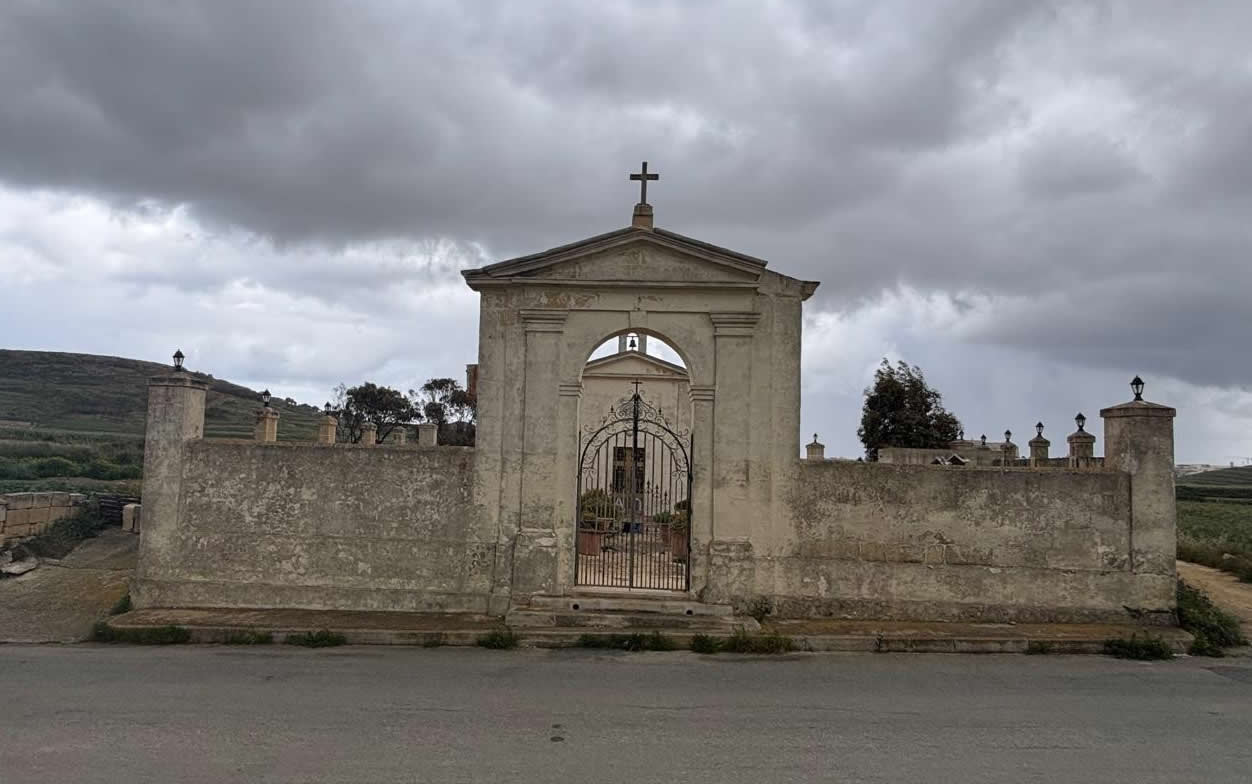
The Għasri Cemetery Chapel is a small but significant religious structure located within the cemetery of Għasri, Gozo. Positioned at coordinates 36.058649, 14.232020, it serves as an integral part of the village’s funerary and spiritual landscape.
Although modest in appearance, the chapel plays a vital role in the religious life of Għasri, particularly in connection with burial traditions, remembrance, and Catholic devotional practices. Its presence reflects centuries-old customs in Malta and Gozo, where cemeteries are closely linked with dedicated chapels for liturgical use.
Historical Context of Għasri
Għasri is the smallest village and parish in Gozo, characterised by its rural setting and long-standing agricultural traditions. Historically, the area formed part of neighbouring Żebbuġ until it became an independent parish on 16 December 1921.
Christian heritage in the area stretches back many centuries, with early chapels serving scattered rural communities across valleys such as Wied il-Għasri and Wied il-Mielaħ. These early places of worship laid the foundation for later ecclesiastical development, including the establishment of parish structures and associated burial grounds.
As the village evolved into an independent parish, the need for a formal cemetery and supporting religious infrastructure—including a chapel—became increasingly important.
Development of the Cemetery and Chapel
While precise archival dates for the construction of the Għasri Cemetery Chapel are limited, its development is closely tied to the growth of the parish in the late 19th and early 20th centuries. During this period, Maltese villages began formalising burial practices by establishing dedicated cemeteries outside village centres.
The chapel would have been constructed to serve essential liturgical functions, including funeral rites and prayers for the deceased. Such chapels were a standard feature of cemeteries across Malta and Gozo, reflecting the Catholic emphasis on remembrance and intercession.
The establishment of the parish church in 1903–1916, followed by the official creation of the parish in 1921, likely accelerated the development and regular use of the cemetery chapel as part of the village’s religious infrastructure.
Architecture and Design
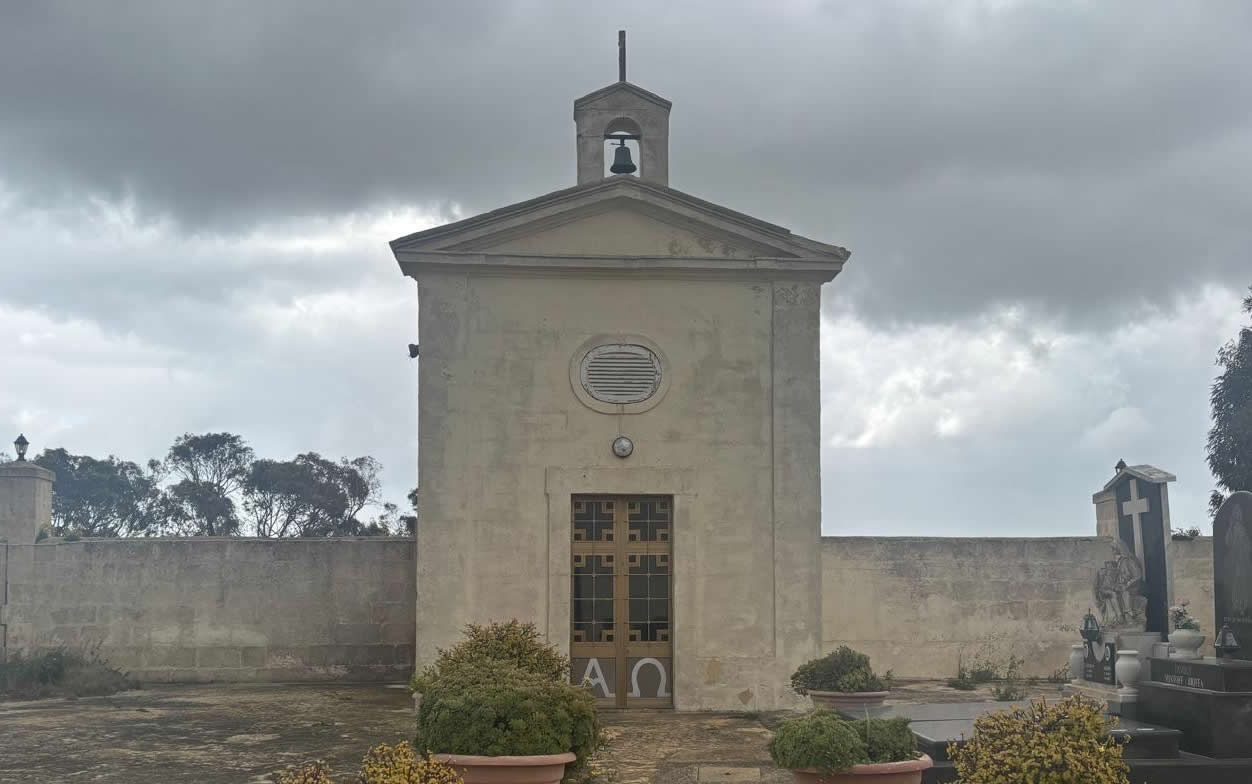
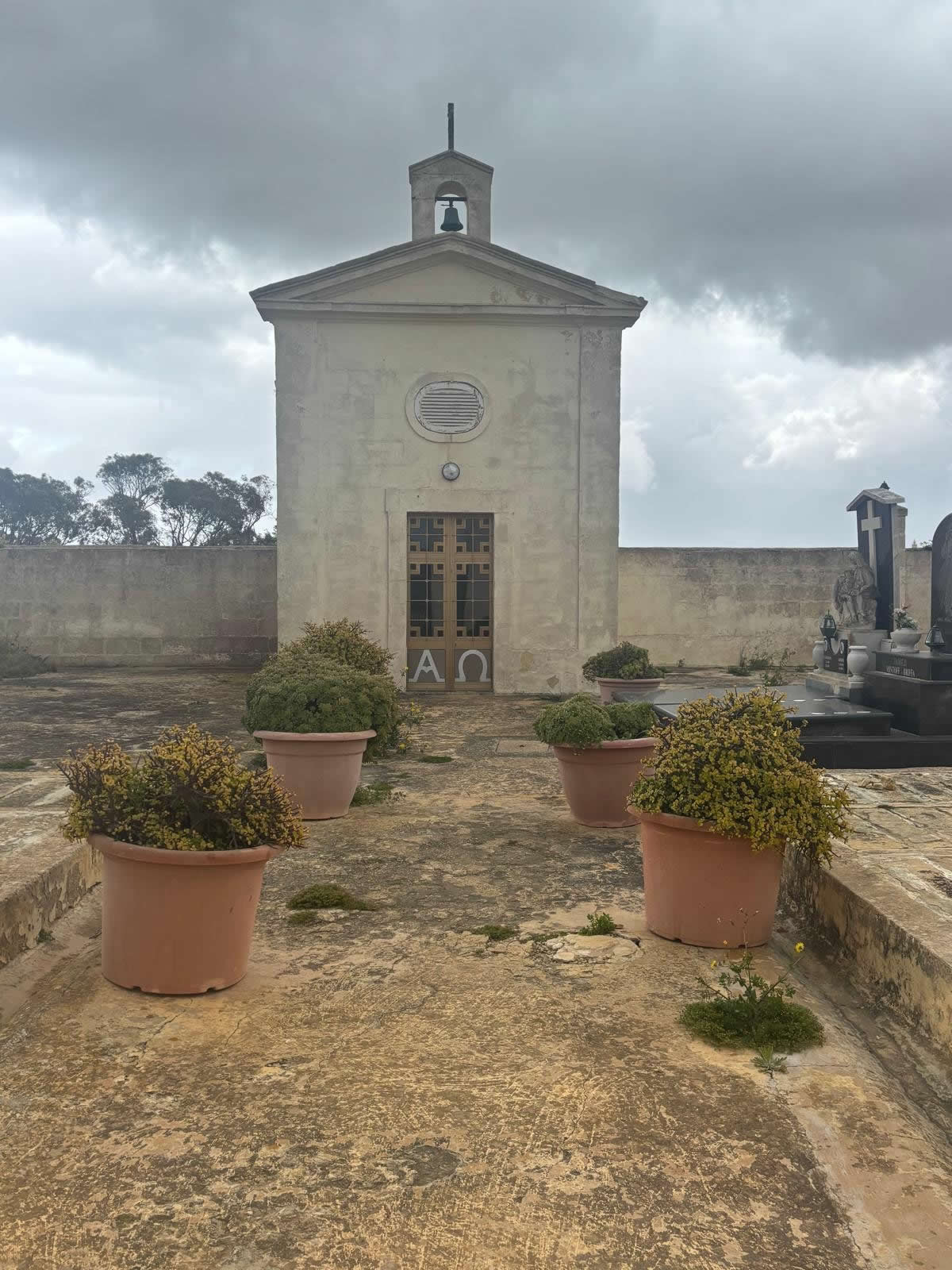
The Għasri Cemetery Chapel follows the traditional architectural style of Maltese cemetery chapels—simple, functional, and built using locally sourced limestone.
- Style: Vernacular with subtle ecclesiastical influence
- Material: Maltese limestone
- Layout: Small rectangular plan
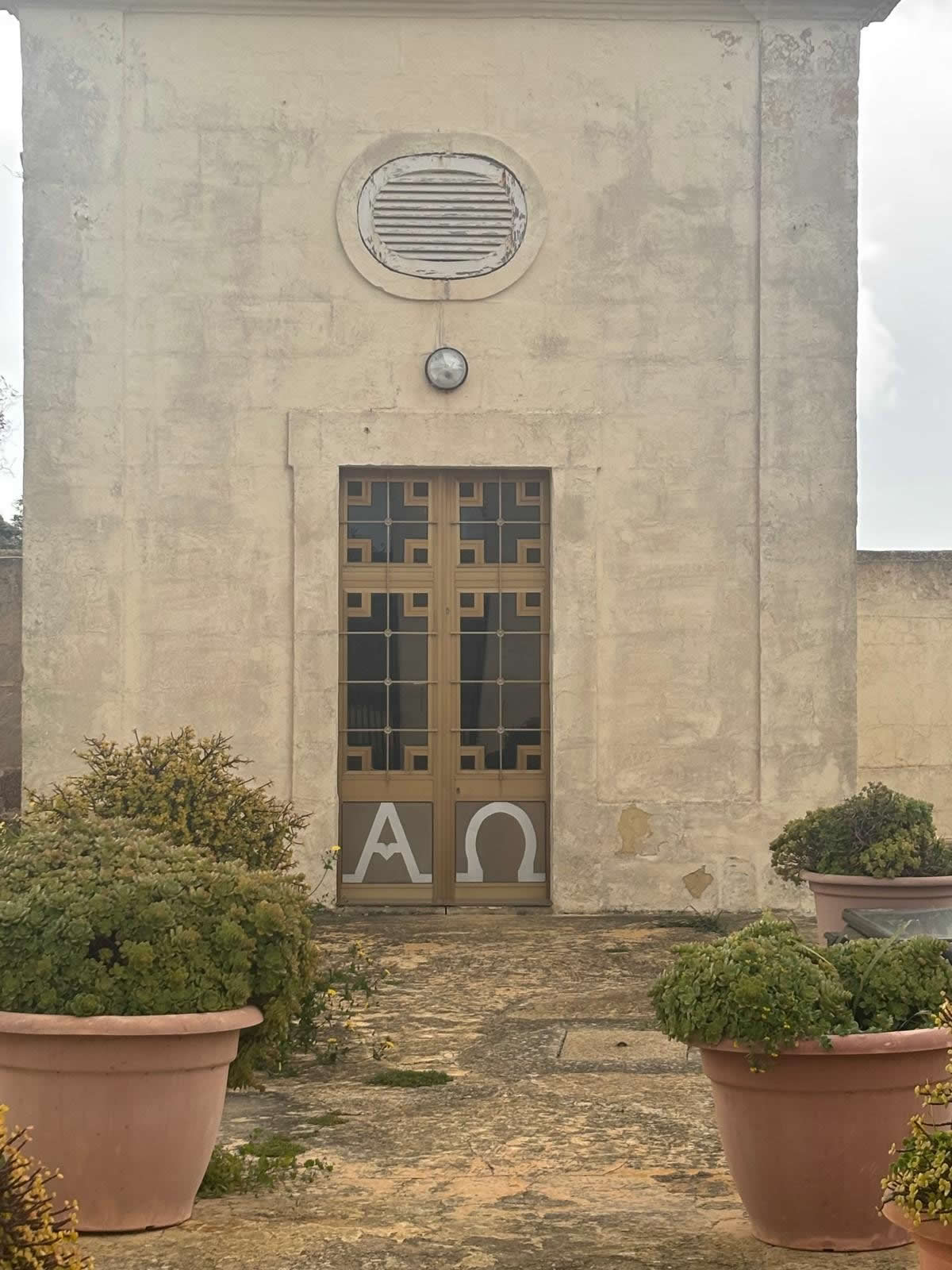
- Façade: Plain and understated
Unlike parish churches, which often display elaborate Baroque or Neoclassical features, cemetery chapels were designed with restraint. Their purpose was not grandeur, but rather the creation of a solemn and contemplative environment suitable for funerary rites.
The architecture of the chapel reflects this intention, emphasising simplicity, proportion, and a sense of quiet dignity.
Interior and Liturgical Features
The interior of the Għasri Cemetery Chapel is modest yet functional, providing the necessary elements for religious ceremonies associated with burial and remembrance.
- Simple altar used for Mass and funeral rites
- Religious imagery or devotional artwork
- Stone or wooden seating for small congregations
- Minimal decorative features to maintain solemnity
The chapel’s interior is designed to foster reflection and prayer, allowing families and community members to gather in a respectful and intimate setting.
Religious and Cultural Role
The Għasri Cemetery Chapel holds a central role in the religious life of the village, particularly in relation to:
- Funeral services
- Masses for the deceased
- All Souls’ Day commemorations
- Private prayer and remembrance
These functions highlight the enduring importance of the chapel as a space where faith intersects with memory and community identity.
In Maltese culture, cemeteries are not merely places of burial but are deeply connected to religious tradition. The presence of a chapel within the cemetery reinforces this connection, providing a sacred focal point for rituals associated with death and remembrance.
Relationship with the Parish Church
The Għasri Cemetery Chapel operates in close association with the parish church dedicated to Christ the Saviour (Corpus Christi). This church, built between 1903 and 1916, serves as the main centre of worship for the village.
While the parish church hosts regular liturgical celebrations, the cemetery chapel fulfils a more specialised role, focusing on funerary and commemorative functions. Together, they form a complementary system within the parish’s religious life.
Location and Setting
The chapel is situated within the Għasri cemetery, slightly removed from the village centre. This location aligns with long-standing public health and ecclesiastical practices that placed burial grounds outside populated areas.
The surrounding environment is characterised by:
- Quiet rural landscapes
- Traditional stone boundary walls
- Views of the Gozitan countryside
This tranquil setting enhances the contemplative nature of the chapel, making it a place not only of mourning but also of peaceful reflection.
Preservation and Current Use
The Għasri Cemetery Chapel continues to be maintained as part of the village’s active cemetery. Conservation efforts typically focus on:
- Structural maintenance of limestone walls
- Cleaning and preservation of interior features
- Ensuring accessibility for funeral services
Despite its modest scale, the chapel remains an important and functional part of Għasri’s religious infrastructure, regularly used by parishioners.
Visiting the Għasri Cemetery Chapel
Visitors interested in exploring Għasri’s heritage can access the cemetery area where the chapel is located. While entry to the interior may be limited depending on ongoing services, the exterior and surroundings can be appreciated at any time.
Nearby attractions include:
- The Parish Church of Christ the Saviour
- Wied il-Għasri valley
- Ta’ Ġurdan Lighthouse
The chapel forms part of a broader cultural landscape that combines natural beauty with historical and religious significance.
Conclusion
The Għasri Cemetery Chapel is a quiet yet meaningful testament to the village’s spiritual heritage. Though small in scale, it embodies the traditions of faith, remembrance, and community that have shaped Għasri over centuries.
For those exploring Gozo’s chapels and churches, it offers a unique perspective on the island’s religious culture—highlighting the importance of even the most modest structures in preserving collective memory and devotion.
Frequently Asked Questions
What is the Għasri Cemetery Chapel?
It is a small chapel located within the Għasri cemetery used for funeral and commemorative religious services.
When was Għasri established as a parish?
Għasri became an independent parish in 1921.
Is the chapel still used today?
Yes, it is still actively used for funerary rites and religious observances.
Can visitors access the chapel?
The exterior can be visited freely, while interior access depends on usage and parish arrangements.