Chapels in Malta • L-Imqabba (Mqabba)
Location Map Coordinates 35.845376, 14.468010
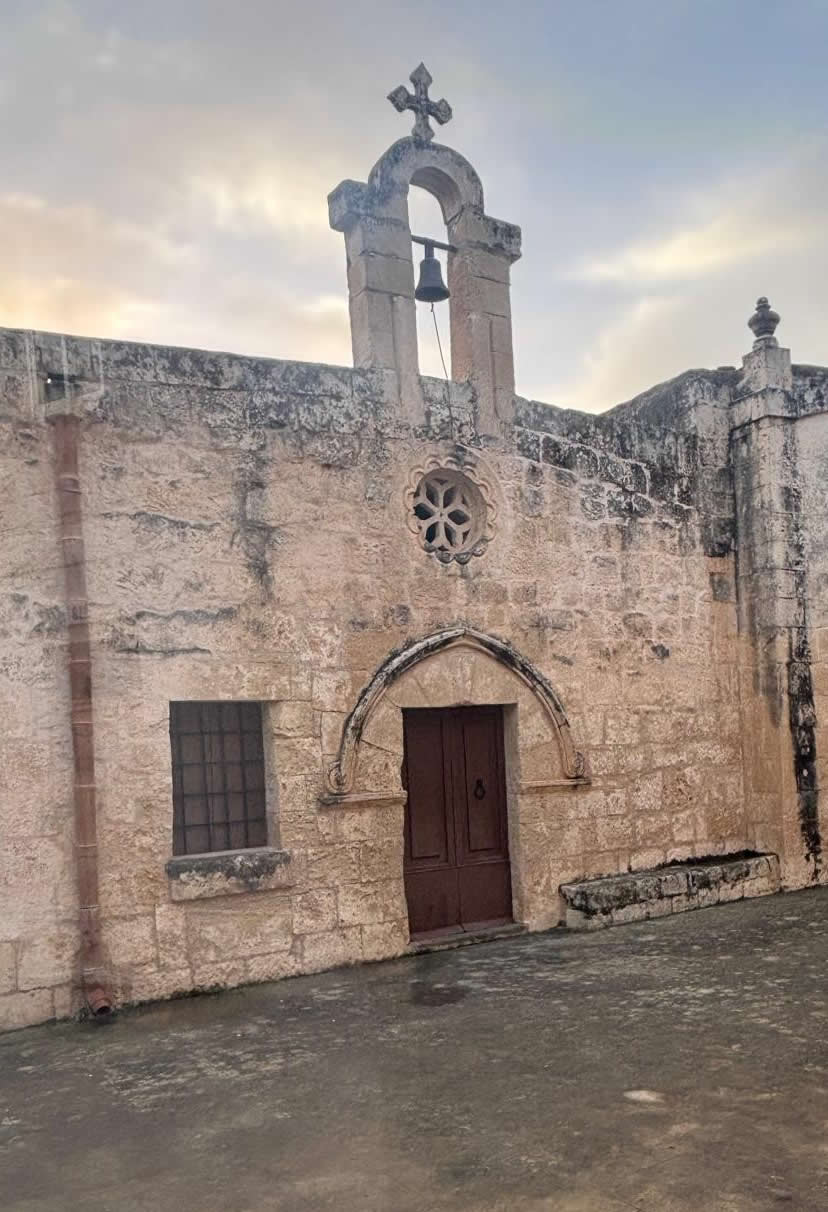
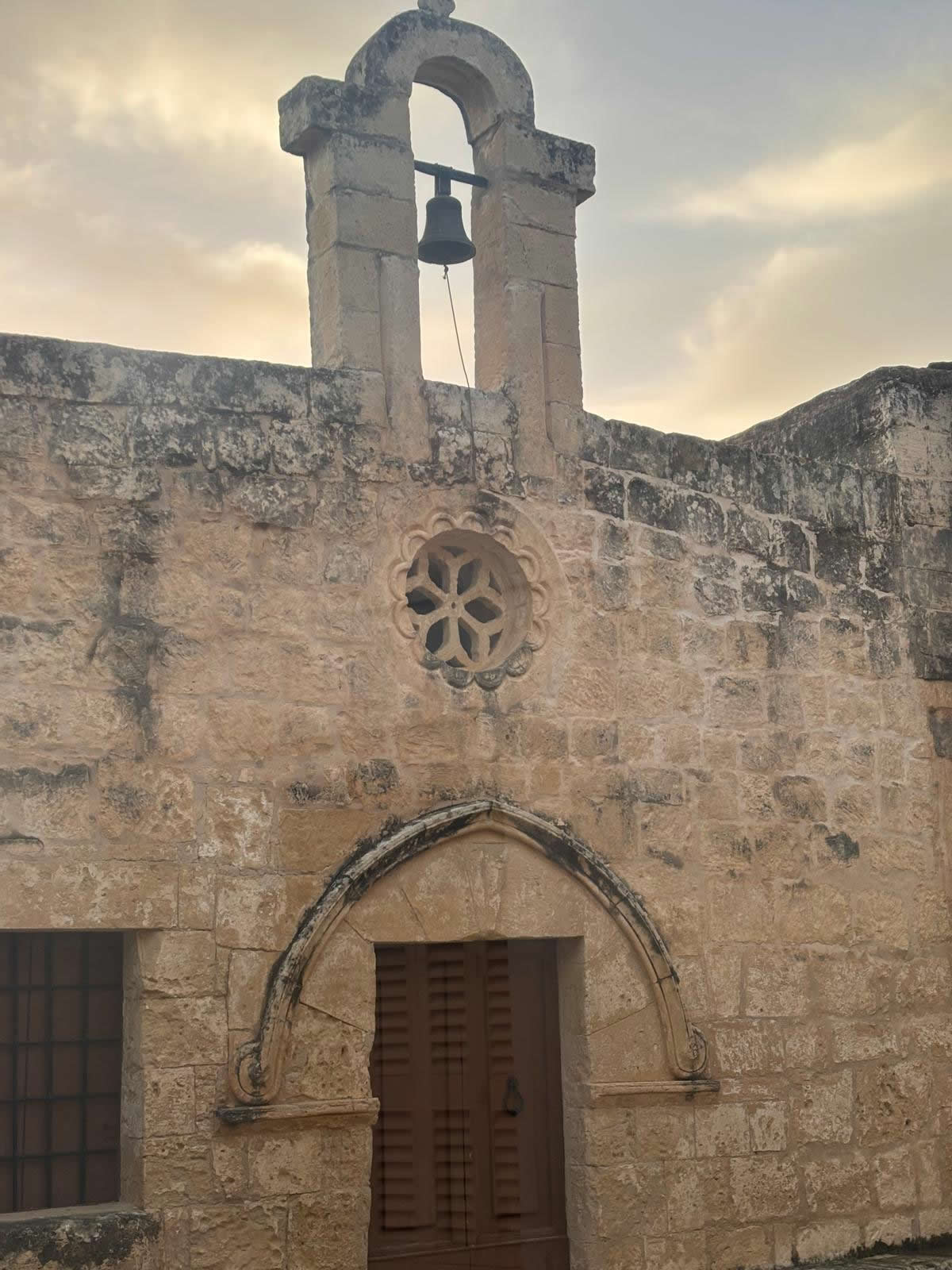
One of Mqabba’s most historically important churches: a medieval building with distinctive pointed arches and a rose window, and the only church in Malta dedicated to St Basil the Great. Coordinates: 35.845376, 14.468010.
Overview
The Church of St Basil sits in the historic core of Mqabba and is closely linked to the village’s religious development. Before the construction and rise of the larger parish church of the Assumption, St Basil’s was repeatedly treated as a “main church” for the community—especially at moments when Mqabba’s status and pastoral needs were changing.
It is also recognised as a protected heritage property in Malta’s National Inventory of the Cultural Property, classified as a medieval site of very high value.
When it was probably built
Build date confirmation (best-supported): Malta’s Mqabba Local Council records that St Basil’s Church was extended three times—starting in 1486 and reaching its final enlarged form in 1515. The church is also listed in Malta’s National Inventory as a medieval property. probable build period is therefore 1486–1515.
Some summaries describe the building as “built in 1486” and later enlarged, while others treat 1515 as the point at which the chapel reached the shape most visitors recognise today.
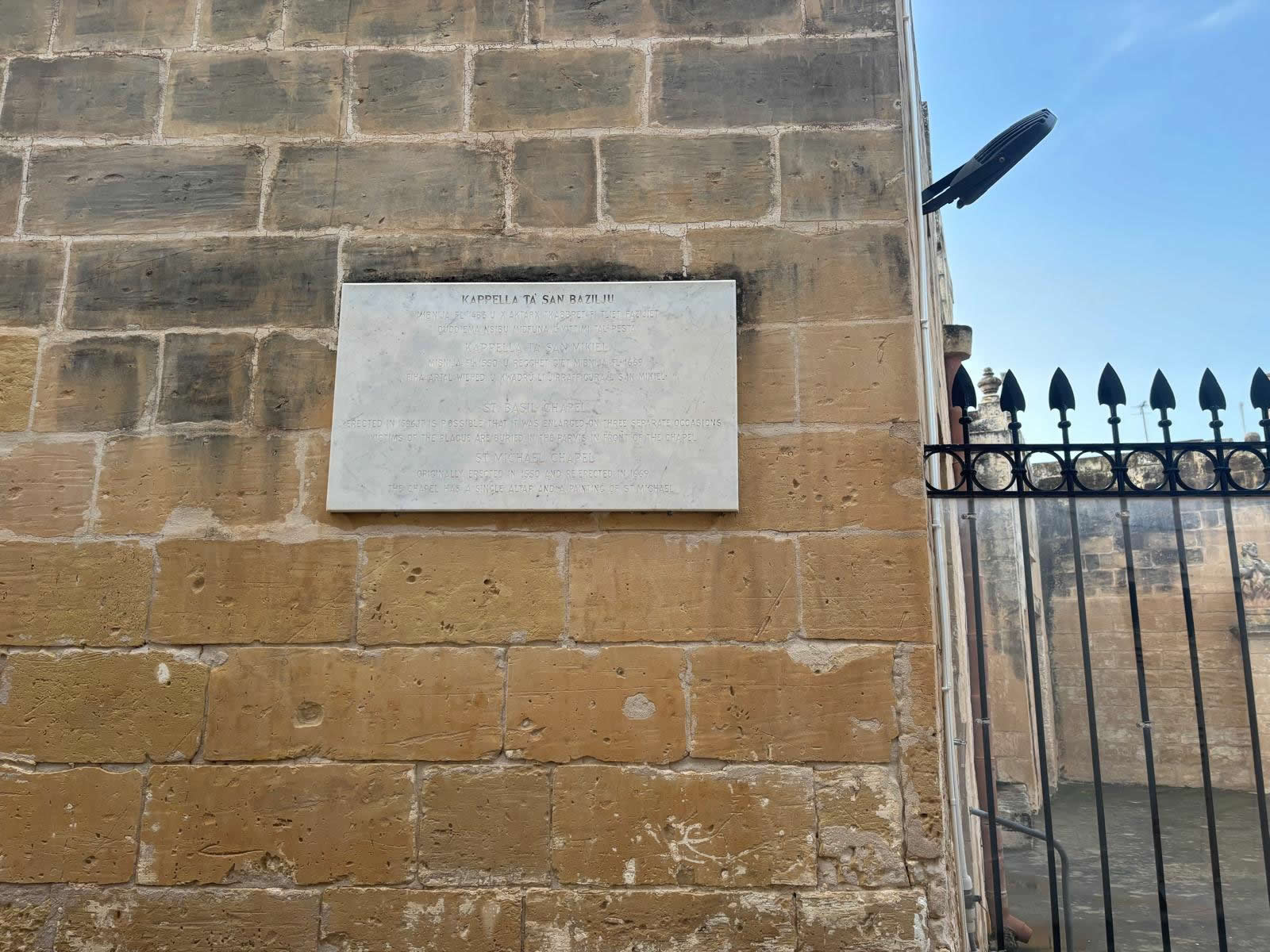
Erected in 1486 It is possible it was enlarged on three separate occasions
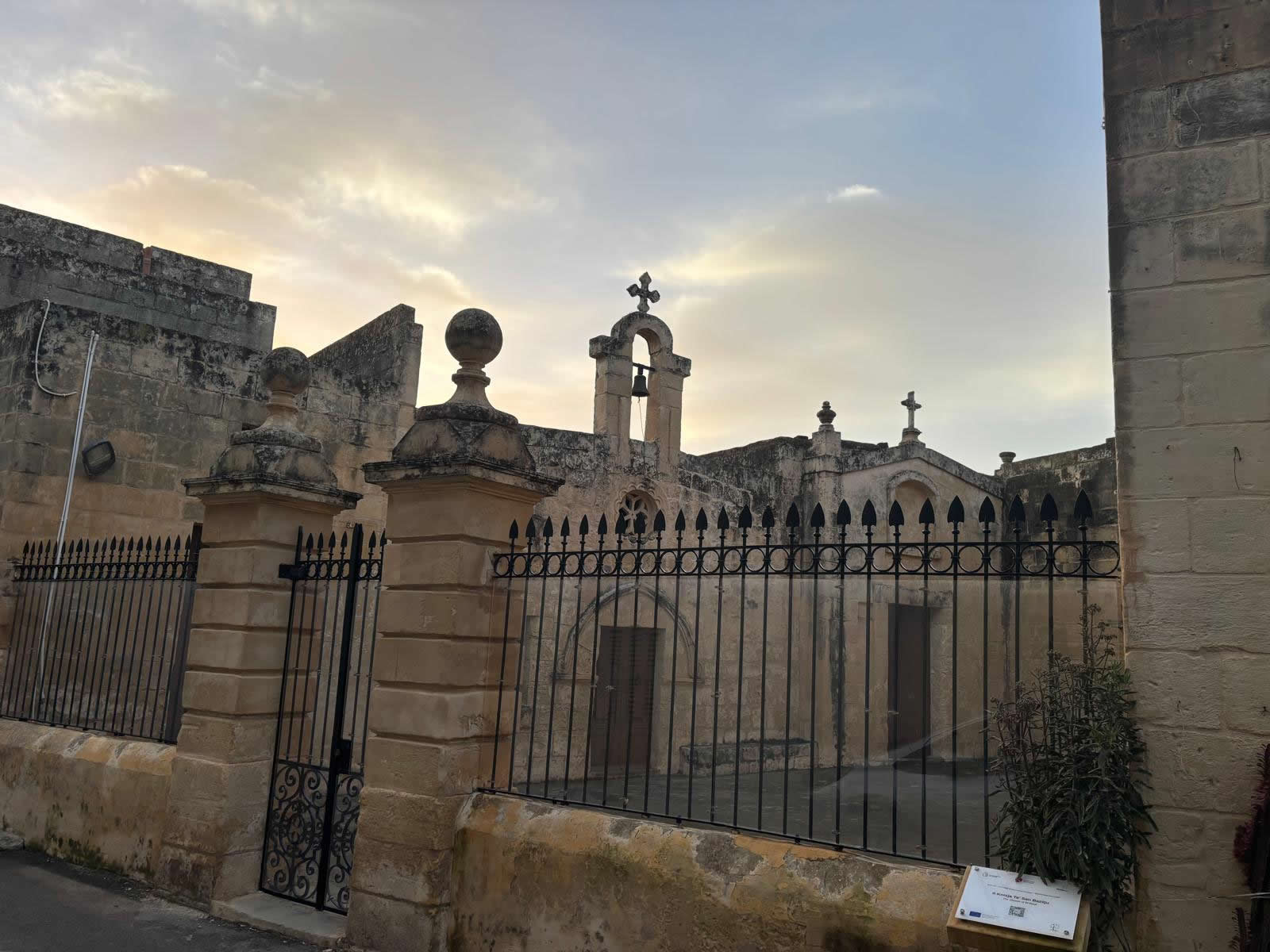
Victims of the plaque are buried in the parvis in front of the chapel
Detailed history
Medieval Mqabba and a church at the centre of village life
In the medieval period, Mqabba’s church life was part of a wider cluster of churches and localities, with pastoral services administered across multiple communities. Local accounts describe the strain of limited clergy over many chapels, which helps explain why access to sacraments became a major concern for residents.
1575 episcopal visit and evidence of status
In 1575, the church was visited during official church inspections, and later sources describe it as a principal church in Mqabba. This period sits just before the village’s successful push to become a parish in its own right.
Becoming (temporarily) Mqabba’s parish church
When Mqabba was established as a parish, the bishop chose St Basil’s Church as the parish’s temporary parish church while other arrangements were made for the community’s long-term parochial needs. Pastoral services in the new parish began around 1598–1599, and the church was progressively equipped and adorned to function as a proper parish church.
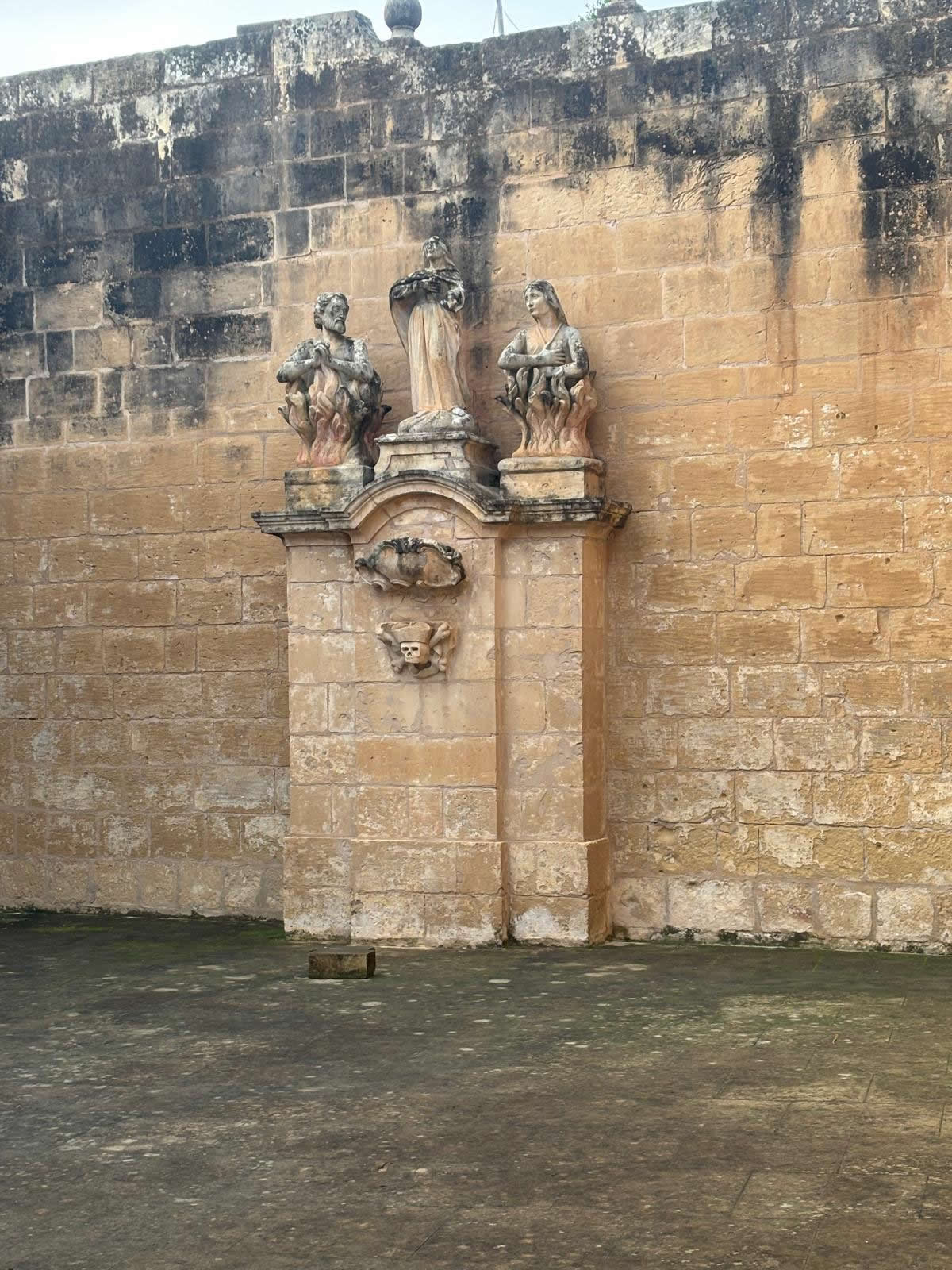
Plague memory and the forecourt cemetery
The parvis in front of St Basil’s is associated with burial during plague periods: later summaries record that victims were buried in and around the church precincts in the 1670s, and that the area later ceased to be used as a cemetery.
20th-century role during WWII
During the Second World War, Mqabba’s main parish church suffered damage, and St Basil’s again served as a parish church for a time. The church’s continued use underscores its enduring importance within the village’s religious landscape.
Architecture and notable features
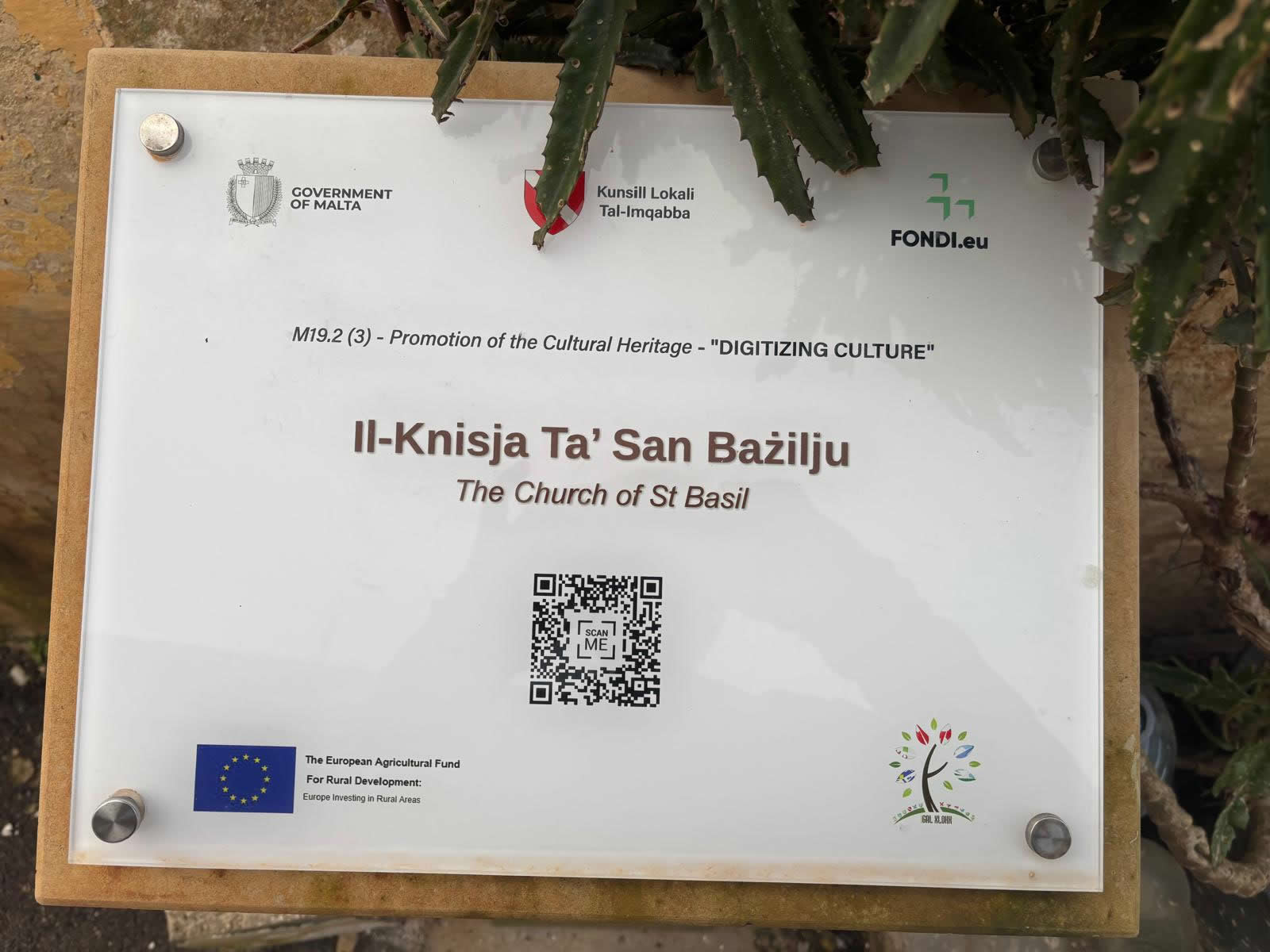
Exterior elements
The National Inventory describes a modest limestone façade with a central door, a hood mould, a rosette (rose) window, and a bell-cot above the roofline—features that immediately signal the building’s antiquity and restrained character.
Interior character: pointed arches and medieval influence
Local descriptions highlight the church’s pointed arches and note a Siculo-Norman influence, visible both inside and in the pointed arch treatment around the main entrance.
Artwork and inscriptions
Sources also note that the titular painting includes the year 1515, commonly used to mark the chapel’s final enlarged form. Another recorded painting above the high altar is dated 1677 in later documentation.
Use today
Today, the Church of St Basil remains an active place of worship and a key heritage stop in Mqabba. It is especially visited for its medieval architectural character and its role in the village’s parish history.
- Religious services and devotional use
- Heritage interest for medieval church architecture
- A focal point for local history (parish formation, plague memory, WWII continuity)
Visiting and map
Coordinates: 35.845376, 14.468010
Tip: paste the coordinates into your maps app: 35.845376, 14.468010.
FAQ
Is this the only church in Malta dedicated to St Basil?
Yes—reference summaries describe it as the only church building in Malta dedicated to St Basil the Great.
When was it built?
The building is listed as medieval in Malta’s National Inventory, and local records state it was extended multiple times, beginning in 1486 and reaching its final enlarged form by 1515—so 1486–1515 is the best practical “probable build period” to publish on emalta.com.
Why is the forecourt historically significant?
Local historical text associates the parvis/forecourt with burial during plague periods and notes that it later stopped being used as a cemetery.
Sources and notes
- Mqabba Local Council – Churches & Chapels (build/extension dates; parish history; features).
- Superintendence for Cultural Heritage (NICPMI entry for Chapel of Saint Basil; heritage classification and description).
- Reference summary for additional milestones (Dusina visit; parish role; WWII; 1515 inscription).
Nearby:
(1) St Mary’s Parish Church,
(2) Ta’ Mintna Catacombs
(3) il-Ħajt tal-Matla.
© emalta.com • Explore more chapels in Malta