Explore This Page
1. Introduction
The old, historic core of Luqa holds deep cultural stories hidden behind the concrete developments of the modern airport town. Long before heavy transport corridors reshaped the southern plains, the early inhabitants developed deep-rooted customs within a historic area known locally as 'Wied il-Knejjes' (The Valley of the Churches). In the old days, this specific neighborhood hosted several small churches and was the primary settlement area where the first generation of Luqa parish families built their lives.
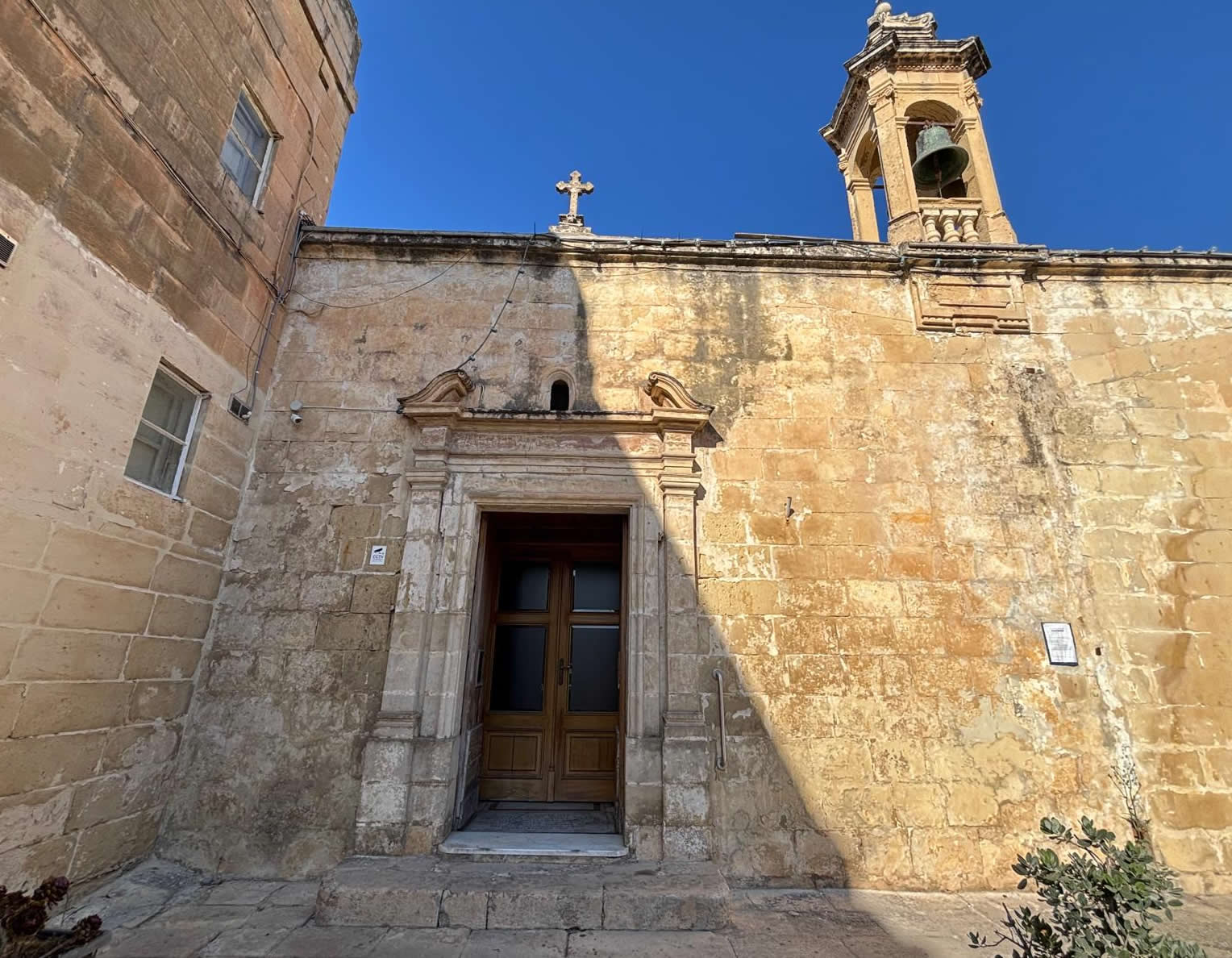
While time, urban expansion, and strategic military changes caused many old structures to disappear, a few key buildings survived. Standing proud at the precise coordinates of 35.860619, 14.487771 on Triq il-Karmnu is the remarkable Chapel of Saint Mary, known across Malta by its unique local title: "Tal-Ftajjar" (Saint Mary of the Flatbreads). This chapel is one of the oldest remaining religious monuments in the area, offering a clear view into early modern community life, local architectural design, and unique charity customs.
2. Early Roots & The 1575 Dusina Visit
Pinpointing the exact decade the original chapel foundation stone was laid remains a challenge for modern historians. However, structural clues and archival records confirm that a dedicated shrine stood on this plot by the early fifteenth century. In those distant years, the chapel featured a more complex interior layout than the current design, including three distinct altars to accommodate the devotional needs of local farming families.
A major historical turning point occurred in 1575 during the systematic apostolic tour of Monsignor Pietro Dusina, the Apostolic Visitor sent to assess the religious health of the Maltese diocese. Dusina's detailed logs offer a fascinating look into the early village layout. While he recognized the local importance of the Saint Mary shrine, he noticed that the two side altars lacked proper security, vestments, and financial support. To protect the dignity of the sacraments, Dusina issued a formal order forbidding further masses on those two side installations, focusing all community worship on the main altar.
3. The Tradition of the 'Ftajjar'
The unique name *“Tal-Ftajjar”* is tied to a fascinating historical charity tradition rather than an architectural style. During the early modern era, the administrator of the chapel was a dedicated local priest named Father Simone Bonnici. He managed an agricultural field within Luqa that was legally bound to the chapel through a formal foundation (*benefiċċju*).
Under the terms of this legal setup, Father Bonnici was required to use the rental income from the field to fund the annual feast of the Assumption, covering the costs of a solemn Mass and evening vespers. Crucially, the foundation also required a public act of charity: distributing freshly baked traditional flatbreads (ftajjar) to the poor and vulnerable families of the parish during the festival. Over the generations, the local community began referring to the building as the chapel of Santa Marija *tal-ftajjar*, preserving the memory of this old mutual-aid custom.
4. Rebuilding of 1613 & Lost Frescoes
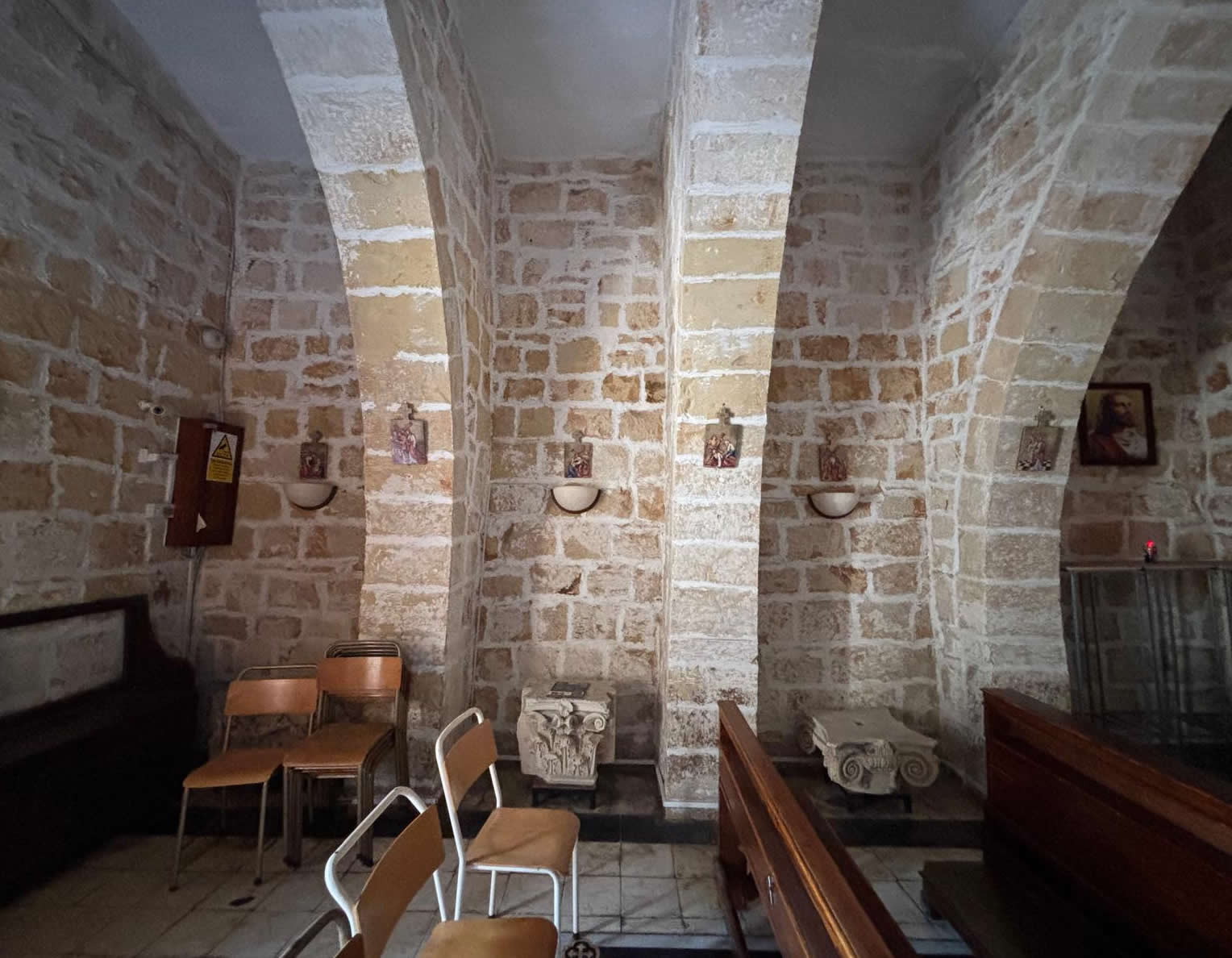
By the beginning of the seventeenth century, the original structure was showing significant signs of wear. Demonstrating strong community spirit, the residents of Luqa pooled their savings to fund a complete rebuilding project in 1613. The new chapel was built with classic architectural strength, utilizing three sturdy interior stone arches to support the roof.
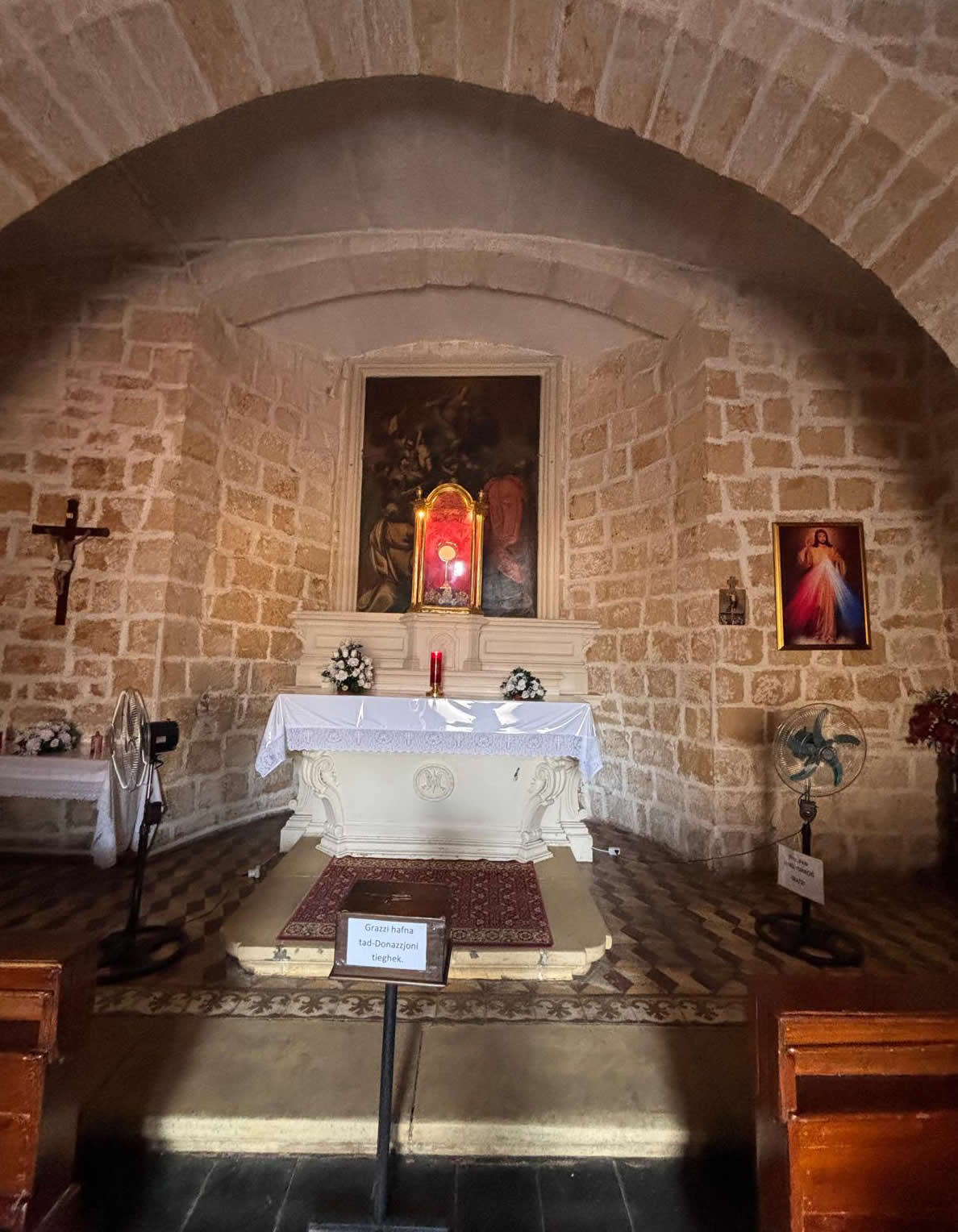
The main altar was set up inside a beautifully carved alcove (*tribuna*) under a stone arch. It featured a historic, highly revered painting of the Assumption of the Virgin Mary accompanied by the Eternal Father. Interestingly, the interior walls of this 1613 building were fully covered with vivid frescoes painted directly onto the lime plaster.
Old historical texts describe these walls as a colorful visual guide for the community. The paintings featured grand depictions of the Savior, the Virgin Mary, Saint Paul, Saint Nicholas, and Saint George, along with representations of the four Evangelists on the main structural panels.
| Year / Timeline | Historical Development | Cultural Context & Impact |
|---|---|---|
| Early 1400s | Initial Construction Phase | Established as an early focus point for rural devotion within the Wied il-Knejjes hamlet. |
| 1575 | Apostolic Inspection by Mons. Dusina | Side altars are decommissioned due to a lack of proper maintenance and resources. |
| 1613 | Community Reconstruction Project | Local residents fund a complete structural update, adding rich interior frescoes. |
| 1656 | Consolidation of Local Altars | Altars from the nearby decommissioned chapels of St. Nicholas and the Nativity are integrated here. |
| 1667 | New Titular Commission | Bishop Balaguer orders a fresh painting due to the heavy wear on the older interior artwork. |
5. Annexation & Profanation Consolidation
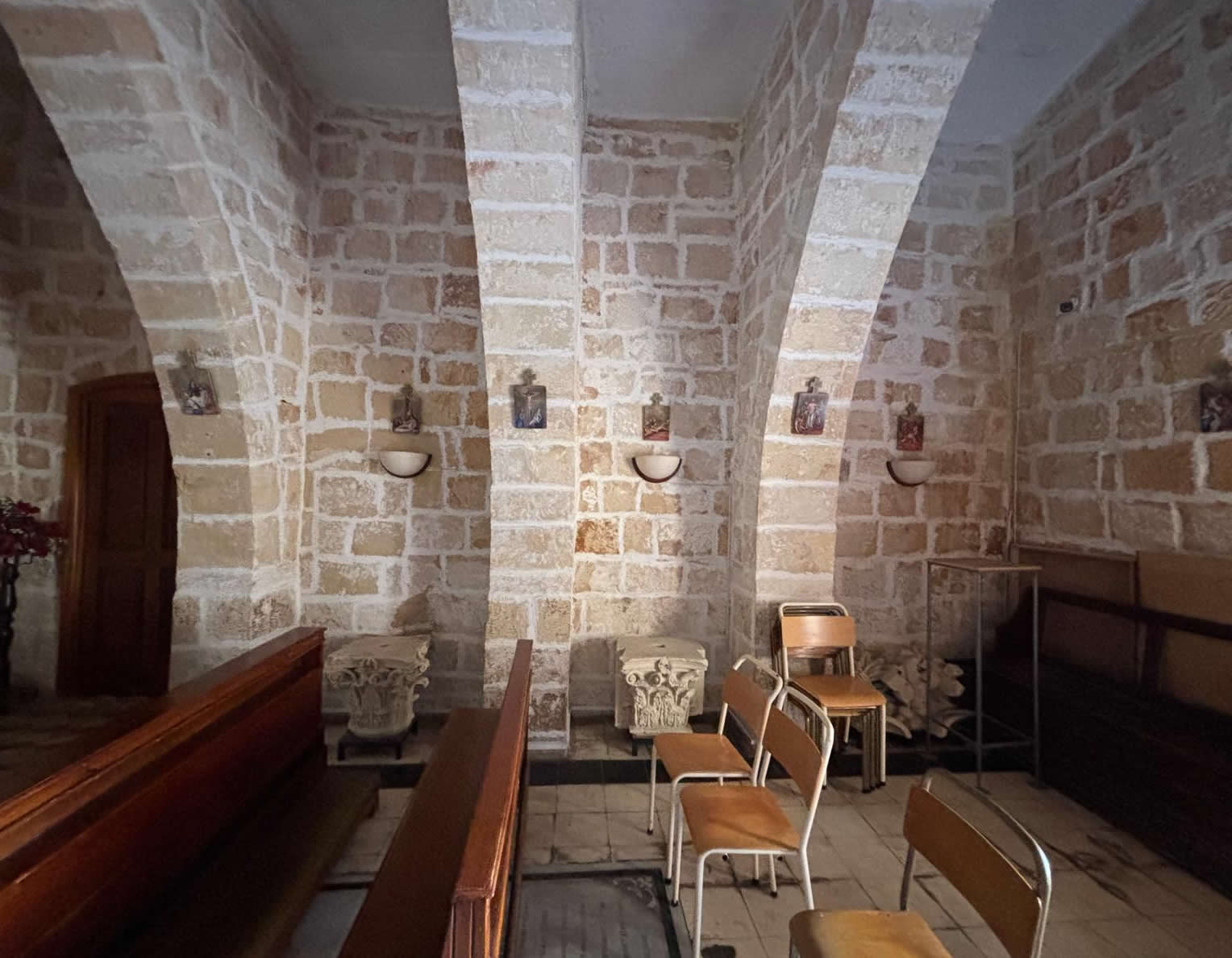
The landscape of *Wied il-Knejjes* underwent a major administrative shift in 1656. Recognizing that the nearby chapels of Saint Nicholas and the Nativity of the Madonna were falling into disrepair and lacked active congregations, Bishop Miguel Juan Balaguer Camarasa chose to decommission them (*iprofanati*).
To preserve their memory, the Bishop ordered that the altars from those two closed buildings be transferred and set up inside the rebuilt Santa Marija tal-Ftajjar chapel. A few years later, in 1667, noticing that the old interior wall frescoes and panels were fading, church authorities commissioned a brand-new titular canvas painting. This artwork remains a key feature of the building to this day.
6. Architectural Analysis
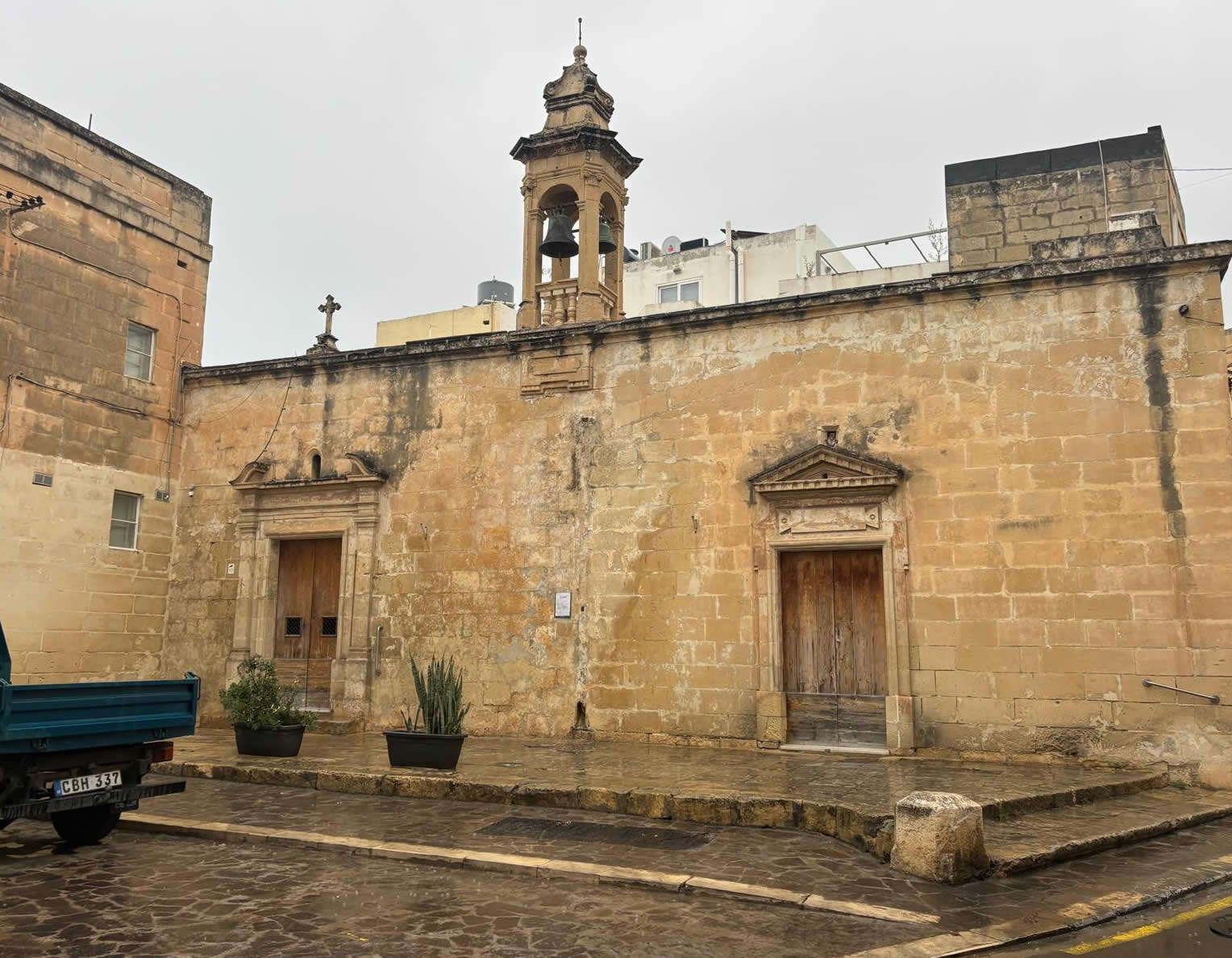
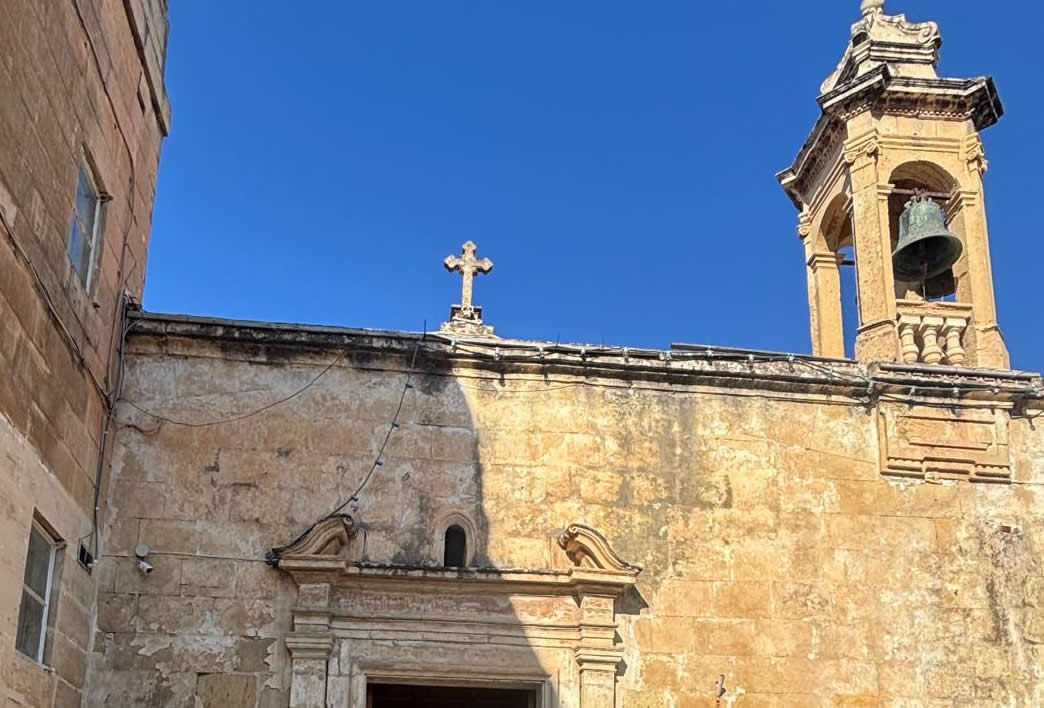
The physical structure of the chapel offers an excellent example of early 17th-century Maltese vernacular architecture. The front facade features a restrained, simple design. Adjoining it directly on the right side is the secondary chapel dedicated to the Nativity of the Blessed Virgin Mary (currently utilized for storing festive street decorations). Rising between these twin facades is a small stone bell-cot (kampnar) that still holds an authentic cast bronze bell.
Directly over the heavy timber entrance door is a clean, circular window, or oculus. This window was an essential engineering feature, angled to cast soft natural daylight directly onto the altar space during morning services.
Crowning the highest point of the front pediment is a historic stone cross. Notably, the base of this cross features a stark, carved human skull—a traditional memento mori symbol. This carving serves as a formal historical record, confirming that the chapel interior and its immediate perimeter functioned as an authorized burial site for the village during the early modern era.
The interior layout follows a classic rectangular floor plan. The roof is built with flat limestone slabs (xorok) that rest securely on three slightly pointed stone arches, reflecting the transition from late medieval methods to classical styles.
7. Fine Art & The Altar Canvas
The interior features a deep, semi-circular apse that houses the main titular altarpiece. This canvas painting, which replaced the damaged early works following the 1667 decree, is an authenticated masterpiece by the celebrated late-Baroque artist Giuseppe D'Arena (who lived between roughly 1633 and 1719).
D'Arena, a prominent contemporary of Mattia Preti, brought a refined touch to the small sanctuary. The painting depicts the Assumption of the Virgin Mary with elegant compositions and smooth transitions of light and shadow (*chiaroscuro*). This artwork stands as one of the finest examples of late-Baroque provincial painting preserved outside major cities like Valletta or Mdina.
8. Modern Preservation & Heritage Linkages
Today, the Chapel of Santa Marija tal-Ftajjar is carefully protected as a Grade 1 national monument, recognized on the National Inventory of the Cultural Property of the Maltese Islands (NICPMI). Its restoration over the years has successfully protected its fragile globigerina limestone walls from the vibrations and environmental pressures of modern traffic.
To see how this unique building compares to other historic shrines across the islands, you can explore our comprehensive master guide on the oldest chapels in Malta and Gozo. Within that broader history, the Tal-Ftajjar chapel remains an invaluable example of how local traditions, fine art, and community pride can endure through changing times.
Epigraphic & Architectural Artifacts
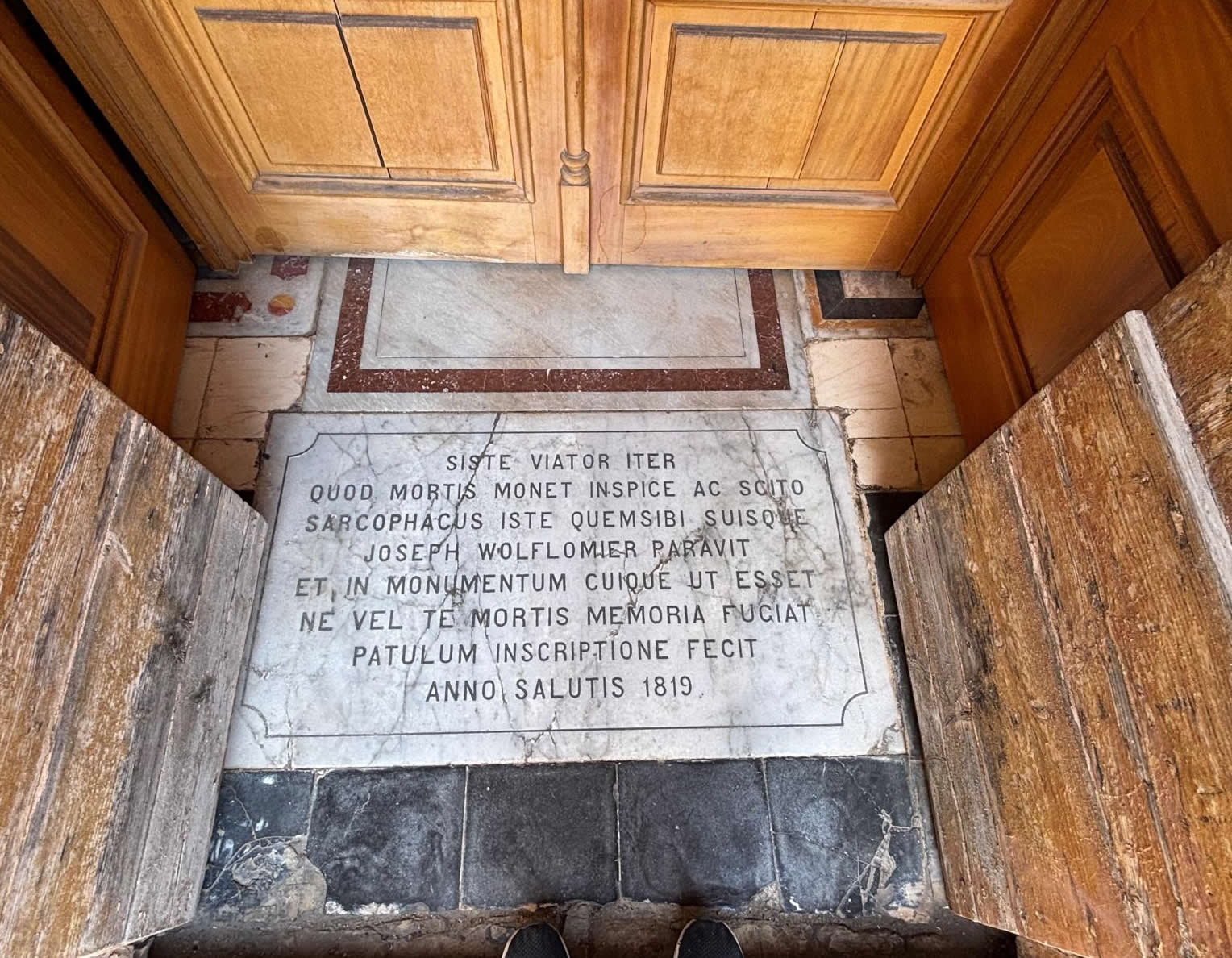
1. The 1819 Memento Mori Inscription
Located directly in the entrance doorway of the Santa Marija "Tal-Ftajjar" Chapel, this marble slab functions as a family tomb marker and a sharp spiritual reminder to all entering visitors.
|
Original Latin:
SISTE VIATOR ITER
QUOD MORTIS MONET INSPICE AC SCITO
SARCOPHAGUS ISTE QUEM SIBI SUISQUE
JOSEPH WOLFLOMIER PARAVIT
ET IN MONUMENTUM CUIQUE UT ESSET
NE VEL TE MORTIS MEMORIA FUGIAT
PATULUM INSCRIPTIONE FECIT
ANNO SALUTIS 1819.
|
English Translation:
"Stop, traveler, on your journey. Look upon what warns of death, and know: This is the tomb which Joseph Wolflomier prepared for himself and his family. And so that it might serve as a monument for everyone, lest the memory of death escape even you, he made it clearly visible with this inscription in the Year of Salvation 1819."
|