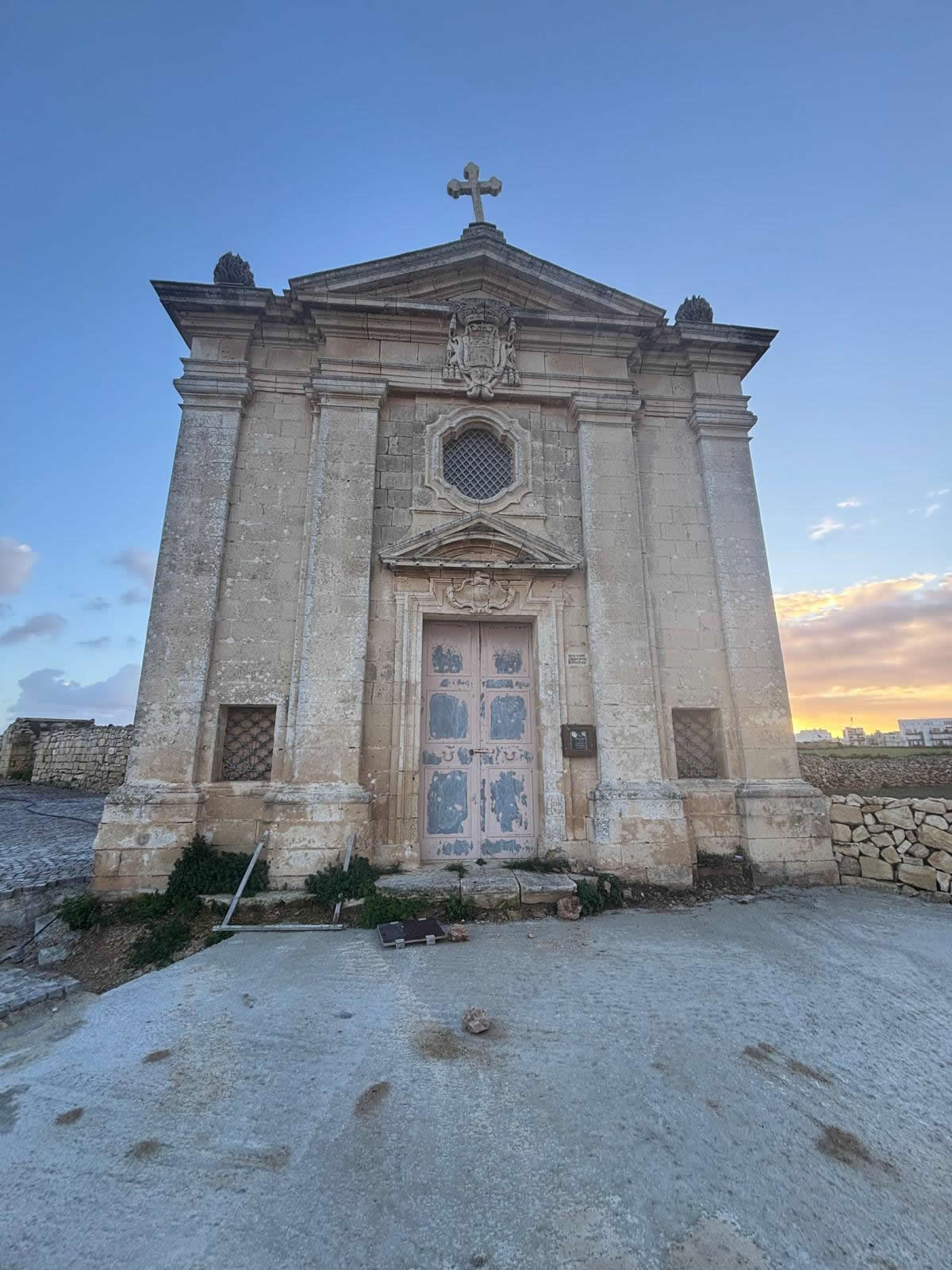
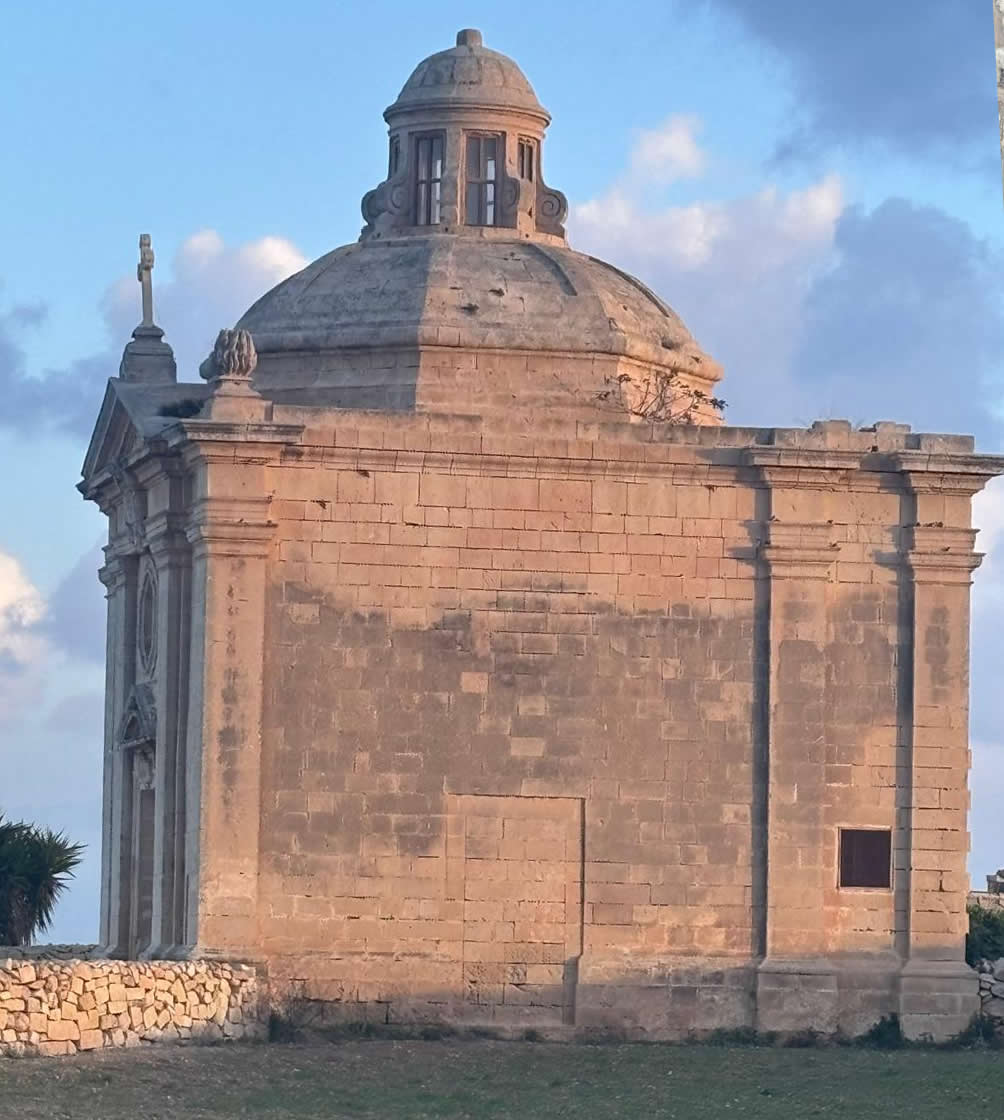
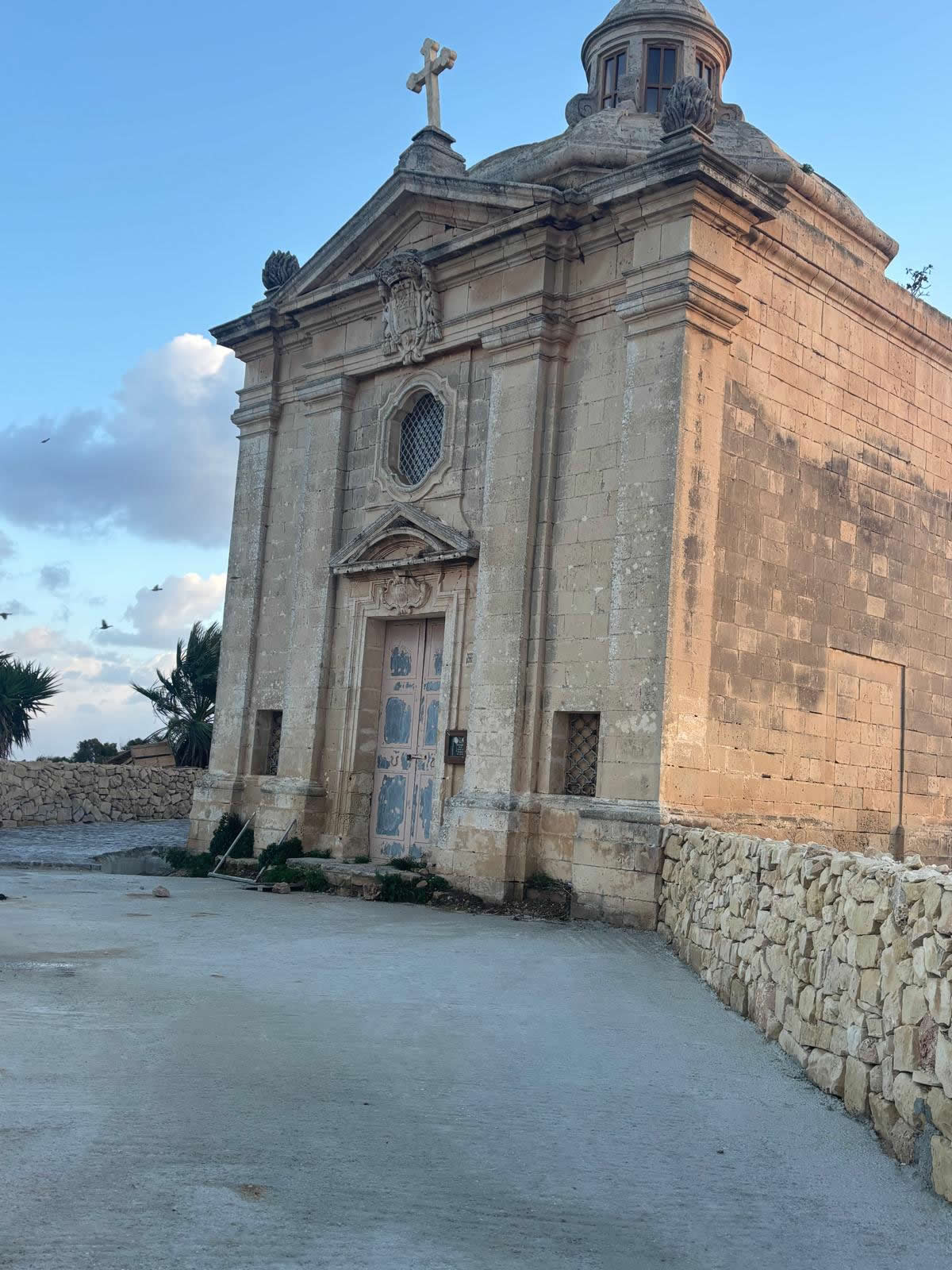
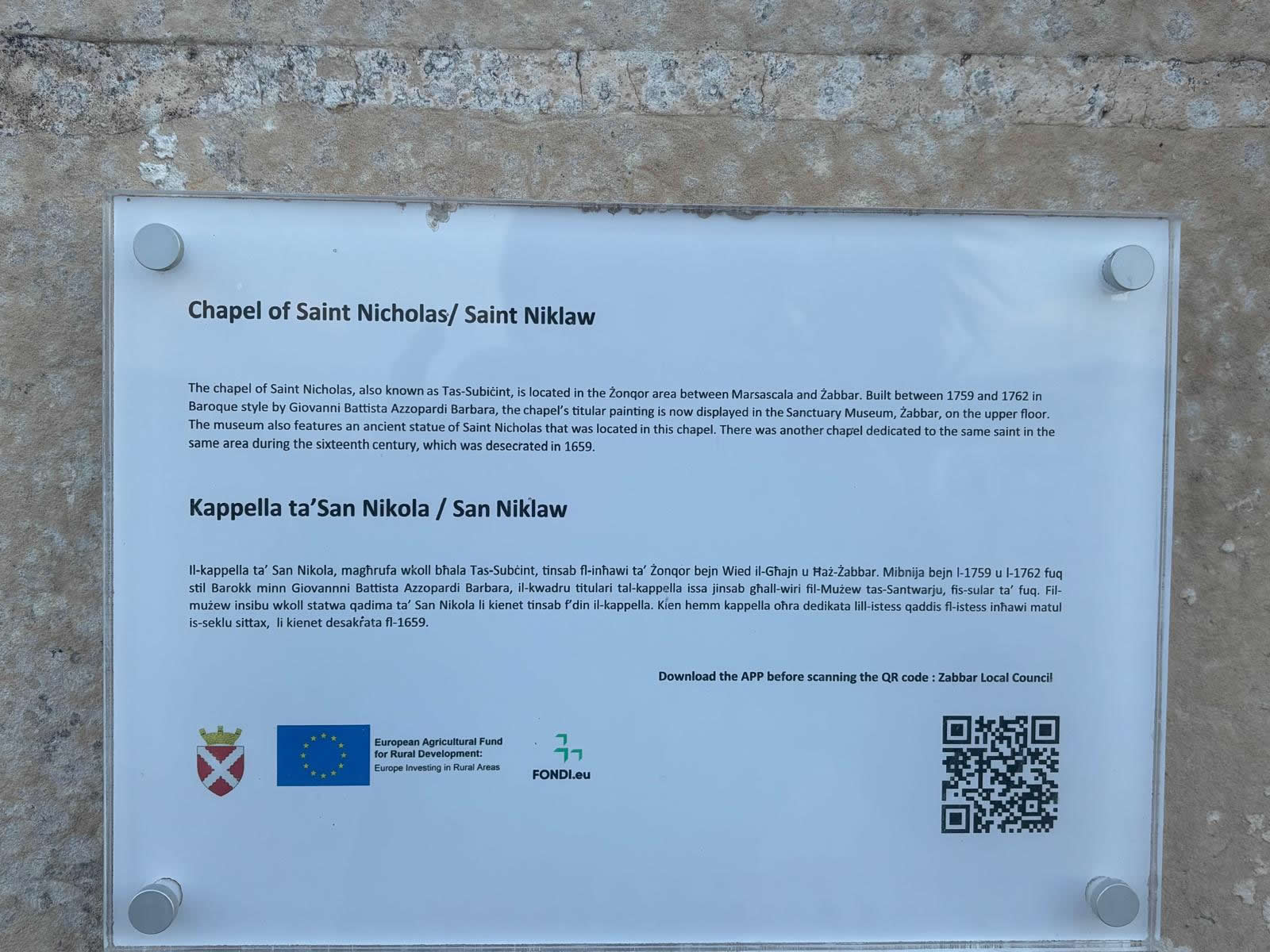
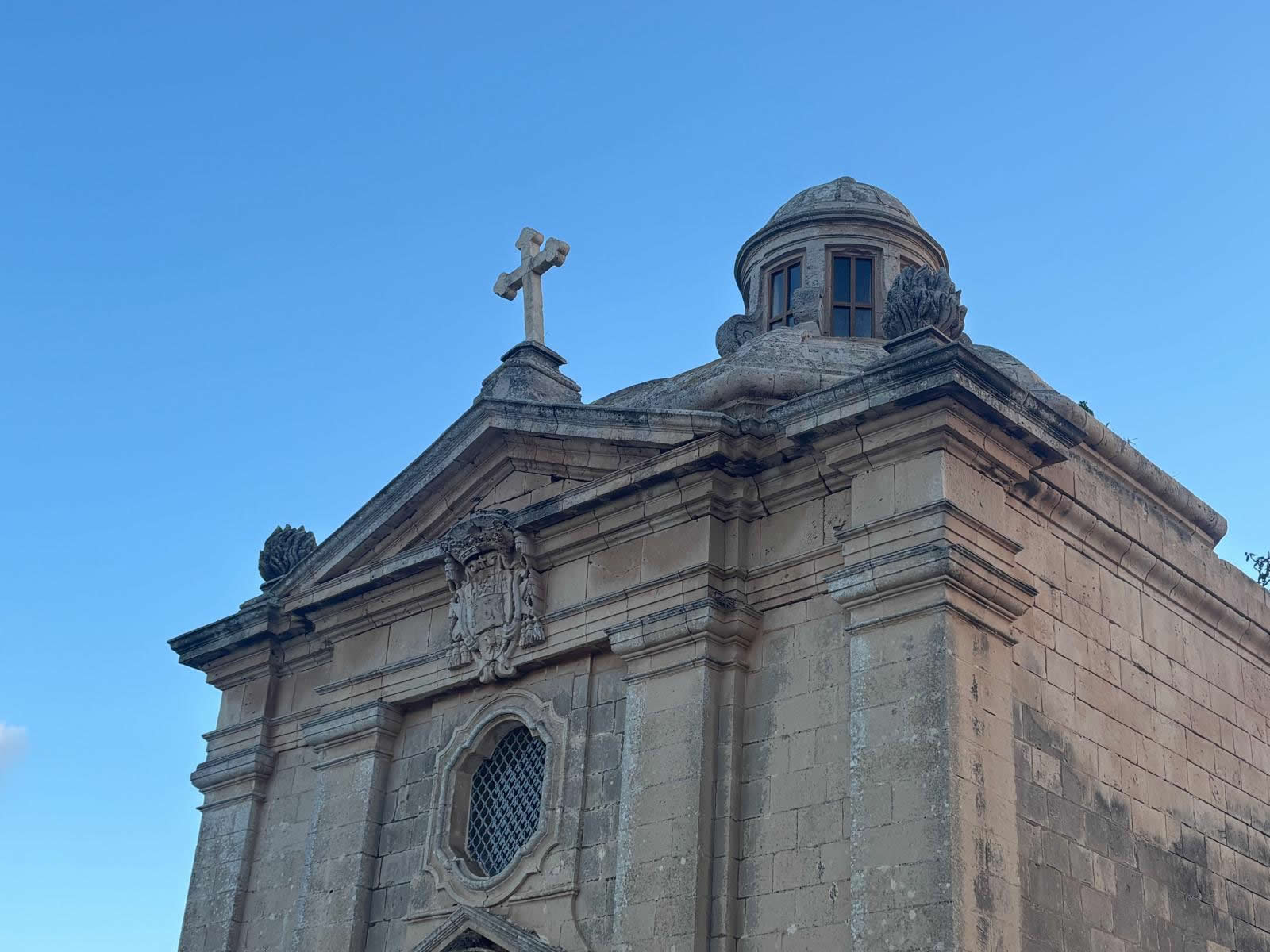
Rising from open countryside in the Żonqor area between Marsaskala and Żabbar, St Nicholas Chapel—also known as Tas-Subriċint—
is a Baroque rural sanctuary with an earlier 16th-century predecessor and a well-documented 18th-century rebuild.
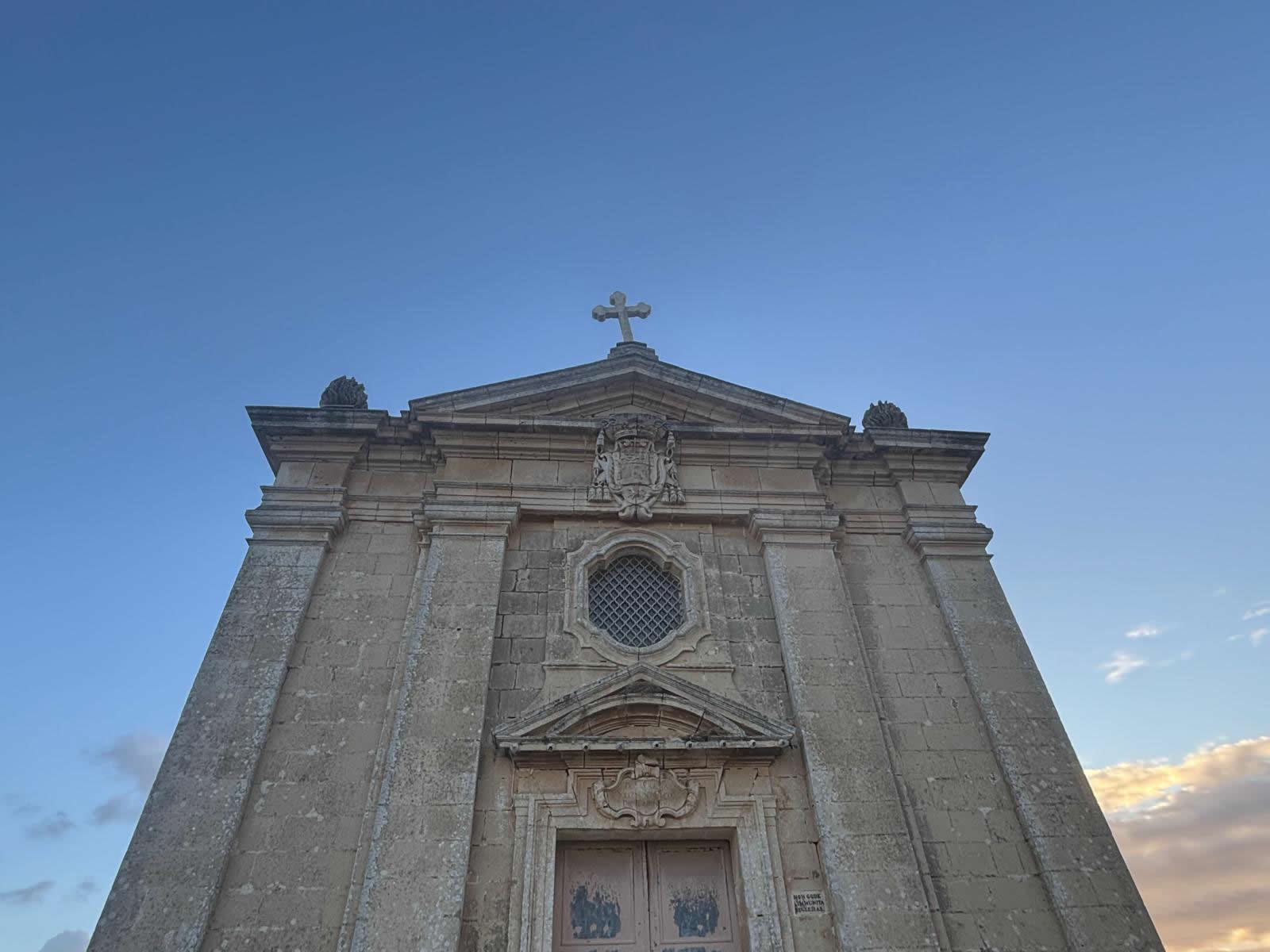
St Nicholas Chapel is a Roman Catholic chapel built in limestone and designed in a restrained Maltese Baroque style.
While the chapel sits within Marsaskala’s boundaries today, it is traditionally connected with and administered by the parish of Żabbar.
TypeRoman Catholic rural chapel
DedicationSaint Nicholas
Confirmed build (present fabric)1759–1762
Key restorationPost-WWII repair (November 1945)
Full detailed history
“Built” here has two layers: (1) an earlier chapel known from early modern documents; and (2) the present Baroque building raised in the 1759–1762 campaign.
Early origins (16th century) and Dusina’s visitation (1575)
Notarial references indicate a St Nicholas chapel in the Żonqor area by the early 1500s. During the 1575 visitation,
the older chapel was found to be extremely plain and lacking basic fittings—an example of how remote countryside chapels often depended on private upkeep.
Deconsecrations and decline (1659, 1666, 1679)
By the mid-17th century the earlier chapel(s) were in poor condition. Records note the chapel was profaned/deconsecrated in 1659,
and again in 1666 and 1679—reflecting ongoing neglect and structural risk.
Rebuilding the chapel you see today (1759–1762)
The present chapel was constructed between 1759 and 1762. The first stone was laid on 10 July 1759,
and the chapel was completed and consecrated in 1762. It is commonly interpreted as serving the spiritual needs of farmers working and living in the area.
Later use and an unusual legal marker
At some point, a plaque reading non gode l'immunita ecclesias was placed near the doorway—indicating that the chapel did not enjoy ecclesiastical immunity,
a noteworthy reminder of how law, jurisdiction and sanctuary privileges intersected in Malta’s religious landscape.
World War II damage and 1945 repairs
The chapel suffered damage during World War II and was repaired in November 1945. This repair campaign is the most clearly stated modern restoration milestone.
How it is used today
Today, St Nicholas Chapel remains active for devotion and occasional liturgy, with regular prayer times and periodic Mass—while continuing to stand as a landmark
in Marsaskala’s rural fringe.
Architecture and notable features
Baroque limestone chapel
The chapel is a compact rectangular building in local limestone, with a small cylindrical dome and lantern. The façade is articulated by pilasters,
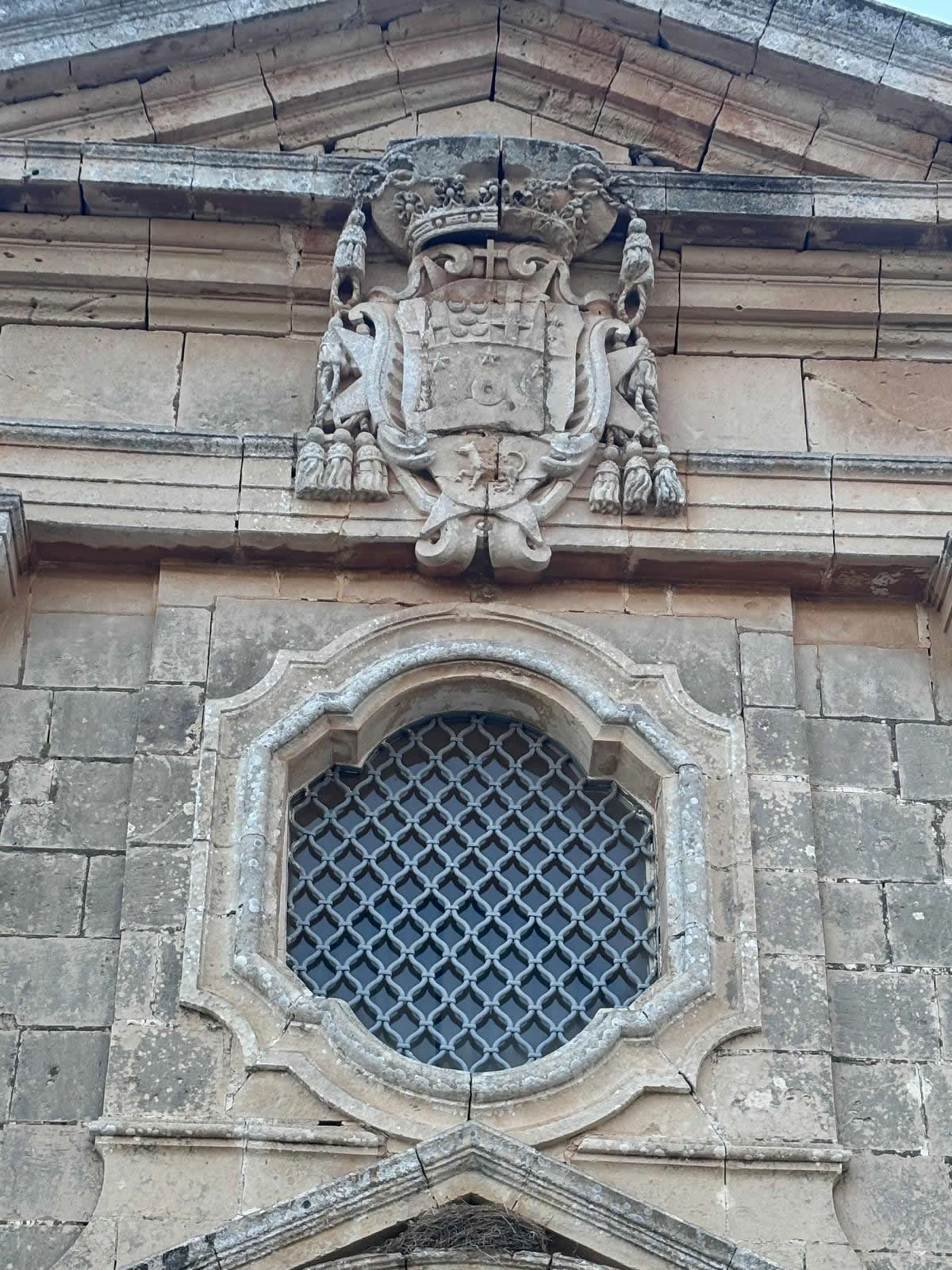
a central doorway with mouldings and a pediment, and a window above the portal for interior light.
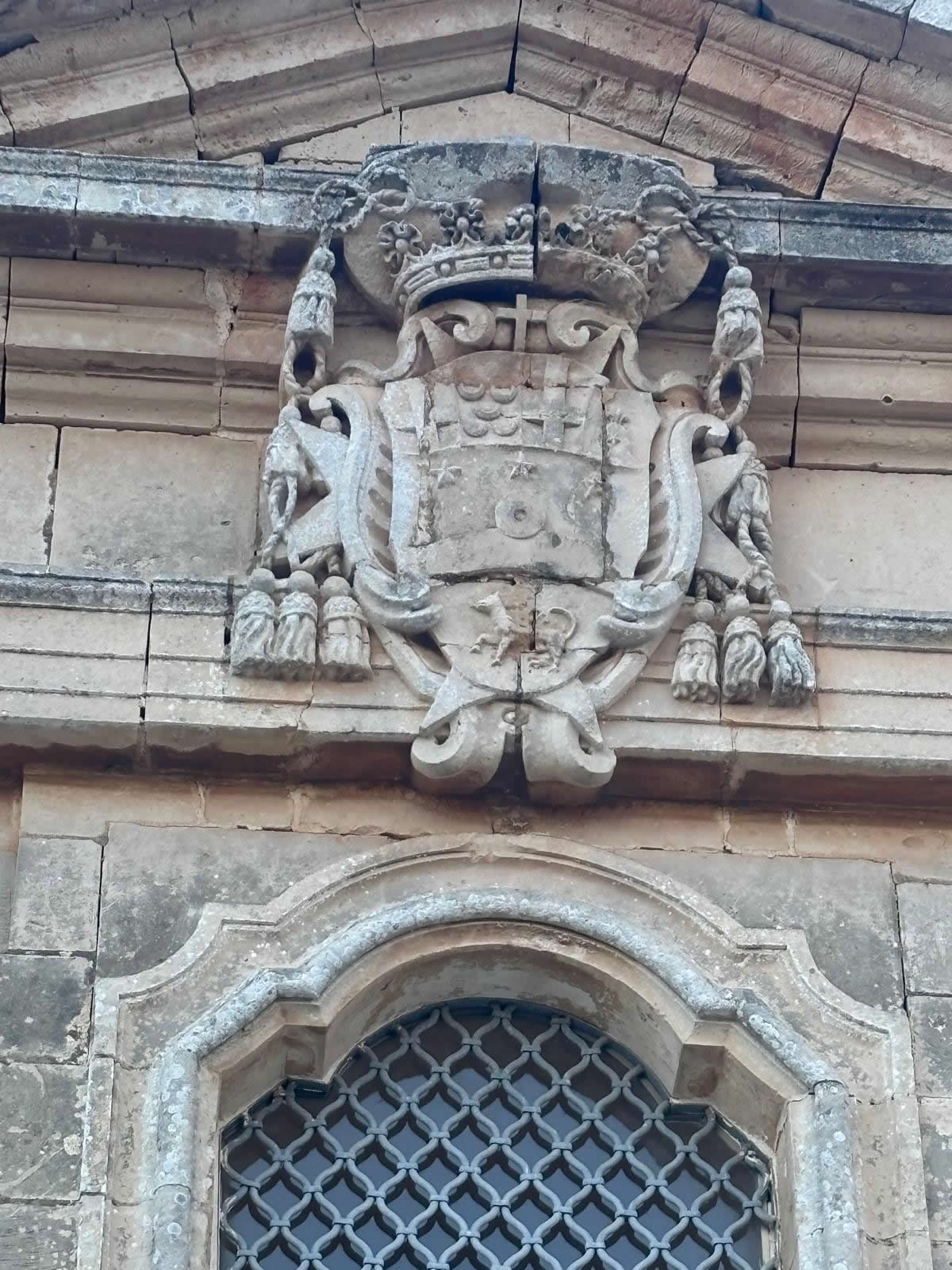
Heraldry and inscriptions
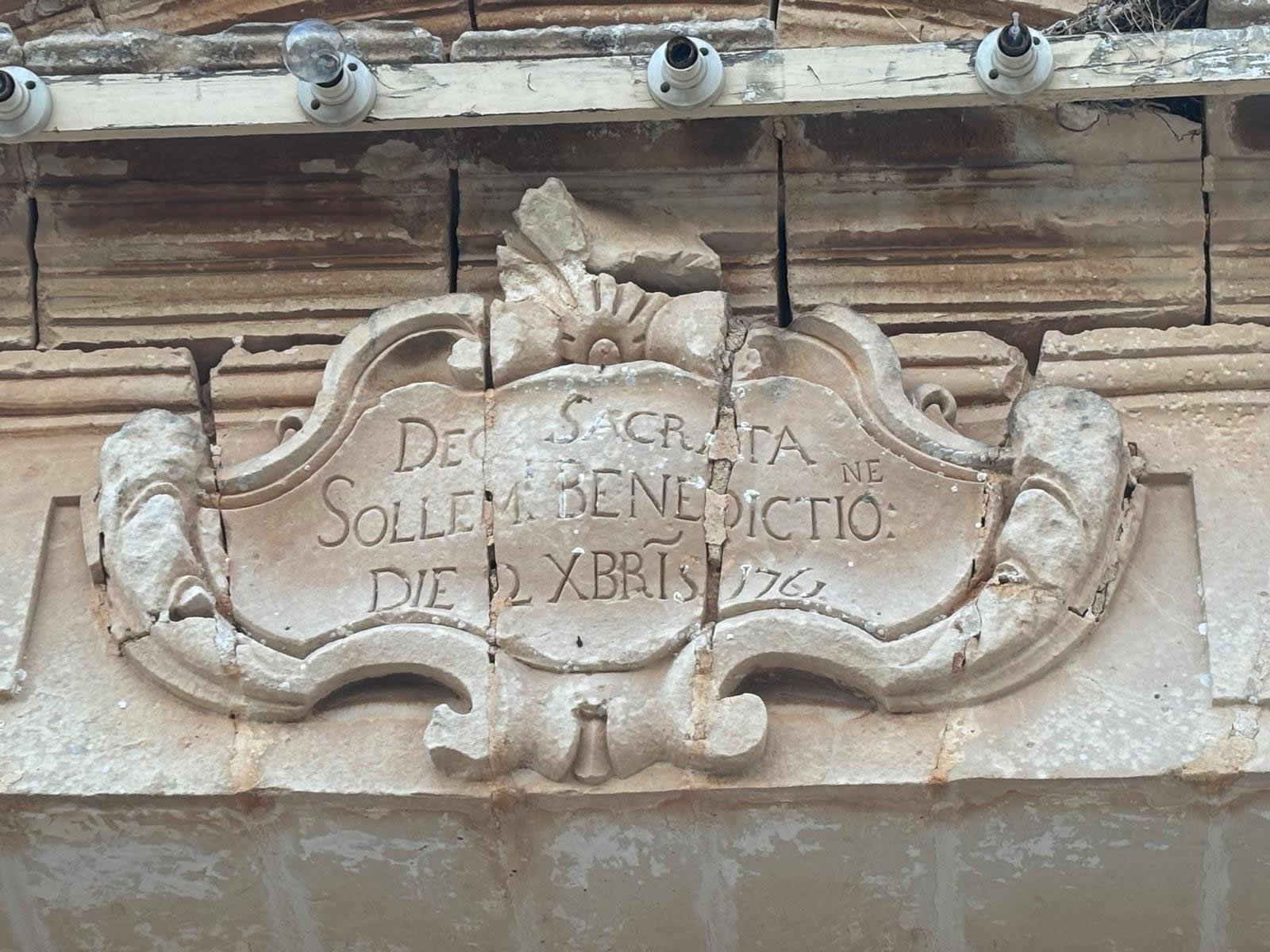
Decorative elements include coats of arms and commemorative inscriptions associated with the chapel’s completion and construction narrative.
Artworks associated with the chapel
The chapel is linked to an altarpiece tradition attributed to Mattia Preti’s workshop; the original is associated with the Żabbar Sanctuary Museum,
while a copy is kept in the chapel.
Timeline of key dates (confirmed / widely cited)
Date / period
Event
Early 16th century
Evidence for an earlier St Nicholas chapel in the Żonqor area.
1575
Pastoral visitation notes the earlier chapel’s basic condition and lack of fittings.
25 March 1659
Earlier chapel(s) profaned/deconsecrated due to poor condition.