📍 Location
Location Map Coordinates 35.885826, 14.518202
Senglea (L-Isla), Malta

Introduction
The Basilica of the Nativity of Mary, located in Senglea (L-Isla), Malta, is one of the most historically significant Marian churches on the island. Dedicated to the Nativity of the Blessed Virgin Mary, the basilica stands as a powerful symbol of faith, resilience, and national identity. Its origins are deeply tied to the aftermath of the Great Siege of Malta in 1565, and its history reflects both the triumphs and tragedies experienced by the Maltese people over centuries.

Today, the basilica serves as an active parish church, a Marian sanctuary, and a major focal point of religious devotion, particularly during the annual feast of the Nativity of Mary celebrated on 8 September.
Foundation and Early Construction (1580–1743)
The original church was constructed around 1580, most likely designed by the architect Vittorio Cassar, as a monument commemorating the Christian victory over the Ottoman forces during the Great Siege of Malta in 1565.
Senglea itself became a parish in 1581, and the church quickly developed into the spiritual centre of the fortified maritime city. The building reflected the architectural language of the late 16th century, combining simplicity with strong structural elements typical of Maltese ecclesiastical architecture.

The church was officially consecrated on 20 October 1743, marking its elevation in importance within the ecclesiastical hierarchy of Malta.
Elevation to Collegiate Church and Basilica
The importance of the Senglea church continued to grow throughout the 18th and 20th centuries. On 21 May 1786, Pope Pius VI granted the church the prestigious title of “collegiata insignis,” recognising its importance as a collegiate church.

In 1921, Pope Benedict XV elevated the church to the status of a minor basilica, further enhancing its religious and cultural significance.
That same year, the venerated statue of the Virgin Mary, known locally as Il-Bambina, was solemnly crowned, cementing the basilica’s role as a Marian sanctuary and pilgrimage destination.

Destruction During World War II
One of the most dramatic chapters in the basilica’s history occurred during the Second World War. Senglea, due to its strategic location within the Grand Harbour, was heavily bombed during air raids in 1941. The church suffered devastating damage, with much of its structure reduced to ruins.
Contemporary accounts describe the town as almost entirely destroyed, with the parish church left as a shell of shattered walls. The destruction of the basilica symbolised the wider suffering endured by the Maltese population during the war.

Reconstruction and Consecration (1946–1956)
Following the end of the war, efforts began to rebuild the basilica. Reconstruction took place between 1946 and 1956, incorporating surviving elements of the original structure while introducing new architectural features suited to the post-war context.

The rebuilt church was consecrated on 24 August 1956 by Archbishop Mikiel Gonzi, marking a moment of renewal and resilience for the community of Senglea.
The new design retained the Baroque spirit of the original structure while reflecting mid-20th century architectural sensibilities.

Architectural Features
The basilica’s façade is characterised by a grand central axis flanked by two bell towers, creating a balanced and imposing appearance. A prominent central portal, Corinthian columns, and a triangular pediment contribute to its classical aesthetic.
Above the façade, the dome rises as a defining feature of the skyline of Senglea, symbolising both spiritual aspiration and architectural achievement.
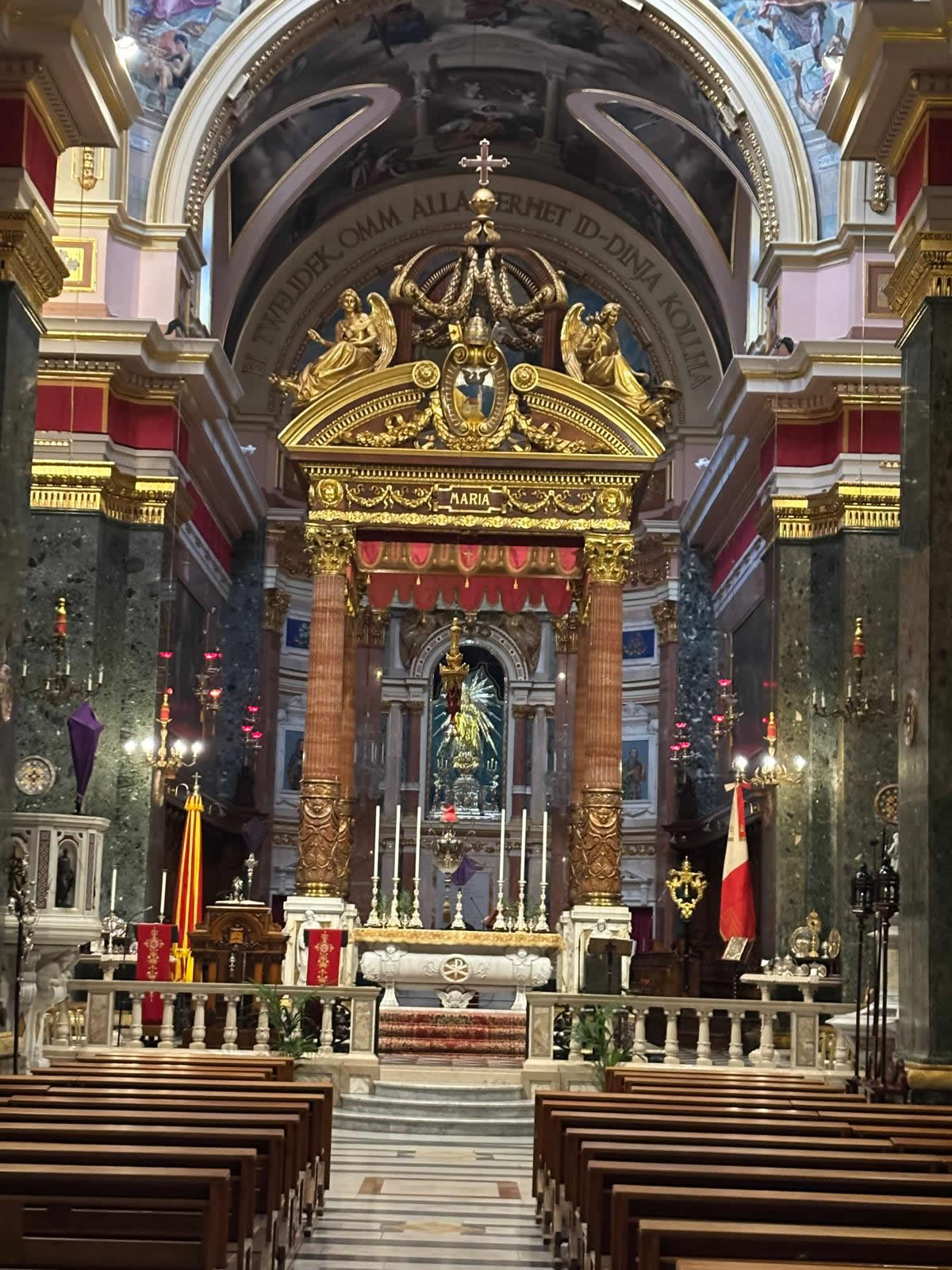
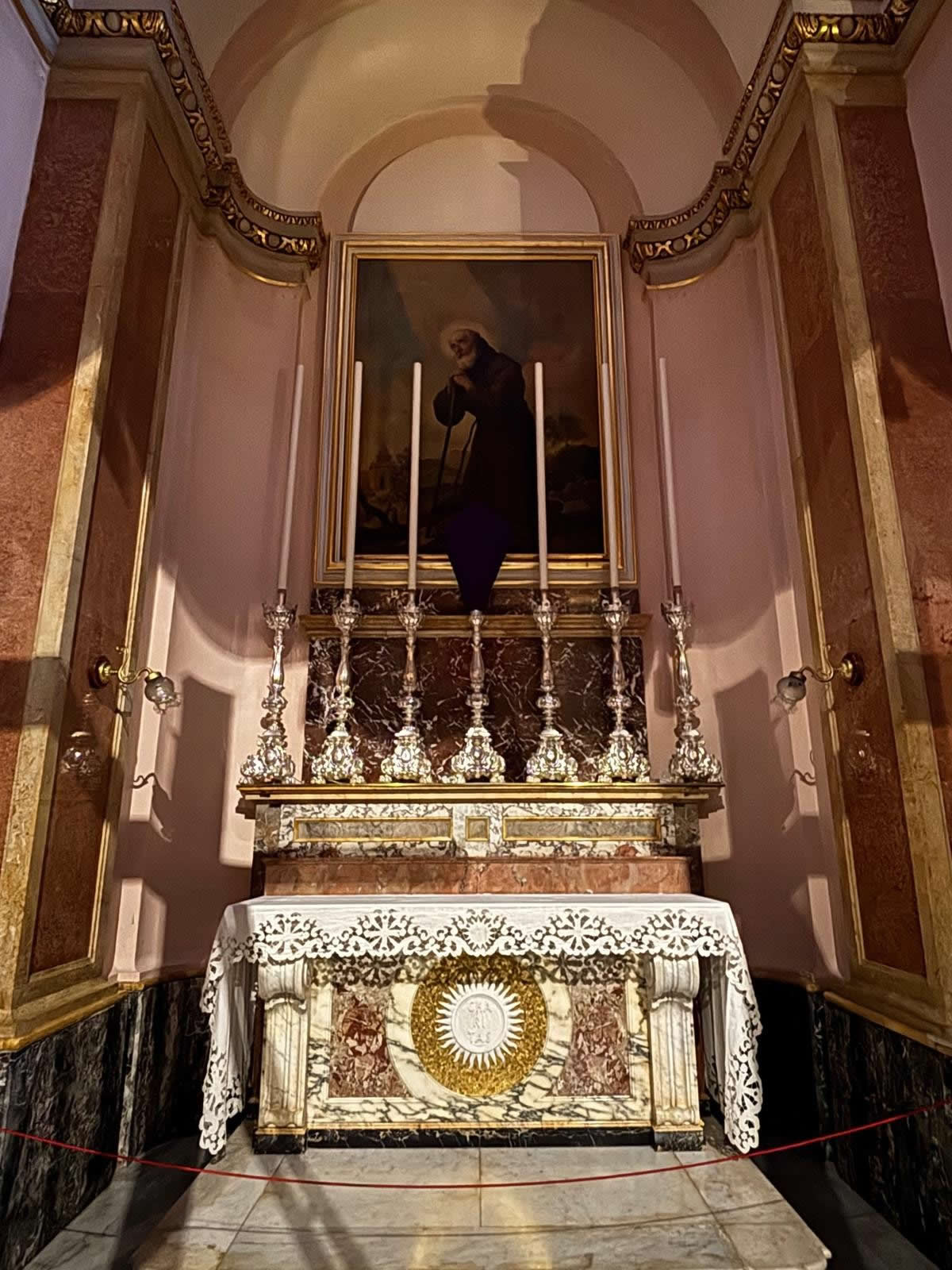
Internally, the basilica features a spacious nave, side chapels, and a richly decorated sanctuary. The use of Maltese limestone allows for intricate carving and detailing, contributing to the overall Baroque atmosphere.

Artworks and Treasures

The most important artistic and devotional object within the basilica is the wooden statue of the Virgin Mary, known as Il-Bambina. Carved in 1618, painted in 1631, and later gilded, this statue holds deep significance for the people of Senglea.
The statue was crowned in 1921, with a crown adorned with precious stones, marking its status as a central object of Marian devotion.

Surrounding the statue are four silver angels, added in 1934, enhancing the visual and symbolic richness of the sanctuary.
Additional artistic elements include:
- Decorative columns featuring saints associated with the Virgin Mary
- Marble statues and liturgical furnishings introduced during the post-war reconstruction
- Choir paintings, including modern additions inaugurated in 2021
Manuscripts and Archives
The basilica also houses an important archive containing manuscripts dating back to the 17th and 18th centuries.
Among these is a significant diary by Francesco Saverio Baldacchino, offering insights into Malta’s history during the final years of the Knights of St John and the early British period.
These archives contribute to the basilica’s role not only as a place of worship but also as a centre of historical research and cultural preservation.

Religious Role and Feast
The basilica remains an active parish church and plays a central role in the religious life of Senglea. The annual feast of the Nativity of Mary on 8 September is one of the most important religious celebrations in Malta, commemorating both the birth of the Virgin Mary and the victory of the Great Siege.
During the feast, the statue of Il-Bambina is carried in procession through the streets of Senglea, accompanied by music, decorations, and traditional celebrations.

Symbolism and Cultural Significance
The Basilica of the Nativity of Mary is not merely a religious building but a symbol of resilience and identity for the Maltese people. Its destruction and subsequent rebuilding reflect the enduring spirit of the community.
The dedication to the Nativity of Mary also connects the basilica to a broader tradition within Christianity, celebrating the birth of the Virgin as a moment of hope and renewal.
Visitor Experience
Today, visitors to Senglea can explore the basilica as part of a wider journey through Malta’s rich religious and cultural heritage. The church’s location overlooking the Grand Harbour adds to its appeal, offering both historical insight and scenic views.
The basilica is open to the public and continues to host regular liturgical services, making it both a living place of worship and a historical landmark.
Conclusion
The Basilica of the Nativity of Mary in Senglea stands as a testament to Malta’s deep-rooted faith, artistic heritage, and resilience in the face of adversity. From its origins in the aftermath of the Great Siege to its destruction during World War II and subsequent reconstruction, the basilica embodies the enduring spirit of the Maltese people.
Through its architecture, artworks, and living traditions, it remains one of the most important Marian sanctuaries in Malta and a key destination for visitors and pilgrims alike.
Frequently Asked Questions
Where is the Basilica of the Nativity of Mary located?
It is located in Senglea (L-Isla), Malta, overlooking the Grand Harbour.
When was it rebuilt?
It was rebuilt between 1946 and 1956 after being destroyed in World War II.
What is Il-Bambina?
It is the revered wooden statue of the Virgin Mary housed in the basilica.