📍 Location
Location Map Coordinates 35.885924, 14.517737
Triq il-Kurċifiss, Senglea (L-Isla), Malta

Introduction
The Holy Crucifix Church, commonly known as the Oratory of the Kurċifiss, is one of the most important devotional sites in Senglea (L-Isla), Malta. Closely associated with the Confraternity of the Holy Crucifix, this historic oratory has played a central role in the spiritual life of the city for over four centuries.
Although modest in scale compared to the nearby basilica, the church is renowned throughout Malta for housing the revered statue of Christ the Redeemer, one of the most venerated devotional images on the island.

Origins and Foundation (1615)
The origins of the Holy Crucifix Church can be traced back to 1615, when a small chapel dedicated to Our Lady of Charity was established within the parish complex of Senglea.
This early chapel eventually developed into a separate oratory dedicated to the Crucifix, reflecting the growing devotion to Christ’s Passion among the local population.

The Confraternity of the Holy Crucifix, composed of lay members devoted to charitable and religious works, played a key role in the development and expansion of the oratory.

Completion and Baroque Development (1733)
The oratory as it is known today was completed in 1733, featuring architectural and artistic elements typical of the Maltese Baroque period.
The interior decoration was designed to inspire devotion, with emphasis placed on the Passion of Christ. Rich ornamentation, sculptural details, and carefully composed altars contributed to the overall spiritual atmosphere of the space.

The Statue of Christ the Redeemer (1742)

The most significant feature of the church is the statue of Christ the Redeemer, created in 1742 by the sculptor Saverio Laferla.

This statue quickly became the focal point of devotion in Senglea and beyond. It is particularly associated with miraculous events, including its veneration during times of plague and hardship.
In 1813, during a severe plague outbreak in Malta, the statue was carried in procession, strengthening its reputation as a powerful symbol of protection and hope.
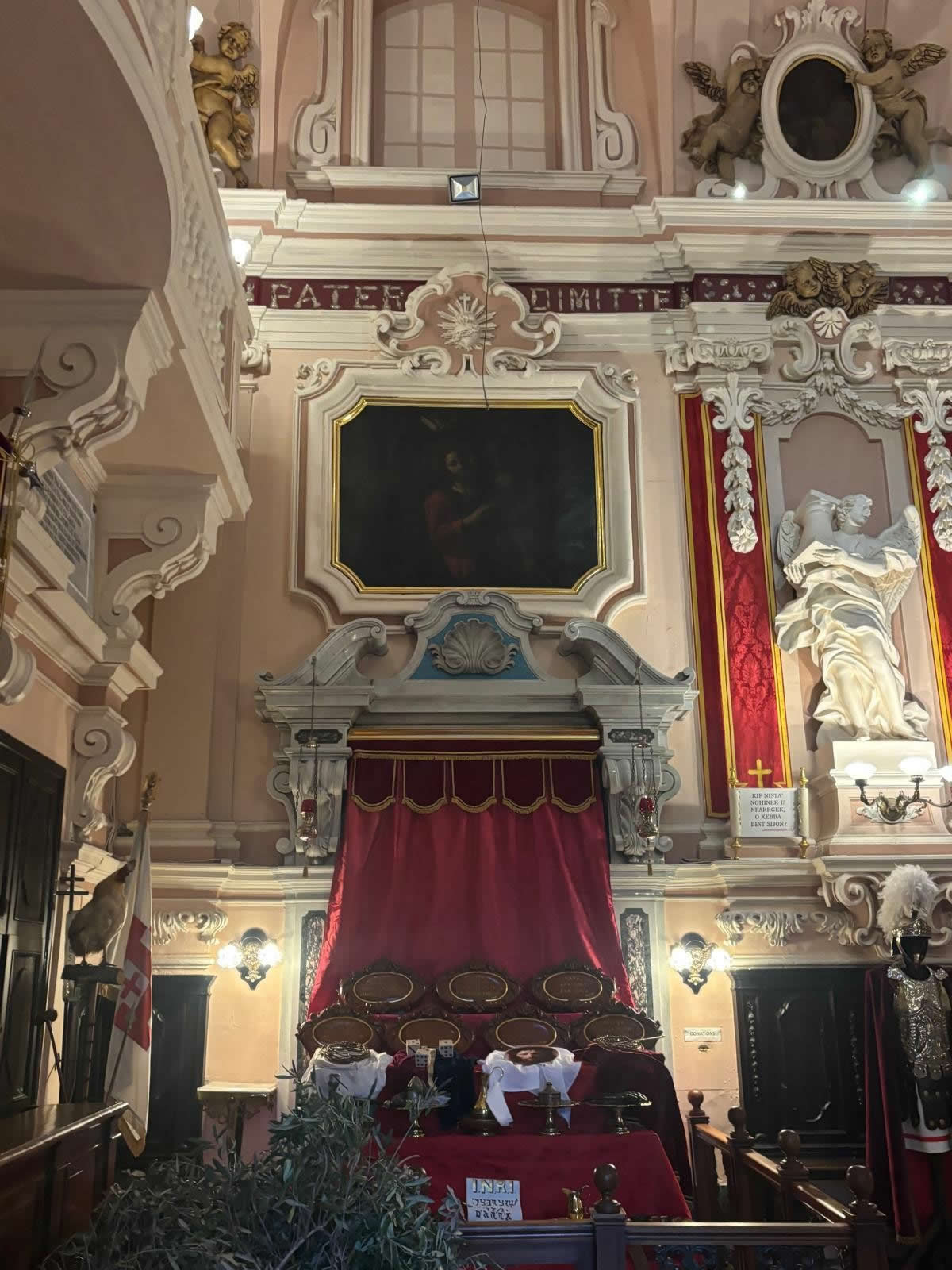
Role of the Confraternity
The Confraternity of the Holy Crucifix has been central to the church’s history. These lay members were responsible for organising religious activities, maintaining the oratory, and assisting the poor and needy.
Their work reflects a broader tradition in Malta, where confraternities played an essential role in social and religious life, particularly in urban communities like Senglea.

Damage During World War II (1941)
On 11 April 1941, during one of the most intense periods of aerial bombardment in Malta, the Holy Crucifix Oratory suffered significant damage.
Despite the destruction, the building was not completely lost. The statue of Christ the Redeemer was removed for safekeeping and transferred to another location, ensuring its survival during the war.
This period marked one of the most challenging moments in the history of the church and the city of Senglea as a whole.

Post-War Restoration
Following the end of World War II, the oratory was carefully restored, with efforts made to return it to its former appearance.
The statue of the Redeemer was eventually returned to its rightful place within the church, symbolising the resilience and faith of the Senglean community.
Restoration work included structural repairs, conservation of artistic elements, and renewal of decorative features.

Architectural Features
The Holy Crucifix Church is characterised by its intimate scale and devotional atmosphere. Unlike larger parish churches, the oratory was designed for smaller gatherings and personal prayer.
Its façade is simple yet elegant, while the interior features a single nave leading to the main altar. Decorative elements emphasise themes of sacrifice, redemption, and divine mercy.
The use of Maltese limestone provides a warm and cohesive visual effect, typical of ecclesiastical buildings in the region.
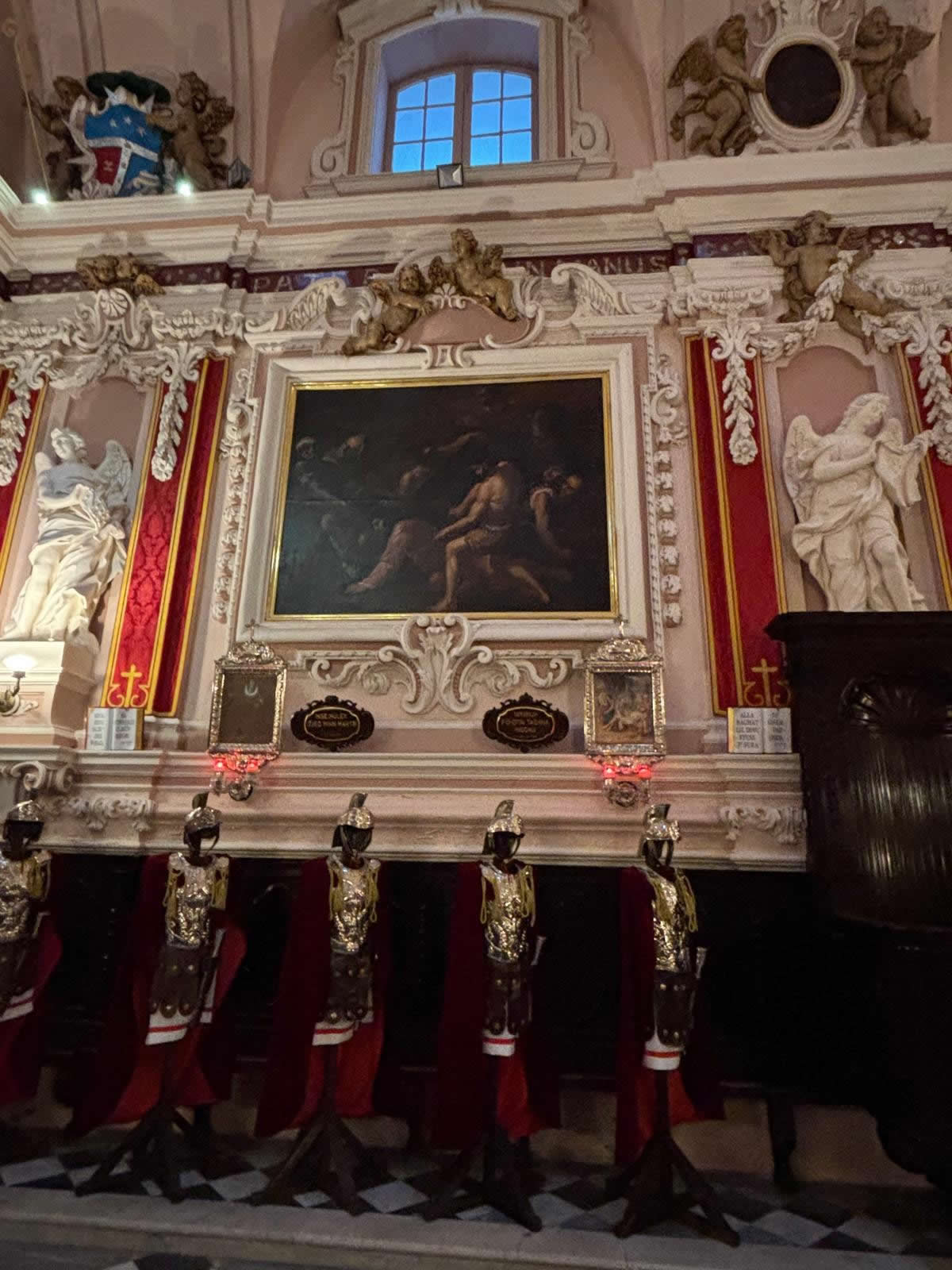
Artworks and Interior Decoration
In addition to the statue of the Redeemer, the church contains various artistic elements that enhance its spiritual significance.
- Baroque altars and sculptural decorations
- Religious paintings depicting the Passion of Christ
- Votive offerings from devotees
These elements contribute to the overall devotional character of the oratory, making it a place of reflection and prayer.

Religious and Cultural Significance
The Holy Crucifix Church holds a special place in the religious life of Senglea. It is closely associated with processions and devotional practices, particularly those centred on the statue of Christ the Redeemer.
These traditions continue to attract devotees from across Malta, reinforcing the church’s role as a spiritual centre.
Modern Use
Today, the church remains an active place of worship, used for private prayer, religious services, and special devotions.
It also serves as a cultural landmark, preserving an important aspect of Senglea’s heritage and identity.
Visitor Experience
Visitors to Senglea can explore the Holy Crucifix Church as part of a broader journey through the Three Cities. Its quiet atmosphere and historical significance make it a meaningful stop for those interested in Malta’s religious traditions.
The church’s location along Triq il-Kurċifiss adds to its charm, situated within the historic urban fabric of the city.
Conclusion
The Holy Crucifix Church in Senglea stands as a powerful symbol of faith, devotion, and resilience. From its origins in 1615 to its role today, it reflects the enduring spiritual traditions of the Maltese people.
Through its architecture, artworks, and devotional practices, the church continues to inspire both residents and visitors, preserving a vital part of Malta’s religious heritage.
Frequently Asked Questions
What is the Kurċifiss Church in Senglea?
It is a historic oratory dedicated to the Holy Crucifix and home to the statue of Christ the Redeemer.
When was it built?
The origins date to 1615, with completion in 1733.
Why is it important?
It is one of Malta’s most important centres of devotion to Christ the Redeemer.