📍 Location
Location Map Coordinates 35.885472, 14.403503

Introduction
The Knisja u Monasteru ta' San Pietru, known in English as the Church and Monastery of St Peter, is one of the most historic religious complexes in the fortified city of Mdina, Malta. Situated close to the entrance of the ancient city, the monastery has long served as a centre for contemplative religious life and remains closely associated with the Benedictine order.
For centuries the monastery housed cloistered Benedictine nuns who lived a life of prayer, seclusion, and devotion within the ancient walls of Mdina. The complex includes the monastery buildings, gardens, and the church dedicated to St Peter and St Benedict.

Foundation of the Monastery
The origins of the monastery date to 1455, when it was established by Pope Callixtus III following a request by the citizens of Mdina.
The new religious institution was built on the site of a medieval hospital which had previously served the local community. This conversion reflects the transformation of many medieval charitable institutions into religious establishments during the late medieval period.
The monastery became the principal residence of Benedictine cloistered nuns in Malta, marking an important stage in the development of female monastic life on the island.
Development of the Benedictine Community
From the fifteenth century onwards the monastery served as a spiritual centre for Benedictine nuns. Young women often entered the monastery at an early age, committing themselves to a life dedicated to prayer, contemplation, and religious discipline.
The community grew significantly over the centuries, and at its height the monastery accommodated dozens of nuns within its walls.

Reconstruction of the Church
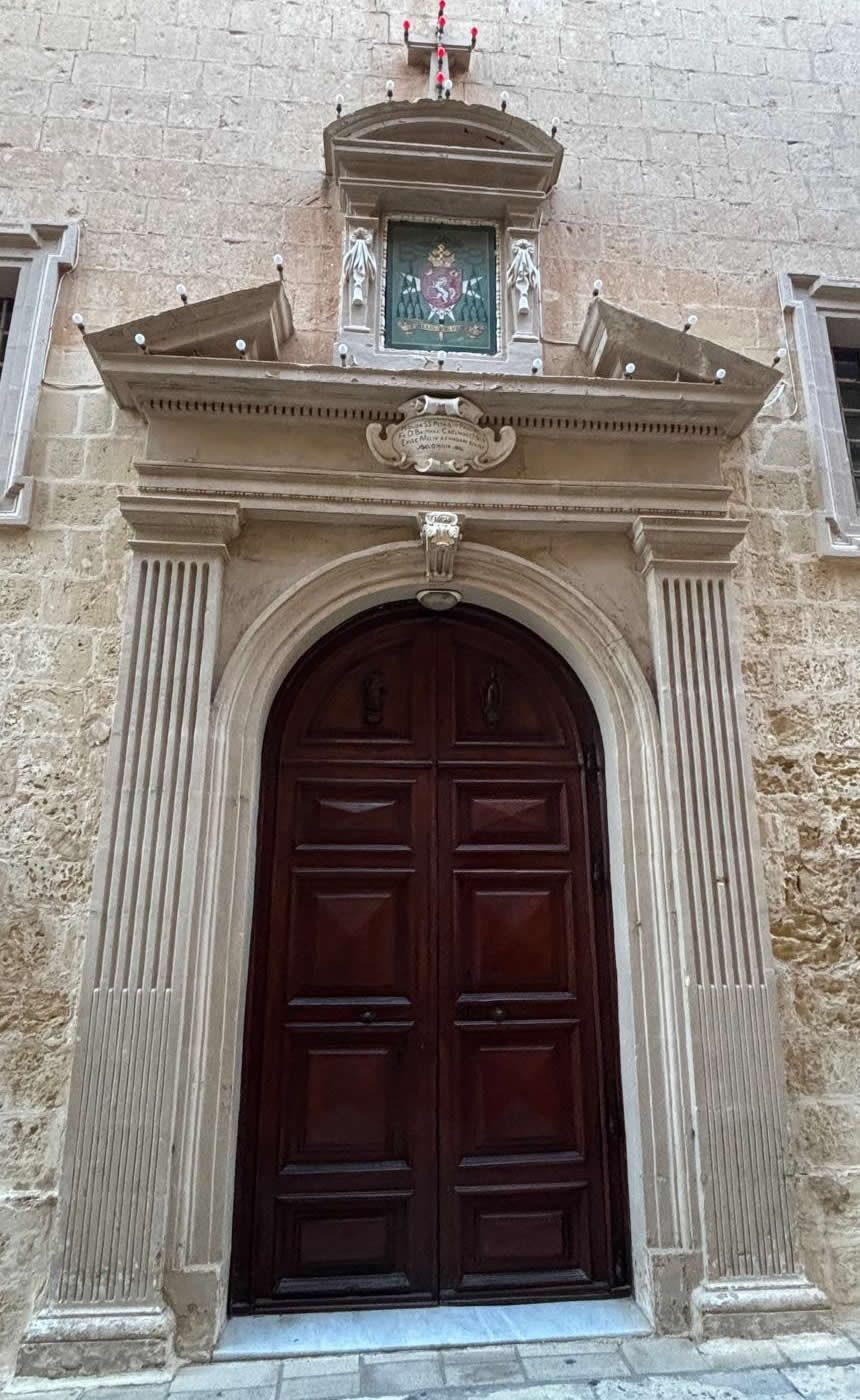
The church attached to the monastery was largely rebuilt around 1625, during the episcopate of Bishop Baldassare Cagliares.

The reconstruction gave the church its present appearance and introduced elements typical of Maltese Baroque architecture. The coat of arms of Bishop Cagliares remains displayed above the church entrance as a reminder of his role in the reconstruction.

Architecture
The architectural design of the church reflects the restrained Baroque style typical of smaller ecclesiastical buildings in Malta. Constructed from local limestone, the façade is characterised by simple proportions and elegant decorative details.

The interior layout follows a traditional chapel design centred around the main altar. The surrounding monastery complex includes cloisters, gardens, and residential quarters which once formed the secluded living space of the Benedictine community.

Artworks
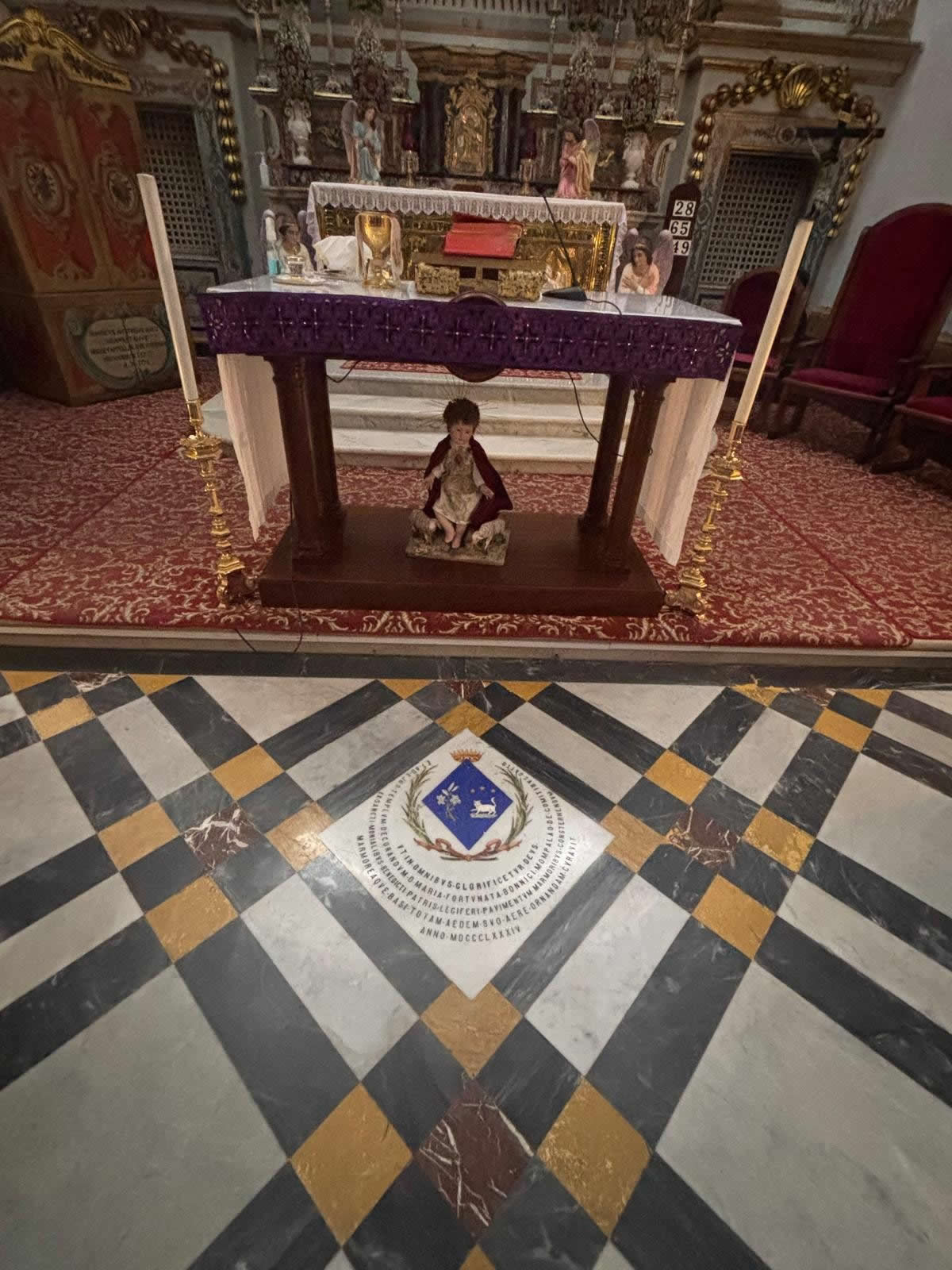
The church contains several notable works of art. The most significant is the 1682 altarpiece by the renowned Baroque artist Mattia Preti.

This painting depicts the Madonna and Child accompanied by St Peter, St Benedict, and St Scholastica, reflecting the spiritual heritage of the Benedictine order.

Additional artworks within the church include paintings attributed to Maltese artist Francesco Zahra, including depictions of the Resurrection of Christ and Our Lady of the Pillar.

Blessed Maria Adeodata Pisani
One of the most significant historical figures associated with the monastery is Blessed Maria Adeodata Pisani, a Benedictine nun who lived in the monastery during the nineteenth century.
She was renowned for her deep spirituality and devotion and later became one of Malta’s most revered religious figures. Her remains are preserved within the monastery complex, and she was beatified by Pope John Paul II in 2001.

Opening to the Public
For centuries the monastery remained closed to the outside world due to the strict enclosure rules observed by the Benedictine nuns. However, in recent years parts of the complex have occasionally opened to the public, allowing visitors to explore sections of the historic buildings and learn about the life of the cloistered community.

Recent Developments
In 2026 the Holy See announced the suppression of the monastery after administrative disputes regarding lease agreements signed without the necessary canonical authorisation.
Following this decision, administrative responsibility for the property was transferred to the Abbot Primate of the Benedictine Order.

Location
| Church | Church and Monastery of St Peter |
|---|---|
| Maltese Name | Knisja u Monasteru ta' San Pietru |
| Location | Mdina, Malta |
| Coordinates | 35.885472, 14.403503 |
| Founded | 1455 |
| Reconstruction | 1625 |
| Order | Benedictine |
| Dedication | St Peter and St Benedict |

Conclusion
The Church and Monastery of St Peter remains one of the most historically significant religious institutions in Mdina. Its centuries-long association with the Benedictine order and its role in the spiritual life of Malta have made it an important landmark within the ancient city.
Today the monastery stands not only as a place of historical and architectural interest but also as a reminder of the long tradition of contemplative religious life in Malta.
