History
1) A medieval gate on Mdina’s land front
Greeks Gate began as a medieval entrance near the southwest corner of Mdina. Unlike later ceremonial gateways, it was primarily practical: a controlled opening through the land-front fortifications, helping regulate who and what could pass into the city.
2) Why it’s called “Greeks Gate”
The gate’s name remembers a small Greek community once living in this part of Mdina. It also holds a striking social-history detail: local tradition records Greeks Gate as the entrance through which enslaved people were allowed to enter Mdina.
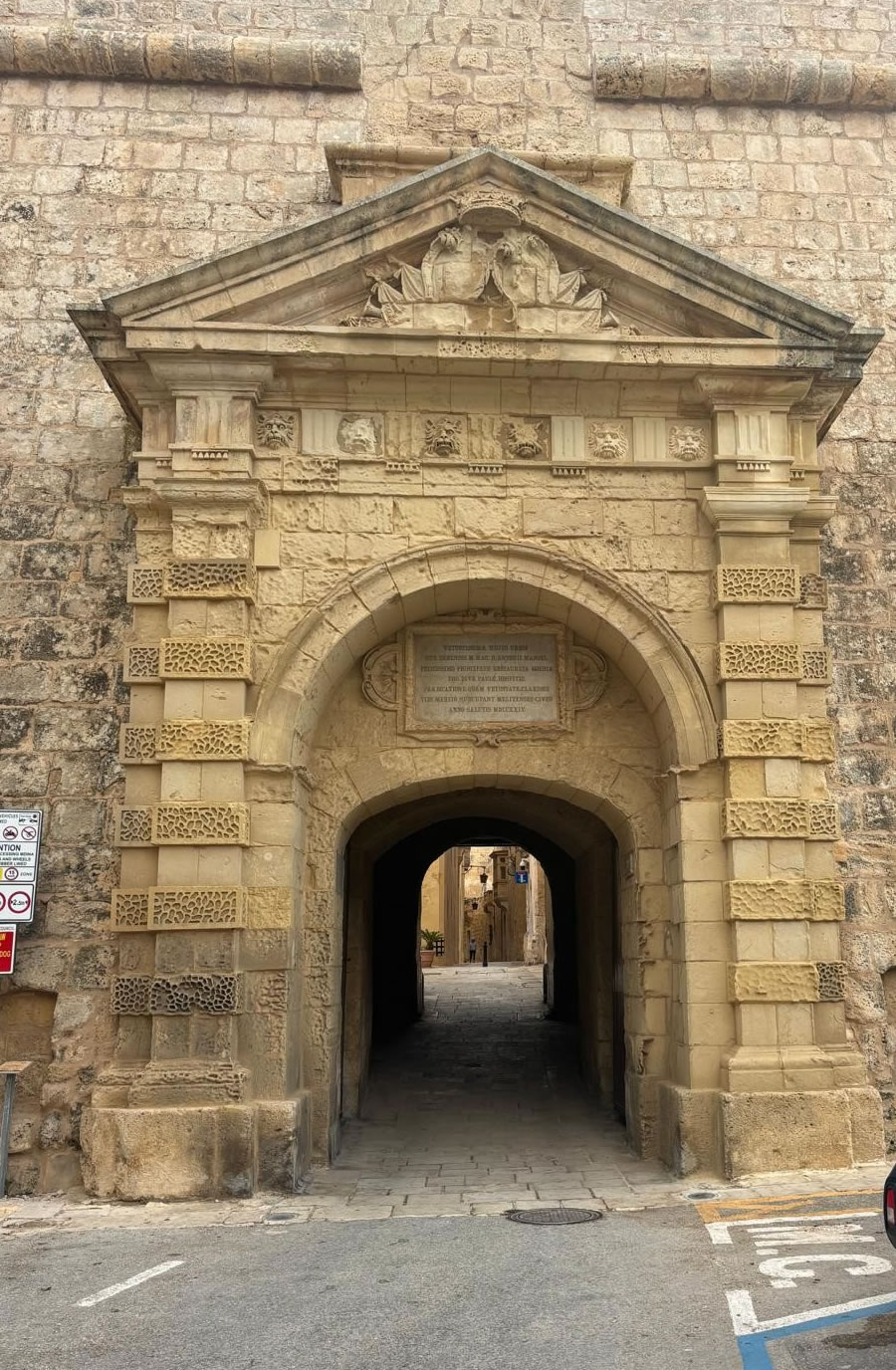
3) 1724: the Baroque portal added by Mondion
In the early 18th century, Mdina’s land-front defences were upgraded and the gate’s approach was refashioned. The result is what visitors recognise today: a Baroque outer portal, dated 1724, attributed to the military engineer and architect Charles François de Mondion. Importantly, the rear/inner gate still retains its medieval form, so the structure remains one of the most “readable” survivals of Mdina’s older walls.
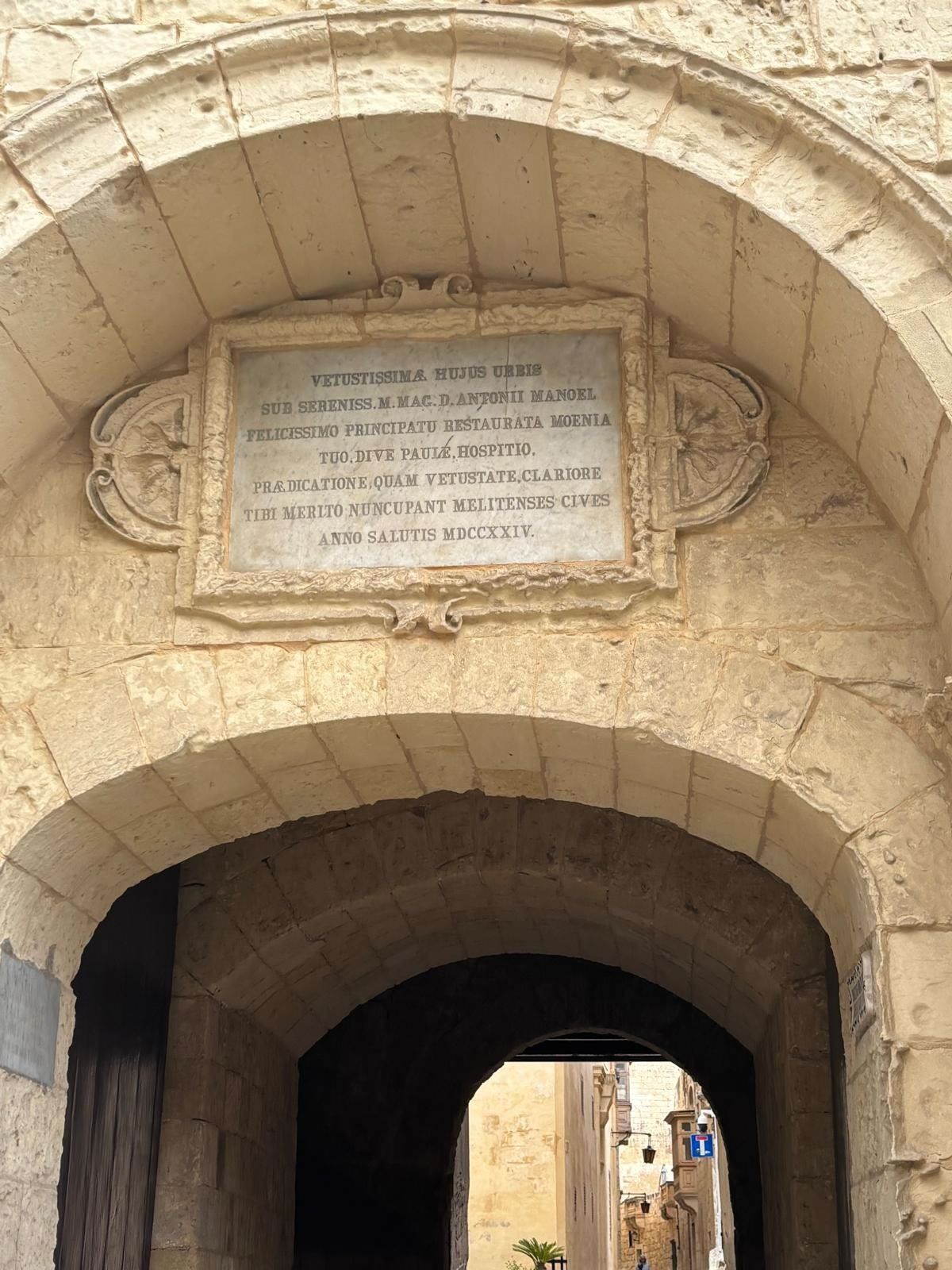
4) How the gate works: a “double gateway”
Greeks Gate is best understood as two vaulted gateways aligned one behind the other. In between, the passage once served as a highly controllable choke-point (historically including guard functions). Today, the layered geometry is one reason the gate photographs so well: the arches frame each other like a stone telescope.
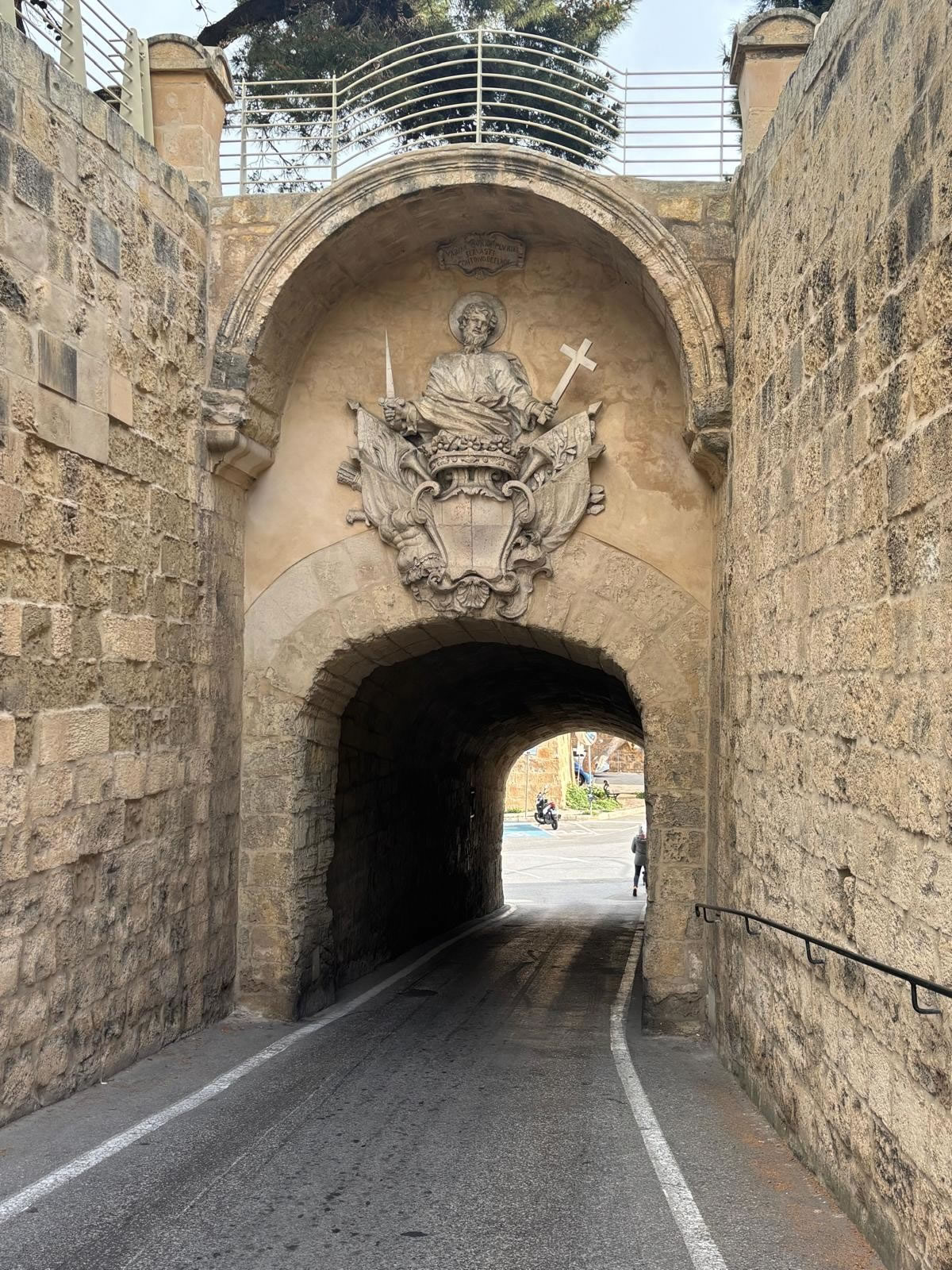
5) Restoration and conservation (2003, 2015–2016, 2023)
Conservation has been an ongoing story. The gate was restored between January and June 2003. Further works were planned in the mid-2010s, with restoration commencing in late 2015 and completing in early 2016. A later government-announced intervention began in July 2023, extending restoration to parts of the medieval fortifications and the gate, with completion targeted for November 2023.
Timeline (key dates)
- Medieval period — Inner Greeks Gate established as part of Mdina’s defensive entrance system.
- Early 18th century — Fortification upgrades reshape the land-front sector around the gate.
- 1724 — Baroque outer portal added; dated inscription and attribution to Charles François de Mondion.
- Jan–Jun 2003 — Restoration works carried out (cleaning, consolidation, vegetation removal).
- Late 2015 – early 2016 — Restoration campaign completed on the gate and nearby areas.
- July 2023 — New restoration works announced on the medieval fortifications and Greeks Gate; completion aimed for Nov 2023.
Visiting notes
Best photo angles
For the “double-portal” effect, step back to frame the Baroque façade and the medieval arch in one shot. Late-afternoon light often enhances the relief and carving.
Connect it to Mdina’s main arrival
Pair Greeks Gate with Mdina Gate (Vilhena Gate) to show how Mdina has two distinct “arrival experiences”: a formal Baroque entrance vs a layered medieval-and-Baroque back gate.