History
1) Before 1724: the medieval gate complex
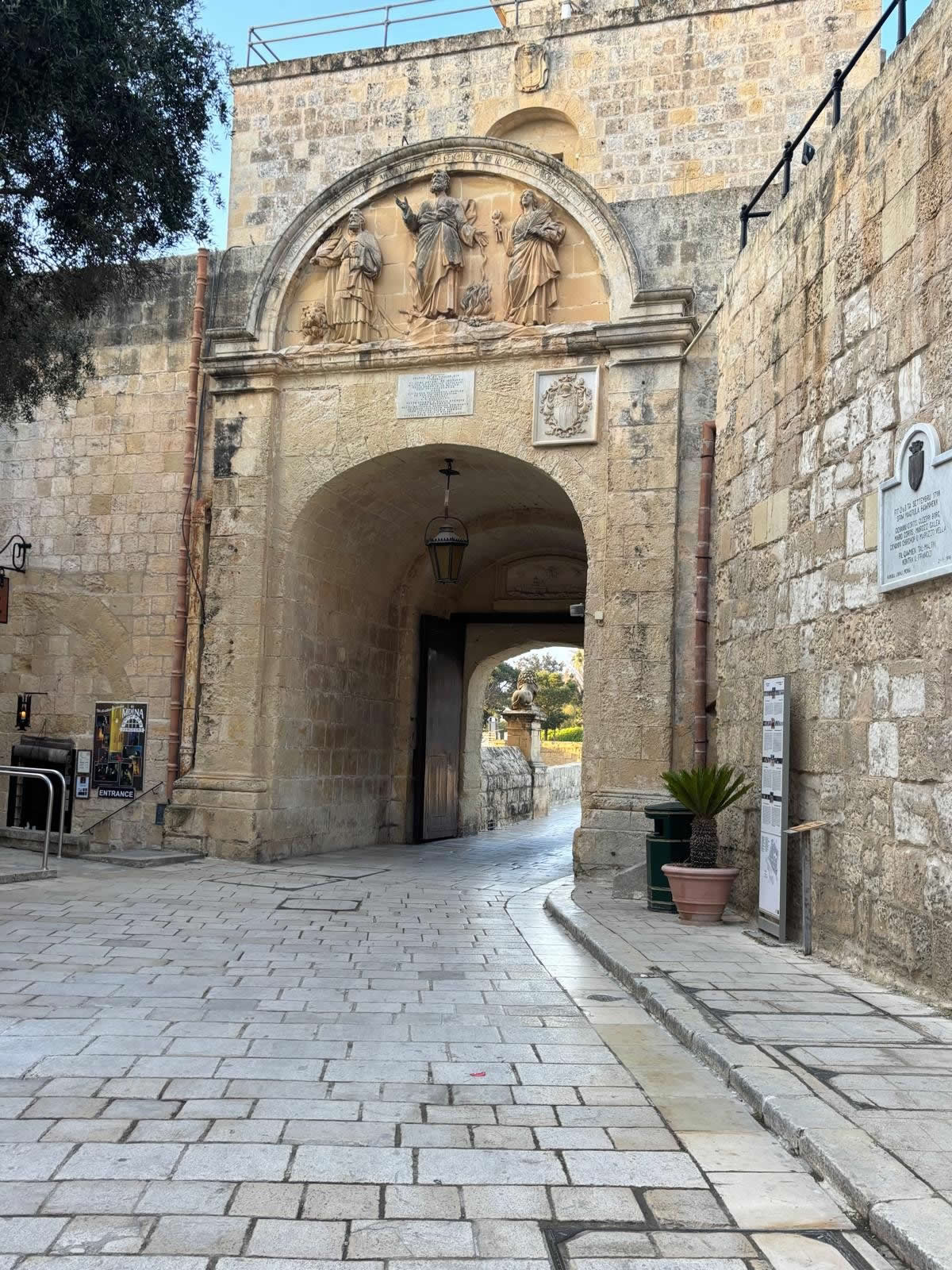
In the medieval period, Mdina’s main entrance was not a single gateway but a sequence of gates and courtyards designed to slow and control access. Historic summaries describe a three-gate arrangement, with an outer gate known as the Prima Porta Principale (also called Porta di Santa Maria), along with defensive additions and later reconstructions across the centuries.
2) 1722–1724: Vilhena’s rebuilding and the new Baroque gate
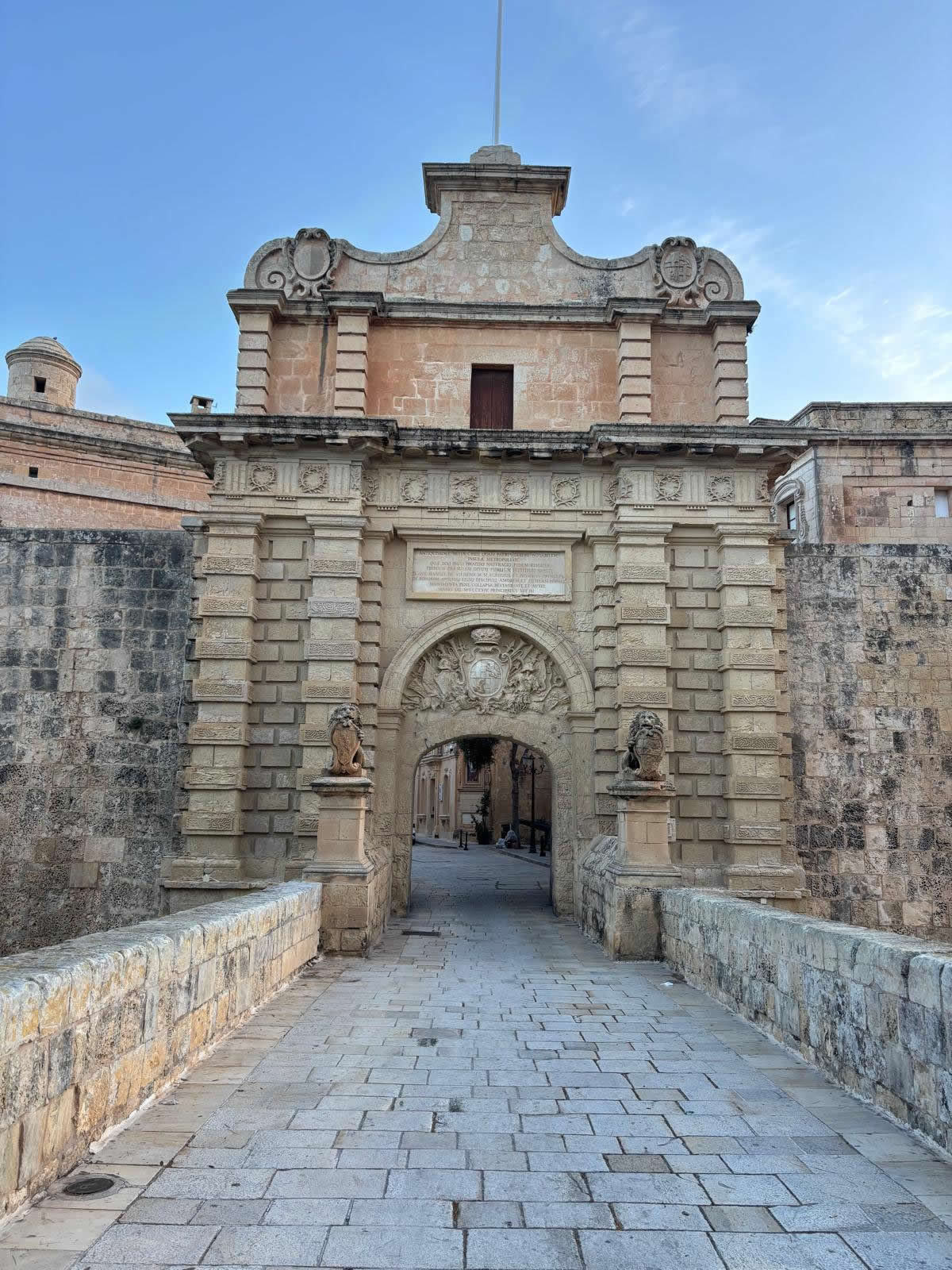
In 1722, Grand Master Vilhena ordered a major programme of restoration and renovation for Mdina. The city entrance was completely rebuilt and the present Baroque gate was constructed in 1724 to designs by Charles François de Mondion. This rebuilding was tied to the creation of Palazzo Vilhena, which required demolishing the old courtyards behind the medieval gate; the earlier entrance was walled up and the new gate was placed slightly to the side.
3) Later heritage status and restoration
Mdina Gate became one of Malta’s best-known monuments and was included in the Antiquities List of 1925. It is scheduled as a Grade 1 national monument and recorded in Malta’s national cultural inventory (Mdina Main Gate inventory reference 1459). The gate was restored in 2008 by the Restoration Unit of the Works Department.
Timeline (key dates)
- Medieval period — Mdina’s main entrance develops as a multi-gate defensive complex.
- 1722 — Grand Master Vilhena orders restoration and renovation of Mdina, including the entrance.
- 1724 — Present Mdina Gate completed (Baroque), designed by Charles François de Mondion.
- 1925 — Listed on Malta’s Antiquities List.
- 2008 — Restoration works carried out by the Restoration Unit.
- 28 June 2013 — “Main Gate – Mdina” published in the National Inventory entry (inventory ref. 1459).
Visiting notes
What to look for
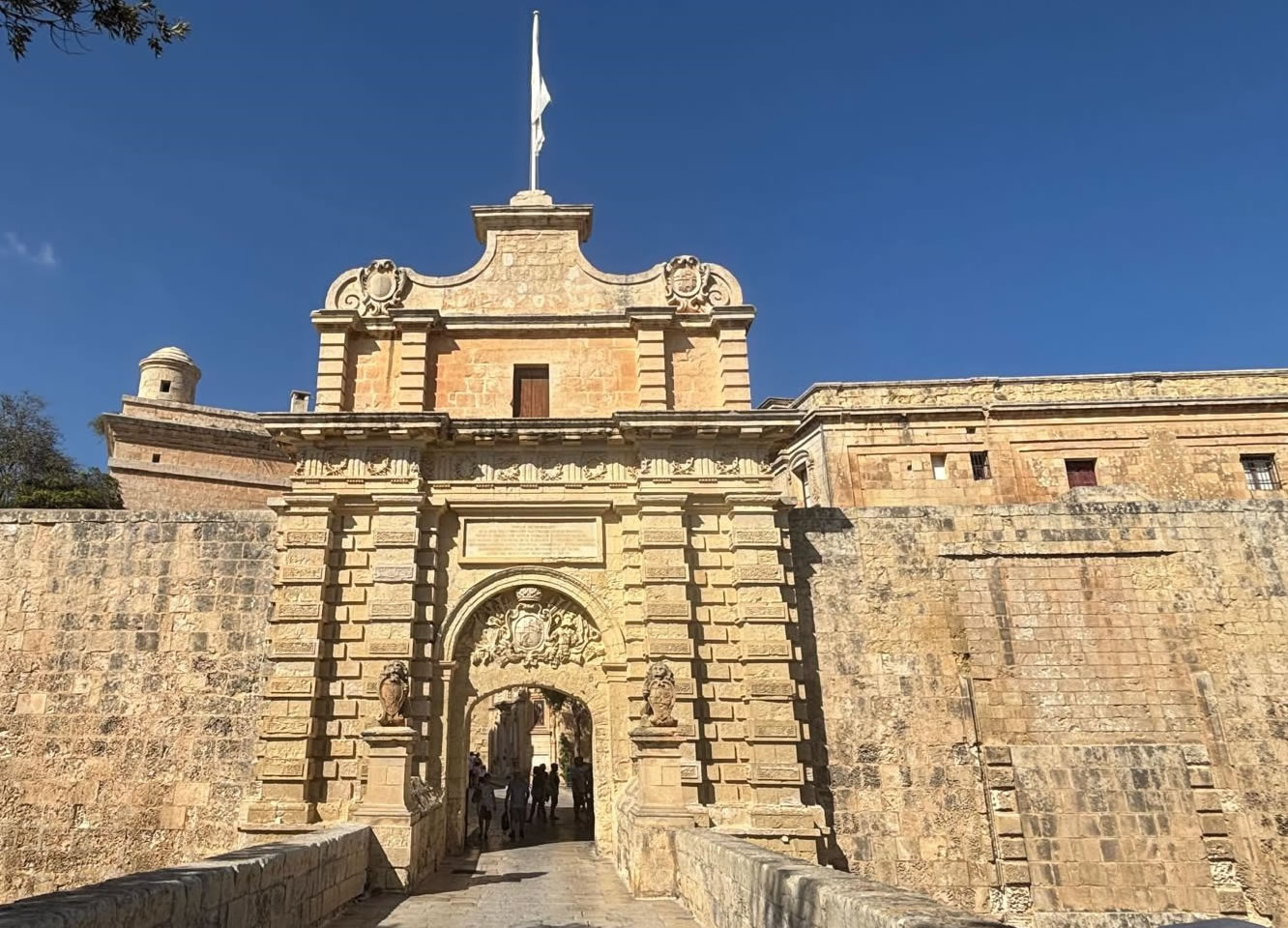
The gate’s Baroque composition is designed as a statement of arrival: note the symmetry, the sculpted elements, and the way the entrance frames the first interior vista into Mdina.
Pair it with nearby heritage
Immediately inside the gate is Palazzo Vilhena, an 18th-century Baroque addition associated with the same building programme.