Introduction
The 1592–1593 plague epidemic in Malta stands as one of the most devastating health crises in the islands’ early modern history. Occurring during the rule of the Order of St John, this outbreak of bubonic plague (Yersinia pestis) killed approximately 3,000 people, representing around 11% of Malta’s population.
Spanning multiple waves between June 1592 and September 1593, the epidemic profoundly reshaped Maltese society. It influenced the development of public health systems and left a lasting impact on urban planning, burial practices, and religious traditions across the islands.
Historical Context: Malta in the Late 16th Century
In the late 1500s, Malta was a strategic Mediterranean stronghold governed by the Knights Hospitaller. The islands relied heavily on maritime trade, particularly with Sicily and North Africa, which made them especially vulnerable to the introduction of infectious diseases.
Malta had already experienced earlier outbreaks of plague in 1427–1428 and 1523, though these were more localized and less widespread.
In addition, a famine in the early 1590s weakened the population—particularly in rural areas—further increasing susceptibility to disease and reducing the island’s resilience in the face of epidemic spread.
Arrival of the Plague (May 1592)
The 1592–1593 plague epidemic in Malta began on 7 May 1592, when Tuscan galleys arriving from Alexandria (Egypt) brought infected crew members and captives to the island.
- The ships had already experienced deaths during the voyage
- Approximately 150 captives and cargo were brought ashore
- The disease initially went unrecognized and misdiagnosed
This failure to correctly identify the plague at an early stage allowed it to spread rapidly across Malta, ultimately leading to one of the most devastating epidemics in the islands’ history.
Three Waves of the Epidemic
The 1592–1593 plague epidemic in Malta unfolded in three distinct waves, each increasing in severity and impact.
First Wave (June – September 1592)
- The initial outbreak spread across key harbour towns
- The disease was misdiagnosed as a venereal illness
- A temporary decline occurred by late summer
Second Wave (November 1592 – January 1593)
- Infections re-emerged after a brief lull
- Authorities mistakenly believed the epidemic had ended
Third Wave (March – September 1593)
- The most severe and deadly phase of the epidemic
- Rapid spread throughout Malta
- Communities and burial systems were overwhelmed
These successive waves highlight the challenges faced by authorities in understanding and controlling the spread of the disease.
Public Health Measures and Early Quarantine Systems
The 1592–1593 plague epidemic in Malta marked a turning point in the islands’ approach to disease control, introducing structured public health strategies that would shape future responses to epidemics.
Isolation and Quarantine
- The Infermeria delle Schiavi in Birgu was converted into an isolation hospital
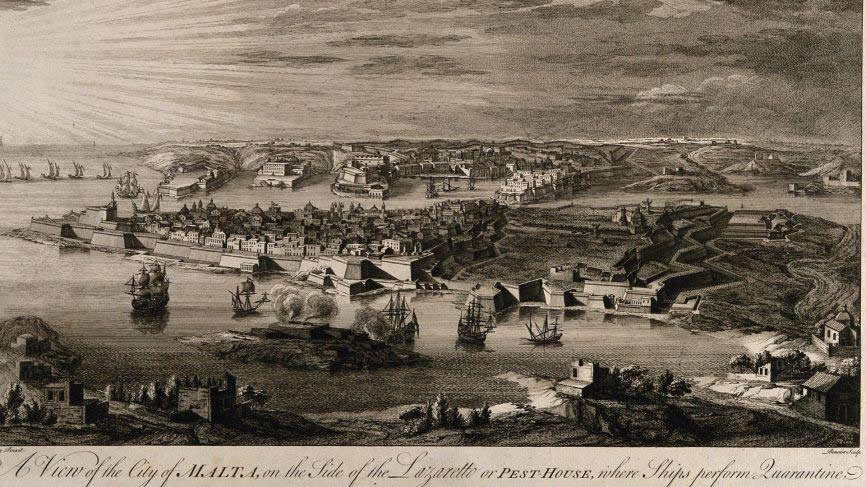
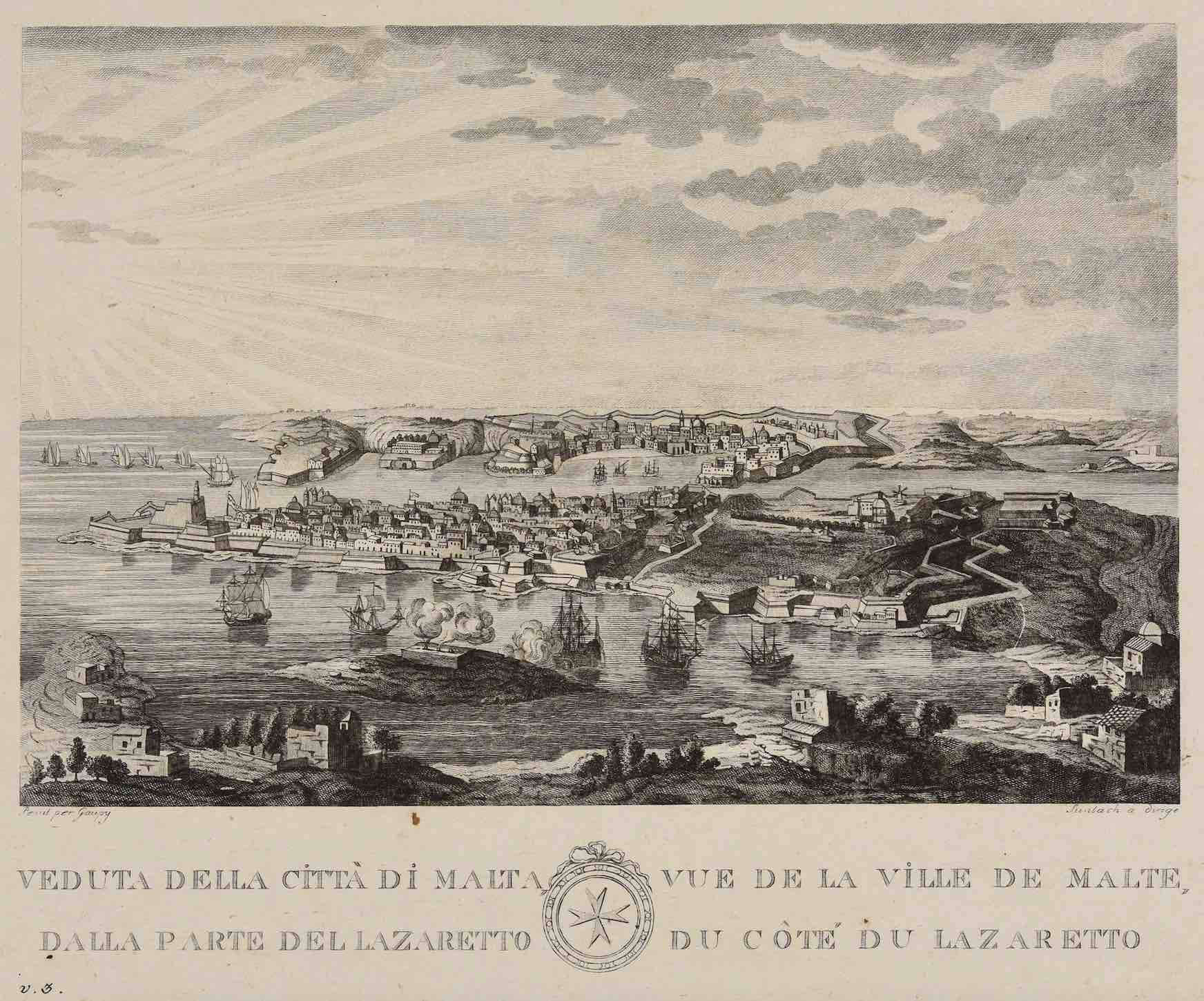
- A dedicated quarantine facility (Isolotto) was established in Marsamxett Harbour
- Approximately 900 infected or suspected individuals were isolated
Strict Social Controls
- Families were confined to their homes
- Only one person per household was permitted to leave daily
- Violations were punished harshly, including flogging or death
Sanitation Measures
- Homes were washed and disinfected using seawater and lime
- Burial grounds were regularly disinfected
- Public washing stations were established
Animal Control
- Dogs were culled in urban areas
- Cats were spared to control rodents, although the link to rats was not yet fully understood
These measures demonstrate an early understanding of contagion and laid the foundations for Malta’s later and more advanced quarantine system.
Burial Practices and the Rise of Plague Cemeteries
One of the most significant changes introduced during the 1592–1593 plague epidemic in Malta was a transformation in burial customs, which had lasting cultural and urban implications.
Before the Plague
- Burials typically took place inside churches or within church precincts
During the Epidemic
- Victims were buried in extramural plague cemeteries located outside settlements
- This marked the first recorded use of dedicated plague cemeteries in Malta
This shift reflected growing awareness of contagion and the need to separate the infected from populated areas during times of epidemic.
A notable legacy site associated with this period is the Church of Our Lady of Sorrows in Pietà, which was later built near a plague burial ground linked to the epidemic.
Medical Intervention and Foreign Expertise
As the epidemic intensified, the Grand Master of the Order of St John sought external assistance from Sicily to help contain the crisis.
- Dr Pietro Parisi of Trapani arrived in Malta in May 1593
- He coordinated closely with local Maltese physicians and health commissioners
- Stricter quarantine enforcement and improved sanitation protocols were implemented
These coordinated medical and administrative interventions played a crucial role in controlling the spread of the disease and ultimately bringing the epidemic to an end.
End of the Epidemic
By mid-1593, the outbreak began to decline due to strict public health measures, and Malta was declared safe in 1594.
Legacy of the 1592–1593 Plague
The 1592–1593 plague epidemic in Malta had profound and lasting consequences that reshaped the islands’ public health systems, urban landscape, and religious life for centuries to come.
1. Development of the Lazzaretto System
The temporary quarantine facilities established during the epidemic later evolved into a permanent Lazzaretto on Manoel Island. This institution became the backbone of Malta’s quarantine system and played a crucial role in protecting the islands from future outbreaks.
2. Public Health Awareness
The epidemic reinforced early concepts of contagion, isolation, and sanitation. Authorities increasingly recognised the importance of quarantine, controlled movement, and hygiene, influencing Malta’s response to later epidemics.
3. Urban and Religious Impact
- Creation of new cemeteries outside urban centres
- Shift away from burials inside churches
- Rise in devotion to plague saints such as St Roch
- Establishment of chapels and religious sites linked to epidemic memory
4. Later Epidemics in Malta
Despite improved measures, Malta continued to face outbreaks in the following decades:
- 1623 – Minor outbreak
- 1655 – Limited spread
- 1675–1676 – Major epidemic causing approximately 11,300 deaths
These later events further validated the importance of the quarantine systems and public health strategies first strengthened during the 1592–1593 plague.
Frequently Asked Questions
What caused the 1592–1593 plague in Malta?
The epidemic was caused by Yersinia pestis introduced via infected ships.
How many people died?
Approximately 3,000 people, around 11% of the population.
How was it controlled?
Through quarantine, isolation, sanitation, and strict regulations.
Where were victims buried?
In plague cemeteries outside towns rather than inside churches.
What was its long-term impact?
It led to the development of Malta’s quarantine system and improved public health policies.