📍 Location
Location Map Coordinates 35.880749, 14.518315
Introduction
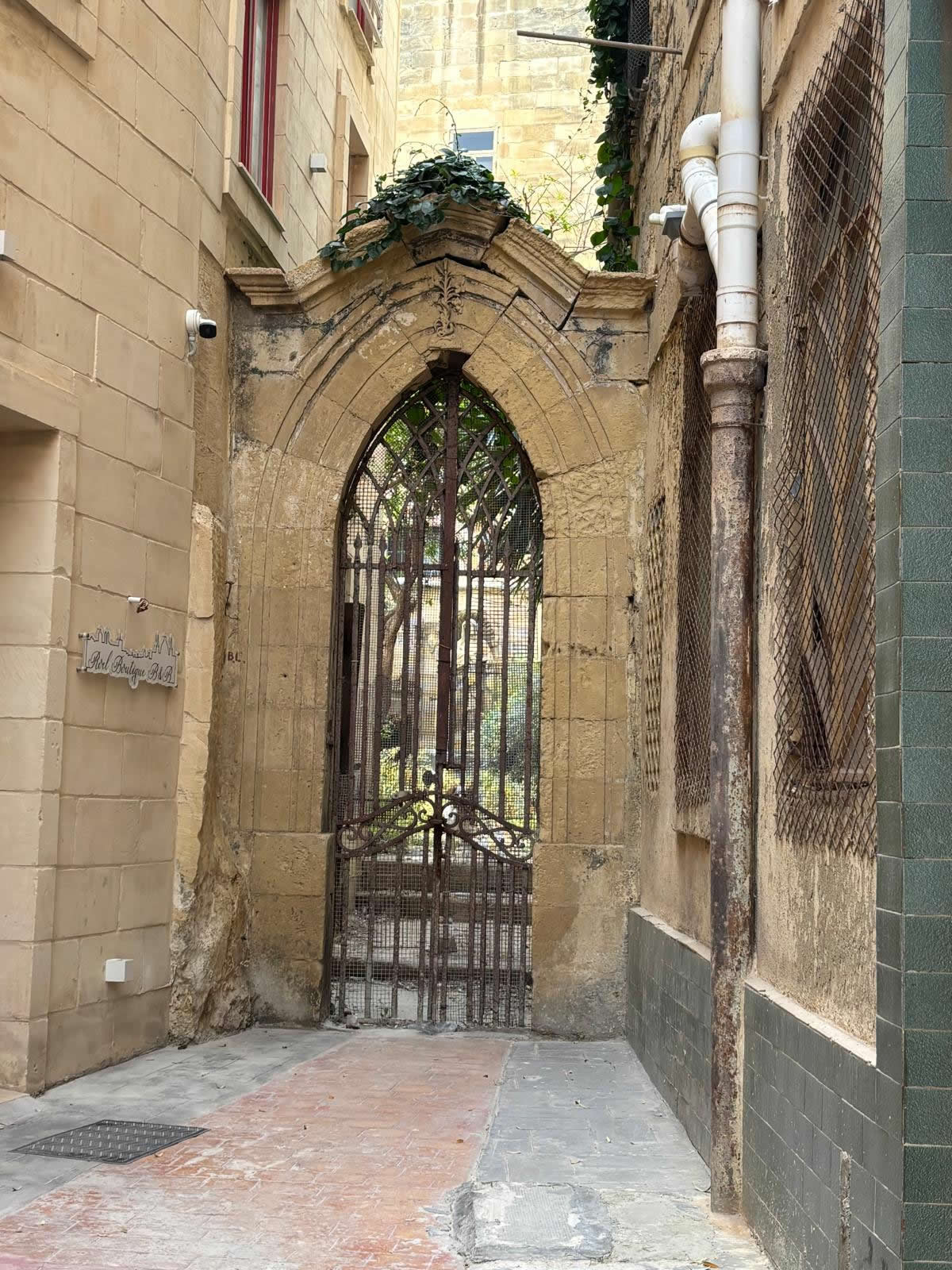
Hidden within the historic landscape of Cospicua (Bormla) lies one of Malta’s lesser-known but deeply significant plague sites — the Cimiterju tal-Infetti, or Cemetery of the Infected. Associated with the devastating Great Plague of 1675–1676, the cemetery stands as a rare surviving reminder of the largest epidemic in Maltese history.

Located in the Cottonera area of the Grand Harbour region, the cemetery was established specifically for plague victims during a period when Malta was overwhelmed by disease, fear, and mass mortality. Although much of the original burial ground has disappeared beneath later urban development, surviving architectural fragments and devotional features continue to preserve the memory of those buried there.
Today, the site remains historically important not only as a burial ground but also as part of Malta’s wider history of quarantine, epidemic management, and religious devotion during times of crisis.

The Great Plague of 1675–1676
The cemetery is directly connected to the Great Plague of Malta of 1675–1676, the deadliest epidemic ever recorded on the islands. The outbreak began in Valletta in December 1675 and rapidly spread across the harbour cities. The epidemic ultimately claimed approximately 11,300 lives from a population estimated between 60,000 and 70,000 people.
The disease was almost certainly bubonic plague caused by Yersinia pestis, most likely introduced through infected goods arriving from North Africa, particularly Tripoli.

The harbour region suffered particularly severe losses due to its population density and maritime activity. Historical records indicate that approximately 1,320 inhabitants of Cospicua died during the epidemic, giving the city one of the highest mortality rates in Malta.
The overwhelming number of deaths quickly exceeded the capacity of existing church burial spaces, leading to the establishment of emergency plague cemeteries outside normal residential zones.

Establishment of Cimiterju tal-Infetti
Cimiterju tal-Infetti was created as a dedicated burial ground for victims of contagious disease during the plague emergency. The term “tal-Infetti” literally means “of the infected,” clearly identifying the cemetery’s function.

Like many plague cemeteries across Europe, the site was intentionally positioned away from densely populated residential areas in accordance with contemporary public health measures and religious practices.
During the epidemic, strict sanitary controls were imposed throughout Malta by the Order of St John. Special plague commissioners oversaw isolation hospitals, quarantine zones, and burial operations.
Victims were often buried rapidly in communal graves due to the sheer scale of mortality. Burial ceremonies were simplified, and many bodies were transported under strict supervision to avoid further contagion.

Cospicua During the Plague
In the 17th century, Cospicua was already an important maritime and residential centre within the Grand Harbour area. Together with Senglea and Vittoriosa, it formed part of the fortified harbour communities that later became known as the Three Cities.
The plague devastated these densely populated districts. Entire households disappeared, commercial activity collapsed, and fear spread throughout the city.
Historical accounts describe:
- Quarantine enforcement by armed guards
- Closure of homes with infected occupants
- Restrictions on religious gatherings
- Emergency isolation hospitals
- Mass burials in plague cemeteries
The crisis deeply affected both religious and social life in Malta, leading to vows, processions, and dedications to plague saints such as Saint Roch and Saint Sebastian.

Architecture and Surviving Features
Although much of the original cemetery has been lost or altered, several historic elements survive at the site.
One of the most notable surviving features is a devotional stone niche containing a statue of the Virgin Mary, positioned against the historic masonry. The niche displays architectural characteristics associated with late medieval or early Baroque Maltese funerary devotional structures.
The surviving statue appears heavily weathered but retains important artistic details, including:
- Draped robes carved in limestone
- A pointed Gothic-style canopy niche
- Religious symbolism associated with mourning and intercession
- Traditional Maltese devotional sculptural styling
The statue likely served as a focal point for prayer and remembrance for plague victims buried at the cemetery.
Surviving boundary walls and subterranean features may still preserve archaeological remains associated with the original burial ground.
Religious Significance
Religion played a central role in Malta’s response to plague epidemics. The burial ground was not simply a practical necessity but also a sacred space intended to provide dignity and spiritual protection for the deceased.
Catholic belief during the period emphasized:
- Prayer for the souls of the dead
- Intercession by saints
- The importance of blessed burial ground
- Preparation for death during epidemics
The surviving Marian statue reflects these devotional traditions and demonstrates how faith shaped the landscape of epidemic response in Malta.
Urban Development and Decline
Following the end of the plague in 1676, the cemetery gradually fell out of regular use. Over subsequent centuries, urban expansion within Cospicua altered much of the surrounding landscape.
As the Cottonera area developed under the Knights of St John and later British administration, sections of historic burial grounds were absorbed into new streets, buildings, and fortifications.
This process was particularly accelerated during the 19th and 20th centuries, when industrialisation and dockyard expansion transformed the harbour region.
Despite these changes, remnants of Cimiterju tal-Infetti survived, preserving an important physical link to Malta’s plague history.
World War II and the Cottonera Area
Like much of Cospicua, the area surrounding the cemetery suffered damage during the Second World War. The harbour cities endured some of the heaviest bombing in Malta due to their strategic naval importance.
Many historic structures disappeared during this period, making the survival of elements connected to the plague cemetery even more significant.
Restoration and Preservation
In recent years, growing awareness of Malta’s historic cemeteries and plague sites has encouraged renewed interest in preservation.
Although Cimiterju tal-Infetti is not a formal museum or major heritage attraction, the surviving statue and structural remains continue to attract historians, photographers, and heritage enthusiasts.
The site remains valuable for:
- Historical research into Malta’s plague epidemics
- Study of funerary architecture
- Religious heritage documentation
- Understanding public health responses under the Knights
Its preservation contributes to wider efforts to document and protect Malta’s vulnerable lesser-known heritage sites.
Cultural and Historical Importance
Cimiterju tal-Infetti is one of the few surviving physical reminders of the catastrophic Great Plague within the harbour cities.
The cemetery represents:
- The human cost of epidemic disease
- 17th-century quarantine practices
- The relationship between religion and medicine
- The social impact of plague on Malta
- The resilience of harbour communities
Its connection to the broader history of Cospicua also places it within the rich historical landscape of the Three Cities, an area deeply associated with the Knights of St John, maritime trade, and military history.
Nearby Historic Sites
Visitors exploring the cemetery area can also discover several nearby historic landmarks within Bormal (Cospicua) and Birgu in the Cottonera region.
Together, these sites help illustrate the wider historical importance of the harbour cities during the rule of the Knights of St John and later periods of Maltese history.
Visiting the Site
The cemetery is located in Cospicua (Bormla), Malta.
Coordinates: 35.880749, 14.518315
The surviving features are modest and partially hidden within the urban landscape, but they remain an evocative reminder of one of Malta’s darkest historical episodes.
Conclusion
Cimiterju tal-Infetti stands as a solemn memorial to the victims of the Great Plague of 1675–1676. Although much of the original cemetery has vanished over time, the surviving devotional elements and historical memory continue to preserve the story of a community devastated by epidemic disease.
Today, the site forms part of Malta’s wider network of plague heritage locations, connecting modern visitors with the realities of quarantine, mortality, and faith in the early modern Mediterranean world.
Its quiet survival within the urban fabric of Cospicua ensures that the memory of the thousands affected by the plague will not be forgotten.
Frequently Asked Questions
What does “Cimiterju tal-Infetti” mean?
The name means “Cemetery of the Infected” in Maltese.
Which plague epidemic was it associated with?
It is associated with the Great Plague of Malta of 1675–1676.
How many people died in Cospicua during the plague?
Historical records indicate approximately 1,320 deaths in Cospicua.
What survives at the cemetery today?
Surviving features include a devotional statue niche, masonry remains, and traces of the historic burial ground.