📍 Location
Location Map Coordinates 35.856383, 14.510608
Tracing the Development, Epidemic Links, and Ecclesiastical Heritage of a Historic Parish Cemetery

1. Spatial Orientation and Technical Index
The historic Cimiterju tat-Torba (known natively as Iċ-Ċimiterju tat-Torba) is an exceptional example of a traditional, church-run burial ground located within the southeastern inland territory of Gudja. Positioned within a low-lying landscape defined by centuries of agricultural terracing and limestone quarrying, this sacred site has served the local community for generations. It stands as a vital landscape feature tracking the changing demographic and funerary practices of Malta's historic southern settlements.
From a topographical perspective, the cemetery sits along a natural limestone shelf. This placement was historically deliberate: it situated early extramural burials at a safe distance from the residential core of the village while remaining close enough to allow formal funeral processions to travel smoothly from the main parish church.

| Site Survey & Archival Data Sheet | |
|---|---|
| Official Cemetery Name | Cimiterju tat-Torba (Torba Cemetery) |
| Locality Identification | Gudja, South-Eastern Region, Malta |
| Geographical Coordinates | 35.856383, 14.510608 |
| Administrative Model | 100% Church-Run (Under Gudja Parish Jurisdiction) |
| Original Foundation | c. Early Modern Period (With older late-medieval roots) |
| Primary Construction Material | Globigerina Limestone and Compacted Earthen Fill (Torba) |
| Current Operational Status | Active Sacred Burial Ground / Parish Cemetery |

2. Historical Origins and Etymological Foundations
The roots of the Cimiterju tat-Torba reach back to a time when Maltese funerary practices were transitioning away from intramural burials—interments inside parish church crypts—and moving toward open-air, extramural cemeteries. For centuries, Maltese families preferred to bury their deceased beneath the flagstones of their local churches, believing that physical closeness to the altar and holy relics offered spiritual protection. However, by the late 17th and 18th centuries, repeated epidemics and rapid population growth forced both church and state officials to rethink these traditional setups to safeguard public hygiene and preserve precious indoor space.
The name of the cemetery offers an insightful look into historic building techniques. The word Torba refers to a traditional Maltese building material made from crushed, compacted limestone fragments mixed with water and soil. Historically, this material was used to form a dense, hard-wearing foundation layer for floors and roofs. In a burial context, the name likely indicates that the site's early graves were dug into a shallow layer of soil and lined or sealed with a heavy layer of compacted *torba* to keep the graves secure and airtight.

Archival discovery records maintained in the parish logs of Gudja show that this parcel of land had been used for informal, seasonal burials long before its formal layout was constructed. When historic plagues or contagious fevers struck the southern hamlets, victims were often buried rapidly in these outlying fields to minimize the risk of infection in the village center. Over time, what began as a series of emergency quarantine plots was formally recognized by church authorities, who blessed the ground, built protective walls around it, and transformed it into a permanent, consecrated parish cemetery.

3. The Church-Run Model: Administration and Archival Practices
Unlike many of Malta’s large municipal cemeteries, which are managed by state health departments or local government boards, the Cimiterju tat-Torba remains a fully church-run institution. It operates under the direct spiritual and administrative care of the Parish of Gudja. This traditional management model means that the cemetery is governed by canonical laws alongside state health regulations, preserving its unique status as a site of deep communal and parish heritage.
This church-led structure heavily influences how the cemetery's historical data is preserved. Every burial at the site is meticulously logged by hand in the parish's *Liber Mortuorum* (Book of the Dead). For family historians and genealogists tracking ancestors from the southern region, these archives are an invaluable resource. They record not only the dates of death and burial, but often include the cause of death, family lineages, and the specific locations of ancestral plots within the cemetery walls.
The parish priest (*il-kappillan*) handles the day-to-day oversight of the cemetery, ensuring that the allocation of plots respects long-standing family rights while adapting to the modern needs of the community. This continuous connection between the parish church and the burial ground ensures that the site remains an active part of Gudja’s living heritage, where traditional memorial masses and seasonal blessings continue to unite families with their ancestors.
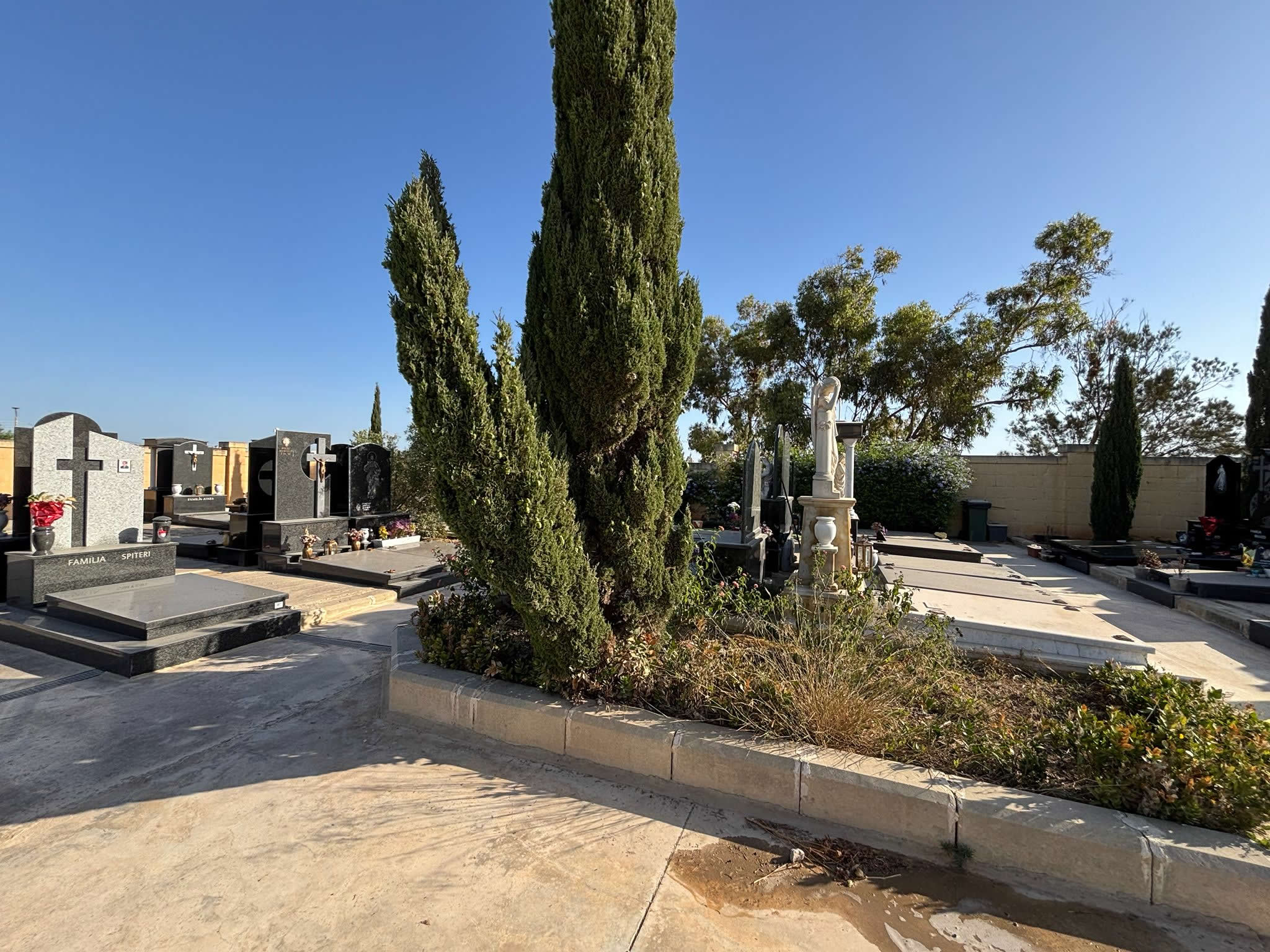
4. Architectural Analysis: Vernacular Mortuary Design
From an architectural perspective, Cimiterju tat-Torba is a classic example of Maltese vernacular mortuary design. It features a layout optimized for solemnity, privacy, and long-term durability. The entire complex is built using locally quarried Globigerina limestone (*franka*), which matures over time into a deep golden-honey hue under the Mediterranean sun.
The Boundary Architecture
The cemetery is enclosed by high, solid limestone walls that create a clear, respectful separation between the busy surrounding roads and the quiet peace of the sacred grounds inside. These walls are topped with traditional stone coping and simple decorative pillars, keeping the architecture focused on quiet reflection. The main entrance features a set of wrought-iron gates framed by two classical stone pilasters, a common layout choice for 18th-century religious enclosures in Malta.
Internal Layout and Path Matrix
Inside the gates, the cemetery follows a clean, geometric grid layout. A central walkway cuts straight through the grounds, leading directly to a small, simple mortuary chapel at the far end. This main path is flanked by neatly arranged rows of family grave plots (*oqbra*).
The individual graves are marked by flat limestone slabs set level with the walkways or by slightly raised stone monuments. Many of these older plots feature hand-carved inscriptions, decorative family crests, and classic funerary symbols, such as dynamic scrollwork or representations of the human soul. This uniform layout reflects the traditional belief in equality in death, where every family within the parish is granted a similar space within the consecrated ground.
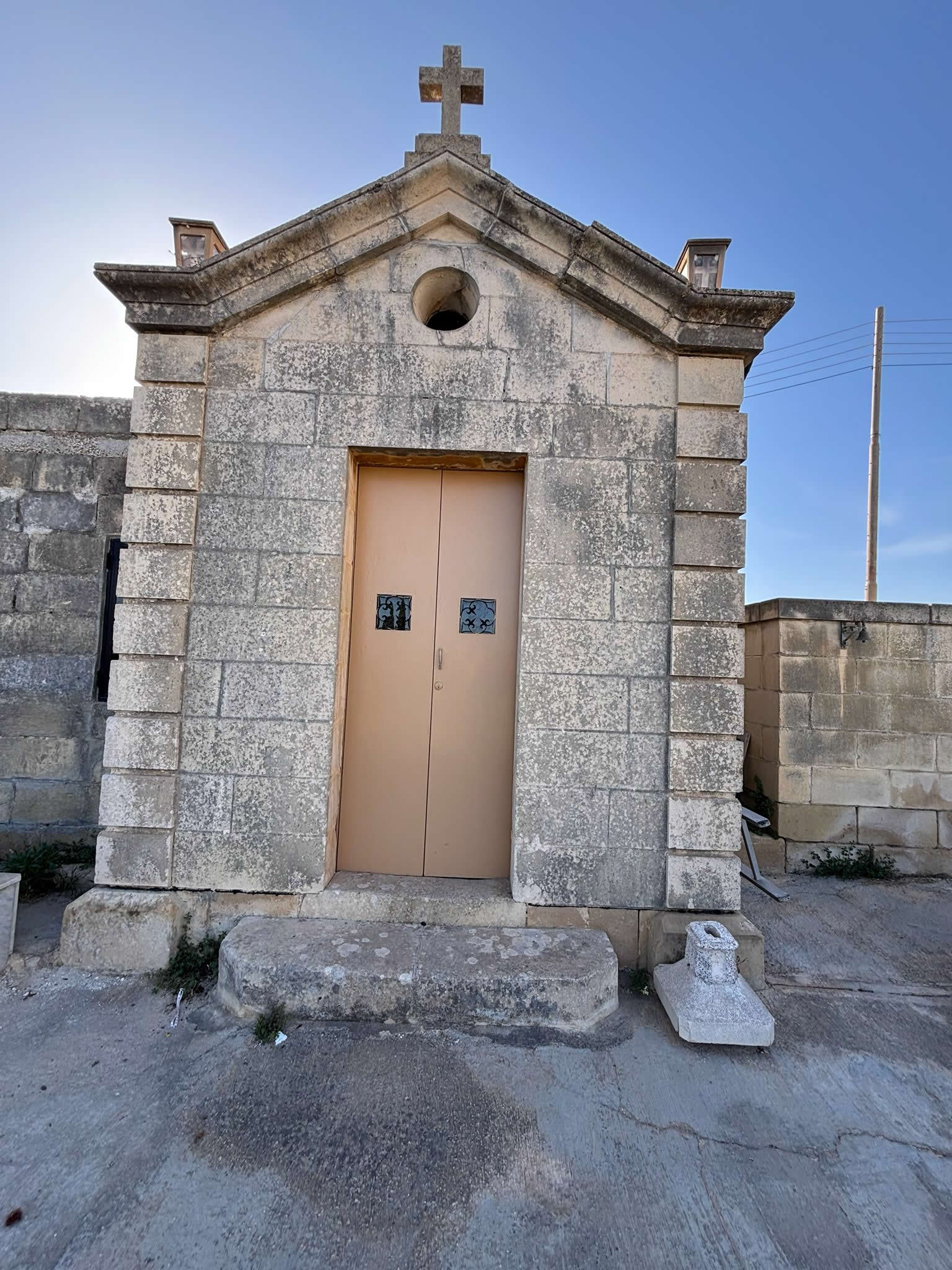
The Mortuary Chapel
The small chapel at the end of the central path serves as the spiritual heart of the cemetery. Built in a simple, unadorned Baroque style, it features a single room designed to host small committal services and annual memorial masses. Its front facade features a simple triangular pediment and a small stone bell-cot, matching the historic design language found across Malta's rural village chapels.

5. Restoration Challenges and Modern Preservation
Over the decades, Cimiterju tat-Torba has faced a variety of structural challenges brought on by the natural aging process and environmental exposure. The soft, porous nature of Globigerina limestone makes it highly vulnerable to weather erosion, while rising damp can pull ground salts up into the stone, leading to gradual flaking and surface decay. In older sections of the cemetery, these natural processes caused some of the historic inscriptions and delicate carvings to fade over time.
To address these issues and protect the site's rich history, the Gudja parish council, in partnership with local heritage restoration teams, launched a series of targeted preservation programs. The project focused on systematically cleaning the outer boundary walls and the main entrance gates using gentle, low-pressure techniques to remove built-up grime without scoring the fragile stone underneath.
Restoration teams carefully repaired structural cracks along the perimeter walls and used traditional, lime-based mortar to re-point stone joints, ensuring the walls can naturally shed moisture. Additionally, paths were leveled to improve safety and accessibility for visitors while keeping the historic graves well-protected. These careful preservation efforts ensure that the cemetery remains a secure, beautifully maintained space that honors the memory of generations past.
6. Contemporary Function and Visitor Etiquette
Today, Cimiterju tat-Torba continues to fulfill its original purpose as an active, sacred burial ground for the Gudja community. It is a space where local history, family memory, and quiet devotion intertwine daily, drawing residents who come to tend family graves, light memorial candles, and reflect in the quiet surroundings.
The cemetery plays a particularly prominent role during the month of November, a traditional time of remembrance across the Maltese islands. On All Souls' Day, the parish community gathers at the site for a formal evening service and candle-lit mass inside the mortuary chapel, bringing families together to honor those who came before them.
When visiting the site for historical research or family genealogy, visitors are asked to observe strict cemetery etiquette. Because this is an active place of rest and private mourning, flash photography should be avoided during burial services, and walking across the stone grave markers is discouraged. By maintaining a quiet, respectful presence, visitors can enjoy the rich history and peaceful character of this important southern landmark.
Frequently Asked Questions — Cimiterju tat-Torba
Yes, the cemetery is open daily during daylight hours, allowing local families and visitors to visit graves and pay their respects. However, opening times may vary slightly between the summer and winter months, so visitors traveling from outside the locality are encouraged to confirm current hours with the Gudja parish office.
Because Cimiterju tat-Torba is church-administered, its historical burial records are preserved within the official parish archives of Gudja rather than public government registries. Genealogists and researchers can access these records by scheduling an appointment directly with the Gudja parish priest.
'Torba' is a traditional Maltese building material made of crushed, compacted limestone and soil, historically used to create solid sub-floors and roof bases. In the context of the cemetery, it points to the traditional building methods used to construct and seal the site's early grave plots during its development.
As a dedicated parish cemetery, plots are primarily reserved for residents of Gudja and individuals with long-standing family connections to the locality. All inquiries regarding grave allocation, transfers, and burial rights must be officially managed through the parish administration.