Location Map Coordinates 35.841721, 14.470954
An Architectural, Historical, and Parochial Profile of Mqabba's Church-Administered Burial Grounds
WGS84 Reference Grid: 35.841721 Latitude, 14.470954 Longitude.
1. Introduction, Village Growth, and the 1912 Foundations
The southern village of Mqabba stands as a vital heartland of traditional Maltese heritage, celebrated globally for its fine globigerina limestone quarries, ancient catacomb networks, and deep community devotions. For centuries, the village developed around its historic center and the grand Parish Church of the Assumption. As was typical across the Maltese islands during the medieval and early modern periods, burials occurred within the crypts of the parish church or in small, primitive plots adjoining nearby countryside chapels. However, the introduction of stricter public sanitation standards by British colonial authorities in the 19th and early 20th centuries, combined with a growing local population, meant these early churchyards could no longer accommodate the town's needs.
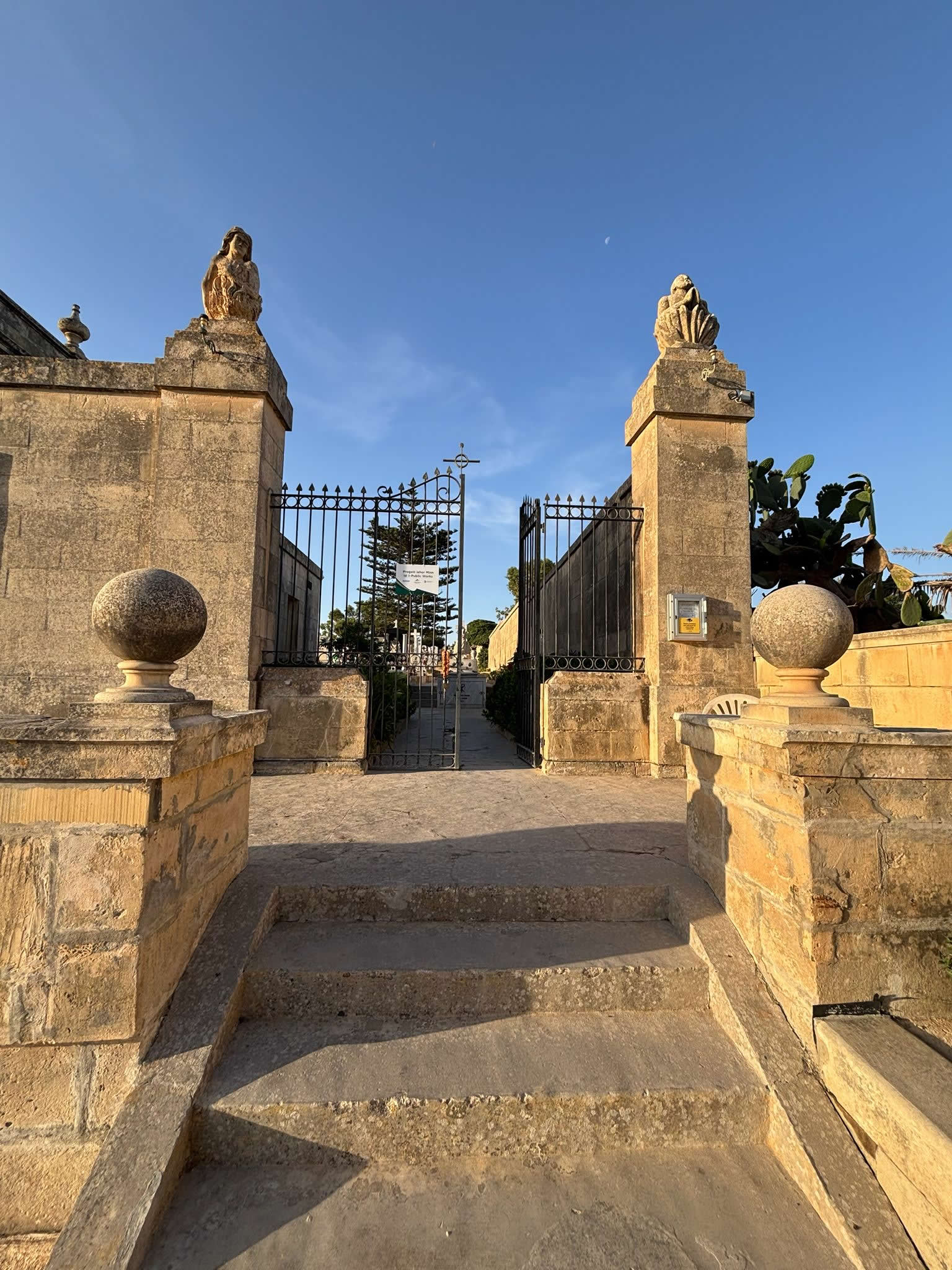
To establish a sustainable, dignified, and hygienic solution for the community, church leaders coordinated the construction of a dedicated extramural burial ground. This initiative culminated in the official opening and solemn consecration of the Jesus Nazzarenu Cemetery (famously known as the Mqabba Parish Cemetery) in the year 1912. To discover how this important early 20th-century complex relates to older, historic, or emergency epidemic grounds across the country, feel free to browse our comprehensive national tracking tool, the Definitive Matrix of Active and Defunct Maltese Cemeteries.
2. The Sacred Landscape: The Jesus of Nazareth Church Connection
A defining characteristic of the Mqabba Parish Cemetery is its physical and spiritual relationship with the landmark building standing directly in front of it: the historic Jesus of Nazareth Church. To view a complete architectural profile and history of that sanctuary, you may read our dedicated monograph on the Jesus of Nazareth Church, Mqabba.

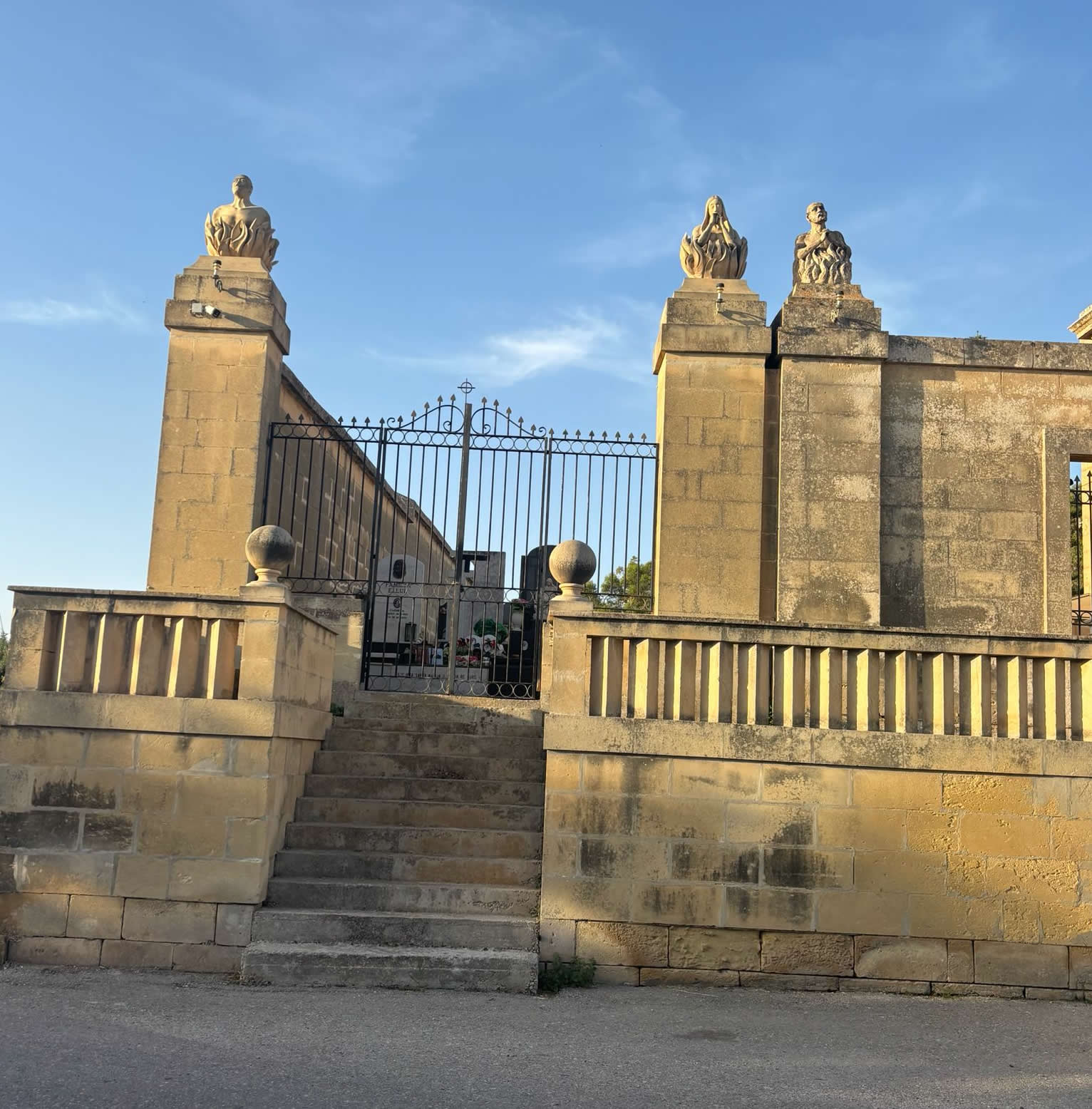
positioned directly either side of the historic Jesus of Nazareth Church.
The church acts as a landmark entrance and a solemn liturgical setting for the cemetery directly behind it. When a member of the Mqabba community passes away, the funeral procession and commemorative rites often find their focus at this church. Funerary masses, committal prayers, and special services are regularly held within its stone walls. Following these indoor rites, the clergy leads the mourning family out through the rear precinct and directly into the gated cemetery grounds for the final interment. This physical connection creates a smooth transition from the main church space to the final resting places within the cemetery walls.
3. Parochial Governance and Ecclesiastical Administration
In contrast to modern public municipal cemeteries funded and run by state environmental boards, the Mqabba cemetery operates entirely under church administration. The Mqabba Parish Office manages all day-to-day operations at the site. The church authorities maintain the official burial logs, coordinate the lease of private family graves, protect the historical registers, and ensure all activities follow Catholic canon law and traditional customs.
This long-standing parochial setup ensures that the cemetery is managed with great care and respect for local traditions. Any structural modifications, changes to family tombstones, or inscription restorations must be formally reviewed and approved by the parish office. This oversight helps protect the architectural and historic character of the grounds, keeping the ancestral memory of Mqabba's families closely connected to the life of the parish.
4. Architectural Survey, Spatial Design, and Topography
The construction of the Jesus Nazzarenu Cemetery in 1912 showcases the high standard of local stone building traditions during the late colonial era. Built using high-quality globigerina limestone sourced from nearby Mqabba quarries, the facility features a robust layout designed to withstand the elements over the decades.
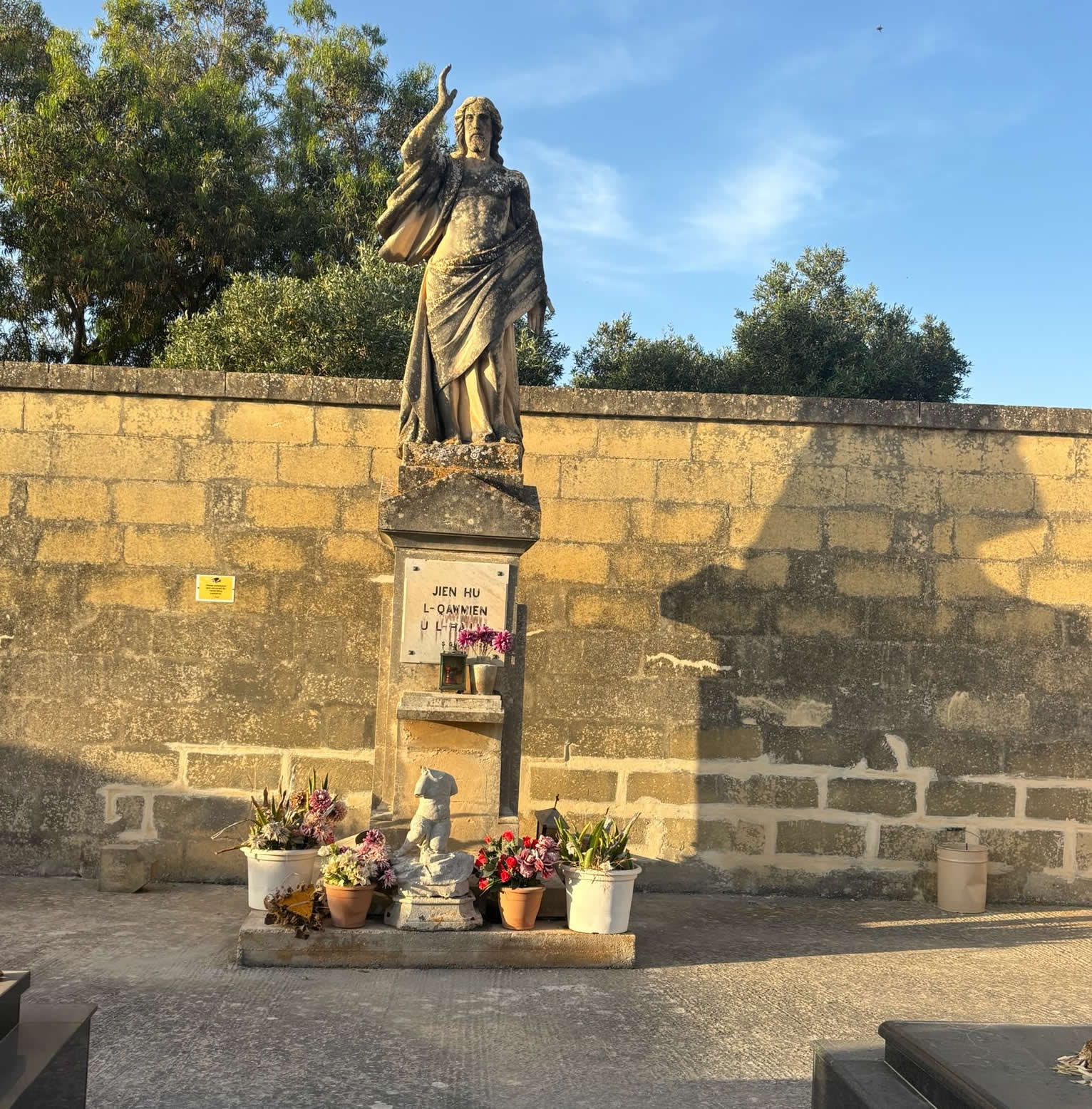
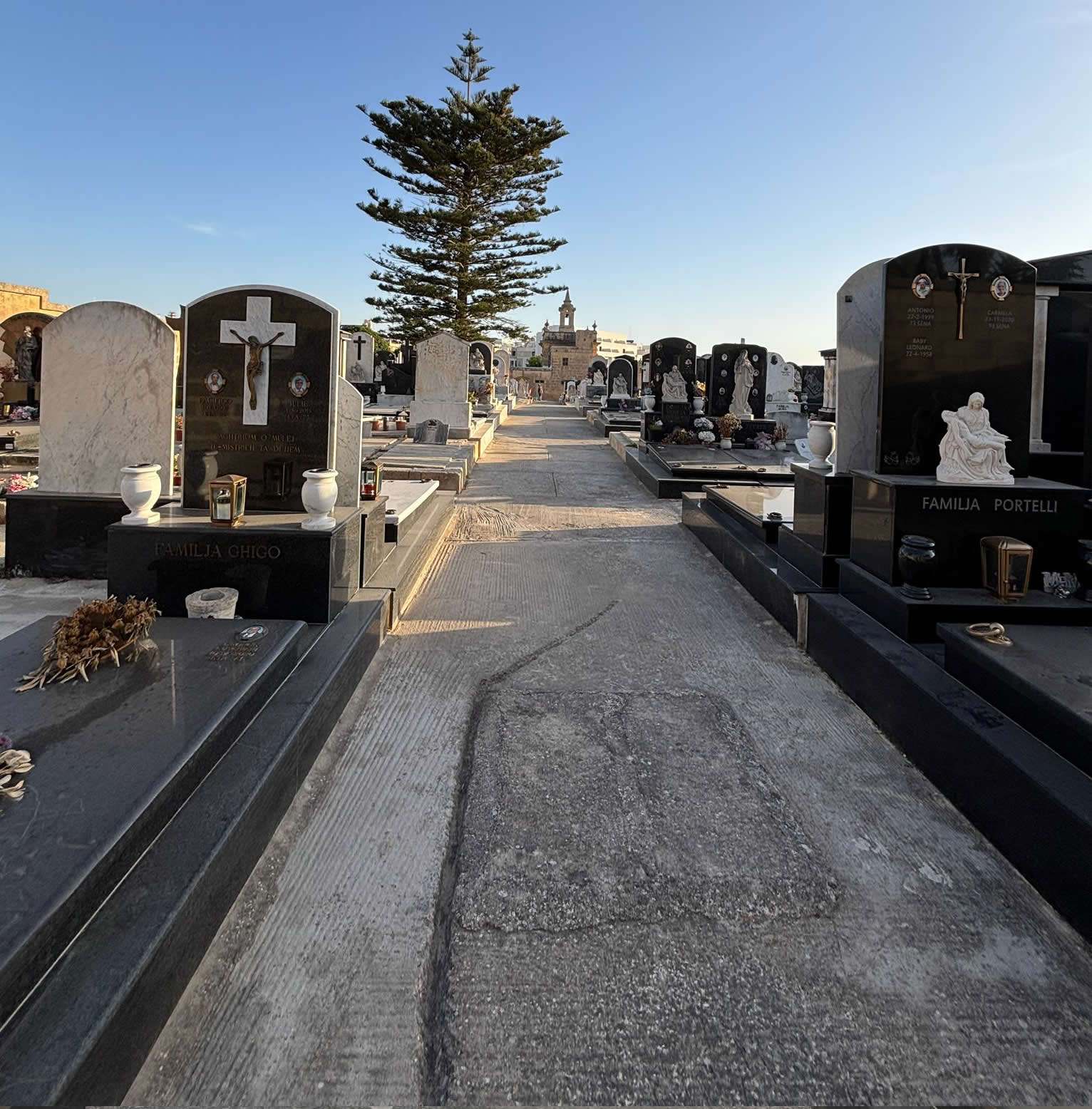
The property is enclosed by tall, solid limestone boundary walls that provide a quiet, reflective environment away from the surrounding streets. Inside, the cemetery is organized in an orderly, symmetrical grid system divided by flat limestone pathways. These paths converge on a prominent central monument, typically a stone crucifix, which serves as the visual and spiritual focal point of the grounds. Mature Mediterranean trees are planted along the perimeter walls, providing shade and contributing to the calm, respectful atmosphere of the space.
5. Funerary Art, Monuments, and Memorial Customs
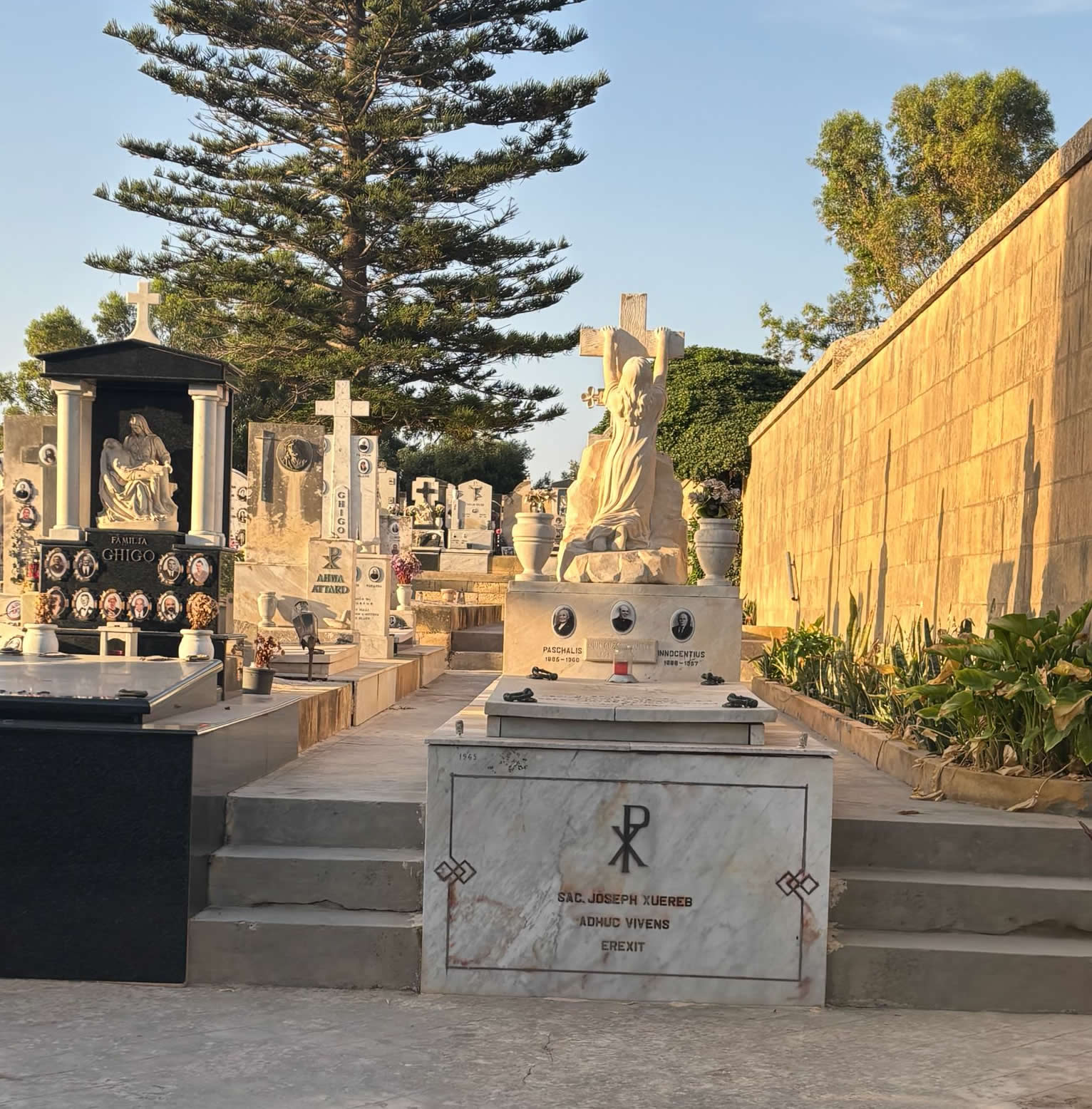
The interior of the cemetery contains a diverse collection of traditional Maltese funerary art and private family monuments. The grave plots are covered with heavy slabs of white marble or polished local stone, many featuring detailed bas-relief carvings, traditional coats of arms, and hand-carved inscriptions in Maltese, Italian, or Latin that record the lineages of old Mqabba families.
The cemetery remains fully active and plays an important role in local religious traditions, especially during November, the month of remembrance for the dead. On All Souls' Day (Jum il-Mejtin), the Mqabba parish clergy leads a traditional outdoor procession from the Jesus of Nazareth Church into the cemetery grounds. Local families gather to clean the tombs, leave fresh flowers, and light memorial candles, keeping a long-standing tradition of community remembrance alive.
The 1912 Indulgence Gate Plaque
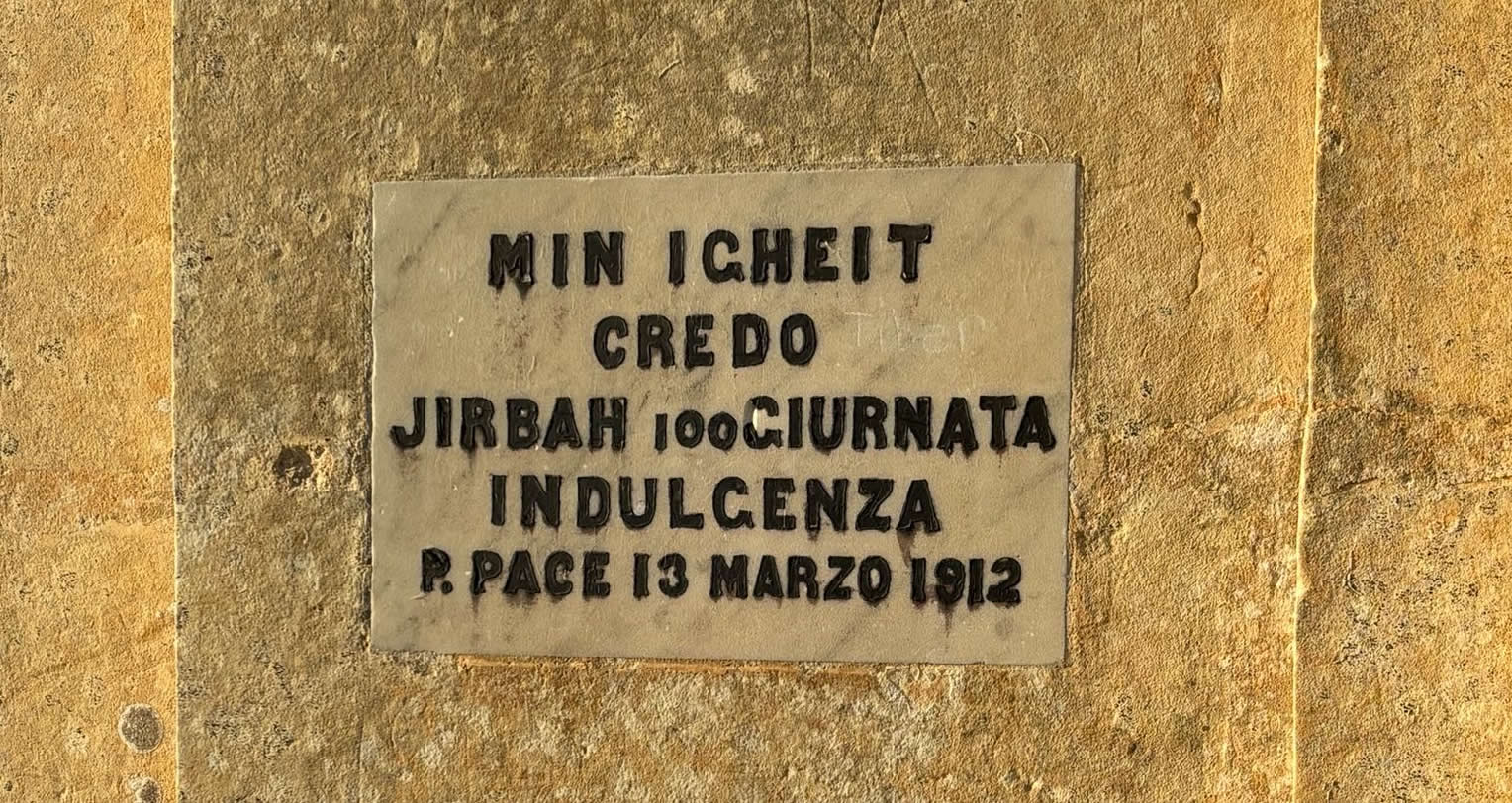
Affixed directly to the stonework near the cemetery entrance is a historic marble tablet dating to the very inauguration of the grounds. Written in an old-style, phonetic variant of the Maltese language typical of the early 20th century, the inscription documents a spiritual concession granted to visiting pilgrims by the local ordinary:
"MIN JGHEID CREDO JIRBAH 100 GIURNATA INDULGENZA — P. PACE 13 MARZO 1912"
Translated into modern English, the text reads: "Whoever recites the Apostles' Creed gains 100 days of indulgence." The decree bears the name of Archbishop-Bishop Pietro Pace (P. Pace) and is dated 13 March 1912. This stone serves as a rare, tangible link to the formal consecration day of the Jesus Nazzarenu burial grounds, highlighting the historical Catholic practice of offering specific spiritual remissions to the faithful as they gathered to pray for the souls of the departed.
6. Technical and Administrative Dataset Profile
The reference matrix below tracks the verified administrative, geographical, and operational parameters of the Mqabba facility:
| Administrative Survey Parameter | Field Inventory Reference Data |
|---|---|
| Official Nomenclature | Jesus Nazzarenu Cemetery (Iċ-Ċimiterju ta' Ġesù Nazzarenu) |
| Alternative Designations | Mqabba Parish Cemetery 1912 / Jesus of Nazareth Cemetery |
| WGS84 Reference Grid | 35.841721 Latitude, 14.470954 Longitude |
| Ownership & Management | Church-Run / Administered directly by the Mqabba Parish Office |
| Year of Consecration | 1912 |
| Primary Building Material | Local Maltese Globigerina Limestone Block Masonry |
| Direct Structural Neighbor | Jesus of Nazareth Church (Situated directly in front) |
| Key Liturgical Event | All Souls' Day Graveside Blessing and Parochial Procession |
7. Frequently Asked Questions (FAQ)
❓ Who should I contact regarding grave deeds or burial registers for the Mqabba cemetery?
Because the Jesus Nazzarenu Cemetery is a private, church-run property, all administrative inquiries, grave transfers, and historical records searches must be submitted directly to the Mqabba Parish Office rather than civil government registries.
❓ When exactly was this cemetery built and opened in Mqabba?
The cemetery was officially constructed, completed, and solemnly consecrated in the year 1912 to serve as the unified, modern extramural burial ground for the local village population.
❓ What is the practical relationship between the cemetery and the church standing in front of it?
The Jesus of Nazareth Church functions as a close liturgical partner to the cemetery. It regularly hosts funeral masses, committal prayers, and parish remembrance processions that walk directly from the church into the burial grounds behind it.
❓ What types of stone are primarily used within the cemetery structures?
The high boundary walls and internal paths are constructed from local Maltese globigerina limestone blocks, while the private tombs are finished with fine marble and polished stone slabs, showing the quality of local stonemasonry traditions.