📍 Location
Location Map Coordinates 35.914713, 14.448023
An Architectural, Historical, and Parochial Study of Naxxar's Church-Run Cemetery Complex
WGS84 Reference Grid: 35.914713 Latitude, 14.448023 Longitude.
1. Introduction, Urban Expansion, and Nineteenth-Century Roots
The ancient hilltop town of Naxxar, situated atop the Great Fault of Malta, represents one of the oldest parish territories on the island. Historically controlling vast swathes of northern agricultural land, its central core grew organically around the magnificent Collegiate Parish Church of Our Lady of Victory. For centuries, the local population interred their dead within deep, subterranean crypts inside the parish church or within small, adjacent burial pits. However, as the 19th century progressed, population growth, urban developments, and sanitary reforms introduced by the British colonial administration made indoor burials untenable. This shifted local burial practices from church interiors toward outdoor, purpose-built sanctuaries.

To meet these requirements, church authorities established Saint George Cemetery (locally known as Iċ-Ċimiterju ta' San Ġorġ). This space was created to serve as a quiet, respectful burial ground for Naxxar families, safely located away from the immediate residential center. To understand how this site fits into the wider regional network of public and private burial grounds across the islands, you can consult our Definitive Matrix of Active and Defunct Maltese Cemeteries.

2. Parochial Governance and Ecclesiastical Administration
A key feature of the Saint George Cemetery is its traditional administrative structure. Unlike modern government-owned municipal grounds managed by state health boards or secular civil regulatory units, this cemetery remains directly under the control of the local parish clergy and administration. The Naxxar Parish Office is responsible for maintaining all burial logs, historical registers, and grave lease deeds, keeping a detailed record of the families laid to rest here over the generations.

This long-standing church management ensures that the facility operates in harmony with traditional Catholic liturgical customs. Grave assignments, family tomb transfers, and monument alterations are carefully reviewed to preserve the sacred, respectful character of the cemetery. While following modern sanitary laws, the parish manages the space with a pastoral approach, keeping the historical bonds between the local church community and its ancestors strong.
3. Architectural Survey and Traditional Limestone Features
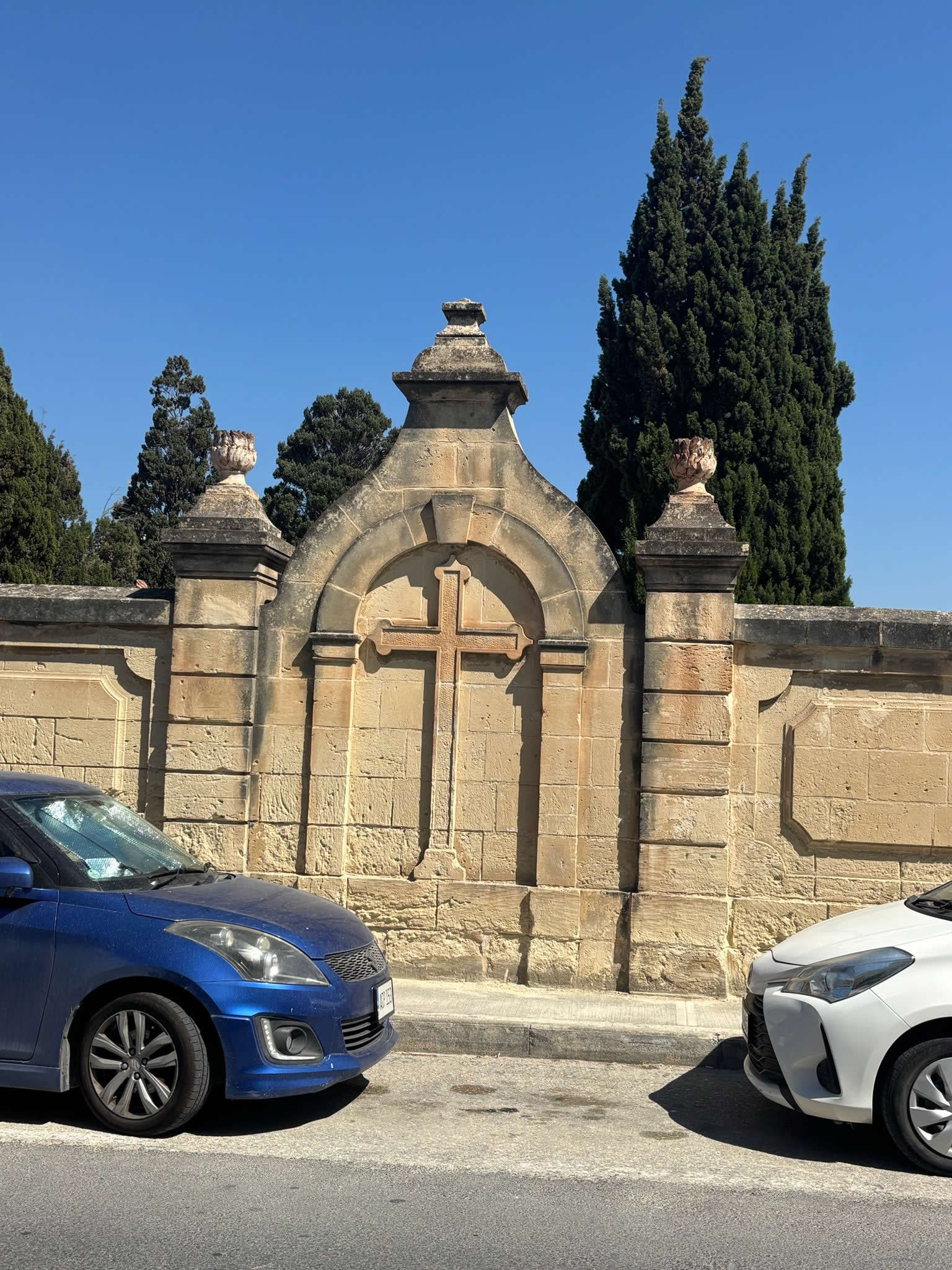
The architecture of Saint George Cemetery showcases the skilled stonemasonry common to late 19th-century Maltese building traditions. The entire property is bounded by tall, solid walls constructed from durable local globigerina limestone, protecting the interior from the elements and neighboring roads.
The main entrance features a carefully carved stone archway fitted with a traditional wrought-iron gate, a design common to historical Maltese churchyard architecture. Inside, the cemetery is laid out in a clean, symmetrical grid pattern divided by stone pathways. A central path leads to a prominent stone crucifix monument, which acts as the visual and spiritual focal point of the grounds. Tall Mediterranean cypress trees are planted along the walls and walks, casting long shadows that contribute to the calm, reflective atmosphere of the site.
4. Funerary Art, Monuments, and Memorial Landscapes
The interior of Saint George Cemetery contains an impressive collection of traditional Maltese funerary art and private family monuments. The tombs are capped with heavy white marble slabs, many featuring detailed bas-relief carvings, traditional coats of arms, and hand-carved inscriptions in Maltese, Latin, or Italian that recount the lineages of old Naxxar families.
The cemetery plays an important role in local religious life during November, the traditional month of remembrance for the dead. On All Souls' Day (Jum il-Mejtin), the Naxxar parish clergy leads special commemorative services on the grounds. Local families gather to decorate their ancestors' tombs with fresh flowers and light memorial candles, maintaining a long-standing tradition of community remembrance.

The 1934 Cemetery Chapel
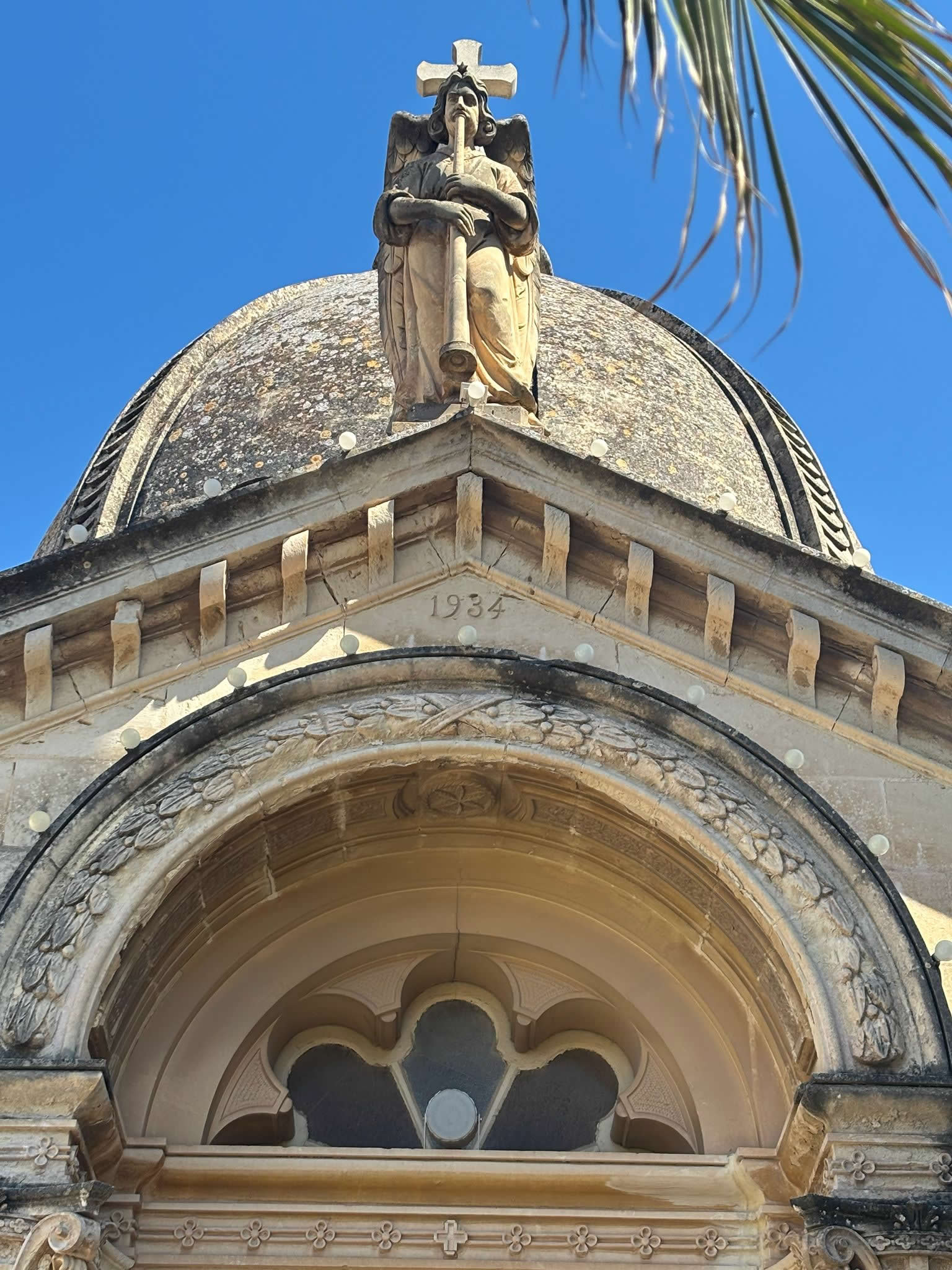
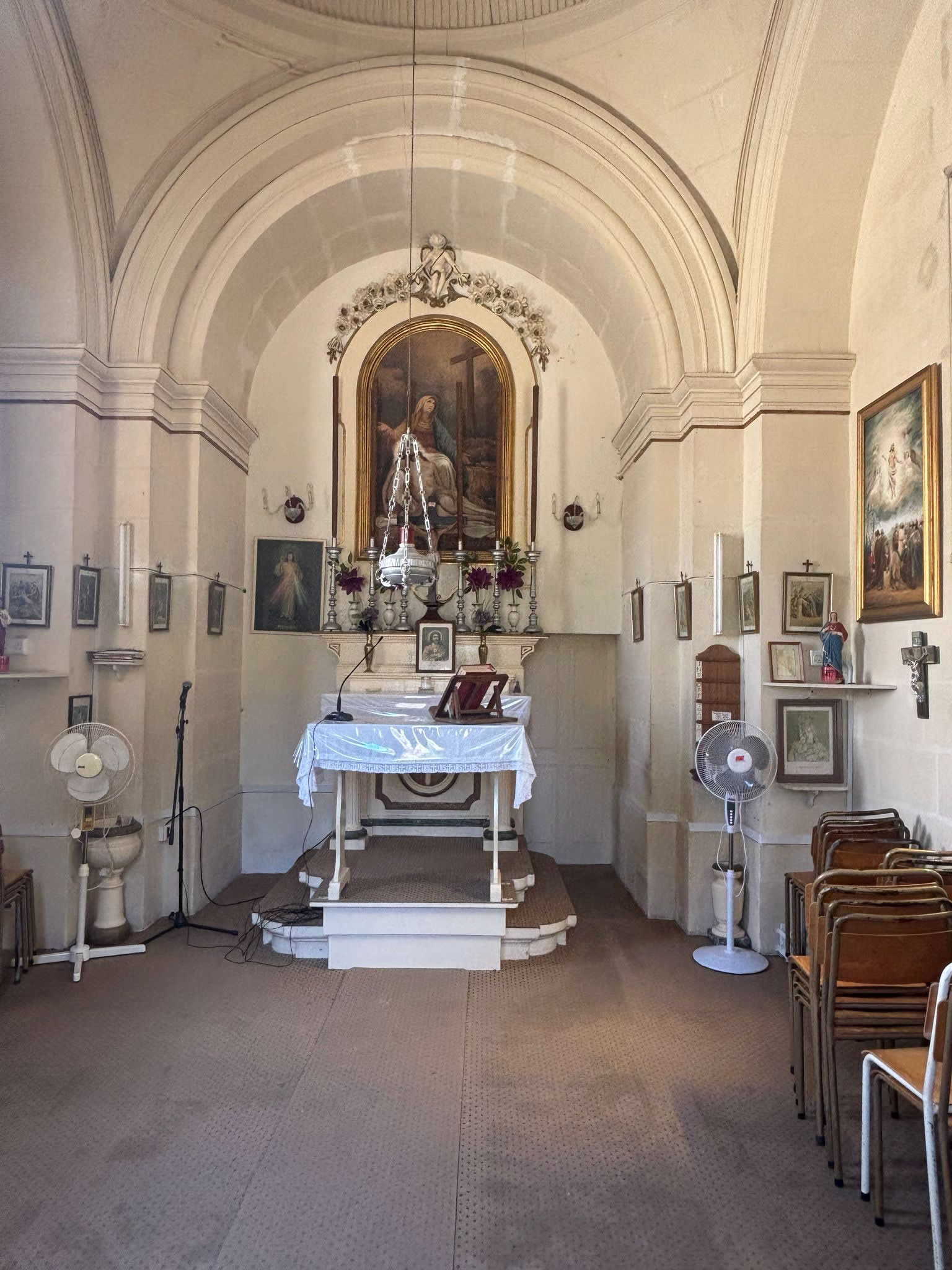
At the spiritual and visual center of the burial grounds stands the dedicated cemetery chapel, a solemn architectural anchor for the surrounding graves. While the cemetery itself was established in the late 19th century, the chapel features a prominent stone inscription bearing the year 1934 across its façade. This date marks a significant 20th-century interwar expansion or structural consolidation carried out by the Naxxar parish to accommodate the growing community's liturgical needs. Built with classic, understated Maltese limestone masonry, the chapel provides a sheltered, sacred space for final committal blessings before interment and serves as the primary focal point for the special commemorative masses celebrated by the parish clergy during the November month of the Holy Souls.
5. Structural Preservation, Masonry Upkeep, and Environmental Care
As an older, historic cemetery, Saint George requires continuous maintenance to protect its soft limestone structures from natural weathering and environmental wear. The open-air location leaves the walls and monuments exposed to sun, wind, and seasonal rains, which can cause gradual erosion and damage over time.
To address these conservation needs, the Naxxar Parish Administration manages targeted repair projects on the grounds. These efforts focus on stabilizing aging boundary walls, cleaning moss and dirt from historic marble markers, and using traditional lime-based mortars to repair stone joints. These careful maintenance practices ensure that modern safety standards are met while preserving the authentic, historic character of the stone monuments, keeping this sacred space protected for future generations.

6. Technical and Administrative Dataset Profile
The reference matrix below tracks the verified administrative, geographical, and operational parameters of the Naxxar facility:
| Administrative Survey Parameter | Field Inventory Reference Data |
|---|---|
| Official Nomenclature | Saint George Cemetery (Iċ-Ċimiterju ta' San Ġorġ) |
| Alternative Spellings | San Gorg Cemetery Naxxar / St. George Parochial Cemetery |
| WGS84 Reference Grid | 35.914713 Latitude, 14.448023 Longitude |
| Ownership Classification | Church-Run / Administered by Naxxar Parish Office |
| Operational Status | Fully Active / Restricted Parochial Interments |
| Primary Construction Material | Maltese Globigerina Limestone Block Masonry |
| Layout Configuration | Symmetrical Path Grid with a Central Cross Monument |
| Key Liturgical Observance | All Souls' Day Parochial Processions (November 2nd) |

7. Frequently Asked Questions (FAQ)
❓ Who should I contact regarding grave maintenance or plot records at Saint George Cemetery?
Because the cemetery is entirely church-run, all inquiries about grave deeds, historical records, or structural maintenance must be directed to the Naxxar Parish Administration Office rather than civil government registries.
❓ When was this cemetery established in Naxxar?
The cemetery was established during the mid-to-late 19th century. It was built to accommodate outdoor burials away from the old town center, following new public health and sanitary policies introduced during the British colonial period.
❓ Are there public mass services held inside the cemetery grounds?
The cemetery does not host standard daily public masses. Instead, it serves as a quiet sanctuary for final graveside blessings, and hosts special parish memorial services and prayer processions in November for All Souls' Day.
❓ What types of stone were used to build the cemetery complex?
The main boundary walls and entrance structures are built from traditional local globigerina limestone blocks, while the private tombs are finished with fine marble slabs, reflecting classic Maltese stonemasonry traditions.
