Location Map Coordinates 35.856527, 14.429128
An Exhaustive Survey of the Our Lady of Mount Carmel Enclave and the Masterpiece of Architect Andrea Vassallo
WGS84 Reference Grid: 35.856527 Latitude, 14.429128 Longitude.
1. Introduction, Historical Chronology, and Spatial Setting
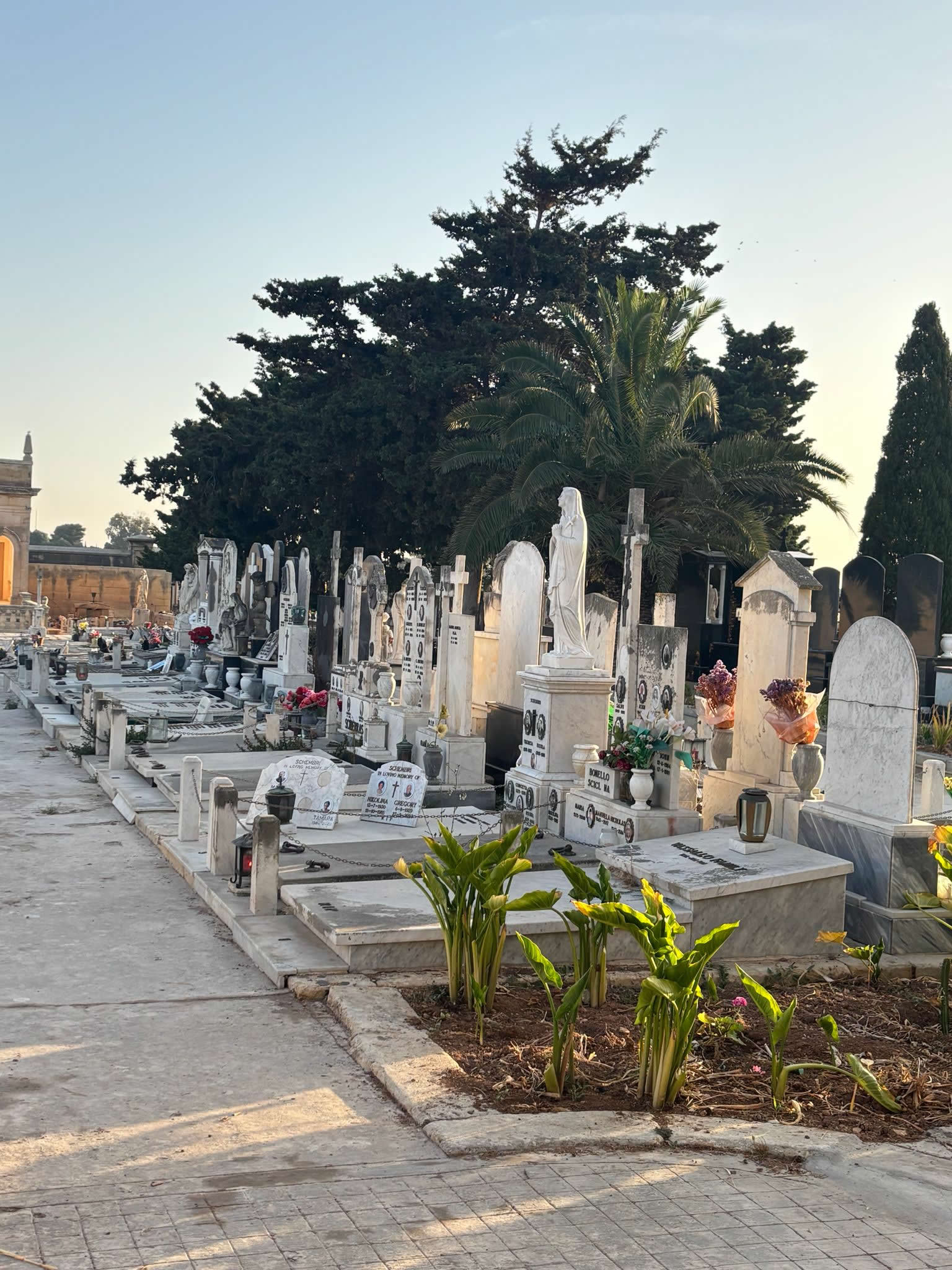
The southern agricultural city of Siġġiewi, designated as Città Ferdinand during the late rule of the Order of St. John, boasts a deeply layered heritage defined by rolling stone fields, deep valleys, and profound religious traditions. For centuries, the community interred its dead within the solemn crypts of the monumental parish church dedicated to St. Nicholas of Bari, or within wayside burial sites scattered among rural hamlets. However, as demographic counts expanded during the late British colonial administration, and stricter public sanitation laws were introduced across the islands, the local church recognized the urgent need to establish a dedicated, extramural burial ground far removed from the immediate residential core.
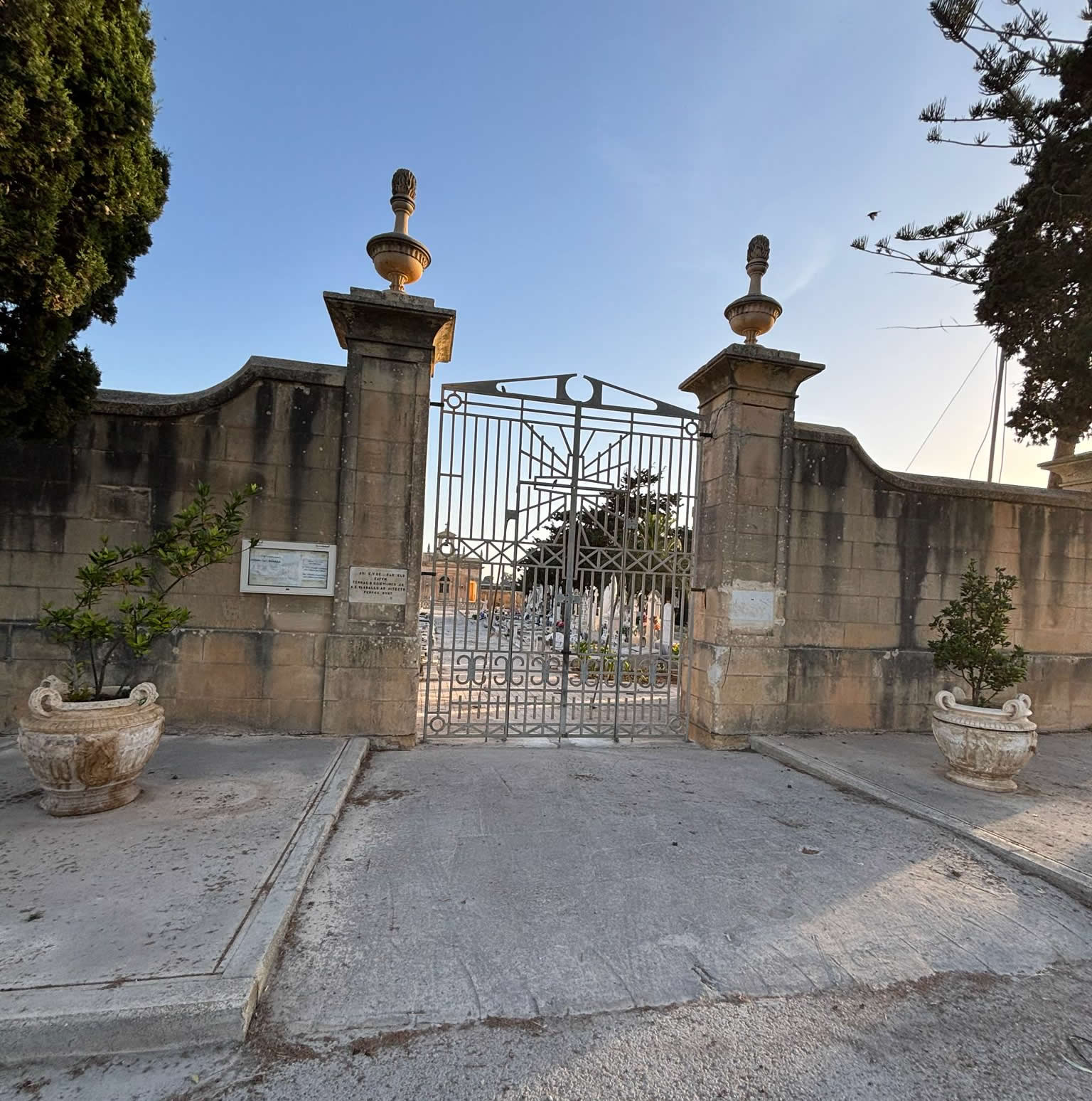
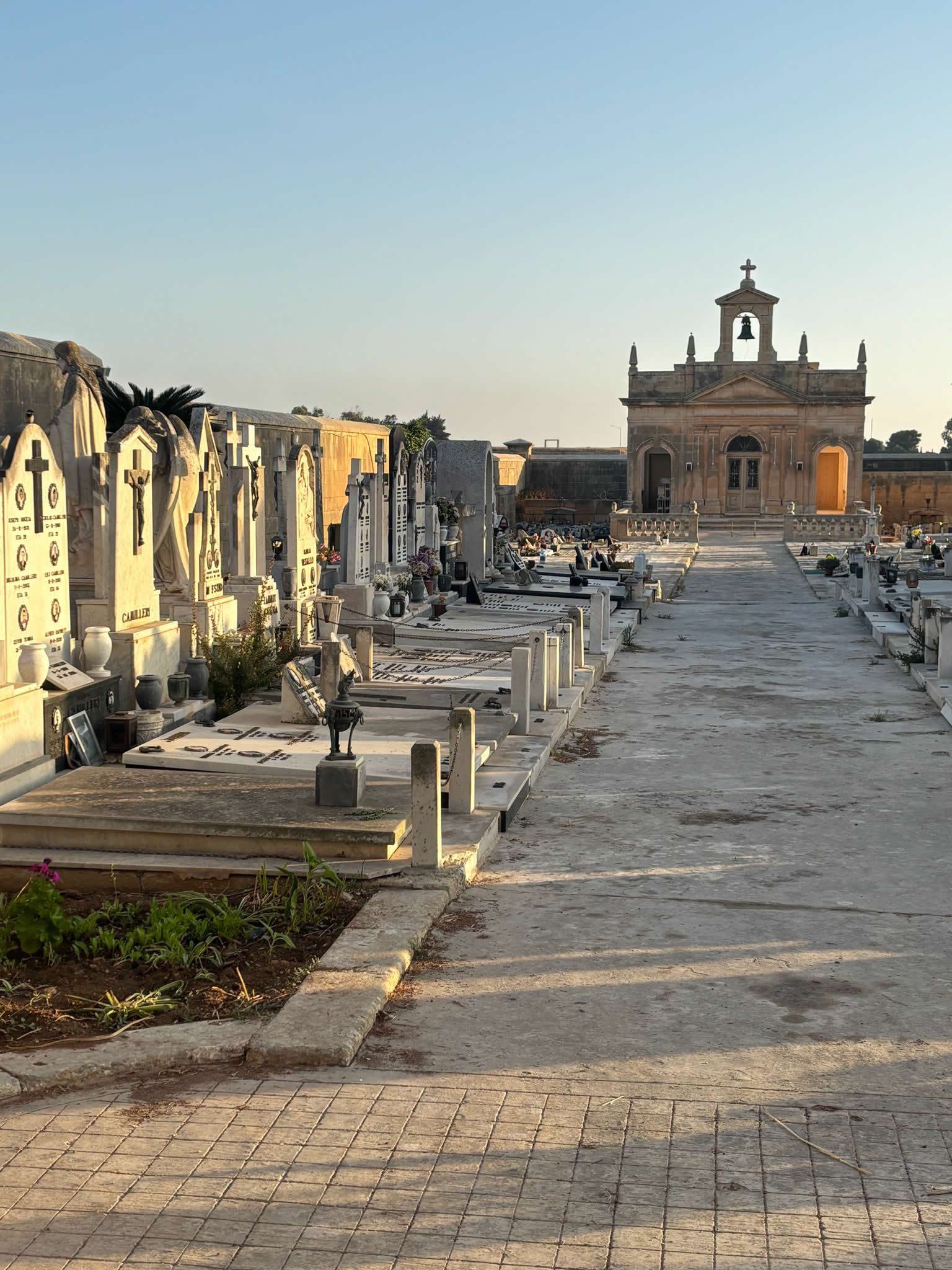
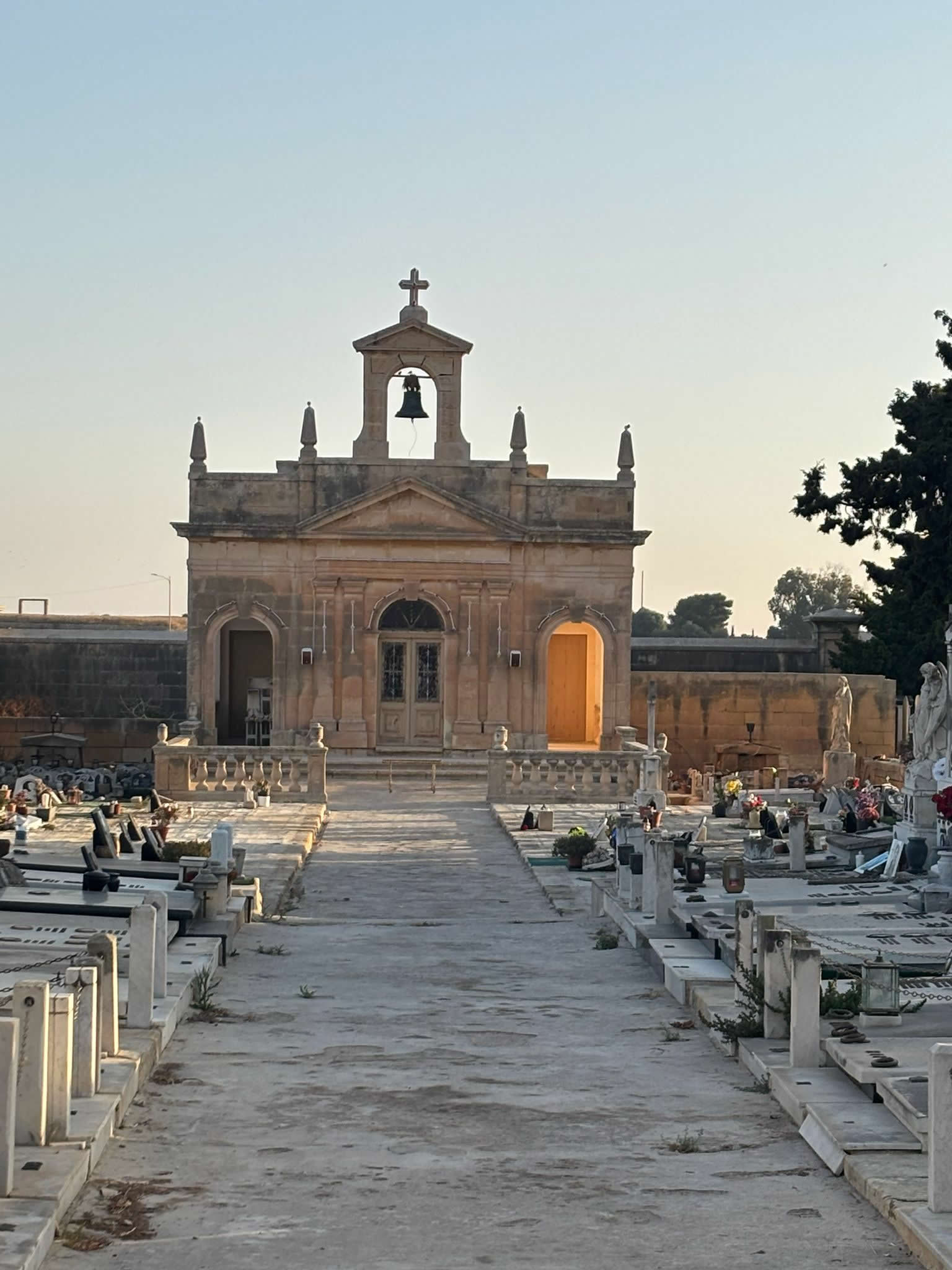
This led to the creation of the beautiful Our Lady of Mount Carmel Cemetery (popularly known as the *Siġġiewi Parochial Cemetery*). This space serves as an active, sacred sanctuary for the final resting places of local families. To understand how this site compares to other regional municipal yards or parish burial systems across Malta, you can view our comprehensive guide, the Definitive Matrix of Verified Maltese Cemeteries. A distinctive feature defines this burial site: the cemetery chapel is fully enclosed by the cemetery grounds, standing as the architectural and spiritual centerpiece around which all the rows of graves are systematically arranged. To see how this spatial orientation aligns with older rural shrines, consider examining our Definitive Index of Historic Maltese Chapels and Wayside Sanctuaries.
2. Epigraphical Survey: The Latin Commemorative Gate Plaque
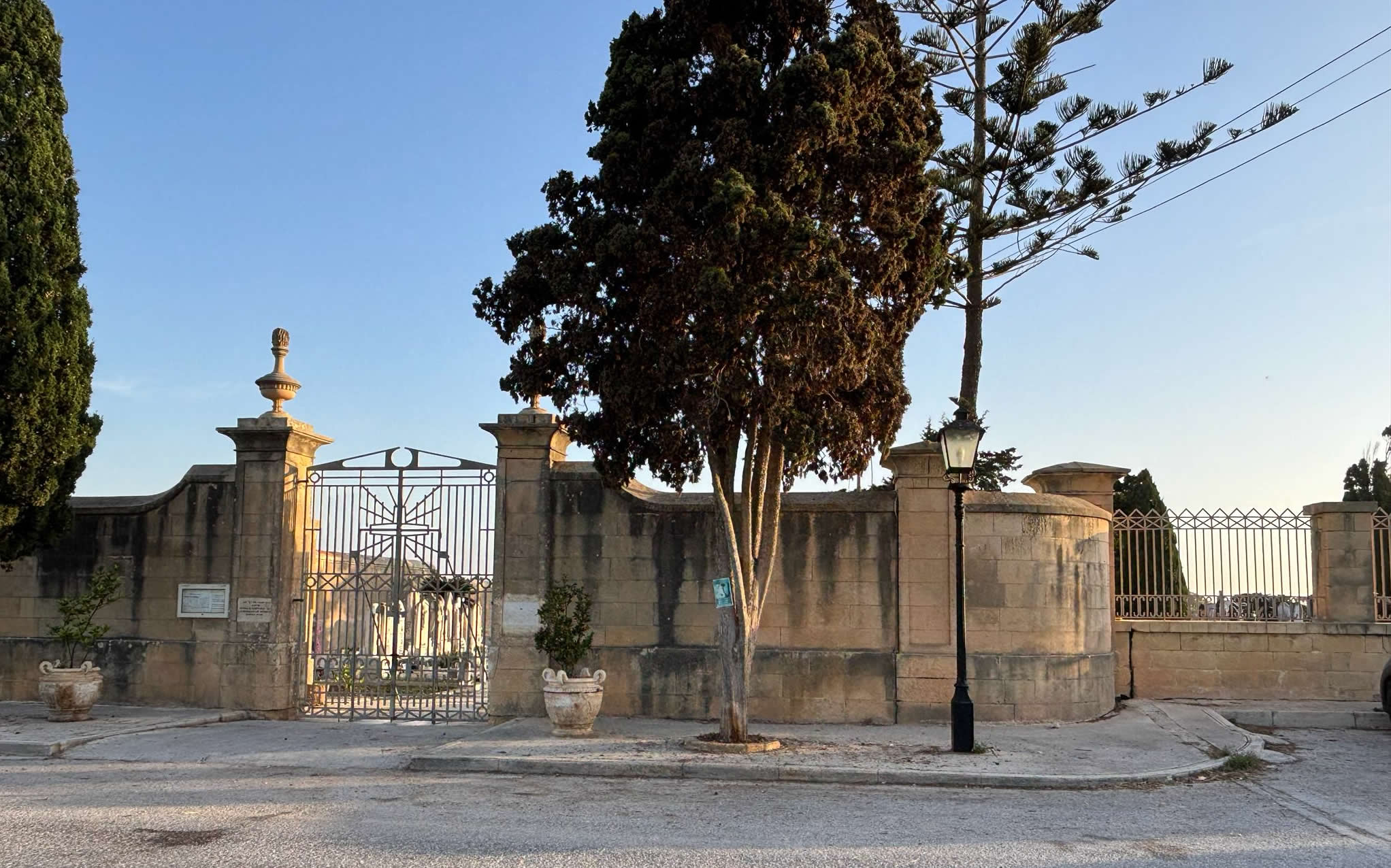
Visitors approaching the main entryway of the cemetery complex are immediately met with a beautifully carved marble commemorative plaque built directly into the limestone fabric of the gateway structure. This tablet is written in formal, post-classical Latin epigraphy and outlines the dedication, architectural mastermind, and patrons responsible for building the complex.
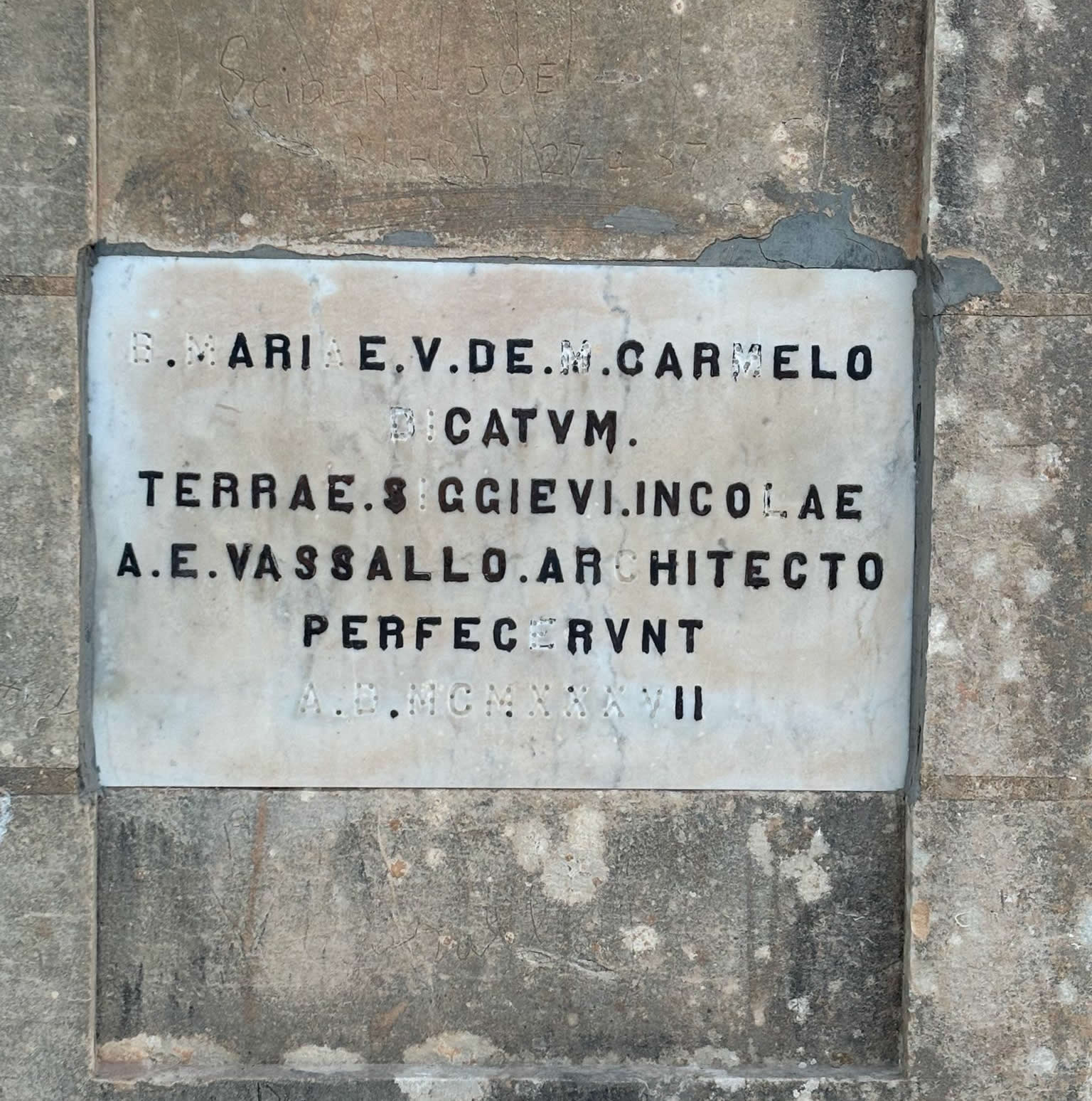
The text on this plaque provides an essential historical timeline for the site. It confirms that the entire space was designed to honor Our Lady of Mount Carmel (*B. Mariæ V. de M. Carmelo*), a deeply rooted Marian devotion across the Maltese islands. Furthermore, it highlights that the funding, labor, and community initiative came directly from the local residents of Siġġiewi (*Terræ Siggievi Incolae*), who came together during the interwar period to complete this magnificent stone sanctuary for their ancestors.
3. Architectural Profile: The Andrea Vassallo Blueprint
The plaque near the gate confirms a vital detail for architectural historians: the chapel was masterfully designed by the celebrated Maltese architect Andrea Vassallo (*A. E. Vassallo Architecto*). Vassallo (1856–1928) stands out as one of the most brilliant and innovative designers in Malta's modern architectural history. He is renowned for masterminding the iconic Neo-Romanesque Basilica of Our Lady of Ta' Pinu in Gozo, the delicate dome of the parish church of Outer Valletta, and various highly stylized private palaces across the islands. His architectural language seamlessly blended classical European styles with the crisp stonemasonry traditions of Malta.

Vassallo passed away in 1928, nearly a decade before the chapel's completion date inscribed on the gate plaque (1937). This indicates that the parish community held tightly to his detailed, pre-existing blueprints, ensuring his vision was executed exactly as planned. The chapel features a striking Neo-Classical façade built from smooth, finely dressed local globigerina limestone blocks. It sits on a elevated base, with wide stone steps leading up to a grand portico framed by elegant columns. The structure is topped by a perfectly balanced dome that draws the eye from anywhere within the surrounding burial grounds, standing as an elegant monument of hope over the silent rows of graves.
4. Parochial Governance and Ecclesiastical Administration
A vital administrative characteristic of the Siġġiewi Cemetery is its status as a fully church-run property. In contrast to municipal yards built and funded by state-run environmental departments, this entire complex operates under the authority of the Archdiocese of Malta via the local Siġġiewi Parish Office (dedicated to St. Nicholas of Bari).
This church-led administration means that all operations inside the boundary walls are governed by Canon Law alongside national public health regulations. The parish office manages the official grave registries, processes the assignment of underground vaults, handles family plot deeds, and oversees structural maintenance. The funds collected from plot allocations are directly reinvested into preserving the delicate stone carvings of Andrea Vassallo's chapel, ensuring that the historic complex is fully protected against weathering and natural decay.
5. Interior Artworks, Liturgical Furnishings, and Commemorative Customs
Inside the chapel, the space is designed to encourage quiet reflection and prayer. The walls are finished in clean, classical stone lines that direct attention toward the main chancel. The central altar is carved from fine local stone and adorned with elegant marble panels, serving as a dignified setting for funeral liturgies.
While the chapel is not used for daily public parish masses, it remains a central hub for local religious traditions during November, the month of remembrance for the dead. On All Souls' Day (Jum il-Mejtin), the clergy leads a traditional prayer procession through the cemetery paths, concluding with a special memorial mass inside the chapel to honor the generations of Siġġiewi residents laid to rest on the grounds.
6. Technical and Administrative Dataset Profile
The matrix below tracks the verified administrative, geographical, and operational parameters of the Siġġiewi complex:
| Administrative Survey Parameter | Field Inventory Reference Data |
|---|---|
| Official Nomenclature | Our Lady of Mount Carmel Cemetery (Iċ-Ċimiterju tas-Siġġiewi) |
| Enclosed Chapel Title | Chapel of Our Lady of Mount Carmel (Kappella tal-Karmnu) |
| WGS84 Reference Grid | 35.856527 Latitude, 14.429128 Longitude |
| Architect of Record | Andrea Vassallo (1856–1928) |
| Date of Structural Completion | 1937 (Inscribed on the formal gate plaque) |
| Ownership Classification | Church-Run / Administered by Siġġiewi Parish Office |
| Architectural Character | Neo-Classical Dome with a Columned Portico Face |
| Key Liturgical Observance | All Souls' Day Memorial Mass and Blessing (November 2nd) |
7. Frequently Asked Questions (FAQ)
❓ Who should I contact for grave registrations or plot maintenance at Siġġiewi Cemetery?
Because the cemetery is fully church-run, all administrative requests, grave deed inquiries, and structural permissions must be formally processed through the Siġġiewi Parish Administration Office rather than civil government entities.
❓ What is unique about the design and location of the chapel?
The chapel was designed by the famous architect Andrea Vassallo and completed in 1937. It is completely enclosed by the cemetery grounds, standing as the structural and spiritual heart around which all the grave paths are laid out.
❓ What does the Latin inscription on the main gate plaque mean?
The plaque records that the chapel is dedicated to Our Lady of Mount Carmel and was completed by the residents of Siġġiewi in 1937, following the architectural designs created by master architect Andrea Vassallo.
❓ Is the cemetery chapel open for daily public mass services?
No, the chapel does not host standard daily public parish services. It is used primarily for graveside committal prayers during funeral processions and opens for special community memorial services on All Souls' Day in November.