The Fontana Springs & Public Wash Houses
Fontana, Gozo

The Definitive Digital Archive of Maltese History & Architecture
Home - Directory of Churches in Malta and Gozo - Malta - Gozo - Comino - Heritage - Places - Travel - Guides - Contact - About
eMalta Heritage
The Definitive Digital Archive of Maltese History & Architecture

📍 Location

Location Map Coordinates 36.037330, 14.235238

Google Map Link

The village of Fontana (locally known as It-Triq tal-Għajn) owes its very name and historical founding to a system of perennial, freshwater springs running down the valley towards Ix-Xlendi. Long before modern internal domestic water systems existed, these natural perennial streams served as the crucial social and agricultural lifelines of the region. Today, the location features two iconic, stone-vaulted public wash houses facing each other in the village square—a remarkable monument to traditional Gozitan communal life and early modern hydraulic engineering.

Quick Reference Data

Location Pjazza l-Għejjun / Triq tal-Għajn, Fontana, Gozo
Primary Structures L-Għajn il-Kbira (The Knight's Wash House) & L-Għajn ta' Bendu
Historical Roots 16th Century origins (Order of Saint John) with later British and modern restorations
Key Features Rock-cut barrel vaults, original stone washing basins (ħuġieġ), and carved magisterial stone crests
Status Fully restored historical landmarks; still utilized by local residents today

1. L-Għajn il-Kbira (The Knight's Wash House)

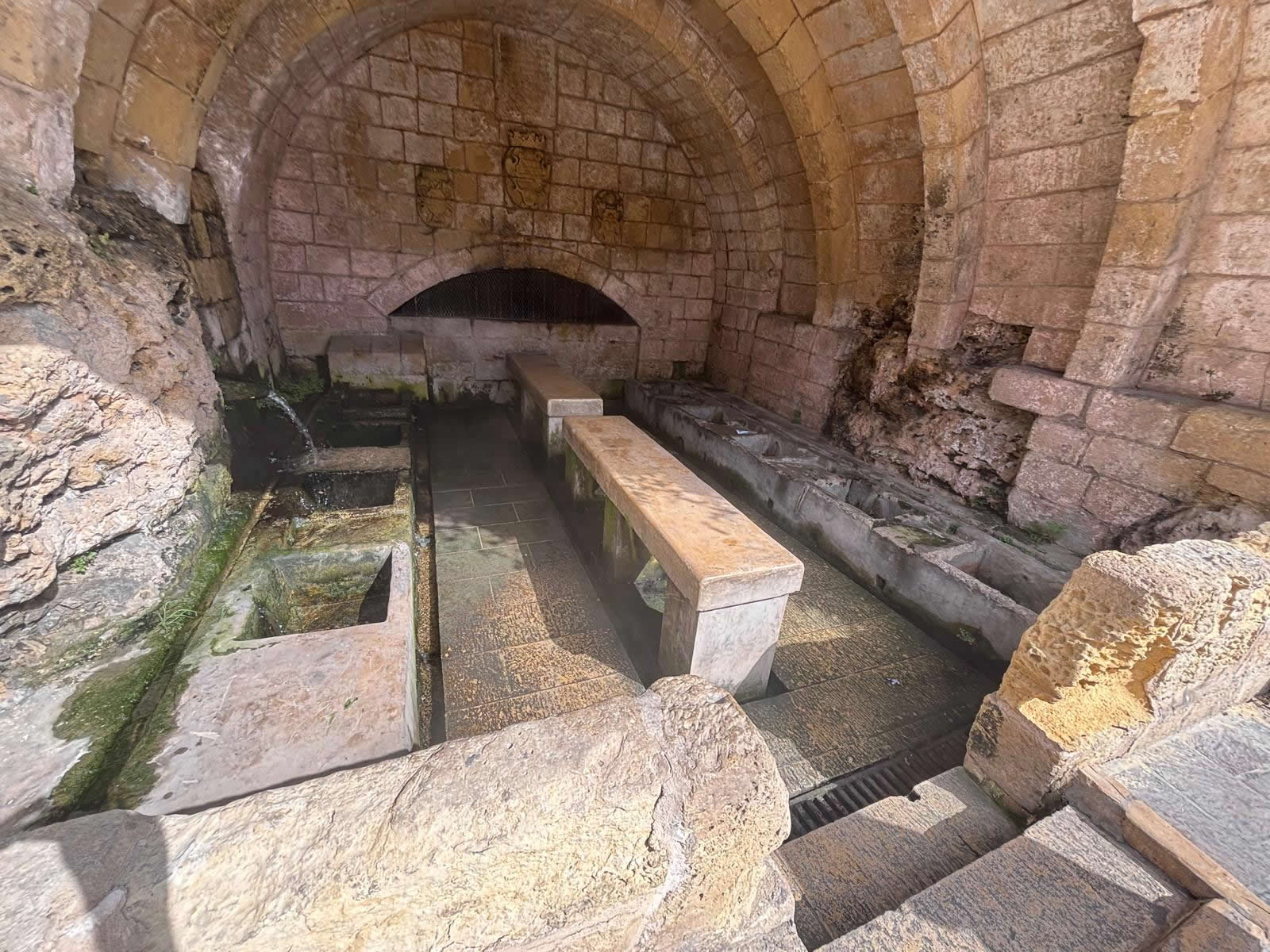
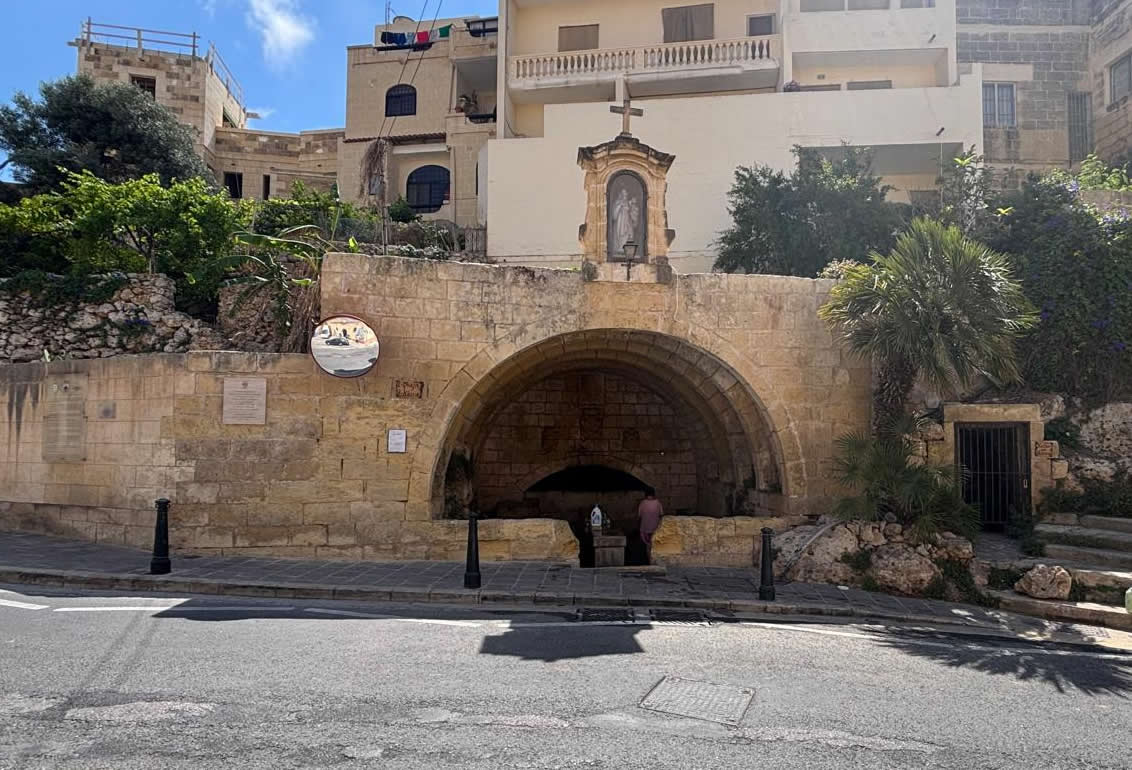
Dominating the northern side of the road, L-Għajn il-Kbira (also known as Għajn tal-Ħasselin) is a majestic, deep-set vaulted structure partially dug directly into the limestone cliff face. Constructed by the Knights of St. John in the 16th century, it was designed specifically to protect the clean, flowing spring water from contamination while giving local washers shelter from the elements. Inside the deep stone-vaulted gallery, rows of heavy stone basins line the walls, fed by gravity-driven rock channels, while a solid stone bench runs down the center for social gathering.

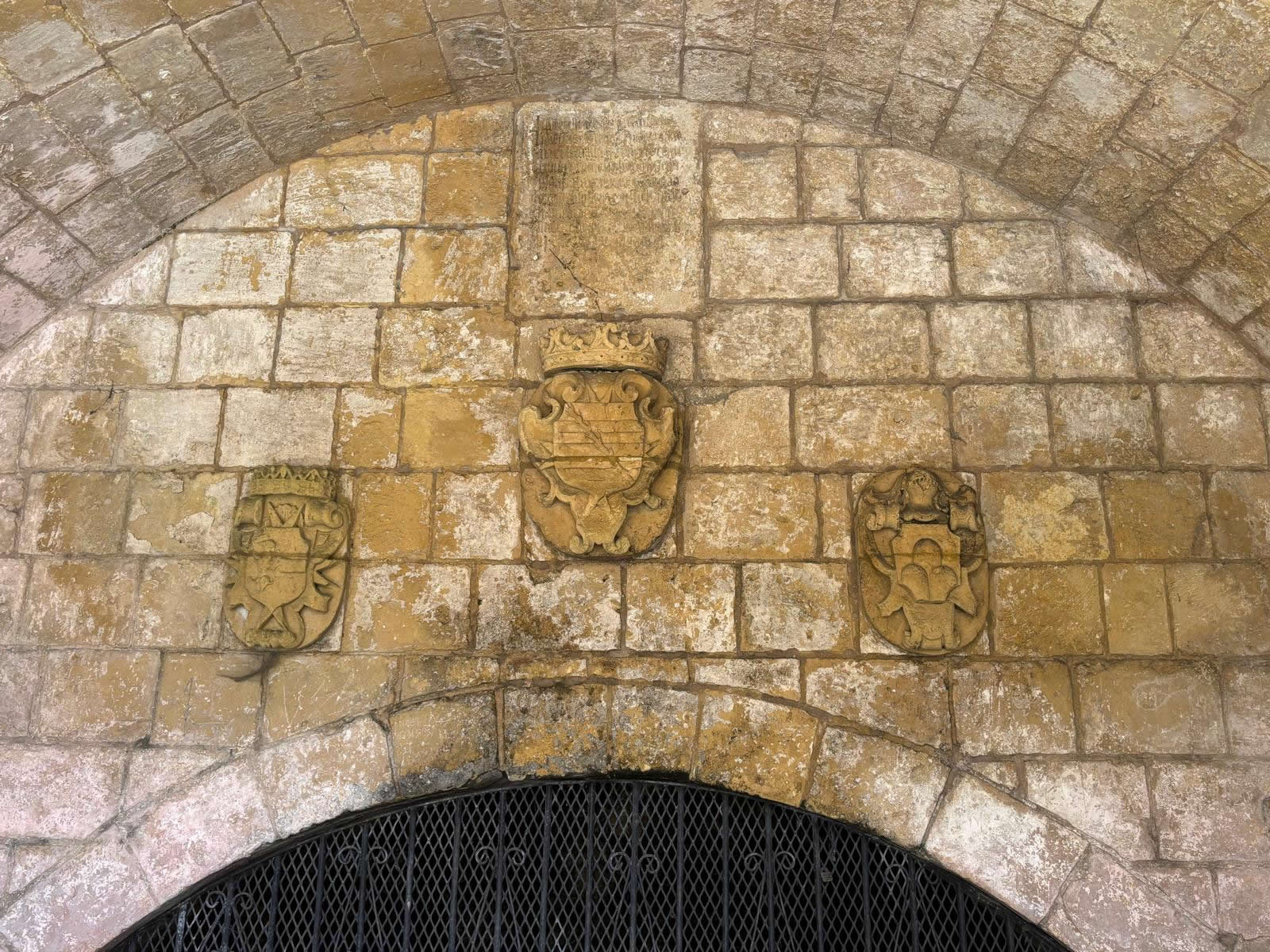
The defining architectural highlight of this wash house is found along its rear rock-carved wall, where historic stone armorial shields and crests remain beautifully preserved, silently marking the administrative patronage and infrastructure oversight of the Order's Grandmasters.
Field Documentation: Knight's Wash House Portfolio (6 Photos)
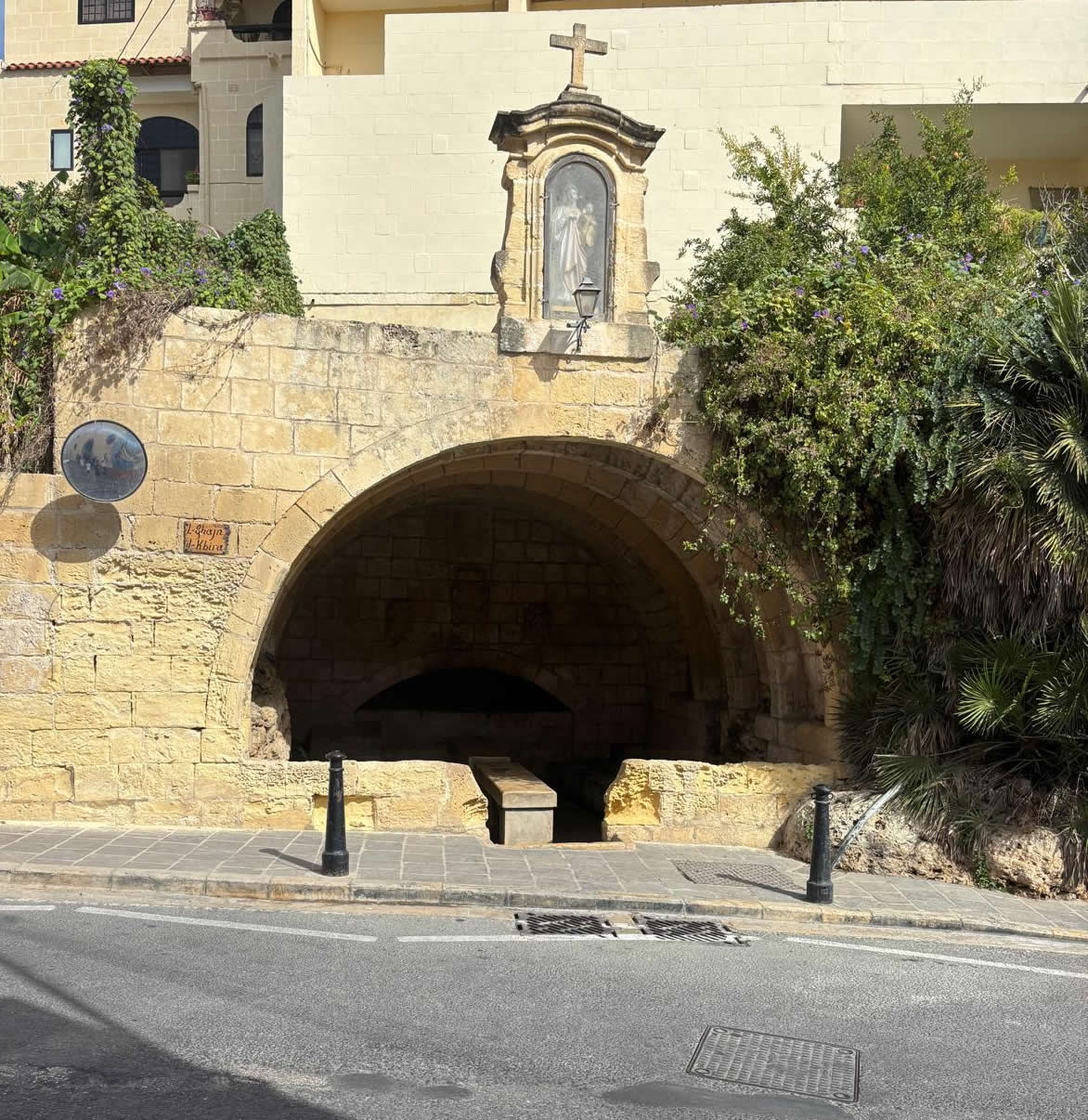
Street view of the large stone archway of L-Ghajn il-Kbira wash house beneath a statue niche and modern apartments in Fontana Gozo
Monumental Entrance: Street-level view of the large limestone archway, topped by a traditional stone statue niche and cross.
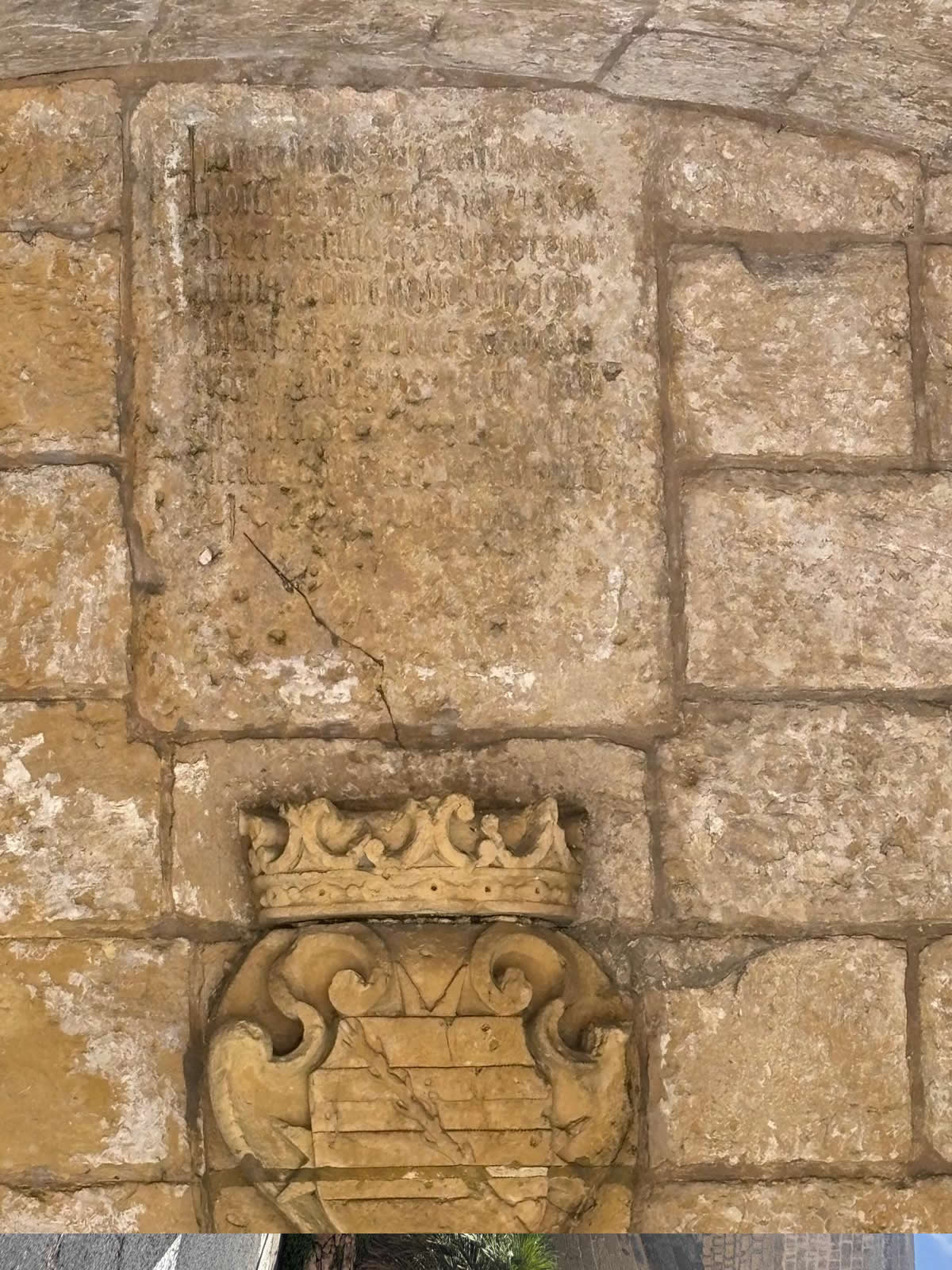
Close up detail of a carved stone armorial coat of arms topped by a crown beneath an eroded Latin inscription slab
Magisterial Patronym: A detailed view of the central armorial shield topped by a crown, situated beneath a heavily weathered stone inscription.
Interior wide view of the vaulted stone public wash house showing stone troughs benches and active spring water source
Internal Mechanics: The interior layout showing active freshwater streams, sitting benches, and stone troughs under a barrel-vaulted ceiling.
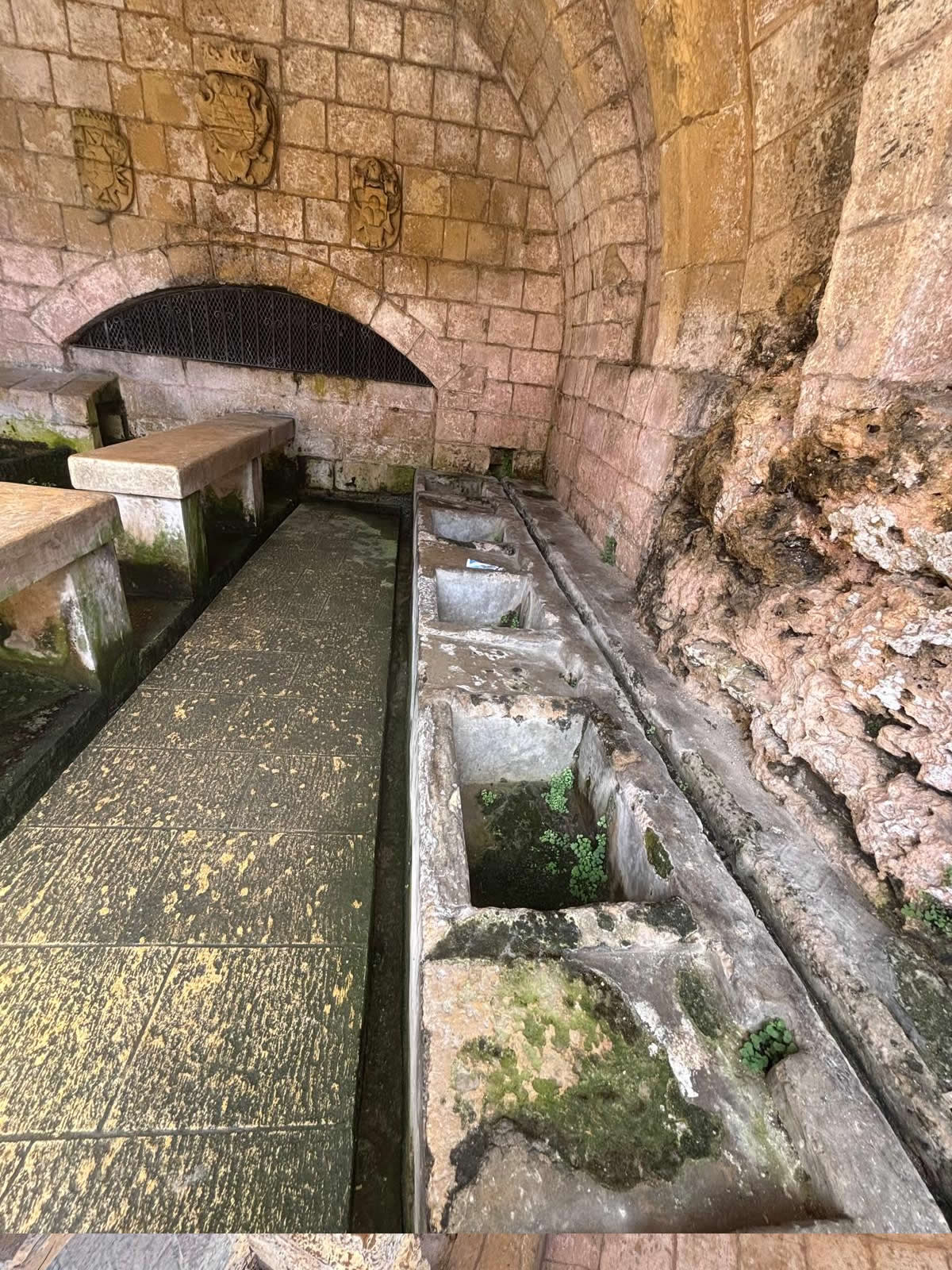
A long linear row of individual stone washing troughs known as hugieg with moss growing inside the fontana wash house
The Washing Bays: A linear view of the historic individual stone washing basins (ħuġieġ) with natural moss growth.
Three carved stone armorial crests of the Knights of St John mounted on the back masonry wall of the wash house
Knights' Heraldry: The trio of stone armorial shields mounted prominently on the back wall above the low protective ironwork.
Exterior frontal view of the Fontana Knights wash house arch surrounded by green trees and roadside pavement
Vernacular Integration: Frontal view of the archway showing how the historic structure blends with the local Gozitan valley foliage and streetscape.

2. L-Għajn ta' Bendu

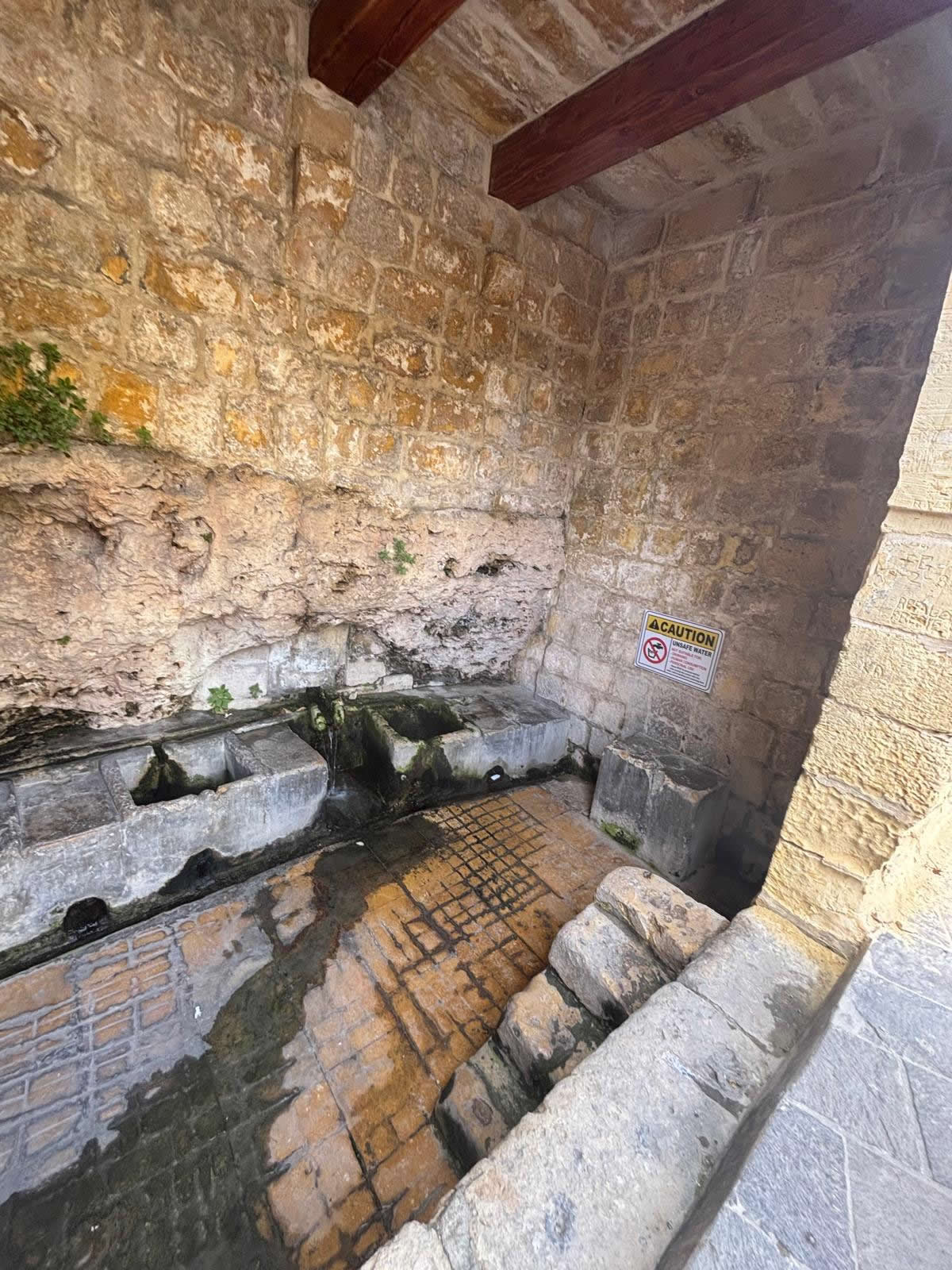
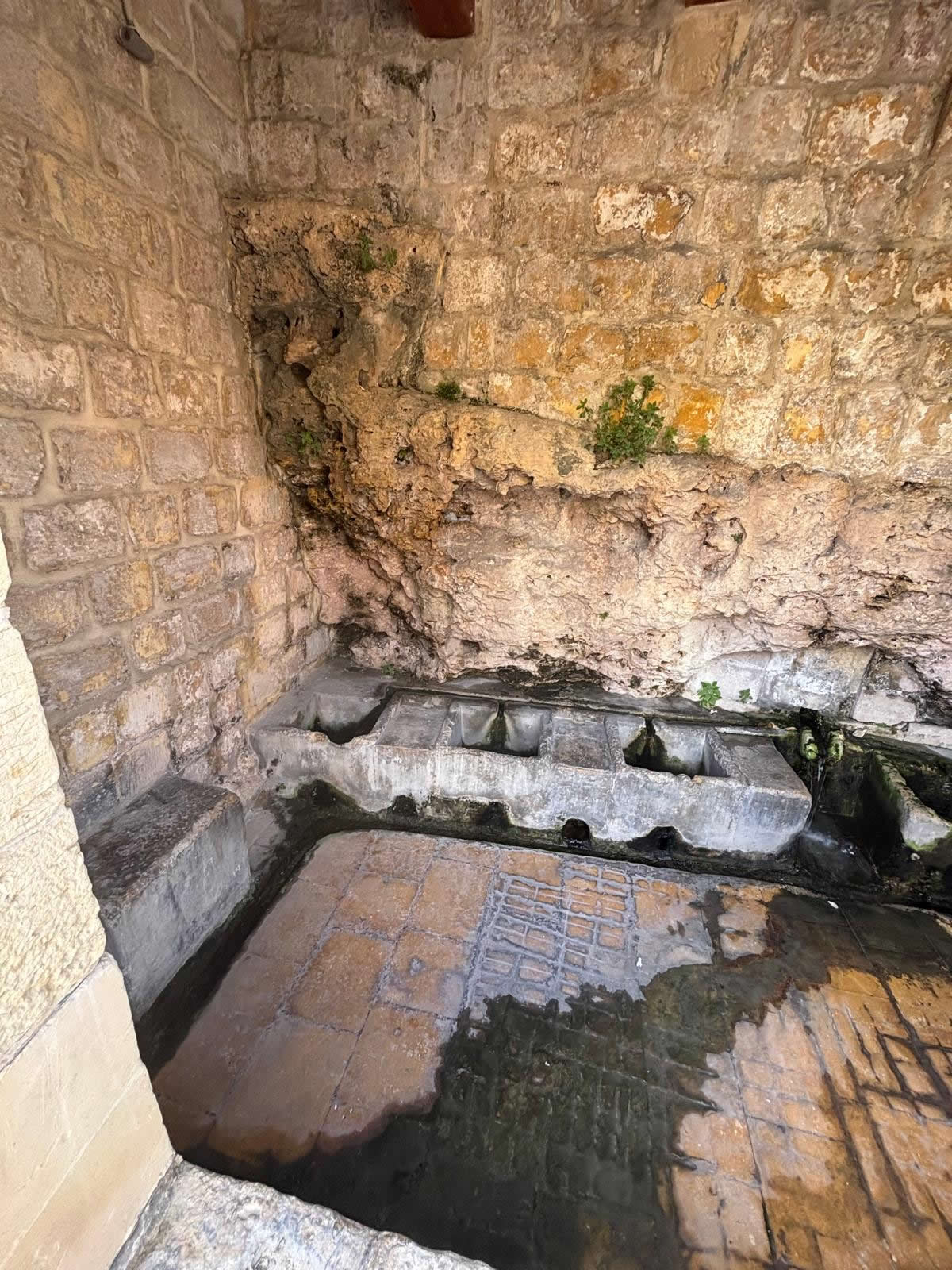
Located directly opposite the Knight's Wash House sits its smaller companion structure, L-Għajn ta' Bendu. This site collects fresh water from the identical deep aquifer network, filtering through natural cracks in the upper rock table. Though smaller in footprint than its monumental counterpart across the road, it remains a critical asset in the network of vernacular water management across Gozo.

Following an emergency partial roof collapse in 2022, the site was carefully stabilized and underwent a full, meticulous architectural conservation project by the Restoration Unit of the Cultural Heritage Directorate. Reopened to the public in 2023, it stands as a pristine showcase of local traditional masonry techniques and defensive water preservation.
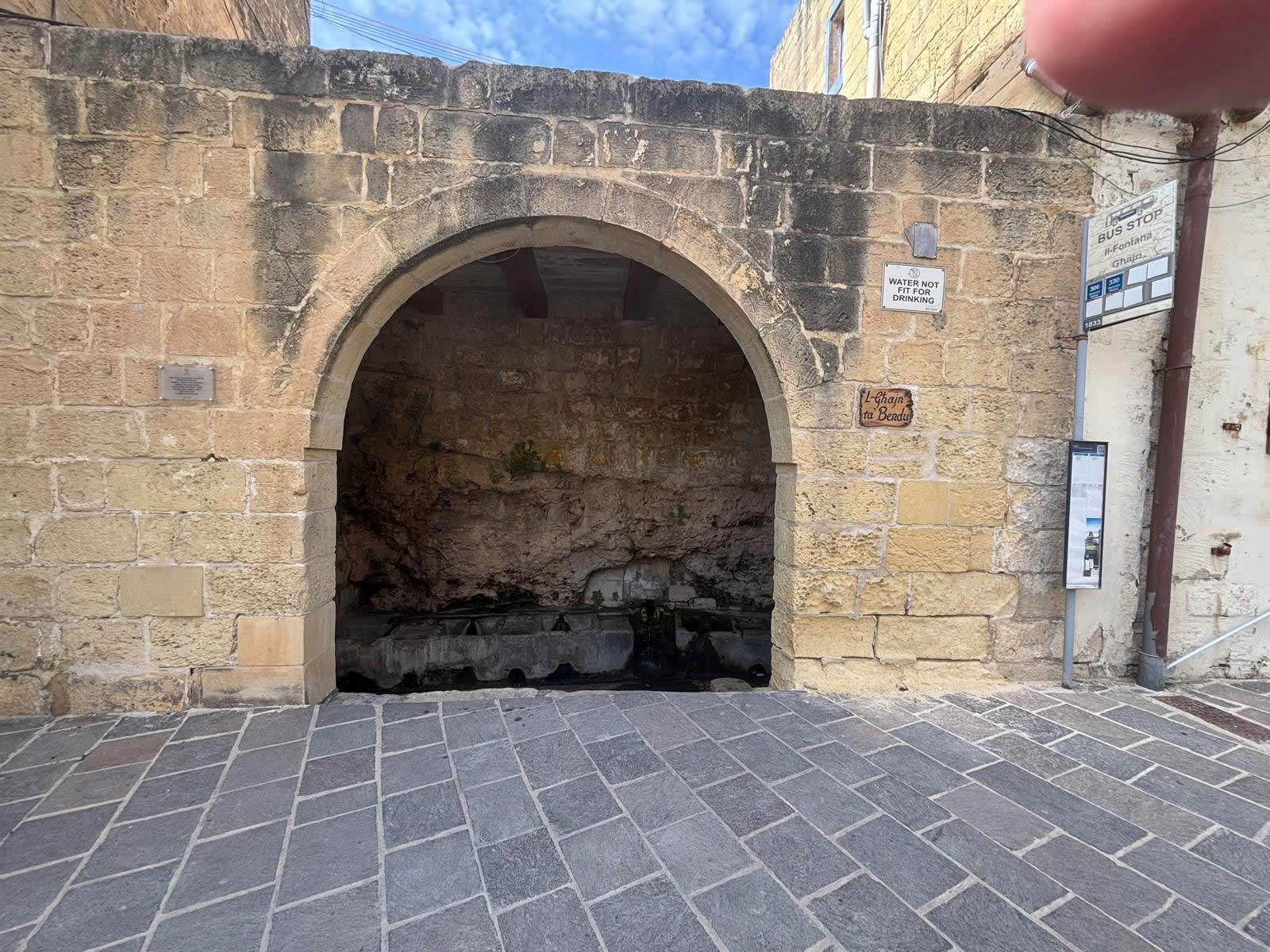
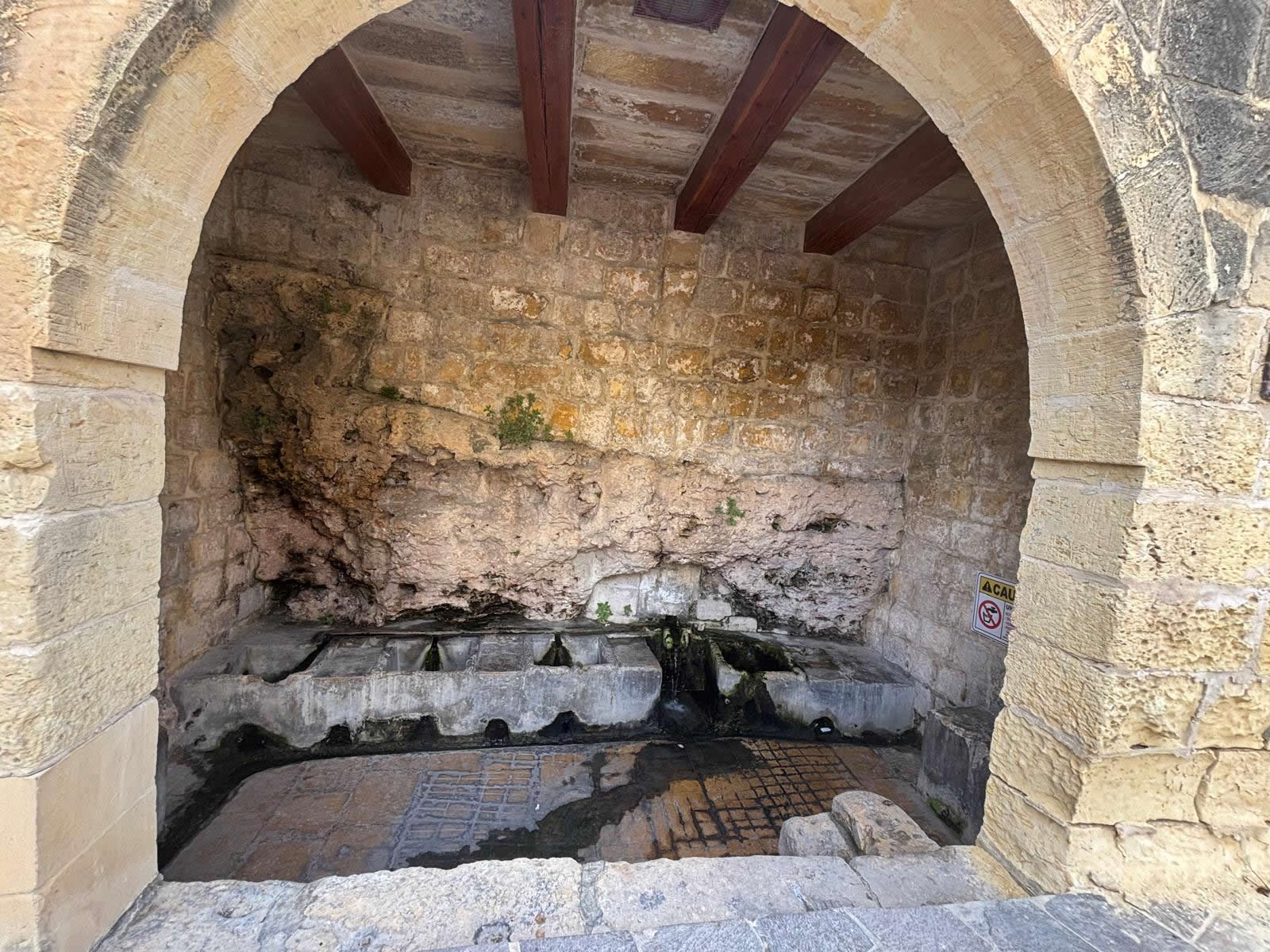
Field Documentation: L-Għajn ta' Bendu Portfolio (5 Photos)
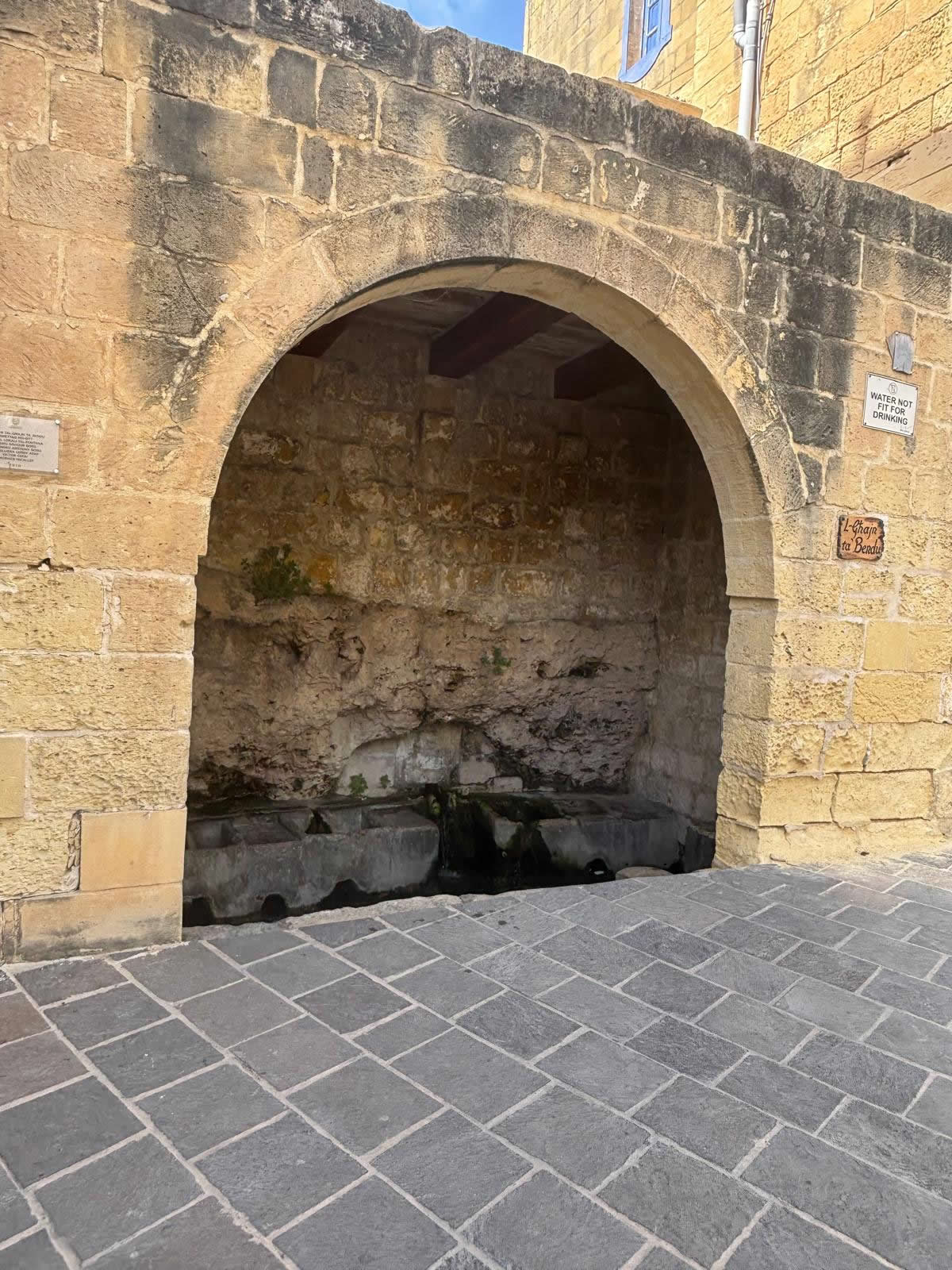
Front view of L-Ghajn ta Bendu wash house arch in Fontana Gozo with stone paving and a bus stop sign to the right
Street Presence: Frontal perspective showing the arched entrance off the stone-paved square, flanked by local directional signage.
Interior view of Ghajn ta Bendu showcasing restored timber ceiling beams and stone basins built against the exposed bedrock
Structural Stabilization: A clean view of the interior showing the heavy timber beams supporting the roof above the limestone basins.
Close up view of the right side stone washing basins in Ghajn ta Bendu next to a yellow caution sign
Hydraulic Details: The right-hand washing troughs resting beneath the natural, mossy bedrock shelving and an official caution notice.
Left side view of the limestone troughs inside Ghajn ta Bendu showing natural water flow on the tiled floor
Aquifer Catchment: Looking down at the left bank of stone basins, where fresh water continuously feeds into the channel system.
Angled exterior street view of the limestone arch of L-Ghajn ta Bendu in Fontana Gozo
Architectural Profile: An angled exterior view highlighting the weathered patina of the outer limestone blocks and the entrance arch.
Living Heritage Note: Unlike many archaeological relics, the Fontana wash houses are living spaces. To this day, local Gozitan residents can occasionally be seen rinsing linens or refilling bottles with the mineral-rich, pure spring water, which remains highly regarded across the island for its exceptional purity.

Frequently Asked Questions (FAQ)

Why does the Knight's Wash House have stone crests at the back?
The stone armorial shields were carved and installed during the rule of the Order of Saint John to mark the structural construction, financial patronage, and formal protection of the public water supply under the Grandmasters.
What happened to L-Għajn ta' Bendu recently?
In 2022, a section of the historic stone roof suffered a structural collapse. The site was temporarily closed for safety and was comprehensively repaired and restored by the Cultural Heritage Directorate, reopening fully in 2023.
Can you still visit the wash houses for free?
Yes, both public wash houses are completely open to the public and free to visit during daylight hours as active monuments of Gozitan cultural history.

Research & Documentation

  • Researcher: Paul Berman
  • Last Updated: 2026

This page forms part of eMalta's ongoing documentation of the historical, cultural and religious heritage of Malta and Gozo.

Information has been compiled through site visits, field research, historical publications, archival records, maps, plans and other reference sources.

All locations that currently exist featured on eMalta have been personally visited and documented. Where historic sites no longer exist, information has been researched from archival sources and contemporary records.

Images used on eMalta include original photography as well as historical illustrations, maps and photographs reproduced with permission from archives, institutions and copyright holders where applicable. Individual image credits and archive reference numbers are provided where available.