Located along the bustling thoroughfare of Triq il-Wied, the Msida Valley Spring Wash House (traditionally known as Għajn tal-Wied) offers a striking juxtaposition of old and new. Sitting beneath mid-20th-century apartment blocks, this historic limestone structure serves as a physical reminder of the vast natural water networks that once trickled down the valley toward the sea. Formalized during the late 18th century under the rule of Grandmaster Emmanuel de Rohan-Polduc, it remains a rare urban survivor of Malta's public hydraulic infrastructure.
Quick Reference Data
| Official Name | Għajn tal-Wied (The Valley Spring Wash House) |
|---|---|
| Location | Triq il-Wied (Valley Road), Msida, Malta |
| Historical Era | Late 18th Century (Order of St. John / Grandmaster de Rohan period) |
| Hydrological Context | Natural freshwater catchment collected from the water table of the extensive Msida Valley system |
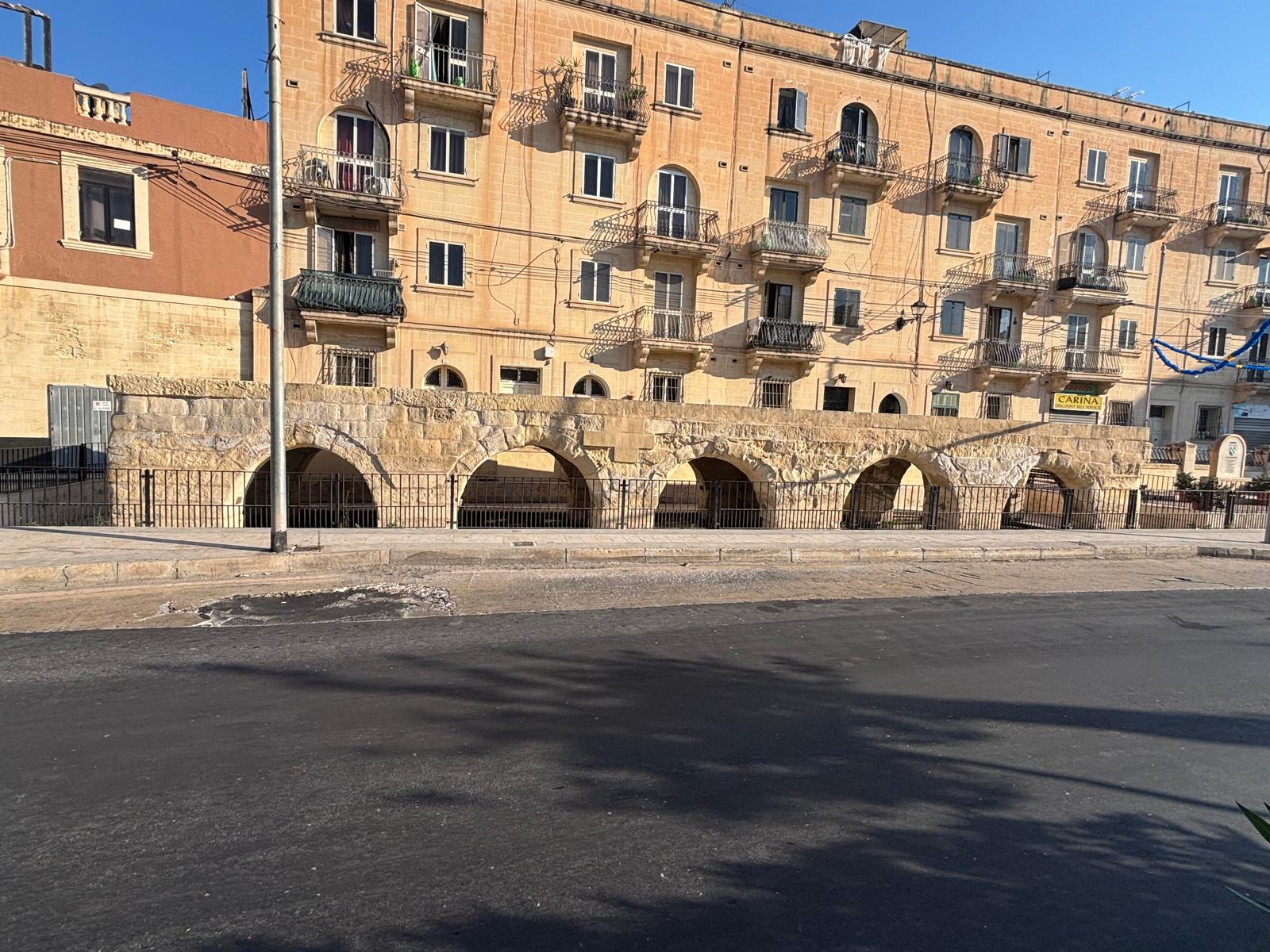
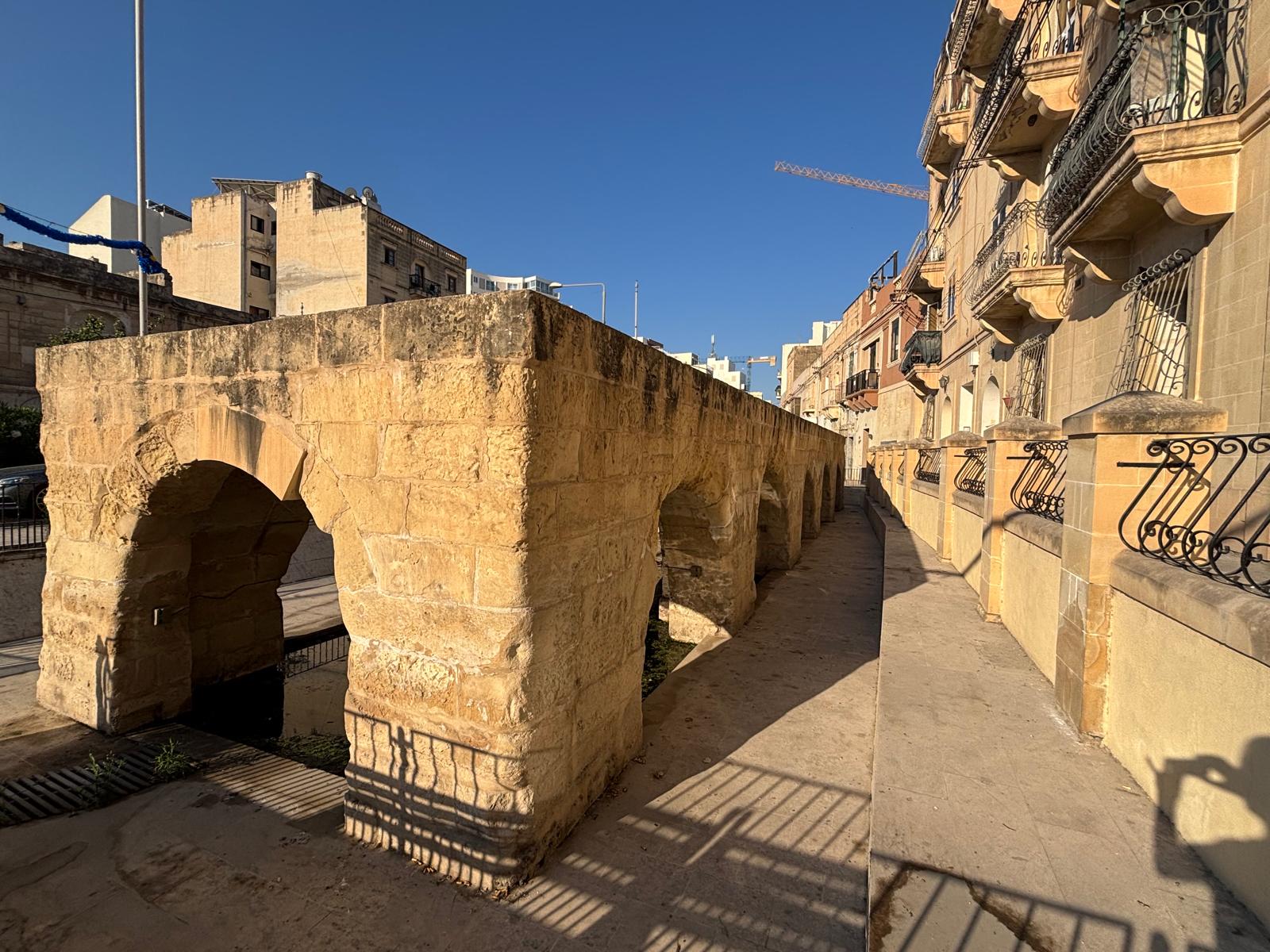
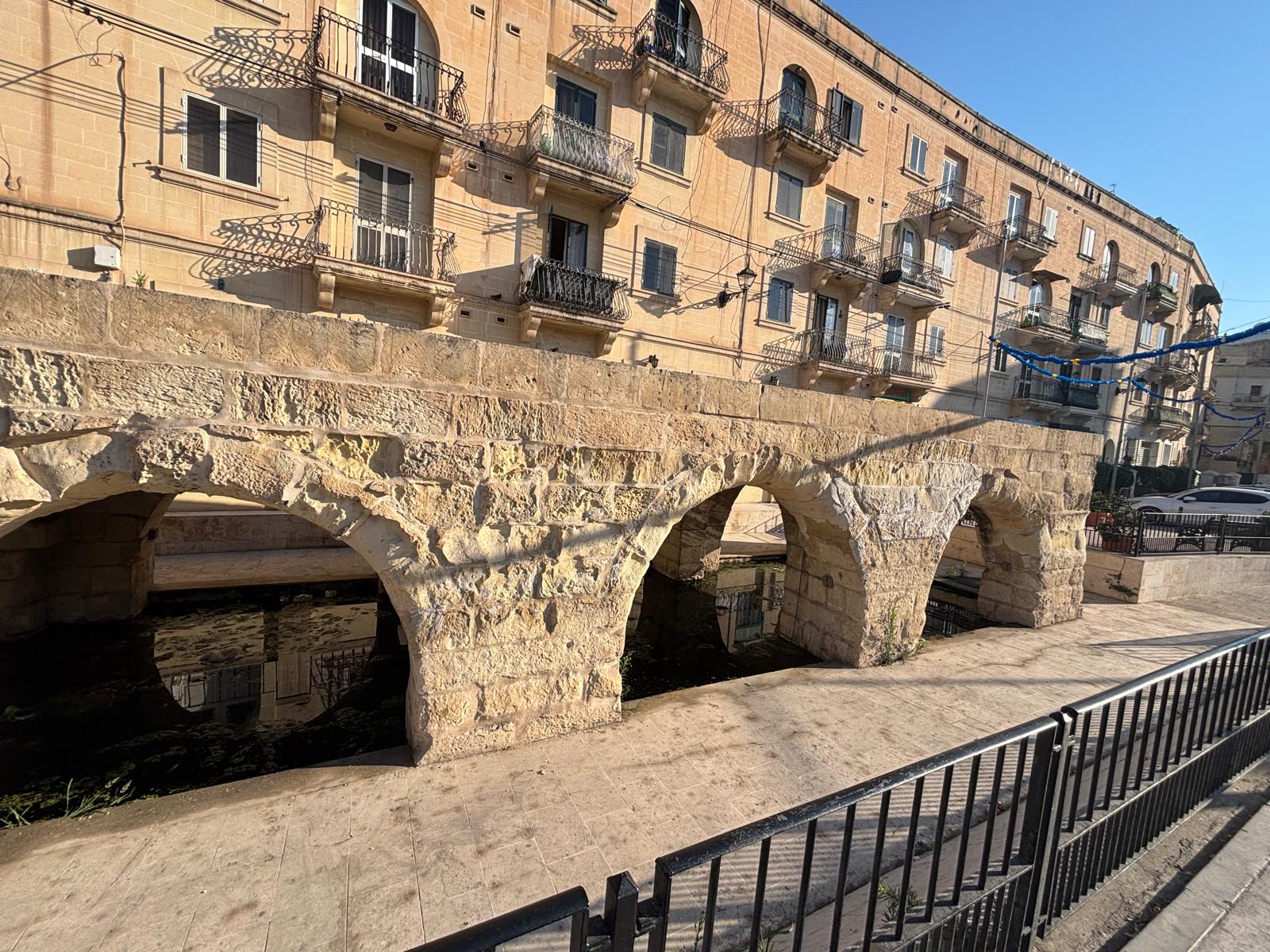
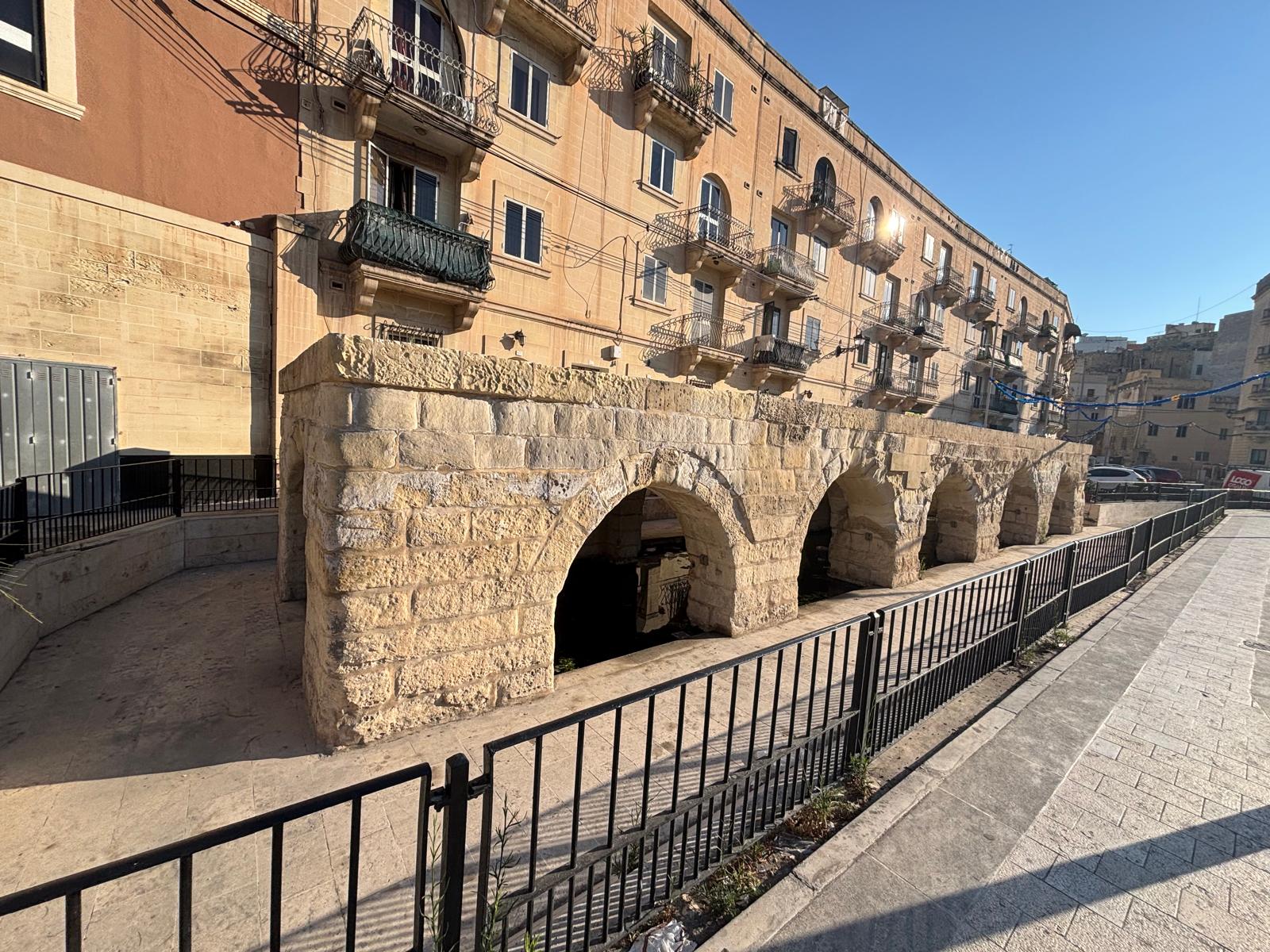
| Architectural Form | Linear low-slung stone arcade featuring segmented limestone arches and a flat flagstone roof |
Urban Hydrology & Architectural Footprint
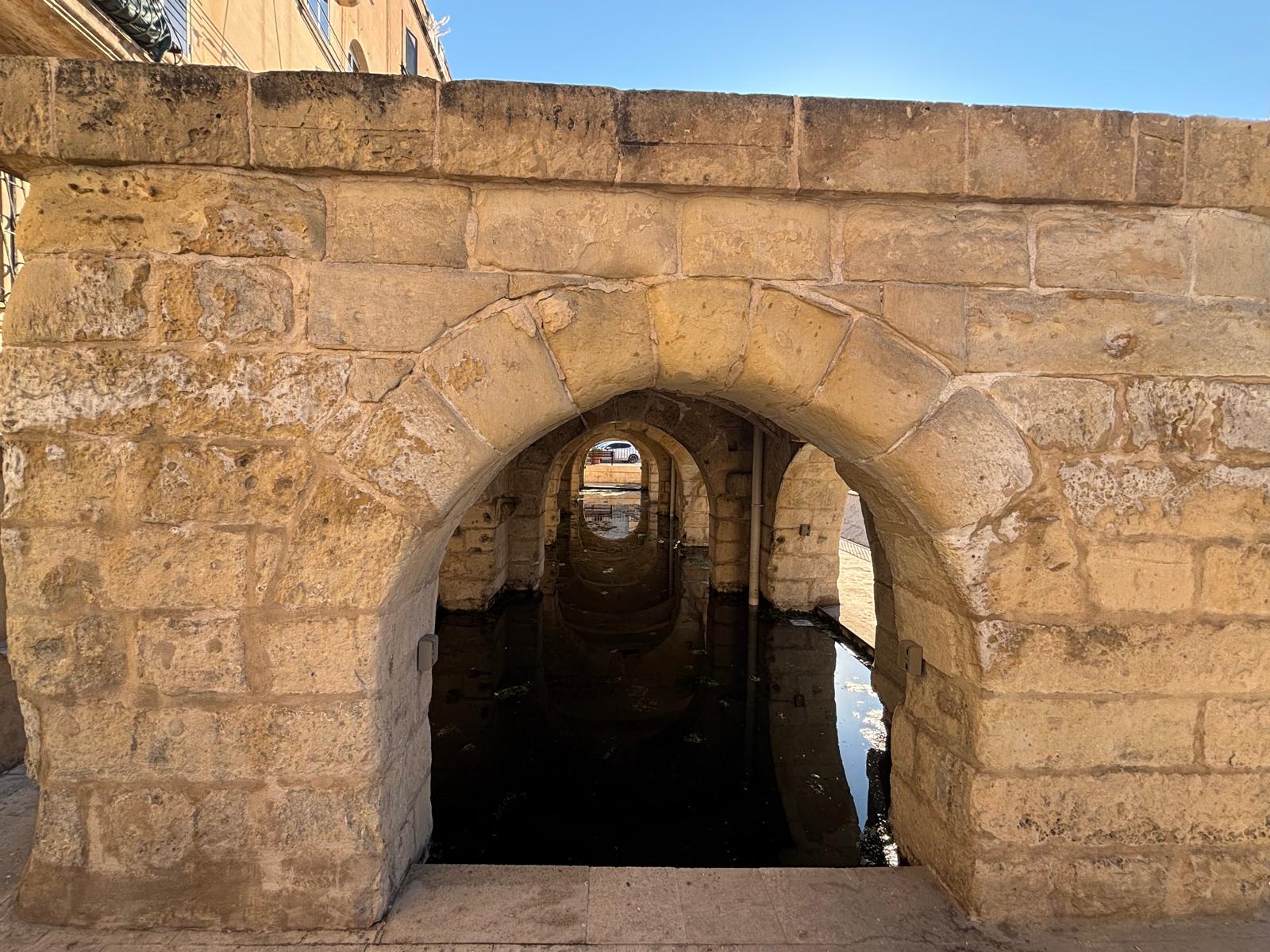
Before the urbanization of Birkirkara and Msida, Valley Road was a wide, natural stormwater channel fed by deep inland aquifers. Fresh water consistently pooled along this low basin, leading historical engineers to construct a long, defensive stone arcade over the water channels. This design kept the clean washing supply insulated from dust, heat, and flash flooding cascading down the valley path.
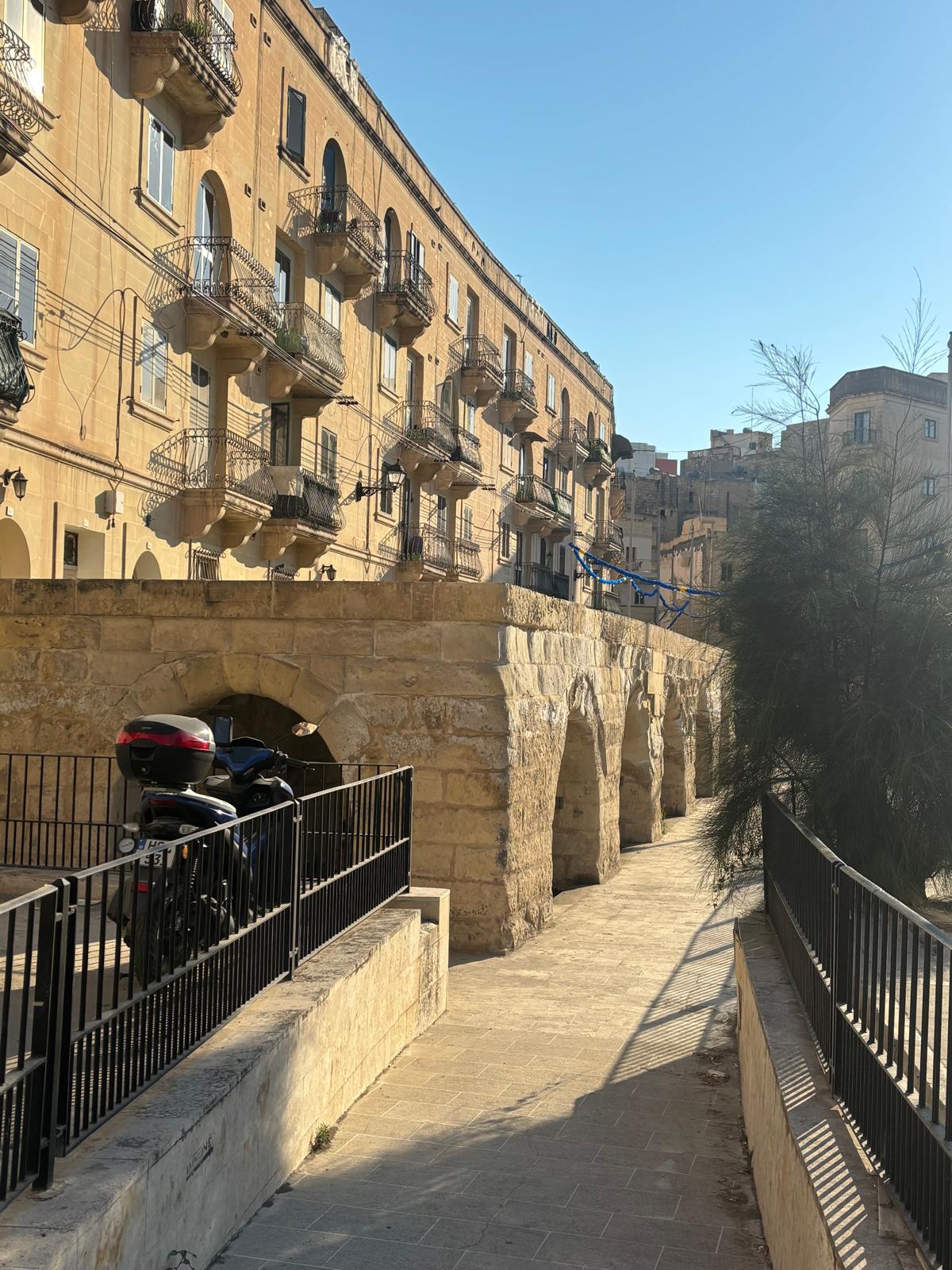
The layout consists of a continuous, low-slung limestone corridor punctuated by a series of repetitive, thick-set stone arches. This segmented arcade supports a solid, flat slab roof that aligns neatly with modern street levels. Today, protective modern iron railings run the length of the structure, separating the historical open water basin from the busy roadway and pedestrian footpaths.
Field Photography Documentation
The following original field photos demonstrate the architectural layout and urban integration of the Msida Spring complex:
Frequently Asked Questions (FAQ)
Research & Documentation
- Researcher: Paul Berman
- Last Updated: 2026
This page forms part of eMalta's ongoing documentation of the historical, cultural and religious heritage of Malta and Gozo.
Information has been compiled through site visits, field research, historical publications, archival records, maps, plans and other reference sources.
All locations that currently exist featured on eMalta have been personally visited and documented. Where historic sites no longer exist, information has been researched from archival sources and contemporary records.
Images used on eMalta include original photography as well as historical illustrations, maps and photographs reproduced with permission from archives, institutions and copyright holders where applicable. Individual image credits and archive reference numbers are provided where available.