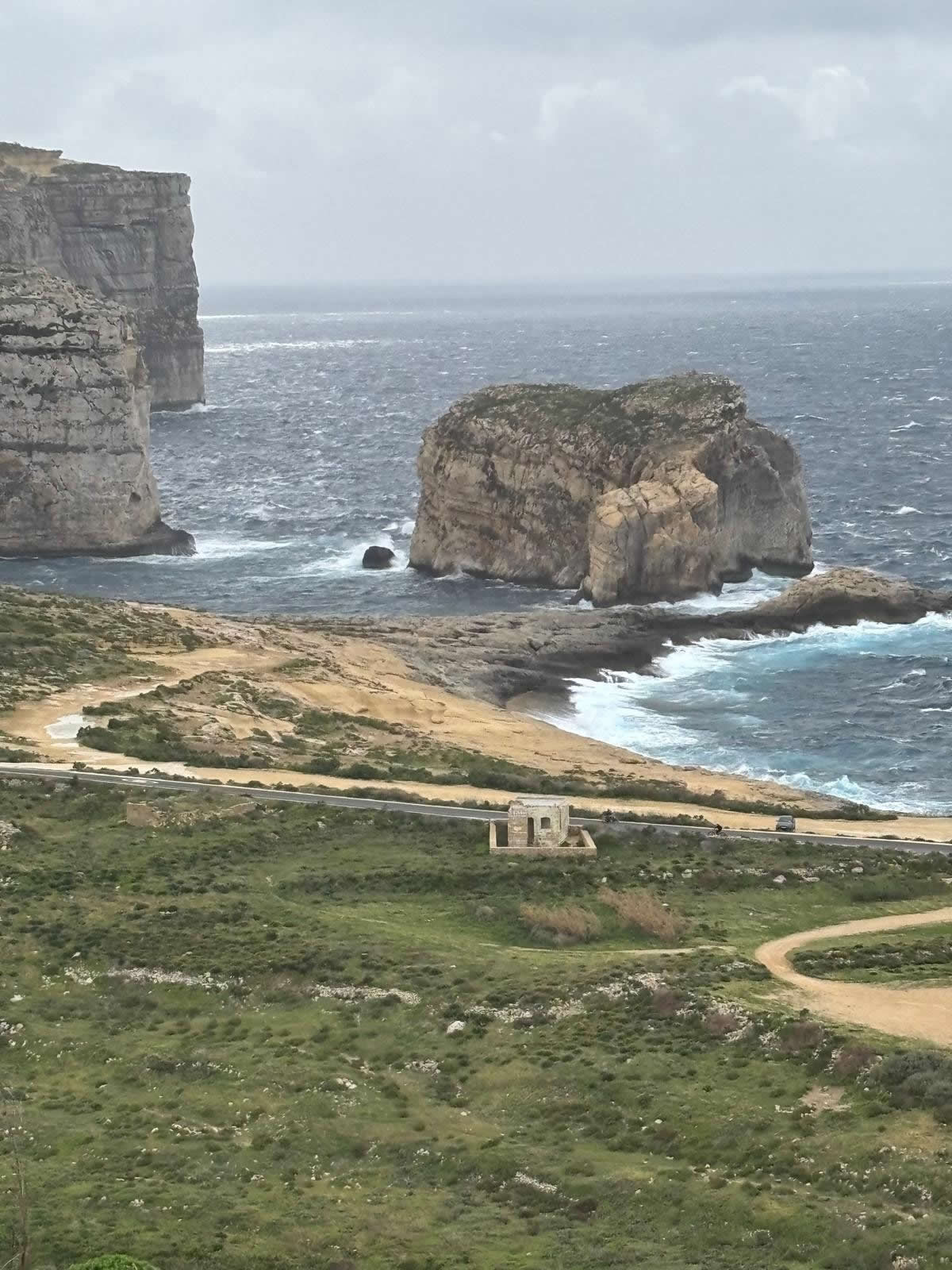
Dwejra is one of Gozo’s most dramatic coastal landscapes: a rugged limestone shoreline where natural features sit close together, including the Blue Hole, the Inland Sea lagoon and tunnel, Fungus Rock, and the Dwejra Tower (1652). Even after the Azure Window collapsed in 2017, Dwejra remains a must-see for scenery, photography, and (in the right conditions) swimming and diving.
At a glance
- Location
- Dwejra coast, San Lawrenz, Gozo (Malta).
- Coordinates
- 36.052751, 14.188648
- Known for
- Blue Hole, Inland Sea & tunnel, Fungus Rock, Dwejra Tower (1652), cliffs and coastal walks.
- Azure Window
- Collapsed on 8 March 2017; the “Azure Window site” is still visited for views and diving/boat routes.
- Best for
- Nature, photography, swimming (Inland Sea), diving (experienced), sunset views.
- Access
- Coastal terrain is rocky and uneven—wear sturdy footwear.
Top highlights at Dwejra
Blue Hole
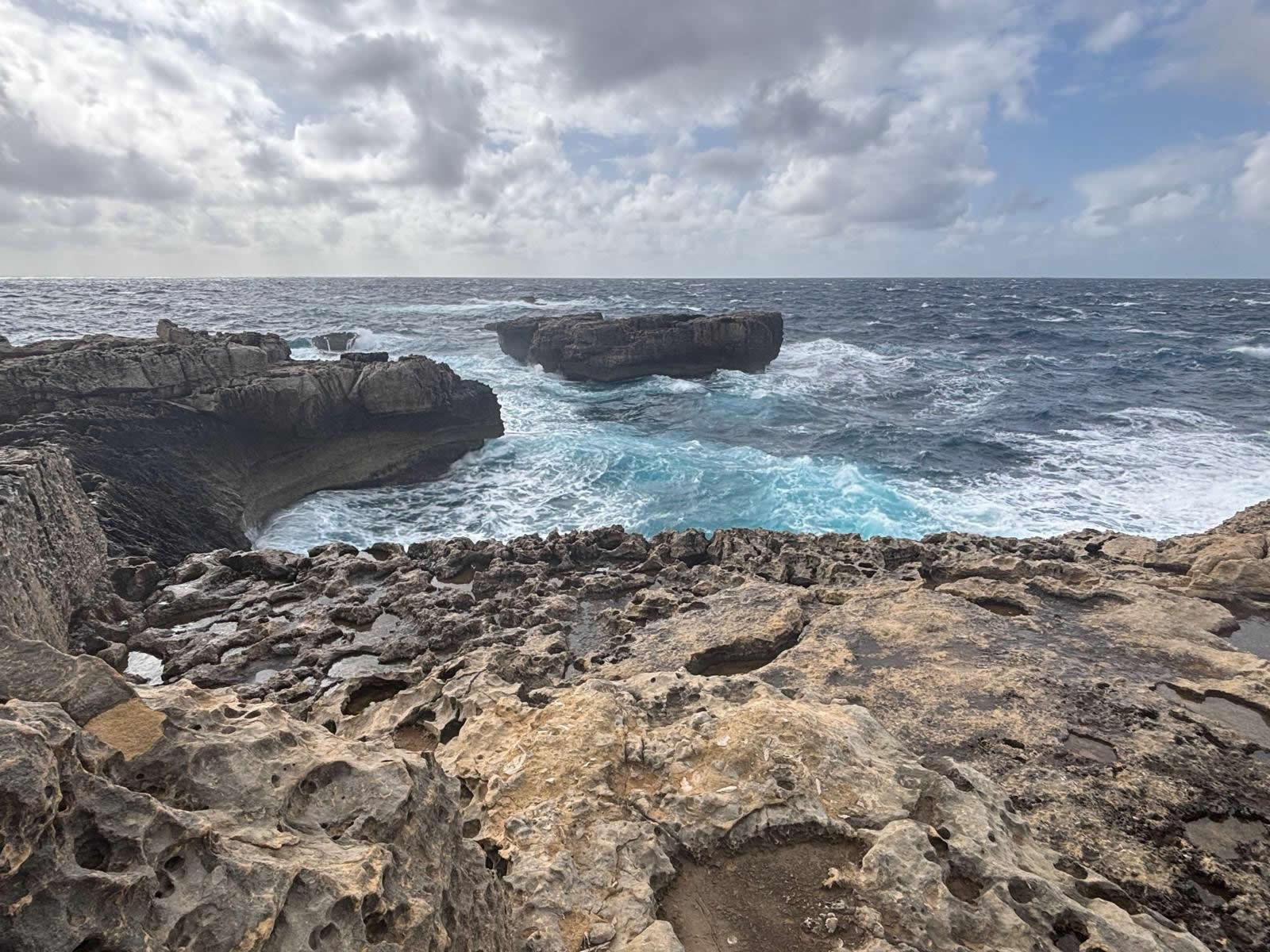
The Blue Hole is among Malta’s most famous dive entries: a natural opening in the limestone that leads to open sea. It’s visually striking even from above, and a key landmark for divers (conditions permitting).
Inland Sea & tunnel
The Inland Sea is a saltwater lagoon connected to the Mediterranean by a natural tunnel through the cliffs. It’s popular for calmer swims and short boat trips that pass through the tunnel to open sea viewpoints.
Fungus Rock (Il-Ġebla tal-Ġeneral)
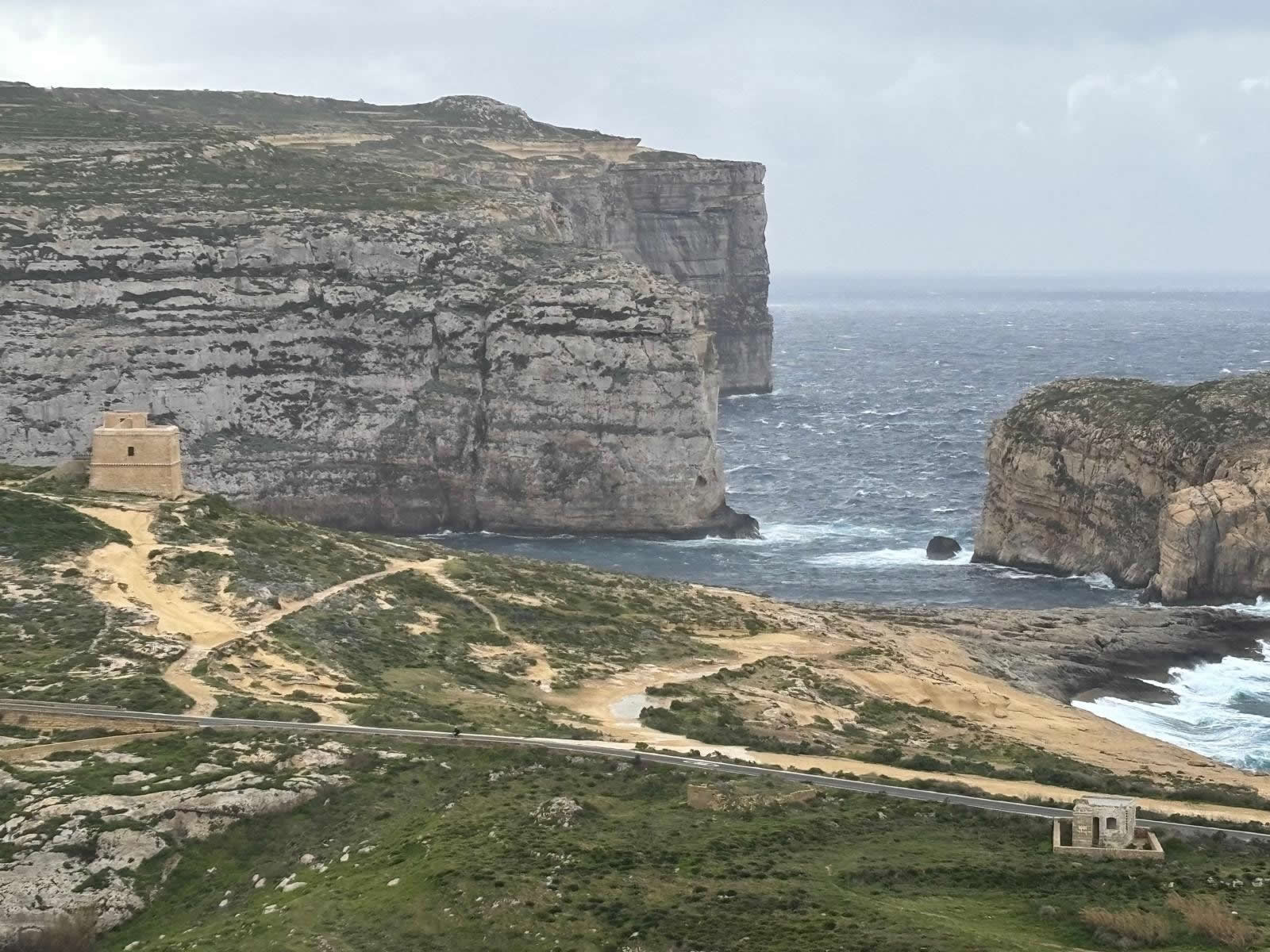
Fungus Rock is a small offshore islet at Dwejra with a distinctive history linked to the Knights of St John and a plant once believed to have medicinal properties. Today it is a protected natural feature and a dramatic photographic subject.
Dwejra Tower (Torri tad-Dwejra)
Built in 1652 as a coastal watchtower, Dwejra Tower offers panoramic views across Dwejra’s cliffs and reefs. It’s one of the best vantage points for understanding the coastline’s scale.
Azure Window site
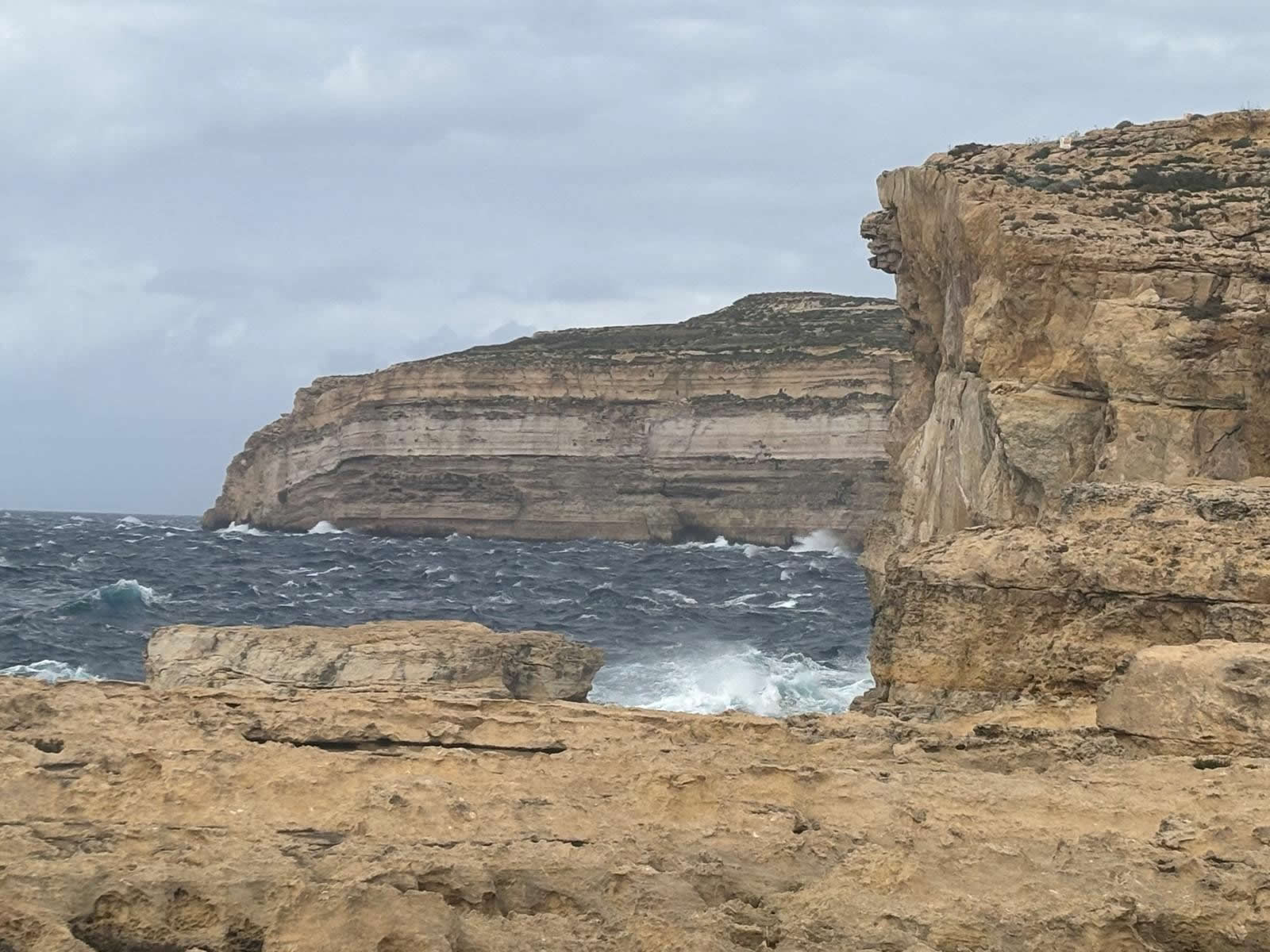
The Azure Window (Tieqa tad-Dwejra) collapsed on 8 March 2017 after storms, leaving an underwater rock field that attracts divers and remains part of many boat-trip narratives. The surrounding coastline is still spectacular.
Things to do
- Coastal walk: explore viewpoints between the tower area, Blue Hole, and Inland Sea paths.
- Swimming: the Inland Sea is often calmer than the exposed coast; always assess conditions.
- Boat trip: in suitable weather, short trips run from the Inland Sea through the tunnel to open sea.
- Diving/snorkelling: world-class shore diving for qualified divers; snorkel only where safe and calm.
- Photography: sunset light is especially strong on Gozo’s west coast—arrive early for parking and composition.
Internal-linking idea: create individual feature pages (Blue Hole, Inland Sea, Dwejra Tower, Fungus Rock) and cross-link them to
build a strong topical “Dwejra” cluster under /places/.
Safety & conditions
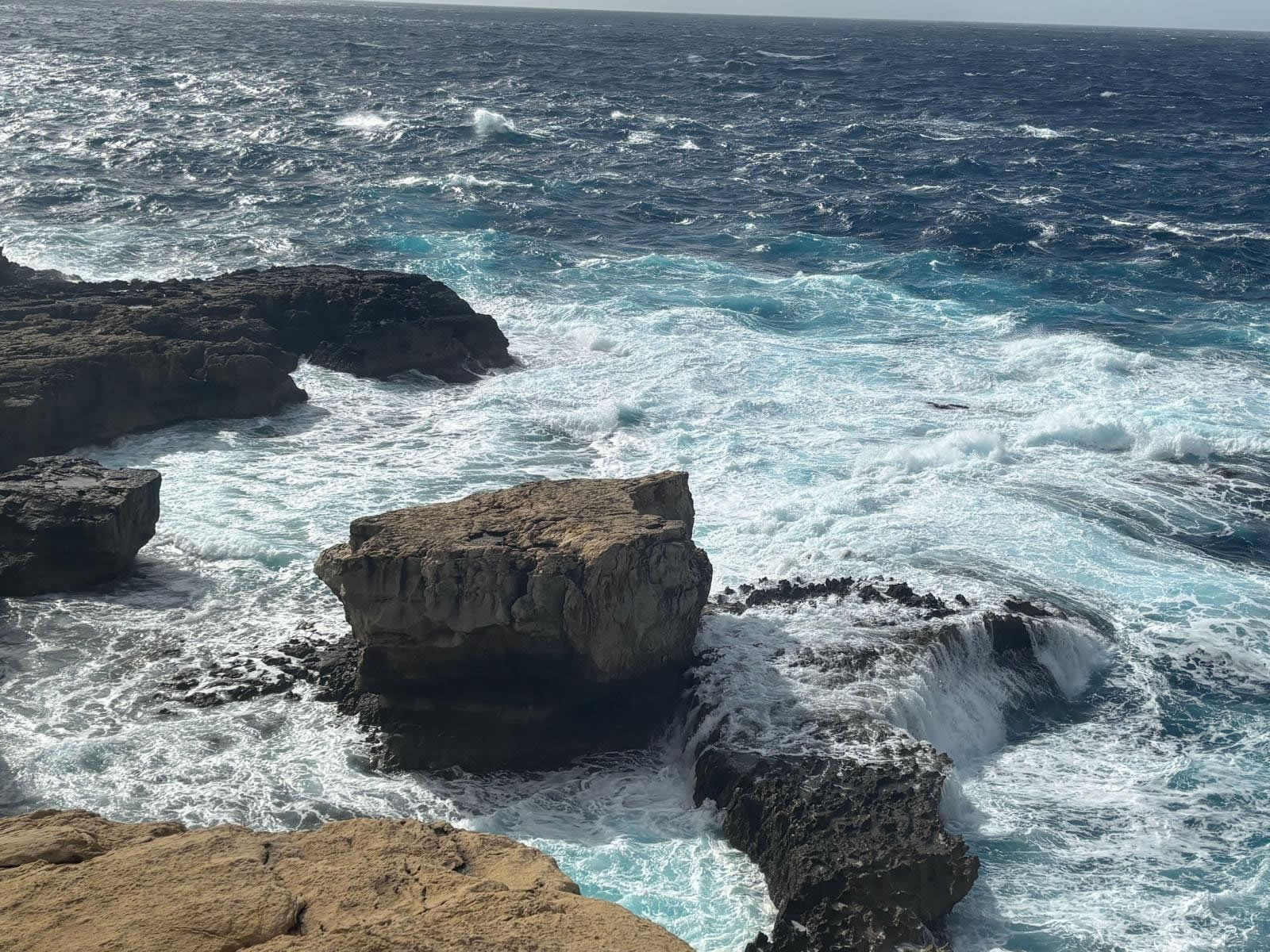
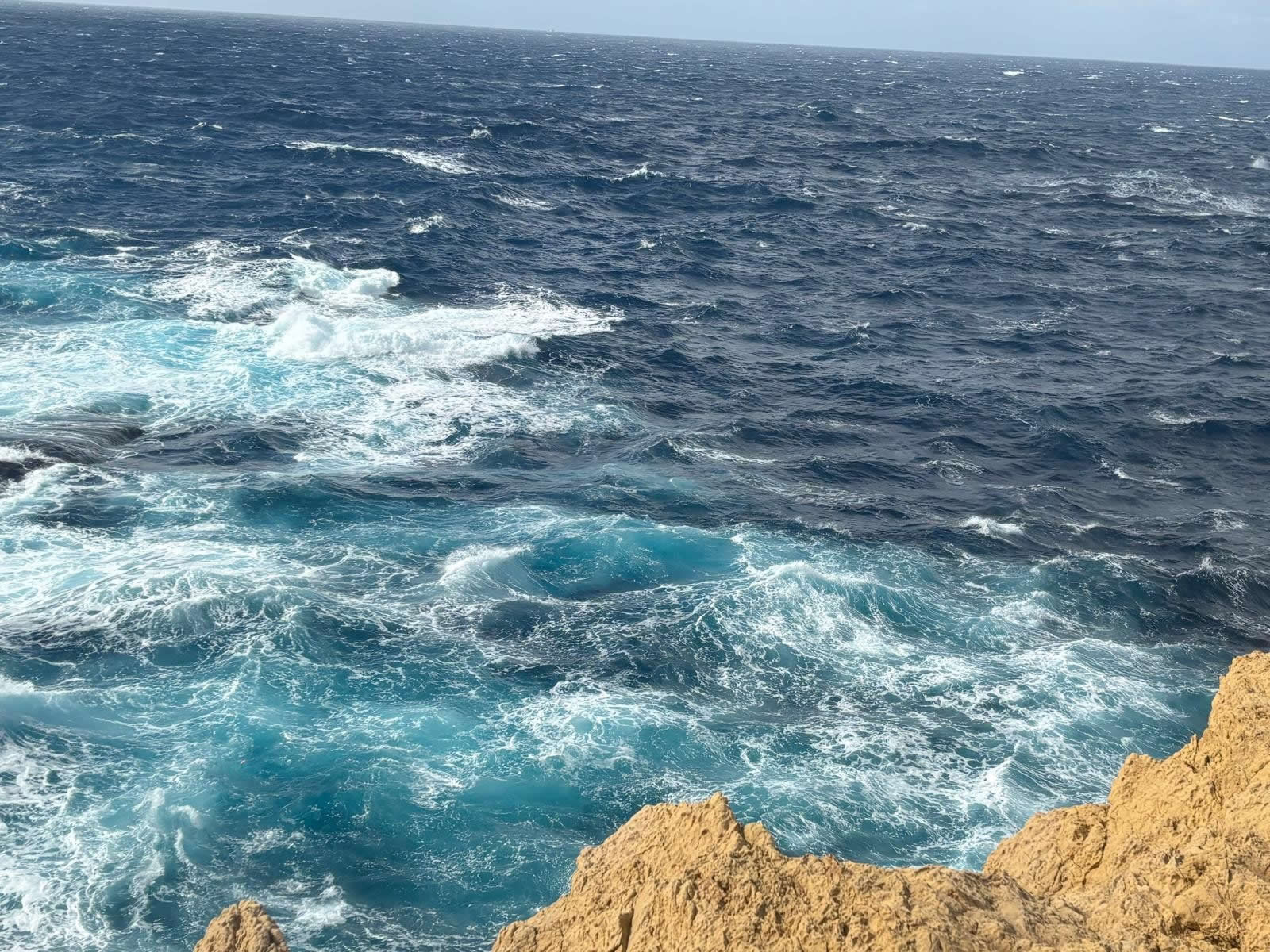
- Rough seas: the open coastline can develop strong swell and surge—avoid cliff edges and slippery rock.
- Footwear: limestone can be sharp and uneven; sturdy shoes are safer than sandals.
- Diving: dive within your training, check entry/exit routes, and follow local operator guidance.
- Respect the site: avoid disturbing rock pools and marine life; take litter home.
Getting there
Dwejra is reached via San Lawrenz on Gozo. The final approach is typically downhill towards the coast. Use the coordinates below for navigation:
Coordinates: 36.052751, 14.188648
Map: Directions
FAQ
How long should I spend at Dwejra?
Most visitors spend 1–3 hours for viewpoints and a short walk; longer if you’re swimming, taking a boat trip, or diving.
Is Dwejra suitable if I don’t dive?
Yes—Dwejra is excellent for scenic walks, photography, the tower viewpoint, and watching boat trips and divers from above.
What’s the best time for photos?
Late afternoon and sunset often give the most dramatic light on the west-coast cliffs (weather and season dependent).
© Emalta. Coordinates: 36.052751, 14.188648. Content intended as a practical visitor overview.