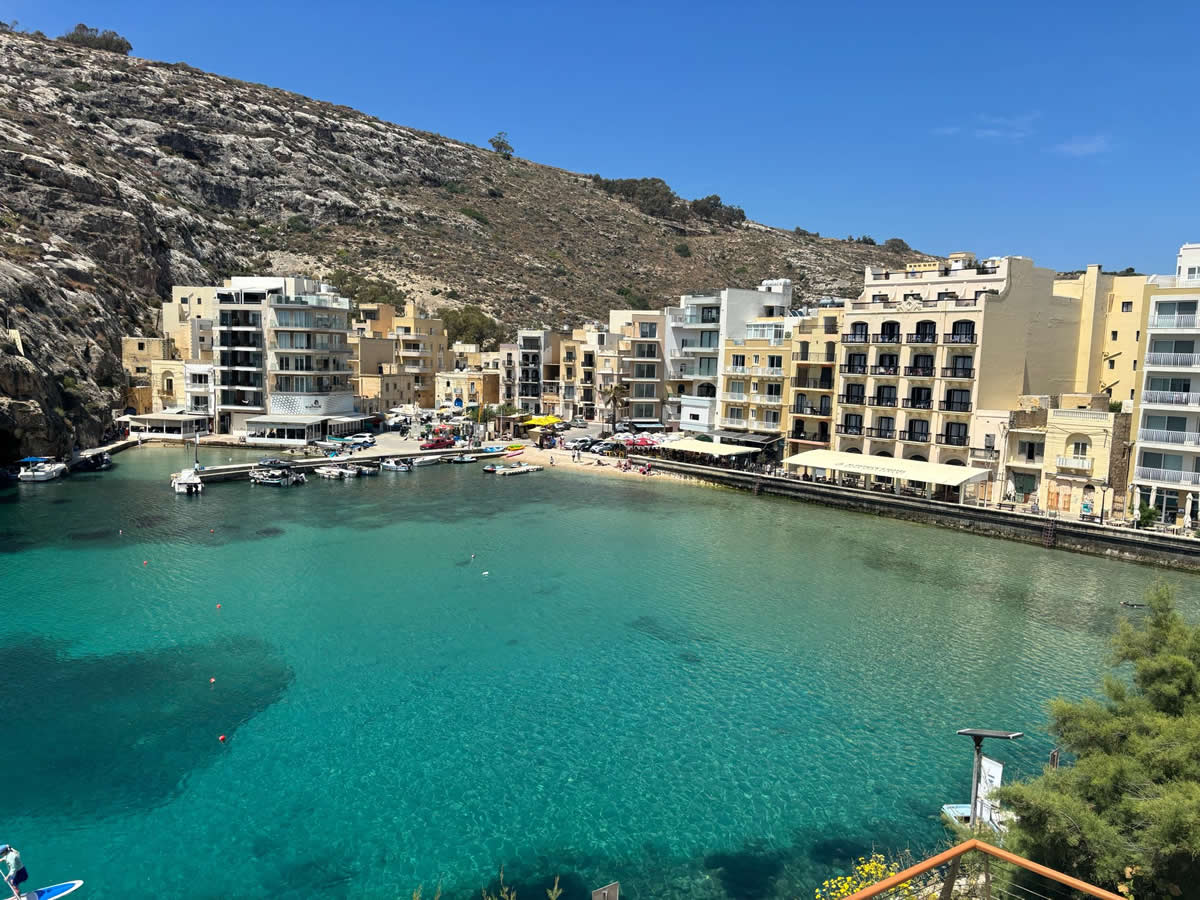
Full detailed history of Xlendi (with relevant dates)Harbour geography and early shoreline useXlendi’s cliffs shelter a narrow inlet from strong winds, making it an attractive anchorage. Summaries of Xlendi’s historical places note discoveries of tombs dating from the Punic–Byzantine period, and describe Roman use of the port, with shipwreck evidence and amphora finds linked to the reef inside the bay. |  |
Name and the “shipwreck” origin story (1960s)
Xlendi’s name is widely linked to a Byzantine-era term (xelandion, a type of galley). Popular accounts connect the name to a galley (“Shilandi”) said to have wrecked near the bay and been rediscovered in the 1960s, reinforcing Xlendi’s identity as a place shaped by seafaring and shipwreck lore.
Coastal defence: Xlendi Tower (1649–1650)
The bay mouth is watched by Xlendi Tower (Torri tax-Xlendi), one of the Lascaris towers. It was proposed in 1649 and completed by June 1650. Sources also provide a specific date used in many summaries: 29 June 1650, with the tower built under Grand Master Juan de Lascaris-Castellar to deter corsair and Ottoman incursions.
The tower later served British-era duties and was reused as an observation point in World War II. In the modern period, responsibility for its upkeep was transferred to local stakeholders, and restoration works have been noted in recent decades.
Modern administration: local mini council (March 2010)
Although Xlendi is administered within the Munxar locality, it is described as having its own five-member “mini council” from March 2010, reflecting the area’s distinct identity and seasonal pressures as a popular coastal destination.
Underwater archaeology: from antiquity to modern surveys
Xlendi’s seabed is part of its heritage. Heritage Malta describes an underwater archaeological park at Xlendi, highlighting a Phoenician shipwreck from the 7th century BC among wider artefact discoveries. In addition, the Virtual Museum notes that in 1993 a deep-water survey outside Xlendi detected a dense scatter of amphorae—now known as the “Tower Wreck” because of its proximity to the coastal watchtower.
At-a-glance timeline
- Punic–Byzantine period — tombs discovered in and around Xlendi (e.g., St Simon Point / valley areas).
- Roman era — harbour use noted; shipwreck/amphora evidence associated with the bay’s reef.
- 1649 — Xlendi Tower proposed.
- June 1650 — tower completed.
- 29 June 1650 — tower often specifically dated to this day in summaries.
- 1960s — “Shilandi” wreck linked to the name is described as rediscovered.
- 1993 — deep-water amphora scatter detected; “Tower Wreck” label used.
- March 2010 — local mini council formed for Xlendi-area management.
Best places to visit in and around Xlendi
Xlendi Bay: promenade, swim ladders and sunset dining
The heart of Xlendi: a sheltered inlet framed by cliffs, with swimming access and a lively waterfront in summer. In calm weather, it’s also a classic snorkelling spot.
Xlendi Tower (1650): the bay’s stone guardian
A short walk from the bay mouth, the Lascaris watchtower is Xlendi’s most recognisable landmark and a key photo viewpoint.
St Simon Point: cliffs, viewpoints and heritage traces
A scenic headland walk for big-horizon photos and cliff-edge drama. The wider area is also associated with historic finds (including tomb discoveries mentioned in place summaries).
Wied ix-Xlendi (Xlendi Valley): an easy gorge walk
Follow the valley inland for a quieter side of Xlendi: limestone walls, terraces, and a natural corridor linking the coast to the villages above.
Underwater archaeology & diving routes
For experienced divers and guided visits, Xlendi is tied to major underwater heritage: shipwreck stories, amphora scatters, and the underwater archaeological park experience.
How to visit
- Best for: swimming, sunsets, easy-to-moderate cliff walks, and diving/snorkelling.
- Best time: shoulder seasons for quieter walks; summer for the classic bay atmosphere.
- Walk idea: Bay → Tower viewpoint → cliff route to St Simon Point → return via the valley edge.
- Safety: avoid cliff edges in strong wind; take care on wet rock near swim ladders.
FAQ
What does the name “Xlendi” mean?
It is commonly linked to the Greek/Byzantine xelandion (galley type), reinforced by a “Shilandi” wreck story associated with the 1960s rediscovery.
When was Xlendi Tower built?
Proposed in 1649 and completed by June 1650; many summaries cite 29 June 1650.
Is there underwater heritage at Xlendi?
Yes—Xlendi is promoted by Heritage Malta for its underwater archaeological park, including a Phoenician shipwreck (7th century BC) and wider artefacts.