📍 Location
The coordinates of Qala Salt Pans are:
- 36.029239, 14.329250
Here’s a brief, history of the Qala salt pans
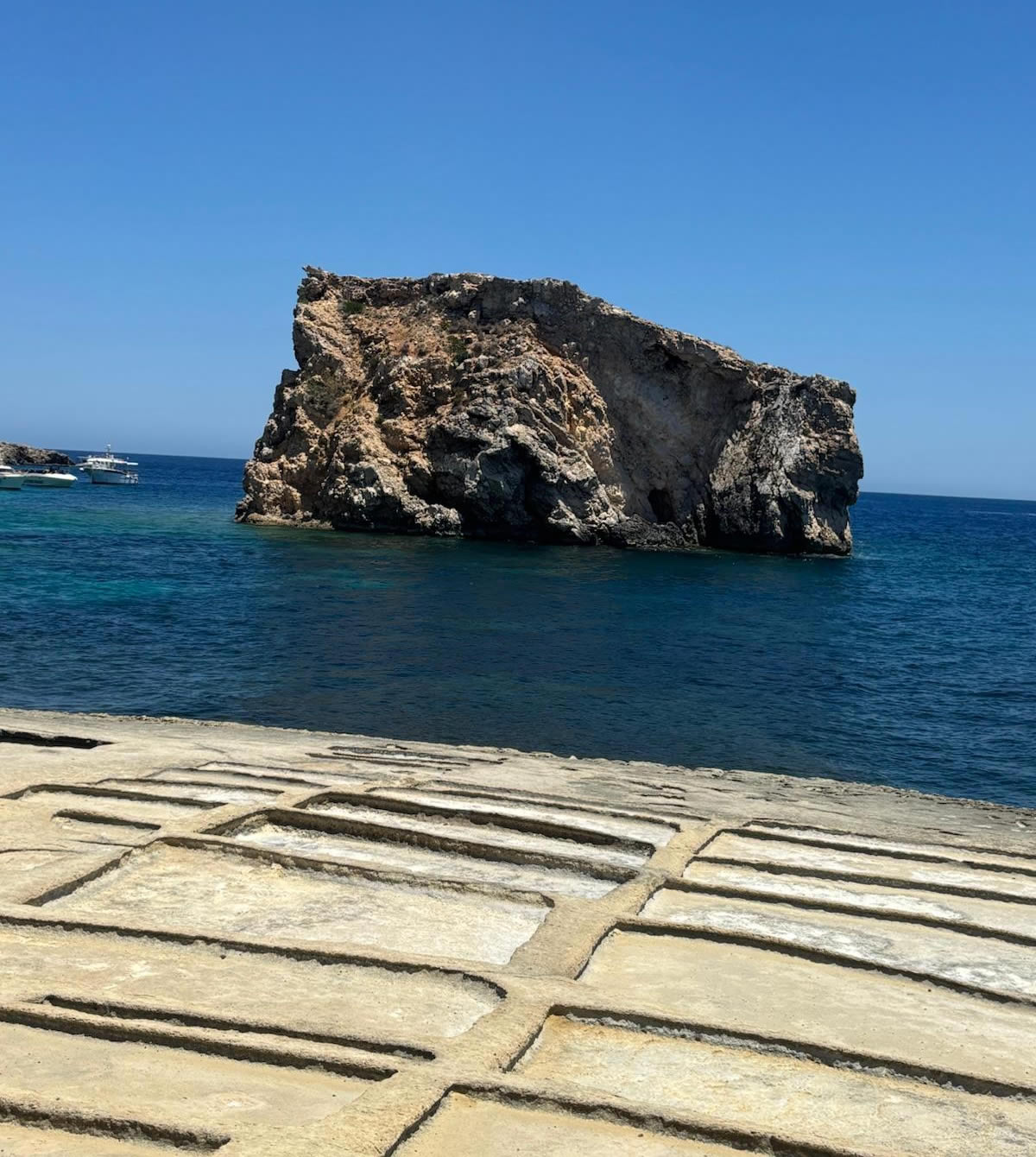
Forgotten Craftsmen of the Qala Shoreline
Carved directly into the exposed limestone shelves along the coastal trails of Qala and Ħondoq ir-Rummien, a series of modest, hand-chiseling salt pans offers a quiet look into Gozo’s traditional maritime heritage. Unlike the expansive, heavily visited commercial saltworks along the island's northern coast, these smaller clusters represent a micro-scale, domestic endeavor. Hand-carved by local villagers, they stand as testament to the rural ingenuity required to harvest one of the Mediterranean’s most essential commodities.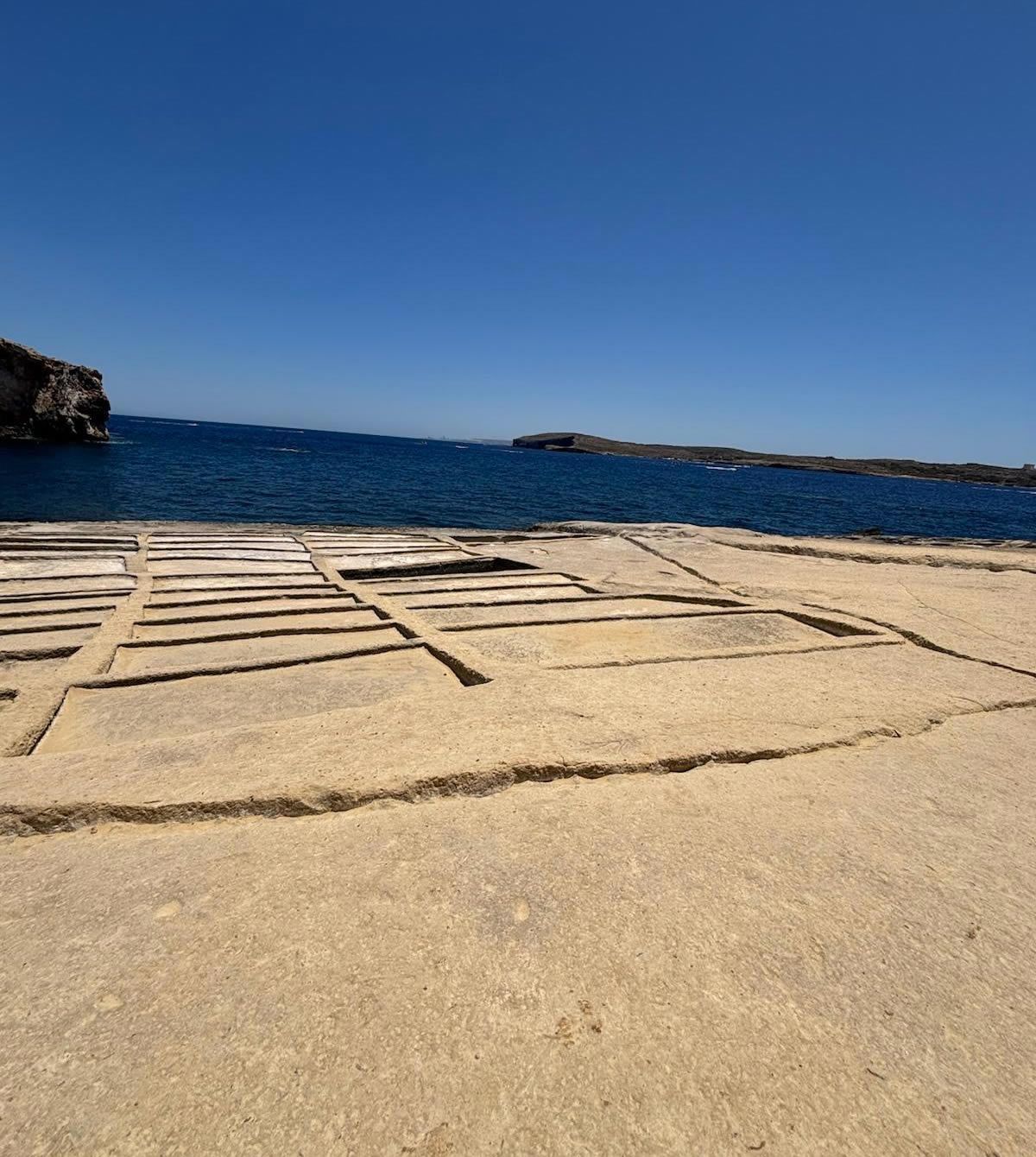
Built Above the Tide: A Manual Effort
What makes these specific pans distinctive is their elevation. Set onto raised rock platforms slightly above the high-water line, they were deliberately engineered to prevent ordinary summer swells from washing over the basins and diluting the drying harvest. Because they sit beyond the reach of natural wave-flooding channels, salt harvesters could not rely on the sea to fill them automatically. Instead, raw seawater had to be hauled up manually from the sea edge in buckets (keff) and ladled into the shallow basins throughout the scorching summer months.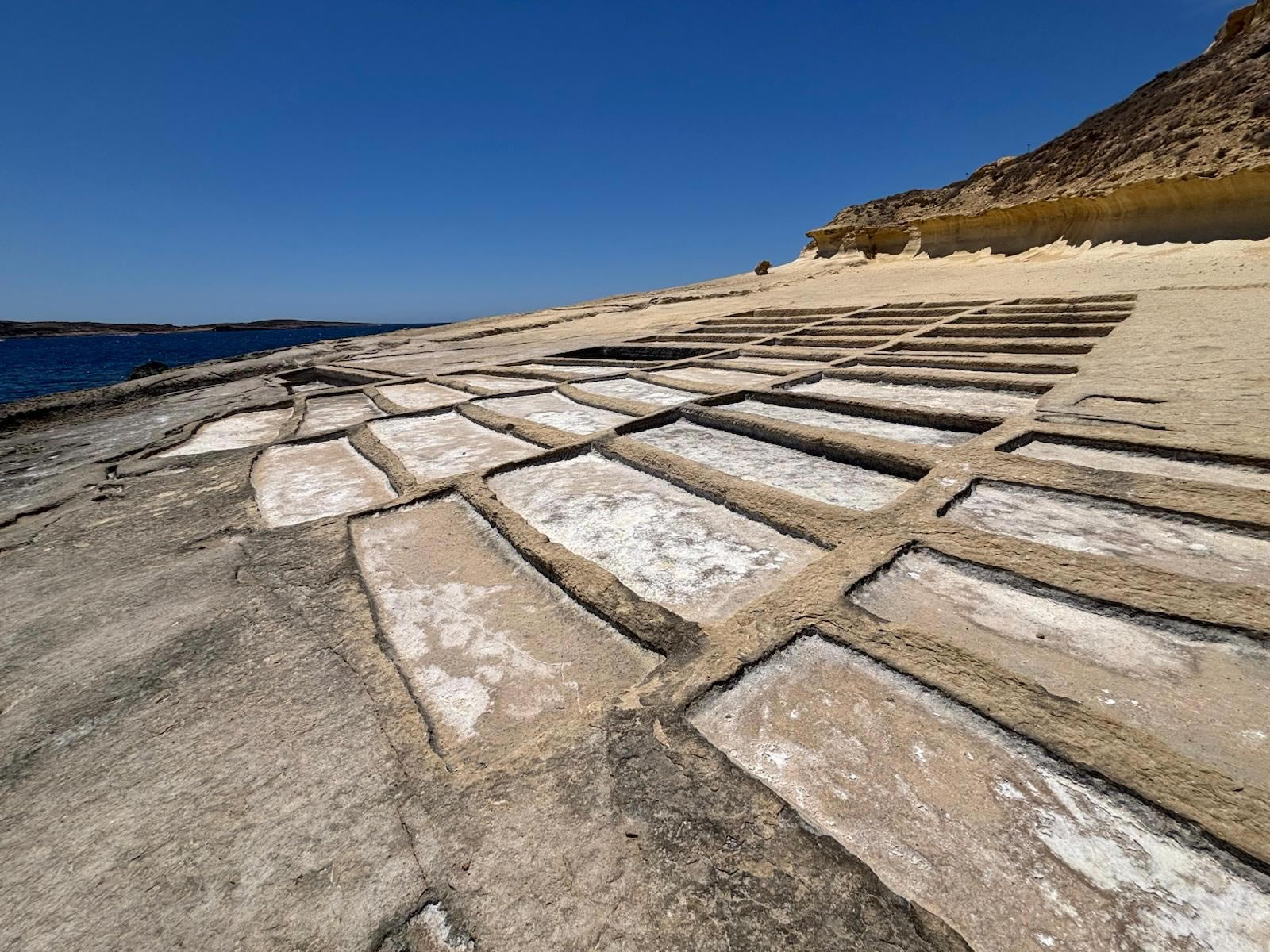
Domestic Preservation & The Village Economy
These elevated micro-clusters were rarely part of large-scale commercial concessions. Instead, they belonged to local Qala families and fishermen who chiseled out private sets to secure their own household supply. In an era before mass-produced table salt, this hard-won harvest was vital for local food preservation—used directly by coastal households for curing sheep’s milk cheeselets (ġbejniet), pickling capers and olives, and salting the summer catch.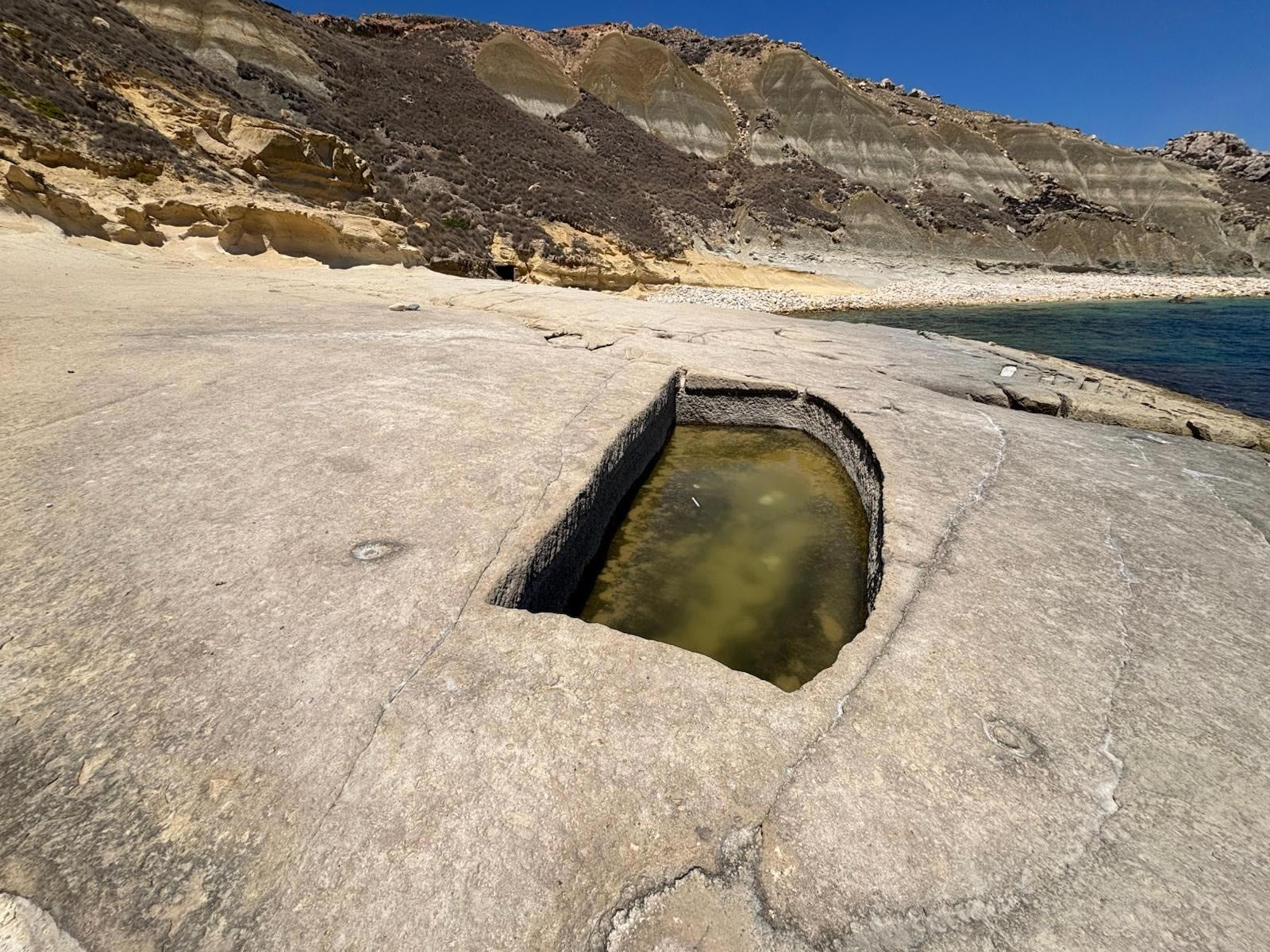
Sun, Wind, and Stone
The operation of these elevated pans relied entirely on the natural elements. Harvesters would often keep a deeper carved rock basin (bir) to store and pre-warm raw seawater. From there, the brine was transferred into shallow, hand-chiseled crystallization beds only a few centimeters deep. Heated by the intense Gozitan sun and dried by the constant sea breeze sweeping across the channel toward Comino, a single batch of seawater would evaporate into gleaming white sea salt crystals in just a week to ten days.A Preserved Coastal Legacy
As low-cost imported salt became widely available in the mid-20th century, the labor-intensive practice of manual bucket-harvesting along these raised ledges gradually came to an end. Today, these pans sit within the protected public domain, accessible along the coastal footpaths. Though weathered by decades of salt spray and winter storms, their crisp geometric outlines remain remarkably intact—an open-air monument to Gozo's artisanal past.Research & Documentation
- Researcher: Paul Berman
- Last Updated: 2026
This page forms part of eMalta's ongoing documentation of the historical, cultural and religious heritage of Malta and Gozo.
Information has been compiled through site visits, field research, historical publications, archival records, maps, plans and other reference sources.
All locations that currently exist featured on eMalta have been personally visited and documented. Where historic sites no longer exist, information has been researched from archival sources and contemporary records.
Images used on eMalta include original photography as well as historical illustrations, maps and photographs reproduced with permission from archives, institutions and copyright holders where applicable. Individual image credits and archive reference numbers are provided where available.